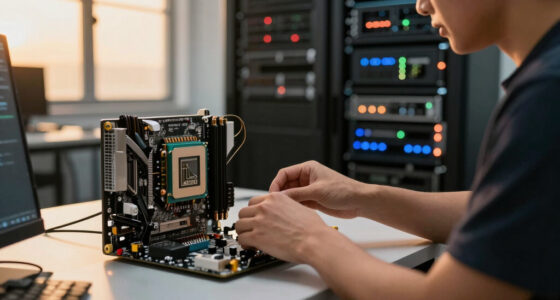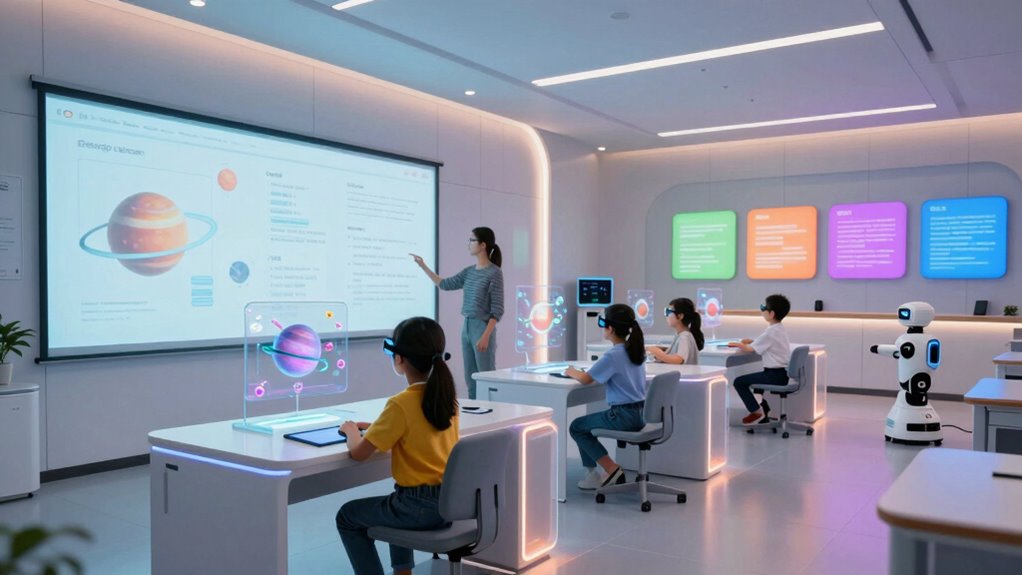

Gadgets are transforming your classroom into an engaging, personalized learning space. Interactive devices like augmented textbooks, smart whiteboards, and tablets foster active participation and instant feedback. Virtual and augmented reality bring immersive experiences, making lessons more memorable. AI-powered tools tailor lessons to each student’s needs, boosting motivation. Collaboration becomes seamless with digital platforms, while gamification keeps learners excited. If you continue exploring, you’ll discover how these innovations shape the future of education.

Get the latest gadgets delivered free with Prime
- Fast, free delivery on millions of items
- Prime Video, Amazon Music and more included
- Member-only deals all year
Key Takeaways
- Gadgets like interactive whiteboards and augmented textbooks create immersive, engaging learning experiences that enhance student participation and understanding.
- VR and AR technologies enable virtual explorations and tactile experiences, making complex concepts more accessible and memorable.
- AI-powered personalized learning tools adapt lessons in real-time, providing targeted support and immediate feedback for individual students.
- IoT devices and sensors monitor classroom environments and student engagement, allowing for dynamic adjustments to optimize learning conditions.
- Advanced gadgets facilitate hybrid, flexible classrooms that support diverse learning styles and promote collaboration across physical and digital spaces.
The Rise of Interactive Learning Devices

Have you noticed how interactive learning devices are transforming classrooms today? Augmented textbooks now combine traditional pages with digital features, allowing you to access videos, quizzes, and additional resources instantly. They make learning more engaging and tailored to your needs. Interactive whiteboards have replaced chalkboards, offering a dynamic way to visualize lessons. You can manipulate images, draw directly on the board, and collaborate with classmates in real-time. These devices foster active participation, making lessons more memorable. Teachers can quickly adapt content, incorporate multimedia, and respond to your questions on the spot. As a result, learning becomes more interactive and immersive. The rise of these devices signals a shift toward a more engaging, tech-driven educational experience that prepares you for the digital age. Understanding thermal behavior of devices helps optimize their performance and safety in educational settings. This knowledge is essential for maintaining device longevity and ensuring safe operation in classrooms. Additionally, considering the thermal management of devices can prevent overheating and extend their lifespan. Moreover, learning about the thermal properties of gadgets can assist educators and students in selecting appropriate protective measures to prevent damage and ensure consistent device operation.
Virtual Reality and Augmented Reality in Education
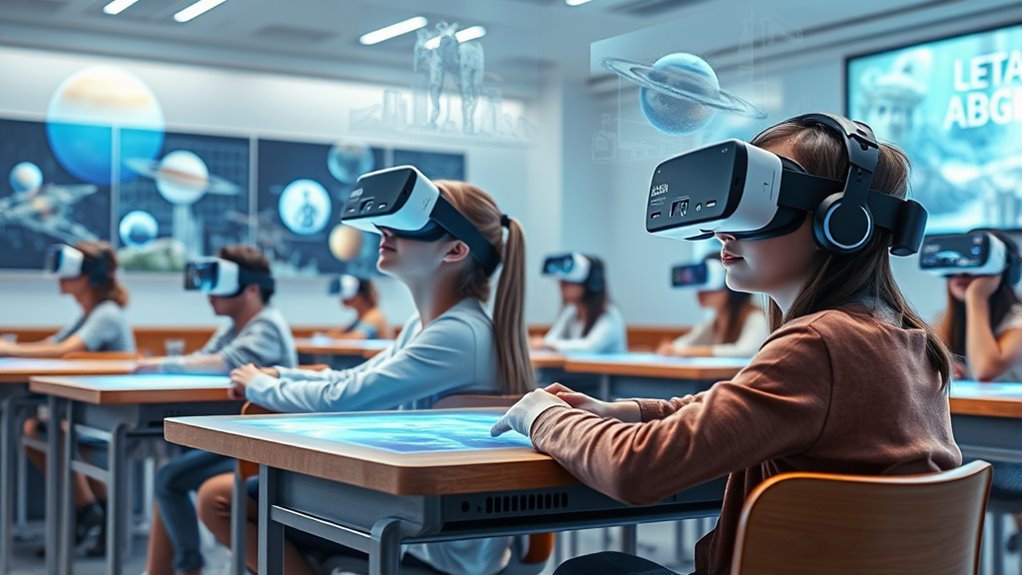
Virtual Reality (VR) and Augmented Reality (AR) are revolutionizing education by immersing students in interactive, lifelike experiences. With VR and AR, you can explore ancient civilizations, dissect virtual organisms, or walk through a human body—all from your classroom. These technologies enhance sensory immersion, making lessons more engaging and memorable. Haptic feedback adds a tactile dimension, allowing you to feel textures or forces within the virtual environment. This sensory input deepens understanding and boosts retention. As a result, complex concepts become easier to grasp, and your learning becomes more dynamic. Additionally, the use of high-quality projectors can significantly improve the visual clarity and realism of AR and VR experiences, making lessons even more immersive. Incorporating energy-efficient cloud servers ensures that these advanced technologies are sustainable and accessible for educational institutions worldwide. The integration of immersive learning environments supports diverse learning styles and encourages active student participation, transforming traditional education into an exciting, hands-on adventure that prepares you better for real-world challenges. Furthermore, ensuring device compatibility across various hardware platforms can facilitate smoother implementation and broader access in different educational settings. Leveraging AI-driven personalization can tailor educational content to individual student needs, further enhancing engagement and learning outcomes.
Personalized Learning Through Artificial Intelligence

Artificial Intelligence (AI) is transforming education by tailoring learning experiences to each student’s unique needs and abilities. With AI-driven tutoring, you get personalized guidance that adapts in real-time, helping you master concepts at your own pace. Adaptive assessments evaluate your progress constantly, giving immediate feedback to target areas that need improvement. This approach guarantees you’re not stuck on difficult topics, boosting confidence and motivation. Consider these key benefits:
AI personalizes learning, offers real-time feedback, and boosts confidence by adapting to each student’s unique needs.
- Customizes lessons based on your strengths and weaknesses
- Provides instant feedback to refine your understanding
- Offers targeted support through AI-driven tutoring systems
- Increases engagement by adapting to your learning style through innovative technologies.
Furthermore, the integration of AI-powered systems enhances the overall learning environment by enabling seamless interaction between students and educational content. Safe and smart electrical systems ensure that these advanced educational tools are powered reliably and securely, reducing the risk of interruptions or hazards during your learning sessions. Additionally, reliable power supplies are essential to maintain uninterrupted access to AI-powered educational resources and prevent potential disruptions. As AI continues to evolve, its integration into education technology promises even more personalized and effective learning experiences.
The Impact of Tablets and Mobile Devices in Classrooms

Tablets and mobile devices are revolutionizing classrooms by making learning more interactive and accessible. Their portability allows you to carry lessons everywhere, enhancing engagement. Device durability has improved, so you can rely on these gadgets even with daily use. Screen accessibility features, like adjustable text size and voice commands, ensure all students can participate fully. These devices enable instant access to educational resources, fostering independent learning. You can easily troubleshoot issues or replace devices without significant disruption. As technology advances, tablets and mobile devices become more resilient and user-friendly, empowering you to explore new teaching methods. Ultimately, their integration helps create dynamic learning environments where everyone benefits from better access, durability, and customization.
Gamification and Its Role in Student Engagement

Gamification transforms traditional learning by turning lessons into engaging, game-like experiences that motivate students to participate actively. By applying game design principles and reward systems, you can make education more enjoyable and impactful. This approach taps into your natural desire for achievement and recognition, encouraging consistent effort. Moreover, incorporating simple plant care tips can help students develop patience and responsibility as they learn to nurture living things. Additionally, understanding the power of feedback can significantly enhance how students respond to challenges and improve their skills. Research supports that personality assessments like 16PF and MBTI can also be integrated into gamified learning to tailor challenges to individual student traits, further increasing engagement. Recognizing the importance of body modifications such as piercings can also serve as a way to explore personal identity and self-expression within a classroom setting. Furthermore, fostering a methodical approach in game design can help educators create more structured and effective learning experiences. Here are four ways gamification enhances engagement:
- Increases motivation through immediate feedback and rewards
- Builds competition that drives students to improve
- Fosters collaboration via team challenges and leaderboards
- Encourages mastery by setting clear goals and levels to progress
Smart Classrooms: Integrating IoT Technologies

Smart classrooms use IoT technologies to create enhanced learning environments that adapt to students’ needs. You can access real-time data monitoring to track progress and identify areas for improvement instantly. This integration helps make education more personalized and efficient. Additionally, leveraging simplified tech concepts ensures that educators and students can easily understand and utilize these advanced tools. Understanding the home-care techniques involved in maintaining and optimizing these devices can further improve their longevity and performance. Implementing user-friendly interfaces can also facilitate smoother interactions with the technology, fostering a more inclusive learning environment. Incorporating navigation and mapping techniques from household robots can help optimize classroom layouts and device deployment for better coverage and efficiency.
Enhanced Learning Environments
Integrating Internet of Things (IoT) technologies into classrooms transforms traditional learning spaces into intelligent environments that adapt to students’ needs. You can create enhanced learning environments that foster engagement and practical skills. IoT enables seamless collaboration, allowing students to participate in collaborative projects with real-time data sharing. Hands-on experiments become more dynamic, with sensors providing instant feedback to deepen understanding. These smart classrooms support personalized learning paths, adjusting content based on individual progress. They also facilitate interactive group work, connecting students across different locations. By incorporating IoT, you elevate the educational experience, making it more immersive and responsive. The key benefits include: 1. Real-time data collection for instant insights 2. Enhanced collaboration through connected devices 3. Dynamic hands-on experiments with immediate feedback 4. Personalized learning tailored to student needs through precise sensor integration
Real-Time Data Monitoring
By leveraging IoT technologies, classrooms can now continuously monitor student engagement and environmental conditions in real time. This allows you to gather accurate data on factors like temperature, lighting, and noise levels, ensuring ideal learning environments. This real-time data collection not only helps identify issues but also supports personalized learning by adjusting the environment to meet individual student needs. Real-time data monitoring enhances data accuracy by providing immediate feedback, helping you identify issues before they impact students. Additionally, these systems are designed with scalability in mind, so you can expand or upgrade your setup as your needs evolve without losing performance. As a result, teachers gain valuable insights into classroom dynamics, enabling precise adjustments that boost engagement and comfort. With scalable IoT solutions, you can future-proof your classroom, maintaining efficient data collection even as technology advances and your educational environment grows. Air quality sensors are also increasingly integrated into these systems, further improving the overall learning environment.
The Benefits of Digital Collaboration Tools

Have you ever wondered how digital collaboration tools can transform your classroom experience? These tools foster teamwork, boost digital literacy, and prepare you for the modern world. They enable seamless peer assessment, encouraging constructive feedback and deeper understanding. Using platforms like shared documents and discussion boards, you can actively participate in projects regardless of location.
Here are four key benefits:
- Enhance communication skills through real-time interaction.
- Promote critical thinking with collaborative problem-solving.
- Develop digital literacy by charting various tools confidently.
- Strengthen peer assessment skills, gaining diverse perspectives.
Challenges and Considerations in Tech-Driven Education

As you incorporate new technology into classrooms, you’ll need to address issues like the digital divide that can leave some students behind. Privacy and security concerns also become critical as more data is shared online. Additionally, ensuring teachers are properly trained to use new tools is essential for effective implementation.
Digital Divide Concerns
Despite the rapid advancement of technology in education, the digital divide remains a significant obstacle to ensuring equal access for all students. Accessibility barriers and socioeconomic disparities prevent some students from benefiting fully from tech-driven learning. To address this, consider these factors:
- Device availability – Not all students have access to laptops or tablets at home.
- Internet connectivity – Poor or unreliable internet hinders participation in online lessons.
- Digital literacy – Some students lack the skills to navigate new technologies effectively.
- Financial constraints – Limited budgets can restrict schools’ ability to provide necessary resources.
Overcoming these challenges requires targeted efforts to bridge gaps, ensuring every student gains equal opportunities to thrive in a digital classroom.
Privacy and Security
While integrating technology into classrooms offers many benefits, it also introduces significant privacy and security challenges. Protecting student privacy and ensuring data security must be top priorities. You should implement strict access controls and encryption to safeguard sensitive information. Data breaches can compromise student identities and erode trust. The table below highlights key considerations:
| Concern | Action | Responsibility |
|---|---|---|
| Student privacy | Limit data collection and share protocols | School administrators |
| Data security | Use secure networks and regular audits | IT staff |
| Policy compliance | Follow legal standards like FERPA | School district officials |
Addressing these issues requires ongoing vigilance and clear policies, ensuring technology enhances learning without risking privacy breaches.
Teacher Training Needs
- Mastering new digital platforms and tools for seamless integration.
- Staying informed about ongoing curriculum updates to align lessons with evolving standards.
- Cultivating flexibility to adapt to diverse student needs and technological changes.
- Gaining confidence in troubleshooting tech issues without disrupting the learning process.
Preparing Educators for a Digital Future

To prepare educators for a digital future, training programs must go beyond basic technical skills and focus on fostering adaptability and innovative teaching methods. Emphasizing digital literacy helps you understand how to effectively use technology in your lessons, making learning more engaging and accessible. You should learn to seamlessly integrate tech tools into your curriculum, transforming traditional teaching approaches into dynamic, interactive experiences. Developing these skills ensures you’re equipped to meet diverse student needs and stay current with evolving educational technologies. Focus on building confidence in navigating new gadgets and platforms, so you can lead your students confidently into the digital age. Ultimately, this preparation allows you to create a flexible, tech-savvy classroom that prepares students for the future.
Future Trends Shaping the Educational Landscape

As educators become more adept at integrating technology into their classrooms, emerging trends are beginning to reshape how learning occurs. You’ll notice a shift toward prioritizing classroom ergonomics, ensuring students stay comfortable and engaged. This focus allows for better concentration and less fatigue, complementing the move away from traditional teaching methods. Future trends include:
- Personalized learning experiences powered by AI, adapting to individual student needs.
- Hybrid models combining in-person and online lessons for flexibility.
- Focus on ergonomic furniture and tech setups to improve health and productivity.
- Use of immersive technologies like AR and VR to create engaging, hands-on learning environments. These trends reflect a move toward more dynamic, student-centered education, blending innovative gadgets with thoughtful classroom design to enhance learning outcomes.
Frequently Asked Questions
How Do Gadgets Affect Students’ Social Skills and Interpersonal Communication?
Gadgets can both help and hinder your social skills and interpersonal communication. While they facilitate digital communication and allow for peer collaboration across distances, they can also reduce face-to-face interactions, making it harder to develop empathy and social cues. To balance this, you should actively engage in in-person conversations and teamwork, ensuring that technology enhances rather than replaces your ability to connect with others effectively.
What Measures Ensure Data Privacy and Security in Digital Classrooms?
Your data’s safety is crucial, more than you can imagine. To guarantee privacy, schools implement robust encryption protocols that scramble information, making it unreadable to outsiders. They also use data anonymization, stripping personal details from records to protect identities. Regular security audits and strict access controls further strengthen defenses. By combining these measures, you create a safer digital classroom environment, so your information stays private and secure at all times.
How Accessible Are These Educational Technologies for Students With Disabilities?
You’ll find that educational technologies are increasingly accessible for students with disabilities thanks to inclusive design and assistive devices. Manufacturers now prioritize features like screen readers, text-to-speech, and customizable interfaces, making learning more equitable. Many platforms integrate these tools seamlessly, ensuring students can participate fully. As a result, technology fosters an inclusive environment where all students, regardless of disabilities, can engage, learn, and succeed effectively.
What Is the Cost Impact of Implementing Advanced Gadgets Across Schools?
Implementing advanced gadgets in schools is like planting seeds for future growth, but it can strain your budget considerations. You’ll see costs vary widely depending on technology types and scale. To manage expenses, explore funding strategies such as grants, partnerships, and phased rollouts. While initial investments are significant, the long-term benefits of engaging students and enhancing learning make it a worthwhile investment for your educational community.
How Do Technological Tools Influence Traditional Teaching Methods and Curricula?
Technological tools revolutionize traditional teaching methods by promoting digital literacy and encouraging curriculum adaptation. You can engage students through interactive lessons, making learning more dynamic and relevant. These gadgets help you tailor content to diverse learning styles, fostering critical thinking and problem-solving skills. As a result, you create an inclusive environment where technology seamlessly integrates with education, preparing students for a digital future while enhancing their overall learning experience.
Conclusion
As you step into the classroom of tomorrow, imagine it as a vibrant garden where gadgets are the seeds of innovation. Just like a gardener nurtures growth with care, you’ll cultivate curiosity and creativity through these tools. With over 90% of teachers embracing digital tech, your role becomes that of a guiding hand, shaping a future where learning blossoms. Embrace these changes, and watch education transform into a thriving, dynamic landscape.
Halloween Picks
halloween
As an affiliate, we earn on qualifying purchases.