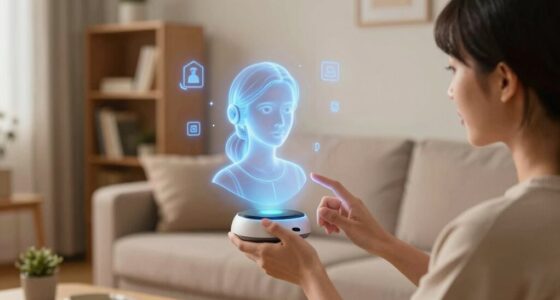
Tech gadgets are revolutionizing emergency care by enabling faster diagnosis, precise procedures, and better patient outcomes. Portable imaging devices, AI-powered triage systems, wearable monitors, and robotic aids help you respond swiftly and accurately. Telemedicine connects specialists instantly, while continuous monitoring tracks essential signs in real-time. Advanced data integration guarantees seamless decision-making. If you keep exploring, you’ll discover how these innovations are transforming the future of emergency medicine and saving lives every day.
Key Takeaways
- Advanced imaging and portable diagnostic tools enable rapid, on-the-spot assessments, speeding up decision-making and treatment in emergency settings.
- Wearable sensors and continuous monitoring devices provide real-time vital sign data, allowing proactive responses to critical changes.
- Robotics and automation improve procedural precision, resource management, and minimally invasive interventions, enhancing patient safety.
- Telemedicine technologies facilitate remote specialist consultations, quickening triage and expanding access to expert care.
- AI-powered systems optimize triage, diagnostics, and data analysis, leading to faster, more accurate emergency medical interventions.

The 2027-2032 World Outlook for Portable Medical Diagnostic Imaging Devices
As an affiliate, we earn on qualifying purchases.
As an affiliate, we earn on qualifying purchases.
Advanced Diagnostic Devices Transform Emergency Assessments

Advanced diagnostic devices are revolutionizing how emergency medical teams assess patients. You can now rely on rapid genetic testing to identify underlying conditions or infections quickly, guiding immediate treatment decisions. These devices help pinpoint genetic markers that influence patient care, especially in complex cases. Additionally, surgical navigation systems provide real-time visuals during urgent procedures, increasing precision and safety in the ER. With advanced imaging and tracking technology, you can navigate complex anatomy without guesswork, reducing complications and improving outcomes. These tools make assessments faster and more accurate, enabling you to deliver targeted interventions swiftly. As a result, emergency teams can act with confidence, knowing they have cutting-edge technology at their fingertips to optimize patient care from the moment they arrive. High-precision imaging technology further enhances diagnostic accuracy, allowing for detailed visualization of internal structures and abnormalities. Moreover, integrating innovative cloud solutions can facilitate rapid data sharing and collaboration among medical teams, ensuring that critical information is accessible in real time. Incorporating AI-powered diagnostics can further streamline decision-making processes, providing predictive insights that support emergency interventions.

Vibeat Wearable Blood Oxygen Monitor Oxylink – Bluetooth Pulse Oximeter Finger with Audio Notification, Rechargeable O2 Sensor for Continuous Tracking with Free App
Reliable Long Time Tracking: Continuously tracking and recording blood oxygen saturation level, heart rate and motion every minute,…
As an affiliate, we earn on qualifying purchases.
As an affiliate, we earn on qualifying purchases.
Wearable Technology: Monitoring Patients in Real-Time

Wearable technology lets you monitor essential signs continuously, providing real-time data to emergency teams. These devices can automatically alert staff if any critical changes occur, speeding up response times. As a result, patient care becomes more proactive and efficient in urgent situations. Incorporating Free Floating features into these gadgets can further enhance their versatility and comfort for users. Additionally, advancements in biosignal detection allow for more accurate and comprehensive health assessments, improving emergency response effectiveness. The integration of AI-driven analysis in these devices can further personalize patient monitoring, leading to better health outcomes. Enhanced connectivity also enables seamless data sharing between devices and healthcare providers, further optimizing patient care. Implementing remote monitoring capabilities ensures continuous oversight even when patients are outside clinical settings.
Continuous Vital Sign Tracking
Continuous essential sign tracking has become a pivotal component in emergency care, allowing healthcare providers to monitor patients in real-time without interrupting their treatment. With biometric monitoring devices, you can receive instant updates on vital signs such as heart rate, blood pressure, and oxygen saturation. These devices transmit data continuously, enabling real-time analytics that help anticipate complications before they worsen. Reliable connections are crucial for ensuring that vital sign data is transmitted accurately and without interruption. You benefit from:
- Accurate, uninterrupted vital sign measurement
- Faster diagnosis and intervention
- Improved patient safety and outcomes
This technology reduces the need for manual checks, minimizes errors, and guarantees that critical changes are detected immediately. Robust data transmission ensures that vital information remains consistent and dependable throughout patient monitoring. By integrating continuous vital sign tracking into emergency protocols, healthcare providers can respond more swiftly and precisely, ultimately saving lives and enhancing care quality. Implementing wireless monitoring solutions further enhances mobility and reduces clutter in critical care environments. Additionally, adopting high-fashion standards in medical device design can improve user experience and device reliability, especially in demanding clinical settings.
Emergency Alert Systems
Emergency alert systems integrated with wearable technology enable healthcare providers to monitor patients in real-time and respond instantly to critical changes. These systems enhance disaster preparedness by allowing swift action during emergencies, even when patients are remote or in crowded settings. Wearable devices continuously transmit essential data through robust communication networks, ensuring that medical teams receive alerts immediately if a patient’s condition worsens. This real-time data transmission is crucial for timely interventions and improved patient outcomes. This proactive approach reduces response times, minimizes complications, and saves lives. By automating alerts for abnormal heart rates, oxygen levels, or falls, you’ll stay ahead of potential crises. Reliable communication networks ensure continuous data transmission even in challenging environments, further improving patient safety. Additionally, emerging nanotechnologies are beginning to enhance the capabilities of wearable sensors, making them more precise and less intrusive. These advancements contribute to enhanced patient monitoring and help ensure timely medical responses. Implementing these systems also involves advanced data security, which is vital for protecting sensitive health information during transmission. Emergency alert systems with wearables truly revolutionize patient monitoring and emergency response.
AI-powered triage system
As an affiliate, we earn on qualifying purchases.
As an affiliate, we earn on qualifying purchases.
Telemedicine and Remote Consultations in the ER
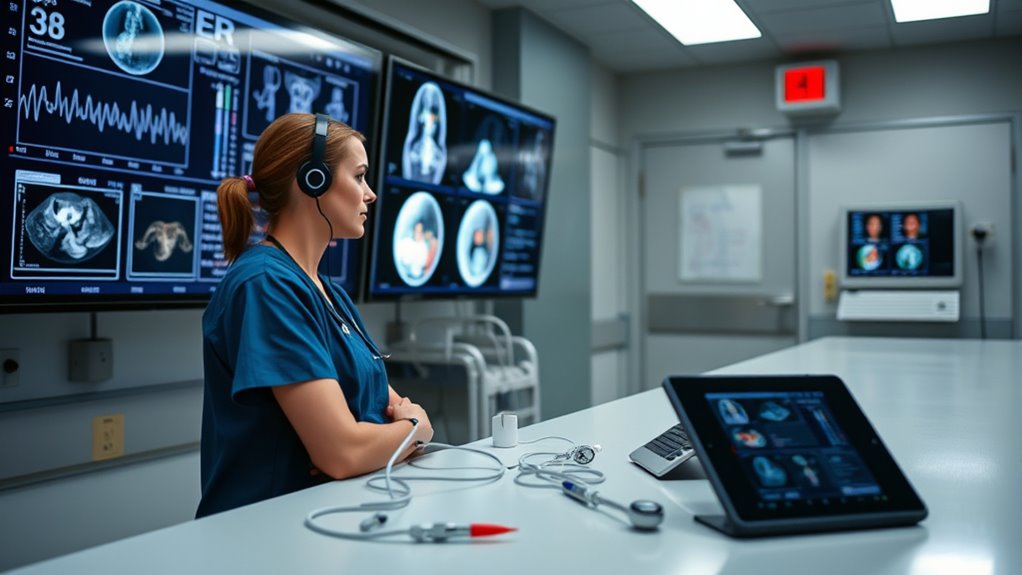
Telemedicine and remote consultations are transforming how emergency rooms deliver care, allowing medical professionals to assess and diagnose patients quickly without being physically present. You can now experience virtual consultations that enable real-time communication with specialists, even from afar. Remote monitoring devices collect vital signs and other critical data, providing a thorough view of your condition instantly. This technology enhances decision-making, reduces wait times, and improves patient outcomes. Additionally, these systems can integrate with home energy solutions to ensure reliable power during critical moments. Incorporating technological integration into emergency care enhances the efficiency and reliability of remote health services.
Key benefits include:
- Rapid access to expert opinions through virtual consultations
- Continuous health tracking with remote monitoring tools
- Faster triage and treatment initiation
These innovations streamline emergency response, ensuring you receive timely, accurate care while minimizing unnecessary hospital visits.

SYNLETT Caregiver Pager Call Button Wireless Call Bell Alert Buttons for Patients Elderly Seniors Home Portable Nurse Call System Bed Alarm Fall Prevention Emergency
PORTABLE CAREGIVER PAGER: This wireless pager system comes with 2 wireless call buttons and 2 portable pagers. It…
As an affiliate, we earn on qualifying purchases.
As an affiliate, we earn on qualifying purchases.
AI-Powered Triage Systems Improve Response Times
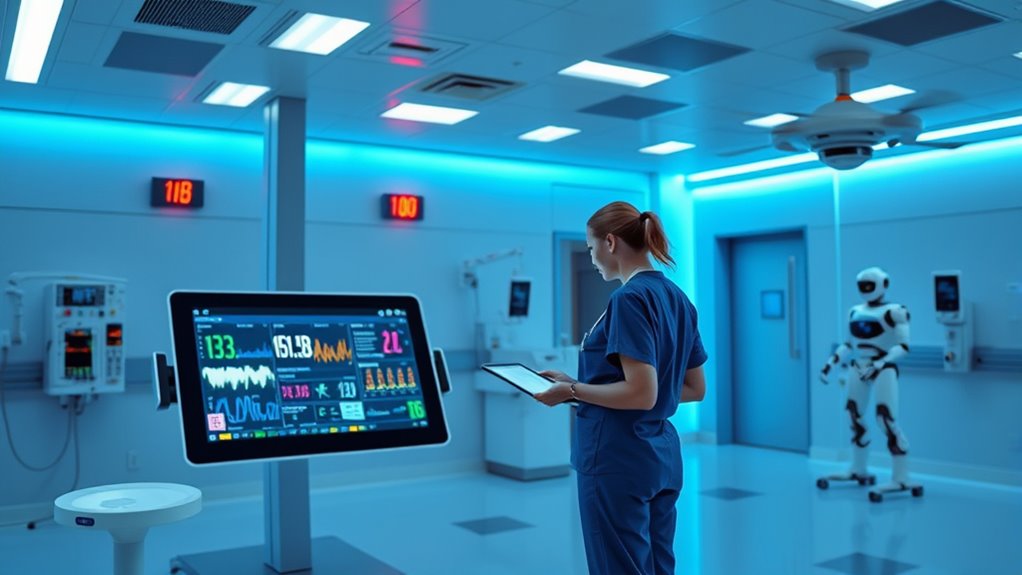
AI-powered triage systems speed up patient assessments, so you get quicker care when it’s needed most. They help reduce waiting times, allowing staff to focus on the most urgent cases. Plus, these systems improve diagnostic accuracy, leading to better treatment outcomes right from the start. Implementing encryption solutions ensures that sensitive patient data remains protected during digital communication and record-keeping. Integrating electric health records with triage systems further streamlines data access and enhances overall efficiency. Incorporating water safety protocols in healthcare facilities can prevent water-related accidents and promote a safer environment for patients and staff. Additionally, adopting medical device security measures helps safeguard vital technology against cyber threats, ensuring reliable and secure healthcare delivery. Recognizing the importance of cybersecurity in healthcare is essential as digital systems become more prevalent in medical environments.
Faster Patient Assessment
Have you ever wondered how hospitals can evaluate patients faster during critical moments? AI-powered triage systems streamline patient assessment by quickly analyzing symptoms and medical documentation, enabling faster decision-making. These systems assist healthcare providers in prioritizing cases based on severity, reducing delays in care. Additionally, integrating cutting-edge technology like AI enhances the overall accuracy and speed of emergency responses. With real-time data processing, you benefit from:
- Rapid patient triage, ensuring urgent cases get immediate attention
- Accurate assessment, minimizing human error in initial evaluations
- Efficient resource allocation, optimizing ER workflows
Reduced Waiting Times
Thanks to AI-powered triage systems, patient response times in the ER have considerably improved. These systems quickly analyze patient data, prioritizing urgent cases and reducing bottlenecks. As a result, waiting times decrease, and care becomes more efficient. Hospital architecture now integrates dedicated zones for AI stations, streamlining patient flow. Staff training is essential, equipping personnel to interpret AI insights and adapt workflows accordingly. Additionally, connected equipment enhances data accuracy and real-time monitoring, further optimizing patient outcomes. Here’s how the impact compares:
| Aspect | Effect |
|---|---|
| Reduced waiting times | Faster identification of critical cases |
| Staff training | Improved decision-making and response efficiency |
| Hospital architecture | Optimized spatial design for seamless AI use |
| Patient satisfaction | Increased due to quicker care delivery |
This tech-driven approach transforms ERs into faster, more responsive environments.
Enhanced Diagnostic Accuracy
Enhanced diagnostic accuracy is a key benefit of AI-powered triage systems, allowing emergency teams to identify conditions more precisely and swiftly. These systems leverage advanced diagnostic algorithms and medical imaging to analyze patient data in real-time, reducing errors and improving outcomes. With AI, you can expect faster and more reliable diagnoses, helping to prioritize urgent cases. The technology continuously learns from new data, refining its accuracy over time. Key advantages include:
- Improved interpretation of medical imaging for quicker detection of critical issues
- Enhanced identification of subtle symptoms through sophisticated diagnostic algorithms
- Reduced misdiagnoses, ensuring patients receive the right treatment promptly
Portable Imaging Tools Enhance On-the-Spot Diagnosis

Portable imaging tools are transforming emergency room diagnostics by allowing healthcare providers to quickly assess patients at the bedside. These portable diagnostics enable immediate visualization of injuries or conditions, reducing the need for time-consuming transport to radiology departments. Thanks to imaging advancements, devices like handheld ultrasounds and compact X-ray machines deliver clear, real-time images that guide swift decision-making. This technology helps identify fractures, internal bleeding, or infections on the spot, speeding up treatment and improving patient outcomes. With portable imaging tools, you can rely on rapid, accurate assessments without delays. The convenience and efficiency they offer make them essential in high-pressure ER environments, where every second counts. As imaging technology continues to evolve, your ability to deliver prompt, precise care gets even better.
Smart Medical Instruments Streamline Procedures
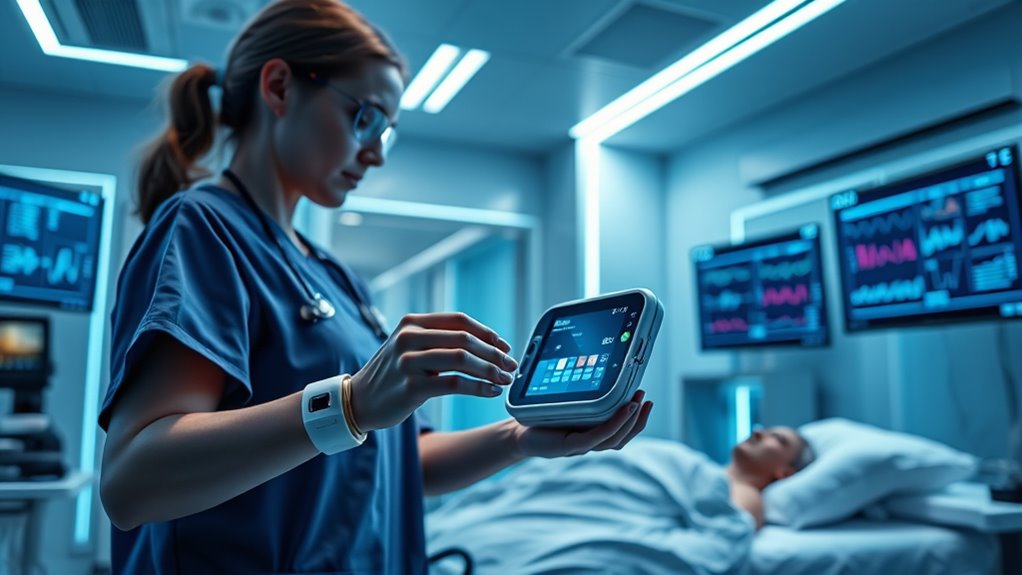
Smart medical instruments are revolutionizing how procedures are performed in the emergency room, making them faster and more accurate. Advanced device design guarantees these tools are user-friendly and adaptable to various emergency scenarios. Precise instrument calibration guarantees reliable results every time, reducing the risk of errors. These innovations streamline workflows, allowing you to perform complex interventions with confidence. Key features include:
- Intuitive interfaces that simplify complex tasks
- Automated calibration processes for consistent accuracy
- Modular designs enabling quick adjustments during procedures
Electronic Health Records and Data Integration
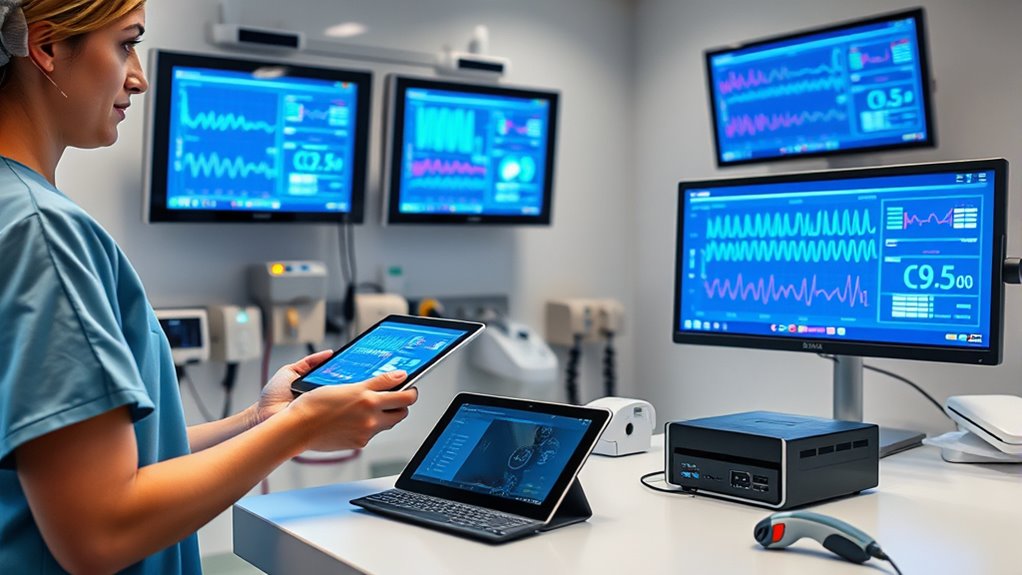
Electronic health records (EHRs) and data integration are transforming ER workflows by providing instant access to patient information. With real-time updates, you can quickly review medical histories, lab results, and imaging, reducing delays. EHR systems also streamline medical coding, ensuring that diagnoses and procedures are accurately documented for billing. This improves billing accuracy, minimizes errors, and accelerates reimbursement. Seamless data sharing between departments enhances coordination, enabling you to make informed decisions swiftly. Additionally, integrated systems reduce paperwork and manual entry, freeing up time for patient care. As a result, your ER operates more efficiently, with improved patient outcomes and fewer administrative mistakes. Overall, electronic health records and data integration are essential tools in modern emergency medicine.
Robotic Assistance and Automation in Emergency Care

Robotic assistance and automation are transforming emergency care by increasing precision during critical procedures. They help you respond faster, reducing delays that can be life-threatening. As a result, patient outcomes improve with quicker, more accurate interventions.
Precision in Procedures
Advancements in robotic assistance and automation are transforming the way emergency care providers perform complex procedures. You now benefit from enhanced medication precision, reducing errors and ensuring patients receive the correct doses quickly. Surgical accuracy has also improved, allowing for minimally invasive interventions with steady, precise movements that human hands can’t always achieve. These technologies enable you to:
- Execute delicate procedures with consistent accuracy
- Minimize complications through precise instrument control
- Speed up recovery times by reducing tissue damage
Robotics provide a level of consistency and control unmatched by manual methods, ensuring each step is executed flawlessly. As a result, emergency care becomes more reliable, safer, and tailored to each patient’s needs, revolutionizing how you approach critical procedures.
Accelerated Response Times
Thanks to robotic assistance and automation, emergency responders can now react faster than ever before. These technologies substantially improve triage efficiency, allowing responders to quickly assess patient needs and prioritize care. Automated systems, such as AI-powered diagnostic tools, help identify critical conditions rapidly, reducing delays in treatment. Robots assist in response coordination by managing logistics, delivering supplies, and even performing initial assessments in chaotic environments. This acceleration means faster decision-making and streamlined workflows, which are vital during emergencies. As a result, patients receive timely interventions, and hospitals can optimize resource allocation. Overall, robotic assistance transforms emergency care into a swift, well-coordinated process, saving lives and enhancing outcomes through faster response times.
Patient Engagement Technologies and Personal Health Devices
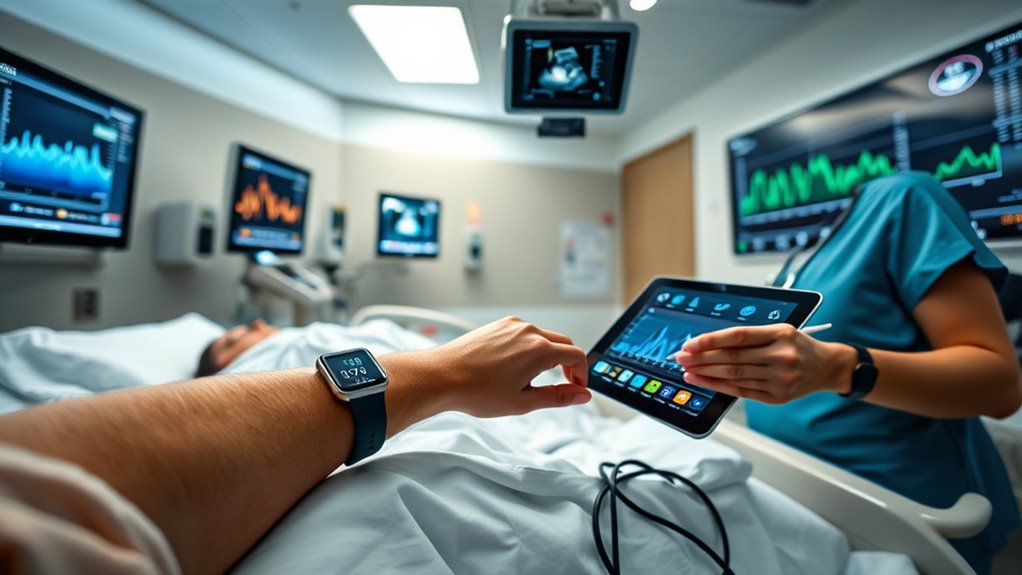
Patient engagement technologies and personal health devices are transforming how you interact with emergency care. These tools empower you to stay informed and actively participate in your health management. Through secure patient portals, you can access your medical records, test results, and treatment plans anytime. Medication reminders ensure you never miss doses, improving recovery outcomes. Personal health devices like wearable monitors track essential signs in real-time, alerting you and your healthcare team to potential issues before they escalate. This tech fosters seamless communication, enhances adherence to treatment, and promotes a sense of control.
- Access medical info instantly via patient portals
- Stay on top of medications with reminders
- Monitor health metrics in real-time with wearable devices
Future Trends and Innovations Shaping Emergency Medicine
Emerging technologies are rapidly transforming emergency medicine, offering new ways to diagnose, treat, and monitor patients more effectively. As these innovations evolve, future trends include emerging training programs that equip clinicians with skills in AI, robotics, and telemedicine. You’ll see a shift toward more integrated, real-time data systems that improve decision-making and patient outcomes. Policy updates will play a vital role, ensuring safety, privacy, and ethical use of advanced gadgets. These changes will also streamline workflows, reduce errors, and enhance response times. Staying ahead means embracing ongoing education and understanding new regulations. By adopting these innovations early, you can provide faster, more precise care, ultimately saving more lives and improving emergency response standards across the board.
Frequently Asked Questions
How Do Gadgets Ensure Patient Privacy During Emergency Data Transmission?
You guarantee patient privacy during emergency data transmission by using encryption protocols that secure sensitive information from unauthorized access. Additionally, data anonymization masks personal identifiers, making it difficult for anyone to trace data back to the individual. These combined measures help protect your privacy, even when rapid data sharing is essential, allowing medical staff to access crucial information quickly without compromising confidentiality.
What Training Is Required for ER Staff to Operate New Medical Technologies?
Think of training as planting seeds for growth. You’ll need to complete medical device certification to guarantee safety and compliance, then engage in staff competency development programs tailored to each gadget. Hands-on workshops, simulations, and ongoing education help you master new technology confidently. This way, you’re equipped to operate advanced medical devices efficiently, turning complex tools into reliable allies in critical moments.
Are There Any Risks Associated With Reliance on AI in Emergency Diagnostics?
Relying on AI in emergency diagnostics can introduce risks like AI bias, which may lead to inaccurate assessments, and increased technology dependency, potentially delaying critical decision-making if tech fails. You should be aware that overdependence might reduce clinical judgment skills. To mitigate these risks, guarantee continuous human oversight, regularly update AI algorithms, and stay trained to recognize when technology might be providing flawed or biased results.
How Do Portable Devices Compare in Accuracy to Traditional Hospital Equipment?
You might wonder if portable devices match traditional hospital equipment in accuracy. Rest assured, wearable monitoring and portable imaging have advanced remarkably, often providing results comparable to bulky, stationary systems. Their convenience and rapid data collection can be vital in emergencies. Yet, some nuances remain—certain complex diagnostics still favor traditional tools. This evolving balance between portability and precision keeps healthcare on the edge of a technological breakthrough.
What Are the Costs and Funding Options for Implementing Advanced ER Gadgets?
You should conduct a thorough cost analysis to understand the expenses of advanced ER gadgets, including equipment, maintenance, and staff training. Funding strategies may involve securing grants, partnering with technology providers, or applying for government programs. By exploring these options, you can effectively allocate resources, reduce financial barriers, and guarantee your ER benefits from cutting-edge technology without overspending. Planning ahead helps maximize your investment and improve patient care.
Conclusion
As tech continues to weave into the fabric of emergency medicine, you’re riding a wave of innovation that transforms chaos into clarity. These gadgets act like guiding stars, illuminating the path to faster, smarter care. Embrace this revolution, knowing that each breakthrough propels you closer to saving lives with precision and compassion. The future of ER care is a dynamic dance, and with technology leading the way, you’re part of a movement that’s reshaping healthcare’s very heartbeat.