📊 Full opportunity report: Kill-Switch-Proof: How to Build So Washington Can’t Take Your AI Stack Down on ThorstenMeyerAI.com — validation score, market gap, and execution plan.
TL;DR
In June 2026, the U.S. government forcibly shut down top AI models, exposing vulnerabilities in reliance on external providers. Organizations are now adopting architectural strategies to prevent future outages.
In June 2026, the U.S. government issued directives that resulted in the shutdown of the most advanced AI models, including Anthropic’s Fable 5 and a limited release of OpenAI’s GPT-5.6. These actions demonstrated that reliance on external AI providers can lead to sudden, uncontrollable outages, regardless of contractual SLAs or technical safeguards. As a result, organizations are now exploring architectural strategies to make their AI stacks resistant to government takedowns, emphasizing control and flexibility.
Following the directives, many organizations discovered that their dependence on external AI models created a vulnerability: a government or vendor decision could render their AI capabilities inaccessible overnight. The key to resilience lies in architectural design: mapping dependencies, implementing abstraction layers, and maintaining open-weight models that can be hosted internally. The recommended approach involves creating a configurable, swap-ready infrastructure where models are simply identified by a configuration line, enabling rapid switching without extensive re-engineering.
Industry experts, including AI infrastructure providers like Portkey and TrueFoundry, advocate for building a model-abstraction gateway that routes requests to different providers or self-hosted models. This gateway should support fallback tiers, including open-weight models that are under full organizational control, to ensure continuous operation even during shutdowns. Additionally, organizations are urged to inventory all dependencies proactively, test fallback procedures regularly, and prioritize licensing terms that permit local hosting and commercial use.
Kill-switch-proof: build so Washington can’t take your AI stack down
In June, the US government switched off the market’s most capable model — twice, in three weeks. You can’t stop the gate. You can decide whether it takes you down. The difference is entirely architectural — and buildable.
You can’t control the gate — Washington will keep deciding which frontier models ship, and both labs are pushing to make review permanent. What you control is your exposure to it. Kill-switch-proofing isn’t predicting the next directive — it’s making the next one a config change instead of an outage, a routing rule that fails over to a model no one can pull while your users notice nothing. The question stops being “will they take my model away?” and becomes the boring one you can answer: “which one do I route to next?”
Implications of Resilient AI Architecture for Organizations
This shift in AI infrastructure design is critical for organizations that rely heavily on AI for operations, security, or strategic advantage. Building kill-switch-proof stacks reduces exposure to government actions, vendor outages, or geopolitical restrictions. It enhances sovereignty and ensures operational continuity, especially for entities with international teams or compliance obligations. In a landscape where AI model access can be arbitrarily revoked, resilient architecture becomes a strategic necessity rather than an optional upgrade.

Server Room Temperature and Humidity Monitor for Data Centers,Pharmaceuticals Alongwith Factory Calibration Certificate Model: AI-RHTx-IOT (RHTx-IoT Hosting to Customer End (Without Hosting))
Model: RHTx-IoT1; SMS + Email + Cloud hosting to User End | Measuring Parameters: Temperature, Relative Humidity |…
As an affiliate, we earn on qualifying purchases.
As an affiliate, we earn on qualifying purchases.
June 2026 AI Model Shutdowns and Industry Response
The shutdown of Anthropic’s Fable 5 and the limited release of GPT-5.6 marked a turning point in AI dependency risk. These events revealed that reliance on external providers leaves organizations vulnerable to government actions that can impose indefinite outages without warning or recourse. The directives stemmed from concerns about export controls and national security, especially affecting organizations with international teams or offshore operations. Industry response has focused on architectural resilience, emphasizing dependency mapping, abstraction layers, and self-hosted open-weight models as solutions.
“The events of June 2026 exposed a fundamental weakness in how organizations depend on external AI models. Building resilient, configurable stacks is no longer optional; it’s essential for operational sovereignty.”
— Thorsten Meyer, AI infrastructure expert
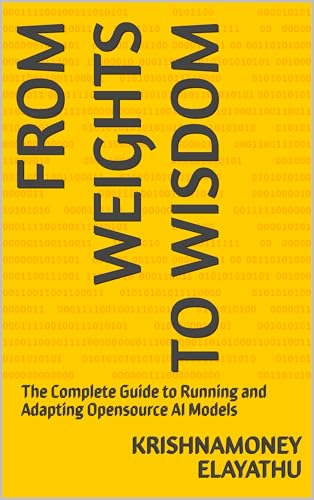
From Weights to Wisdom: The Complete Guide to Running and Adapting Opensource AI Models
As an affiliate, we earn on qualifying purchases.
As an affiliate, we earn on qualifying purchases.
Uncertainties in Implementation and Future Risks
While the recommended architectural strategies are gaining traction, it remains unclear how quickly organizations can fully implement these changes at scale. Additionally, evolving export controls, licensing restrictions, and geopolitical tensions could introduce new risks or restrictions on self-hosted models. The long-term effectiveness of open-weight models in replacing state-of-the-art closed models also warrants further evaluation, especially in complex reasoning tasks.

The 0-to-1 TPM Interview Playbook (2026 AI-Native Edition): The Complete Thinking System for Technical Program Manager Interviews at Google, Meta, Amazon, … (The 0→1 Interview Playbook Series 11)
As an affiliate, we earn on qualifying purchases.
As an affiliate, we earn on qualifying purchases.
Next Steps for Building Resilient AI Systems
Organizations are expected to conduct comprehensive dependency inventories, develop and test fallback procedures, and adopt open-weight models for critical workloads. Industry providers will likely enhance gateway solutions with more automation and compliance features. Regulatory developments and industry standards may also shape best practices for resilient AI architecture, with ongoing monitoring of geopolitical and legal changes.

AI Operations Infrastructure Architecture: Enterprise AI Gateway and Practical DecisionOps (Japanese Edition)
As an affiliate, we earn on qualifying purchases.
As an affiliate, we earn on qualifying purchases.
Key Questions
What is a kill-switch-proof AI stack?
A kill-switch-proof AI stack is an architecture designed to prevent external shutdowns from rendering AI capabilities inoperable, typically through dependency mapping, abstraction layers, and self-hosted open-weight models.
Why did the U.S. government shut down AI models in June 2026?
The shutdown was driven by export controls and national security concerns, leading to directives that required global, indefinite removal of certain AI models without prior warning or recourse.
Can organizations fully eliminate dependency on external providers?
While organizations can significantly reduce dependency by self-hosting open-weight models and implementing flexible architectures, complete elimination depends on the specific workloads and model capabilities required.
What are the main technical steps to build a resilient AI stack?
Key steps include dependency mapping, implementing a model abstraction gateway, defining fallback tiers, and hosting open-weight models internally to ensure operational continuity during shutdowns.
Are open-weight models sufficient for all AI applications?
Open-weight models can serve as reliable fallback options and provide sovereignty benefits, but they may not match the performance of the latest closed models on complex reasoning tasks, so their role is often complementary.
Source: ThorstenMeyerAI.com