

🔍 Read the full analysis: Maximize Business Efficiency With These 13 AI Automation Tools In 2026 on ThorstenMeyerAI.com

Get the latest gadgets delivered free with Prime
- Fast, free delivery on millions of items
- Prime Video, Amazon Music and more included
- Member-only deals all year
TL;DR
In 2026, a curated list of 13 AI automation tools offers businesses advanced solutions to enhance efficiency, scalability, and integration. This development reflects rapid growth in AI-driven automation, impacting various industries.
In 2026, businesses are increasingly adopting a curated set of 13 AI automation tools designed to maximize operational efficiency, scalability, and integration. These tools are gaining popularity across industries for their ability to automate complex workflows with minimal coding, offering a competitive edge in a rapidly evolving technological landscape. This development underscores the ongoing shift towards AI-driven automation as a core component of business strategy.
The list includes tools like Google AI Studio, which excels in building scalable workflows, and Spec-Driven AI Testing, specialized for automation testing. These tools are evaluated based on their ability to integrate with existing development environments, support for popular programming languages, scalability, ease of use, and support ecosystems. Key differentiators among the tools include their pricing models, customization options, and suitability for different team sizes and technical skill levels.
Leading platforms emphasize API integration, CI/CD pipeline support, and minimal coding requirements, enabling rapid deployment and adaptation. The selection process considered documentation quality, community support, and the ability to handle both small-scale and enterprise-level automation tasks. While some tools prioritize user-friendliness for beginners, others offer advanced features for seasoned developers, reflecting a broad spectrum of options tailored to diverse business needs.
The 13 picks
- 1
 Software Testing with Generative AIView on Amazon →
 - 2
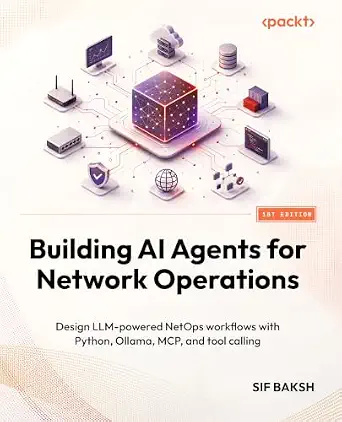 Building AI Agents for Network Operations: Design LLM-powered NetOps workflow…View on Amazon →
 - 3
 40 Python Programming Projects for AI Agents and AutomationsView on Amazon →
 - 4
 The Claude Code Operating Model: Build Scalable AI Coding Systems with Skills…View on Amazon →
 - 5
 Spec-Driven AI Engineering: Build Reliable Software from Requirements to Code…View on Amazon →
 - 6
 Building Agentic AI Systems: A Step-by-Step Guide to Creating LLM-Powered AI…View on Amazon →
 - 7
 AI for Quality Assurance and Software Testing: The Practitioner’s Complete Gu…View on Amazon →
 - 8
 Building Intelligent Applications with Claude AI: A Practical Guide to Creati…View on Amazon →
 - 9
 Spec-Driven Software Testing with AI: Build Reliable Test Suites from Specifi…View on Amazon →
 - 10
 Mastering Claude AI: The Complete Practical Guide to Prompt Engineering, Proj…View on Amazon →
 - 11
 Claude AI Automation & Monetization: Build AI-Powered Systems, Automate Workf…View on Amazon →
 - 12
 Google AI Studio Guide 2026: Master Google AI Studio to Build Intelligent AI…View on Amazon →
 - 13
 Agentic Coding with Claude Code (5-in-1): A Practical Developer’s Handbook fo…View on Amazon →
Why AI Automation Tools Are Critical for 2026 Business Success
The adoption of these 13 AI automation tools signifies a major shift in how companies approach operational efficiency. By automating routine tasks, businesses can reduce costs, improve accuracy, and free up human resources for strategic activities. The ability to seamlessly integrate with existing workflows and scale with growth makes these tools vital for maintaining competitive advantage in a technology-driven economy. Furthermore, their widespread adoption indicates a broader trend towards AI-enabled digital transformation that could reshape industry standards and labor dynamics.
Rapid Growth and Diversification of AI Automation in 2026
The AI automation landscape has expanded significantly over the past few years, with 2026 seeing a surge in tools tailored for various sectors, from software development and testing to network operations. Earlier in the decade, many solutions were limited to basic scripting or manual integrations, but recent advancements have enabled sophisticated, low-code platforms that support complex workflows. Companies like Google and emerging startups have contributed to a competitive environment where innovation is rapid, and tools are increasingly user-friendly and scalable. This evolution reflects a broader industry trend emphasizing automation as a key driver of digital transformation.
Remaining Questions About Long-Term Adoption and Impact
While the current list of tools shows promising features and widespread industry support, it remains unclear how deeply these solutions will be adopted across all sectors in the long term. Questions persist about their ability to adapt to rapidly changing technology standards, the total cost of ownership, and potential integration challenges in legacy systems. Additionally, the broader impact on employment and organizational structures continues to be debated among experts, with some cautioning about over-reliance on automation.
Next Steps for Businesses and Developers Using AI Automation Tools
Organizations should evaluate their current workflows to identify areas where AI automation can deliver immediate benefits. As the tools continue to evolve, future updates are expected to enhance integration capabilities, reduce costs, and expand functionalities. Businesses are advised to monitor vendor developments, participate in user communities, and pilot new solutions to stay ahead in automation. Additionally, industry standards and best practices are likely to emerge, guiding effective implementation and scaling of AI-driven automation strategies.
Key Questions
How do I choose the best AI automation tool for my business?
Assess your company’s specific needs, including required features, scalability, ease of use, and budget. Consider tools that integrate well with your existing systems and offer good support resources. Pilot programs can help determine suitability before full deployment.
Can these tools handle complex workflows across different industries?
Many of the top-ranked tools are designed to support complex, multi-step workflows and are adaptable across various sectors, from software development to network management. However, the suitability depends on your specific use case and integration requirements.
What are the main benefits of adopting AI automation tools in 2026?
Benefits include increased operational efficiency, reduced costs, improved accuracy, faster deployment of workflows, and the ability to scale automation as your business grows. These tools also enable teams to focus on strategic tasks by automating routine processes.
Are there risks associated with implementing these AI tools?
Risks include potential integration challenges, vendor lock-in, over-reliance on automation, and possible impacts on employment. Proper planning, vendor evaluation, and staff training are essential to mitigate these risks.
Source: ThorstenMeyerAI.com
Fall Picks
fall essentials
As an affiliate, we earn on qualifying purchases.