
TL;DR

Get the latest gadgets delivered free — and shop member deals
- Fast, free delivery on millions of items
- Access to Prime Big Deal Days deals on October 6–7
- Prime Video, Amazon Music and more included
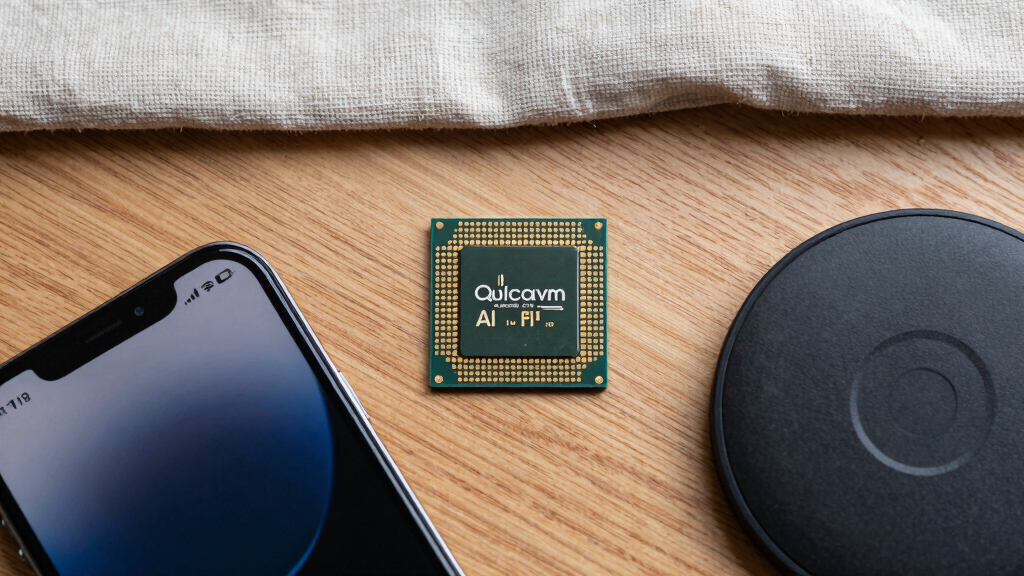
Qualcomm has introduced a new AI data center chip that omits high-bandwidth memory (HBM), directly challenging Nvidia’s market leadership. The move signals a strategic shift in AI hardware design.
Qualcomm has unveiled a new artificial intelligence data center chip that forgoes high-bandwidth memory (HBM), aiming to challenge Nvidia’s longstanding market dominance in AI hardware. The company’s latest design prioritizes cost efficiency and power savings, marking a significant departure from traditional high-performance AI chips that rely heavily on HBM technology.
During a presentation in New York last Thursday, Qualcomm’s vice president of data center, Durga Malladi, demonstrated a prototype featuring a stack of low-power DRAM chips mounted directly on a logic die. This design eliminates the need for HBM, which is typically used in high-end AI accelerators to boost memory bandwidth.
Qualcomm claims this approach can reduce manufacturing costs and improve energy efficiency, potentially making AI data center hardware more accessible and scalable. The new chip, part of Qualcomm’s Dragonfly line, is positioned as a direct competitor to Nvidia’s A100 and H100 series, which rely on HBM for performance.
While Qualcomm has not disclosed specific performance metrics, industry analysts note that ditching HBM could impact the chip’s raw speed but may benefit from lower latency and reduced complexity, especially for certain AI workloads.
Implications for AI Hardware Competition
This development signals a strategic shift in AI hardware design, as Qualcomm’s move to eliminate HBM could disrupt Nvidia’s market dominance. If successful, this approach might lower costs and increase adoption of AI accelerators across more data centers, broadening access to AI processing capabilities. It also indicates a potential trend toward more diversified memory architectures in AI chips, which could influence future industry standards and innovation.As an affiliate, we earn on qualifying purchases.
Background of AI Chip Market and Nvidia’s Dominance
Nvidia has maintained a stronghold on the AI hardware market with its high-performance GPUs, especially the H100 and A100 series, which utilize HBM to achieve high bandwidth and speed. These chips have become the standard for data center AI workloads, powering everything from machine learning training to inference tasks.
Qualcomm’s entry into this space with a new design that omits HBM represents a notable strategic shift. The company has been expanding its data center ambitions, leveraging its expertise in mobile and low-power chips to develop alternative architectures. This move comes amid broader industry efforts to reduce costs and improve energy efficiency in AI hardware, driven by increasing demand for AI processing in cloud and enterprise settings.
Previous attempts by other manufacturers to challenge Nvidia’s dominance have often focused on alternative memory architectures or specialized accelerators, but none have yet gained significant market share.
“Eliminating HBM might reduce peak performance but could lead to more scalable and energy-efficient AI hardware for certain applications.”
— an anonymous researcher
As an affiliate, we earn on qualifying purchases.
Unclear Performance Impact and Market Reception
It is not yet confirmed how Qualcomm’s new chip will perform relative to Nvidia’s offerings, especially under demanding AI workloads. Details about the chip’s benchmarking results, real-world efficiency, and scalability remain undisclosed. Industry experts are cautious, noting that the elimination of HBM could limit peak performance but may benefit cost and power consumption.
Market reception and adoption are also uncertain, as data center operators weigh performance against cost savings and compatibility with existing infrastructure.
As an affiliate, we earn on qualifying purchases.
Upcoming Testing, Industry Response, and Market Adoption
Qualcomm is expected to conduct further performance testing and seek industry validation in the coming months. The company may also showcase the chip at upcoming industry events to gauge interest from data center operators and cloud service providers. Nvidia and other competitors are likely to respond with their own innovations, potentially intensifying the competition in AI hardware.
Monitoring how Qualcomm’s design performs in real-world scenarios and how quickly it gains market traction will be key to understanding its impact on the AI chip landscape.
As an affiliate, we earn on qualifying purchases.
Key Questions
What is the main innovation Qualcomm announced?
Qualcomm introduced an AI data center chip that eliminates high-bandwidth memory (HBM) by using low-power DRAM stacked directly on the logic die, aiming to cut costs and improve energy efficiency.
How does this challenge Nvidia’s dominance?
By offering a potentially cheaper and more energy-efficient alternative to Nvidia’s HBM-based chips, Qualcomm seeks to expand AI hardware options and reduce Nvidia’s market share in data centers.
Will the new chip match Nvidia’s performance?
It is currently unclear how the new Qualcomm chip will perform under high-demand AI workloads, as detailed benchmarks and real-world testing results have not yet been released.
Why is removing HBM significant?
Removing HBM could lower manufacturing costs, reduce power consumption, and simplify chip design, but might also limit maximum throughput and peak performance in certain applications.
When will we see this chip in the market?
Qualcomm has not announced a specific release date, but further testing and validation are expected in the coming months, with potential market introduction later this year or early 2027.
Source: Nikkei Asia
Fall Picks
fall essentials
As an affiliate, we earn on qualifying purchases.