

The space tech boom driven by private rockets and satellites is transforming your daily life in many ways. It improves your internet and communication services through satellite networks and enhances navigation with more precise GPS. Space innovations also help monitor Earth’s environment, which can influence policies affecting you. Additionally, space-based tech supports safety and emergency responses, making everyday activities smoother. To discover how these advancements continue shaping your world, explore further to see what the future holds.
Key Takeaways
- Private rockets lower launch costs, enabling more frequent satellite deployments that improve internet, navigation, and communication services in daily life.
- Satellite technology provides real-time environmental data, helping monitor climate change and support sustainable practices affecting communities.
- Advanced space-based sensors enhance emergency response, disaster management, and safety through precise location tracking and rapid communication.
- Miniaturized satellites and space innovations contribute to smarter devices, wearable health tech, and improved consumer electronics.
- The growth of private space ventures accelerates technological innovation, leading to new products, services, and experiences that influence everyday life.
Top picks for "space tech boom"
Open Amazon search results for this keyword.
As an affiliate, we earn on qualifying purchases.
The Rise of Private Space Companies

Have you noticed how private companies are transforming space exploration? Private space startups are leading this revolution, making space more accessible than ever. These commercial space ventures develop innovative rockets and technology, reducing costs and increasing launch frequency. Companies like SpaceX and Blue Origin have challenged traditional government-led missions, opening new opportunities for research and business. Their success inspires other entrepreneurs to invest in space, accelerating progress and driven by competition. Private companies now handle satellite launches, space tourism, and even plans for lunar and Mars missions. This shift not only speeds up technological advancements but also lowers barriers for entry into space activities. The rise of private space startups marks a new era where exploration is no longer solely government-driven but a growing commercial enterprise. Additionally, energy-efficient cloud solutions are increasingly supporting the infrastructure behind space technology, enhancing data management and processing for space missions. As these companies continue to innovate, they are also pushing the development of advanced propulsion systems, which could revolutionize travel within our solar system. Moreover, advancements in miniaturized satellite technology are enabling more cost-effective and widespread deployment of constellations, further transforming global communications and data collection. Furthermore, the integration of sustainable manufacturing practices is helping reduce the environmental impact of space activities, aligning with broader ecological goals. These innovations are also driven by public-private partnerships, which foster collaboration and funding in the space sector.
How Satellites Keep You Connected
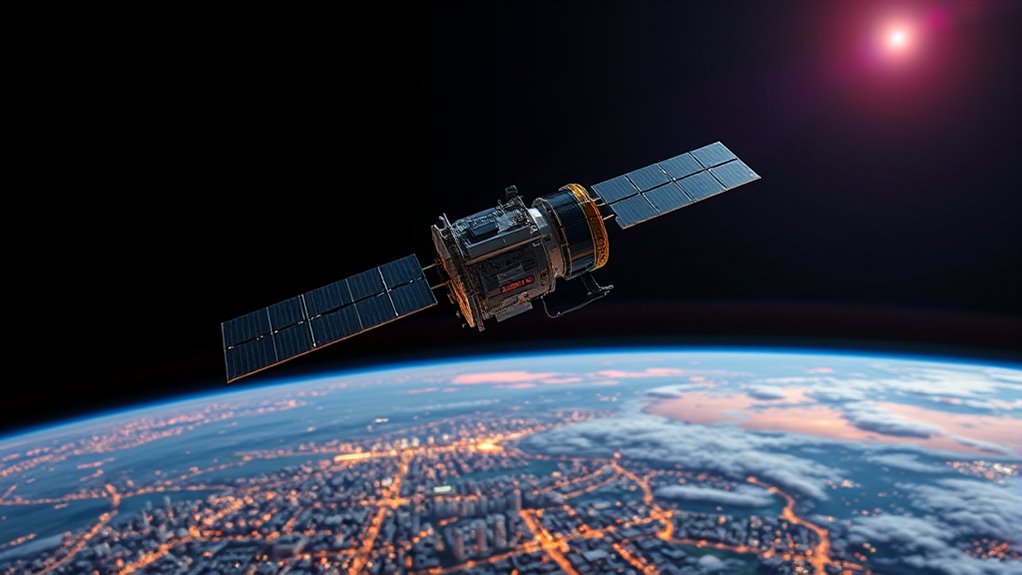
Satellites play a crucial role in keeping you connected by transmitting signals that support your everyday communication, navigation, and entertainment needs. Thanks to advancements like satellite miniaturization, more satellites now orbit closer to Earth, improving coverage and speed. Additionally, these innovations enable the deployment of smaller, more efficient satellites, which can be launched more frequently and at lower costs. Moreover, the development of space debris mitigation strategies is essential to address the increasing number of satellites and prevent potential hazards in Earth’s orbit. These strategies involve innovative techniques like debris removal and improved orbit management to safeguard operational satellites. The ongoing efforts in space traffic management aim to reduce collision risks and enhance the sustainability of satellite networks. However, increased satellite deployment raises concerns about space debris, which can threaten operational satellites and complicate space traffic management. Despite these challenges, satellite networks deliver your internet, phone, and TV services reliably. They also enable real-time navigation, helping you find routes or share your location. As technology progresses, satellite miniaturization makes it possible to deploy more affordable, efficient satellites, further enhancing global connectivity and ensuring you stay connected, informed, and entertained, no matter where you are.
Improving Navigation and Location Services

Thanks to advancements in space technology, your GPS becomes more accurate than ever, guiding you precisely wherever you go. Real-time traffic updates help you avoid delays, saving you time and frustration. These improvements also enable faster emergency responses, potentially saving lives when every second counts. Additionally, mastering time zones ensures that communication and coordination across different regions are seamless and reliable. The ongoing development of satellite technology continues to enhance global connectivity, making information sharing faster and more dependable worldwide. As satellite networks expand, they also improve disaster management by providing critical data during emergencies, helping communities respond more effectively and support sustainable development efforts globally.
Enhanced GPS Accuracy
Enhanced GPS accuracy has become essential for improving navigation and location services, especially as more applications rely on precise positioning. Satellite signal interference can disrupt GPS signals, leading to less reliable data and errors in your device’s location. To combat this, space technology advancements help refine GPS signal accuracy by deploying more satellites and improving signal processing. These innovations reduce the impact of interference and ensure your navigation remains precise, whether you’re driving, cycling, or exploring new places. Satellite network improvements also play a crucial role in minimizing disruptions and boosting overall reliability. Additionally, advancements in signal processing techniques help devices better filter out noise and interference, further enhancing accuracy. Enhanced GPS accuracy means you get real-time, dependable directions, accurate geotagging, and better location-based services. As satellite networks evolve, your devices can better filter out noise, providing seamless, highly accurate positioning no matter where you are.
Real-Time Traffic Updates
Real-time traffic updates have transformed the way you navigate, providing instant information about road conditions, congestion, and accidents. With satellite data relayed via private space companies, your navigation apps now deliver accurate, timely updates. When traffic congestion stalls your commute, these updates guide you to faster routes, saving you time and frustration. They also alert you to road construction or closures ahead, helping you plan alternative paths. By continuously monitoring road conditions from space, these systems reduce the guesswork involved in everyday travel. Additionally, satellite data integration enhances the precision and reliability of navigation tools, ensuring you stay informed and on the fastest route possible. Thanks to advancements in satellite technology, your navigation tools are more reliable than ever, ensuring you stay informed and on the fastest route possible. The integration of advanced satellite technology enables these systems to provide even more detailed and accurate traffic insights, further improving your daily commutes.
Better Emergency Response
Satellite technology from private space companies now plays a pivotal role in improving emergency response by providing precise location data and rapid communication. This enhances disaster management efforts by delivering real-time information to responders, helping them reach those in need faster. Improved navigation and location services mean you’re more likely to get timely assistance during emergencies, whether it’s a natural disaster or a medical crisis. Additionally, private satellites strengthen emergency alert systems, ensuring alerts are more accurate and faster. These advancements help save lives by reducing response times and coordinating efforts more effectively. As private space tech continues to evolve, your safety during emergencies becomes more reliable, making disaster management more efficient and effective than ever before reliable satellite data. Well-sourced coverage ensures that these technological improvements are reliable and accurately documented, further supporting emergency preparedness and response. Enhanced data accuracy and coverage also contribute to better disaster prediction and preparedness strategies, ultimately saving more lives. Furthermore, ongoing innovations in satellite technology are expanding global coverage, which is essential for comprehensive emergency response in remote or underserved areas.
Monitoring Our Environment From Space

You can see how satellite data collection helps us monitor Earth’s health in real time. By tracking climate change, these satellites provide vital insights into environmental shifts. This data-driven approach allows scientists and policymakers to make informed decisions that can mitigate environmental damage and promote sustainability. Additionally, advancements in satellite technology continue to enhance our ability to observe and respond to global environmental challenges. This technology empowers us to respond more effectively to global challenges and protect our planet. As remote sensing techniques improve, our capacity to analyze environmental data becomes even more precise and comprehensive. Furthermore, the ongoing development of sensor technology enhances the accuracy and resolution of environmental observations, leading to better-informed strategies for environmental protection. These innovations in environmental monitoring are crucial for addressing the urgent issues posed by climate change.
Satellite Data Collection
Have you ever wondered how we can monitor the environment from thousands of miles above Earth? Satellites collect essential data by continuously scanning our planet’s surface and atmosphere. This information helps us track changes in forests, oceans, and urban areas. However, space debris and crowded orbital pathways pose challenges, risking collisions that could damage or disable satellites. To guarantee reliable data collection, agencies carefully manage satellite positions and avoid cluttered orbits. These satellites use sensors and imaging technology to gather real-time information, which informs weather forecasts, disaster responses, and resource management. By understanding these patterns from space, you gain insights into environmental health, helping protect our planet and prepare for future challenges.
Climate Change Tracking
How do we keep track of the planet’s changing climate from space? Satellites play a crucial role in monitoring environmental shifts that directly affect you. They measure urban heat levels, helping identify cities experiencing dangerous temperature increases, which can impact your health and energy use. Satellites also track deforestation, revealing how forests shrink over time, threatening biodiversity and contributing to climate change. This data helps scientists understand how land use changes affect global warming and provides early warnings of environmental stress. By observing these patterns from space, you gain a clearer picture of how human activity influences the climate. This information supports policies to reduce urban heat effects and combat deforestation, ultimately helping you and future generations adapt to a changing world.
Enhancing Communication Networks

Space technology is revolutionizing communication networks by providing faster, more reliable connections across the globe. Satellites in geostationary orbits stay fixed relative to specific points on Earth, ensuring consistent coverage for TV, internet, and phone services. This stability helps reduce signal delays and improves overall quality. Satellite miniaturization makes it possible to deploy more satellites at lower costs, increasing network capacity and coverage, especially in remote areas. Smaller satellites can be launched more efficiently, allowing for rapid updates and expansion of communication infrastructure. As a result, you experience fewer dropped calls, faster internet speeds, and better connectivity wherever you are. This continuous innovation in satellite technology directly enhances your daily communication, keeping you connected in an increasingly digital world.
Innovations in Space Technology and Everyday Devices
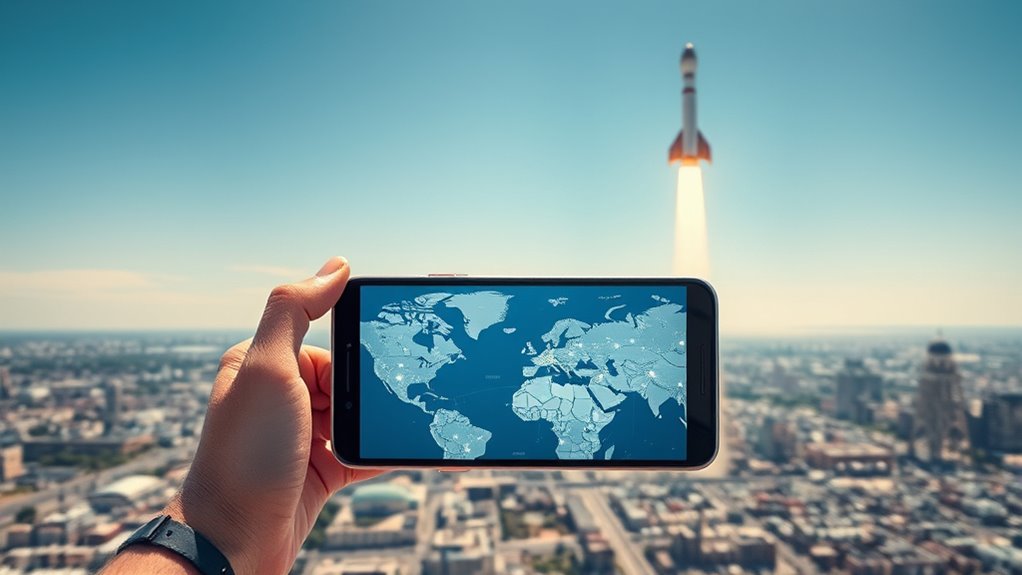
Advances in space technology are now transforming the devices you use every day, making them smarter, more efficient, and more connected. Innovations like space tourism are inspiring new gadgets and experiences that bridge everyday life with space. For example, sensors developed for astronaut suits are now used in wearable health devices, providing real-time health data. Meanwhile, asteroid mining efforts are pushing the boundaries of resource extraction, leading to improved materials and technologies that benefit consumer electronics. These space-inspired innovations help improve battery life, durability, and miniaturization of devices. As private companies continue to develop space tourism and asteroid mining, expect even more breakthroughs that will enhance your smartphones, home appliances, and health monitors. Space tech isn’t just about exploration; it’s shaping your everyday technology.
The Future of Space Exploration and Its Impact

As technology continues to evolve, the future of space exploration promises to revolutionize not only our understanding of the universe but also the way we live on Earth. You could soon experience space tourism firsthand, making vacations beyond our planet a reality. Additionally, asteroid mining might become a major resource source, providing rare minerals and water that could sustain Earth’s growing demands. Here’s what to expect:
- Increased accessibility to space travel for the public, fueling new industries.
- Extraction of asteroid resources, reducing reliance on terrestrial mining.
- Advancements in life support and habitat technologies, making long-term space missions feasible.
These developments will impact your daily life through more sustainable resources and new technological innovations, shaping a future where space exploration is integrated into everyday life.
Challenges and Opportunities in the Space Industry

The rapid growth of the space industry presents both exciting opportunities and significant hurdles to overcome. Regulatory hurdles can slow down innovation, as steering through complex rules requires time and resources that startups and established companies alike must manage. Funding obstacles also pose challenges, especially for new ventures trying to secure investment for ambitious projects. Despite these barriers, opportunities abound for entrepreneurs and tech innovators willing to tackle them. Advances in reusable rockets, satellite technology, and commercial space travel create new markets and expand possibilities for everyday applications. By working through regulatory and funding challenges, you can help shape a future where space tech benefits society, drives economic growth, and open the door to discoveries previously thought impossible.
Frequently Asked Questions
How Do Private Rockets Reduce Space Travel Costs?
Private rockets reduce space travel costs by making launch costs more affordable through reusable rockets. You benefit because companies reuse rocket components instead of building new ones for each launch, slashing expenses. This innovation lowers the overall price of sending satellites and payloads into space. As a result, space missions become cheaper, faster, and more accessible, which can lead to new technologies and services that impact your daily life.
What Are the Privacy Concerns Related to Satellite Data?
You might worry about satellite surveillance invading your privacy, as data security risks increase with more satellites collecting information. These satellites can monitor your activities and transmit sensitive data, raising concerns about unauthorized access or misuse. To protect yourself, stay informed about how satellite data is used and advocate for strong data security measures. Being aware helps you understand and manage the privacy risks linked to satellite technology in everyday life.
How Do Space Tech Advances Influence Everyday Consumer Products?
Space tech advances profoundly shape your everyday essentials, from smarter satellites providing precise positioning to space-inspired innovations like space food and wearable tech. These breakthroughs boost your convenience, enhance your entertainment, and elevate your efficiency. Wearable tech tracks your health seamlessly, while space food inspires innovative packaging. As space technology continues soaring, it pushes the boundaries of what’s possible in products you rely on daily, making life more connected, comfortable, and cutting-edge.
What Safety Measures Protect Astronauts in Private Space Missions?
You’re protected during private space missions through rigorous astronaut training, which prepares you for hazards like space debris. Safety measures include shielding to prevent damage from debris, emergency protocols, and life support systems. Training also emphasizes handling unexpected situations, ensuring your safety. These steps minimize risks, giving you confidence that, even amid space debris, you’re well-prepared and protected during your journey beyond Earth.
How Will Space Technology Shape Future Global Economies?
You’ll see space technology shaping future global economies through expanding space tourism and fostering international space policies. As more people venture into space, it boosts tourism, creates new markets, and sparks innovation worldwide. International policies will guarantee cooperation and regulation, making space activities more sustainable and profitable. These advancements will drive economic growth, generate jobs, and inspire advancements on Earth, ultimately transforming how countries compete and collaborate globally.
Conclusion
The space tech boom is transforming your daily life more than you realize, connecting, guiding, and protecting you in ways that seem almost magical. Private rockets and satellites are revolutionizing communication, navigation, and environmental monitoring, making the world smarter and more connected. This rapid innovation is just the beginning—soon, space technology will become as common as your morning coffee. Stay excited, because the future of space is going to change everything, faster than you can blink!