Smart city tech is transforming your daily life through better transportation, real-time info, and sustainable energy solutions. Imagine smoother commutes with autonomous vehicles and smart traffic systems that adapt to traffic flow. Your safety gets a boost with connected devices and analytics that detect threats early. Green initiatives and digital tools also improve urban environments and resource management. Keep exploring to discover how these innovations can truly enhance your urban experience.
Key Takeaways
- Urban technology enhances city living through real-time traffic management, reducing congestion and improving transportation efficiency.
- Smart sensors and environmental monitoring enable quick ecological responses, promoting healthier, more sustainable urban environments.
- Citizen engagement platforms foster participation in city planning, increasing transparency and community involvement.
- Connected safety devices improve emergency response times and public safety through real-time threat detection.
- Data-driven urban management optimizes resource allocation, energy use, and infrastructure maintenance for resilient cities.
Top picks for "rise smart city"
Open Amazon search results for this keyword.
As an affiliate, we earn on qualifying purchases.
The Evolution of Urban Infrastructure Through Technology
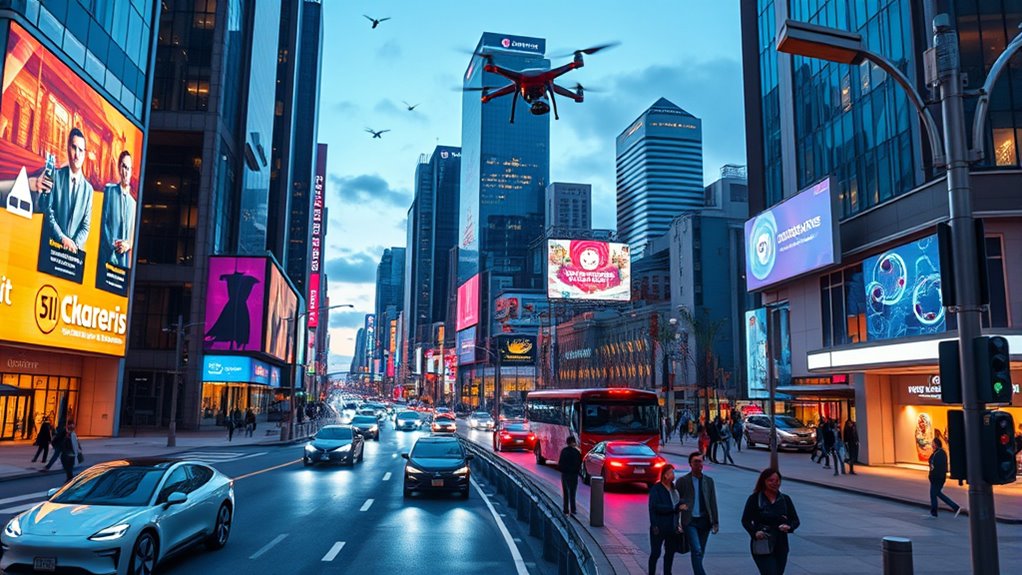
Technology has transformed urban infrastructure, making cities smarter and more efficient. You now see more urban greenspaces integrated with digital tools that monitor environmental quality and manage resources. These innovations encourage citizen participation, allowing residents to contribute ideas and feedback through mobile apps and online platforms. As a result, city planners can better understand community needs and adjust projects accordingly. Smart sensors track foot traffic and air quality, helping optimize greenspace maintenance and accessibility. This technological shift fosters a more engaged citizenry and creates greener, healthier environments. By embracing these advancements, cities become more sustainable and inclusive, ensuring that urban greenspaces serve everyone’s needs while empowering residents to take an active role in shaping their communities. Additionally, the integration of smart technology into urban greenspaces helps improve overall city resilience against environmental challenges. The deployment of sensor networks enhances real-time data collection, enabling more responsive and adaptive urban management strategies. Furthermore, leveraging European cloud servers ensures secure and sustainable data handling, supporting smarter urban infrastructure. Implementing digital environmental monitoring systems further enhances the capability to respond swiftly to ecological issues, promoting climate resilience and urban sustainability.
Smarter Transportation Systems and Commuting Experiences
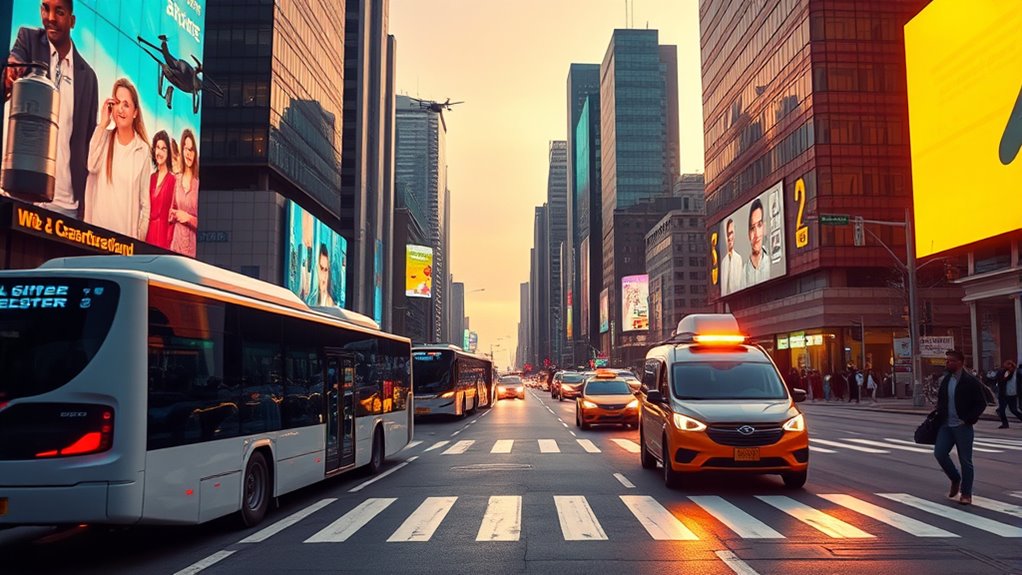
Imagine your daily commute becoming smoother with real-time transit data that keeps you informed about delays and alternatives. Autonomous vehicles are starting to seamlessly integrate into traffic, offering safer and more efficient travel. Smart traffic management systems adjust signals and routes on the fly, reducing congestion and making your journey quicker. Additionally, advanced traffic coordination is enabling more synchronized and responsive urban transportation networks, further enhancing mobility in smart cities. With vehicle-to-infrastructure communication, these systems can better adapt to changing conditions and optimize flow, creating a more seamless travel experience.
Real-Time Transit Data
Real-time transit data is transforming how cities manage transportation and how you experience your daily commute. With instant updates on public transit, you can better plan your trips, avoiding delays and crowded buses or trains. This data helps transit authorities monitor traffic flow, identify congestion patterns, and optimize routes to reduce wait times. As a result, your journey becomes smoother and more predictable. You’ll receive alerts about delays, cancellations, or alternative routes, allowing you to adjust on the fly. This technology also enables smarter scheduling and resource allocation, improving the overall efficiency of public transit systems. Ultimately, real-time transit data makes your commute more reliable, saving you time and reducing stress while contributing to more efficient traffic management in your city.
Autonomous Vehicle Integration
As autonomous vehicles become more integrated into urban transportation systems, they are transforming how cities manage traffic and how you commute. These vehicles can improve pedestrian safety by precisely detecting pedestrians and adjusting speeds accordingly, reducing accidents and creating a safer environment for everyone. Parking management also benefits, as autonomous cars can drop you off and autonomously find parking spots, easing congestion and freeing up space. With smarter parking solutions, you won’t have to waste time searching for a spot, making your daily commute more efficient. As these vehicles communicate with city infrastructure, traffic flow becomes smoother and safer. Overall, autonomous vehicle integration enhances your commuting experience by making urban travel safer, more predictable, and less stressful.
Smart Traffic Management
Smart traffic management leverages advanced technology to optimize urban transportation flow, making your daily commute smoother and more predictable. With smart parking systems, you can quickly find available spots, reducing circling and congestion. Digital signage provides real-time updates on traffic conditions, alternative routes, and parking availability, helping you plan your trip efficiently. These innovations work together to minimize delays and improve safety. Additionally, implementing AI cybersecurity measures ensures these systems remain protected from digital threats, maintaining their reliability and safety. Incorporating Free Floating parking solutions can further enhance flexibility for drivers, decreasing congestion and increasing convenience. Support for Breakfast options in smart city initiatives can also encourage healthier commuting habits by promoting access to nutritious meals nearby.
Data-Driven Approaches to City Planning and Management

Data-driven approaches are transforming how cities plan and manage their infrastructure, resources, and services. Urban analytics allows you to analyze vast amounts of data to identify trends, improve efficiency, and make informed decisions. Civic dashboards compile real-time information about traffic, utilities, and public services, giving city officials a clear overview of current conditions. These tools enable proactive management, helping you allocate resources effectively and respond swiftly to issues. By relying on data, you can optimize public transportation routes, reduce waste, and enhance overall livability. Incorporating firewood management principles can further improve sustainability efforts within urban settings. Additionally, integrating outdoor wisdom can promote greener, more sustainable urban practices that benefit both residents and the environment.
Enhancing Public Safety With Connected Devices and Analytics
Connected devices and analytics are revolutionizing public safety by providing real-time insights and rapid response capabilities. When emergencies happen, these tools help you and first responders act faster, minimizing harm. Connected devices like surveillance cameras, sensors, and wearable tech continuously monitor the environment, detecting threats such as accidents, fires, or criminal activity. Analytics process this data instantly, identifying patterns and predicting issues before they escalate. As a result, public safety improves because authorities can deploy resources more efficiently and keep you better protected. You benefit from smarter, more responsive urban environments that adapt in real time to emerging risks. This integration of connected devices in city infrastructure makes public safety more proactive, reducing risks and enhancing peace of mind for everyone. Trusted Businesses and Services Near You help ensure the reliability and safety of these technologies. Additionally, understanding the field‑of‑view and imaging‑scale of connected devices can optimize their placement for maximum coverage and effectiveness.
Sustainable Energy Solutions Powered by Urban Innovation

How can urban innovation transform our energy systems to become more sustainable? By integrating renewable energy sources like solar and wind, cities can reduce reliance on fossil fuels and lower emissions. Innovative urban projects often include advanced energy storage solutions, allowing excess energy to be saved and used when demand peaks. Smart grids optimize energy distribution, balancing supply and demand efficiently. These technologies make it possible for cities to generate clean power locally, decreasing transmission losses and increasing resilience. Urban innovation also promotes microgrids that can operate independently during outages, ensuring continuous energy flow. Additionally, understanding battery technologies helps in appreciating how energy storage can be improved for better efficiency and longevity. Energy resilience is enhanced through these combined efforts, making urban power systems more robust against disruptions. Implementing smart grid technologies further enhances energy management by providing real-time data and adaptive responses to consumption patterns. Overall, these sustainable energy solutions empower cities to become greener, more efficient, and better prepared for future challenges, directly impacting your everyday life with cleaner air and reliable power.
Improving Healthcare Access and Services in Smart Cities
As cities harness innovative technologies to build sustainable energy systems, they also have the opportunity to transform healthcare access and services. Telehealth expansion makes it easier for you to consult with doctors from home, reducing wait times and travel. Health data integration connects your medical records across providers, ensuring seamless care. Smart cities deploy sensors and IoT devices to monitor public health trends, enabling proactive interventions. This integration helps identify outbreaks early and tailor community health programs. To visualize this, consider the following:
| Technology | Benefit | Impact |
|---|---|---|
| Telehealth expansion | Remote consultations | Increased accessibility |
| Health data integration | Unified health records | Improved care coordination |
| IoT sensors | Real-time health monitoring | Faster response to health issues |
The Role of Citizens in Shaping the Digital Urban Ecosystem
Have you ever considered how your daily actions influence the digital landscape of your city? Citizen engagement is key to shaping a thriving smart city. Your digital literacy empowers you to participate actively in decision-making processes. Here’s how you can make a difference:
- Share feedback on urban tech initiatives to improve services.
- Use city apps to report issues like potholes or broken lights.
- Attend community meetings—virtual or in-person—to voice your ideas.
- Educate yourself about new technologies to better understand their impact.
Challenges and Risks of Implementing Urban Tech Solutions
While citizen engagement helps shape smart city initiatives, implementing urban tech solutions presents a range of challenges and risks that can hinder progress. Privacy concerns are at the forefront, as expanding data collection may expose personal information to breaches or misuse. This can erode public trust and slow adoption. Additionally, the digital divide poses a significant obstacle; not everyone has equal access to new technology, risking increased inequality. If underserved communities are left behind, the benefits of urban tech won’t reach everyone, undermining the goal of inclusive development. Addressing these issues requires careful planning, transparent policies, and equitable infrastructure investments. Without tackling privacy issues and bridging the digital divide, smart city initiatives may face resistance and fail to deliver their full potential. Furthermore, vetted information about privacy and security best practices is essential to building public confidence in urban tech deployments. Recognizing the importance of urban technological infrastructure can help guide effective and equitable implementation strategies. Moreover, fostering public awareness about the benefits and risks of urban tech can help cultivate community support and trust. Developing comprehensive privacy frameworks can further strengthen the foundation for responsible urban technological growth.
Envisioning the Future: What Comes Next for Smart Cities
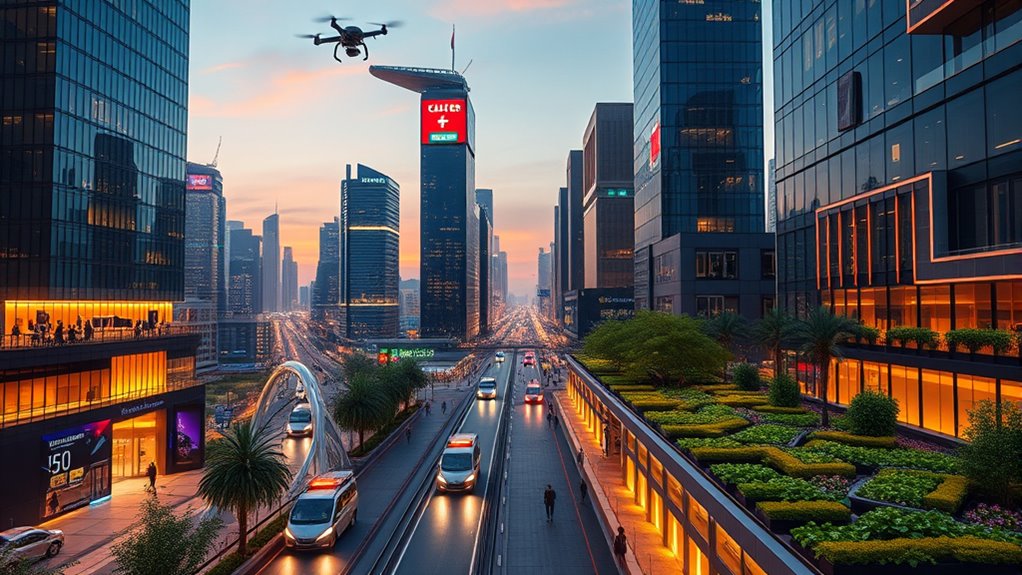
As emerging technologies and innovations develop, they’ll reshape how cities address pressing urban challenges. You’ll see smarter infrastructure, data-driven decision-making, and new solutions that improve daily life. Thinking about what’s next helps you imagine a future where cities become more efficient, sustainable, and responsive. Incorporating local automation and AI-driven systems will further enable cities to adapt quickly to changing needs and enhance residents’ quality of life. Additionally, integrating sauna and cold-plunge systems could promote urban wellness initiatives, contributing to healthier communities. Integrating urban wellness amenities like these can also foster community engagement and improve overall well-being in urban environments.
Emerging Technologies and Innovations
Emerging technologies are poised to revolutionize the way smart cities operate, introducing innovations that enhance efficiency, sustainability, and quality of life. You’ll see urban agriculture integrated into cityscapes, allowing residents to grow food locally and reduce food miles. Citizen engagement platforms will become more interactive, giving you a direct voice in city planning and services. Here’s what to expect:
- Smart sensors optimizing resource use in urban farms, boosting local food production.
- Augmented reality apps encouraging community participation in urban projects.
- Data-driven systems making transportation more efficient and eco-friendly.
- IoT-connected devices fostering transparency and collaboration between citizens and city officials.
These innovations make your city more sustainable, inclusive, and responsive to your needs, shaping a smarter urban future.
Addressing Urban Challenges
Smart cities face ongoing challenges such as traffic congestion, pollution, and social inequality, but innovative solutions are paving the way forward. You can expect urban greenery to play a essential role in improving air quality and providing residents with natural spaces that foster community well-being. Smart technology enables real-time data collection, helping city planners identify problem areas and implement targeted solutions. Citizen engagement is crucial; when residents actively participate in decision-making, they help shape more equitable and sustainable urban environments. Digital platforms encourage feedback and collaboration, ensuring solutions meet community needs. By combining urban greenery with active citizen involvement, smart cities can better address challenges, creating healthier, more inclusive, and resilient urban spaces for everyone.
Frequently Asked Questions
How Do Smart Cities Address Privacy Concerns With Data Collection?
Smart cities address privacy concerns by implementing data encryption to protect your information and ensuring user consent before collecting any data. They make transparency a priority, clearly informing you about what data is gathered and how it’s used. You’re given options to control your data, empowering you to make informed choices. This approach helps balance urban innovation with your privacy rights, creating a safer, more trustworthy environment.
What Are the Costs Involved in Transforming a City Into a Smart City?
Transforming a city into a smart city involves significant costs, including extensive cost analysis and infrastructure investment. You’ll need to upgrade existing systems, deploy sensors, and enhance connectivity, which can be expensive upfront. Additionally, ongoing maintenance and cybersecurity measures add to the expenses. While the initial investment may seem high, these costs aim to improve efficiency, sustainability, and quality of life, ultimately offering long-term benefits that justify the expenditure.
How Inclusive Are Smart City Technologies for Underserved Communities?
Smart city tech often overlooks underserved communities, with studies showing a 40% digital divide in urban areas. You might find that digital access remains limited for many, but community engagement initiatives can bridge this gap. When cities involve local residents in planning, technology becomes more inclusive, ensuring underserved communities benefit equally from urban innovations. Your participation can help shape smarter, more equitable cities for everyone.
Can Urban Tech Solutions Adapt to Rapid Population Growth?
Urban tech solutions can adapt to rapid population growth by enhancing urban infrastructure and boosting citizen engagement. You’ll see smarter planning that scales with your city’s needs, using data-driven insights to optimize transportation, housing, and services. Citizen engagement platforms allow residents to provide feedback and participate in decision-making, ensuring that tech solutions remain flexible and responsive. This combination helps cities grow sustainably while keeping your community connected and resilient.
What Legal and Ethical Issues Arise From Widespread Sensor Deployment?
Widespread sensor deployment could turn your city into an all-seeing, all-knowing surveillance machine, raising huge legal and ethical concerns. You might worry about who owns your data and how it’s used, plus the lack of transparency in algorithms guiding city decisions. The risk is losing control over personal information, creating a slippery slope where privacy vanishes and trust erodes—making every sensor a potential violation of your rights.
Conclusion
As you step into the future of smart cities, remember you’re the heartbeat driving this digital metropolis. Like a skilled conductor, your choices and participation orchestrate a vibrant symphony of innovation and sustainability. Embrace the technology guiding you, but stay vigilant of its shadows. Together, you’re shaping a living, breathing urban organism—where every connection and decision breathes new life into your city’s promise, turning the urban landscape into a canvas of endless possibility.