By 2030, laptops will still be an essential part of your personal computing experience, evolving with advancements like flexible, immersive displays, AI-driven features, and seamless cloud integration. They’ll become smarter, more portable, and adaptable to your lifestyle, incorporating augmented reality and biometric security. Despite new technologies, traditional laptops will remain relevant, complementing other wearable and immersive devices. To discover how these innovations will shape your digital future, keep exploring what’s on the horizon.
Key Takeaways
- Laptops will evolve with flexible, foldable, and immersive displays, enhancing portability and user experience by 2030.
- AI and biometric security will make future devices more personalized, responsive, and seamlessly integrated into daily life.
- Wearable and augmented reality technologies may supplement or replace traditional laptops for many tasks.
- Advancements in energy-efficient components and battery tech will support continued portable computing use.
- Despite innovations, laptops will likely remain relevant alongside emerging immersive and wearable personal computing devices.

KYY Triple Laptop Screen Extender, 15.6" 1080P FHD IPS Dual Portable Extended Monitor, USB C Travel Display for 12-17'' Laptop, 210°Rotation & Kickstand, Plug and Play (Windows Only)
[Windows System Only] KYY X90E triple portable monitor is only designed for Windows systems, applicable for 12-17" laptops….
As an affiliate, we earn on qualifying purchases.
As an affiliate, we earn on qualifying purchases.
The Evolution of Personal Computing Devices

The evolution of personal computing devices has been driven by rapid technological advancements and changing user needs. You’ve seen laptops become more mobile, prioritizing portability so you can work anywhere. This shift emphasizes mobile portability, allowing you to carry your device effortlessly, whether commuting or working remotely. Alongside this, ergonomic design has become a key focus, ensuring comfort during extended use. Modern laptops now feature slimmer profiles, lightweight materials, and adjustable screens to reduce strain. These innovations mean you no longer need bulky equipment; instead, you get sleek, user-friendly devices that adapt to your lifestyle. As technology progresses, these core elements—mobility and comfort—continue to shape how you interact with personal computing devices daily. Additionally, the integration of European cloud innovation is enhancing data security and supporting sustainable energy use in device manufacturing and operation. This ongoing progress suggests that future devices will likely incorporate even more energy-efficient components, further reducing environmental impact. Furthermore, ongoing research into sustainable materials promises to make future devices even more eco-friendly and aligned with environmental sustainability goals.

Haofy USB Fingerprint Reader 5V ABS Biometric Scanner for PC Laptop 360° Auto Calibration with Self Learning AI for Home Office Business
[Wide Compatibility] Works with PCs and laptops via USB port, supporting multiple accounts with 10 fingerprint storage capacity…
As an affiliate, we earn on qualifying purchases.
As an affiliate, we earn on qualifying purchases.
Technological Advancements Shaping the Future
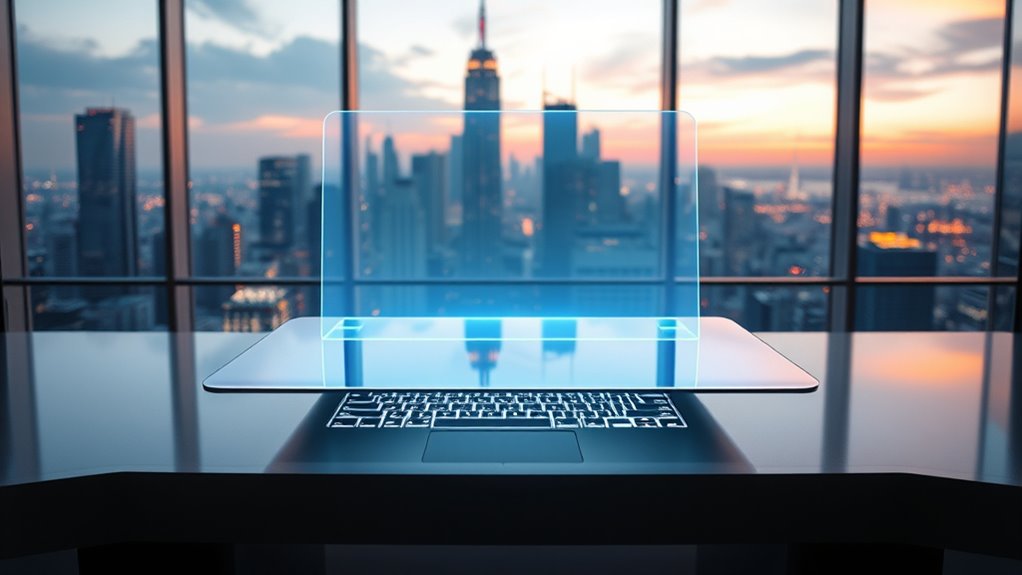
AI integration will make laptops smarter and more responsive to your needs, transforming how you work and play. Meanwhile, wearable tech is gaining ground, offering seamless connectivity and convenience. Together, these advancements are shaping a future where your devices become more intuitive and personalized. As these technologies evolve, modern kitchen technology will also benefit from smarter appliances and connected systems that enhance everyday living.
AI Integration in Devices
As devices become smarter, AI integration is transforming how laptops operate and serve you. Voice commands enable seamless interaction, letting you control functions hands-free and increase productivity. AI-powered assistants learn your habits, anticipate needs, and personalize experiences, making your laptop more intuitive. However, privacy concerns are a real challenge; as AI collects and analyzes data, safeguarding your personal information becomes critical. Developers are working to improve security protocols, but you should stay vigilant about data sharing and permissions. This integration makes laptops more efficient and user-friendly, but it also raises questions about data privacy. In the future, balancing AI benefits with privacy protections will be essential for a trustworthy and innovative personal computing experience.
Rise of Wearable Tech
Advancements in wearable technology are revolutionizing how you stay connected and monitor your health, complementing the smart features of laptops. These devices now offer seamless integration with your digital life, providing real-time updates and health insights. However, privacy concerns remain a major issue, as sensitive data such as health metrics and location information become vulnerable to breaches. Battery life also poses a challenge; many wearables still struggle to last an entire day without charging, limiting their convenience. Despite these hurdles, wearable tech continues to evolve rapidly, becoming more discreet, efficient, and secure. As the technology advances, it’s likely you’ll see more sophisticated devices that prioritize privacy and longer battery life, making wearables an even more integral part of your personal computing ecosystem**. Ongoing innovation aims to address these privacy and security issues, ensuring safer use of these devices in daily life. Additionally, research into energy-efficient components is helping to extend battery life, making these devices more practical for everyday use. As a result, the development of power management solutions** is crucial for the future of wearable tech.

Rokid Max2 black AR Glasses, 215" Micro-OLED Display, 50° FOV, 600 Nits Brightness, compatible with smart phones, Windows laptops, Ipad since 2020
Experience a stunning 215" virtual screen at a 6-meter distance, delivering sharp, high-contrast visuals powered by advanced Micro…
As an affiliate, we earn on qualifying purchases.
As an affiliate, we earn on qualifying purchases.
The Role of Artificial Intelligence and Machine Learning

Artificial intelligence and machine learning are transforming how laptops serve your needs. Adaptive AI assistants can anticipate your commands, making your workflow smoother. With personalized experiences, your device becomes uniquely tailored to you, enhancing efficiency and convenience. Additionally, AI-powered virtual reality in e-learning could redefine how we access educational content through immersive and interactive environments. As these technologies advance, the integration of personalized user experiences will likely become a standard feature in future laptops, further revolutionizing personal computing. Furthermore, adaptive AI can continuously learn from your usage patterns to improve performance and offer smarter solutions over time.
Adaptive AI Assistants
Adaptive AI assistants are transforming how you interact with laptops by providing personalized, real-time support. They listen to your voice commands, allowing you to control your device effortlessly and get instant help without navigating menus. These assistants learn from your habits, making suggestions and automating routine tasks to boost productivity. However, privacy concerns are a significant factor to consider, as these systems process sensitive data to personalize experiences. You might worry about how your information is stored and used, which can impact your trust in these AI tools. Despite this, the benefits of adaptive AI assistants—like seamless interaction and smarter device management—are shaping a future where laptops become more intuitive and responsive to your needs.
Personalized User Experiences
As AI assistants become more adept at understanding your habits and preferences, they pave the way for highly personalized user experiences on laptops. These intelligent systems adapt to your workflow, suggest relevant content, and automate routine tasks. However, ensuring user privacy and data security remains essential. You’ll want AI to improve your experience without risking sensitive information. To balance personalization and privacy, manufacturers embed advanced encryption and transparent data policies. Here’s how this plays out:
| Personalization Focus | Data Handling Approach | Privacy Measures |
|---|---|---|
| Context-aware suggestions | Local processing | End-to-end encryption |
| Adaptive interfaces | Minimal data collection | User-controlled data access |
| Workflow automation | Anonymized data | Transparent privacy policies |
| Content recommendations | Secure cloud storage | Regular security audits |
| Customization settings | User consent protocols | Privacy-focused AI design |
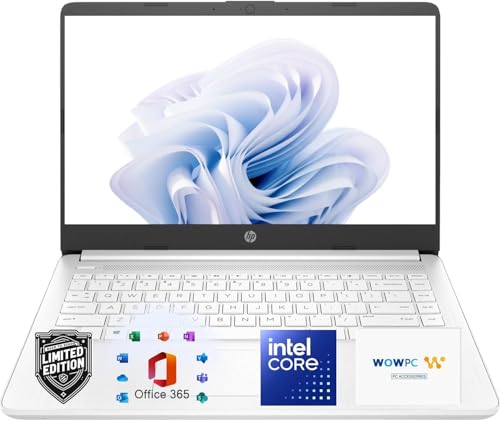
HP Ultrabook Laptop with Office 365 – Copilot AI – Intel Core | Thin & Portable, Anti-Glare Display, 1TB OneDrive + 64GB SSD, Win11, Fast Charge and 12hrs Battery, Fast, Smart, Essential, no Mouse
Efficient Performance for Everyday Tasks: Powered by the Intel Processor and Intel Graphics, this 14-inch laptop delivers smooth…
As an affiliate, we earn on qualifying purchases.
As an affiliate, we earn on qualifying purchases.
Augmented Reality and Immersive Experiences
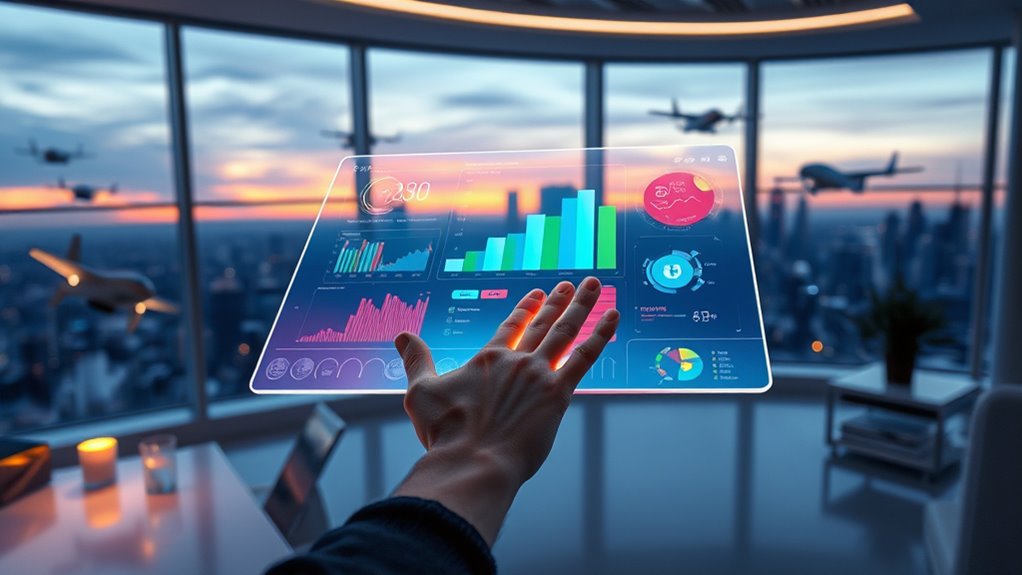
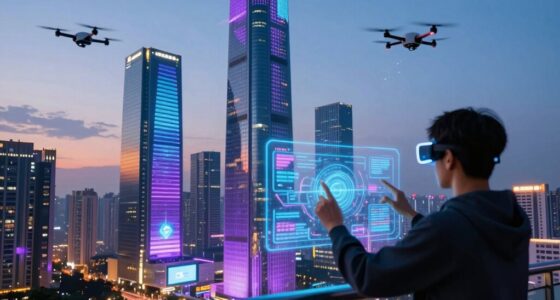
Augmented reality and immersive experiences are transforming how you interact with your laptop, blending digital content seamlessly into your real-world environment. Virtual interfaces allow you to access applications and data without traditional screens, making tasks feel more natural and intuitive. With sensory immersion, your surroundings become part of the digital experience, enhancing focus and engagement. You might wear lightweight AR glasses or contact lenses that project holographic displays, eliminating the need for physical screens. These advancements enable you to manipulate 3D models, collaborate in virtual spaces, or explore data intuitively. As a result, your laptop evolves from a mere device to an immersive portal, where digital and physical worlds merge effortlessly, creating a more dynamic, engaging, and seamless personal computing experience.
Cloud Computing and the Shift Toward Remote Access

Cloud computing is revolutionizing how you access and manage your data by enabling remote storage and processing capabilities. With the shift toward cloud-based solutions, you no longer need to rely solely on physical devices like laptops; instead, your data is stored securely in distant servers, accessible from anywhere. This transformation enhances flexibility and collaboration but also raises concerns about data privacy and cloud security. You must trust that service providers implement robust security measures to protect your information from cyber threats. As cloud technology advances, encryption and authentication protocols become more sophisticated, ensuring your data remains private. Overall, cloud computing is transforming personal computing by making remote access seamless, efficient, and increasingly secure.
Potential Challenges and Limitations

While cloud computing offers many benefits for remote access and data management, it also introduces several challenges that users must consider. First, battery constraints remain a concern, as portable devices need longer-lasting power sources to support extended use without frequent charging. Second, ergonomic concerns arise with prolonged use, especially as devices become more compact and portable, potentially causing discomfort or strain. Third, reliance on cloud services can lead to issues with data security and privacy, which may require additional safeguards. Additionally, technological limitations such as battery efficiency could hinder the widespread adoption of portable devices in the future. Improving battery technology is crucial for enabling longer device usage and supporting the demands of future computing needs. Moreover, portable device durability remains a key factor in ensuring longevity and reliability in various environments. Advances in nanotechnology could play a significant role in developing more resilient and efficient components for portable electronics. The development of wearable technology could also influence how we interact with portable devices, making them more integrated into daily life. These limitations mean you might face hurdles in achieving seamless, comfortable, and secure computing experiences in the future. Addressing battery efficiency, ergonomic design, and data protection will be essential for overcoming these potential challenges.
Predictions From Industry Experts and Thought Leaders

Industry experts and thought leaders predict that the future of laptops will be marked by significant technological advancements, making devices more powerful yet more user-friendly. Quantum computing could revolutionize processing speeds, enabling real-time complex calculations. Biometric security will likely become standard, enhancing data protection without sacrificing convenience. These innovations will transform how you interact with your device, creating seamless experiences. Below is a glimpse of their predictions:
| Technology | Impact | Timeline |
|---|---|---|
| Quantum Computing | Faster processing, complex problem-solving | 2025-2030 |
| Biometric Security | Improved, frictionless user authentication | Immediate |
| AI Integration | Smarter, personalized interfaces | 2024-2025 |
| Flexible Displays | More portable, adaptable devices | 2023-2024 |
| Cloud Connectivity | Enhanced collaboration and storage | Ongoing |
Frequently Asked Questions
Will Laptops Become Completely Obsolete by 2030?
Laptops likely won’t be completely obsolete by 2030, but their role will change. You’ll probably rely more on wearable devices and cloud computing for everyday tasks, leaving traditional laptops as backup or for specialized work. As technology advances, these devices will become more integrated and portable, making laptops less essential. Still, they’ll probably stay around for those who need powerful, dedicated computing capabilities.
How Will Privacy Concerns Evolve With New Computing Technologies?
Imagine it’s 2030, and privacy concerns are evolving faster than smartphones in the 2000s. You’ll need stronger biometric security and advanced data encryption to protect your information. As technology advances, you’ll see more personalized safeguards, making hacking harder. However, you’ll also need to stay vigilant, understanding that new vulnerabilities may emerge. Ultimately, your proactive approach to privacy will help you guard your personal data in this rapidly changing digital landscape.
What New Skills Will Users Need for Future Personal Computing Devices?
You’ll need to develop skills like gesture control and AI literacy to stay ahead with future personal computing devices. Mastering gesture control allows intuitive interaction, while understanding AI helps you navigate smart systems effectively. As technology advances, being comfortable with these skills guarantees you can operate new interfaces seamlessly, protect your privacy, and maximize device capabilities. Embracing these skills now prepares you for the evolving digital landscape of 2030.
Could Future Devices Replace Traditional Input Methods Like Keyboards and Mice?
Yes, future devices could replace traditional input methods like keyboards and mice, but not entirely. Imagine seamlessly controlling your device through voice commands or gesture controls—no buttons needed. As technology advances, these intuitive inputs will become more accurate and natural, making physical keyboards and mice less central. You’ll find yourself interacting more effortlessly, creating a smoother, more immersive experience that transforms how you engage with personal computing.
How Sustainable Are the Environmental Impacts of Future Personal Computing Devices?
Future personal computing devices are becoming more sustainable by using eco-friendly materials and leveraging renewable energy sources. You can expect manufacturers to focus on reducing e-waste and energy consumption, making devices that are easier to recycle and more energy-efficient. This shift helps lower environmental impacts, so you’ll find that your gadgets in 2030 are not only smarter but also kinder to the planet, promoting a more sustainable digital lifestyle.
Conclusion
By 2030, personal computing will have evolved into a vibrant tapestry of AI, AR, and cloud magic, transforming your device into a seamless extension of yourself. Laptops may fade into the background, replaced by immersive, intelligent experiences that feel almost like second nature. As technology continues to weave itself into your daily life, you’ll find yourself steering through a digital universe where the line between reality and innovation blurs, creating a future as limitless as your imagination.