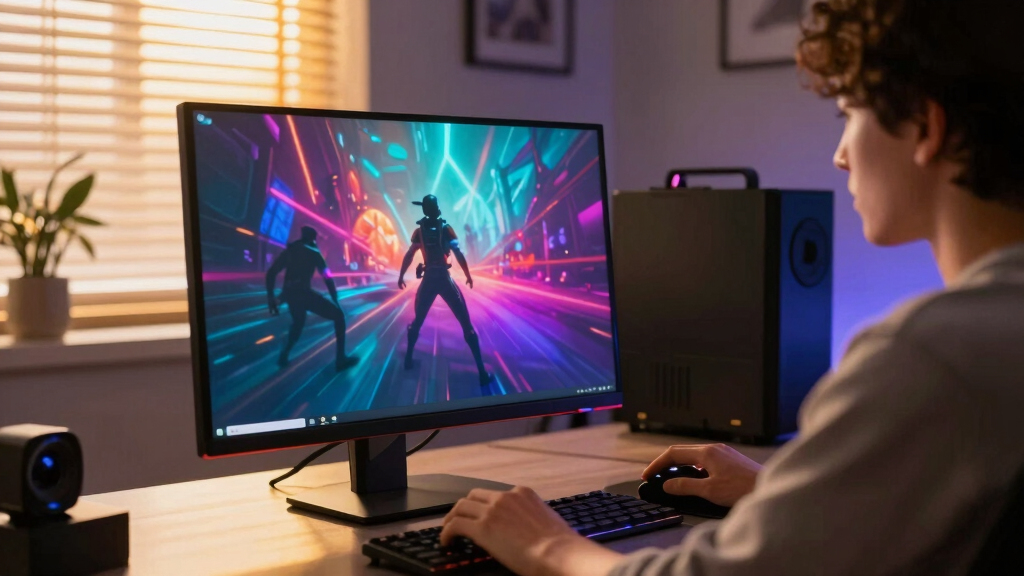

For gamers seeking the ultimate visual experience, 4K OLED gaming monitors offer stunning contrast, vibrant colors, and fast response times. The Samsung Odyssey OLED G6 stands out for its remarkable QD-OLED display and 240Hz refresh rate, perfect for competitive play. Meanwhile, the LG UltraGear 32GX850A-B provides excellent flexibility with its adjustable stand and HDR400 support, making it ideal for immersive gaming. The main challenge lies in balancing image quality, refresh rate, and price — higher-end models deliver exceptional visuals but come with a premium. Continue reading for a detailed breakdown of these options and more, to find the best fit for your gaming setup.

Get the latest gadgets delivered free with Prime
- Fast, free delivery on millions of items
- Prime Video, Amazon Music and more included
- Member-only deals all year
Complete the kit



Key Takeaways
- QD-OLED technology generally offers brighter, more vivid colors compared to traditional OLEDs, making it a key factor in choosing premium displays.
- Refresh rates of 240Hz provide a smoother experience, especially in fast-paced games, but often come at a higher cost and may require powerful GPUs.
- HDR support varies significantly; higher HDR standards like HDR400 or HDR10 are preferred for enhanced visual depth, though they also increase price.
- Adjustability and ergonomic features are common in higher-tier models, improving comfort during long gaming sessions.
- Price differences often reflect build quality, feature set, and brand reputation; buyers should weigh these factors against their gaming priorities.


| 4K OLED gaming monitor | Resolution | Refresh Rate | Response Time | Size |
|---|---|---|---|---|
| Samsung 27” Odyssey OLED G5 | QHD | 180Hz | 0.03ms (GtG) | 27 inches |
| Samsung 27" Odyssey OLED G6 Ga | QHD (1440P) | 240Hz | 0.03ms | — |
| LG 32GX850A-B 32" UltraGear 4K | 3840 x 2160 (4K UHD) | 165Hz / 330Hz (dual mode) | 0.03ms | 32 inches |
| ASUS ROG Swift 32” 4K OLED Gam | 4K UHD | 240Hz | 0.03ms | 32 inches |
| Alienware 34 240Hz QD-OLED Cur | 3440 x 1440 | 240Hz | 0.03ms | 34.2 inches |
| Samsung 32" Odyssey OLED G8 Se | 4K UHD | 240Hz | 0.03ms | 32 inches |
| MSI MPG 321URX QD-OLED 32-Inch | 3840 x 2160 (4K UHD) | 240Hz | 0.03ms | 32 inches |
| ASUS ROG Strix 27” 4K QD-OLED | 3840 x 2160 (4K UHD) | 240 Hz | 0.03 ms | 26.5 Inches |
| ASUS ROG Swift 32” 4K OLED Gam | 3840 x 2160 (4K UHD) | 240Hz | 0.03ms | 32 Inches |
| ASUS ROG Strix 32” 4K OLED Gam | 3840 x 2160 | 240 Hz | 0.03ms | — |
More Details on Our Top Picks
Samsung 27” Odyssey OLED G5 (G50SF) QHD Gaming Monitor, 180Hz, 0.03ms, G-Sync Compatible, FreeSync
The Samsung Odyssey OLED G5 stands out as the most balanced choice due to its vibrant color accuracy validated by Pantone, combined with a high 180Hz refresh rate and ultra-fast 0.03ms response time. Unlike the G6, it offers excellent gaming performance without the premium price tag, though it still costs more than non-OLED options. Its G-Sync and FreeSync support ensure smooth gameplay, while the OLED technology delivers deep blacks and vivid visuals. However, the potential for burn-in and the limited ergonomic adjustments mean it’s best suited for users who prioritize image quality over long-term durability concerns. This monitor makes the most sense for gamers seeking a high-quality display that balances performance, value, and color fidelity.
Pros:- Vivid, accurate colors with Pantone validation
- High 180Hz refresh rate and 0.03ms response time for smooth gameplay
- G-Sync and FreeSync compatibility reduce screen tearing
- Good balance of price and performance for OLED tech
Cons:- Potential risk of burn-in with prolonged static images
- Limited ergonomic adjustments may affect comfort
Best for: Gamers who want a versatile, high-quality OLED experience without the highest price tag
Not ideal for: Users who require extensive ergonomic adjustments or are concerned about OLED burn-in over long sessions
- Size:27 inches
- Resolution:QHD
- Refresh Rate:180Hz
- Response Time:0.03ms (GtG)
- G-Sync Compatible:Yes
- HDR:HDR10
Our verdict“This monitor provides a compelling mix of color accuracy and gaming performance for gamers on a budget who prioritize visual quality.”
Samsung 27″ Odyssey OLED G6 Gaming Monitor – QD-OLED, QHD, 240Hz, 0.03ms, HDR10, Height-adjustable
The Samsung Odyssey OLED G6 is designed for gamers who demand top-tier performance and ergonomic flexibility. Its 240Hz refresh rate and 0.03ms response time surpass the G5, ensuring ultra-smooth motion and minimal input lag, ideal for competitive gaming. The QD-OLED panel delivers even richer colors and better contrast, supported by HDR10 and Pantone validation for color precision. The adjustable stand enhances comfort during long gaming sessions, making it a clear upgrade over the G5 for those who value ergonomic customization. However, the high cost and potential burn-in risks still apply, requiring careful usage. This monitor suits users who want a premium, highly customizable OLED display for intense gaming and multimedia use.
Pros:- Exceptional 240Hz refresh rate for ultra-smooth gameplay
- Vivid, lifelike colors with QD-OLED technology
- Height-adjustable, pivot, tilt, and swivel for personalized comfort
- Advanced OLED Safeguard technology to mitigate burn-in
Cons:- Premium price point limits accessibility
- OLED burn-in risk remains if static images are displayed excessively
Best for: Pro gamers or enthusiasts seeking top-tier performance with ergonomic flexibility
Not ideal for: Casual users or those with a tight budget who may find the price prohibitive
- Display Size:27 inches
- Resolution:QHD (1440P)
- Refresh Rate:240Hz
- Response Time:0.03ms
- HDR:HDR10
- Stand Features:Height-adjustable, pivots, tilts, swivels
Our verdict“This monitor is best suited for users wanting a premium, highly adjustable OLED display capable of handling fast-paced gaming with vivid visuals.”
LG 32GX850A-B 32″ UltraGear 4K UHD OLED Gaming Monitor, G-SYNC, FreeSync Premium Pro, 165Hz/330Hz, 0.03ms, HDR400, Adjustable Stand, Black
The LG UltraGear 32GX850A-B offers a large 32-inch 4K OLED display with dual refresh modes—165Hz and 330Hz—making it highly adaptable for both casual and competitive gaming. Its 0.03ms response time ensures minimal motion blur, and the HDR400 certification enhances contrast and colors for immersive visuals. The extensive ergonomic adjustments, including tilt, height, swivel, and pivot, set it apart from smaller or less flexible monitors like the G5. While the high-end OLED panel provides deep blacks and vibrant colors, the high cost and potential burn-in issues remain considerations. This monitor is ideal for gamers who want stunning 4K resolution with flexible performance options in a larger format.
Pros:- Vivid 4K OLED visuals with excellent contrast
- Dual-mode refresh rates for flexibility in gaming
- Full ergonomic adjustability for comfort
- Supports G-SYNC and FreeSync Premium Pro
Cons:- High price for a large OLED display
- Potential for burn-in with static images over time
Best for: Gamers seeking a large, detailed 4K OLED experience with flexible refresh options
Not ideal for: Budget-conscious users or those who prioritize long-term durability over maximum resolution
- Size:32 inches
- Resolution:3840 x 2160 (4K UHD)
- Refresh Rate:165Hz / 330Hz (dual mode)
- Response Time:0.03ms
- HDR:HDR400
- Stand Adjustments:Tilt, Height, Swivel, Pivot
Our verdict“This monitor suits users wanting a large, versatile 4K OLED setup with premium color and adjustability at a premium price.”
ASUS ROG Swift 32” 4K OLED Gaming Monitor (PG32UCDMR)
The ASUS ROG Swift PG32UCDMR elevates gaming and creative tasks with a 32-inch 4K QD-OLED panel featuring 240Hz refresh rate and 0.03ms response time. Its outstanding color coverage (99% DCI-P3) and HDR performance with DisplayHDR 400 True Black make it an excellent choice for users demanding color accuracy and deep blacks. Multiple high-end connectivity options, including DisplayPort 2.1 and USB-C with 90W charging, cater to both gaming and professional workflows. Its advanced OLED care features help mitigate burn-in, making it more durable for prolonged use. Compared with the LG 32GX850A-B, this monitor offers better connectivity and slightly superior HDR, but at a higher cost. It’s best suited for gamers who also pursue content creation or professional editing.
Pros:- Exceptional 4K OLED picture quality with deep blacks
- High 240Hz refresh rate and rapid 0.03ms response time
- Excellent color accuracy with 99% DCI-P3 coverage
- Multiple modern connectivity options including USB-C with 90W power
Cons:- Premium price point may be prohibitive for some
- Requires careful management to prevent burn-in during prolonged static displays
Best for: Creative professionals and high-end gamers seeking top-tier 4K OLED visuals with versatile connectivity
Not ideal for: Budget-conscious users or those with limited desk space due to its premium size and price
- Size:32 inches
- Resolution:4K UHD
- Refresh Rate:240Hz
- Response Time:0.03ms
- HDR:DisplayHDR 400 True Black
- Connectivity:DisplayPort 2.1, HDMI 2.1, USB-C 90W
Our verdict“This monitor provides professional-grade visuals and connectivity for demanding users willing to invest in the best OLED experience.”
Alienware 34 240Hz QD-OLED Curved Gaming Monitor – AW3425DW
The Alienware AW3425DW offers a 34.2-inch ultrawide curved display with 3440 x 1440 resolution, designed to maximize immersion. Its DCI-P3 99.3% color coverage and 1000-nit peak brightness produce stunning, vibrant visuals, complemented by a 240Hz refresh rate and 0.03ms response time for fast-paced gaming. The 1800R curvature enhances the sense of depth, making it ideal for racing or flight sims. Adaptive sync technologies ensure tear-free gameplay. Compared to smaller, flat OLEDs like the LG 32GX850A-B, this monitor emphasizes immersive experience over resolution, but its large size and premium price may not suit all setups. It’s a compelling choice for players who want a wide, curved display with excellent color and motion clarity.
Pros:- Vibrant color with DCI-P3 99.3% coverage and deep contrast
- Large, curved ultrawide for immersive gaming
- High 240Hz refresh rate with 0.03ms response time
- HDR support with 1000-nit peak brightness
Cons:- Premium price and large size limit compatibility with some setups
- Potential burn-in risk with static UI elements in long sessions
Best for: Gamers seeking an ultrawide, immersive curved OLED experience for racing or simulation games
Not ideal for: Users with limited space or those preferring a flat, 4K UHD display for productivity
- Size:34.2 inches
- Resolution:3440 x 1440
- Refresh Rate:240Hz
- Response Time:0.03ms
- Curve Radius:1800R
- HDR:DisplayHDR TrueBlack 400
Our verdict“This monitor is ideal for gamers who prioritize immersion and ultrawide visuals over traditional 4K flat screens, accepting the premium cost.”
Samsung 32″ Odyssey OLED G8 Series 4K UHD Smart Gaming Monitor with QD-OLED, 240Hz, 0.03ms, G-Sync Compatible
The Samsung Odyssey OLED G8 stands out for its vibrant 4K QD-OLED display that combines deep blacks with bright, punchy colors, surpassing many competitors like the ASUS ROG Strix XG27UCDMG in color accuracy and contrast. Its 240Hz refresh rate paired with a 0.03ms response time ensures exceptionally smooth gameplay, making it ideal for competitive gamers who demand the best. G-Sync compatibility further eliminates tearing, while glare-free tech enhances visibility in bright environments. However, this monitor’s premium price reflects its high-end tech, which may be overkill for casual players, and its complex cooling system could mean more maintenance over time.
Pros:- Vivid 4K QD-OLED display with deep blacks and bright colors
- Fast 240Hz refresh rate with 0.03ms response time
- G-Sync compatibility for tear-free gameplay
- Glare-free technology reduces ambient light distractions
Cons:- High cost may be prohibitive for some users
- Complex cooling system could increase maintenance needs
Best for: High-end gamers who prioritize top-tier visuals and performance and are willing to invest in the latest technology.
Not ideal for: Budget-conscious gamers or casual users who find the high price prohibitive and don’t need ultra-precise color or peak performance.
- Size:32 inches
- Resolution:4K UHD
- Panel Technology:QD-OLED
- Refresh Rate:240Hz
- Response Time:0.03ms
- G-Sync Compatibility:Yes
- Brightness:250 nits
- Connections:HDMI 2.1, DisplayPort
- Warranty:3 years
Our verdict“This monitor is best suited for gamers seeking top-tier performance and stunning visuals, and who are prepared to pay a premium.”
MSI MPG 321URX QD-OLED 32-Inch 4K UHD Gaming Monitor
The MSI MPG 321URX offers a compelling blend of vivid colors and high performance, with a 4K UHD resolution and a 240Hz refresh rate that rivals the Samsung G8 but at a slightly lower brightness. Its 1.07 billion shades and DCI-P3 99% coverage deliver excellent color fidelity for both gaming and content creation, a step above the Samsung G8’s brightness but slightly less contrast depth. The inclusion of USB Type-C and HDMI 2.1 provides flexible connectivity, making it suitable for users with multiple devices. Yet, its premium price tag may be a hurdle, and as with most OLEDs, burn-in risk remains a concern for prolonged static images.
Pros:- High color accuracy with 1.07 billion shades and DCI-P3 coverage
- Fast 240Hz refresh rate and 0.03ms response time
- Versatile connectivity including USB-C and HDMI 2.1
- Vivid, detailed image quality suitable for creative work
Cons:- Premium price point may be steep for some users
- OLED burn-in susceptibility over long static use
Best for: Content creators and gamers who need accurate colors and multiple device connections in a 4K OLED display.
Not ideal for: Casual gamers or those on a tight budget, as the high price and burn-in risk may outweigh the benefits.
- Size:32 inches
- Resolution:3840 x 2160 (4K UHD)
- Panel Type:QD-OLED
- Refresh Rate:240Hz
- Response Time:0.03ms
- Color Gamut:DCI-P3 99%
- HDR:VESA DisplayHDR True Black 400
- Ports:USB Type-C, HDMI 2.1, DisplayPort 1.4a
Our verdict“This monitor excels for users needing accurate colors and flexible connections, provided they accept the premium cost and potential burn-in risk.”
ASUS ROG Strix 27” 4K QD-OLED Gaming Monitor (XG27UCDMG) – 240Hz, 0.03ms, Anti-Flicker 2.0, Custom Heatsink, Care Pro, Neo Proximity Sensor, 99% DCI-P3, True 10-bit Color, 3-Year Warranty
The ASUS ROG Strix XG27UCDMG combines a 27-inch 4K QD-OLED panel with a 240Hz refresh rate and 0.03ms response, making it highly responsive for fast-paced gaming. Its true 10-bit color and 99% DCI-P3 coverage rival higher-end models like the Samsung G8, while the inclusion of a Neo Proximity Sensor aims to reduce burn-in risks during static content. The monitor’s advanced cooling system and anti-flicker tech enhance durability, ideal for prolonged use. However, its high brightness levels might require careful calibration, and the limited port selection could necessitate additional accessories for some users.
Pros:- Exceptional 4K resolution with vibrant, accurate colors
- Fast 240Hz refresh rate and 0.03ms response time
- Neo Proximity Sensor reduces burn-in risk
- Advanced cooling and anti-flicker technology
Cons:- High brightness may need calibration for some environments
- Limited port options may require add-ons
Best for: Dedicated gamers and creative professionals seeking longevity and advanced features in a compact 27-inch package.
Not ideal for: Budget-conscious buyers or those wanting more extensive port options without extra accessories.
- Size:26.5 Inches
- Resolution:3840 x 2160 (4K UHD)
- Panel Technology:QD-OLED
- Refresh Rate:240 Hz
- Response Time:0.03 ms
- Color Gamut:99% DCI-P3
- Brightness:3426 lumens
- Ports:2 HDMI, 2 USB
Our verdict“This monitor suits gamers and creators wanting longevity, advanced features, and a compact size, with a willingness to invest more for durability.”
ASUS ROG Swift 32” 4K OLED Gaming Monitor (PG32UCDM) – UHD (3840 x 2160), QD-OLED, 240Hz, G-SYNC Compatible
The ASUS ROG Swift PG32UCDM offers a 32-inch 4K QD-OLED panel that delivers striking visuals with deep blacks and vibrant colors, comparable to the Samsung Odyssey G8 but with a slightly larger size. Its 240Hz refresh rate and 0.03ms response time ensure fluid gameplay, while its effective heat management extends panel longevity. With a high contrast ratio of 1,500,000:1, it excels in dark scenes and HDR content, making it ideal for players who crave immersive visuals. The main tradeoff is its premium price, which might be limiting for some, and its susceptibility to burn-in over prolonged static images.
Pros:- Large 32-inch display with stunning contrast and deep blacks
- Vivid 4K resolution and 240Hz refresh rate
- Effective heat management for longevity
- G-SYNC compatible for tear-free gaming
Cons:- Premium price point
- OLED burn-in risk over extended static images
Best for: High-end gamers and enthusiasts who want a large, immersive display with excellent contrast and durability features.
Not ideal for: Casual gamers or those with limited budgets, given its high price and burn-in considerations.
- Size:32 Inches
- Resolution:3840 x 2160 (4K UHD)
- Display Technology:QD-OLED
- Refresh Rate:240Hz
- Response Time:0.03ms
- Contrast Ratio:1,500,000:1
- Brightness:1000 cd/m²
- VESA Compatibility:Yes
Our verdict“This monitor is ideal for gamers wanting a large, immersive OLED experience with premium features, provided they accept the cost and care for burn-in risks.”
ASUS ROG Strix 32” 4K OLED Gaming Monitor (XG32UCWMG)
The ASUS ROG Strix XG32UCWMG stands out for its combination of exceptional visuals and versatile features, making it a top choice for serious gamers who demand both clarity and speed. Its 32-inch OLED panel offers stunning contrast and sharpness, comparable to the LG 32GX850A-B but with the added benefit of dual modes for 4K@240Hz and FHD@480Hz—ideal for competitive play. The inclusion of a Neo Proximity Sensor enhances longevity by preventing burn-in, a key concern with OLEDs at high brightness levels. While the high brightness provides vivid HDR performance, it might cause glare in bright rooms, which could be a drawback for some users. The limited stand adjustability might also be a concern for those seeking ergonomic flexibility. Priced at a premium, this monitor is best suited for gamers who prioritize top-tier image quality and advanced features over affordability.
Pros:- Exceptional contrast and color realism with OLED technology
- Dual-mode for 4K@240Hz and FHD@480Hz enhances competitive gaming
- Includes advanced burn-in prevention with Neo Proximity Sensor
- Versatile connectivity options including HDMI 2.1 and USB-C
Cons:- High brightness can cause glare in well-lit environments
- Limited stand adjustability reduces ergonomic flexibility
- Premium price may be a barrier for some users
Best for: High-end gamers seeking a versatile, feature-rich OLED monitor with exceptional visuals and high refresh rates.
Not ideal for: Casual gamers or those with bright ambient lighting who need a more budget-friendly or glare-resistant option.
- Display Size:32 Inches
- Resolution:3840 x 2160
- Display Technology:OLED
- Refresh Rate:240 Hz
- Contrast Ratio:1500000:1
- HDR:VESA DisplayHDR 400 True Black
- Connectivity:DisplayPort 1.4, HDMI 2.1, USB-C
- Response Time:0.03ms
- Brightness:4453.8 lm
Our verdict“This monitor is ideal for high-performance gamers who want the best combination of visuals and speed, accepting some glare and higher cost.”

How We Picked
To determine the best 4K OLED gaming monitors, I evaluated each model based on key criteria such as display technology, refresh rate, response time, color accuracy, HDR support, and ergonomic features. I prioritized models that offer a genuine 4K resolution paired with OLED or QD-OLED panels, which provide superior contrast and color. The refresh rate and response time are critical for smooth gameplay, especially in competitive titles, so these factors heavily influenced rankings. I also considered build quality, connectivity options, and value for money, aiming to recommend options suitable for a range of budgets and uses. The final list reflects a balance of performance, features, and price, with clear distinctions based on target user needs and price tiers.| 4K OLED gaming monitor | HDR |
|---|---|
| Samsung 27” Odyssey OLED G5 | HDR10 |
| Samsung 27" Odyssey OLED G6 Ga | HDR10 |
| LG 32GX850A-B 32" UltraGear 4K | HDR400 |
| ASUS ROG Swift 32” 4K OLED Gam | DisplayHDR 400 True Black |
| Alienware 34 240Hz QD-OLED Cur | DisplayHDR TrueBlack 400 |
| Samsung 32" Odyssey OLED G8 Se | — |
| MSI MPG 321URX QD-OLED 32-Inch | VESA DisplayHDR True Black 400 |
| ASUS ROG Strix 27” 4K QD-OLED | — |
| ASUS ROG Swift 32” 4K OLED Gam | — |
| ASUS ROG Strix 32” 4K OLED Gam | VESA DisplayHDR 400 True Black |
Factors to Consider When Choosing 4K OLED Gaming Monitors
Choosing the right 4K OLED gaming monitor involves more than just pixel resolution. Buyers should consider the display’s refresh rate and response time to ensure fluid gameplay, especially for fast-paced titles. HDR support enhances visual depth but varies widely; understanding HDR standards helps in selecting a monitor that truly elevates game visuals. Ergonomic features like height adjustment and swivel are important for long gaming sessions, so these should be prioritized if comfort is a concern. Connectivity options, including HDMI and DisplayPort, also matter for compatibility with various systems. Lastly, pricing reflects differences in panel quality, features, and brand reputation—balancing these factors is key to making a satisfying purchase.Display Technology and Resolution
While all models here are 4K OLED or QD-OLED, differences in panel quality can impact contrast and color vibrancy. QD-OLED displays tend to be brighter and more color-rich, making them a preferred choice for immersive gaming. However, they often come at a higher price. Understanding the tradeoff between resolution and panel type helps buyers select a monitor that matches their visual expectations and budget, especially if they also plan to use the monitor for content creation or media consumption.
Refresh Rate and Response Time
High refresh rates of 240Hz are common among these monitors, offering ultra-smooth motion—especially beneficial in competitive gaming. Response times under 0.03ms reduce motion blur, providing clearer images during rapid scene changes. However, these features usually increase the cost and demand more powerful graphics hardware. Buyers should match their gaming style and system capabilities with these specs to avoid overspending on features they won’t fully utilize.
HDR Support and Color Accuracy
HDR standards like HDR10 and HDR400 are key for richer, more dynamic visuals. Monitors with higher HDR support generally deliver better contrast and color depth, but they also tend to be pricier. Color accuracy, especially coverage of DCI-P3 or Adobe RGB, matters if you also do content creation or want the most lifelike visuals. Understanding the HDR and color specs helps prevent disappointment from exaggerated marketing claims and ensures the monitor meets your visual expectations.
Ergonomics and Build Quality
Adjustable stands, tilt, swivel, and VESA compatibility improve comfort during long gaming sessions and enable optimal positioning. Strong build quality ensures durability and a better overall experience. Cheaper models often compromise on ergonomics, which can cause discomfort over extended use. Prioritizing these features is especially beneficial if you plan to use the monitor as a primary display for many hours.
Connectivity and Compatibility
Multiple HDMI and DisplayPort options ensure compatibility with various gaming consoles, PCs, and accessories. Some models also support USB-C or additional features like built-in speakers, which can enhance convenience. Ensuring your hardware can handle the monitor’s input requirements prevents frustration and guarantees optimal performance. Buyers should verify their system’s graphics capabilities, especially if aiming for high refresh rates at 4K resolution.
Frequently Asked Questions
Is a 4K OLED monitor worth the extra cost over standard LED monitors?
For users who prioritize visual fidelity, contrast, and color richness, a 4K OLED monitor offers significant advantages over traditional LED screens. The deeper blacks and vibrant colors create a more immersive gaming experience, especially in story-driven or visually complex titles. However, these benefits come with a higher price tag and sometimes higher power consumption. If budget constraints are tight or if color accuracy is less critical, a high-quality LED monitor can still deliver excellent performance at a lower cost.
Can I use a 4K OLED monitor for non-gaming tasks like content creation?
Absolutely. The excellent color accuracy and contrast of OLED and QD-OLED panels make these monitors suitable for content creation, photo editing, and video work. Models with high DCI-P3 coverage and HDR support will deliver more accurate and vibrant colors. However, buyers should check for features like color calibration options and consistent panel quality, as not all gaming-oriented monitors are optimized for professional workflows. Investing in a monitor with high color fidelity can serve dual purposes for gaming and creative work.
Will I need a powerful GPU to take full advantage of a 240Hz 4K OLED monitor?
Yes, achieving high frame rates at 4K resolution requires a high-end graphics card, especially if you want to consistently run games at 240Hz. Without a powerful GPU, you may be limited to lower settings or reduced frame rates, which diminishes the benefit of the high refresh rate. If your system can’t handle these specs, consider a slightly lower refresh rate or resolution to match your hardware capabilities while still enjoying OLED benefits.
Are QD-OLED monitors more durable than traditional OLEDs?
QD-OLED technology is designed to improve brightness and color vibrancy, but durability can vary based on manufacturing quality. Generally, QD-OLEDs are comparable in lifespan to conventional OLEDs, with proper care. However, like all OLEDs, they are susceptible to burn-in if static images are displayed for prolonged periods. Choosing models with features like pixel shifting and screen savers can mitigate these risks and prolong the monitor’s lifespan.
Is it worth paying extra for a monitor with adjustable height and swivel features?
Adjustable ergonomics significantly enhance comfort, especially during long gaming or work sessions. They allow you to position the monitor for optimal viewing angles, reducing strain on your neck and eyes. While models with these features tend to be more expensive, the benefits in comfort and posture often justify the additional investment. For anyone spending many hours at their desk, these features can make a meaningful difference in overall experience.
Conclusion
For gamers seeking the best performance regardless of budget, the Samsung Odyssey OLED G6 offers an exceptional combination of brightness, contrast, and refresh rate, making it the top choice for enthusiasts. If you want a balance of premium features and affordability, the LG UltraGear 32GX850A-B provides excellent value with its adjustable stand and HDR capabilities. The ASUS ROG Swift 32” PG32UCDM is ideal for those who prioritize a premium build, advanced gaming features, and compatibility with high-end systems. Beginners or casual gamers might find more affordable models sufficient, while professionals should look for monitors with superior color accuracy and calibration options. Carefully matching your gaming style, system specs, and budget will help you pick the right monitor for your needs.
As an affiliate, we earn on qualifying purchases.Halloween Picks

8.5 Foot Halloween Inflatable Haunted House Castle with Skeleton, Ghost & Skulls

10.5 ft Lighted Pumpkin and Ghost Halloween Inflatable Archway

Haunted Hill Farm 4.6‑Ft Head‑Spinning Beatrix Halloween Animatronic Prop