

For most buyers seeking the best M5 Pro MacBook Pro deals, I’d start with the 16-inch M5 Pro with 48GB memory and a 1TB SSD: it balances a larger workspace with room for demanding projects. The 14-inch M5 Pro with 24GB memory and 1TB storage is a more portable choice, while the 16-inch M5 Max configurations suit graphics-heavy work and unusually large workloads. The main tradeoffs are portability versus screen space, and whether the extra GPU and memory capacity of an M5 Max will make a real difference to your work. Several listings share near-identical specifications, so the chip, screen size, memory, and storage matter more than color or duplicated naming. Read on for my comparison, buying advice, and recommendations by buyer type.

Get the latest gadgets delivered free with Prime
- Fast, free delivery on millions of items
- Prime Video, Amazon Music and more included
- Member-only deals all year
Complete the kit



Key Takeaways
- The 16-inch M5 Pro with 48GB memory stands out as the balanced pick in this lineup: it pairs more memory than the 24GB Pro models with a 1TB SSD, without moving to an M5 Max.
- The 14-inch M5 Pro configurations share a 15-core CPU, 16-core GPU, 24GB memory, and 1TB SSD. Their main appeal is a smaller, more portable chassis, not a difference in listed core or storage specifications.
- M5 Max models are aimed at a different workload tier. The 40-core GPU and 128GB memory configurations are the clearest fit for graphics-intensive work and large projects, but are excessive for many everyday and general creative tasks.
- Storage varies sharply across the M5 Max options. The listed configurations include 2TB and 4TB SSDs, so buyers handling large local media libraries should compare capacity rather than assuming all high-end models are alike.
- The 16-inch M5 Pro options split between 24GB and 48GB memory. Buyers who keep many demanding apps or large creative files open may benefit from 48GB; lighter workloads may not need that additional capacity.





| M5 Pro MacBook Pro deal | GPU | Storage | Display | Memory |
|---|---|---|---|---|
| Apple MacBook Pro | 20-core GPU | 1TB SSD | 16.2-inch Liquid Retina XDR; 1600 nits peak brightness | 48GB unified memory |
| Apple 14.2-inch MacBook Pro wi | 16-core GPU | 1TB SSD | 14.2-inch Liquid Retina XDR | 24GB unified memory |
| Apple 14.2-inch MacBook Pro wi | 16-core GPU | 1TB SSD | 14.2-inch Liquid Retina XDR | 24GB unified memory |
| Apple MacBook Pro 16.2-inch wi | 40-core GPU | 4TB SSD | 16.2-inch Liquid Retina XDR | 128GB unified memory |
| Apple MacBook Pro 16.2-inch wi | 32-core GPU | 2TB SSD | 16.2-inch Liquid Retina XDR | 36GB unified memory |
| Apple MacBook Pro 16.2-inch wi | 40-core | 2TB SSD | 16.2-inch Liquid Retina XDR | 128GB |
| Apple MacBook Pro 14.2-inch wi | 40-core | 2TB SSD | 14.2-inch Liquid Retina XDR | 128GB |
| Apple MacBook Pro 16.2-inch wi | 20-core | 1TB SSD | 16.2-inch Liquid Retina XDR | 48GB unified memory |
| Apple 16-Inch MacBook Pro with | 40-core integrated graphics | 2TB SSD | 16 inches | — |
| Apple MacBook Pro 16.2-inch wi | 20-core | 1TB SSD | 16.2-inch Liquid Retina XDR | 24GB unified memory |
| Apple MacBook Pro 16.2-inch wi | 20-core | 1TB SSD | 16.2-inch Liquid Retina XDR | 24GB unified memory |
More Details on Our Top Picks
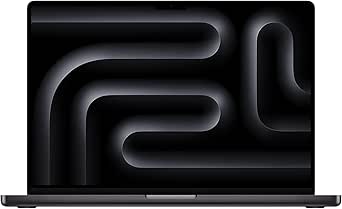
Apple MacBook Pro (2026) 16-inch with M5 Pro chip, 48GB Unified Memory, 1TB SSD, Liquid Retina XDR Display, Wi-Fi 7 – Silver
I rank this 16-inch M5 Pro first for buyers who want a powerful, well-rounded MacBook Pro without stepping up to an M5 Max. Its 18-core CPU, 20-core GPU, and 48GB of unified memory give demanding creative work and on-device AI more room than the 14-inch M5 Pro with 24GB. The larger Liquid Retina XDR display also gives long editing sessions more workspace, while Thunderbolt 5, HDMI, and SDXC reduce the need for adapters. Compared with the 16-inch M5 Max models in this list, it has less graphics power, but that difference matters most for heavily GPU-bound work. The tradeoff is portability: at 4.71 pounds, it is a substantial carry, and its 1TB SSD may be limiting for large local media libraries.
Pros:- 48GB unified memory gives demanding workflows more headroom than the 24GB 14-inch M5 Pro models.
- 16.2-inch Liquid Retina XDR display offers a spacious work area with high brightness and contrast.
- Thunderbolt 5, HDMI, and SDXC support a broad range of peripherals and media workflows.
- Wi-Fi 7 and Bluetooth 6 provide current wireless connectivity.
Cons:- At 4.71 pounds, it is less convenient to carry than the 14-inch M5 Pro.
- The 1TB SSD may not leave enough local space for large video, audio, or AI project libraries.
- Its M5 Pro GPU is less suited to graphics-intensive work than the M5 Max options.
Best for: Creative professionals who want a large display and generous memory for editing, development, and AI workloads without choosing an M5 Max.
Not ideal for: Frequent travelers who prioritize a lighter laptop, or GPU-heavy professionals who need the M5 Max’s greater graphics capacity.
- Processor:Apple M5 Pro, 18-core CPU
- GPU:20-core GPU
- Memory:48GB unified memory
- Storage:1TB SSD
- Display:16.2-inch Liquid Retina XDR; 1600 nits peak brightness
- Weight:4.71 pounds
- Ports:Three Thunderbolt 5, MagSafe 3, SDXC, HDMI, headphone jack
- Wireless:Wi-Fi 7, Bluetooth 6
Our verdict“Choose this 16-inch M5 Pro for a roomy screen and 48GB of memory, unless your work needs M5 Max graphics or a lighter daily carry.”
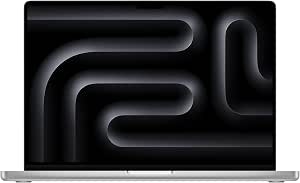
Apple 14.2-inch MacBook Pro with M5 Pro, 15-core CPU, 16-core GPU, 24GB Memory, and 1TB SSD (Silver)
This 14-inch configuration is the lineup’s practical choice for people who need M5 Pro capability in a more portable package. At 3.52 pounds, it is notably easier to carry than the 16-inch M5 Pro with 48GB, while keeping the same useful mix of Thunderbolt 5, HDMI, and SDXC connections. Its 24GB of unified memory and 1TB SSD suit many creative and development workloads, though they leave less headroom than the larger 48GB model for complex projects. The Liquid Retina XDR screen keeps brightness and contrast high, but its smaller workspace is less comfortable for extended timelines or side-by-side editing. I’d pick this Silver version over the Space Black 14-inch listing when color is part of the buying decision; the underlying listed core, memory, and storage configuration is otherwise similar.
Pros:- Smaller 14.2-inch form is easier to carry than either 16-inch M5 Pro option.
- 24GB unified memory and a 1TB SSD support demanding everyday creative and development work.
- Liquid Retina XDR display offers high brightness and contrast in a compact size.
- Thunderbolt 5, HDMI, and SDXC provide useful connections without relying entirely on adapters.
Cons:- 24GB of memory provides less room for large projects than the 48GB 16-inch M5 Pro.
- The smaller display gives less workspace for editing and multitasking.
- The provided product details do not specify battery runtime.
Best for: Mobile developers and creative professionals who want an M5 Pro MacBook Pro with a smaller footprint, built-in ports, and 1TB of storage.
Not ideal for: Buyers working with memory-heavy projects or who want a large canvas for detailed editing; the 16-inch 48GB M5 Pro is a better fit.
- Processor:Apple M5 Pro, 15-core CPU
- GPU:16-core GPU
- Memory:24GB unified memory
- Storage:1TB SSD
- Display:14.2-inch Liquid Retina XDR
- Weight:3.52 pounds
- Ports:Three Thunderbolt 5, MagSafe 3, SDXC, HDMI, headphone jack
- Wireless:Wi-Fi 7, Bluetooth 6
Our verdict“Choose this Silver 14-inch M5 Pro when carrying comfort matters more than the extra screen space and memory of the 16-inch model.”
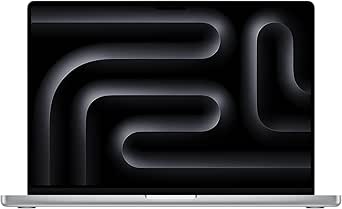
Apple 14.2-inch MacBook Pro with M5 Pro, 15-core CPU, 16-core GPU, 24GB Memory, and 1TB SSD
The Space Black version gives buyers who want a compact M5 Pro the same core configuration as the Silver 14-inch model, with a darker finish as its clearest distinction. It pairs a 15-core CPU, 16-core GPU, and 24GB of unified memory with 1TB of storage, a useful combination for portable creative work that does not require the extra memory of the 16-inch 48GB model. At 3.52 pounds, it is easier to bring between work locations than that larger machine, and its Thunderbolt 5, HDMI, and SDXC ports help when connecting displays or importing media. The compromise is the 14.2-inch workspace, which can feel constrained beside the 16-inch models. Choose this over the Silver listing for the finish, not a documented performance advantage.
Pros:- Space Black finish offers a distinct alternative to the otherwise similarly configured Silver 14-inch model.
- M5 Pro with a 16-core GPU supports demanding creative and AI workloads.
- 1TB SSD provides room for active projects and applications.
- Thunderbolt 5, HDMI, and SDXC cover a broad range of common connections.
Cons:- The 14.2-inch screen provides less working area than the 16-inch M5 Pro and M5 Max models.
- 24GB unified memory is less generous than the 48GB configuration in the 16-inch M5 Pro.
- The listed specifications do not give a battery runtime.
Best for: Buyers who want a portable M5 Pro MacBook Pro in Space Black for development, photo work, and other demanding mobile tasks.
Not ideal for: People who need a larger built-in canvas, more than 24GB of memory, or a configuration distinction beyond the Space Black finish compared with the Silver 14-inch model.
- Processor:Apple M5 Pro, 15-core CPU
- GPU:16-core GPU
- Memory:24GB unified memory
- Storage:1TB SSD
- Display:14.2-inch Liquid Retina XDR
- Weight:3.52 pounds
- Color:Space Black
- Ports:Three Thunderbolt 5, MagSafe 3, SDXC, HDMI, headphone jack
Our verdict“Pick this Space Black 14-inch M5 Pro if you want the compact configuration and darker finish, but choose the 16-inch model for more screen and memory.”
Apple MacBook Pro 16.2-inch with M5 Max, 18-Core CPU, 40-Core GPU, 128GB Memory, 4TB SSD, Space Black
This is the most capable configuration in this batch for professionals whose projects put pressure on both graphics and memory. The M5 Max 40-core GPU, 128GB unified memory, and 4TB SSD give it a much higher ceiling than the M5 Pro models, including the 48GB 16-inch option. That capacity is aimed at demanding production pipelines, large assets, and work that benefits from keeping more data available locally. The 16.2-inch Liquid Retina XDR display and broad port selection also make it a strong workstation-style setup. The tradeoff is substantial: the supplied listing gives a weight of 8.2 pounds, far above the 4.73-pound 16-inch M5 Max with 36GB memory and 2TB storage. This makes more sense as a powerful desktop replacement than a frequent-travel companion.
Pros:- 40-core GPU targets graphics-intensive professional workloads beyond the M5 Pro configurations.
- 128GB unified memory provides extensive capacity for large projects and demanding applications.
- 4TB SSD offers more local workspace than the 1TB and 2TB options in this batch.
- Three Thunderbolt 5 ports, HDMI, and SDXC support a workstation-style setup.
Cons:- The listed 8.2-pound weight makes it markedly less portable than the other 16-inch models here.
- Its M5 Max capabilities exceed what many general productivity and lighter creative workflows require.
- The 16.2-inch chassis is a less convenient travel choice than the 14-inch M5 Pro models.
Best for: High-end video, 3D, and other professional users who need a large GPU, substantial unified memory, and extensive local storage in one laptop.
Not ideal for: People who carry a laptop daily, or buyers whose workloads do not need the M5 Max GPU and 128GB memory; the M5 Pro models are more restrained choices.
- Processor:Apple M5 Max, 18-core CPU
- GPU:40-core GPU
- Memory:128GB unified memory
- Storage:4TB SSD
- Display:16.2-inch Liquid Retina XDR
- Weight:8.2 pounds (as listed)
- Color:Space Black
- Ports:Three Thunderbolt 5, MagSafe 3, SDXC, HDMI, headphone jack
- Wireless:Wi-Fi 7, Bluetooth 6
Our verdict“Choose this M5 Max when your professional workload can use its 128GB memory, 40-core GPU, and 4TB SSD, not when portability is the priority.”
Apple MacBook Pro 16.2-inch with M5 Max, 18-core CPU, 32-core GPU, 36GB Memory, 2TB SSD, Wi-Fi 7, Space Black
This 16-inch M5 Max is a more measured step up from the M5 Pro than the 128GB, 40-core GPU configuration. Its 32-core GPU and 36GB of unified memory give graphics-heavy creative work more capability than the 20-core GPU in the 48GB M5 Pro, while the 2TB SSD doubles the storage of the M5 Pro options in this batch. It also avoids the unusually high listed weight of the 128GB M5 Max model, coming in at 4.73 pounds—close to the 16-inch M5 Pro. That balance makes it a stronger fit for frequent rendering or other GPU-led tasks than for memory-heavy projects that benefit from 128GB. Compared with the M5 Pro, it trades a more powerful GPU and larger SSD for less memory than the 48GB Pro configuration.
Pros:- 32-core M5 Max GPU offers more graphics capacity than the M5 Pro configurations in this batch.
- 2TB SSD provides more local project space than the M5 Pro models with 1TB.
- At 4.73 pounds, it is much lighter as listed than the 128GB M5 Max option.
- 16.2-inch Liquid Retina XDR display and broad ports suit a desktop-style creative setup.
Cons:- 36GB unified memory is less than the 48GB in the leading M5 Pro configuration and far below the 128GB M5 Max.
- The 16.2-inch size is less portable than the 14-inch M5 Pro models.
- M5 Max graphics may be unnecessary for general productivity or less demanding creative work.
Best for: Video editors, 3D creators, and other GPU-focused professionals who want M5 Max graphics and 2TB of storage without the listed 8.2-pound weight of the 128GB M5 Max.
Not ideal for: Users who need 128GB of memory for exceptionally large workloads, or buyers whose everyday work does not benefit from M5 Max graphics over M5 Pro.
- Processor:Apple M5 Max, 18-core CPU
- GPU:32-core GPU
- Memory:36GB unified memory
- Storage:2TB SSD
- Display:16.2-inch Liquid Retina XDR
- Weight:4.73 pounds
- Wireless:Wi-Fi 7, Bluetooth 6
- Ports:Three Thunderbolt 5, MagSafe 3, SDXC, HDMI, headphone jack
Our verdict“Choose this 16-inch M5 Max for GPU-heavy creative work and 2TB of storage, but favor the 128GB model for memory-bound projects or M5 Pro for lighter workloads.”
Apple MacBook Pro 16.2-inch with M5 Max, 18-Core CPU, 40-Core GPU, 128GB Memory, 2TB SSD, Silver
This configuration pairs the M5 Max with 128GB of memory, making it the more compelling choice here for large projects, intensive multitasking, and demanding AI or creative workflows that can use substantial memory. Its 16.2-inch Liquid Retina XDR display gives that work more room than the 14.2-inch M5 Max model, while Thunderbolt 5, HDMI, and SDXC reduce the need for adapters. Compared with the M5 Pro 16.2-inch with 48GB, this model offers much more memory and a stronger GPU, but that headroom matters most for genuinely heavy workloads. The tradeoff is substantial portability: at 8.4 pounds, it is much heavier than the listed 16.2-inch M5 Pro configurations. I’d skip it for everyday office work or frequent commuting.
Pros:- M5 Max with a 40-core GPU suited to demanding graphics and compute workloads
- 128GB of memory supports large projects and heavy multitasking
- 2TB SSD provides room for active creative files
- 16.2-inch Liquid Retina XDR display and broad port selection
Cons:- Listed weight of 8.4 pounds makes it much less convenient to carry than the M5 Pro 16.2-inch options
- M5 Max and 128GB memory are excessive for many everyday workloads
Best for: Video, 3D, and AI professionals who regularly work with large projects and need 128GB of memory on a spacious display.
Not ideal for: Commuters and general-purpose users who prioritize a lighter laptop or have no workload that benefits from the M5 Max and 128GB of memory.
- Chip:Apple M5 Max
- CPU:18-core
- GPU:40-core
- Display:16.2-inch Liquid Retina XDR
- Memory:128GB
- Storage:2TB SSD
- Ports:Three Thunderbolt 5, MagSafe 3, SDXC, HDMI, headphone jack
- Weight:8.4 pounds
Our verdict“Choose this large-format M5 Max when memory capacity and GPU resources matter more than carrying weight.”
Apple MacBook Pro 14.2-inch with M5 Max, 18-core CPU, 40-core GPU, 128GB Memory, 2TB SSD, Space Black
This is the lineup’s clearest answer for buyers who want M5 Max performance without committing to a 16-inch machine. It keeps the same 18-core CPU, 40-core GPU, 128GB memory, and 2TB SSD as the 16.2-inch M5 Max Silver option, but fits them into a 14.2-inch display size. That makes it easier to pack and more practical for mobile professionals, while the XDR screen and ports—including Thunderbolt 5, HDMI, and SDXC—retain the workstation feel. Compared with the M5 Pro 14.2-inch configurations elsewhere in the roundup, it has far more graphics and memory headroom, though many everyday users won’t benefit from that difference. The smaller display also gives less working space than the 16.2-inch M5 Max. Pick it for mobility, not maximum screen area.
Pros:- M5 Max and 40-core GPU in the lineup’s smaller display size
- 128GB memory and 2TB SSD accommodate demanding professional workflows
- Thunderbolt 5, HDMI, SDXC, and MagSafe 3 provide flexible connections
- 12MP Center Stage camera and Liquid Retina XDR display
Cons:- 14.2-inch screen offers less workspace than the 16.2-inch M5 Max alternative
- High-end chip and memory capacity may be unnecessary for general office and web use
Best for: Traveling editors, 3D artists, and AI practitioners who need M5 Max-class capability and high memory in a smaller laptop.
Not ideal for: Buyers who mainly work at a desk and prefer the larger canvas of a 16.2-inch display, or who only need routine productivity performance.
- Chip:Apple M5 Max
- CPU:18-core
- GPU:40-core
- Display:14.2-inch Liquid Retina XDR
- Memory:128GB
- Storage:2TB SSD
- Wireless:Wi-Fi 7, Bluetooth 6
- Ports:Three Thunderbolt 5, MagSafe 3, SDXC card slot, HDMI, headphone jack
Our verdict“Choose this model if you need M5 Max resources on the go and can trade some screen area for a smaller format.”
Apple MacBook Pro 16.2-inch with M5 Pro, 18-core CPU, 20-core GPU, 48GB Memory, 1TB SSD, Space Black
Among these five options, this is the M5 Pro configuration I’d favor for demanding work that benefits from extra memory but doesn’t call for an M5 Max. Its 48GB unified memory gives more breathing room for large creative projects and multitasking than the 24GB M5 Pro 16.2-inch Silver model. The 18-core CPU and 20-core GPU also make it a stronger M5 Pro configuration than the 15-core CPU, 16-core GPU 14.2-inch alternatives in the broader roundup. You still get the spacious 16.2-inch XDR display and Thunderbolt 5, HDMI, and SDXC. Against the M5 Max options, it gives up GPU capacity and memory ceiling, but that can be a sensible compromise if your work doesn’t need Max-level graphics. Its 4.71-pound listed weight and 1TB SSD are the main constraints.
Pros:- 48GB unified memory offers more headroom than the 24GB M5 Pro configuration
- 18-core CPU and 20-core GPU suit demanding professional work
- 16.2-inch Liquid Retina XDR display provides a roomy workspace
- Thunderbolt 5, HDMI, and SDXC support varied peripherals and media
Cons:- The 4.71-pound listed weight is a drawback for frequent carrying
- 1TB SSD is less built-in storage than the 2TB M5 Max configurations
- M5 Pro GPU has less capacity than the M5 Max models for graphics-heavy work
Best for: Creative professionals who want more than 24GB of memory for large projects but don’t need the M5 Max’s 40-core GPU.
Not ideal for: GPU-intensive specialists who need M5 Max performance, or frequent travelers seeking a lighter laptop with a smaller footprint.
- Chip:Apple M5 Pro
- CPU:18-core
- GPU:20-core
- Display:16.2-inch Liquid Retina XDR
- Memory:48GB unified memory
- Storage:1TB SSD
- Weight:4.71 pounds
- Ports:Three Thunderbolt 5, MagSafe 3, SDXC, HDMI, headphone jack
Our verdict“Pick this M5 Pro when 48GB of memory and a large display matter more than M5 Max graphics or a larger SSD.”
Apple 16-Inch MacBook Pro with M5 Max Chip, 18-Core CPU, 40-Core GPU, 128GB Memory, 2TB SSD
This 16-inch M5 Max configuration is aimed at buyers who want a ready-to-charge professional setup alongside the core machine: the supplied box contents include a 140W USB-C power adapter and a 6.5-foot USB-C to MagSafe 3 cable. Its 18-core CPU, 40-core GPU, 128GB unified memory, and 2TB SSD match the headline capabilities of the 16.2-inch M5 Max Silver model, so the choice is less about a different performance tier and more about the listed package and specifications. Compared with the 14.2-inch M5 Max, this model offers a larger display, but it is less suited to buyers who want a smaller laptop. The product data gives a 16-inch display size rather than the 16.2-inch figure listed for the other large model, and does not specify ports or weight—details I’d verify before choosing it.
Pros:- M5 Max with 18-core CPU and 40-core GPU for demanding workloads
- 128GB unified memory supports large projects and intensive multitasking
- 2TB SSD provides substantial fast internal storage
- Includes a 140W USB-C adapter and 6.5-foot USB-C to MagSafe 3 cable
Cons:- The 16-inch form factor is less convenient than the 14.2-inch M5 Max for frequent travel
- Product data does not list weight or port details, limiting direct comparison
- M5 Max specifications may be excessive for buyers with routine productivity needs
Best for: Professionals buying an M5 Max workstation who value an included high-wattage adapter, long charging cable, and 2TB of internal storage.
Not ideal for: Buyers who need confirmed port or weight details before purchase, or who want a compact machine like the 14.2-inch M5 Max.
- Display:16 inches
- Chip:Apple M5 Max
- CPU:18-core
- GPU:40-core integrated graphics
- Unified Memory:128GB
- Storage:2TB SSD
- Power Adapter:140W USB-C
- Warranty:1-year limited warranty; 90 days of free technical support
Our verdict“Choose this 16-inch M5 Max if the included charging gear and 2TB storage fit your setup, and confirm the missing physical details first.”
Apple MacBook Pro 16.2-inch with M5 Pro, 18-Core CPU, 20-Core GPU, 24GB Memory, 1TB SSD, Wi-Fi 7 – Silver
This is the more restrained large-screen M5 Pro pick: it keeps the 18-core CPU and 20-core GPU found in the 48GB M5 Pro model, while using 24GB of unified memory and a 1TB SSD. That makes it a better fit for professional work that needs a strong processor and a spacious display but doesn’t routinely involve oversized media projects or memory-hungry multitasking. Compared with the 48GB Space Black M5 Pro, the lower memory capacity leaves less headroom as projects grow; compared with the M5 Max models, it gives up GPU resources and the 128GB memory ceiling. In return, its spec mix is easier to justify for mainstream creative and productivity work. The 16.2-inch Liquid Retina XDR display, Wi-Fi 7, broad ports, and 12MP Center Stage camera round out the setup, though its 4.71-pound weight limits portability.
Pros:- 18-core CPU and 20-core GPU deliver a capable M5 Pro setup
- 16.2-inch Liquid Retina XDR display offers ample workspace
- Wi-Fi 7, Bluetooth 6, and a wide range of built-in ports
- 12MP Center Stage camera supports video calls
Cons:- 24GB memory provides less room for demanding multitasking than the 48GB M5 Pro
- 1TB SSD is smaller than the 2TB M5 Max configurations
- Listed weight of 4.71 pounds is substantial for a frequently carried laptop
Best for: Professionals who want a large XDR screen and M5 Pro performance for everyday creative, development, and productivity work without needing 48GB or 128GB of memory.
Not ideal for: Users handling exceptionally large projects or intensive AI and GPU workloads, who are better matched to the 48GB M5 Pro or an M5 Max configuration.
- Chip:Apple M5 Pro
- CPU:18-core
- GPU:20-core
- Display:16.2-inch Liquid Retina XDR
- Memory:24GB unified memory
- Storage:1TB SSD
- Wireless:Wi-Fi 7, Bluetooth 6
- Weight:4.71 pounds
Our verdict“Choose this model for a large-screen M5 Pro suited to mainstream professional work, but step up to 48GB or M5 Max for heavier workloads.”
Apple MacBook Pro 16.2-inch with M5 Pro, 18-core CPU, 20-core GPU, 24GB Memory, 1TB SSD, Space Black
I’d choose this configuration for creative work that benefits from a spacious display without stepping up to an M5 Max. Its 18-core CPU and 20-core GPU match the 16-inch M5 Pro model with 48GB of memory, while this version has 24GB unified memory—a more limiting fit for large projects or heavy multitasking. The 16.2-inch Liquid Retina XDR display reaches 1600 nits peak brightness, giving HDR work and detailed timelines more room than the 14.2-inch M5 Pro options. Three Thunderbolt 5 ports, HDMI, SDXC, and MagSafe 3 also reduce reliance on adapters. The tradeoff is portability: at 4.71 pounds, it is less convenient to carry than a 14-inch model. I’d pick the 48GB M5 Pro configuration for memory-heavy workloads, and reserve M5 Max models for buyers who need greater graphics capacity.
Pros:- 18-core CPU and 20-core GPU suit demanding creative and AI workloads
- 16.2-inch Liquid Retina XDR display offers a roomy workspace and up to 1600 nits peak brightness
- Three Thunderbolt 5 ports, HDMI, SDXC, and MagSafe 3 support a flexible desk setup
- All-day battery performance is suited to work away from an outlet
Cons:- At 4.71 pounds, it is less portable than the 14.2-inch M5 Pro models
- 24GB unified memory provides less room for heavy multitasking than the 48GB M5 Pro configuration
- M5 Max models offer more graphics capacity for GPU-intensive work
Best for: Video editors, photographers, and developers who want a large built-in workspace, strong M5 Pro performance, and a broad set of ports, but do not need more than 24GB of unified memory.
Not ideal for: Frequent travelers and professionals working with large datasets, complex projects, or many demanding apps at once; the 16.2-inch chassis is heavy to carry, and the 24GB memory configuration offers less headroom than the 48GB M5 Pro alternative.
- Chip:Apple M5 Pro
- CPU:18-core
- GPU:20-core
- Display:16.2-inch Liquid Retina XDR
- Memory:24GB unified memory
- Storage:1TB SSD
- Wireless:Wi-Fi 7, Bluetooth 6
- Ports:Three Thunderbolt 5, MagSafe 3, SDXC card slot, HDMI, headphone jack
- Weight:4.71 pounds
Our verdict“Choose this model if you want a large-screen M5 Pro workstation with useful built-in ports, but move to the 48GB version for memory-heavy projects or a 14-inch model for easier travel.”

How We Picked
I ranked these 11 configurations by how clearly their specifications match common buyer needs, giving weight to chip tier, screen size, unified memory, and SSD capacity. I treated an M5 Pro configuration as the better starting point for most buyers and reserved higher placements for models that offer a convincing balance of capability and flexibility. M5 Max models rank well for specialist workloads, but their extra GPU resources and large memory configurations do not make them the default choice for everyone.
Where listings share the same core specifications, I judged them by the needs they serve rather than treating a color or naming variation as a meaningful performance difference. The lineup includes both 14-inch and 16-inch models, along with multiple M5 Max memory and storage combinations, so the order reflects use-case fit rather than a single performance ladder. I did not use pricing or seller-specific promotions to rank these options; buyers should confirm the exact configuration and current offer before purchasing.
| M5 Pro MacBook Pro deal | Ports | Chip |
|---|---|---|
| Apple MacBook Pro | Three Thunderbolt 5, MagSafe 3, SDXC, HDMI, headphone jack | — |
| Apple 14.2-inch MacBook Pro wi | Three Thunderbolt 5, MagSafe 3, SDXC, HDMI, headphone jack | — |
| Apple 14.2-inch MacBook Pro wi | Three Thunderbolt 5, MagSafe 3, SDXC, HDMI, headphone jack | — |
| Apple MacBook Pro 16.2-inch wi | Three Thunderbolt 5, MagSafe 3, SDXC, HDMI, headphone jack | — |
| Apple MacBook Pro 16.2-inch wi | Three Thunderbolt 5, MagSafe 3, SDXC, HDMI, headphone jack | — |
| Apple MacBook Pro 16.2-inch wi | Three Thunderbolt 5, MagSafe 3, SDXC, HDMI, headphone jack | Apple M5 Max |
| Apple MacBook Pro 14.2-inch wi | Three Thunderbolt 5, MagSafe 3, SDXC card slot, HDMI, headphone jack | Apple M5 Max |
| Apple MacBook Pro 16.2-inch wi | Three Thunderbolt 5, MagSafe 3, SDXC, HDMI, headphone jack | Apple M5 Pro |
| Apple 16-Inch MacBook Pro with | — | Apple M5 Max |
| Apple MacBook Pro 16.2-inch wi | — | Apple M5 Pro |
| Apple MacBook Pro 16.2-inch wi | Three Thunderbolt 5, MagSafe 3, SDXC card slot, HDMI, headphone jack | Apple M5 Pro |
Factors to Consider When Choosing Best M5 Pro MacBook Pro Deals
Before choosing among these configurations, I’d pin down the work the MacBook needs to handle and which limits would be difficult to work around later. A deal is only a good fit when its chip, memory, screen size, and storage match your routine.
Choose M5 Pro or M5 Max by workload
Start with the apps and tasks you run, not the highest-tier chip name. For general office work, software development, and many creative workflows, an M5 Pro configuration is the more sensible place to begin. The M5 Max options in this lineup pair an 18-core CPU with a 40-core GPU and, in several versions, 128GB of memory; that headroom makes more sense for demanding graphics work and large projects. A common mistake is paying for GPU capacity that your software rarely uses. If you can’t name the task that needs the additional GPU resources, prioritize memory, storage, or the screen size you’ll use every day.
Match memory to the way you multitask
This lineup includes 24GB, 36GB, 48GB, and 128GB memory configurations, so the right choice depends on how much you ask the machine to keep active. Many everyday users and people working with a few typical apps can start with 24GB, while large creative projects, extensive multitasking, and specialized workloads can make extra memory more useful. The 16-inch M5 Pro with 48GB is a middle ground between the 24GB Pro models and the 128GB M5 Max machines. Don’t treat maximum memory as a free upgrade in usefulness: unused capacity won’t speed up every task. Think about your largest regular project, not an occasional worst-case scenario.
Decide whether 14 inches or 16 inches fits your routine
The 14-inch models make a stronger case for buyers who carry a laptop often or work in varied locations. The 16-inch models give you more screen area for timelines, code, documents, and side-by-side windows, which can reduce the need to rearrange your workspace. This is a daily-use choice rather than a simple spec upgrade: portability and screen room pull in opposite directions. Buyers who mostly work at a desk may favor the larger display, while frequent travelers may prefer the smaller chassis. If you use an external monitor most of the time, consider whether the built-in screen size should carry as much weight in your decision.
Buy enough SSD capacity for your local files
The listed SSD options range from 1TB on the M5 Pro models to 2TB and 4TB on selected M5 Max configurations. Local video, photo libraries, development tools, and large project files can consume space faster than a buyer expects, so estimate what you need to keep available without an external drive. A larger SSD is convenient, but it should not automatically take priority over a useful memory upgrade or the right chip. Cloud storage and external drives can help, though they add steps and may not suit every workflow. Choose capacity around your working files, and leave room for software, temporary project files, and future work.
Compare duplicate listings by configuration, not color
Some entries in this roundup are close matches: the 14-inch M5 Pro models share the same listed CPU, GPU, memory, and SSD, and several 16-inch M5 Max listings share the same core configuration. Color differences such as Silver and Space Black do not indicate a performance change. Before selecting a listing, check the exact screen size, chip, memory, and SSD capacity, along with any seller-specific details. Don’t assume a similar product title means an identical configuration, particularly where one M5 Max option has 36GB memory and a 32-core GPU while others list 128GB and a 40-core GPU. Comparing the full specification line helps avoid buying a model that misses a key requirement.
Pay for headroom only when it solves a real constraint
Higher-tier configurations make sense when current work already strains a lesser machine or when a specific professional application benefits from more GPU capacity, memory, or local storage. If your present workload is comfortable, buying far beyond it can leave useful capability unused. On the other hand, buyers planning to keep a MacBook for demanding work may value extra memory or storage as room for larger projects. Consider which part of your workflow actually slows down and whether a spec increase addresses that limit. Spend for a concrete need, not simply because one listing has the largest numbers.
Frequently Asked Questions
Should I choose the 16-inch M5 Pro with 48GB memory or an M5 Max model?
I’d choose the 16-inch M5 Pro with 48GB memory if you want a capable general-purpose machine for demanding work without a clearly stated need for the M5 Max GPU. The M5 Max options are better suited to workloads that can use their larger GPU configuration and, in some versions, 128GB memory. They also offer 2TB or 4TB SSD options that the listed M5 Pro models do not. Compare the specific work you run, rather than assuming the higher-tier chip is automatically a better fit. If your tasks are mainly everyday productivity or moderate creative work, the M5 Pro is the more focused choice.
Are the two 14-inch M5 Pro listings different machines?
Both listed 14-inch M5 Pro configurations specify a 15-core CPU, 16-core GPU, 24GB memory, and 1TB SSD. One title names Silver and the other does not specify a color, but the provided specifications do not show a performance difference. Check the complete product listing before buying, since the title alone may omit details. If the remaining configuration is the same, base your decision on the exact item details and seller terms rather than expecting different speed from the listed hardware. For a larger display or more memory, look at the 16-inch M5 Pro options instead.
Is 24GB memory enough, or should I move up to 48GB?
For everyday work and moderate multitasking, 24GB may be a reasonable fit. Buyers who regularly work with large creative projects, many demanding apps, or sizable datasets may benefit from the 48GB option in the 16-inch M5 Pro. The important distinction is the size and complexity of your normal workload, not how many browser tabs you might open once in a while. If you are choosing between more memory and storage, consider whether your current work is limited by active-app capacity or by keeping files on the laptop. The 128GB M5 Max models target much heavier requirements than most buyers need.
When is a 4TB SSD worth choosing over a 2TB SSD?
A 4TB SSD is most useful if you need to keep a large amount of active work on the MacBook, such as extensive media libraries or multiple sizable projects. The 2TB M5 Max configurations may offer enough room for many professional workflows while leaving capacity for apps and working files. External drives can hold archives, but they are less convenient when you need projects available on the go. Don’t select 4TB solely because it is the largest capacity listed; first estimate how much storage your current work occupies and how quickly it grows. Also check the rest of the configuration, since the 4TB option in this lineup has different listed details from some 2TB versions.
Should I buy a 14-inch M5 Max or a 16-inch M5 Pro?
Pick the 14-inch M5 Max if compact size matters and your work can make use of its M5 Max performance tier. Its listed 128GB memory and 40-core GPU set it apart from the 14-inch M5 Pro models, which have 24GB memory and a 16-core GPU. Choose the 16-inch M5 Pro if screen space matters more and its 18-core CPU, 20-core GPU, and 24GB or 48GB memory match your needs. This decision combines two separate priorities, performance headroom and built-in workspace, so neither configuration is a universal winner. Weigh how often you travel against how demanding your regular workload is.
Conclusion
For most buyers, my best overall choice is the 16-inch M5 Pro with 48GB memory and a 1TB SSD: it offers a balanced mix of screen space and memory without stepping up to M5 Max. The best value in capability is the 14-inch M5 Pro with 24GB memory and a 1TB SSD for buyers who want a capable, more portable configuration and don’t need the larger display. For a best premium pick, choose an M5 Max with 128GB memory and a 40-core GPU; select 4TB rather than 2TB if your active files justify the extra capacity. The best option for beginners is the 14-inch M5 Pro, whose listed configuration avoids paying for high-end GPU resources most new MacBook Pro buyers may not use. For specific graphics-heavy or memory-intensive needs, the 14-inch M5 Max offers the high-end specification in the smaller size, while the 16-inch M5 Max models provide a larger workspace. Match the exact configuration to your work, then verify the listing details before you buy.
Columbus Day / Indigenous Peoples' Day Picks
long weekend sales
As an affiliate, we earn on qualifying purchases.