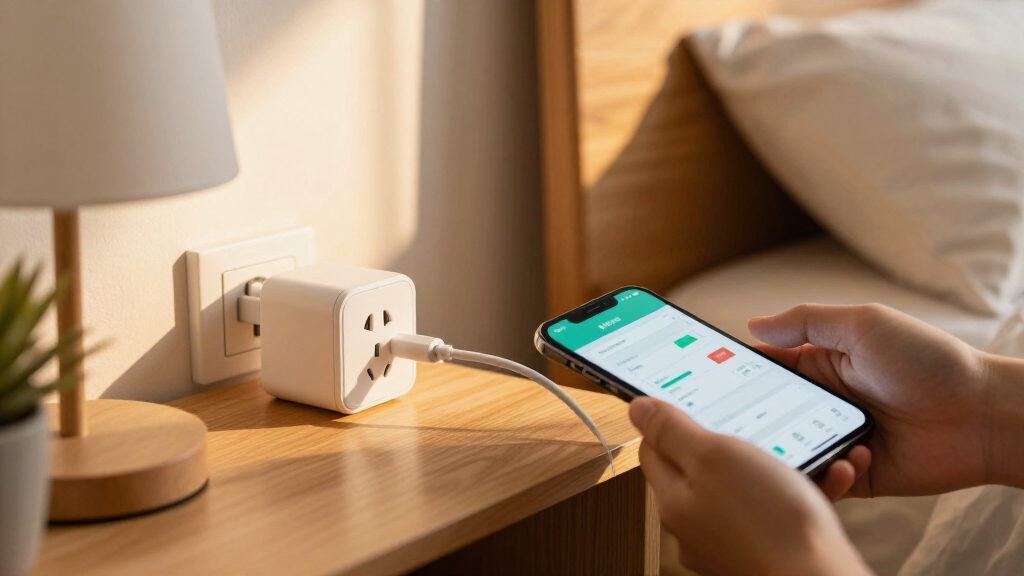

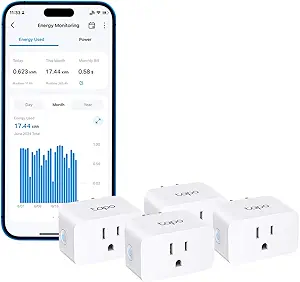
Smart plugs with energy monitoring let you see exactly how much power your appliances actually draw, which makes them one of the cheapest ways to shrink an electric bill. The Kasa KP125MP4 earns my top spot because it pairs Matter compatibility with Kasa’s polished app and comes in a practical four-pack. If you want to go deeper on energy data, the Emporia 4-pack feeds readings straight into a whole-home energy platform, while the TP-Link Tapo P115 2-pack is the easiest way to try energy tracking on a budget. The main tradeoffs in this category come down to ecosystem (Wi-Fi vs. Matter vs. Zigbee), how much detail the app actually gives you, and whether a multi-pack really saves money. Keep reading for the full breakdown of all eleven options.
Complete the kit



Key Takeaways
- Matter compatibility is the biggest differentiator in 2026 — the Kasa KP125MP4, Tapo P110M, and SONOFF S61s all support it, which future-proofs them against app shutdowns and platform changes that stranded older plugs.
- Not all energy dashboards are equal: Emporia stands alone for historical data and cost tracking, while generic no-name 4-packs often show only instant wattage with no useful history.
- The same TP-Link hardware appears under both Tapo and Kasa branding with different pack sizes — buying the wrong variant is the most common mistake shoppers make in this category.
- Zigbee options like the THIRDREALITY Gen3 trade app convenience for hub reliability and lower Wi-Fi congestion, making them a niche but smart pick for smart home enthusiasts.
- 15A ratings were standard across the lineup, so the real separation came from app quality, scheduling features, and physical bulk — not raw power handling.




| smart plugs with energy monitoring | Connectivity | Max Current | Certification | Model |
|---|---|---|---|---|
| Govee Smart Plug with Energy M | WiFi 2.4GHz and Bluetooth | — | — | — |
| TP-Link Tapo P115 Smart Plug W | WiFi 2.4GHz | 15A | — | Tapo P115 |
| Kasa Matter Smart Plug with En | WiFi, Matter | 15A | UL certified flame retardant | KP125MP4 |
| TP-Link Tapo P115 Wi-Fi Smart | WiFi 2.4GHz | 15A | — | Tapo P115 |
| Smart Plug Outlet with Energy | — | 15A | FCC | — |
| SONOFF S61s Matter Smart Plug | Matter over Wi-Fi (2.4GHz) | — | ETL Listed | — |
| Kasa Smart Plug Mini with Ener | 2.4GHz Wi-Fi | — | UL certified | KP115 |
| Tapo P110M Smart Plug | — | 15A | Matter certified | P110M |
| Kasa Matter Smart Plug with En | — | 15A | UL certified flame retardant | KP125MP2 |
| Emporia Energy Monitoring Smar | Wi-Fi (2.4GHz only) | — | — | — |
| THIRDREALITY Smart Plug Gen3 | — | 15A | ETL Certified | — |
More Details on Our Top Picks
Govee Smart Plug with Energy Monitoring, WiFi + Bluetooth Outlet, 4 Pack
Most energy-monitoring plugs in this roundup keep a few weeks of data at best; the Govee 4-pack stores a full year of daily, weekly, and monthly usage, which changes how you use it. Instead of spotting a spike after the bill arrives, you can compare this winter’s heater consumption against last winter’s and actually verify whether an upgrade saved money. Compared with the Tapo P115 4-Pack, Govee’s Bluetooth plus WiFi pairing also tends to make first-time setup less painful on phones that struggle with 2.4GHz handoffs. The tradeoff is ecosystem depth: Govee’s scheduling and group control are solid, but there’s no Matter support like the Kasa KP125MP4 offers, so Apple Home users are left out. Fire-resistant housing and ETL certification mean these handle high-draw appliances without worry.
Pros:- One year of stored energy history beats the typical weeks-long retention of rivals
- Bluetooth plus WiFi pairing simplifies setup compared to WiFi-only plugs
- ETL and FCC certified with fire-resistant materials for high-power appliances
- Group control lets you toggle whole rooms of monitored devices at once
Cons:- 2.4GHz WiFi only — no 5GHz band support
- Locked into the Govee Home app with no Matter path to other ecosystems
Best for: Homeowners tracking seasonal appliance costs over months, not just daily spikes
Not ideal for: Apple Home or SmartThings users — there’s no Matter or HomeKit support here
- Quantity:4 pack
- Connectivity:WiFi 2.4GHz and Bluetooth
- Compatibility:Alexa, Google Assistant, Govee Home App
- Max Load:15A, 120V
- Certifications:FCC, ETL
- Material:Fire-resistant housing
- Energy History:Daily/weekly/monthly, up to 1 year
Our verdict“This pick makes the most sense for anyone whose priority is long-run energy data rather than smart-home ecosystem breadth.”
TP-Link Tapo P115 Smart Plug Wi-Fi with Energy Monitoring (2-Pack), 15A
Not everyone needs four monitored outlets on day one, and the Tapo P115 2-pack is the low-commitment way in. What separates it from the budget SmartLife-based 4-pack is protection logic: the P115 adds a smart charging cutoff that stops overcharging phones and laptops, plus auto-shutoff on electrical overload. Those features translate directly into device longevity and fire safety when you’re leaving something plugged in overnight. Energy data comes with cost estimation built in, so you see dollars, not just watt-hours — something the Govee app makes you interpret more manually. The compromise is per-unit cost and breadth: at two plugs, it’s pricier per outlet than the 4-pack sibling, and there’s no Matter support like the Tapo P110M or Kasa KP125MP4 offer.
Pros:- Cost estimation converts raw energy data into real dollar figures
- Smart charging cutoff protects batteries from overnight overcharging
- Auto-shutoff guards against electrical overload without any configuration
- Off-peak scheduling lets high-draw devices run when rates drop
Cons:- Requires 2.4GHz WiFi and the Tapo app for setup
- Two plugs cost more per outlet than the 4-pack version
Best for: First-time buyers who want to test energy monitoring on a phone charger and one appliance before committing
Not ideal for: Whole-home monitoring projects — two outlets fill up fast, and scaling via 2-packs costs more
- Model:Tapo P115
- Pack Size:2-Pack
- Max Current:15A
- Connectivity:WiFi 2.4GHz
- Key Features:Energy monitoring, scheduling, auto-shutoff, charging cutoff
- Voice Assistants:Alexa, Google Assistant
- App:Tapo app
Our verdict“This model is better suited to cautious first-timers who want safety smarts and cost tracking in a small, low-risk starter bundle.”
Kasa Matter Smart Plug with Energy Monitoring (KP125MP4)
If your home runs on more than one voice assistant — or you think it might someday — the Kasa KP125MP4 is the safest architecture in this lineup. Matter certification means it speaks natively to Apple Home, Alexa, Google Home, and SmartThings, while the budget SmartLife 4-pack and Govee options lock you to one or two platforms. The feature that quietly beats everything here is local LAN control: unlike the Tapo P115, which depends on cloud connectivity, these plugs keep responding during internet outages. The compact housing also avoids blocking the second wall outlet, which full-size monitoring plugs frequently do. The tradeoff is friction — full Matter integration requires a compatible hub or controller, and anyone starting from scratch will feel that extra setup burden compared to hub-free plugs.
Pros:- Native Matter support across Apple Home, Alexa, Google Home, and SmartThings
- Local LAN control keeps plugs working during internet outages
- Compact UL-certified flame-retardant body leaves adjacent outlets free
- Two-year limited warranty doubles most rivals’ coverage
Cons:- Needs a Matter-compatible hub/controller for full smart home integration
- Capped at 15A/1800W, so no heavy appliances beyond standard loads
Best for: Multi-platform smart homes, especially Apple Home users who have almost no other option in this category
Not ideal for: Buyers with no Matter hub and no plans for one — the hub-free SmartLife or Govee plugs are simpler
- Model:KP125MP4
- Max Current:15A
- Max Power:1800W
- Connectivity:WiFi, Matter
- Compatible Platforms:Apple Home, Amazon Alexa, Google Home, Samsung SmartThings
- Certification:UL certified flame retardant
- Warranty:2-year limited
Our verdict“This pick makes the most sense for ecosystem-agnostic households that want future-proof control and offline reliability in one package.”
TP-Link Tapo P115 Wi-Fi Smart Plug with Energy Monitoring, 4-Pack, 15A
Once you’ve confirmed energy monitoring is useful, the scaling question kicks in, and this is where the Tapo P115 4-pack earns its slot. Four identical plugs with statistics and charts in one Tapo app make it easy to profile a heater, a dehumidifier, a TV setup, and a fridge simultaneously — then compare them side by side. It shares every strength of the 2-pack version: automatic overload shutoff, scheduling, and Alexa or Google voice control, at a better per-outlet value. Compared with the Govee 4-pack, the Tapo app’s cost projections are more polished, though Govee retains a longer history window. The main gap is platform reach — there’s no Matter or Apple Home support, so the Kasa KP125MP4 remains the choice for mixed-ecosystem homes.
Pros:- Four monitored outlets in one bundle beats 2-packs on per-plug value
- In-app charts and statistics make multi-appliance comparison straightforward
- Automatic shutoff adds overload protection across every outlet
- Remote scheduling and control work reliably through the Tapo app
Cons:- Requires the Tapo app and 2.4GHz WiFi with no offline local control
- No Matter support limits future ecosystem flexibility
Best for: Households ready to audit several appliances at once and compare their real costs
Not ideal for: Apple Home users or anyone wanting offline local control — this is cloud-and-2.4GHz only
- Model:Tapo P115
- Pack Size:4 plugs
- Max Current:15A
- Connectivity:WiFi 2.4GHz
- Energy Monitoring:Yes, with statistics and charts
- Voice Assistants:Amazon Alexa, Google Assistant
- Automatic Shutoff:Yes (overload protection)
Our verdict“Compared with smaller bundles, this 4-pack is the smarter buy for buyers who already know they want whole-room energy insight.”
Smart Plug Outlet with Energy Monitoring, 15A 2.4 GHz Wi-Fi, 4-Pack
When the goal is simply maximum monitored outlets for minimum spend, this generic 4-pack gets the essentials right. You get real-time power readings, scheduling, timers, and group control for whole-room toggling, all without buying a hub — the THIRDREALITY Zigbee plug in this roundup can’t say that. The compact housing avoids blocking the second outlet, matching the Kasa KP125MP4’s space-aware design. But the corners cut are real: direct Alexa connection isn’t supported, so everything routes through the SmartLife app, which adds a layer of friction the Tapo P115 doesn’t have. Overload and short-circuit protection are present and FCC certified, though there’s no ETL or UL listing like the Kasa and Govee options carry, and no smart charging cutoff to protect batteries.
Pros:- Four monitored outlets at a lower price than name-brand equivalents
- Hub-free setup through the SmartLife app on standard 2.4GHz WiFi
- Compact body leaves adjacent outlets usable
- Group control manages multiple plugs with a single tap
Cons:- No direct Alexa integration — everything funnels through the SmartLife app
- FCC certification only, without the ETL or UL listing of pricier rivals
- 2.4GHz-only WiFi with no 5GHz fallback
Best for: Renters and budget-conscious buyers who want four monitored outlets for basic scheduling and usage tracking
Not ideal for: Safety-focused buyers running high-draw appliances — the absence of a UL or ETL listing is a legitimate hesitation
- Pack Size:4 plugs
- Max Current:15A
- Max Power:1800W
- WiFi:2.4GHz
- Hub Required:No
- App:SmartLife
- Voice Control:Alexa, Google Assistant (via SmartLife)
- Certification:FCC
Our verdict“This option stands out for price-per-outlet coverage, but buyers prioritizing certification or native voice integration should pay up for Tapo or Kasa.”
SONOFF S61s Matter Smart Plug 15A Wi-Fi Outlet with Energy Monitoring, 4-Pack
This option stands out for anyone whose smart home revolves around Apple Home, because Matter certification means these plugs pair natively without workarounds. Compared with the Kasa KP125MP2, the SONOFF S61s covers the same four major ecosystems but adds electricity cost tracking inside the eWeLink app, which makes it more useful for budgeting, not just monitoring. The 15A/1875W rating also beats the Emporia 4-pack, which tops out at 10A, so heaters and larger appliances are fair game here. The tradeoff: eWeLink is a less polished app than Kasa or Tapo, and setup can feel clunkier. There’s also a 40°C operating ceiling that rules out enclosed, hot spaces like attics or garages in summer.
Pros:- Native Matter support across Apple Home, Alexa, Google Home, and SmartThings
- Real-time energy monitoring with electricity cost estimation
- Full 15A/1875W load capacity for heaters and larger appliances
- Overload protection and fire-resistant housing
Cons:- eWeLink app is less polished than Kasa or Tapo alternatives
- 2.4GHz Wi-Fi only, with a 40°C max operating temperature
Best for: Apple Home households who want native Matter support plus cost tracking for 15A appliances like space heaters and fans
Not ideal for: Buyers who want the smoothest app experience — eWeLink is functional but less refined than Kasa or Tapo
- Wattage:1875 watts
- Operating Voltage:120 volts
- Connectivity:Matter over Wi-Fi (2.4GHz)
- Compatible Platforms:Apple Home, Alexa, Google Home, SmartThings, eWeLink
- Quantity:4-pack
- Certification:ETL Listed
Our verdict“This pick makes the most sense for Apple-centric households that need Matter compatibility and cost tracking on heavier appliances, as long as they tolerate a middling app.”
Kasa Smart Plug Mini with Energy Monitoring (KP115)
If the app is where you’ll live every day, the Kasa KP115 is the one to beat. The Kasa app is widely regarded as one of the most reliable and intuitive in the category, which matters more than it sounds — an energy monitor you dread opening is an energy monitor you stop using. Unlike the SONOFF S61s or Tapo P110M, this plug skips Matter, so Apple Home users are left out, but Alexa and Google Home households get rock-solid reliability. The sliding child-safety cover and UL certification with a 2-year warranty round out a safety story few budget plugs match. The compromise is simple: no Matter means less future-proofing, and you’re buying one plug at a time rather than in bulk packs.
Pros:- Kasa app is among the most reliable and user-friendly in the category
- Built-in energy monitoring despite the compact size
- UL certified with fireproof shell and overheating protection
- Sliding child-safety cover, plus a 2-year warranty
Cons:- No Matter support — incompatible with Apple Home
- Sold individually, so outfitting multiple rooms costs more than 4-pack options
Best for: Alexa or Google Home users who value a polished, dependable app and want to start with a single outlet
Not ideal for: Apple Home users or Matter-focused buyers planning a cross-platform smart home
- Model:KP115
- Connectivity:2.4GHz Wi-Fi
- Voice Assistants:Alexa, Google Home
- Energy Monitoring:Yes
- Certification:UL certified
- Safety Features:Overheating protection, fireproof shell, sliding safety cover
- Warranty:2 years
Our verdict“This model is better suited to buyers who prioritize day-to-day app experience and proven reliability over Matter future-proofing.”
Tapo P110M Smart Plug (4-Pack), Matter Compatible, Energy Monitoring, 15A
The Tapo P110M earns its place for what it does beyond raw monitoring: off-peak scheduling and power cutoff thresholds turn energy data into actual savings. Compared with the Emporia 4-pack, which only schedules on/off times, the Tapo lets you set cutoff limits that protect devices from runaway draw — a genuinely useful safety layer for things like aquarium heaters or dehumidifiers. Its statistics and bill estimation are also more granular than the SONOFF S61s offers through eWeLink. The catch is twofold: full Matter functionality leans on a compatible hub or controller, and your energy data stays locked inside the Tapo ecosystem, so anyone hoping to pipe consumption into a third-party dashboard will hit a wall.
Pros:- Detailed energy statistics with electricity bill estimation
- Off-peak scheduling helps shift usage to cheaper rate windows
- Power cutoff thresholds and overcharge protection safeguard devices
- Matter certified for Alexa, Apple Home, Google Home, and SmartThings
Cons:- Full Matter functionality requires a compatible hub or controller
- Energy data cannot leave the Tapo app ecosystem
Best for: Savings-focused buyers who want off-peak scheduling, bill estimates, and protective cutoff thresholds across four outlets
Not ideal for: Users who want to export energy data into third-party dashboards or who lack a Matter-compatible hub
- Model:P110M
- Pack Size:4 plugs
- Max Current:15A
- Certification:Matter certified
- Compatibility:Alexa, Apple HomeKit, Google Home, Samsung SmartThings
- Key Features:Energy monitoring, scheduling, overcharge prevention, remote control
Our verdict“This pick makes the most sense for buyers who want to act on their energy data — scheduling around off-peak rates and setting protective cutoffs — rather than just observe it.”
Kasa Matter Smart Plug with Energy Monitoring (KP125MP2)
The KP125MP2’s standout trick is local LAN control — when your internet drops, these plugs keep responding instead of becoming dumb plastic. That’s a resilience advantage none of the other plugs in this lineup can claim, including the Tapo P110M and SONOFF S61s, which lean on cloud connectivity for full function. You get Matter support across all four major platforms, a compact housing that doesn’t hog adjacent outlets, and a 2-year warranty backing the UL-certified flame-retardant build. The tradeoffs are real, though: Matter here assumes a compatible hub or controller, and like everything at 15A/1800W, it’s outclassed by nothing but also can’t exceed its ceiling for heavy-duty loads. Compared with the KP115, you gain future-proofing but the per-plug value shrinks.
Pros:- Local LAN control keeps plugs working during internet outages
- Matter support across Apple Home, Alexa, Google Home, and SmartThings
- Compact design leaves adjacent outlets free
- UL-certified flame-retardant build with 2-year limited warranty
Cons:- Requires a Matter-compatible hub or controller for full functionality
- Capped at 15A/1800W, like most plugs in this class
Best for: Buyers in areas with spotty internet who need smart plugs that keep working offline
Not ideal for: Households without any Matter-compatible hub or controller to unlock full functionality
- Model:KP125MP2
- Max Current:15A
- Max Power:1800W
- Protocol:Matter
- Compatible Platforms:Apple Home, Alexa, Google Home, SmartThings
- Certification:UL certified flame retardant
- Warranty:2-year limited
Our verdict“This option stands out for reliability-minded buyers who want their plugs to survive an internet outage — a rare capability worth paying a small premium for.”
Emporia Energy Monitoring Smart Plug (4 Pack)
For covering four outlets without overspending, the Emporia 4-pack is the value play here — provided you read the fine print on amperage. Its 10A/1200W ceiling puts it below the Tapo P110M and SONOFF S61s (both 15A), which rules out space heaters, some AC units, and anything with a heavy startup draw. Where it shines is hunting standby waste: real-time power readouts in the Emporia app make vampire loads obvious, and on/off scheduling automates coffee makers and humidifiers without fuss. It also plays nicely with a wider temperature range than the SONOFF (up to 140°F), so garages and workshops are viable. The ecosystem is Alexa and Google only, though — no Matter, no Apple Home, no path to SmartThings.
Pros:- Real-time energy monitoring that surfaces standby power waste
- Four plugs at a lower per-outlet cost than Matter-certified rivals
- Wide 14°F to 140°F operating range suits garages and workshops
- On/off scheduling and remote control via Alexa, Google, or the app
Cons:- Limited to 10A continuous load — unsuitable for high-power appliances
- 2.4GHz Wi-Fi only, with no Matter or Apple Home support
Best for: Budget-conscious buyers outfitting several low-draw devices — lamps, fans, humidifiers, coffee makers — who want to identify standby waste
Not ideal for: Anyone running high-wattage appliances like space heaters or air conditioners — the 10A limit is a hard ceiling
- Pack Size:4 plugs
- Operating Voltage:120V
- Wattage:1200 watts (10A)
- Connectivity:Wi-Fi (2.4GHz only)
- Compatible With:Alexa, Google Assistant, Android, iOS
- Operating Temperature:14°F to 140°F
Our verdict“This model is better suited to buyers prioritizing per-outlet value for light-duty devices, as long as they accept the 10A ceiling and a basic ecosystem.”
THIRDREALITY Smart Plug Gen3 (4 Pack) – Zigbee 15A Outlet with Real-Time Power Monitoring, ETL Certified
If your smart home runs on Zigbee rather than Wi-Fi, this option stands out for reasons the WiFi-based picks like the Govee Smart Plug or Tapo P115 can’t match. Zigbee means less router congestion, and each plug doubles as a mesh repeater, so a four-pack actively strengthens your network instead of crowding it. The ±1% power monitoring accuracy is tighter than most competitors in this roundup, which matters if you’re tracking down phantom loads from specific appliances rather than just eyeballing rough numbers. Compared with the Emporia Energy Monitoring plugs, this model trades away effortless app-based energy dashboards for deeper Home Assistant and Hubitat integration. The tradeoff is real, though: unlike every Wi-Fi option here, this plug will not work without a Zigbee hub, and advanced settings like power-state restoration only unlock on THIRDREALITY’s own Gen2 hub or Home Assistant.
Pros:- ±1% monitoring accuracy is tighter than most energy-monitoring plugs, making it better for pinpointing small standby loads
- Each plug acts as a Zigbee repeater, extending mesh network range throughout larger homes
- Space-saving body doesn’t block the adjacent outlet, unlike bulkier plugs such as the Emporia
- Broad hub compatibility including Echo devices, Home Assistant, SmartThings, and Hubitat
Cons:- Requires a Zigbee hub — completely unusable as a standalone plug, unlike the Wi-Fi alternatives in this roundup
- Advanced safety settings like power-on state restoration are limited to THIRDREALITY Hub Gen2 and Home Assistant users
- Zigbee ecosystem adds setup complexity for buyers used to simple Wi-Fi app onboarding
Best for: Smart home hobbyists already running a Zigbee hub (Echo with built-in Zigbee, Home Assistant, SmartThings, or Hubitat) who want precise energy data and stronger mesh coverage
Not ideal for: Anyone without a Zigbee hub or buyers who want a plug-and-play Wi-Fi setup like the Kasa or Tapo options — this plug is non-functional standalone
- Connectivity Protocol:Zigbee 3.0 (hub required)
- Power Monitoring Accuracy:±1% real-time
- Max Current:15A
- Operating Voltage:110V
- Quantity:4 Pack
- Control Methods:Remote, Voice (via compatible hub)
- Hub Compatibility:Echo devices, Home Assistant, SmartThings, Hubitat, THIRDREALITY Hub Gen2
- Certification:ETL Certified
- Special Feature:Built-in Zigbee mesh repeater
Our verdict“This pick makes the most sense for Zigbee-first households that want lab-grade energy accuracy and mesh reinforcement, while hub-less buyers should stick with Wi-Fi plugs like the Tapo P115 or Kasa KP125M.”

How We Picked
I evaluated each plug through the specific lens of energy monitoring quality first and smart-home versatility second. That meant looking at whether the companion app shows real-time wattage, historical consumption, and estimated cost — and whether that data survives if you switch platforms. Plugs that only display an instant reading with no history scored lower, because tracking over time is the entire point of paying extra for monitoring.
From there, I weighed protocol support (Wi-Fi-only vs. Matter vs. Zigbee), app polish, physical design, pack value, and ecosystem longevity. TP-Link’s Kasa and Tapo lines ranked highly because their software is consistently reliable and now supports Matter; Emporia ranked as the specialist pick for its energy-data depth; and generic multipacks landed lower despite attractive pricing because their apps and long-term support are less proven. The ranking favors plugs a buyer can install today and still use confidently in five years.
| smart plugs with energy monitoring | Model | Certification |
|---|---|---|
| Govee Smart Plug with Energy M | — | — |
| TP-Link Tapo P115 Smart Plug W | Tapo P115 | — |
| Kasa Matter Smart Plug with En | KP125MP4 | UL certified flame retardant |
| TP-Link Tapo P115 Wi-Fi Smart | Tapo P115 | — |
| Smart Plug Outlet with Energy | — | FCC |
| SONOFF S61s Matter Smart Plug | — | ETL Listed |
| Kasa Smart Plug Mini with Ener | KP115 | UL certified |
| Tapo P110M Smart Plug | P110M | Matter certified |
| Kasa Matter Smart Plug with En | KP125MP2 | UL certified flame retardant |
| Emporia Energy Monitoring Smar | — | — |
| THIRDREALITY Smart Plug Gen3 | — | ETL Certified |
Factors to Consider When Choosing Smart Plugs With Energy Monitoring
Energy-monitoring smart plugs look identical in product photos, but the differences that matter most show up months after you buy them. Here is what actually separates a worthwhile purchase from a regrettable one.Protocol Choice Determines Your Ceiling
The wireless protocol a plug uses matters more than any other spec. Plain Wi-Fi plugs work with nothing but their own app and whatever integrations the manufacturer bothers to maintain — when that company exits the smart home business, your hardware becomes a plain outlet. Matter-compatible plugs like the KP125MP4 or SONOFF S61s work natively with Apple Home, Google Home, and Alexa, so the plug survives even if its maker’s app disappears. Zigbee plugs require a hub but keep your Wi-Fi network uncongested and respond faster in larger setups. A common mistake is buying the cheapest Wi-Fi plug for a smart home you plan to grow — the small savings upfront costs you flexibility later.
Energy Data Depth Varies Wildly
Every plug here claims energy monitoring, but the actual experience ranges from a single live wattage number to full hourly, daily, and monthly histories with cost estimates. If your goal is finding which appliance is quietly inflating your bill, you need historical logging — one glance at today’s reading tells you almost nothing. Emporia builds its whole ecosystem around this kind of analysis, while several generic multipacks treat energy data as a checkbox feature. Before buying, check whether the app lets you export data or view usage across weeks. Also note that measurement floor varies: some plugs can’t register loads under roughly one watt, which makes them useless for tracking standby drain on small devices.
Pack Size and Price Per Plug
Energy monitoring is most useful when you can instrument several appliances at once — a fridge, a dehumidifier, a TV setup, a space heater — so multipacks are usually the smarter buy. A common trap is the identical hardware sold in different bundle sizes; TP-Link’s Tapo P115 comes as a 2-pack and a 4-pack, and Kasa’s KP125M line comes in multiple counts. Compare per-plug cost rather than package price, and resist buying more plugs than you have meaningful loads to measure. A plug sitting in a lamp you never analyze is just an expensive on/off switch.
Physical Size and Outlet Sharing
A bulky plug can block the second socket on a duplex outlet, which matters when you are monitoring two appliances side by side. Kasa’s Mini line and the Tapo P110M are shaped to share a wall plate, while some rounder designs like certain Govee and generic units hog space. Also check the maximum load: everything in this roundup handles 15A, which covers most household appliances, but always verify before plugging in a high-draw heater. Outdoor and heavy-appliance use calls for hardware outside this list entirely.
Automation and Scheduling Features
Energy data becomes actionable when the plug can act on it. The best apps let you set schedules, timers, away modes, and automation triggers — for example, cutting power to a device that exceeds a wattage threshold or running a dehumidifier only during off-peak hours. Kasa and Tapo lead here with mature rule engines, while basic plugs often offer only a simple schedule. If you use a platform like Home Assistant, Matter or Zigbee plugs open the door to completely custom energy automations. Think about what you want the data to do, not just what it shows.
Long-Term Support and Brand Reliability
The smart plug graveyard is full of products whose apps stopped receiving updates the year after launch. Established brands like TP-Link have a track record of maintaining their ecosystems and adding standards like Matter to existing lines, while unknown-brand multipacks are a gamble on long-term app availability. My advice: favor companies with a visible smart home roadmap, and treat rock-bottom generic packs as acceptable only if you would not lose sleep if the app died. The cost of a dead app is the plug’s full purchase price, not just a few dollars.
Frequently Asked Questions
Can one energy-monitoring plug actually lower my electric bill?
Yes, but indirectly. The plug itself saves power only when you use its data to change behavior — for example, discovering that an old fridge draws far more than expected, or that a set-top box burns 15 watts around the clock. Where the savings become automatic is combining monitoring with scheduling and automation, like cutting standby power overnight or running high-draw devices during off-peak rates. A single plug monitoring your biggest suspect appliance usually pays for itself if it catches one wasteful device. Buying a four-pack and instrumenting your top energy consumers at once gives you the clearest picture of where your money goes.
Is Matter compatibility worth choosing over a cheaper Wi-Fi-only plug?
For most buyers building or expanding a smart home, yes. Matter plugs like the Kasa KP125MP4, Tapo P110M, and SONOFF S61s work directly with Apple Home, Google Home, and Alexa without relying on a third-party cloud, which means faster local control and far less risk of the plug becoming useless if the manufacturer shuts down its app. If you only use Alexa and never plan to switch, a solid Wi-Fi-only plug like the Tapo P115 is perfectly serviceable and often cheaper per unit. The people who regret skipping Matter are the ones who change platforms later or want advanced Home Assistant setups.
What is the difference between the Kasa and Tapo versions of basically the same plug?
They are both TP-Link brands sharing similar hardware, but the ecosystems differ. Kasa plugs use the Kasa app and have a longer history of reliable performance, while Tapo is TP-Link’s newer platform where most of its development effort — including Matter support — is now focused. Some Tapo models like the P110M support Matter while older Kasa units like the KP115 do not, which affects platform flexibility. Functionally, energy monitoring quality is comparable on both. The practical advice is to pick one app family and stay consistent, because mixing the two means managing separate dashboards.
Do Zigbee plugs like the THIRDREALITY make sense without a hub?
No — a Zigbee plug requires a coordinator, whether that is a SmartThings hub, an Amazon Echo with a built-in Zigbee radio, or a Home Assistant setup. If you do not already own one of those, adding a hub just for plugs erases the price advantage and adds complexity. The payoff for hub owners is real: Zigbee avoids loading your Wi-Fi network with dozens of devices, responds quickly, and works well for local automation. That makes the THIRDREALITY Gen3 a specialist pick rather than a general recommendation, but a genuinely good one if the hub question is already answered.
How accurate is the energy monitoring on these plugs?
Accuracy is generally good enough for identifying waste, typically within a few percent of what a utility meter records, but you should not expect lab-grade measurement. Where plugs differ more noticeably is in the low-wattage range — some struggle to register standby draws under a watt or two, and sampling intervals mean brief power spikes can be missed. Emporia’s plug tends to pair well with utility-rate data for cost estimates, while simpler apps may only convert watt-hours using a flat rate you enter yourself. For deciding whether to replace an aging appliance or unplug a vampire load, any of the monitored plugs here will give you a clear enough answer.
Conclusion
After comparing all eleven options, my recommendations split cleanly by buyer type. For best overall, the Kasa KP125MP4 hits the sweet spot of Matter support, an excellent app, and a useful four-pack count. The Tapo P115 2-pack takes best value for anyone wanting reliable energy tracking at the lowest sensible entry point. If energy data is your main obsession rather than a side benefit, the Emporia 4-pack is the premium specialist pick thanks to its historical analysis and integration with whole-home monitoring. Beginners should start with the Govee 4-pack — its Bluetooth-assisted setup is the most forgiving first experience. Finally, for specific needs: hub owners should grab the THIRDREALITY Zigbee Gen3, Matter-first households can equally consider the Tapo P110M or SONOFF S61s, and anyone wanting a single trusted plug can’t go wrong with the Kasa KP115. Whatever you choose, prioritize the app and protocol over the plug’s looks — that is where the long-term value lives.