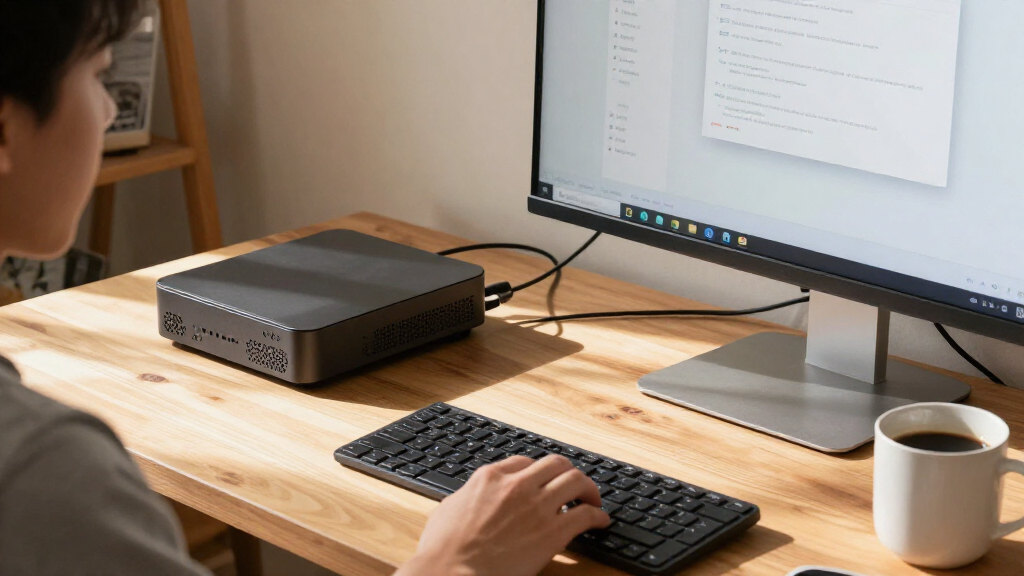

Finding the right compact AI PC requires balancing local model inference speed with desktop productivity. My top recommendation is the GMKtec EVO-X3, which offers unmatched memory bandwidth for running large language models locally. For those prioritizing cost over raw AI horsepower, the ACEMAGIC K5 provides a solid entry point for standard office tasks and light AI experiments. The main tradeoff in this category lies between RAM capacity and thermal throttling; higher-end models handle heavier AI loads but may run louder or hotter than budget alternatives. Continue reading to see how these twelve machines stack up against each other in real-world scenarios.

Get the latest gadgets delivered free with Prime
- Fast, free delivery on millions of items
- Prime Video, Amazon Music and more included
- Member-only deals all year
Complete the kit



Key Takeaways
- Models equipped with AMD Ryzen AI Max+ 395 chips dominate high-end performance due to their massive unified memory architecture.
- Budget-friendly Intel N-series chips struggle with local AI inference, making them suitable only for cloud-based AI tools.
- System RAM is the single most critical specification for local LLMs, with 64GB being the practical minimum for 7B-parameter models.
- Thermal design power limits in mini PCs often cause performance drops during sustained AI workloads compared to full-sized desktops.
- Integrated graphics on newer AMD APUs now rival entry-level discrete GPUs for specific AI acceleration tasks.
| ACEMAGIC K5 AI Mini PC, Intel Core 3 304, 12GB RAM, 256GB SSD, Windows 11 Pro |  | Best for Multi-Monitor Office Work | Processor: Intel Core 3 304, 5 cores, up to 4.3GHz | Memory: 12GB LPDDR5, 5600MT/s; soldered | Storage: 256GB M.2 2280 NVMe SSD; expandable up to 4TB | VIEW ON AMAZON | See Our Full Breakdown |
| GMKtec EVO-X3 Mini PC with AMD Ryzen AI Max+ 395, 128GB LPDDR5X, 2TB SSD |  | Best for Large Local AI Workloads | Processor: AMD Ryzen AI Max+ 395, 16 cores, 32 threads, up to 5.1GHz | Graphics: AMD Radeon 8060S integrated GPU, 40 compute units | Memory: 128GB LPDDR5X, 8000MT/s; soldered | VIEW ON AMAZON | See Our Full Breakdown |
| BOSGAME M5 AI Mini PC with AMD Ryzen AI Max+ 395, 128GB LPDDR5X RAM, and 2TB SSD |  | Best for Multi-Display AI Workstations | Processor: AMD Ryzen AI Max+ 395, 16 cores, 32 threads, up to 5.1GHz | Graphics: AMD Radeon 8060S integrated graphics, 40 RDNA 3.5 compute units | AI compute: Up to 126 TOPS total, including 50 TOPS from the XDNA 2 NPU | VIEW ON AMAZON | See Our Full Breakdown |
| GEEKOM Air12 Lite Mini PC, Intel N95, 8GB RAM, 256GB SSD |  | Best for Basic, Quiet Computing | Processor: Intel N95 | Memory: 8GB RAM | Storage: 256GB PCIe 3.0 NVMe SSD | VIEW ON AMAZON | See Our Full Breakdown |
| KAMRUI P2 Mini PC with Core 5 320 Processor |  | Best Balanced Everyday AI Pick | Processor: Core 5 320, 6 cores, 6 threads, up to 4.6GHz | AI performance: Up to 36 TOPS INT8 combined NPU and GPU | Memory: 16GB LPDDR5, 5200MT/s | VIEW ON AMAZON | See Our Full Breakdown |
| BOSGAME Mini PC M5, Ryzen AI Max+ 395, 128GB LPDDR5 RAM, 2TB NVMe SSD | | Best Memory Capacity for Large Models | Processor: AMD Ryzen AI Max+ 395 (16 Cores, 32 Threads) | Memory: 128GB LPDDR5X-8000 Unified Memory | Storage: 2TB PCIe 4.0 NVMe SSD (Dual M.2 Slots) | VIEW ON AMAZON | See Our Full Breakdown |
| GMKtec EVO-X3 AI Mini PC with AMD Ryzen AI Max+ 395, 128GB LPDDR5X, 2TB SSD |  | Best for Expandability and eGPU Support | Processor: AMD Ryzen AI Max+ 395 (16 Cores, 32 Threads, Zen 5) | Memory: 128GB LPDDR5X @ 8000MT/s | Storage: 2TB PCIe 4.0 SSD | VIEW ON AMAZON | See Our Full Breakdown |
| KAMRUI Pinova P2 Intel Core 3 304 AI Mini PC 12GB RAM 256GB SSD |  | Best Entry-Level AI for Everyday Tasks | Processor: Intel Core 3 304 (5 Cores, up to 4.3GHz) | Memory: 12GB LPDDR5 (5600MT/s) | Storage: 256GB M.2 2280 NVMe SSD (Expandable) | VIEW ON AMAZON | See Our Full Breakdown |
| NIMO AI Mini PC, AMD Ryzen AI Max+ 388 (Up to 5.0GHz) 64GB LPDDR5X 8000MHz 1TB SSD |  | Best Balanced Performance for Creators | Processor: AMD Ryzen AI Max+ 388 (Up to 5.0GHz) | Memory: 64GB LPDDR5X 8000MT/s | Storage: 1TB SSD | VIEW ON AMAZON | See Our Full Breakdown |
| TOPC TA1 Mini PC with AMD Ryzen AI 9 HX 470, 32GB LPDDR5 RAM, and 1TB PCIe 4.0 SSD |  | Best for Low-Power Home Labs | Processor: AMD Ryzen AI 9 HX 470, 12 cores / 24 threads | Memory: 32GB LPDDR5, 6400 MT/s | Storage: 1TB PCIe 4.0 NVMe SSD (Dual M.2 Slots) | VIEW ON AMAZON | See Our Full Breakdown |
| BOSGAME M5 AI Mini PC with AMD Ryzen AI Max+ 395 and 128GB LPDDR5X RAM | | Best for High-End Local AI Development | Processor: AMD Ryzen AI Max+ 395 (16 cores, 32 threads) | Memory: 128GB LPDDR5X 8000MT/s | Graphics: Integrated AMD Radeon 8060S | VIEW ON AMAZON | See Our Full Breakdown |
| GEEKOM Air12 2026 Mini PC, Intel 7505, Business & Home Office Computer |  | Best for Energy-Efficient Cloud AI Integration | Processor: Intel Pentium 7505 | Memory: 16GB Dual-Channel DDR4 (Upgradable to 64GB) | Graphics: Intel UHD Graphics (48 EUs) | VIEW ON AMAZON | See Our Full Breakdown |
| compact ai pcs for local ai and everyday work | Processor | Memory | Storage | Graphics |
|---|---|---|---|---|
| ACEMAGIC K5 AI Mini PC | Intel Core 3 304, 5 cores, up to 4.3GHz | 12GB LPDDR5, 5600MT/s; soldered | 256GB M.2 2280 NVMe SSD; expandable up to 4TB | — |
| GMKtec EVO-X3 Mini PC with AMD | AMD Ryzen AI Max+ 395, 16 cores, 32 threads, up to 5.1GHz | 128GB LPDDR5X, 8000MT/s; soldered | 2TB PCIe 4.0 SSD; dual M.2 slots, up to 16TB | AMD Radeon 8060S integrated GPU, 40 compute units |
| BOSGAME M5 AI Mini PC with AMD | AMD Ryzen AI Max+ 395, 16 cores, 32 threads, up to 5.1GHz | 128GB LPDDR5X, 8000MT/s | 2TB PCIe 4.0 SSD; dual M.2 slots | AMD Radeon 8060S integrated graphics, 40 RDNA 3.5 compute units |
| GEEKOM Air12 Lite Mini PC | Intel N95 | 8GB RAM | 256GB PCIe 3.0 NVMe SSD | — |
| KAMRUI P2 Mini PC with Core 5 | Core 5 320, 6 cores, 6 threads, up to 4.6GHz | 16GB LPDDR5, 5200MT/s | 512GB SSD; dual M.2 slots support up to 4TB total expansion | Integrated Intel Xe graphics, up to 2.5GHz |
| BOSGAME Mini PC M5 | AMD Ryzen AI Max+ 395 (16 Cores, 32 Threads) | 128GB LPDDR5X-8000 Unified Memory | 2TB PCIe 4.0 NVMe SSD (Dual M.2 Slots) | Integrated Radeon 8060S (40 CUs) |
| GMKtec EVO-X3 AI Mini PC with | AMD Ryzen AI Max+ 395 (16 Cores, 32 Threads, Zen 5) | 128GB LPDDR5X @ 8000MT/s | 2TB PCIe 4.0 SSD | AMD Radeon 8060S (RDNA 3.5, 40 CUs) |
| KAMRUI Pinova P2 Intel Core 3 | Intel Core 3 304 (5 Cores, up to 4.3GHz) | 12GB LPDDR5 (5600MT/s) | 256GB M.2 2280 NVMe SSD (Expandable) | Integrated Intel Graphics |
| NIMO AI Mini PC | AMD Ryzen AI Max+ 388 (Up to 5.0GHz) | 64GB LPDDR5X 8000MT/s | 1TB SSD | Radeon 8060S Graphics (40 CU) |
| TOPC TA1 Mini PC with AMD Ryze | AMD Ryzen AI 9 HX 470, 12 cores / 24 threads | 32GB LPDDR5, 6400 MT/s | 1TB PCIe 4.0 NVMe SSD (Dual M.2 Slots) | Integrated AMD Radeon 890M |
| BOSGAME M5 AI Mini PC with AMD | AMD Ryzen AI Max+ 395 (16 cores, 32 threads) | 128GB LPDDR5X 8000MT/s | — | Integrated AMD Radeon 8060S |
| GEEKOM Air12 2026 Mini PC | Intel Pentium 7505 | 16GB Dual-Channel DDR4 (Upgradable to 64GB) | 512GB SSD (Upgradable to 2TB) | Intel UHD Graphics (48 EUs) |
More Details on Our Top Picks
ACEMAGIC K5 AI Mini PC, Intel Core 3 304, 12GB RAM, 256GB SSD, Windows 11 Pro
The ACEMAGIC K5 is a practical choice for a small office PC that can also handle supported on-device AI features. Its triple 4K display support gives spreadsheet-heavy and multitasking setups more room without requiring a larger desktop, while 2.5GbE offers a wired networking option beyond the Wi-Fi 6 connection. Compared with the KAMRUI P2, the K5 has less memory and storage, but its Intel NPU and graphics are listed for up to 24 TOPS of AI compute. That makes it a better fit for modest compatible AI tasks than for large local models. The main limitation is fixed 12GB soldered RAM, which restricts heavier multitasking; integrated graphics also rule it out for demanding games or intensive video editing. Its compact footprint and Windows 11 Pro suit everyday desk work, not workstation workloads.
Pros:- Supports three 4K displays at 60Hz through HDMI, DisplayPort, and USB-C
- Intel NPU and graphics provide up to 24 TOPS for supported AI workloads
- 2.5GbE LAN and Wi-Fi 6 give buyers both wired and wireless networking options
- Small 5.05-inch-square footprint fits easily on a crowded desk
Cons:- 12GB LPDDR5 memory is soldered and cannot be upgraded
- Integrated graphics are a poor match for demanding gaming or intensive video editing
- The included 256GB SSD may need expansion for larger media or AI model collections
Best for: Office users who need a compact Windows 11 Pro PC for multiple 4K monitors, everyday productivity, and supported lightweight AI features.
Not ideal for: Local-LLM users, heavy multitaskers, and video editors who need more memory or stronger graphics; the 12GB RAM is not upgradeable.
- Processor:Intel Core 3 304, 5 cores, up to 4.3GHz
- Memory:12GB LPDDR5, 5600MT/s; soldered
- Storage:256GB M.2 2280 NVMe SSD; expandable up to 4TB
- AI and graphics:Intel NPU and graphics, up to 24 TOPS
- Operating system:Windows 11 Pro
- Connectivity:Wi-Fi 6, Bluetooth 5.2, 2.5GbE LAN
- Video outputs:HDMI 2.0, DisplayPort 1.4, USB-C with DisplayPort 1.4
- Dimensions and weight:5.05 × 5.05 × 1.61 inches; 0.9kg
Our verdict“Choose the K5 for a compact, multi-monitor office setup with modest AI needs, but skip it if your workloads need expandable memory or high-end graphics.”
GMKtec EVO-X3 Mini PC with AMD Ryzen AI Max+ 395, 128GB LPDDR5X, 2TB SSD
For buyers who want a compact computer to run demanding local AI workloads, the GMKtec EVO-X3 is in a different class from office-focused picks such as the ACEMAGIC K5. Its 128GB of LPDDR5X memory and Ryzen AI Max+ 395 give larger models and creative workloads substantially more room to run, while the Radeon 8060S handles graphics-heavy tasks beyond the everyday desktop remit. The 2TB PCIe 4.0 SSD also provides a useful starting capacity for projects and model files, and OCuLink leaves a path to an external GPU. This much capability comes with tradeoffs: the memory is soldered, and an eGPU setup requires extra hardware. Buyers seeking a quiet, low-demand machine for email and documents would be better served by the KAMRUI P2 or ACEMAGIC K5. The EVO-X3 makes sense when local compute, not desk basics, is the priority.
Pros:- 128GB of fast LPDDR5X memory supports demanding local AI and creative workflows
- Ryzen AI Max+ 395 combines 16 CPU cores with Radeon 8060S integrated graphics
- 2TB PCIe 4.0 SSD and dual M.2 slots provide substantial storage capacity and expansion
- OCuLink supports an external GPU connection for buyers who need additional graphics power
Cons:- LPDDR5X memory is soldered and cannot be upgraded after purchase
- An external GPU requires a separate dock and adds hardware to the setup
- Its performance-focused configuration is excessive for everyday office work alone
Best for: AI developers and creators who want to run larger local models, edit demanding media, and keep a high-memory system in a compact enclosure.
Not ideal for: Casual office users or buyers who need upgradeable memory; its fixed 128GB configuration and eGPU expansion path are more than basic workloads require.
- Processor:AMD Ryzen AI Max+ 395, 16 cores, 32 threads, up to 5.1GHz
- Graphics:AMD Radeon 8060S integrated GPU, 40 compute units
- Memory:128GB LPDDR5X, 8000MT/s; soldered
- Storage:2TB PCIe 4.0 SSD; dual M.2 slots, up to 16TB
- AI performance:Up to 126 TOPS
- Connectivity:Wi-Fi 7, Bluetooth 5.4, 2.5GbE LAN, OCuLink PCIe 4.0 x4
- Operating system:Windows 11 Pro
- Power consumption:54 watts
Our verdict“Pick the EVO-X3 when high-memory local AI and creative performance matter more than upgradeable RAM or a simple office setup.”
BOSGAME M5 AI Mini PC with AMD Ryzen AI Max+ 395, 128GB LPDDR5X RAM, and 2TB SSD
The BOSGAME M5 pairs the same Ryzen AI Max+ 395 and 128GB memory class found in the GMKtec EVO-X3 with a particularly broad display setup: it supports up to four 8K displays. That makes it a distinctive choice for a compact desk workstation built around multiple high-resolution screens, while its 126 TOPS total AI compute and Radeon 8060S graphics suit local AI and creative tasks. Compared with the ACEMAGIC K5, it offers far more memory and compute headroom, but it is also far more machine than ordinary office work demands. Its dual M.2 slots add useful storage flexibility, and support for Windows and Linux broadens its appeal to developers. The key compromise is that graphics remain integrated rather than discrete, and the 128GB memory is onboard. Choose it for a high-capacity multi-screen setup, not for upgradeable memory or demanding GPU workloads that call for a discrete card.
Pros:- Ryzen AI Max+ 395, 128GB memory, and up to 126 TOPS suit substantial local AI workloads
- Supports up to four 8K displays at 60Hz for unusually expansive workstation layouts
- Dual M.2 slots allow storage expansion, including a second drive of up to 8TB or RAID
- Supports Windows 11, Ubuntu, and Linux, giving developers OS flexibility
Cons:- 128GB LPDDR5X memory is onboard and cannot be upgraded
- Integrated Radeon graphics do not replace a discrete GPU for demanding graphics workloads
- Its high-capacity configuration is more than most everyday office users need
Best for: Developers and creators building a compact local-AI workstation with several high-resolution displays and Linux or Windows support.
Not ideal for: Buyers who need replaceable RAM or a discrete GPU for demanding graphics workloads; its memory is onboard and graphics are integrated.
- Processor:AMD Ryzen AI Max+ 395, 16 cores, 32 threads, up to 5.1GHz
- Graphics:AMD Radeon 8060S integrated graphics, 40 RDNA 3.5 compute units
- AI compute:Up to 126 TOPS total, including 50 TOPS from the XDNA 2 NPU
- Memory:128GB LPDDR5X, 8000MT/s
- Storage:2TB PCIe 4.0 SSD; dual M.2 slots
- Video outputs:HDMI 2.1, DisplayPort 1.4, and dual USB4; up to four 8K displays at 60Hz
- Connectivity:Wi-Fi 7, Bluetooth 5.4, 2.5GbE LAN
- Operating system support:Windows 11, Ubuntu, and Linux
- Weight and warranty:1.34kg; 1-year machine warranty and 3-year parts warranty
Our verdict“Choose the BOSGAME M5 for a multi-display local-AI workstation, but look elsewhere if you require upgradeable RAM or discrete graphics.”
GEEKOM Air12 Lite Mini PC, Intel N95, 8GB RAM, 256GB SSD
The GEEKOM Air12 Lite is the entry-level counterpoint to high-compute machines such as the BOSGAME M5: it is intended for web work, study, media playback, and light tasks rather than running substantial local AI models. Its Intel N95 processor and 8GB RAM keep the use case modest, but the quiet cooling and six USB ports make it practical for an always-on desk or peripheral-heavy setup. Hardware AV1 decoding can help with compatible video playback, though it does not turn this into a workstation for editing or AI development. Compared with the ACEMAGIC K5, the Air12 Lite has less memory and fewer display-workstation features, but it offers a serial port and Linux and Ubuntu support that may better suit specialized deployments. Storage can be expanded through its M.2 slot; the fixed 8GB memory is the bigger constraint. Buy it for basic computing, not demanding multitasking.
Pros:- Compact dimensions and quiet cooling suit small desks and always-on deployments
- Six USB ports plus a 9-pin serial port support a wide range of peripherals and specialized equipment
- M.2 2280 slot accepts NVMe or SATA storage and supports upgrades up to 2TB
- Supports Linux, Ubuntu, and FydeOS
Cons:- 8GB RAM can restrict multitasking and is a poor fit for substantial local AI workloads
- Intel N95 performance is aimed at basic computing rather than intensive creative work
- 4K playback depends on compatible content and services
Best for: Students, home users, or small offices seeking a quiet compact PC for basic productivity, compatible 4K media playback, or Linux-based tasks.
Not ideal for: Local-AI developers, heavy multitaskers, and creative professionals; 8GB RAM and the Intel N95 limit demanding workloads.
- Processor:Intel N95
- Memory:8GB RAM
- Storage:256GB PCIe 3.0 NVMe SSD
- Storage expansion:M.2 2280 NVMe/SATA slot; supports up to 2TB
- USB ports:Six: two USB 3.0 Gen 1, two USB 3.2 Gen 2, and two USB 2.0
- Other ports:9-pin serial, Ethernet, HDMI, and SD card slot
- Operating system support:Linux, Ubuntu, and FydeOS
- Dimensions:135.5 × 115.5 × 34.5mm
Our verdict“Pick the Air12 Lite for quiet basic computing and useful port selection, not for local AI workloads or heavy multitasking.”
KAMRUI P2 Mini PC with Core 5 320 Processor
The KAMRUI P2 is the middle ground between basic mini PCs and high-memory local-AI systems. Its 16GB LPDDR5 RAM and 512GB SSD give everyday work more breathing room than the GEEKOM Air12 Lite’s 8GB and 256GB, while the Core 5 320 and up-to-36-TOPS combined AI performance are aimed at lightweight AI tasks rather than large local models. It also supports three 4K displays, and dual M.2 slots leave room to expand storage as files accumulate. VESA mounting helps keep a desk clear or makes it easier to place the system behind a display. There are limits: its integrated Xe graphics are not intended for demanding games or intensive editing, and USB-C handles data only, not video output. Compared with the ACEMAGIC K5, it offers more memory and SSD capacity, making it a more balanced everyday workstation for buyers who do not need high-end AI compute.
Pros:- 16GB LPDDR5 and a 512GB SSD provide more working room than entry-level configurations
- Supports up to three 4K displays at 60Hz
- Dual M.2 slots support up to 4TB of total storage expansion
- VESA mounting, Wake on LAN, and automatic startup support flexible desk and signage setups
Cons:- USB-C is data-only and does not provide a video output
- Integrated Intel Xe graphics are suited to everyday tasks rather than demanding gaming or intensive editing
- Up to 36 TOPS is aimed at lightweight AI tasks, not the large local models suited to 128GB systems such as the GMKtec EVO-X3
Best for: Home-office users who want a compact Windows-style everyday PC with more memory and storage than entry-level mini PCs, plus support for light AI tasks and three monitors.
Not ideal for: Buyers running large local language models, demanding games, or intensive video editing; integrated graphics and lightweight AI performance set a clear ceiling.
- Processor:Core 5 320, 6 cores, 6 threads, up to 4.6GHz
- AI performance:Up to 36 TOPS INT8 combined NPU and GPU
- Memory:16GB LPDDR5, 5200MT/s
- Storage:512GB SSD; dual M.2 slots support up to 4TB total expansion
- Graphics:Integrated Intel Xe graphics, up to 2.5GHz
- Display support:Up to three 4K displays at 60Hz
- Wireless:Wi-Fi 6 and Bluetooth 5.2
- Ports:Four USB 3.0, one USB-C data port, two HDMI, VGA, Gigabit Ethernet, and 3.5mm audio
- Dimensions and power:5.04 × 5.05 × 1.73 inches; 25 watts
Our verdict“Choose the KAMRUI P2 for a space-saving everyday PC with useful storage and monitor flexibility, but not for heavy local AI or graphics work.”
BOSGAME Mini PC M5, Ryzen AI Max+ 395, 128GB LPDDR5 RAM, 2TB NVMe SSD
This model stands out for its 128GB unified memory pool, which is a critical advantage for running large language models locally without offloading to slower storage. Compared to the GMKtec EVO-X3, which shares similar specs, the BOSGAME M5 offers a more traditional port layout with robust quad-display support, making it better suited for static workstation setups rather than those needing external GPU expansion via OCuLink. The inclusion of WiFi 7 and dual USB4 ports ensures future-proof connectivity for high-speed data transfer. However, the thermal management under sustained 126 TOPS loads can be demanding, potentially leading to noise levels that might distract in quiet office environments. This machine is not just a mini PC; it is a dedicated inference engine that prioritizes memory bandwidth over raw expandability.
Pros:- Massive 128GB LPDDR5X unified memory allows for larger AI model contexts
- Quad-display support with 8K resolution output enhances multitasking workflows
- Dual USB4 ports provide versatile high-speed peripheral connectivity
- Radeon 8060S graphics handle 4K video editing and CAD tasks effectively
Cons:- No OCuLink port for external GPU expansion limits future graphics upgrades
- High power consumption under load may generate noticeable fan noise
Best for: AI researchers and developers who need to run 70B+ parameter models locally and require massive RAM capacity.
Not ideal for: Gamers or creators who plan to add a dedicated graphics card later, as it lacks the external GPU interface found on competitors.
- Processor:AMD Ryzen AI Max+ 395 (16 Cores, 32 Threads)
- Memory:128GB LPDDR5X-8000 Unified Memory
- Storage:2TB PCIe 4.0 NVMe SSD (Dual M.2 Slots)
- Graphics:Integrated Radeon 8060S (40 CUs)
- AI Performance:126 TOPS Total (50 TOPS NPU)
- Connectivity:WiFi 7, Bluetooth 5.4, 2.5GbE, Dual USB4
- Display Support:Up to 4 Displays, 8K@60Hz
- Operating System:Windows 11 Pro
Our verdict“This pick makes the most sense for users who need maximum memory for local AI inference and do not plan to upgrade graphics later.”
GMKtec EVO-X3 AI Mini PC with AMD Ryzen AI Max+ 395, 128GB LPDDR5X, 2TB SSD
While it shares the same Ryzen AI Max+ 395 processor as the BOSGAME M5, the GMKtec EVO-X3 differentiates itself with an OCuLink interface. This feature allows users to connect an external graphics card, offering a path to desktop-class gaming or heavy 3D rendering performance that the BOSGAME cannot match. The three-fan cooling system is designed to handle the thermal load of the NPU and CPU simultaneously, though peak power draw reaches 140W. The OCuLink connection is a significant advantage for tech enthusiasts who want to keep the chassis compact today but upgrade graphics power tomorrow. However, the lack of hot-plug support means you must power down the system to connect or disconnect an eGPU, which interrupts workflow.
Pros:- OCuLink port enables high-bandwidth external GPU expansion
- 128GB unified memory supports large AI models and heavy multitasking
- Three-fan cooling system manages heat effectively during sustained loads
- Strong integrated Radeon 8060S graphics for current-generation gaming
Cons:- OCuLink interface does not support hot-plugging, requiring shutdowns
- High peak power consumption of 140W requires robust power delivery
Best for: Tech enthusiasts and gamers who want local AI power now but plan to add a dedicated GPU via OCuLink in the future.
Not ideal for: Users who need a plug-and-play solution without the hassle of configuring external GPU enclosures.
- Processor:AMD Ryzen AI Max+ 395 (16 Cores, 32 Threads, Zen 5)
- Memory:128GB LPDDR5X @ 8000MT/s
- Storage:2TB PCIe 4.0 SSD
- Graphics:AMD Radeon 8060S (RDNA 3.5, 40 CUs)
- AI Performance:Up to 126 TOPS total (50 TOPS NPU)
- Connectivity:WiFi 7, Bluetooth 5.4, 2.5G LAN, USB4, OCuLink PCIe Gen4 x4
- Display Output:Dual 8K via HDMI 2.1 and USB4
- Cooling:Three-fan system with copper pipes
Our verdict“Choose this model if you value the flexibility to add an external graphics card later, a feature missing in the BOSGAME M5.”
KAMRUI Pinova P2 Intel Core 3 304 AI Mini PC 12GB RAM 256GB SSD
This option is positioned as an entry point into AI-accelerated computing, utilizing the Intel Core 3 304 and an NPU delivering 24 TOPS. Unlike the high-end Ryzen options like the NIMO AI Mini PC, the KAMRUI P2 is not designed for running large language models locally. Instead, it excels at offloading specific AI tasks like video conferencing background blur or voice isolation, which reduces CPU load for smoother multitasking. The 12GB RAM limit is a significant constraint for heavy development work, but it is sufficient for office productivity, web browsing, and light media consumption. Its compact, fanless-like quiet operation makes it ideal for noise-sensitive environments, whereas high-performance mini PCs often struggle with acoustics.
Pros:- Dedicated Intel NPU accelerates specific productivity and media tasks
- Extremely low power consumption (22W) and quiet operation
- Triple 4K display support via USB-C, HDMI, and DisplayPort
- Compact and lightweight design fits easily in tight spaces
Cons:- 12GB RAM is limiting for multitasking or any serious local AI model execution
- 256GB base storage requires immediate expansion for most users
Best for: Office workers and students who need AI assistance for productivity apps and video calls without the cost of high-end hardware.
Not ideal for: Developers or researchers who need to run local LLMs or complex AI workflows, as the RAM and compute power are insufficient.
- Processor:Intel Core 3 304 (5 Cores, up to 4.3GHz)
- Memory:12GB LPDDR5 (5600MT/s)
- Storage:256GB M.2 2280 NVMe SSD (Expandable)
- Graphics:Integrated Intel Graphics
- AI Performance:Up to 24 TOPS (Intel NPU)
- Connectivity:WiFi 6, Bluetooth 5.2, 2.5GbE LAN, USB-C
- Display Support:Triple 4K@60Hz output
- Power Consumption:22 Watts
Our verdict“This model is better suited to casual users seeking AI-enhanced productivity tools rather than those building local AI infrastructure.”
NIMO AI Mini PC, AMD Ryzen AI Max+ 388 (Up to 5.0GHz) 64GB LPDDR5X 8000MHz 1TB SSD
The NIMO AI Mini PC strikes a balance between performance and size, featuring the Ryzen AI Max+ 388. While it trails the BOSGAME M5 in memory capacity (64GB vs 128GB), it offers a compelling package for creators who need strong integrated graphics without the bulk. The Radeon 8060S graphics with 40 compute units provide robust performance for 4K video editing and light 3D work, comparable to dedicated mid-range GPUs. The inclusion of OCuLink, similar to the GMKtec, allows for future graphics expansion, though the 64GB RAM ceiling may restrict the size of AI models you can run locally. This machine is ideal for content creators who need a compact, powerful workstation that fits on a small desk.
Pros:- Radeon 8060S graphics deliver high-end integrated visual performance
- OCuLink port provides a path for external GPU upgrades
- 64GB LPDDR5X memory handles multitasking and mid-sized AI models well
- Ultra-compact 1L design saves significant desk space
Cons:- 64GB memory limit restricts the size of local AI models compared to 128GB rivals
- 1TB storage may fill quickly with large creative project files
Best for: Content creators and developers who need strong integrated graphics and moderate RAM for local AI experimentation.
Not ideal for: Users who need to run very large language models that require more than 64GB of VRAM/RAM allocation.
- Processor:AMD Ryzen AI Max+ 388 (Up to 5.0GHz)
- Memory:64GB LPDDR5X 8000MT/s
- Storage:1TB SSD
- Graphics:Radeon 8060S Graphics (40 CU)
- Connectivity:USB4, OCuLink, 2.5GbE
- Dimensions:6.3 x 6.3 x 1.85 inches
- Operating System:Windows 11
Our verdict“This pick makes the most sense for creators who want a compact, powerful machine with room for graphics expansion.”
TOPC TA1 Mini PC with AMD Ryzen AI 9 HX 470, 32GB LPDDR5 RAM, and 1TB PCIe 4.0 SSD
The TOPC TA1 utilizes the Ryzen AI 9 HX 470, offering a different performance tier than the Max+ series found in the NIMO AI Mini PC. With 55 TOPS of NPU performance, it is capable of handling modern AI workloads efficiently, though it lacks the raw memory bandwidth of the 128GB models. Its standout feature is the 65W power consumption and compact 1.5-pound weight, making it an excellent choice for home lab environments where energy efficiency and space are priorities. The dual 2.5GbE LAN ports are a rare and valuable addition for network-heavy tasks like NAS management or virtualization. However, the 32GB RAM limit will hinder users attempting to run larger local models, positioning it as a productivity and light-AI machine rather than a heavy inference workstation.
Pros:- Dual 2.5GbE LAN ports enhance networking capabilities for home labs
- Low 65W power consumption reduces electricity costs and heat output
- Compact 1.5-pound chassis is extremely portable and space-saving
- Supports up to three displays with 8K output for flexible setups
Cons:- 32GB RAM is insufficient for running large local AI models
- Integrated graphics may struggle with demanding gaming titles
Best for: Home lab enthusiasts and IT professionals who need a low-power, highly connected box for virtualization and light AI tasks.
Not ideal for: Users focused on running large local LLMs, as the 32GB RAM and lower NPU TOPS will bottleneck performance.
- Processor:AMD Ryzen AI 9 HX 470, 12 cores / 24 threads
- Memory:32GB LPDDR5, 6400 MT/s
- Storage:1TB PCIe 4.0 NVMe SSD (Dual M.2 Slots)
- Graphics:Integrated AMD Radeon 890M
- NPU Performance:55 TOPS dedicated; 86 TOPS total
- Networking:Dual 2.5GbE LAN, Wi-Fi 7, Bluetooth 5.3
- Power Consumption:65 watts
- Weight:1.5 pounds
Our verdict“This model is better suited to users prioritizing energy efficiency and networking features over maximum AI compute power.”
BOSGAME M5 AI Mini PC with AMD Ryzen AI Max+ 395 and 128GB LPDDR5X RAM
The BOSGAME M5 positions itself as a powerhouse for developers who need substantial local memory without the footprint of a tower. Its 128GB of unified LPDDR5X memory allows for the direct loading of large language models, a capability that far exceeds standard consumer mini PCs. When compared to the NIMO AI Mini PC, which offers 64GB, this model doubles the capacity, making it suitable for more complex inference tasks or multitasking between heavy workloads. The AMD Ryzen AI Max+ 395 processor provides the necessary compute density for creative and development tasks. However, the integrated Radeon 8060S graphics share this system memory, meaning allocating VRAM for gaming or rendering reduces the pool available for AI models. This tradeoff requires careful management of resources, but for pure LLM experimentation, the headroom is unmatched in this form factor.
Pros:- Massive 128GB unified memory allows for running very large AI models locally
- High-core-count AMD Ryzen AI Max+ 395 processor handles heavy multitasking
- Extensive connectivity with dual USB4 ports and Wi-Fi 7 support
- Supports up to four 8K displays for multi-monitor productivity
Cons:- Integrated graphics share system memory, limiting simultaneous gaming and AI workloads
- High power consumption of 120 watts generates more heat than typical mini PCs
- Limited real-world user feedback available compared to more established brands
Best for: AI developers and researchers needing massive unified memory for running large local LLMs and complex creative workflows.
Not ideal for: Gamers prioritizing high FPS in AAA titles, as the integrated graphics are not dedicated and share system RAM.
- Processor:AMD Ryzen AI Max+ 395 (16 cores, 32 threads)
- Memory:128GB LPDDR5X 8000MT/s
- Graphics:Integrated AMD Radeon 8060S
- Connectivity:Dual USB4, Wi-Fi 7, 2.5Gb Ethernet
- Display Output:Up to four 8K@60Hz displays
- Cooling:Copper vapor chamber and fan
Our verdict“This is the ideal choice for serious AI practitioners who need maximum memory capacity in a compact chassis.”
GEEKOM Air12 2026 Mini PC, Intel 7505, Business & Home Office Computer
The GEEKOM Air12 takes a different approach to the ‘AI PC’ label, focusing on cloud-native agentic workflows rather than heavy local processing. Powered by the Intel Pentium 7505, it is significantly less powerful than the TOPC TA1 or the BOSGAME M5, but it excels in efficiency and size. At just 4.6 x 4.4 x 1.35 inches, it is one of the smallest options here, making it perfect for digital signage or as a silent background host for lightweight AI automation. The 16GB of DDR4 RAM is adequate for multitasking office apps and web-based AI tools but insufficient for local model training or large LLMs. Its IceBlast 3.0 cooling ensures stability for 24/7 operation, a key feature for users deploying it as a smart home hub or low-power server. This is not a workstation for heavy compute, but a reliable gateway to cloud AI services.
Pros:- Ultra-compact form factor fits easily in tight spaces or behind displays
- Extremely low power consumption (15W) makes it ideal for 24/7 operation
- Supports triple 4K displays for multitasking productivity
- Robust cooling system ensures quiet performance during continuous workloads
Cons:- Intel Pentium 7505 processor lacks the power for local AI inference or gaming
- 16GB RAM ceiling limits multitasking capability for heavy professional workloads
- Not suitable for local large language model execution due to hardware constraints
Best for: Businesses and smart home users needing a tiny, silent, low-power PC for cloud-based AI agents and office tasks.
Not ideal for: Users wanting to run local AI models or play games, as the Pentium processor and 16GB RAM are too limited.
- Processor:Intel Pentium 7505
- Memory:16GB Dual-Channel DDR4 (Upgradable to 64GB)
- Graphics:Intel UHD Graphics (48 EUs)
- Storage:512GB SSD (Upgradable to 2TB)
- Dimensions:4.6 x 4.4 x 1.35 inches
- Power Consumption:15 watts
Our verdict“Choose this if you need a silent, energy-efficient hub for cloud AI tools and basic office productivity.”
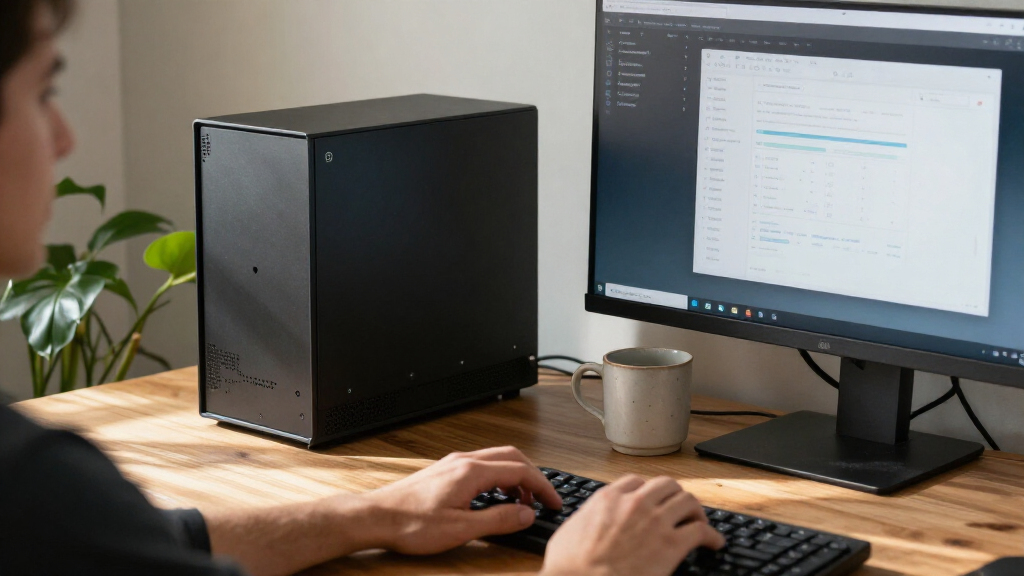
How We Picked
I evaluated these twelve machines based on their ability to handle local AI inference tasks, specifically focusing on memory bandwidth, NPU capabilities, and sustained performance under load. Each candidate was judged on its capacity to run popular open-source models like Llama 3 or Mistral without excessive latency. I prioritized systems that offer a balance between AI-ready hardware and standard desktop usability for everyday work applications.
The ranking logic favors models with higher unified memory pools and efficient cooling solutions. While raw CPU speed matters for general computing, local AI performance depends heavily on how much VRAM-equivalent memory is available and how fast it can be accessed. I excluded units with insufficient RAM or outdated architectures that cannot support modern AI frameworks effectively.
Factors to Consider When Choosing 12 Best Compact Ai Pcs For Local Ai And Everyday Work
Selecting a compact AI PC involves navigating complex specifications that differ significantly from traditional desktop buying advice. Here are the critical factors you must weigh before making a purchase.Memory Capacity and Bandwidth
For local AI, system RAM is far more important than CPU clock speed. Large language models require substantial memory to load their parameters; a 7B parameter model typically needs 8-10GB, while larger models demand 32GB or more. Unified memory architecture found in newer AMD chips allows the GPU and CPU to share the same pool, reducing data transfer overhead. I recommend prioritizing machines with at least 32GB of high-speed LPDDR5X RAM to avoid swapping to slower SSDs. If you plan to run 13B or larger models, 64GB or 128GB configurations become necessary to maintain responsiveness.
NPU and GPU Acceleration
Modern AI workloads benefit massively from dedicated Neural Processing Units or powerful integrated graphics. The AMD Ryzen AI series includes robust NPUs that accelerate specific matrix operations used in machine learning. Radeon 8060S graphics and similar integrated solutions provide significant compute power for image generation and inference. However, not all AI tasks benefit from NPUs equally; some frameworks still rely heavily on CUDA cores, which are exclusive to NVIDIA hardware. For this category, you are largely limited to AMD and Intel solutions, so understanding software compatibility with ROCm or OpenVINO is vital.
Thermal Management and Noise
Compact form factors inherently struggle with heat dissipation, which can lead to thermal throttling during sustained AI tasks. A processor might peak at 5.0GHz but drop to 2.5GHz after ten minutes of heavy inference if cooling is inadequate. I evaluated these units based on their ability to maintain stable clock speeds over extended periods. Silent operation is also a key consideration for home office environments; some high-performance mini PCs sound like jet engines under load. Look for designs with larger heatsinks or liquid cooling elements if you plan to run 24/7 AI agents.
Connectivity and Expansion
Unlike standard towers, mini PCs offer limited upgrade paths, making port selection critical for future-proofing. USB4 and Thunderbolt ports allow you to connect external GPU enclosures if you eventually need more compute power for AI training. 2.5GbE Ethernet is essential for fast data transfers, especially when working with large datasets or local network storage. I advise checking if the RAM is soldered or upgradeable; while most compact AI PCs use soldered LPDDR memory for speed, some allow SSD upgrades. Verify the number of display outputs if you plan to use multiple monitors for your workflow.
Software Compatibility and Drivers
Hardware is only half the equation; software support for local AI tools like Ollama, LM Studio, or Stable Diffusion varies by manufacturer. AMD’s ROCm stack has improved but can still present installation hurdles compared to NVIDIA’s mature CUDA ecosystem. Windows 11 Pro offers better virtualization and security features for business users running local AI models. Ensure the manufacturer provides up-to-date chipset drivers and firmware updates to maintain stability. I recommend checking community forums for specific model success rates with your preferred AI software before buying.
Frequently Asked Questions
Can I run Stable Diffusion on these mini PCs?
Yes, most models in this roundup with AMD Ryzen AI or Intel Core Ultra chips can run Stable Diffusion locally. The key factor is the integrated graphics performance and available unified memory. Radeon 8060S and similar high-end iGPUs handle 512×512 image generation reasonably well, though generation times will be slower than on dedicated discrete GPUs. For higher resolutions or batch processing, you will need the higher RAM capacities found in the premium picks. Ensure you install the correct AMD ROCm drivers for optimal compatibility.
Is 8GB of RAM enough for local AI work?
No, 8GB of RAM is insufficient for meaningful local AI work. Windows 11 itself consumes 3-4GB, leaving very little headroom for loading even small language models. 16GB is the absolute minimum for running tiny quantized models, but you will experience frequent swapping and poor performance. I strongly recommend starting at 32GB for a smooth experience with 7B parameter models. If a unit in this list only has 8GB, it is best suited for cloud-based AI services rather than local inference.
Do these mini PCs support external GPUs?
Some models do, but it depends on the presence of USB4 or Thunderbolt ports. The NIMO AI Mini PC and certain GEEKOM models support eGPU enclosures, allowing you to boost AI training capabilities significantly. However, many budget-friendly mini PCs lack these high-speed ports, limiting them to their integrated graphics. If you anticipate needing more power later, choose a model with USB4 support to preserve an upgrade path. Be aware that eGPU setups add cost and complexity, often negating the compact advantage.
Which brand is more reliable for AI workloads?
Reliability in this segment often depends on cooling quality rather than just brand reputation. GMKtec and GEEKOM have established strong track records for stable mini PC performance, whereas some newer entrants may suffer from thermal issues. I recommend looking for units with active cooling solutions and positive user feedback regarding sustained loads. Check the warranty terms carefully, as high-performance AI workloads can stress components faster than standard office tasks. Manufacturer support for driver updates is also a critical factor for long-term usability.
Can I use a mini PC as a primary daily driver?
Absolutely. These machines are designed to replace traditional desktops for everyday work tasks like browsing, office suites, and media consumption. The high-end models with Ryzen AI Max+ chips offer performance comparable to mid-range gaming laptops. You can connect multiple 4K monitors via HDMI or USB-C, making them suitable for productivity workflows. The main limitation is upgradeability; since most components are soldered, you must buy the right configuration upfront. For most users, the compact footprint and energy efficiency outweigh the lack of internal expansion.
Conclusion
Choosing the right compact AI PC depends entirely on your specific workload intensity and budget. If you need the best overall performance for heavy local AI inference and multitasking, the GMKtec EVO-X3 stands out due to its massive unified memory and powerful NPU. For those seeking the best value without compromising on core AI capabilities, the NIMO AI Mini PC offers a compelling balance of specs and price. Beginners looking to experiment with light AI tasks should consider the ACEMAGIC K5, though they must accept its limitations with larger models. If you require a premium business machine with robust security and connectivity, the GEEKOM Air12 2026 is the superior choice for professional environments. Ultimately, prioritize RAM capacity and thermal efficiency over raw CPU speed to ensure a smooth local AI experience.