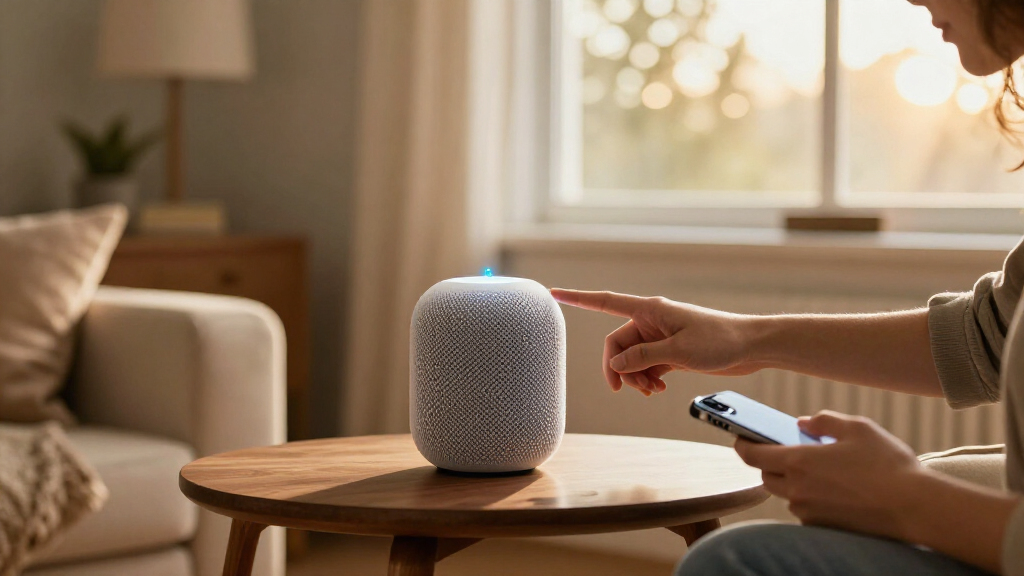

The best Apple smart home devices depend on whether you want a reliable Home hub, easy control of existing appliances, or smart lighting. My best overall pick is the Apple HomePod (2nd Generation), which combines Siri control, sound, and a central role in an Apple-focused home. For everyday automation, the Tapo Matter Smart Plug P110M stands out for energy monitoring, while the Linkind Matter Smart LED Bulbs are a straightforward way to add connected lighting. The main tradeoffs are whether a device works with Apple Home, what extra hardware or setup it needs, and how much flexibility you want across smart-home platforms. Read on for the full comparison and guidance on choosing the right fit.

Get the latest gadgets delivered free with Prime
- Fast, free delivery on millions of items
- Prime Video, Amazon Music and more included
- Member-only deals all year
Complete the kit



Key Takeaways
- The HomePod is the most capable Apple-centered hub pick. It offers more than accessory control, while the plugs and lights focus on specific jobs.
- Matter support appears across several plug options. It can help with cross-platform flexibility, but buyers should still check Apple Home compatibility and setup requirements for each model.
- Energy monitoring is the clearest feature distinction among plugs. The Tapo P110M adds consumption tracking; simpler plug models may suit buyers who only need on/off control.
- Multi-packs favor whole-home projects. Tapo and Linkind offer bundles that can make outfitting several rooms easier, while single-purpose choices suit smaller setups.
- The two HomeView listings need careful verification. Check the exact model identity and product details before choosing between the Silver and Space Gray listings.
| Meross Smart Table Lamp with Apple HomeKit and Alexa Compatibility |  | Best Smart Lamp | Bulb base: E26 medium | Light source: LED | Wattage: 6 watts | VIEW LATEST PRICE | See Our Full Breakdown |
| TP-Link Tapo Matter Supported Smart Plug Mini, 15A/1800W, Compact, White (3-Pack) |  | Best Matter Plug for a Starter Setup | Pack quantity: 3 plugs | Maximum load: 15A / 1800W | Operating voltage: 120V | VIEW LATEST PRICE | See Our Full Breakdown |
| Tapo Smart Plug, Matter Compatible, Energy Monitoring, P110M (4-Pack), 15A |  | Best for Energy Monitoring | Pack quantity: 4 plugs | Maximum load: 15A / 1800W | Connectivity: Matter and Wi-Fi | VIEW LATEST PRICE | See Our Full Breakdown |
| Apple HomeView Smart Home Display, Silver |  | Best Premium Apple Home Hub | Display: 7-inch Liquid Retina | Audio: Spatial Audio speakers | User profiles: Up to six people | VIEW LATEST PRICE | See Our Full Breakdown |
| Kasa Smart Plug Mini 15A, EP25P4, Apple HomeKit Supported |  | Best HomeKit Plug with Energy Tracking | Maximum load: 15A / 1800W | Operating voltage: 120 volts | Connectivity protocol: Wi-Fi | VIEW LATEST PRICE | See Our Full Breakdown |
| Apple HomePod (2nd Generation) Smart Speaker with Siri – Midnight |  | Best for Premium Apple Home Audio | Woofer: 4 inches | Beamforming tweeters: 5 | Microphones: 4 | VIEW LATEST PRICE | See Our Full Breakdown |
| Linkind Matter Smart Plug, Compatible with Apple Home, Alexa, Siri, Google Home |  | Best Cross-Platform Smart Plug | Voltage: 120 V | Connector type: 3-prong, Type B (North American) | Poles: 1 | VIEW LATEST PRICE | See Our Full Breakdown |
| Kasa Smart Plug Mini 15A, EP25P2, Apple HomeKit Supported |  | Best Smart Plug for Energy Monitoring | Model: EP25P2 | Operating voltage: 120 V | Maximum wattage: 1,800 W | VIEW LATEST PRICE | See Our Full Breakdown |
| Apple HomeView, Space Gray |  | Best for Shared Household Control | Display: 7-inch Liquid Retina | Audio: Spatial Audio | Personalized users: Up to 6 | VIEW LATEST PRICE | See Our Full Breakdown |
| Linkind Matter Smart Plug with Night Light, 4-Pack |  | Best for Hallways and Bedrooms | Pack size: 4 | Connectivity: 2.4 GHz Wi-Fi; IPv6 required | Smart-home compatibility: Apple Home, Alexa, Google Home, SmartThings | VIEW LATEST PRICE | See Our Full Breakdown |
| Linkind Matter Smart LED Bulbs, A19 E26, 6-Pack |  | Best for Colorful Apple Home Lighting | Bulb shape and base: A19, E26 | Pack size: 6 bulbs | Light output: 800 lumens per bulb | VIEW LATEST PRICE | See Our Full Breakdown |
| Tapo Smart Plug, Wi-Fi In-Wall Outlet, P210M, Matter Compatible |  | Best In-Wall Upgrade for Dual-Outlet Control | Installation: In-wall, wall mount | Outlet control: Two devices, independently or simultaneously | Smart home protocol: Matter over Wi-Fi | VIEW LATEST PRICE | See Our Full Breakdown |
| Linkind Matter Smart Plug, 4-Pack | 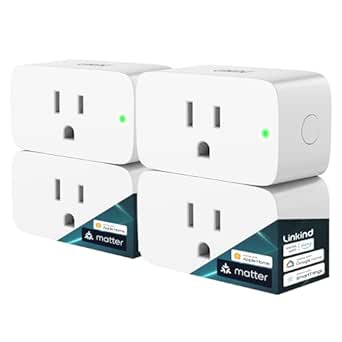 | Best Value for Adding Apple Home Plug Control | Pack size: 4 plugs | Connectivity: 2.4 GHz Wi-Fi; IPv6 network | Smart home compatibility: Apple Home, Alexa, Google Home, SmartThings, AiDot | VIEW LATEST PRICE | See Our Full Breakdown |
More Details on Our Top Picks
Meross Smart Table Lamp with Apple HomeKit and Alexa Compatibility
I’d choose the Meross lamp when you want a standalone light that fits into an Apple Home setup without replacing bulbs or adding a hub. HomeKit control, Siri commands, schedules, touch controls, and app access make everyday adjustments flexible, while color and color-temperature settings let it shift from functional light to a softer accent. Compared with the Linkind Matter Smart LED Bulbs in this roundup, this is a self-contained tabletop option rather than a way to upgrade several existing fixtures; that makes placement simple, but limits the light to one location. Its 6W output is better suited to a bedside table or desk than lighting a large room. I’d skip it for outdoor use or buyers who need a bright primary light, since it is corded and not water resistant.
Pros:- Works with Apple HomeKit and supports Siri, app, and touch control.
- Offers dimming, adjustable color temperature, and color-changing light.
- Schedules and timers can automate everyday on-and-off routines.
Cons:- Corded power limits placement and makes it less flexible than a battery-powered light.
- The 6W LED output may not provide enough light for a large room.
- Not water resistant, so it is unsuitable for outdoor use.
Best for: Apple Home users who want adjustable color lighting for a bedside table, desk, or small accent area without fitting a separate smart bulb.
Not ideal for: Buyers who need bright whole-room lighting, portable placement, or a lamp suitable for outdoor or damp spaces.
- Bulb base:E26 medium
- Light source:LED
- Wattage:6 watts
- Control:App, touch, and voice
- Connectivity:Wi-Fi
- Compatible platforms:Apple HomeKit and Amazon Alexa
- Mounting type:Tabletop
- Water resistance:Not water resistant
Our verdict“Choose the Meross if you want a color-adjustable HomeKit lamp for a small indoor area, not a bright room-filling light.”
TP-Link Tapo Matter Supported Smart Plug Mini, 15A/1800W, Compact, White (3-Pack)
I’d pick this Tapo three-pack for Apple households that want to automate several ordinary plug-in devices while keeping the option to use other smart-home platforms. Matter support is its main distinction: it gives the plug broad ecosystem compatibility, while Bluetooth onboarding is intended to simplify initial setup. Local LAN control can keep supported control functions available when internet access drops, a useful contrast with a basic Wi-Fi-only setup. Compared with the Kasa EP25P4, this model is the stronger fit if cross-platform Matter support matters more than energy tracking; the Kasa includes monitoring, while this Tapo listing does not specify it. The 15A/1800W capacity suits many common household devices, but it uses 2.4 GHz Wi-Fi only and needs a compatible ecosystem for its smart features.
Pros:- Matter support enables compatibility across Apple Home and other listed platforms.
- Three plugs make it practical to automate several devices in one setup.
- Local LAN control can support operation during internet outages.
- Compact body is designed to save outlet space.
Cons:- Connects to 2.4 GHz Wi-Fi only.
- No energy-monitoring feature is listed.
- Smart functions depend on a compatible ecosystem.
Best for: Apple Home users setting up multiple indoor lamps or small appliances who value Matter compatibility and may use more than one smart-home platform.
Not ideal for: Buyers who need energy-use reports, 5 GHz Wi-Fi support, or a smart plug for outdoor equipment.
- Pack quantity:3 plugs
- Maximum load:15A / 1800W
- Operating voltage:120V
- Protocols:Bluetooth, Matter, and Wi-Fi
- Wi-Fi band:2.4 GHz
- Supported platforms:Apple Home, Amazon Alexa, Google Home, and Samsung SmartThings
- Certification:UL certified
- Control methods:App, voice, and scheduling
Our verdict“Choose this Tapo pack for multi-device Matter flexibility, but choose the Kasa EP25P4 if tracking energy use is a priority.”
Tapo Smart Plug, Matter Compatible, Energy Monitoring, P110M (4-Pack), 15A
This four-pack is the better choice when I want smart plugs to do more than switch devices on and off. Its standout is energy monitoring, which gives buyers a way to review connected-device consumption; the product description also lists overcharge prevention and power thresholds. Matter support makes it a plausible fit for an Apple-centered home that may also include other compatible platforms. Compared with the TP-Link Tapo P125M three-pack, the P110M adds energy insights and includes one more plug, while the P125M emphasizes local LAN control and compact space-saving design. The tradeoff is that this model still depends on Wi-Fi for full functionality, supports only 2.4 GHz networks, and has no stated outdoor or waterproof rating. I’d reserve it for indoor appliances and devices whose consumption is useful to track.
Pros:- Energy monitoring provides insight into connected-device consumption.
- Matter compatibility supports broader smart-home integration.
- Four plugs suit households automating several indoor devices.
- Overcharge prevention and power thresholds are listed as safety features.
Cons:- Full functionality requires a Wi-Fi connection.
- Limited to 2.4 GHz Wi-Fi networks.
- No outdoor or waterproof rating is specified.
Best for: Apple Home users who want a group of indoor smart plugs and want to monitor the energy use of connected devices.
Not ideal for: Buyers who need outdoor-rated plugs, 5 GHz Wi-Fi, or a product whose listed details explicitly confirm local LAN control.
- Pack quantity:4 plugs
- Maximum load:15A / 1800W
- Connectivity:Matter and Wi-Fi
- Control:App, voice, remote, and scheduling
- Energy monitoring:Supported
- Safety features:Overcharge prevention and power thresholds
- Mounting type:Tabletop
- Color:White
Our verdict“Choose the P110M pack if energy tracking and four Matter-compatible plugs matter more than the P125M’s stated local LAN control.”
Apple HomeView Smart Home Display, Silver
On the supplied product details, the Apple HomeView is the most screen-centered option here: it combines a 7-inch Liquid Retina display with Apple Home controls, Siri, FaceTime, messaging, and Intercom. Personalized profiles for up to six people make it better suited to a shared household than a single-purpose plug such as the Tapo P110M, which automates individual appliances but has no display or communication features. Spatial Audio speakers add an entertainment role, so this device reaches beyond basic accessory control. That breadth also means it is a more involved and less focused purchase than a smart plug or the Meross table lamp. The description says Siri is initially available in English and that usage limits may apply; buyers should also verify availability and current product details before choosing, as the supplied listing dates availability to September 2026.
Pros:- Combines Apple Home controls with a 7-inch display.
- Supports personalized profiles for up to six people.
- Includes FaceTime, messaging, and Intercom features.
- Spatial Audio speakers add an entertainment function beyond smart-home control.
Cons:- The larger feature set is unnecessary for buyers who only need plug or lighting control.
- Siri is initially available in English, according to the listing.
- Usage limits may apply, and the supplied availability date is September 2026.
Best for: Apple households with several members who want a shared display for Home controls, calls, messaging, Intercom, and entertainment.
Not ideal for: Buyers who only need inexpensive device automation, prefer a screen-free setup, or need to confirm availability before a listed September 2026 release date.
- Display:7-inch Liquid Retina
- Audio:Spatial Audio speakers
- User profiles:Up to six people
- Smart-home control:Apple Home app
- Dimensions:5.13 x 6.82 x 5.73 inches
- Weight:2.1 pounds
- Model number:MDH14LL/A
- Color:Silver
- Date first available:September 1, 2026
Our verdict“Choose HomeView for a shared Apple household display with communication and entertainment features, after confirming its availability and limits.”
Kasa Smart Plug Mini 15A, EP25P4, Apple HomeKit Supported
The Kasa EP25P4 is a practical pick for Apple users who want HomeKit-compatible on/off control and energy monitoring in a compact plug. Scheduling and voice control can automate routines for lamps or other compatible devices, while support for Alexa, Google Assistant, and SmartThings leaves room for a mixed-platform household. Compared with the Tapo P125M, the Kasa’s differentiator is energy monitoring; the Tapo offers Matter support and stated local LAN control instead. That distinction matters: I’d favor Kasa when the HomeKit fit and consumption tracking are the priority, and Tapo when broad Matter interoperability is the draw. The Kasa is rated for 15A/1800W, but it remains an indoor Wi-Fi plug, and remote HomeKit control requires an additional Apple device such as an Apple TV or iPad, according to the supplied details.
Pros:- Supports Apple HomeKit, Alexa, Google Assistant, and SmartThings.
- Energy monitoring helps track consumption from connected devices.
- Compact design is intended to leave adjacent outlet space usable.
- Supports scheduling, remote control, and voice commands.
Cons:- Remote HomeKit control requires an additional Apple device, according to the listing.
- The 15A/1800W limit does not suit every high-power appliance.
- Wi-Fi connectivity is listed, but Matter support is not.
Best for: Apple Home users who want a compact plug for indoor lamps or appliances and want to track connected-device energy use.
Not ideal for: Buyers seeking Matter support, outdoor use, or remote HomeKit control without an additional Apple device.
- Maximum load:15A / 1800W
- Operating voltage:120 volts
- Connectivity protocol:Wi-Fi
- Compatible platforms:Amazon Alexa, Apple HomeKit, Google Assistant, and SmartThings
- Energy monitoring:Supported
- Control:Remote, voice, and scheduling
- Mounting type:Plug-in
- Color:White
Our verdict“Choose the Kasa EP25P4 for HomeKit control and energy tracking, but prefer the Tapo P125M if Matter compatibility is your priority.”
Apple HomePod (2nd Generation) Smart Speaker with Siri – Midnight
The HomePod (2nd Generation) is the strongest pick here for buyers who want a smart-home voice interface that also serves as a serious room-filling speaker. Its room sensing adjusts playback to the space, while Siri and smart-home integration let it handle compatible accessories by voice. Pairing two HomePods for stereo makes it a better fit for a dedicated listening area than either Linkind smart plug, which adds control to an existing appliance rather than audio. The tradeoff is commitment: this is a larger, more specialized purchase, and its full functionality depends on Wi-Fi and Apple’s ecosystem. Choose it for sound-led home control; skip it if you mainly need an affordable way to automate a lamp or other device.
Pros:- Room sensing adapts sound to the listening environment
- Siri voice control connects audio use with compatible smart-home commands
- Supports stereo pairing with another HomePod
- Four microphones support voice pickup
Cons:- More speaker than most buyers need for simple smart-home control
- Full functionality depends on Wi-Fi and the Apple ecosystem
- A second HomePod is needed for stereo pairing
Best for: Apple households that want high-quality room-filling audio alongside Siri voice control and compatible smart-home control.
Not ideal for: Shoppers who only need basic outlet automation, use other smart-home platforms as their main setup, or need features to work without Wi-Fi.
- Woofer:4 inches
- Beamforming tweeters:5
- Microphones:4
- Maximum output power:38 watts
- Connectivity:Wireless
- Power source:Batteries included
- Warranty:90-day limited
Our verdict“Choose the HomePod if premium audio and Siri-led Apple home control matter more to you than low-cost, single-purpose automation.”
Linkind Matter Smart Plug, Compatible with Apple Home, Alexa, Siri, Google Home
The Linkind Matter Smart Plug is a practical fit for households that use Apple Home alongside other voice-assistant platforms. Matter support gives it broader platform flexibility than a HomeKit-focused accessory, while scheduling and remote control make everyday devices easier to automate. Compared with the Kasa Smart Plug Mini EP25P2, Linkind emphasizes cross-platform compatibility and safety features rather than energy monitoring. It handles loads up to 15 A and 1,800 W, so it can serve many common household devices, but it is not a substitute for checking an appliance’s electrical requirements. The limits are its 2.4 GHz Wi-Fi requirement, North American plug format, and need for a Matter-certified hub for full platform compatibility. It suits mixed-platform homes better than buyers seeking detailed energy tracking.
Pros:- Matter support spans Apple Home and several other smart-home platforms
- Scheduling and remote control support simple appliance automation
- Rated for loads up to 15 A and 1,800 W
- ETL certification and stated overload protection add safety measures
Cons:- Only supports 2.4 GHz Wi-Fi
- Full smart-home platform compatibility requires a Matter-certified hub
- Type B plug limits it to North American outlets
Best for: North American households that want one smart plug to work across Apple Home and other Matter-compatible ecosystems.
Not ideal for: Buyers with only 5 GHz Wi-Fi, non-North-American outlets, or a preference for energy monitoring like the Kasa EP25P2 provides.
- Voltage:120 V
- Connector type:3-prong, Type B (North American)
- Poles:1
- Wires:3
- Amperage:15 A
- Power capacity:1,800 W
- Wi-Fi support:2.4 GHz
- Certification:ETL
Our verdict“Pick this Linkind plug if cross-platform Matter compatibility is your priority and your network and outlets meet its requirements.”
Kasa Smart Plug Mini 15A, EP25P2, Apple HomeKit Supported
The Kasa EP25P2 stands apart from the Linkind single smart plug by adding energy monitoring, which can help owners understand how much power a connected device uses. Its support for Apple HomeKit, Alexa, Google Assistant, and SmartThings makes it useful in homes where platform needs may change, and its compact build is designed to leave the neighboring outlet accessible. Scheduling, timers, and remote control cover the everyday automation basics without requiring a more elaborate device such as the HomePod. The tradeoffs are its 15 A maximum load and the need for an additional Apple device for remote HomeKit control. This is the better pick for tracking connected-device consumption; choose Linkind instead if Matter-based setup is the deciding feature.
Pros:- Energy monitoring helps track connected-device power use
- Compact design is intended to preserve access to the adjacent outlet
- Works with Apple HomeKit, Alexa, Google Assistant, and SmartThings
- Supports remote control, timers, and scheduling
Cons:- Maximum load is 15 A, limiting use with higher-power appliances
- Remote HomeKit control requires an additional Apple device
Best for: Apple Home users who want a compact plug with energy monitoring for lamps or other compatible, lower-demand devices.
Not ideal for: People automating appliances above 15 A or Apple Home users who need remote control but do not have an additional Apple device.
- Model:EP25P2
- Operating voltage:120 V
- Maximum wattage:1,800 W
- Connectivity protocol:Wi-Fi
- Supported controllers:Amazon Alexa, Apple HomeKit, Google Assistant, SmartThings
- Mounting type:Plug-in
- Switch type:Push button
- Color:White
Our verdict“Choose the Kasa EP25P2 if energy monitoring and a compact HomeKit-compatible plug matter more than Matter-based setup.”
Apple HomeView, Space Gray
Apple HomeView is the lineup’s most screen-centered option: its 7-inch display brings compatible smart-home controls together with FaceTime, messaging, Siri, and entertainment. The ability to personalize the experience for up to six users gives it a household role that a HomePod speaker or a single Linkind smart plug cannot fill. Spatial Audio adds a media function, while built-in privacy protections may appeal to Apple-focused homes. Its value depends on wanting a shared display, not just another way to switch a connected device on and off. Compared with the HomePod, HomeView prioritizes visual access and multiple household profiles over the listed speaker and room-sensing details. Siri AI is initially available in English, and usage limits may apply, so buyers should check that its features fit their household.
Pros:- Personalized features support up to six users
- Combines Siri, FaceTime, messaging, and smart-home control
- 7-inch Liquid Retina display gives controls a visual interface
- Includes Spatial Audio and built-in privacy protections
Cons:- Siri AI is initially available in English
- Usage limits may apply
- A screen-focused hub is unnecessary for buyers who only need audio or outlet control
Best for: Apple households with several people who want a shared display for smart-home controls, calls, messaging, and entertainment.
Not ideal for: Buyers seeking a simple speaker or plug, households that do not need a shared screen, or users who need Siri AI in a language other than English at launch.
- Display:7-inch Liquid Retina
- Audio:Spatial Audio
- Personalized users:Up to 6
- Dimensions:5.13 × 6.82 × 5.73 inches
- Weight:2.1 pounds
- Color:Space Gray
- Model number:MDH24LL/A
Our verdict“Choose HomeView if your household wants a shared Apple display for calls and smart-home control rather than a speaker-only hub.”
Linkind Matter Smart Plug with Night Light, 4-Pack
This four-pack pairs smart outlet control with a dimmable night light, making it more useful for bedrooms and hallways than the standard Linkind Matter Smart Plug. The dusk-to-dawn sensor can automate the light as ambient conditions change, while adjustable brightness lets households tailor it for a pathway rather than a brightly lit room. Each unit also supports schedules and remote outlet control, and Matter compatibility connects it to Apple Home and other listed platforms when paired with a supported hub. Compared with the Kasa EP25P2, this model adds the built-in light but does not list energy monitoring. Its main compromises are the 2.4 GHz Wi-Fi restriction and hub requirement for smart-home platform control; AiDot app use does not require a hub.
Pros:- Combines a remotely controlled outlet and adjustable night light
- Dusk-to-dawn sensing automates the light based on ambient conditions
- Four-pack supports outfitting multiple rooms
- Works with Apple Home and other listed platforms through a Matter-certified hub
Cons:- Only supports 2.4 GHz Wi-Fi and requires IPv6
- A Matter-certified hub is needed for Apple Home and other smart-home platform control
- No energy-monitoring feature is listed
Best for: Households that want several bedside or hallway outlets with automatic, adjustable night lights and Apple Home control.
Not ideal for: Buyers who already have enough night lighting, need energy monitoring, or lack a Matter-certified hub for Apple Home platform control.
- Pack size:4
- Connectivity:2.4 GHz Wi-Fi; IPv6 required
- Smart-home compatibility:Apple Home, Alexa, Google Home, SmartThings
- Hub requirement:Matter-certified hub for smart-home platforms; not required for AiDot app
- Maximum current:15 A
- Maximum power:1,800 W
- Night light:30 lm; adjustable from 1–100%; dusk-to-dawn sensing
- Plug type:Type B
- Certifications:FCC, ETL
Our verdict“Choose this four-pack if you want outlet automation and automatic night lighting in multiple rooms and have a compatible Matter hub.”
Linkind Matter Smart LED Bulbs, A19 E26, 6-Pack
I’d pick these bulbs when color and flexible scenes matter more than adding smart control to an existing outlet. They provide 16 million colors, 104 preset scenes, and music sync, so a room can shift from bright everyday lighting to accent color without a separate lamp. At 800 lumens per bulb, they also offer practical general-purpose light, not just decorative effects. Matter support gives them a place in Apple Home while keeping Alexa and Google Home compatibility available. Compared with the Linkind Matter Smart Plug, 4-Pack, these bulbs change the light itself rather than automating a device plugged into the wall. The tradeoffs are a need for 2.4 GHz Wi-Fi and poor fit with traditional dimmer switches; anyone with wall dimmers should check the setup before buying.
Pros:- Matter compatibility supports Apple Home and other major smart home platforms.
- Six-bulb pack brings color and app or voice control to multiple fixtures.
- 16 million colors, 104 preset scenes, and music sync offer varied lighting effects.
- 800 lumens from 9 watts provides useful everyday brightness.
Cons:- Requires a 2.4 GHz Wi-Fi network.
- Generally incompatible with traditional dimmer switches.
- Color-changing smart bulbs are unnecessary for buyers who only want simple scheduled on/off control.
Best for: Apple Home households that want color scenes, voice dimming, and app control across several indoor light fixtures.
Not ideal for: People using traditional dimmer switches, or buyers who only need basic on/off automation and would get more flexibility from a smart plug.
- Bulb shape and base:A19, E26
- Pack size:6 bulbs
- Light output:800 lumens per bulb
- Power:9 watts per bulb
- Connectivity:2.4 GHz Wi-Fi, Matter
- Compatible platforms:Apple Home, Alexa, Google Home
- Colors and scenes:16 million colors; 104 preset scenes
- Operating life:25,000 hours
Our verdict“Choose these if you want Matter-enabled color lighting throughout several rooms, but skip them if your fixtures rely on traditional dimmers.”
Tapo Smart Plug, Wi-Fi In-Wall Outlet, P210M, Matter Compatible
The Tapo P210M suits a more permanent Apple Home setup than a plug-in adapter: it replaces an existing wall outlet and can control two devices independently or together. That makes it useful when a pair of lamps or appliances share one outlet but need separate schedules. Matter compatibility connects it to major smart home platforms, while energy monitoring adds information that the Linkind Matter Smart Plug, 4-Pack does not promise in its listed features. The distinction is installation: the Linkind plugs can move between outlets, while this Tapo model requires in-wall wiring, including a neutral wire. Its listed maximum is 15 A, with the product data also specifying a 1,800 W limit, so I would match the load carefully. It depends on Wi-Fi for remote control, making it less suitable where reliable network access is a concern.
Pros:- Controls two outlet-connected devices independently or simultaneously.
- Matter compatibility supports integration with major smart home platforms.
- Energy monitoring can help track connected-device use.
- Automatic shutoff adds a safety-oriented feature.
Cons:- Requires neutral wiring and 2.4 GHz Wi-Fi for setup.
- In-wall installation is less flexible than the Linkind plug-in four-pack.
- Maximum load is limited to 15 A and 1,800 W, and remote control depends on Wi-Fi.
Best for: Homeowners with neutral wiring who want a permanent Matter outlet, separate control of two connected devices, and energy monitoring.
Not ideal for: Renters or anyone unwilling to replace a wall outlet, lacking neutral wiring, or needing remote control that does not depend on Wi-Fi.
- Installation:In-wall, wall mount
- Outlet control:Two devices, independently or simultaneously
- Smart home protocol:Matter over Wi-Fi
- Setup network:2.4 GHz Wi-Fi
- Operating voltage:125 volts
- Maximum current:15 A
- Maximum wattage:1,875 watts listed; product description specifies a 1,800 W limit
- Control:App, voice, remote, and automated
Our verdict“Choose the P210M for a permanent, energy-monitoring outlet with two controllable sockets, provided your wiring and connected loads meet its requirements.”
Linkind Matter Smart Plug, 4-Pack
For buyers automating several existing appliances, this four-pack offers a straightforward way to bring everyday plug-in devices into Apple Home without replacing outlets. The plugs support Matter and several major platforms, plus schedules, timers, voice commands, and remote access. Unlike the Tapo P210M in-wall outlet, they need no wall wiring and can be moved between compatible outlets; unlike the Linkind A19 bulbs, they automate power rather than changing a room’s lighting color. A key qualification is the hub: Apple Home and the other listed major platforms require a compatible Matter hub, though the AiDot app can be used without one. The plugs also require 2.4 GHz Wi-Fi and an IPv6 network. Local-network operation can preserve control when internet access is down, but that does not remove the setup requirements.
Pros:- Four plugs let buyers automate multiple compatible devices.
- Matter supports Apple Home, Alexa, Google Home, and SmartThings with a compatible hub.
- Schedules, timers, voice commands, and remote access support flexible routines.
- Local-network operation is available when internet access is unavailable; short-circuit and overload protection are listed.
Cons:- A compatible Matter hub is required for Apple Home and other major platform control.
- Requires 2.4 GHz Wi-Fi and an IPv6 network.
- Does not list energy monitoring, unlike the Tapo P210M in-wall outlet.
Best for: Apple Home users with a compatible Matter hub who want to automate several lamps or other suitable plug-in devices with schedules and timers.
Not ideal for: Buyers without a Matter hub or IPv6 network, or anyone seeking in-wall installation, energy monitoring, or a solution for high-load appliances.
- Pack size:4 plugs
- Connectivity:2.4 GHz Wi-Fi; IPv6 network
- Smart home compatibility:Apple Home, Alexa, Google Home, SmartThings, AiDot
- Hub requirement:Compatible Matter hub for major smart home platforms; AiDot app can be used without one
- Maximum current:15 A
- Power capacity:1,800 W
- Plug type:Type A
- Safety certifications:FCC, ETL
Our verdict“Choose this four-pack to automate several plug-in devices in Apple Home if you already have a compatible Matter hub and IPv6 network.”
How We Picked
I ranked these devices by how well they serve a clear Apple smart-home need: adding a control point, automating an appliance, improving lighting, or fitting multiple rooms. I weighed Apple Home compatibility, Matter support where listed, practical usability, and whether a device offers a meaningful advantage over simpler alternatives. For plugs, that meant distinguishing energy monitoring, in-wall installation, compact form, and multi-pack utility rather than treating every model as interchangeable.
The order gives priority to versatility and usefulness in an Apple setup, then to focused value and specialized roles. A speaker with Siri and broader home-control potential ranks ahead of an accessory that only switches power, while an energy-monitoring plug has a stronger case than a basic plug for buyers who want usage insight. Product names and listings alone do not establish every setup detail, so I flag cases where buyers should confirm compatibility, installation needs, or model identity before purchase.
Factors to Consider When Choosing Best Apple Smart Home Devices
Choosing Apple-compatible gear is less about collecting the most devices and more about matching each accessory to the way you use your home. These broader checks can prevent common setup mismatches and help you decide when a feature or higher-complexity device is worth it.
Check Apple Home support, not just smart-home compatibility
A device described as compatible with Siri or Matter is not automatically the same as a device that appears and works as expected in Apple Home. Before buying, verify the product’s stated Apple Home support and confirm whether setup happens through Apple Home, a manufacturer app, or both. Matter can make devices easier to use across ecosystems, but it does not remove every difference in available controls or features. A common mistake is buying based on a broad compatibility logo without checking the specific platform and functions you need. If you mainly use Apple devices, prioritize clear Apple Home support over a long list of ecosystem claims.
Decide whether you need a hub or just an accessory
A HomePod and a smart plug solve different problems: one can serve as a Siri-enabled home control point and speaker, while the other automates a connected appliance. Buying several accessories before planning how you will control them can leave a setup that feels fragmented. Think about whether household members need voice control, app control, or automations that run without someone opening an app. If your goal is simply to schedule a lamp, a plug may be enough; if you want a more central Apple experience, a speaker may justify its larger role. Match the device to the job rather than assuming every smart home needs the same centerpiece.
Choose smart plugs by the appliance and installation
Before using a smart plug, check the appliance’s power needs and whether switching its power is appropriate for that device. A plug’s listed rating is useful, but it does not replace checking the appliance label or its operating instructions. Also distinguish a plug-in adapter from an in-wall outlet: the latter involves installation and is not a casual substitute for a plug you can move between rooms. Energy monitoring is useful when you want to understand consumption, but it adds little if your only goal is a simple schedule. Avoid buying a bundle until you know how many outlets you will actually automate.
Plan lighting around room use and existing fixtures
Smart bulbs are most useful when the fixture and bulb base match and the wall switch will remain available for smart control. If someone routinely switches off a lamp at the wall, the bulb may lose power and become unavailable to automations. For that reason, consider who uses the room and whether app or voice control fits their habits. A smart lamp can be a better contained choice when you want a connected light without changing several bulbs or household routines. For multiple rooms, check bulb type and count before choosing a pack so extras do not sit unused.
Treat bundles as a deployment decision, not an automatic bargain
Multi-packs can simplify outfitting several locations, but they only make sense when the devices fit those locations and serve a repeated purpose. A pack of basic plugs is less useful than a smaller number of specialized devices if you need energy data, a particular installation style, or lighting instead. Start by listing the appliances and rooms you want to automate, then group purchases by function. This also makes it easier to spot duplicate models in a product lineup and avoid buying versions that differ only by pack size or listing. Buy for a real rollout plan rather than the appeal of having spare accessories.
Verify product identity and ongoing control needs
When a product appears under multiple names, colors, or listings, confirm the model number and included features rather than relying on the title alone. This matters especially for the two HomeView entries, whose names and finishes differ but whose listing titles do not explain whether their capabilities are identical. Check the manufacturer’s setup instructions and any required account or app before committing to a device. Consider who will maintain the system if a phone changes, Wi-Fi credentials are updated, or an accessory needs to be reset. A setup that household members can manage is often more useful than one with extra features that only one person understands.
Frequently Asked Questions
Do Matter smart plugs work with Apple Home without another smart-home hub?
Matter support can simplify pairing across smart-home platforms, but it does not by itself answer every setup question. Check the exact plug’s Apple Home instructions and whether your intended setup needs a compatible controller or other network equipment. Requirements can vary with the device and the features you want to use. If you want the simplest Apple-focused setup, follow the manufacturer’s current compatibility and setup guidance before buying several plugs. Avoid assuming that a Matter label means every feature works identically in every app.
Should I choose an energy-monitoring plug or a basic smart plug?
Choose energy monitoring when you have a specific reason to track an appliance’s power use, such as comparing usage patterns or identifying devices that draw power while idle. If you only want to schedule a lamp or switch an appliance remotely, a basic plug may cover the task with fewer features to manage. Monitoring data is most useful when you plan to review it and act on what it shows. Also check that the appliance is suitable for smart-plug control and fits the plug’s stated electrical limits. The Tapo P110M is the clearest fit in this lineup for buyers who want consumption insight.
Is a HomePod necessary to use the smart plugs and bulbs in this roundup?
Not every accessory purchase requires a HomePod; many devices can be set up and controlled through their supported apps or platforms. The HomePod is a different kind of investment because it adds a Siri-enabled speaker and can play a broader role in an Apple-centered home. Whether you need it depends on the control and automation features you want, not simply on owning a smart plug or bulb. Check each accessory’s current Apple Home setup requirements before deciding. If you only need to control one appliance, start with the accessory rather than adding a speaker without a clear use for it.
Are smart bulbs or a smart lamp a better first lighting purchase?
Smart bulbs make sense when you want to keep an existing fixture and its bulb base is compatible with the bulb you plan to buy. A smart lamp offers a more self-contained route if you want to add connected lighting without changing bulbs in several fixtures. In either case, consider how household members use the wall switch, since cutting power can disrupt smart control. For a single reading or bedside spot, a lamp can be easier to manage; for multiple existing fixtures, bulbs may fit better. Pick based on the room and daily habits rather than the number of smart features listed.
How can I tell whether the two Apple HomeView listings are different models?
The Silver and Space Gray titles do not provide enough information on their own to confirm whether these are separate versions or color variations. Compare the model number, hardware specifications, included accessories, and manufacturer documentation before choosing. Check whether both listings describe the same Apple Home features and setup requirements. If those details are missing or inconsistent, contact the seller or manufacturer rather than guessing from the finish name. That extra verification is especially useful for a central display, where model differences could affect everyday use.
Conclusion
For most Apple-focused homes, my best overall choice is the Apple HomePod (2nd Generation) because it combines Siri, audio, and a broader home-control role. For best value across a planned set of everyday automations, compare the multi-pack plugs and choose based on whether you need energy monitoring or simple switching. The HomePod is also my best premium pick in this lineup, while buyers new to smart homes can start with a clearly Apple Home-compatible plug and add devices as their routines take shape. For specific needs, choose the Tapo P110M for energy insight, Linkind bulbs for multi-room lighting, or the Tapo in-wall outlet when a built-in installation suits your home. Confirm compatibility and model details before ordering, especially for the two HomeView listings.