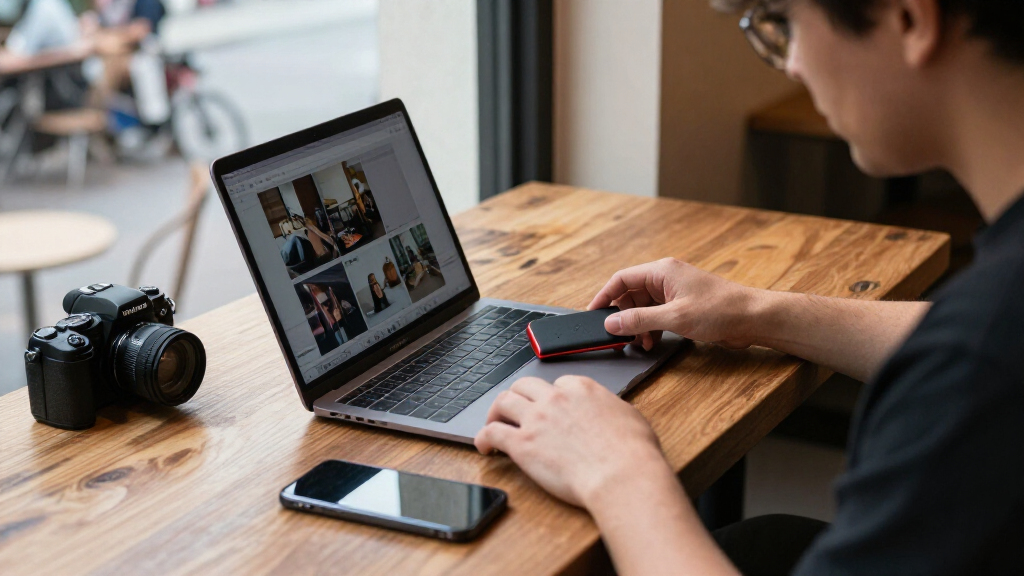

For most people seeking the best SanDisk storage devices, I’d start with the SanDisk Extreme Portable SSD, 1TB: it balances portable solid-state storage with speed suited to everyday file transfers. The Extreme PRO Portable SSD is a stronger fit for demanding work, while the Ultra Dual Drive makes moving files between USB-C and USB-A devices simpler. The main tradeoffs are capacity, speed, durability, and whether you need a drive for a phone, a computer, or both. A tiny flash drive is easier to carry, but an SSD or rugged hard drive may suit larger or more frequent transfers better. Read on for the full breakdown of all 13 options and how I’d match them to different needs.

Get the latest gadgets delivered free with Prime
- Fast, free delivery on millions of items
- Prime Video, Amazon Music and more included
- Member-only deals all year
Complete the kit



Key Takeaways
- Portable SSDs lead this lineup for flexible everyday storage: the 1TB Extreme Portable SSD is my overall pick, while the listed 800MB/s, 1000MB/s, and 2000MB/s models give buyers distinct speed tiers to compare.
- Peak speed is not the only reason to pay more: faster models make the most sense for repeated large transfers or demanding workflows, not simply for keeping occasional documents.
- Phone-focused drives solve different problems: the Creator Phone SSD targets MagSafe-compatible phone mounting, while the 256GB Phone Drive bridges iPhone Lightning and USB-C connections.
- Small flash drives favor convenience over sustained workloads: the Extreme Fit is a compact USB-C choice, while the Ultra Dual Drive adds USB-A compatibility for older computers.
- The 4TB G-Drive ArmorATD prioritizes capacity and rugged handling over SSD-style responsiveness: it suits bulky archives better than quick, frequent file transfers.
| SanDisk Extreme Fit 512GB USB-C Flash Drive |  | Best Compact USB-C Pick | Capacity: 512GB | Interface: USB 3.2 Gen 1 | Connector: USB Type-C | VIEW LATEST PRICE | See Our Full Breakdown |
| SanDisk Extreme PRO Portable SSD, 2TB |  | Best for Demanding Creative Work | Capacity: 2TB | Interface: USB 3.0 | Connector: USB Type-C | VIEW LATEST PRICE | See Our Full Breakdown |
| SanDisk 1TB Portable SSD – Up to 520MB/s, USB-C, USB 3.2 Gen 2 |  | Best Rugged Everyday SSD | Capacity: 1TB | Interface: USB 3.2 Gen 2 (USB-C) | Read speed: Up to 520MB/s | VIEW LATEST PRICE | See Our Full Breakdown |
| SanDisk Creator Phone SSD, 1TB, MagSafe Compatible, USB-C |  | Best for iPhone Video Capture | Capacity: 1TB | Read speed: Up to 1,000MB/s | Interface: USB 3.0 | VIEW LATEST PRICE | See Our Full Breakdown |
| SanDisk Extreme Portable SSD, 1TB |  | Best Balanced Portable SSD | Capacity: 1TB | Read speed: Up to 1,000MB/s | Write speed: Up to 950MB/s | VIEW LATEST PRICE | See Our Full Breakdown |
| SanDisk 1TB Portable USB-C Drive, Black |  | Best Compact 1TB SSD | Storage capacity: 1 TB | Read speed: Up to 600 MB/s | Connectivity: USB Type-C | VIEW LATEST PRICE | See Our Full Breakdown |
| SanDisk Extreme Portable 500GB External SSD |  | Best for Rough-Weather Carry | Storage capacity: 500 GB | Read speed: Up to 550 MB/s | Interface: USB 3.1 | VIEW LATEST PRICE | See Our Full Breakdown |
| SanDisk 256GB Phone Drive for iPhone with USB-C and Lightning Connectors |  | Best for iPhone-to-USB-C Transfers | Storage capacity: 256 GB | Connectors: USB-C and Lightning | Read speed: Up to 150 MB/s | VIEW LATEST PRICE | See Our Full Breakdown |
| SanDisk Ultra Dual Drive 256GB USB-C and USB-A Flash Drive |  | Best for Mixed USB-C and USB-A Devices | Storage capacity: 256 GB | Connectors: USB Type-C and USB-A | Interface: USB 3.0 | VIEW LATEST PRICE | See Our Full Breakdown |
| SanDisk Professional 4TB G-Drive ArmorATD Rugged Portable External Hard Drive |  | Best High-Capacity Rugged HDD | Capacity: 4 TB | Interface: USB-C (USB 3.2 Gen 1) | Read speed: Up to 130 MB/s | VIEW LATEST PRICE | See Our Full Breakdown |
| SanDisk 1TB Portable SSD, Up to 800MB/s Read Speed, Black |  | Best for Rugged Everyday Carry | Storage capacity: 1 TB | Maximum read speed: Up to 800 MB/s | Interface: USB 3.2 Gen 2 | VIEW LATEST PRICE | See Our Full Breakdown |
| SanDisk 1TB Portable SSD, Up to 1000 MB/s Read Speed, Black |  | Best Balanced Speed and Portability | Storage capacity: 1 TB | Maximum read speed: Up to 1,000 MB/s | Interface: USB 3.0 | VIEW LATEST PRICE | See Our Full Breakdown |
| SanDisk Extreme Portable SSD, 1TB, Up to 2000MB/s |  | Best for Fast, Protected Field Storage | Storage capacity: 1 TB | Read speed: Up to 2,000 MB/s | Interface: USB 3.0 | VIEW LATEST PRICE | See Our Full Breakdown |
| SanDisk storage device | Interface | Read speed | Dimensions | Connector |
|---|---|---|---|---|
| SanDisk Extreme Fit 512GB USB- | USB 3.2 Gen 1 | Up to 400MB/s | 0.73 × 0.54 × 0.63 in | USB Type-C |
| SanDisk Extreme PRO Portable S | USB 3.0 | — | — | USB Type-C |
| SanDisk 1TB Portable SSD | USB 3.2 Gen 2 (USB-C) | Up to 520MB/s | 3.81 × 1.85 × 0.39 in | — |
| SanDisk Creator Phone SSD | USB 3.0 | Up to 1,000MB/s | 3.25 × 2.7 × 0.43 in | USB Type-C |
| SanDisk Extreme Portable SSD | — | Up to 1,000MB/s | — | — |
| SanDisk 1TB Portable USB-C Dri | — | Up to 600 MB/s | 2.95 × 1.77 × 0.39 inches | — |
| SanDisk Extreme Portable 500GB | USB 3.1 | Up to 550 MB/s | — | USB-C |
| SanDisk 256GB Phone Drive for | — | Up to 150 MB/s | 0.34 × 0.61 × 1.97 inches | — |
| SanDisk Ultra Dual Drive 256GB | USB 3.0 | Up to 150 MB/s | 0.79 × 1.5 × 0.37 inches | — |
| SanDisk Professional 4TB G-Dri | USB-C (USB 3.2 Gen 1) | Up to 130 MB/s | 7.2 × 4.8 × 2 inches | — |
| SanDisk 1TB Portable SSD | USB 3.2 Gen 2 | — | — | USB Type-C |
| SanDisk 1TB Portable SSD | USB 3.0 | — | 1.77 × 3.35 × 0.39 inches | USB Type-C |
| SanDisk Extreme Portable SSD | USB 3.0 | Up to 2,000 MB/s | 3.35 × 2 × 0.39 inches | USB Type-C |
More Details on Our Top Picks
SanDisk Extreme Fit 512GB USB-C Flash Drive
The SanDisk Extreme Fit packs 512GB into a tiny plug-and-stay drive, making it a better fit than the larger SanDisk 1TB Portable SSD when you want storage that can remain connected to a USB-C device. Its read speeds reach 400MB/s, which can help move everyday photos, documents, and videos without carrying a separate portable drive. Compatibility with computers, tablets, and smartphones also gives it more flexibility than a drive limited to one device type. The tradeoff is capacity and performance: it holds less than the 1TB SSD options and its stated speed depends on a compatible USB 3.2 port. The Memory Zone app can assist with file management, but it requires a separate download, and usable capacity will be below the advertised 512GB.
Pros:- Tiny plug-and-stay design is easy to leave connected
- 512GB capacity fits a substantial everyday file library
- Read speeds reach up to 400MB/s with suitable hardware
- Works with compatible USB-C computers, tablets, and smartphones
Cons:- USB 3.2 support is needed to reach the stated performance
- Usable capacity is less than the advertised 512GB
- SanDisk Memory Zone requires a separate download and installation
Best for: USB-C laptop and tablet owners who want a compact drive for frequently accessed files and occasional transfers.
Not ideal for: Video editors or buyers moving large projects often; the 512GB capacity and flash-drive form factor are less suited to sustained, demanding workloads than a portable SSD.
- Capacity:512GB
- Interface:USB 3.2 Gen 1
- Connector:USB Type-C
- Read speed:Up to 400MB/s
- Compatible devices:Tablet, smartphone, personal computer
- Color:Black
- Dimensions:0.73 × 0.54 × 0.63 in
Our verdict“Choose the Extreme Fit if you want a low-profile USB-C drive for everyday files, not a high-capacity SSD for sustained creative work.”
SanDisk Extreme PRO Portable SSD, 2TB
For large working files and fast project transfers, the SanDisk Extreme PRO Portable SSD is the performance-led choice here: it offers 2TB capacity, up to 4,000MB/s reads, and average sustained writes of 3,100MB/s. That sustained figure is more relevant to long transfers than a brief peak, and it puts this drive well ahead of the SanDisk Extreme Portable SSD, 1TB on the listed speed figures. Its IP65 protection, three-meter drop protection, and 256-bit AES encryption add practical safeguards for mobile work. Those strengths come with a narrower use case: it is more drive than everyday backups usually need, and actual performance varies by device and conditions. Encryption also requires a software download, while the supplied data lists a USB 3.0 interface alongside a USB-C connector.
Pros:- 2TB capacity accommodates large project libraries
- Up to 4,000MB/s reads and 3,100MB/s average sustained writes
- IP65 water and dust resistance with drop protection up to 3m
- 256-bit AES encryption adds password-protected data security
Cons:- Real-world performance depends on the host device and usage conditions
- Encryption software requires a separate download
- The listed USB 3.0 interface details may leave connection and speed compatibility unclear to some buyers
Best for: Photographers, video professionals, and other creators who move large files between compatible computers and need rugged protection.
Not ideal for: Casual backup users or buyers seeking a tiny plug-in drive; this portable SSD’s performance and capacity may be unnecessary for routine documents and photos.
- Capacity:2TB
- Interface:USB 3.0
- Connector:USB Type-C
- Maximum read speed:Up to 4,000MB/s
- Maximum write speed:Up to 3,800MB/s
- Average sustained write speed:3,100MB/s
- Water and dust resistance:IP65
- Drop protection:Up to 3m
- Encryption:256-bit AES
Our verdict“Pick this model for demanding, high-volume creative transfers and rugged protection, but skip it if everyday backup is your main job.”
SanDisk 1TB Portable SSD – Up to 520MB/s, USB-C, USB 3.2 Gen 2
The SanDisk 1TB Portable SSD is a straightforward choice for buyers who want solid-state storage that can travel without paying for the extreme speed profile of the SanDisk Extreme PRO Portable SSD. Its listed 520MB/s read speed suits everyday media libraries and file transfers, while the compact 1.44-ounce body is easy to carry. The two-meter drop protection and rubber attachment hook are useful for commuters and field workers who want to secure a drive to a bag. Compared with the MagSafe-focused SanDisk Creator Phone SSD, this model is less specialized for phone-based video capture but has a more general portable-storage role. Its limitations are the lower speed ceiling and the lack of clearly specified included cables or adapters; host-device conditions can also affect performance.
Pros:- 1TB capacity in a compact 1.44-ounce body
- Read speeds reach up to 520MB/s
- Drop protection up to two meters
- Rubber hook helps attach the drive to a belt or backpack
Cons:- Slower listed read speed than the 1,000MB/s and 4,000MB/s SSD options
- Performance depends on the host device and interface conditions
- Included cable or adapter is not specified in the product data
Best for: Commuters, students, and mobile workers who need a lightweight 1TB drive for everyday files and want a way to attach it to a bag.
Not ideal for: Creators recording high-bitrate phone video directly to storage or moving very large projects regularly; faster SSD options in this roundup are better suited to those workloads.
- Capacity:1TB
- Interface:USB 3.2 Gen 2 (USB-C)
- Read speed:Up to 520MB/s
- Form factor:Portable, 2.5 in
- Weight:1.44 oz
- Dimensions:3.81 × 1.85 × 0.39 in
- Compatibility:Desktop, laptop, PlayStation 5
- Drop protection:Up to 2m
Our verdict“Choose this portable SSD for lightweight, protected everyday storage, and look to a faster model for intensive creative transfers.”
SanDisk Creator Phone SSD, 1TB, MagSafe Compatible, USB-C
The SanDisk Creator Phone SSD earns its place by serving a specific mobile workflow: it attaches magnetically to compatible MagSafe phones and supports direct Apple ProRes 4K recording at 60 fps on listed iPhone Pro models. That makes it a more purpose-built phone-video accessory than the general-use SanDisk Extreme Portable SSD, 1TB, even though both list read speeds up to 1,000MB/s. The 1TB capacity, IP65 protection, and three-meter drop protection make it suitable for taking a recording setup outdoors. Its main drawback is compatibility: ProRes capture at that setting is limited to certain iPhone Pro generations, and the drive still needs a USB-C connection. Buyers without a compatible phone may get more value from a less specialized portable SSD.
Pros:- Supports direct ProRes 4K capture at 60 fps on compatible iPhone Pro models
- MagSafe-compatible magnetic attachment suits phone-based recording
- IP65 water and dust resistance
- Drop protection up to 3m
Cons:- ProRes recording support is limited to specified iPhone Pro models
- Requires a USB-C connection
- Its phone-focused attachment offers less benefit for buyers who only use a computer
Best for: iPhone 15 Pro, 15 Pro Max, 16 Pro, or 16 Pro Max owners who record ProRes video and want storage that attaches to the phone.
Not ideal for: Android users, owners of unsupported iPhones, or anyone who mainly needs general-purpose backup storage rather than a phone-mounted recording drive.
- Capacity:1TB
- Read speed:Up to 1,000MB/s
- Interface:USB 3.0
- Connector:USB Type-C
- Compatibility:Laptop, smartphone, tablet; MagSafe-compatible smartphones
- Durability:IP65 water and dust resistance; drop protection up to 3m
- Weight:1.92 oz
- Dimensions:3.25 × 2.7 × 0.43 in
- Included software:One month of Adobe Creative Cloud
Our verdict“Buy this SSD for a compatible iPhone Pro recording setup; for ordinary cross-device storage, the general-purpose Extreme Portable SSD is a simpler fit.”
SanDisk Extreme Portable SSD, 1TB
The SanDisk Extreme Portable SSD, 1TB is the balanced pick for buyers who want fast, broadly compatible external storage without the specialized phone mount of the Creator Phone SSD or the extreme performance tier of the SanDisk Extreme PRO Portable SSD. Its listed speeds of up to 1,000MB/s read and 950MB/s write suit moving photos, video, and project files between USB-C devices. Support for laptops, desktops, smartphones, tablets, and Macs makes it useful across a mixed-device household or workflow; the product data also notes Time Machine and Files app compatibility. Unlike the ruggedized models described elsewhere in this roundup, the supplied details do not list water, dust, or drop protection, so I would not choose it for rough field use. Cable and accessory details are also unspecified.
Pros:- Read speeds up to 1,000MB/s and write speeds up to 950MB/s
- USB-C connectivity works across a broad range of listed devices
- 1TB capacity suits photos, videos, and project files
- Listed as compatible with Time Machine and the Files app
Cons:- The supplied product data does not specify water, dust, or drop protection
- Included cables and accessories are not specified
- Less suited to demanding sustained workloads than the 2TB Extreme PRO
Best for: Mac and USB-C device owners who want a general-purpose 1TB SSD for transferring and backing up media across several devices.
Not ideal for: Field creators who need stated water, dust, or drop protection, or buyers who need more than 1TB for large project archives.
- Capacity:1TB
- Read speed:Up to 1,000MB/s
- Write speed:Up to 950MB/s
- Connectivity:USB Type-C
- Compatible devices:Laptop, desktop, smartphone, tablet, Mac
- Drive type:External solid-state drive
- Color:Black
- Model number:SDSSDE62-2T00-GAO
Our verdict“Choose this model for fast, general-purpose 1TB storage across USB-C devices, but pick a ruggedized drive for exposed field work.”
SanDisk 1TB Portable USB-C Drive, Black
The SanDisk 1TB Portable USB-C Drive suits buyers who want solid-state storage in a notably light, pocket-friendly package. Its up to 600MB/s read speed is faster than the 500GB SanDisk Extreme Portable SSD’s listed 550MB/s, while the 1TB capacity leaves more room for large work folders and media libraries. A moving-parts-free design and 2-meter drop protection add reassurance for everyday carrying, though this isn’t the lineup’s rugged pick: the Extreme Portable SSD adds IP55 water and dust resistance. Read speed is the headline figure, not a promise of matching write performance, and actual results depend on the host device. Choose this model for portable capacity and straightforward USB-C use; skip it if weather protection or the fastest transfers matter more.
Pros:- 1TB capacity in a pocket-sized drive weighing 1.12 ounces
- Read speeds up to 600MB/s for moving large files
- Solid-state construction has no moving parts
- Rated for drop protection up to 2 meters
Cons:- Write speeds are lower than the stated maximum read speed
- Actual performance varies with the host device and usage conditions
- No water- or dust-resistance rating is listed
Best for: Laptop and tablet owners who want 1TB of compact, drop-protected storage for files and media.
Not ideal for: Travelers who need stated water and dust resistance, or creators who need faster transfers than this drive’s read-speed rating suggests.
- Storage capacity:1 TB
- Read speed:Up to 600 MB/s
- Connectivity:USB Type-C
- Drop protection:Up to 2 meters
- Weight:1.12 ounces
- Dimensions:2.95 × 1.77 × 0.39 inches
- Compatible devices:Desktop, laptop, smartphone, tablet
- Platforms:Mac, PC
Our verdict“Choose it for lightweight 1TB USB-C storage, but pick the SanDisk Extreme Portable SSD if rated water and dust resistance matters more.”
SanDisk Extreme Portable 500GB External SSD
The SanDisk Extreme Portable 500GB External SSD is the pick here for buyers who put weather resistance ahead of capacity. Its IP55-rated water and dust resistance, shock-resistant core, and pocketable size suit commutes and outdoor work better than the SanDisk 1TB Portable USB-C Drive, which lists drop protection but no IP rating. The tradeoff is room: this model offers half that drive’s capacity, so large video libraries may fill it quickly. Its up to 550MB/s read speed is suitable for routine file transfers and photo or video workflows, but it trails the 1TB Portable USB-C Drive’s stated read speed. The drive must be clean and dry before use, and real performance depends on the connected device and software.
Pros:- IP55-rated water and dust resistance
- Shock-resistant solid-state core
- Compact 1.44-ounce design for travel
- Read speeds up to 550MB/s
Cons:- 500GB capacity may be limiting for large media collections
- Must be clean and dry before use
- Actual performance varies by capacity, device, operating system, and application
Best for: Photographers and mobile workers who carry files outdoors and value IP55 water and dust resistance over a larger capacity.
Not ideal for: People storing large video archives or needing 1TB in one drive; its capacity is 500GB, and it is not the fastest SSD in this group.
- Storage capacity:500 GB
- Read speed:Up to 550 MB/s
- Interface:USB 3.1
- Connector:USB-C
- Water and dust resistance:IP55
- Shock resistance:Up to 1500G
- Weight:1.44 ounces
- Warranty:3-year limited manufacturer warranty
Our verdict“Pick this model for a compact drive with stated water and dust resistance, and choose the SanDisk 1TB Portable USB-C Drive if capacity and higher listed read speed matter more.”
SanDisk 256GB Phone Drive for iPhone with USB-C and Lightning Connectors
For moving files between older Lightning iPhones and newer USB-C equipment, the SanDisk 256GB Phone Drive solves a compatibility problem the SanDisk Ultra Dual Drive cannot: it has both Lightning and USB-C connectors, rather than USB-C and USB-A. Its 256GB capacity can hold a useful selection of photos and videos without relying on cloud access, while the Memory Zone app supports backups, file management, and password-protected encryption. That app is a real dependency: Lightning transfers and automatic backups require it, so this is less convenient than a simple plug-in drive. Its read speed reaches 150MB/s, but writes are listed at 10–50MB/s. Choose it for cross-generation Apple-device transfers, not as a fast workstation drive.
Pros:- Lightning and USB-C connectors bridge compatible Apple devices and newer equipment
- 256GB capacity for storing and transferring files
- Memory Zone supports manual and automatic backups
- Password-protected file encryption is available through the app
Cons:- Lightning transfers and backups require the SanDisk app
- Write speed is listed at 10–50MB/s, well below the maximum read speed
- USB-A is not listed as a connector
Best for: iPhone owners with a Lightning port who regularly move photos or files to USB-C iPads, Macs, or computers.
Not ideal for: Buyers who want app-free Lightning transfers, faster sustained writes, or a drive that connects to traditional USB-A ports.
- Storage capacity:256 GB
- Connectors:USB-C and Lightning
- Read speed:Up to 150 MB/s
- Write speed:10–50 MB/s
- Compatible devices:Compatible iPhones, iPad Pro, Mac, smartphones, tablets, and computers
- Dimensions:0.34 × 0.61 × 1.97 inches
- App:SanDisk Memory Zone
- Color:Metallic Sky blue
Our verdict“Choose this drive for app-assisted transfers between Lightning iPhones and USB-C devices; choose the SanDisk Ultra Dual Drive for USB-A compatibility instead.”
SanDisk Ultra Dual Drive 256GB USB-C and USB-A Flash Drive
The SanDisk Ultra Dual Drive 256GB is a practical handoff drive for households or offices that still use both USB-C and traditional USB-A ports. Its retractable dual-connector design makes it more adaptable than the iPhone Phone Drive, whose Lightning connector serves a different need, and it avoids the phone drive’s app requirement for Lightning transfers. Read speeds reach 150MB/s, with a listed 75MB/s write speed; that’s fine for moving documents and everyday media, but slower than the portable SSDs in this roundup. The small flash-drive format is convenient, though it does not offer the drop protection or weather-resistance claims of the SanDisk Extreme Portable SSD. Android phones also need USB OTG support, so connector fit alone does not guarantee compatibility.
Pros:- USB-C and USB-A connectors work across newer and traditional ports
- Retractable design helps protect the connectors when carried
- Read speeds up to 150MB/s for everyday file transfers
- Small format is easy to keep with a phone, tablet, or laptop
Cons:- Write speed is listed at 75MB/s and varies by capacity
- Android phones require USB-C and USB OTG support
- No water, dust, or drop-protection rating is listed
Best for: Students, families, and office users who move files between USB-C phones or tablets and computers with USB-A ports.
Not ideal for: Android users whose devices lack USB OTG support, or creators who need SSD-class transfer speeds or rugged protection.
- Storage capacity:256 GB
- Connectors:USB Type-C and USB-A
- Interface:USB 3.0
- Read speed:Up to 150 MB/s
- Write speed:75 MB/s
- Design:Retractable connectors; reversible USB-C connector
- Dimensions:0.79 × 1.5 × 0.37 inches
- Compatibility:Mobile devices, tablets, and computers; Android devices require USB-C and OTG support
Our verdict“Pick this flash drive for everyday transfers between USB-C and USB-A devices, but choose a portable SSD for faster work or added rugged protection.”
SanDisk Professional 4TB G-Drive ArmorATD Rugged Portable External Hard Drive
The SanDisk Professional G-Drive ArmorATD serves a different job from the compact SSDs here: it prioritizes 4TB of capacity and a protective enclosure over speed and light weight. Its anodized aluminum shell, easy-grip bumper, and IP54 rain and dust resistance suit field backups better than the 500GB SanDisk Extreme Portable SSD when carrying large archives is the main concern. The cost of that capacity is noticeable in daily use: at up to 130MB/s read, this hard drive is far slower than either SSD, and its 12.32-ounce weight makes it bulkier to carry. It works natively with macOS, while Windows users must reformat it. Choose it for rugged bulk storage, not for fast editing directly from the drive or frequent pocket carry.
Pros:- 4TB capacity suits large media libraries and backups
- IP54 rain and dust resistance
- Anodized aluminum enclosure and protective bumper
- Native macOS compatibility and USB-C connectivity
Cons:- Read speeds up to 130MB/s are slower than the portable SSD options
- At 12.32 ounces, it is heavier and bulkier than pocket-sized drives
- Windows use requires reformatting
Best for: Video professionals, photographers, and field workers who need several terabytes of backup space in a rain- and dust-resistant enclosure.
Not ideal for: People who need a light, fast drive for frequent file editing, or Windows users who want to use the drive without reformatting.
- Capacity:4 TB
- Interface:USB-C (USB 3.2 Gen 1)
- Read speed:Up to 130 MB/s
- Enclosure material:Anodized aluminum
- Form factor:2.5-inch
- Weight:12.32 ounces
- Dimensions:7.2 × 4.8 × 2 inches
- Compatibility:macOS native; Windows requires reformatting
Our verdict“Choose the ArmorATD for high-capacity field backups and a rugged enclosure, but use a portable SSD if speed and low carry weight take priority.”
SanDisk 1TB Portable SSD, Up to 800MB/s Read Speed, Black
The rubber enclosure and built-in attachment hook make this 1TB SSD a practical pick for carrying between work, school, and home. Its stated read speed of up to 800MB/s is suited to routine backups and moving files, though it trails the 1,000MB/s SanDisk 1TB Portable SSD and the 2,000MB/s SanDisk Extreme Portable SSD. The advantage here is a design focused on being secured to a bag or belt loop, plus protection against drops of up to two meters. That can matter more for mobile use than a higher peak speed. The tradeoff is that the listed speed is for reading, and writes may be slower; real performance also depends on the connected device and conditions. Choose it for durable carry, not the fastest transfers.
Pros:- 1TB capacity in a portable solid-state drive
- Rubber enclosure is rated for drops up to two meters
- Rubber hook gives buyers a way to attach it to a bag or belt loop
- USB-C connection with USB 3.2 Gen 2 interface
Cons:- Up to 800MB/s read speed is lower than the other 1TB SSDs in this batch
- Write speeds may be lower than the stated read speed
- Actual performance varies with the host device and usage conditions
Best for: Students, commuters, and field workers who want a 1TB backup drive that can attach to a backpack and handle accidental drops.
Not ideal for: Video editors or other users moving large projects frequently who would benefit more from the higher stated read speeds of the SanDisk Extreme Portable SSD.
- Storage capacity:1 TB
- Maximum read speed:Up to 800 MB/s
- Interface:USB 3.2 Gen 2
- Connector:USB Type-C
- Drop protection:Up to 2 meters
- Enclosure material:Rubber
- Form factor:Portable, 2.5 inches
- Compatible devices:Laptops and tablets
Our verdict“Choose this model if a hook and drop protection matter more than matching the faster read speeds of SanDisk’s other 1TB portable SSDs.”
SanDisk 1TB Portable SSD, Up to 1000 MB/s Read Speed, Black
This model is the middle ground in this group: its up to 1,000MB/s read speed is faster on paper than the 800MB/s SanDisk 1TB Portable SSD, while its compact 1.12-ounce body is easy to carry. For laptop, tablet, or smartphone owners who move sizable files but do not need the Extreme model’s higher 2,000MB/s rating, that balance makes sense. It has no moving parts and is rated to withstand drops of up to two meters, adding reassurance for everyday travel. The tradeoff is that its stated USB 3.0 interface and read-speed figure do not promise matching write performance; writes may be slower, and usable capacity falls below the advertised 1TB. I’d pick it for a lightweight general-purpose drive, not for the most demanding transfer workloads.
Pros:- Up to 1,000MB/s stated read speed
- Lightweight at 1.12 ounces and compact enough for pocket carry
- Drop protection rated up to two meters
- USB-C connection works across desktop, laptop, smartphone, and tablet devices
Cons:- Write speeds may be lower than the stated read speed
- Actual usable capacity is less than 1TB
- The listed specs do not provide the IP65 dust and water resistance of the SanDisk Extreme Portable SSD
Best for: Laptop and smartphone users who carry a drive daily and want more stated read speed than the 800MB/s model without choosing the faster Extreme SSD.
Not ideal for: Creators who regularly move very large projects and want the highest stated throughput or outdoor users who need a stated dust- and water-resistance rating.
- Storage capacity:1 TB
- Maximum read speed:Up to 1,000 MB/s
- Interface:USB 3.0
- Connector:USB Type-C
- Weight:1.12 ounces
- Dimensions:1.77 × 3.35 × 0.39 inches
- Drop protection:Up to 2 meters
- Compatible devices:Desktop, laptop, smartphone, and tablet
Our verdict“Pick this compact SSD for a portable 1TB drive with a useful speed step up from the 800MB/s model, while accepting slower writes and no stated IP rating.”
SanDisk Extreme Portable SSD, 1TB, Up to 2000MB/s
The SanDisk Extreme Portable SSD is the performance pick here, pairing up to 2,000MB/s read speed with IP65-rated dust and water resistance and drop protection up to three meters. That combination suits creators and mobile professionals who need to move large files and carry storage through less controlled environments. It is a clear step above the 1,000MB/s SanDisk 1TB Portable SSD for stated read speed, and it adds environmental protection that the listed specs for that model do not claim. The compromises are practical: write speeds can be lower than the headline read figure, and the 1.6-ounce drive is heavier than that compact alternative. Password protection uses 256-bit AES encryption, but requires a software download and supports only Windows 10+ and macOS 12+. This is the strongest fit when speed and protection outweigh simplicity.
Pros:- Highest stated read speed in this batch at up to 2,000MB/s
- IP65-rated resistance to dust and water
- Drop protection rated up to three meters
- 256-bit AES password protection is available
Cons:- Write speeds may be lower than the stated maximum read speed
- Encryption requires a software download and supports Windows 10+ and macOS 12+
- At 1.6 ounces, it is heavier than the 1.12-ounce SanDisk 1TB Portable SSD
Best for: Photographers, video creators, and field workers who carry active projects across devices and need dust, water, and drop protection.
Not ideal for: Buyers who only need basic backups, want the lightest option, or need encryption without installing software on a supported operating system.
- Storage capacity:1 TB
- Read speed:Up to 2,000 MB/s
- Interface:USB 3.0
- Connector:USB Type-C
- Water and dust resistance:IP65
- Drop protection:Up to 3 meters
- Encryption:256-bit AES
- Weight:1.6 ounces
- Dimensions:3.35 × 2 × 0.39 inches
Our verdict“Choose the Extreme Portable SSD for demanding mobile work that benefits from faster stated reads and stronger environmental protection, rather than simple everyday backups.”
How We Picked
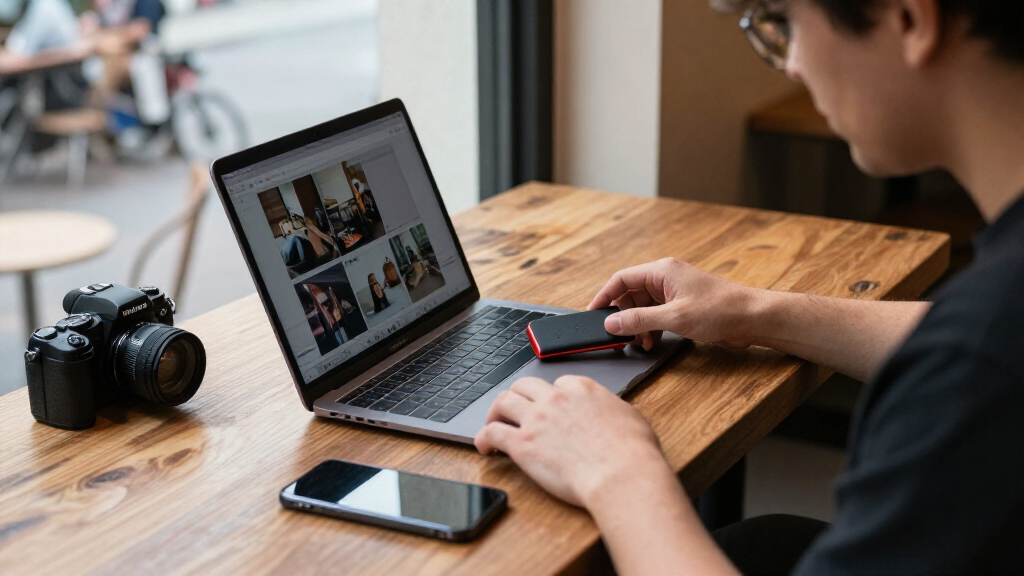
I compared these 13 products by the job they are built to do, rather than treating every storage device as a substitute for every other one. My criteria included stated capacity and speed, connector compatibility, portability, ruggedness, and ease of use with phones and computers. I also weighed whether a feature changes a buyer’s day-to-day experience: dual connectors can simplify transfers across mixed devices, while a compact body or phone-mounting design serves a narrower use case.
The ranking gives priority to broadly useful options that balance capacity, speed, and compatibility, then places more specialized devices where their advantages matter most. That is why a versatile portable SSD ranks ahead of a phone-specific drive or a large mechanical archive drive for general buyers. The listed speed figures are manufacturer-stated claims, not a promise of identical results in every setup; host ports, cables, file sizes, and workload can affect transfer rates. Since the lineup includes several similar 1TB SSDs, I distinguish them by their stated speed tier and intended use rather than assuming their names alone prove differences in durability or performance.
| SanDisk storage device | Interface | Connector |
|---|---|---|
| SanDisk Extreme Fit 512GB USB- | USB 3.2 Gen 1 | USB Type-C |
| SanDisk Extreme PRO Portable S | USB 3.0 | USB Type-C |
| SanDisk 1TB Portable SSD | USB 3.2 Gen 2 (USB-C) | — |
| SanDisk Creator Phone SSD | USB 3.0 | USB Type-C |
| SanDisk Extreme Portable SSD | — | — |
| SanDisk 1TB Portable USB-C Dri | — | — |
| SanDisk Extreme Portable 500GB | USB 3.1 | USB-C |
| SanDisk 256GB Phone Drive for | — | — |
| SanDisk Ultra Dual Drive 256GB | USB 3.0 | — |
| SanDisk Professional 4TB G-Dri | USB-C (USB 3.2 Gen 1) | — |
| SanDisk 1TB Portable SSD | USB 3.2 Gen 2 | USB Type-C |
| SanDisk 1TB Portable SSD | USB 3.0 | USB Type-C |
| SanDisk Extreme Portable SSD | USB 3.0 | USB Type-C |
Factors to Consider When Choosing Best SanDisk Storage Devices
I’d choose a SanDisk device by starting with the files and devices it needs to serve, then checking whether speed, size, or ruggedness matters most. These distinctions can prevent paying for performance you will not use or buying a connector that does not fit your setup.
Match the device type to the workload
First decide whether you need quick access, a small carry-anywhere drive, or a large backup destination. SSDs are the more natural fit for frequent transfers and portable work, while flash drives suit smaller handoffs and files you want to keep in a pocket. A high-capacity rugged hard drive can make sense for archives, but its storage role differs from a fast, frequently handled SSD. A common mistake is comparing all devices only by capacity and overlooking how often files will move. For occasional documents, a faster SSD may add little practical value. For active video or project files, a small flash drive can become inconvenient even if its capacity seems sufficient.
Choose speed for the files you actually move
Speed matters most when transfers are large, frequent, or part of a time-sensitive workflow. The models in this roundup advertise different read-speed tiers, but advertised figures do not guarantee the same real-world result on every computer. The device’s connection, the computer’s port, cable quality, and the type of files all affect transfer time. Small documents may not benefit much from a faster drive because other parts of the transfer can become the bottleneck. Before paying for a higher speed tier, check that your host device supports the relevant connection and that your workload involves enough large files to make the difference useful. Buyers who mostly store backups should prioritize capacity and reliable backup habits over headline speed.
Check every connector in your workflow
Make a list of the ports on the devices you plan to use, including phones, tablets, laptops, and older desktop computers. USB-C compatibility alone does not mean a drive will work equally well across every phone or support every file-management feature. A USB-C and USB-A dual-connector drive can reduce friction when moving files between newer and older computers. For iPhones, confirm whether your model uses USB-C or Lightning before choosing a phone drive, and check that your intended transfer method is supported. Buyers often focus on the plug and forget about the operating system, available storage permissions, or the need for an adapter. Sorting out those details before purchase can save time and avoid a drive that only works with part of the setup.
Treat ruggedness and portability as separate priorities
A drive’s portability is about more than whether it fits in a bag; it also includes how comfortably it travels with the equipment it serves. Compact flash drives take up little room, but their size can make them easier to misplace. A ruggedized drive can be a better match for field work or frequent transport, though a protective design does not replace careful backups or safe handling. Phone-mounted storage has its own tradeoff: it can keep recording storage close to the handset, but it adds bulk while attached. Ask where the drive will live, how often it will be connected, and whether it will face dust, bumps, or outdoor conditions. Avoid assuming that every portable SSD has the same protection just because it shares a product family name.
Buy capacity with headroom, not guesswork
Estimate how much space your current files use, then allow room for growth and temporary working copies. Photos, video, and project folders can expand quickly, while documents and occasional transfers often need far less. A larger drive can reduce how often you manage files, but unused capacity is not automatically useful if portability or cost is the bigger concern. Also distinguish a working drive from a backup: a single external device does not protect files if it is lost, damaged, or fails. For important data, keep another copy on a separate device or backup service. That simple planning step matters more than choosing between two nearby capacity options.
Pay for a premium tier only when it changes your routine
Higher performance and specialized designs are most valuable when they remove a real bottleneck. A creator who regularly moves large media files may benefit from a faster SSD or a phone-oriented recording setup, while a casual user may prefer a simpler portable SSD or flash drive. USB-A compatibility has lasting value if older machines remain part of your workflow, even if the drive is not the fastest choice. Likewise, a rugged, high-capacity hard drive can suit bulk storage without being the best pick for quick daily transfers. Compare the feature you will use every week against the tradeoff it brings, such as extra bulk or a narrower purpose. If you cannot name the task a premium feature improves, a more straightforward model is likely the better match.
Frequently Asked Questions
Which SanDisk drive should I choose for everyday computer backups?
I’d begin with how much data you need to keep and how often the backup runs. For regular transfers and a portable setup, a 1TB portable SSD is a practical starting point; for a large archive where capacity matters more than quick access, the 4TB G-Drive ArmorATD fills a different role. Do not rely on a single drive as the only copy of important files. Keep a second copy somewhere separate, and check that the capacity leaves room for future files. If you are backing up an entire computer, compare the drive’s usable space with the size of your system and backup history before choosing.
Is a 2000MB/s SanDisk SSD worth choosing over the slower 1TB options?
It may be worthwhile if you often move large files and your computer supports a connection capable of taking advantage of the drive’s stated speed. The listed 800MB/s, 1000MB/s, and 2000MB/s models give you different advertised speed tiers, but those figures are not guaranteed transfer rates for every task. A slower port, cable, or small-file workload can reduce the practical difference. For routine documents, photos, and occasional backups, a higher tier may not change much. I’d reserve the faster model for workflows where transfer time is a regular constraint and verify host compatibility first.
Which SanDisk option makes the most sense for moving files between an iPhone and a computer?
The right pick depends on the iPhone’s connector and whether you want a simple file handoff or storage that stays attached while recording. The 256GB Phone Drive includes USB-C and Lightning connectors, which suits transfers across those connector types. The Creator Phone SSD is aimed at a different use: phone-centered storage with MagSafe compatibility and USB-C. Check your iPhone model and the apps or file workflows you plan to use before choosing, since connector fit alone does not guarantee every feature works as expected. If you regularly move files to older computers, also check whether you need an adapter or USB-A access.
Should I get a compact flash drive or a portable SSD for travel?
Choose a compact flash drive when the main goal is carrying a small set of files or making quick handoffs. The Extreme Fit is designed for a low-profile USB-C setup, and the Ultra Dual Drive adds a USB-A connection for mixed generations of computers. A portable SSD is a better fit when you need more capacity or expect to transfer large files regularly. Small drives can be easier to misplace, while SSDs take up more room and may be unnecessary for light document storage. Think about whether you will work directly from the drive or only use it to move files, since that often decides the better format.
Can a rugged SanDisk drive replace a separate backup plan?
No. Rugged construction can help a drive cope with some handling risks, but it cannot protect data from loss, theft, accidental deletion, or every kind of damage. The G-Drive ArmorATD is positioned for rugged, high-capacity portable storage, while a separate copy remains the safer way to protect important files. Keep backups on a second device or in another location, and check that the backup process is actually completing. For files you cannot replace, use more than one copy rather than relying on a single drive’s build. Ruggedness is a useful trait, not a backup strategy.
Conclusion
For a broad mix of computer storage and file transfers, I’d choose the SanDisk Extreme Portable SSD, 1TB as the best overall fit. The SanDisk 1TB Portable SSD with a stated speed of up to 520MB/s is my best value-style pick for buyers who want straightforward SSD storage without prioritizing the fastest listed tier. For demanding transfer workflows, the Extreme PRO Portable SSD is the premium choice, while the Ultra Dual Drive is my best beginner-friendly option for moving files between USB-C and USB-A devices. For phone-specific needs, choose the Creator Phone SSD for a MagSafe-compatible recording setup or the 256GB Phone Drive for Lightning and USB-C transfers. If your priority is a large rugged archive rather than SSD responsiveness, the 4TB G-Drive ArmorATD is the specialist pick. Match the drive to your ports, workload, and backup plan, and the differences across this lineup become much easier to judge.