Finding the best ESP32-C3 development boards in 2026 means balancing performance, price, and ease of use. The top pick, ESP32-C3-DevKitM-1-N4X, offers reliable performance for most projects. For cost-conscious builders, the ESP32-C3 Mini Development Board with WiFi & Bluetooth (2 Pack) delivers solid value. Meanwhile, the ESP32-C3 OLED Development Board stands out for its integrated display, ideal for visual feedback. These options reveal common tradeoffs: more features often mean higher costs or complexity, while simpler boards may limit expandability. Continue reading for a detailed breakdown of each board and what makes them unique.

Get the latest gadgets delivered free with Prime
- Fast, free delivery on millions of items
- Prime Video, Amazon Music and more included
- Member-only deals all year
Complete the kit



Key Takeaways
- The top-ranked boards balance performance with ease of use, making them suitable for a broad range of projects.
- Multiple packs and bulk options offer better value for large-scale deployments or educational use.
- Integrated displays and expansion options are key differentiators for project-specific needs.
- Performance varies mainly around WiFi/Bluetooth capabilities and processor speed, influencing suitability for real-time tasks.
- Build quality and compatibility with common development environments are non-negotiable for long-term reliability.
| ESP32-C3-DevKitM-1-N4X Development Board |  | Best Overall for Beginners and Prototyping | Connectivity Technology: USB Micro-B | Operating System: FreeRTOS | Wireless Compatibility: 802.11n | VIEW LATEST PRICE | See Our Full Breakdown |
| ESP32-C3 Mini Development Board with WiFi & Bluetooth (2 Pack) |  | Best Value Pack for Small IoT Projects | Processor: RISC-V 32-bit, up to 160MHz | Memory: 400KB SRAM, 384KB ROM, 4MB Flash | Wireless: Wi-Fi 802.11b/g/n, Bluetooth 5.0 | VIEW LATEST PRICE | See Our Full Breakdown |
| ESP32-C3 OLED Development Board with 0.42 Inch Display, WiFi & Bluetooth 5.0, 160MHz |  | Best for Compact, Display-Enabled IoT Projects | Display: 0.42 inch OLED | WiFi: Yes | Bluetooth: 5.0 | VIEW LATEST PRICE | See Our Full Breakdown |
| ESP32-C3 Mini Development Board 3-Pack – WiFi & Bluetooth 5 for IoT Projects |  | Best for Multi-Device IoT Deployments | Wireless Connectivity: WiFi 802.11b/g/n, Bluetooth 5 | CPU: 32-bit RISC-V with FPU | GPIO Pins: 11 with PWM | VIEW LATEST PRICE | See Our Full Breakdown |
| AITRIP ESP32-C3 Mini Development Board, 4MB Flash, WiFi & Bluetooth, Compact RISC-V Core |  | Best for Low-Power, Space-Constrained IoT Devices | CPU: ESP32-C3, 32-bit RISC-V | Operating Frequency: 160 MHz | SRAM: 400 KB | VIEW LATEST PRICE | See Our Full Breakdown |
| 5pcs Type-C ESP32-C3 Development Board – WiFi & Bluetooth 5.0, 160MHz, Arduino Compatible |  | Best Multi-Unit Value for Cost-Effective IoT Prototyping | Processor: Single-core 32-bit RISC-V | Main Frequency: 160 MHz | SRAM: 400 KB | VIEW LATEST PRICE | See Our Full Breakdown |
| 2pcs ESP32-C3 Development Board – Mini Wi-Fi & Bluetooth 5.0 |  | Best Compact Pair for Space-Constrained IoT and Wearables | Processor: Single-core 32-bit RISC-V | Main Frequency: 160 MHz | SRAM: 400 KB | VIEW LATEST PRICE | See Our Full Breakdown |
| 2PCS ESP32-C3 0.42-inch OLED Development Board WiFi Bluetooth |  | Best for Smart Displays and IoT with Visual Feedback | Memory Storage Capacity: 4 MB | Processor Model: Core M Family | Connectivity Technology: Bluetooth, Wi-Fi | VIEW LATEST PRICE | See Our Full Breakdown |
| ESP32-C3 Development Board, USB-C Supermini, Wi-Fi & Bluetooth 5.0, 3-Pack |  | Best Mini Triple Pack for Flexible IoT Prototyping | WiFi: Dual-mode Wi-Fi | Bluetooth: Supported | Clock Speed: Up to 160MHz | VIEW LATEST PRICE | See Our Full Breakdown |
| AITRIP 2 Sets ESP32-C3 MINI Development Board with Expansion Board for Arduino |  | Best Overall for Versatile IoT and Wearables | Processor: ESP32-C3 32-bit RISC-V, up to 160 MHz | Power Supply: Supports 3.3V to 6V external power | Digital I/O: 11 PWM-capable digital I/Os | VIEW LATEST PRICE | See Our Full Breakdown |
| Waveshare 3PCS ESP32-C3 Mini Development Board, Based on ESP32-C3FN4 Single-Core Processor, 160MHz, 2.4GHz Wi-Fi & BLE 5 |  | Best for Modern Connectivity and Prototyping | Processor: ESP32-C3FN4 | Processor Architecture: RISC-V 32-bit | Main Frequency: 160MHz | VIEW LATEST PRICE | See Our Full Breakdown |
| Teyleten ESP32-C3 Development Board (3 Pack) |  | Best for Budget-Conscious Multi-Project Development | Model: ESP32-C3 | Quantity: 3 pcs | Features: WiFi, Bluetooth | VIEW LATEST PRICE | See Our Full Breakdown |
| XIAO ESP32-C3 3-Pack – RISC-V Tiny MCU Board with Wi-Fi and Bluetooth 5.0 |  | Best for Space-Constrained Embedded Projects | Processor: ESP32-C3 32-bit RISC-V, up to 160 MHz | Connectivity: Wi-Fi, Bluetooth 5.0 | Size: 21 x 17.5 mm | VIEW LATEST PRICE | See Our Full Breakdown |
| 2 Set Supermini ESP32-C3 Development Board with Breakout Board – Arduino & MicroPython Compatible, 2.4GHz Wi-Fi & BLE 5.0, Ultra Low Power Design, Rich Interface for IoT Wearable Devices |  | Best for Wearables and Low-Power IoT Devices | CPU: ESP32-C3 32-bit RISC-V at 160 MHz | Connectivity: Wi-Fi 802.11 b/g/n, Bluetooth 5.0 | Size: 22.52x18mm | VIEW LATEST PRICE | See Our Full Breakdown |
More Details on Our Top Picks
ESP32-C3-DevKitM-1-N4X Development Board
The ESP32-C3-DevKitM-1-N4X stands out as the most accessible entry point among these boards, thanks to its straightforward pin header layout that facilitates breadboard prototyping. Unlike the more feature-rich ESP32-C3 OLED Development Board, it offers a simple, compact design ideal for quick experiments, though it lacks detailed specifications and advanced peripherals. Its ease of use makes it perfect for newcomers or those wanting a straightforward development experience, but it may fall short for projects requiring extensive onboard features or high memory. Compared to more feature-packed options, this board emphasizes simplicity and affordability, trading off advanced capabilities for user-friendliness.Pros:- Easy access to I/O pins on both sides simplifies wiring and testing
- Compact, lightweight design ideal for breadboard and portable projects
- Ideal for beginners due to its straightforward layout
Cons:- Limited detailed specifications make advanced customization difficult
- Lacks additional peripherals or onboard features for complex applications
Best for: Beginners and educators seeking an affordable, easy-to-use development platform for learning and simple prototyping.
Not ideal for: Advanced developers needing detailed specifications, onboard peripherals, or extensive features for complex projects.
- Connectivity Technology:USB Micro-B
- Operating System:FreeRTOS
- Wireless Compatibility:802.11n
- RAM Memory Technology:LPDDR4X
- Processor Count:1
Our verdict“Perfect for beginners and quick prototyping, but not suited for projects requiring detailed specs or advanced features.”
ESP32-C3 Mini Development Board with WiFi & Bluetooth (2 Pack)
This dual-pack of ESP32-C3 Mini Development Boards offers a cost-effective solution for deploying multiple small IoT sensors or wearable devices, with a 32-bit RISC-V processor running up to 160MHz and supporting both Wi-Fi 4 and Bluetooth 5.0. Compared to the larger, more complex boards like the ESP32-C3 OLED Development Board, these are more streamlined, sacrificing onboard displays but excelling in size and power efficiency. They are well-suited for applications where multiple devices are needed, but their limited processing power and the setup complexity may challenge those unfamiliar with wireless IoT configurations. They are ideal for projects emphasizing networked sensors or simple data collection, where budget and size matter most.Pros:- Compact size suitable for wearables and embedded sensors
- Supports both Wi-Fi 4 and Bluetooth 5.0 for versatile wireless communication
- Low power consumption with deep sleep modes enhances battery life
Cons:- Limited processing capacity for intensive tasks
- Setup can be complex for beginners unfamiliar with wireless protocols
- Requires external power supply for some applications
Best for: Developers building multiple small-scale IoT or wearable devices on a budget.
Not ideal for: Projects requiring high processing power, detailed user interfaces, or extensive onboard peripherals.
- Processor:RISC-V 32-bit, up to 160MHz
- Memory:400KB SRAM, 384KB ROM, 4MB Flash
- Wireless:Wi-Fi 802.11b/g/n, Bluetooth 5.0
- Size:22 x 52 x 18 mm
- Interfaces:I2C, SPI, UART, GPIO, ADC
Our verdict“An economical choice for deploying multiple small IoT devices, though not ideal for high-demand applications.”
ESP32-C3 OLED Development Board with 0.42 Inch Display, WiFi & Bluetooth 5.0, 160MHz
The ESP32-C3 OLED Development Board is tailored for projects that benefit from visual feedback, thanks to its small 0.42-inch OLED display and integrated WiFi and Bluetooth 5.0. Unlike the basic boards like the ESP32-C3-DevKitM-1-N4X, this model offers a built-in display, making it more suitable for wearable or home automation applications where direct user interaction is key. However, its limited onboard memory and tiny display size restrict the complexity of interfaces, requiring some familiarity with display handling. It’s well-suited for compact IoT gadgets, but less so for large, complex dashboards or data-heavy applications.Pros:- Small footprint with a built-in OLED display for real-time feedback
- Rich peripheral options for sensor integration
- Supports USB download for easy programming
Cons:- Limited onboard memory constrains complex applications
- Small display size may not suffice for detailed interfaces
Best for: Developers creating small IoT devices with visual indicators or wearable interfaces.
Not ideal for: Projects needing extensive memory, large screens, or complex graphical interfaces.
- Display:0.42 inch OLED
- WiFi:Yes
- Bluetooth:5.0
- Frequency:160MHz
- Flash Memory:4MB
- Pin Interfaces:I2C, SPI, UART, GPIO, ADC
Our verdict“Ideal for compact, display-enabled IoT gadgets, though limited by onboard memory and display size.”
ESP32-C3 Mini Development Board 3-Pack – WiFi & Bluetooth 5 for IoT Projects
This set of ESP32-C3 Mini Development Boards delivers a flexible, multi-unit platform for complex IoT deployments, with each board featuring WiFi and Bluetooth 5. The 32-bit RISC-V processor and support for numerous interfaces like I2C, SPI, UART, and GPIO make these boards suitable for scalable sensor networks or embedded projects. Compared with single-unit boards like the ESP32-C3-DevKitM-1-N4X, this pack emphasizes multiple deployments, but configuration complexities and power management need careful handling. These are best suited for projects where multiple nodes are needed, not for standalone, high-performance applications.Pros:- Multiple units at a competitive price for scalable projects
- Supports fast, reliable WiFi and Bluetooth connections
- Versatile interfaces suitable for various sensors and actuators
Cons:- Requires careful configuration of UART and power supply
- Limited external memory expansion options
Best for: Developers deploying multi-node IoT sensor networks or distributed embedded systems.
Not ideal for: Single-device projects that demand high processing power or extensive onboard features.
- Wireless Connectivity:WiFi 802.11b/g/n, Bluetooth 5
- CPU:32-bit RISC-V with FPU
- GPIO Pins:11 with PWM
- ADC Channels:4
- Power Options:USB Type-C or external 3.3V-6V
Our verdict“A cost-effective solution for multi-device IoT projects, though with setup complexity for beginners.”
AITRIP ESP32-C3 Mini Development Board, 4MB Flash, WiFi & Bluetooth, Compact RISC-V Core
The AITRIP ESP32-C3 Mini Development Board is a high-performance, space-efficient option with a 32-bit RISC-V processor and 4MB of flash. Its extensive set of interfaces, including GPIO, ADC, UART, I2C, and SPI, makes it adaptable for wearables, smart sensors, or low-power wireless applications. Compared to the basic ESP32-C3-DevKitM-1-N4X, it offers more security features like AES and secure boot, appealing for sensitive deployments. However, external memory is limited to onboard flash, and setup may require some technical experience. This board is suitable for projects demanding a compact footprint combined with advanced security features.Pros:- Compact and lightweight, ideal for wearable devices
- Supports multiple wireless protocols with high security features
- Rich set of interfaces including GPIO, ADC, UART, I2C, SPI
Cons:- Limited external memory options beyond onboard flash
- Requires technical knowledge for setup and development
Best for: Developers designing low-power, secure IoT or wearable devices with multiple interface needs.
Not ideal for: Projects requiring large external memory or extensive graphical interfaces.
- CPU:ESP32-C3, 32-bit RISC-V
- Operating Frequency:160 MHz
- SRAM:400 KB
- ROM:384 KB
- ADC:2 x 12-bit SAR, 6 channels
Our verdict“A strong choice for secure, space-constrained IoT projects requiring versatile interfaces and high security.”
5pcs Type-C ESP32-C3 Development Board – WiFi & Bluetooth 5.0, 160MHz, Arduino Compatible
This set of five ESP32-C3 boards stands out for its affordability and versatility, making it ideal for bulk projects or educational settings. Compared to the 2-piece set, the five-pack offers greater value per unit, especially when multiple prototypes are needed. The boards feature a single-core RISC-V processor running at 160MHz, with integrated Wi-Fi 4 and Bluetooth 5.0, supporting a wide range of wireless IoT applications. However, the inconsistent mention of processor speed—sometimes 150 MHz—raises questions about exact performance. Additionally, lacking detailed user feedback makes assessing real-world reliability difficult. The power supply requirement of 3.3V to 6V adds setup complexity for some users. This option is best suited for developers or educators who need multiple units on a budget, but those seeking detailed firmware support or a single, polished board might prefer alternatives.
Pros:- Cost-effective for multiple units
- Supports Wi-Fi 4 and Bluetooth 5.0 for versatile connectivity
- Compact design suitable for wearable and small IoT devices
Cons:- Conflicting processor speed details reduce clarity
- Lack of performance feedback complicates reliability assessment
- Requires external power supply setup for many use cases
Best for: Bulk IoT project teams, educators, or hobbyists needing multiple boards at a low cost
Not ideal for: Individuals wanting a single, fully supported development board for professional deployment
- Processor:Single-core 32-bit RISC-V
- Main Frequency:160 MHz
- SRAM:400 KB
- ROM:384 KB
- Wireless:Wi-Fi 4, Bluetooth 5.0
- Power Supply:3.3V to 6V
Our verdict“This set offers excellent value for bulk projects but may lack clarity on performance specifics for critical applications.”
2pcs ESP32-C3 Development Board – Mini Wi-Fi & Bluetooth 5.0
This duo of mini ESP32-C3 boards emphasizes portability and low-power operation, making them suitable for wearable devices or embedded IoT solutions. Compared to the 5-piece set, these boards are smaller and more streamlined, but lack the bulk of multiple units, limiting scalability. Both feature a 32-bit RISC-V processor at 160MHz, with Wi-Fi 4 and Bluetooth 5.0, supporting energy-efficient wireless communications. The key tradeoff is that the boards cannot be powered via USB and external power at the same time, which can complicate development. Their limited size and power features make them less suitable for complex, high-power applications. This pick is perfect for developers focusing on minimalist, low-power wireless projects, but not for those needing extensive connectivity or testing multiple setups simultaneously.
Pros:- Extremely compact for space-limited projects
- Low power consumption with integrated wireless features
- Supports Wi-Fi 4 and Bluetooth 5.0 for reliable connectivity
Cons:- Cannot use USB and external power simultaneously
- Limited to low-power applications, not suitable for high-demand projects
- Small size may pose handling challenges during assembly
Best for: Developers building small, energy-efficient IoT wearables or portable sensors
Not ideal for: Users requiring simultaneous USB programming and power or high-power peripherals
- Processor:Single-core 32-bit RISC-V
- Main Frequency:160 MHz
- SRAM:400 KB
- ROM:384 KB
- Wireless:Wi-Fi 4, Bluetooth 5.0
- Power Supply:3.3V to 6V
Our verdict“This set excels for miniaturized, low-power IoT projects but isn’t ideal for complex or high-power applications.”
2PCS ESP32-C3 0.42-inch OLED Development Board WiFi Bluetooth
This pair of ESP32-C3 boards with integrated 0.42-inch OLED screens stands out for applications requiring visual output, such as smart home dashboards or wearable interfaces. Compared with the typical boards that lack displays, this model offers immediate on-device feedback, simplifying debugging and user interaction. Supporting Wi-Fi and Bluetooth, these boards facilitate wireless control and data exchange. However, the small OLED screen limits detailed data display and might be restrictive for more complex interfaces. The onboard memory, at 4MB, is modest for advanced applications, and some technical setup knowledge is necessary. It is best suited for hobbyists and developers creating visual IoT interfaces, but not for projects demanding extensive peripheral support or complex graphics.
Pros:- Built-in OLED display enhances user interaction
- Supports Wi-Fi and Bluetooth for versatile connectivity
- Compact design ideal for small IoT devices
Cons:- Limited onboard memory for complex applications
- Small screen size may restrict detailed information display
- Requires some technical knowledge for setup
Best for: Hobbyists or developers creating visual IoT interfaces or smart displays
Not ideal for: Projects needing large displays, extensive memory, or complex UI features
- Memory Storage Capacity:4 MB
- Processor Model:Core M Family
- Connectivity Technology:Bluetooth, Wi-Fi
- Operating System:FreeRTOS
- Pin interfaces:I2C, SPI, UART, GPIO, ADC
- Antenna:Ceramic antenna
Our verdict“This board is perfect for visual IoT projects but less suitable for graphics-intensive or memory-heavy applications.”
ESP32-C3 Development Board, USB-C Supermini, Wi-Fi & Bluetooth 5.0, 3-Pack
The SuperMini ESP32-C3 boards with USB-C interfaces and a 3-pack configuration offer a versatile solution for rapid prototyping and small-scale deployments. The dual-mode Wi-Fi and Bluetooth 5.0 support provide robust wireless connectivity, while the USB-C interface simplifies programming and communication. Compared to single or dual packs, this trio allows testing multiple configurations or deploying several devices simultaneously. The boards feature a 32-bit RISC-V processor with support for multiple serial and GPIO interfaces, making them suitable for various IoT applications. The main tradeoff involves some technical complexity—setup and wiring may challenge beginners. Additionally, their small size limits the inclusion of extensive peripherals. This setup is ideal for engineers and developers needing multiple, highly capable mini boards for quick iteration, but beginners might prefer more integrated solutions.
Pros:- Supports dual-mode Wi-Fi and Bluetooth 5.0
- Includes three boards for versatile testing or deployment
- USB-C interface simplifies connectivity and programming
Cons:- Requires some technical setup, not plug-and-play
- Limited onboard peripherals for complex projects
- Small form factor may make handling tricky for beginners
Best for: Prototyping teams and engineers needing multiple compact, wireless-capable boards
Not ideal for: Users new to microcontroller development or those requiring extensive onboard peripherals
- WiFi:Dual-mode Wi-Fi
- Bluetooth:Supported
- Clock Speed:Up to 160MHz
- Flash Memory:4MB
- ROM:384KB
- Interface:USB Type-C
- Number of Boards:3
Our verdict“This trio offers flexible, miniaturized wireless development options ideal for experienced prototypers.”
AITRIP 2 Sets ESP32-C3 MINI Development Board with Expansion Board for Arduino
This kit stands out for its inclusion of two compact ESP32-C3 MINI boards along with expansion modules, making it ideal for those who need multiple units for complex projects. Its high-performance 32-bit RISC-V CPU with floating point support delivers ample processing power for embedded applications, surpassing some single-board options like the XIAO ESP32-C3, which is more focused on size. The expansion boards add versatility, but the requirement for an external power supply if USB power is disconnected can complicate portable setups. Compared to the Waveshare set, which offers three boards but lacks expansion options, this package provides a balanced mix of power and expandability, albeit with limited detailed specs on compatibility and size. Overall, it’s well-suited for developers seeking a flexible, multi-board environment for IoT or wearable projects.
Pros:- High-performance RISC-V CPU with floating point support
- Multiple serial interfaces including UART, I2C, SPI
- Compact design suitable for wearable and IoT projects
- Includes expansion boards for added versatility
Cons:- Requires external power supply if USB is disconnected
- Limited detailed specifications on dimensions and compatibility
Best for: Developers building multi-module IoT or wearable prototypes needing expansion options and high CPU performance
Not ideal for: Beginners or hobbyists who prefer plug-and-play solutions without external power requirements
- Processor:ESP32-C3 32-bit RISC-V, up to 160 MHz
- Power Supply:Supports 3.3V to 6V external power
- Digital I/O:11 PWM-capable digital I/Os
- Analog I/O:4 ADC pins
- Serial Interfaces:UART, I2C, SPI
- Package:2 boards + 2 expansion boards
Our verdict“This set is best for advanced users who need multiple versatile boards with expansion capabilities for IoT and wearable projects.”
Waveshare 3PCS ESP32-C3 Mini Development Board, Based on ESP32-C3FN4 Single-Core Processor, 160MHz, 2.4GHz Wi-Fi & BLE 5
This trio of boards is ideal for developers needing multiple units for parallel projects or extensive testing. Featuring the ESP32-C3FN4 processor at 160MHz, these boards support both Wi-Fi 5 and Bluetooth 5, offering more current wireless standards than some competitors like the XIAO ESP32-C3, which only emphasizes RF performance. They provide a broad set of interfaces—3× SPI, 1× I2C, 2× UART, 1× I2S, 2× ADC—making them highly adaptable, but the absence of pre-soldered headers increases initial setup effort. The limited onboard storage of 4MB can restrict large firmware or data-heavy applications, and the complex setup might challenge absolute beginners. Compared to the single-board Teyleten set, these boards excel in connectivity options but require more technical skill to assemble and configure. They are perfect for prototyping connected devices where flexibility and modern wireless features are priorities.
Pros:- Supports Wi-Fi 5 and Bluetooth 5 for advanced connectivity
- Includes three boards for simultaneous project development
- Flexible power and clock configurations for low power operation
- Multiple GPIO and interface options for diverse applications
Cons:- No pre-soldered headers, requiring additional soldering
- Limited onboard storage (4MB Flash) for large applications
- Setup complexity may be intimidating for beginners
Best for: Prototypers and developers needing multiple versatile boards with the latest Wi-Fi and Bluetooth features
Not ideal for: Hobbyists seeking simple, ready-to-use boards without soldering or complex setup
- Processor:ESP32-C3FN4
- Processor Architecture:RISC-V 32-bit
- Main Frequency:160MHz
- Wi-Fi:2.4GHz (802.11 b/g/n)
- Bluetooth:5 (LE)
- SRAM:400KB
- ROM:384KB
- Flash Memory:4MB
- GPIO Pins:15
Our verdict“This set suits experienced developers aiming to prototype multiple wireless-enabled projects with cutting-edge connectivity features.”
Teyleten ESP32-C3 Development Board (3 Pack)
This pack offers three straightforward ESP32-C3 boards, making it an attractive choice for those starting multiple projects or needing backups. While it focuses on simplicity with easy-to-enter download mode, it lacks detailed specifications, which could pose challenges for precise hardware integration or troubleshooting. Compared with the XIAO ESP32-C3, which emphasizes compactness and RF performance, these boards offer a more general-purpose approach suitable for basic IoT applications. The manual process of entering download mode each time might slow down development cycles, especially for frequent flashing. Nonetheless, for hobbyists or educators on a tight budget, this trio provides essential Wi-Fi and Bluetooth capabilities at a lower cost, though with less emphasis on advanced features or extensive documentation.
Pros:- Includes three boards for multiple projects or student use
- Supports Wi-Fi and Bluetooth connectivity
- Easy to enter download mode for programming
Cons:- Requires manual entry into download mode each time
- Limited detailed specifications and potential stability issues
- Lacks onboard storage details, limiting large firmware options
Best for: Beginners or educators requiring multiple basic ESP32-C3 boards for learning or prototyping without complex features
Not ideal for: Advanced developers needing detailed specs or ready-to-assemble solutions for complex projects
- Model:ESP32-C3
- Quantity:3 pcs
- Features:WiFi, Bluetooth
Our verdict“This set fits budget-conscious beginners or educators looking for multiple simple ESP32-C3 boards for basic IoT and Bluetooth projects.”
XIAO ESP32-C3 3-Pack – RISC-V Tiny MCU Board with Wi-Fi and Bluetooth 5.0
The XIAO ESP32-C3 series is designed for those needing a tiny, power-efficient board without sacrificing wireless capabilities. Its SMD design and small footprint—just 21 x 17.5 mm—make it perfect for embedded applications where space is at a premium. The RISC-V processor at up to 160 MHz provides solid performance for RF-intensive projects, and support across multiple development environments like Arduino and MicroPython boosts flexibility. However, the small size restricts component accessibility, which can complicate debugging or hardware modifications. The low power modes are impressive but require careful management to maximize battery life. Compared to bulkier options like the 2-set Supermini, the XIAO is ideal for production or compact devices, though less suitable for users who need easy access to all pins and components during development.
Pros:- Small, lightweight, and compact ideal for embedded projects
- Supports multiple development environments including Arduino and MicroPython
- Excellent RF communication range, over 100 meters
- Supports battery charging and low power modes
Cons:- Limited component accessibility due to SMD design
- Requires careful power mode management for battery efficiency
Best for: Engineers designing small, battery-powered embedded devices needing RF performance and multi-environment support
Not ideal for: Hobbyists who prefer accessible hardware for tinkering or extensive prototyping
- Processor:ESP32-C3 32-bit RISC-V, up to 160 MHz
- Connectivity:Wi-Fi, Bluetooth 5.0
- Size:21 x 17.5 mm
- Battery Support:Yes, lithium battery charge management
- Power Modes:4 modes, as low as 44 μA in deep sleep
- Interface:Multiple development ports, SMD design
Our verdict“This tiny, efficient board is perfect for space-critical applications that demand reliable RF communication and multi-platform support.”
2 Set Supermini ESP32-C3 Development Board with Breakout Board – Arduino & MicroPython Compatible, 2.4GHz Wi-Fi & BLE 5.0, Ultra Low Power Design, Rich Interface for IoT Wearable Devices
This pair of compact ESP32-C3 boards offers a combination of small size and rich interface options, making them excellent choices for IoT wearables and sensor projects. Their ultra low power design and support for Wi-Fi and BLE 5.0 allow for efficient, long-lasting operation. Compared to the single-board options like the Teyleten set, these boards provide more flexibility in interface options—such as UART, I2C, SPI—and have security features like AES encryption and secure boot, which are important for sensitive applications. The limited GPIO pins may restrict complex sensor arrays, but for simple wearable devices or low-power sensors, these boards deliver reliable performance with minimal footprint. The main tradeoff is that they require some technical knowledge to fully utilize security features and power modes effectively.
Pros:- Compact size suitable for wearable tech
- Supports Wi-Fi and Bluetooth 5.0 for versatile connectivity
- Rich interface options and security features
- Ultra low power modes for extended battery life
Cons:- Limited GPIO pins for complex sensor setups
- Requires some technical expertise to configure security and power modes
Best for: Designers creating space-constrained, secure, low-power IoT wearables or sensors
Not ideal for: Projects needing extensive GPIO or rapid prototyping without security considerations
- CPU:ESP32-C3 32-bit RISC-V at 160 MHz
- Connectivity:Wi-Fi 802.11 b/g/n, Bluetooth 5.0
- Size:22.52x18mm
- GPIO Pins:11 PWM GPIO
- ADC Pins:4
- Interfaces:UART, I2C, SPI
- Security Features:AES-128/256 encryption, secure boot
Our verdict“This board set is ideal for low-power, space-sensitive IoT wearables that require secure wireless communication.”
How We Picked
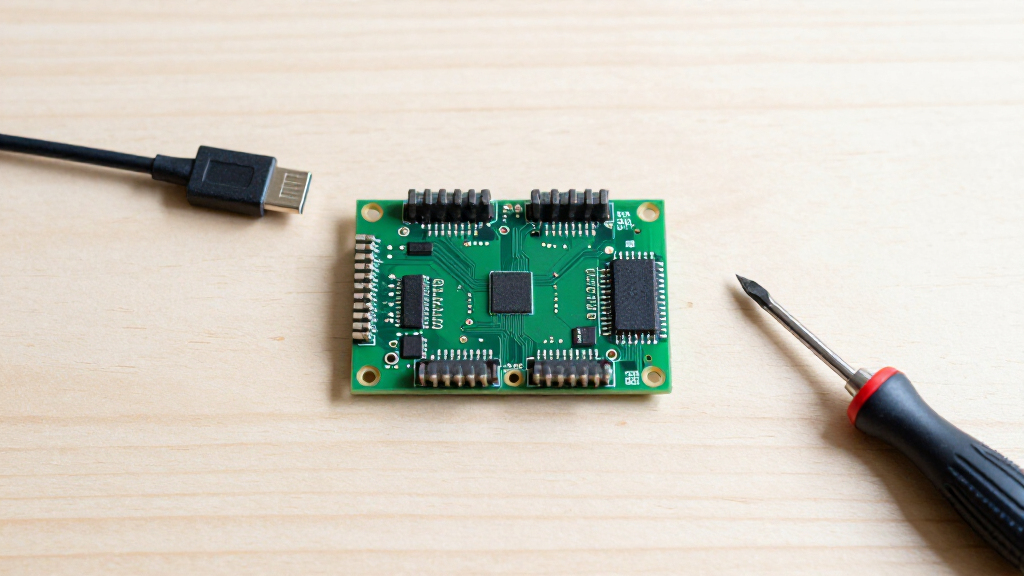
Our evaluation process focused on core factors that influence project success and user experience. Performance metrics like processor speed, WiFi, and Bluetooth versions were prioritized to ensure the boards could handle modern IoT tasks. We also considered ease of use, including available documentation, community support, and compatibility with popular development environments like Arduino and MicroPython. Build quality and form factor played roles in assessing durability and suitability for different projects. Finally, value was a key criterion, with a preference for boards that offer a good balance of features at competitive prices. This approach helped us rank boards that deliver reliable performance without unnecessary complexity or cost.Factors to Consider When Choosing Best ESP32-C3 Development Boards
Choosing the right ESP32-C3 development board requires considering several factors beyond just price or brand. A well-suited board should match your project’s technical requirements, budget, and your familiarity with embedded development. Understanding these key considerations helps avoid common pitfalls like overpaying for features you won’t use or selecting a board incompatible with your development setup.Performance and Connectivity Features
Assess the processor speed, WiFi, and Bluetooth versions to match your project’s demands. Boards with newer WiFi 5 or Bluetooth 5.0 standards provide faster data rates and better range, essential for real-time applications. However, higher-performance boards often come at a premium and may require more power management considerations. Match your choice to the complexity of your intended project to avoid overspending or underperforming.
Form Factor and Expandability
The physical size and pin layout influence your design flexibility. Compact boards are ideal for wearable or space-constrained projects, but they may offer fewer pins or interfaces. Larger boards often include additional connectors or headers, facilitating easier development and expansion. Consider whether your project needs multiple sensors, displays, or modules, and select a form factor that accommodates those needs without sacrificing portability.
Ease of Use and Compatibility
Look for boards with clear documentation, active community support, and compatibility with your preferred development environment, such as Arduino IDE or MicroPython. Boards with pre-installed bootloaders or straightforward flashing procedures reduce setup time. Inexperienced users should favor boards with robust tutorials and examples, while advanced users might prefer more customizable options with open-source schematics.
Build Quality and Power Management
Durability and power efficiency matter, especially for embedded or wearable applications. Select boards with quality components that can withstand environmental stresses. Power management features like low-power modes extend battery life, which is critical for portable devices. Avoid overly cheap options that might compromise longevity or reliability in the long run.
Cost and Value
Balance your project needs against your budget. While cheaper boards may suffice for prototyping, investing in higher-quality or feature-rich options pays off in production or long-term deployment. Consider bulk purchase discounts if you plan multiple units. Don’t overlook the importance of warranty and manufacturer support, which can save time and money if issues arise.
Frequently Asked Questions
Is the ESP32-C3 suitable for battery-powered projects?
Yes, many ESP32-C3 boards feature low-power modes that extend battery life, making them suitable for portable applications. However, the power consumption varies depending on the specific board and its components. Selecting a board with efficient power management and minimal peripheral requirements helps maximize runtime without sacrificing performance. Keep in mind that larger displays or active WiFi connections may impact battery life, so choose accordingly based on your project’s needs.
Can I use the ESP32-C3 boards with MicroPython?
Most ESP32-C3 development boards support MicroPython, which simplifies programming for IoT projects. Compatibility depends on the specific board and available firmware, but many manufacturers provide pre-flashed images or detailed instructions. Using MicroPython can significantly shorten development time, especially for prototyping or educational purposes. Verify the community support and firmware availability for your chosen board to ensure seamless setup.
What should I consider when selecting a board for industrial applications?
Industrial projects demand reliability, durability, and long-term support. Look for boards with industrial-grade components, extended temperature ranges, and certifications if available. Additionally, ease of integration into existing systems and support for industrial communication protocols are vital. Consider the availability of spare parts and manufacturer support, as these factors contribute to the long-term viability of your deployment.
Are multi-pack options worth it for hobbyists or educators?
Absolutely. Buying in packs often reduces the overall cost per unit and simplifies scaling for classroom or workshop use. Multi-pack options also ensure uniformity across multiple devices, streamlining troubleshooting and maintenance. However, verify that each board in the pack meets your performance requirements, as some bulk options might compromise on features or build quality to lower the cost.
How important is the physical size of the development board?
The size impacts both your device’s portability and the complexity of integrating additional components. Smaller boards are ideal for wearables or embedded applications with tight space constraints, but they may offer fewer I/O pins. Larger boards provide more connectivity options and easier access for prototyping, but could increase overall device size. Choose a size that aligns with your project’s spatial and functional needs.
Conclusion
For most users starting with IoT development, the ESP32-C3-DevKitM-1-N4X stands out as the best overall due to its balanced performance and ease of use. Budget-conscious hobbyists will find the ESP32-C3 Mini Development Board with WiFi & Bluetooth (2 Pack) offers excellent value. Those needing advanced features like integrated displays or multiple interfaces should consider options like the ESP32-C3 OLED Development Board. Beginners or educational users will benefit from boards with robust community support, while industrial developers should prioritize boards with enhanced durability and long-term availability. Overall, the right choice depends on your specific project goals, technical needs, and budget constraints.