The best AI smart glasses balance useful hands-free features with comfortable frames, dependable phone connectivity, and lenses that suit daily wear. My best overall pick is the Ray-Ban Meta (Gen 2) Wayfarer, which stands out among this lineup for combining a familiar frame with camera, audio, and voice-assistant features. For lens flexibility, the Ray-Ban Meta Gen 2 with Transitions lenses is a standout; for buyers focused on camera specifications, the KAIGERR model lists a 13MP camera. The main tradeoffs are between established-brand features and less familiar alternatives, and between camera claims, lens choices, fit, and the companion-app experience. Read on for the full comparison and help matching a pair to how you plan to use it.

Get the latest gadgets delivered free with Prime
- Fast, free delivery on millions of items
- Prime Video, Amazon Music and more included
- Member-only deals all year
Complete the kit



Key Takeaways
- Ray-Ban Meta Gen 2 Wayfarer models lead this lineup by pairing smart features with recognizable frames, though buyers still need to choose between clear, polarized, gradient, and Transitions lens options.
- The KAIGERR stands out on listed camera resolution with a 13MP camera, but a larger megapixel figure alone does not establish better image quality or a better overall glasses experience.
- Several alternatives advertise 4K video or real-time translation, but these claims should be checked against supported modes, app requirements, and language availability before purchase.
- Lens choice changes everyday usefulness: clear lenses suit indoor and mixed use, while polarized, photochromic, electrochromic, or Transitions lenses target different light conditions.
- Feature-rich listings are not automatically the best value; comfort, phone compatibility, controls, privacy cues, and support can matter more over time than a headline camera or AI specification.
| Ray-Ban Meta (Gen 2) Wayfarer Large Smart Glasses, Matte Black with Clear Lenses |  | Best Overall for Versatile AI Integration and Style | Frame style: Wayfarer, full-frame | Size: Large | Color: Matte black | VIEW LATEST PRICE | See Our Full Breakdown |
| Demabon AI Smart Glasses with 8MP Camera, Bluetooth Audio, Photochromic Lenses, and Voice Assistant |  | Best Value for Camera and AI Features at a Lightweight Price | Camera: 8 MP | Video recording: 4K with 3-axis stabilization | Battery capacity: 270mAh | VIEW LATEST PRICE | See Our Full Breakdown |
| OHO AI Smart Glasses with UV400 Polarized Lenses and Bluetooth Audio |  | Best Compact Design with Translation and UV Protection | Brand: OhO sunshine | Model: A8U | Color: Black | VIEW LATEST PRICE | See Our Full Breakdown |
| Bapick AI Smart Glasses with 8MP Camera |  | Best for High-Resolution Photos and Portable Recording | Camera: 8 MP | Photo resolution: 32 MP | Video: 30 fps | VIEW LATEST PRICE | See Our Full Breakdown |
| Ray-Ban Meta (Gen 2) Wayfarer Smart Glasses, Matte Black with Polarized Gradient Graphite Lenses |  | Best for Classic Style with Advanced Video and AI Features | Frame style: Wayfarer | Frame color: Matte black | Lens type: Polarized Gradient Graphite | VIEW LATEST PRICE | See Our Full Breakdown |
| Ray-Ban Meta Wayfarer Gen 2 Smart Glasses with Transitions Lenses |  | Best for Changing Light | Camera: 12 MP ultra-wide | Video resolution: Up to 3K | Maximum clip length: 3 minutes per session | VIEW LATEST PRICE | See Our Full Breakdown |
| Ray-Ban Meta (Gen 2) Wayfarer Smart Glasses, Shiny Black with Green Lenses | 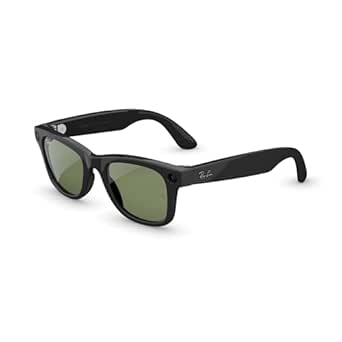 | Best for Meta AI Features | Frame style and color: Wayfarer, shiny black | Lens color: Green (G15) | Camera: 12 MP ultra-wide | VIEW LATEST PRICE | See Our Full Breakdown |
| KAIGERR AI Smart Glasses with 13MP Camera and Bluetooth Audio |  | Best for Long Music Playback | Camera: 13 MP | Video recording: 1080p HD with anti-shake stabilization | Battery capacity: 300 mAh | VIEW LATEST PRICE | See Our Full Breakdown |
| iONCT AI Smart Glasses with Camera and 4K Video Recording |  | Best for High-Resolution Capture | Camera: 8 MP lens with IMX219 sensor | Video recording: 4K with electronic image stabilization | Photo resolution: 32 MP | VIEW LATEST PRICE | See Our Full Breakdown |
| Meta Ray-Ban Gen 2 Wayfarer Smart Glasses, Matte Black, Clear Lenses |  | Best for Clear Indoor Wear | Frame color: Matte black | Lens: Clear, standard, non-polarized polycarbonate | Frame material: Resin | VIEW LATEST PRICE | See Our Full Breakdown |
| SGUKZF Smart Glasses with 4K Camera and Real-Time Translation |  | Best for Stabilized 4K Capture | Camera: 4K with EIS stabilization | Translation: Real-time translation in 139+ languages | Audio: Open-ear speakers and Bluetooth calling | VIEW LATEST PRICE | See Our Full Breakdown |
| AI Smart Glasses with Camera, 4K Video, Real-Time Translation, AI Assistant |  | Best for Voice-Assistant Travel | Camera: 4K video capture | AI features: ChatGPT voice assistant, real-time translation, object recognition via companion app | Audio: Open-ear Bluetooth audio and hands-free calling | VIEW LATEST PRICE | See Our Full Breakdown |
| Osawalla AI Smart Glasses with 8MP Camera and Photochromic Lenses |  | Best for Onboard Storage | Camera: 8 MP | Video: 1080p with EIS stabilization | Storage: 32 GB | VIEW LATEST PRICE | See Our Full Breakdown |
| AI Smart Glasses with 8MP Camera, GPT Assistant, and Real-Time Translation |  | Best for Prescription-Lens Flexibility | Camera: 8MP with EIS stabilization | AI features: GPT assistant, real-time translation, object recognition | Audio: Open-ear speakers and Bluetooth calling | VIEW LATEST PRICE | See Our Full Breakdown |
| AI Smart Glasses with 8MP Camera, EIS Video, and Electrochromic Lenses |  | Best for Adjustable Lens Tint | Camera: 8MP | Video: 1080p with EIS stabilization | Lens: Electrochromic with four tint levels | VIEW LATEST PRICE | See Our Full Breakdown |
| AI smart glasse | Camera | Water resistance |
|---|---|---|
| Ray-Ban Meta | 12 MP ultra-wide | — |
| Demabon AI Smart Glasses with | 8 MP | IP67 |
| OHO AI Smart Glasses with UV40 | — | Water repellent |
| Bapick AI Smart Glasses with 8 | 8 MP | — |
| Ray-Ban Meta | 12 MP ultra-wide | — |
| Ray-Ban Meta Wayfarer Gen 2 Sm | 12 MP ultra-wide | — |
| Ray-Ban Meta | 12 MP ultra-wide | — |
| KAIGERR AI Smart Glasses with | 13 MP | — |
| iONCT AI Smart Glasses with Ca | 8 MP lens with IMX219 sensor | Not water resistant |
| Meta Ray-Ban Gen 2 Wayfarer Sm | 12 MP | — |
| SGUKZF Smart Glasses with 4K C | 4K with EIS stabilization | IP66 |
| AI Smart Glasses with Camera | 4K video capture | IP65 |
| Osawalla AI Smart Glasses with | 8 MP | IP65 |
| AI Smart Glasses with 8MP Came | 8MP with EIS stabilization | IP65 |
| AI Smart Glasses with 8MP Came | 8MP | IP68; listed depth of 1 meter |
More Details on Our Top Picks
Ray-Ban Meta (Gen 2) Wayfarer Large Smart Glasses, Matte Black with Clear Lenses
This model stands out for combining classic Wayfarer style with advanced AI features, making it a top choice for those who want both fashion and function. Its 12 MP camera and 3K video recording capabilities outperform many competitors like the Demabon, which offers stabilized 4K but lacks the same stylish appeal. The open-ear audio and Bluetooth calling support add convenience, though Meta AI features require a smartphone, Bluetooth, and internet—adding setup complexity. The 8-hour battery life and 48-hour charging case are practical for everyday use, but the 3-minute clip limit can be restrictive for continuous recording needs.
Pros:- Stylish, full-frame Wayfarer design blending fashion with tech
- Records high-quality 3K videos and 12 MP photos hands-free
- Supports open-ear audio, calls, messaging, and real-time translation
Cons:- Meta AI features depend on a smartphone, Bluetooth, and internet connection
- Video clips are limited to 3 minutes per session, restricting continuous recording
Best for: Stylish tech enthusiasts who want versatile smart glasses with strong AI features and real-world looks.
Not ideal for: Outdoor adventurers seeking rugged, fully standalone devices—these rely heavily on smartphones and internet connectivity.
- Frame style:Wayfarer, full-frame
- Size:Large
- Color:Matte black
- Lens color:Clear
- Camera:12 MP ultra-wide
- Video resolution:Up to 3K
- Battery life:Up to 8 hours
- Charging case capacity:Up to 48 hours
- Audio:Open-ear speakers
Our verdict“This pick suits those who prioritize style and integrated AI features but are comfortable with some connectivity requirements.”
Demabon AI Smart Glasses with 8MP Camera, Bluetooth Audio, Photochromic Lenses, and Voice Assistant
Compared with the Ray-Ban Meta, the Demabon offers a more affordable package with a sharp 8 MP camera and stabilized 4K video, making it ideal for casual content creators. Its lightweight, 42g frame with removable photochromic lenses enhances daily comfort and UV protection. While it provides AI features like real-time translation and object recognition, its battery life for media use isn’t clearly specified, and it requires a compatible app for media management. Unlike the Meta glasses, it doesn’t have a built-in display or extensive styling options, but it compensates with a versatile feature set at a lower price point.
Pros:- High-quality 8 MP camera with stabilized 4K video recording
- Removable photochromic lenses with UV400 protection
- Lightweight at 42g and water-resistant for daily wear
Cons:- Battery life for camera and AI features isn’t explicitly detailed
- Requires a phone app for full media management and AI functionalities
Best for: Budget-conscious users who want solid camera, AI, and UV protection without sacrificing portability.
Not ideal for: Professional videographers or those needing extended continuous recording—its battery life limits recording to 80 minutes.
- Camera:8 MP
- Video recording:4K with 3-axis stabilization
- Battery capacity:270mAh
- Weight:42g
- Water resistance:IP67
- Lens type:Removable photochromic with UV400
- Connectivity:Bluetooth and Wi-Fi
- Compatibility:Android and iOS
- GPS:No
Our verdict“This model offers excellent value for users wanting a lightweight camera-equipped pair with AI features on a budget.”
OHO AI Smart Glasses with UV400 Polarized Lenses and Bluetooth Audio
The OHO AI glasses excel for users who want lightweight, polarized lenses combined with real-time translation across 165 languages. Weighing only 33 grams, they are ideal for daily wear, outdoor activities, and quick conversations. While they lack a display or camera, their 10-hour battery life and splash-resistant build make them practical for extended use. Compared to the Demabon, they focus more on translation and less on photography, making them perfect for travelers and language learners. Their Bluetooth audio and hands-free calls support seamless communication, but their lack of visual recording limits their use for capturing content.
Pros:- Extremely lightweight at 33 grams for all-day comfort
- Polarized, high-impact-resistant lenses with UV400 protection
- Supports real-time translation in 165 languages and Bluetooth audio
Cons:- No display or camera for visual recording
- No GPS or advanced fitness tracking features
Best for: Travelers and language learners seeking compact, stylish glasses with translation and UV protection.
Not ideal for: Content creators or professionals who need camera or video recording capabilities—these don’t support visual capture.
- Brand:OhO sunshine
- Model:A8U
- Color:Black
- Frame shape:Rectangular
- Lens features:Polarized, UV400, impact resistant
- Battery Life:Up to 10 hours
- Connectivity:Bluetooth
- Translation Languages:165
- Water Resistance:Water repellent
Our verdict“These glasses suit those prioritizing translation, UV protection, and lightweight design over content capture functionalities.”
Bapick AI Smart Glasses with 8MP Camera
This model makes a strong case for users who need high-resolution photography and video without bulk. Its 8 MP camera and 32 MP photos, combined with 30 fps video, outperform many competitors like the Demabon, which has 4K stabilization but lower photo resolution. The 300 mAh battery offers up to 10 hours of music playback, but continuous recording is limited to 80 minutes—less ideal for extensive recording sessions. The inclusion of noise-canceling microphones and open-ear audio supports hands-free calls, and the two lens types provide flexibility. However, the lack of GPS limits outdoor navigation or fitness applications, making it more suited for casual content capture than outdoor adventure.
Pros:- High-resolution 32 MP photos and 30 fps video
- Supports hands-free calls with noise-canceling microphones
- Includes AI assistant and real-time translation in 139 languages
Cons:- Limited to 80 minutes of continuous recording per charge
- No GPS or outdoor navigation features
Best for: Content creators and casual photographers wanting high-res images and stabilized video in a portable form.
Not ideal for: Long-duration videographers or outdoor explorers needing extensive recording or navigation features—these lack GPS and long continuous recording.
- Camera:8 MP
- Photo resolution:32 MP
- Video:30 fps
- Battery capacity:300 mAh
- Music playback:Up to 10 hours
- Storage capacity:32 GB
- Lenses:Polarized and anti-blue-light
- Connectivity:Bluetooth 5.3
- Languages:139
Our verdict“This choice is perfect for users prioritizing high-quality photos and portable video within a compact frame.”
Ray-Ban Meta (Gen 2) Wayfarer Smart Glasses, Matte Black with Polarized Gradient Graphite Lenses
This model is a refined take on the classic Wayfarer, offering a sleek, full-frame style combined with a 12 MP camera capable of recording up to 3K videos. Its open-ear audio and hands-free calling make it suitable for daily multitasking. Compared to the first Meta Gen 2 glasses, this version with polarized gradient lenses adds an extra layer of glare reduction and aesthetic appeal. Though it shares the same 8-hour battery life and 3-minute clip limit, the stylish design makes it more appealing for everyday wear while still offering Meta AI features that require a smartphone connection. It’s ideal for users who seek a sophisticated look with functional AI capabilities.
Pros:- Stylish full-frame Wayfarer design with polarized gradient lenses
- Records videos in up to 3K with a 12 MP ultra-wide camera
- Supports open-ear audio, calls, and Meta AI features
Cons:- Video session length limited to 3 minutes, similar to other Meta models
- Requires Bluetooth and internet for AI features, just like other Meta glasses
Best for: Fashion-conscious users wanting stylish smart glasses with high-quality video and AI features.
Not ideal for: Outdoor adventurers needing long battery life or extensive outdoor navigation—these are more suited for casual, stylish use.
- Frame style:Wayfarer
- Frame color:Matte black
- Lens type:Polarized Gradient Graphite
- Camera:12 MP ultra-wide
- Video resolution:Up to 3K
- Battery life:Up to 8 hours
- Charging case:Provides up to 48 hours
- Audio:Open-ear speakers
- Included components:Charging case, cleaning cloth
Our verdict“Ideal for style-driven users who want high-quality video and AI features in a familiar, fashionable frame.”
Ray-Ban Meta Wayfarer Gen 2 Smart Glasses with Transitions Lenses
The Transitions lenses give this Ray-Ban Meta Gen 2 a practical advantage for people moving between indoors and bright outdoor settings: the lenses darken in sunlight and fade clear indoors, so there is less need to switch eyewear. It keeps the lineup’s useful mix of a 12 MP camera, 3K video, open-ear audio, and Meta AI, with up to eight hours of moderate-use battery life. Compared with the matte-black Clear Lenses model, this version adapts better to sunlight but is less suited to buyers who want consistently clear lenses indoors. The main limits are shared across these Meta options: clips stop at three minutes, and AI features rely on a connected phone, app, and internet. I’d choose it for adaptable lenses, not as a standalone AI device.
Pros:- Transitions lenses darken in sunlight and fade clear indoors.
- Records video at up to 3K resolution with a 12 MP ultra-wide camera.
- Open-ear audio supports calls while leaving surrounding sounds audible.
- Up to eight hours of moderate-use battery life, with up to 48 hours of charging from the case.
Cons:- Video clips are limited to three minutes per session.
- Meta AI requires a Bluetooth-connected smartphone, the Meta AI app, and internet access.
Best for: People who regularly move between sunny outdoor settings and indoor spaces and want one pair of camera-enabled glasses.
Not ideal for: Buyers who need uninterrupted long-form recording or want AI features to work without a connected smartphone and internet.
- Camera:12 MP ultra-wide
- Video resolution:Up to 3K
- Maximum clip length:3 minutes per session
- Lens type:Transitions lenses; darken in sunlight and fade to clear indoors
- Battery life:Up to 8 hours with moderate use
- Charging case:Provides up to 48 hours of charging
- Audio:Open-ear speakers
- AI requirements:Meta AI app, smartphone connection, and internet access
Our verdict“Choose this Gen 2 if light-adapting lenses matter more than clear indoor lenses or longer continuous recordings.”
Ray-Ban Meta (Gen 2) Wayfarer Smart Glasses, Shiny Black with Green Lenses
This shiny-black Wayfarer is the strongest pick here for buyers who want a familiar smart-glasses package with Meta AI and real-time translation. Its 12 MP ultra-wide camera records up to 3K, while open-ear speakers, voice control, and hands-free calling make everyday interactions less dependent on taking out a phone. Against the Ray-Ban Meta Transitions model, the green G15 lenses do not adapt to changing light, but they offer a straightforward fixed-lens choice; compared with the KAIGERR AI Smart Glasses, this model has a shorter listed music-playback figure unavailable for direct comparison, but benefits from Meta’s connected AI ecosystem. The tradeoff is that AI depends on a smartphone, app, and internet, and recording stops after three minutes per clip. It suits users who value the Meta feature set over independent operation.
Pros:- Combines Meta AI features and real-time translation with voice control.
- 12 MP ultra-wide camera records video at up to 3K.
- Open-ear speakers support calls while keeping ambient sound audible.
- Up to eight hours of moderate-use battery life, with up to 48 hours of charging from the case.
Cons:- Meta AI requires a smartphone connection, the Meta AI app, and internet access.
- Video clips are limited to three minutes per session.
- Fixed green lenses do not adapt to indoor and outdoor light changes.
Best for: Android users who want voice-controlled Meta AI, real-time translation, calls, and camera capture in a recognizable Wayfarer frame.
Not ideal for: People who need long continuous video clips, phone-free AI, or lenses that automatically adapt to changing light.
- Frame style and color:Wayfarer, shiny black
- Lens color:Green (G15)
- Camera:12 MP ultra-wide
- Video resolution:Up to 3K
- Maximum video clip length:3 minutes
- Battery life:Up to 8 hours with moderate use
- Charging case capacity:Up to 48 hours of charging
- Connectivity:Bluetooth and Wi-Fi
- Weight:0.05 kg
Our verdict“Pick this version if connected Meta AI and translation matter more to you than adaptive lenses or longer clip recording.”
KAIGERR AI Smart Glasses with 13MP Camera and Bluetooth Audio
The KAIGERR’s clearest differentiator is endurance for listening: its stated playback reaches up to 20 hours at normal volume, longer than the eight-hour moderate-use figure listed for the Ray-Ban Meta Gen 2 models. It also offers a 13 MP camera, stabilized 1080p video, and translation in over 100 languages, making it a more budget-minded feature mix for buyers who care about audio and everyday capture more than the highest video resolution. The tradeoff is visible against the iONCT AI Smart Glasses: KAIGERR records at 1080p rather than 4K, while iONCT lists 32 MP photos and broader translation support. KAIGERR’s 42 g polycarbonate frame and Android/iOS compatibility add flexibility, but there is no GPS, and maximum-volume playback is listed at only nine hours.
Pros:- Up to 20 hours of music playback at normal volume.
- 13 MP photos and stabilized 1080p video.
- Voice assistance and translation support in over 100 languages.
- Lightweight 42 g frame with Android and iOS compatibility.
Cons:- Video recording is limited to 1080p, below the 3K Ray-Ban Meta options and 4K iONCT model.
- No GPS functionality.
- Maximum-volume music playback is listed at up to nine hours.
Best for: Frequent listeners who want lightweight Bluetooth glasses with long normal-volume playback, basic camera capture, and phone-compatible translation.
Not ideal for: Buyers prioritizing 4K video, GPS-based features, or the most detailed camera specifications.
- Camera:13 MP
- Video recording:1080p HD with anti-shake stabilization
- Battery capacity:300 mAh
- Music playback:Up to 20 hours at normal volume; up to 9 hours at maximum volume
- Weight:42 g
- Frame material:Polycarbonate
- Connectivity:Bluetooth 5.4 and 5 GHz Wi-Fi
- Storage:4 GB
- Compatibility:Android and iOS
Our verdict“Choose KAIGERR if long listening time and a lightweight frame matter more than 4K capture or GPS.”
iONCT AI Smart Glasses with Camera and 4K Video Recording
For buyers who rank capture detail above the polished connected ecosystem offered by Ray-Ban, the iONCT stands out with 4K video, electronic image stabilization, and 32 MP photos. It also pairs camera functions with open-ear speakers, calls, voice controls, and translation support across over 165 languages. Compared with the KAIGERR AI Smart Glasses, iONCT offers higher stated video and photo resolution plus broader translation coverage, while KAIGERR lists longer normal-volume music playback. The camera tradeoff is stamina: iONCT lists up to 80 minutes of video recording, far less than its up-to-10-hour music figure, so it is better for shorter capture sessions than extended recording. It also lacks GPS and water resistance, unlike a more everyday-ready pick such as the Ray-Ban Meta Wayfarer Gen 2.
Pros:- Records 4K video with electronic image stabilization.
- Lists 32 MP photo resolution.
- Translation support covers over 165 languages.
- Open-ear speakers, voice controls, and hands-free calling add utility beyond the camera.
Cons:- Video recording is listed at up to 80 minutes per charge.
- Not water resistant.
- No GPS functionality.
Best for: Travelers and content-minded buyers who want stabilized 4K clips, high-resolution photos, and multilingual translation in one pair of glasses.
Not ideal for: People who record for long stretches, need GPS, or expect their glasses to handle wet-weather use.
- Camera:8 MP lens with IMX219 sensor
- Video recording:4K with electronic image stabilization
- Photo resolution:32 MP
- Translation support:Over 165 languages
- Music playback:Up to 10 hours
- Video recording time:Up to 80 minutes
- Bluetooth:Bluetooth 5.3
- Water resistance:Not water resistant
- GPS:No GPS
Our verdict“Choose iONCT for higher-resolution capture and wide translation support, provided short video runtime and no water resistance suit your use.”
Meta Ray-Ban Gen 2 Wayfarer Smart Glasses, Matte Black, Clear Lenses
This matte-black Gen 2 makes the most sense for buyers who want the Ray-Ban Meta camera and audio features with clear, standard lenses. The 12 MP camera captures up to 3K video, while open-ear speakers handle calls and audio without fully isolating the wearer. Compared with the Transitions-lens Ray-Ban Meta Wayfarer, these lenses stay clear rather than darkening outdoors, which can suit indoor-first use but offers less flexibility in bright sun. It shares the same practical constraints as the shiny-black green-lens model: clips are limited to three minutes, and Meta AI needs a connected smartphone, app, and internet access. The familiar Wayfarer styling and charging case help make it an everyday wearable, but this is not the right pick for standalone AI or long continuous video.
Pros:- Clear standard lenses suit indoor wear and avoid automatic tint changes.
- 12 MP camera records video at up to 3K resolution.
- Open-ear speakers support calls while preserving awareness of surrounding sounds.
- Up to eight hours of moderate-use battery life, with up to 48 hours of charging from the case.
Cons:- Video clips are limited to three minutes per session.
- Meta AI requires a connected smartphone, app, and internet access.
- Clear lenses do not provide the outdoor light adaptation of the Transitions-lens Ray-Ban Meta model.
Best for: Indoor-first users who want clear lenses, hands-free calls, open-ear audio, and Meta AI-connected camera features in a standard Wayfarer size.
Not ideal for: People who spend long periods in bright sunlight, need longer recording sessions, or want Meta AI without a connected phone.
- Frame color:Matte black
- Lens:Clear, standard, non-polarized polycarbonate
- Frame material:Resin
- Camera:12 MP
- Video resolution:Up to 3K
- Maximum clip length:3 minutes per session
- Battery life:Up to 8 hours with moderate use
- Charging case capacity:Up to 48 hours of charging
- Fit dimensions:50 mm lens width; 22 mm bridge; 15.6 cm arm length
Our verdict“Choose this pair for clear indoor lenses and Ray-Ban Meta features, but pick the Transitions version if your light conditions change often.”
SGUKZF Smart Glasses with 4K Camera and Real-Time Translation
The SGUKZF stands out for pairing a 4K camera with electronic image stabilization and translation across 139+ languages, making it a fit for travelers who want hands-free recording alongside communication tools. Compared with the Osawalla AI Smart Glasses, which records stabilized 1080p video, this model offers a higher stated video resolution; the Osawalla, however, lists 32 GB of storage, while the SGUKZF lists 4 GB. Its photochromic lenses and 35 g frame suit changing light and longer wear, and open-ear audio supports calls without sealing off surrounding sound. The tradeoff is a modest 290 mAh battery and no GPS, so it is less compelling for long recording sessions or location-based features. I would choose it for camera resolution, not for extensive onboard storage.
Pros:- 4K camera with electronic image stabilization
- Translation support for 139+ languages
- Open-ear speakers support calls while keeping surroundings audible
- 35 g frame and photochromic lenses suit everyday outdoor wear
Cons:- No GPS functionality
- 4 GB of listed storage is less than the Osawalla’s 32 GB
- 290 mAh battery may limit demanding recording and audio use
Best for: Travelers who prioritize stabilized 4K point-of-view video, translation, and a lightweight photochromic frame.
Not ideal for: People who need GPS, substantial onboard storage, or long recording sessions between charges.
- Camera:4K with EIS stabilization
- Translation:Real-time translation in 139+ languages
- Audio:Open-ear speakers and Bluetooth calling
- Lenses:Photochromic
- Water resistance:IP66
- Weight:35 g
- Battery capacity:290 mAh
- Memory storage:4 GB
- GPS:No GPS
Our verdict“Choose the SGUKZF if stabilized 4K capture matters more to you than extensive storage or GPS.”
AI Smart Glasses with Camera, 4K Video, Real-Time Translation, AI Assistant
This model puts a ChatGPT voice assistant alongside real-time translation, 4K video, and object recognition through a companion app. That combination gives travelers and meeting-goers more ways to ask questions or identify what they are seeing than the SGUKZF Smart Glasses, whose listed AI feature emphasizes translation. It also supports iOS and Android phones, a useful fit for households or teams using different platforms. The tradeoff is that the listing gives no storage capacity or GPS details, and its 290 mAh battery may constrain heavy use of recording, calls, and assistant features. IP65 protection is stated, but the product data does not specify usage limits. I would pick it for voice-led assistance, while buyers focused on documented storage should compare it with the Osawalla.
Pros:- Built-in ChatGPT voice assistant and real-time translation
- 4K video capture
- Object recognition via companion app
- Compatible with iOS and Android smartphones
Cons:- No storage capacity is listed
- No built-in GPS is specified
- 290 mAh battery may be limiting during extended recording and assistant use
Best for: Travelers and meeting-goers who want a voice assistant, translation, and app-based object recognition across iOS or Android.
Not ideal for: Buyers who need clearly specified onboard storage, GPS, or a battery capacity suited to extended heavy use.
- Camera:4K video capture
- AI features:ChatGPT voice assistant, real-time translation, object recognition via companion app
- Audio:Open-ear Bluetooth audio and hands-free calling
- Water resistance:IP65
- Battery capacity:290 mAh
- Connectivity:Bluetooth wireless
- Compatibility:iOS and Android smartphones
- Frame shape:Rectangular
Our verdict“Choose this pair if voice assistance and broad phone compatibility matter more than clearly documented storage.”
Osawalla AI Smart Glasses with 8MP Camera and Photochromic Lenses
The Osawalla is the practical pick for buyers who want AI features without giving up room for saved media: its listed 32 GB storage is substantially more than the 4 GB stated for the SGUKZF Smart Glasses and the 2 GB in the GPT Assistant model. It records 1080p video with EIS, so it gives up the SGUKZF’s stated 4K resolution in exchange for a more generous storage specification. Translation in over 139 languages, voice assistance, and object recognition broaden its usefulness beyond capture. Photochromic lenses, IP65 protection, and a 40.8 g TR90 frame suit everyday wear, though the frame is heavier than the SGUKZF’s 35 g design. The stated music playback time is up to seven hours; buyers who record heavily should not assume the same runtime for every feature.
Pros:- 32 GB of listed storage
- 1080p video with EIS stabilization
- Voice assistance, object recognition, and translation in over 139 languages
- Photochromic lenses and IP65 water resistance
Cons:- Video resolution is 1080p, below the 4K stated for the SGUKZF
- 40.8 g frame is heavier than the SGUKZF’s 35 g frame
- Up to seven hours of music playback does not establish runtime for intensive camera use
Best for: People who want translation and camera features with more listed onboard storage for saved media.
Not ideal for: Buyers who prioritize 4K recording, the lightest frame in this group, or electrochromic tint controls.
- Camera:8 MP
- Video:1080p with EIS stabilization
- Storage:32 GB
- Translation:Over 139 languages
- Connectivity:Bluetooth 5.4 and Wi-Fi
- Weight:40.8 g
- Battery capacity:290 mAh
- Music playback:Up to 7 hours
- Water resistance:IP65
Our verdict“Choose the Osawalla if listed storage and broad AI functions matter more than 4K video or the lightest fit.”
AI Smart Glasses with 8MP Camera, GPT Assistant, and Real-Time Translation
Replaceable prescription lenses give this model a distinct advantage for buyers who need vision correction: unlike the Osawalla AI Smart Glasses, whose listing specifies photochromic lenses, this pair is explicitly described as supporting lens replacement. Its 8MP camera with EIS, GPT assistant, real-time translation, and object recognition covers the familiar AI-glasses mix, while open-ear speakers keep calls and audio compatible with staying aware of nearby sounds. The tradeoff is 2 GB of storage, far below the Osawalla’s listed 32 GB, so it is a weaker choice for keeping many captures on the glasses. Call time is listed at around four hours, which may also disappoint frequent callers. I would rank it for prescription flexibility rather than storage capacity or extended calling.
Pros:- Replaceable prescription lenses
- 8MP camera with EIS stabilization
- GPT assistant, translation, and object recognition
- Open-ear audio and IP65 water resistance
Cons:- 2 GB storage is much less than the Osawalla’s listed 32 GB
- Around four hours of call time may not suit frequent, extended calls
- Listed music playback is up to seven hours, which may be short for all-day audio use
Best for: Prescription-wearers seeking replaceable lenses alongside translation, voice assistance, and hands-free capture.
Not ideal for: Frequent callers or people who want generous onboard storage for photos and videos.
- Camera:8MP with EIS stabilization
- AI features:GPT assistant, real-time translation, object recognition
- Audio:Open-ear speakers and Bluetooth calling
- Battery capacity:300 mAh
- Music playback:Up to 7 hours
- Call time:Around 4 hours
- Storage:2 GB
- Water resistance:IP65
- Lenses:Replaceable prescription lenses
Our verdict“Choose this model if replaceable prescription lenses are your priority and its limited storage fits your recording habits.”
AI Smart Glasses with 8MP Camera, EIS Video, and Electrochromic Lenses
The strongest differentiator here is four touch-adjustable electrochromic tint levels, letting wearers change lens darkness directly instead of relying on photochromic lenses to react to light. That makes this a more controllable alternative to the Osawalla AI Smart Glasses, which have photochromic lenses, while the Osawalla lists the same 32 GB storage capacity. The camera records 1080p video with EIS; despite the title’s 4K wording, the supplied specifications say 1080p. Translation in 165+ languages, object recognition, open-ear audio, and a stated 6–8 hours of mixed use make it a feature-rich option. Its 40 g frame and IP68 rating add everyday practicality, but the battery figure is still finite and the video resolution is not 4K. I would choose it for tint control, not maximum capture resolution.
Pros:- Four touch-adjustable electrochromic tint levels
- 1080p video with EIS stabilization
- Translation support in 165+ languages and object recognition
- IP68 water-resistance rating and 32 GB storage
Cons:- Specifications list 1080p video, despite the title mentioning 4K
- 6–8 hours of mixed use may not cover a full day of intensive use
- Tint levels require touch adjustment rather than automatic photochromic response
Best for: Wearers who want on-demand lens tint adjustment and broad translation support for changing light conditions.
Not ideal for: Buyers who require verified 4K video or prefer photochromic lenses that adjust without touch controls.
- Camera:8MP
- Video:1080p with EIS stabilization
- Lens:Electrochromic with four tint levels
- Translation:165+ languages
- Bluetooth:Bluetooth 6.0
- Weight:40 g
- Battery:290 mAh; 6–8 hours mixed use
- Storage:32 GB
- Water resistance:IP68; listed depth of 1 meter
Our verdict“Choose this pair if adjustable tint is more useful to you than 4K recording or automatic lens darkening.”

How We Picked
I compared these 15 options around the needs that shape a smart-glasses purchase: camera and video claims, audio and assistant functions, lens type, frame usability, and the likely effort of setup and daily use. Product names and listed features help distinguish the options, but they do not prove that camera output, translation quality, battery life, or app support will match a buyer’s expectations. I gave more weight to a balanced combination of wearable design and useful features than to a single standout number or an ambitious feature label.
The ranking places the Ray-Ban Meta Gen 2 Wayfarer family ahead because it offers several lens configurations around a shared, familiar smart-glasses format. The Transitions version earns a specific lens-focused place, while the KAIGERR, iONCT, SGUKZF, and other camera-forward models suit buyers who prioritize listed imaging or translation features but warrant closer verification. The Demabon, OHO, Bapick, and Osawalla options bring distinct mixes of camera, audio, and lens features; they rank below the leading picks because their listings alone provide less basis for judging the full connected experience. I treat similarly named AI glasses as separate listings, not as proof of shared hardware or software.
| AI smart glasse | Water resistance |
|---|---|
| Ray-Ban Meta | — |
| Demabon AI Smart Glasses with | IP67 |
| OHO AI Smart Glasses with UV40 | Water repellent |
| Bapick AI Smart Glasses with 8 | — |
| Ray-Ban Meta | — |
| Ray-Ban Meta Wayfarer Gen 2 Sm | — |
| Ray-Ban Meta | — |
| KAIGERR AI Smart Glasses with | — |
| iONCT AI Smart Glasses with Ca | Not water resistant |
| Meta Ray-Ban Gen 2 Wayfarer Sm | — |
| SGUKZF Smart Glasses with 4K C | IP66 |
| AI Smart Glasses with Camera | IP65 |
| Osawalla AI Smart Glasses with | IP65 |
| AI Smart Glasses with 8MP Came | IP65 |
| AI Smart Glasses with 8MP Came | IP68; listed depth of 1 meter |
Factors to Consider When Choosing Best AI Smart Glasses
Before choosing a pair, I would work backward from the moments when I expect to wear and use them. Smart glasses can look similar on a product page while differing in lens behavior, phone support, capture controls, and how much of the experience depends on an app. These checks can prevent a feature list from overshadowing everyday fit and usability.
Match the Lenses to Where You Wear Them
Start with your most common lighting conditions rather than choosing lenses by name alone. Clear lenses make more sense for indoor wear and variable environments, while polarized lenses are aimed at reducing glare outdoors. Photochromic and Transitions lenses respond to changing light, but their behavior can vary with conditions and may not suit every setting, including some car windows. Electrochromic lenses may offer a different way to adjust tint, so check how they are controlled and whether they need charging. A common mistake is buying a tint that feels right outside but makes screens or indoor spaces uncomfortable. If one pair must cover work, travel, and outdoor use, lens versatility may matter more than a camera upgrade.
Treat Camera Numbers as a Starting Point
An 8MP or 13MP camera label and a 4K video claim describe different specifications, not a guaranteed ranking of real-world footage. Ask whether the camera supports the resolution you need in the recording modes you expect to use, and check stabilization, audio capture, storage, and export options. Hands-free framing has limits: a glasses camera follows head movement, which can produce a different perspective from a phone or action camera. Buyers often focus on resolution and overlook how quickly clips can be reviewed, transferred, or shared. Look for sample footage and clear details on recording duration before treating a headline figure as decisive. For casual moments, quick capture may be more useful than maximum resolution.
Check AI and Translation Support Before Relying on It
“AI assistant” and “real-time translation” can cover very different functions, from voice commands to spoken translation or camera-based assistance. Confirm which languages and features are supported, whether the glasses need an internet connection, and which phone app handles requests. Feature availability may depend on region, software, or subscription terms, so read the current product and app documentation rather than assuming every advertised function is ready everywhere. Consider where you will use the assistant: noisy streets, quiet offices, and travel settings place different demands on microphones and audio. A smart pair is a poor fit if its main advertised feature cannot work in your usual environment. Keep a phone-based backup for high-stakes translation or navigation needs.
Prioritize Fit, Controls, and Comfort
Smart glasses need to fit like glasses first, since pressure at the nose or temples can make useful features irrelevant. Check frame measurements, available sizes, prescription options, weight, and whether the listed frame suits your face shape. Large and standard Wayfarer variants are not interchangeable for every wearer, so compare dimensions rather than relying on the style name. Try to understand how recording, volume, and assistant controls work without looking at the frames. Buttons and touch surfaces may be easier in some situations, while voice controls can be awkward in public. If you expect long wear, comfort and control placement are better reasons to choose one model over a longer feature list.
Verify Phone Compatibility, Battery, and Support
The companion app is part of the product, not an optional detail: it may handle setup, firmware, media transfer, and assistant settings. Check phone operating-system requirements and app availability before ordering, especially for lesser-known listings. Battery life depends on how you use the glasses; frequent recording, audio playback, and voice requests can place different demands on a charge. Look for published battery estimates tied to specific activities, charging details, and replacement or repair support. Buyers sometimes compare only the frame and forget that a weak app or difficult transfer process can limit daily use. A clear warranty and responsive support can be more valuable than an extra advertised mode.
Think Through Privacy and Recording Etiquette
Camera glasses can capture people nearby, so check how recording is signaled and whether the indicator is easy to notice. Learn the controls for starting and stopping capture before wearing them in shared spaces. Local laws and venue rules can restrict recording, and social expectations may be stricter than the law. Avoid assuming that a discreet frame makes recording appropriate; ask permission when other people are the subject. Also check where recordings are stored, how they sync, and what account or cloud settings apply. If privacy controls are unclear, that uncertainty can outweigh a camera feature you rarely use.
Frequently Asked Questions
Which lens option should I choose if I move between indoors and outdoors?
For frequent changes in lighting, compare the Ray-Ban Meta Transitions option with the photochromic and electrochromic listings, but check the specific tint behavior and controls before choosing. These lens types do not necessarily react in the same way or suit every activity. Clear lenses are a straightforward choice if most use is indoors, while polarized lenses are aimed more at bright outdoor glare. Consider how often you will switch environments and whether you need a consistent tint for screens or driving. If possible, review the maker’s lens guidance for your specific use rather than assuming all light-adjusting lenses behave alike.
Does a 13MP or 4K camera mean the glasses will take better video?
Not by itself. The KAIGERR’s listed 13MP camera and several models’ 4K claims describe advertised specifications, but they do not reveal stabilization, exposure, microphone quality, or how usable the footage looks in motion. Check sample clips and confirm whether the stated resolution applies to the recording mode you plan to use. Also compare how easy it is to transfer and share footage, since that affects everyday usefulness. If image quality is your main reason to buy, treat the sample output and recording workflow as more informative than the headline number.
Can I count on real-time translation while traveling?
Do not assume every translation label means the same capability. Check supported languages, whether translation is spoken or displayed through an app, and whether a network connection is required. Some functions may depend on the phone, software version, or location. Before travel, confirm the feature in the manufacturer’s current documentation and try it in a low-stakes setting. For important conversations, keep a translation app on your phone as a backup.
Are the Ray-Ban Meta Gen 2 listings different glasses or mainly different lens choices?
Several entries in this roundup are Ray-Ban Meta Gen 2 Wayfarer listings with different frame finishes, sizes, or lenses, so the product names alone do not establish a different core experience. The practical choice is often about fit and how the lens suits your routine: clear, green, polarized gradient, or Transitions. Compare dimensions carefully, especially between large and standard versions. Confirm the exact generation and included lens details on the listing you plan to buy. Do not assume every listing has identical accessories or availability just because the frame family is shared.
What should I check if these will be my first smart glasses?
For a first pair, prioritize a clear setup process, compatible phone app, comfortable fit, and controls you can use without practice. Decide whether you mainly want hands-free photos, audio, or assistant features; paying for camera or translation functions you will rarely use adds complexity without much benefit. Check how recordings move to your phone and how the glasses indicate that capture is active. The Ray-Ban Meta Gen 2 family is the more straightforward starting point in this lineup for buyers who want a recognizable eyewear format, while an alternative may fit better if a specific camera or lens feature is your priority. Review warranty and support details before relying on any model as an everyday pair.
Conclusion
For most buyers, I would start with the Ray-Ban Meta (Gen 2) Wayfarer as the best overall choice, then select the lens and frame size that suit daily wear. The best premium fit for lens flexibility is the Transitions version, while the best option for camera-spec-focused shoppers is the KAIGERR based on its listed 13MP camera—after checking sample output and app details. For a first pair, the standard Ray-Ban Meta Gen 2 with clear lenses is the simpler starting point among these listings; for bright outdoor use, compare the polarized Ray-Ban option and the OHO polarized model. Buyers drawn to 4K recording or translation should check support, language availability, and real sample performance before choosing the iONCT, SGUKZF, or other feature-led alternatives. My final recommendation is to prioritize fit, lens behavior, and phone compatibility over the longest feature list.
Fall Picks
fall essentials
As an affiliate, we earn on qualifying purchases.