
The best mini PC for most people in this roundup is the ACEMAGIC M1, pairing a Ryzen 7 7735HS with 24GB of memory and a 1TB SSD. For a more balanced everyday desktop, I’d also look at the GEEKOM A5 2027 Edition, while the Apple Mac mini with M6 is a distinct pick for buyers who want macOS. The main tradeoffs are processing headroom versus size and simplicity, and more memory or storage versus a lower-spec machine for basic tasks. Low-power models can handle light office work, but they are not substitutes for stronger systems when workloads grow. Read on for the full breakdown and to see which mini PC best fits your needs.

Get the latest gadgets delivered free with Prime
- Fast, free delivery on millions of items
- Prime Video, Amazon Music and more included
- Member-only deals all year
Complete the kit



Key Takeaways
- The ACEMAGIC M1 leads on ready-to-use hardware: its Ryzen 7 7735HS, 24GB of LPDDR5 memory, and 1TB SSD give it more memory and storage than most of the Windows mini PCs here.
- Several Ryzen 7 7730U models target a similar everyday performance tier: the GEEKOM A5, GMKtec Nucbox M5 Ultra, and BOSGAME P4 Ultra are differentiated more by their supplied storage and overall configuration than by processor class.
- Processor names alone do not tell the whole story: memory ranges from 6GB in the Bmax B1 Plus to 24GB in the ACEMAGIC M1, a gap that affects multitasking and how long a system remains comfortable to use.
- Basic Intel models are for narrow workloads: the Celeron- and Pentium-based options suit light computing better than demanding multitasking, while the Ryzen 5 and Ryzen 7 systems provide more room to grow.
- The roundup includes different operating-system and display priorities: Apple’s M6 Mac mini is the macOS choice, and the KAMRUI Pinova P2 calls out triple 4K display support for multi-screen setups.
| ACEMAGICIAN S3A Mini PC with Ryzen 7 H 255, 16GB RAM, 512GB SSD |  | Best for Performance and Multi-Display Work | Processor: AMD Ryzen 7 H 255, 8 cores/16 threads, up to 4.9GHz | Graphics: AMD Radeon 780M, 12 cores, 2600MHz | Memory: 16GB LPDDR5, 6400MT/s; maximum listed capacity 16GB | VIEW LATEST PRICE | See Our Full Breakdown |
| ACEMAGIC M1 Mini PC with AMD Ryzen 7 7735HS, 24GB LPDDR5 RAM, and 1TB NVMe SSD |  | Best for Ready-to-Use Multitasking | Processor: AMD Ryzen 7 7735HS, 8 cores/16 threads, 3.2GHz base and up to 4.75GHz | Graphics: Integrated AMD Radeon 680M, 12 cores, up to 2200MHz | Memory: 24GB LPDDR5 | VIEW LATEST PRICE | See Our Full Breakdown |
| GMKtec G3 Ultra Mini PC with Intel Pentium Gold 7505, 16GB LPDDR4 RAM, 512GB SSD |  | Best for Basic Office and Remote Management | Processor: Intel Pentium Gold 7505 | Graphics: Intel UHD Graphics, 48 EUs, up to 1000MHz | Memory: 16GB LPDDR4, 3200MT/s | VIEW LATEST PRICE | See Our Full Breakdown |
| Beelink SER5 Mini PC with AMD Ryzen 5 5500U, 16GB DDR4 RAM, 480GB NVMe SSD, Windows 11 Pro |  | Best for Upgradeable Everyday Use | Processor: AMD Ryzen 5 5500U, 6 cores/12 threads, up to 4.0GHz | Graphics: Integrated AMD Radeon Graphics, 7 cores, 1800MHz | Memory: 16GB DDR4, upgradable to 64GB | VIEW LATEST PRICE | See Our Full Breakdown |
| Bmax B1 Plus Mini PC, Intel Celeron J3355, 6GB RAM, 128GB eMMC |  | Best for Basic Browsing and VESA Mounting | Processor: Intel Celeron J3355, up to 2.5GHz | Graphics: Integrated Intel HD Graphics 500 | Memory: 6GB LPDDR3 | VIEW LATEST PRICE | See Our Full Breakdown |
| ACEMAGIC K1 Mini PC, Ryzen 5 5425U, 16GB RAM, 256GB SSD |  | Best for Triple-Display Office Setups | Processor: AMD Ryzen 5 5425U, 4 cores and 8 threads, up to 4.1GHz | Memory: 16GB DDR4 | Storage: 256GB SSD | VIEW LATEST PRICE | See Our Full Breakdown |
| Apple Mac mini Desktop Computer with M6 Chip (2026) |  | Best Premium Mac Mini PC | Chip: Apple M6 | Memory: Up to 32GB unified memory | Memory bandwidth: 170GB/s | VIEW LATEST PRICE | See Our Full Breakdown |
| KAMRUI Pinova P1 Mini PC, AMD Ryzen 3 Pro 7330U, 8GB RAM, 256GB SSD, Windows 11 Pro |  | Best for Mounted, Managed Office Desktops | Processor: AMD Ryzen 3 Pro 7330U, 4 cores and 8 threads, up to 4.3GHz | Memory: 8GB RAM | Storage: 256GB M.2 SSD | VIEW LATEST PRICE | See Our Full Breakdown |
| GMKtec Nucbox M5 Ultra Mini PC with AMD Ryzen 7 7730U, 16GB RAM and 512GB SSD |  | Best for Expandable Performance | Processor: AMD Ryzen 7 7730U, 8 cores and 16 threads, up to 4.5GHz | Memory: 16GB dual-channel DDR4 (2 x 8GB), expandable to 64GB | Storage: 512GB M.2 2280 PCIe 3.0 SSD | VIEW LATEST PRICE | See Our Full Breakdown |
| KAMRUI AK1PLUS Mini PC, Intel Celeron N5095, 16GB RAM, 256GB SSD |  | Best for Basic Dual-4K Computing | Processor: Intel Celeron N5095, 4 cores and 4 threads, up to 2.9GHz | Memory: 16GB LPDDR4X | Storage: 256GB M.2 2280 SSD | VIEW LATEST PRICE | See Our Full Breakdown |
| GEEKOM A5 2027 Edition Mini PC, Ryzen 7 7730U, 16GB RAM, 500GB M.2 NVMe SSD |  | Best for Quiet, Multi-Display Work | Processor: AMD Ryzen 7 7730U | Graphics: Integrated Radeon Vega 8 | Memory: 16GB DDR4, expandable to 64GB | VIEW LATEST PRICE | See Our Full Breakdown |
| GMKtec M2 Pro S Mini PC, Intel Core i7-1185G7, 16GB DDR4, 1TB NVMe SSD |  | Best for Intel-Based Multi-Monitor Setups | Processor: Intel Core i7-1185G7, 4 cores and 8 threads, up to 4.8GHz | Graphics: Integrated Intel Iris Xe Graphics G7, 96 EU | Memory: 16GB dual-channel DDR4 SODIMM, expandable to 64GB | VIEW LATEST PRICE | See Our Full Breakdown |
| BOSGAME E5 Plus Mini PC with AMD Ryzen 3 5400U, 8GB RAM, 256GB SSD |  | Best for Expandable Networking on a Lean Setup | Processor: AMD Ryzen 3 5400U, 4 cores and 8 threads, up to 4.0GHz | Graphics: Integrated AMD Radeon Vega 8 | Memory: 8GB DDR4; two SODIMM slots, expandable to 64GB | VIEW LATEST PRICE | See Our Full Breakdown |
| KAMRUI Pinova P2 Mini PC, AMD Ryzen 5 5425U, 16GB RAM, 256GB SSD, Triple 4K Display |  | Best for Plug-and-Play Multi-Monitor Office Work | Processor: AMD Ryzen 5 5425U, 4 cores and 8 threads, up to 4.1GHz | Graphics: Integrated AMD Radeon Graphics, up to 1600MHz | Memory: 16GB LPDDR4 | VIEW LATEST PRICE | See Our Full Breakdown |
| BOSGAME P4 Ultra Mini PC, AMD Ryzen 7 7730U, 16GB RAM, 1TB PCIe 3.0 SSD |  | Best for Power Users and Home Servers | Processor: AMD Ryzen 7 7730U, 8 cores and 16 threads, up to 4.5GHz | Graphics: Integrated Radeon Graphics with 3GB shared VRAM | Memory: 16GB DDR4 3200MHz, expandable to 64GB | VIEW LATEST PRICE | See Our Full Breakdown |
| mini PC | Memory | Processor | Storage | Graphics |
|---|---|---|---|---|
| ACEMAGICIAN S3A Mini PC with R | 16GB LPDDR5, 6400MT/s; maximum listed capacity 16GB | AMD Ryzen 7 H 255, 8 cores/16 threads, up to 4.9GHz | 512GB PCIe 4.0 NVMe SSD; expandable up to 4TB | AMD Radeon 780M, 12 cores, 2600MHz |
| ACEMAGIC M1 Mini PC with AMD R | 24GB LPDDR5 | AMD Ryzen 7 7735HS, 8 cores/16 threads, 3.2GHz base and up to 4.75GHz | 1TB M.2 2280 SSD | Integrated AMD Radeon 680M, 12 cores, up to 2200MHz |
| GMKtec G3 Ultra Mini PC with I | 16GB LPDDR4, 3200MT/s | Intel Pentium Gold 7505 | 512GB M.2 SATA SSD | Intel UHD Graphics, 48 EUs, up to 1000MHz |
| Beelink SER5 Mini PC with AMD | 16GB DDR4, upgradable to 64GB | AMD Ryzen 5 5500U, 6 cores/12 threads, up to 4.0GHz | 480GB M.2 2280 NVMe SSD | Integrated AMD Radeon Graphics, 7 cores, 1800MHz |
| Bmax B1 Plus Mini PC | 6GB LPDDR3 | Intel Celeron J3355, up to 2.5GHz | 128GB eMMC | Integrated Intel HD Graphics 500 |
| ACEMAGIC K1 Mini PC | 16GB DDR4 | AMD Ryzen 5 5425U, 4 cores and 8 threads, up to 4.1GHz | 256GB SSD | — |
| Apple Mac mini Desktop Compute | Up to 32GB unified memory | — | — | — |
| KAMRUI Pinova P1 Mini PC | 8GB RAM | AMD Ryzen 3 Pro 7330U, 4 cores and 8 threads, up to 4.3GHz | 256GB M.2 SSD | — |
| GMKtec Nucbox M5 Ultra Mini PC | 16GB dual-channel DDR4 (2 x 8GB), expandable to 64GB | AMD Ryzen 7 7730U, 8 cores and 16 threads, up to 4.5GHz | 512GB M.2 2280 PCIe 3.0 SSD | Integrated AMD Radeon Graphics, 8 cores, 2000MHz |
| KAMRUI AK1PLUS Mini PC | 16GB LPDDR4X | Intel Celeron N5095, 4 cores and 4 threads, up to 2.9GHz | 256GB M.2 2280 SSD | Integrated Intel UHD Graphics |
| GEEKOM A5 2027 Edition Mini PC | 16GB DDR4, expandable to 64GB | AMD Ryzen 7 7730U | 500GB M.2 NVMe SSD; additional M.2 and 2.5-inch bays | Integrated Radeon Vega 8 |
| GMKtec M2 Pro S Mini PC | 16GB dual-channel DDR4 SODIMM, expandable to 64GB | Intel Core i7-1185G7, 4 cores and 8 threads, up to 4.8GHz | 1TB M.2 2280 NVMe SSD; additional M.2 2242 SATA slot | Integrated Intel Iris Xe Graphics G7, 96 EU |
| BOSGAME E5 Plus Mini PC with A | 8GB DDR4; two SODIMM slots, expandable to 64GB | AMD Ryzen 3 5400U, 4 cores and 8 threads, up to 4.0GHz | 256GB M.2 2280 SATA SSD | Integrated AMD Radeon Vega 8 |
| KAMRUI Pinova P2 Mini PC | 16GB LPDDR4 | AMD Ryzen 5 5425U, 4 cores and 8 threads, up to 4.1GHz | 256GB M.2 SSD | Integrated AMD Radeon Graphics, up to 1600MHz |
| BOSGAME P4 Ultra Mini PC | 16GB DDR4 3200MHz, expandable to 64GB | AMD Ryzen 7 7730U, 8 cores and 16 threads, up to 4.5GHz | 1TB PCIe 3.0 NVMe SSD; expandable via M.2 slot | Integrated Radeon Graphics with 3GB shared VRAM |
More Details on Our Top Picks
ACEMAGICIAN S3A Mini PC with Ryzen 7 H 255, 16GB RAM, 512GB SSD
I’d place the ACEMAGICIAN S3A near the top for buyers who want strong CPU and integrated graphics performance in a compact desktop. Its 8-core Ryzen 7 H 255 and Radeon 780M give it a performance-oriented profile compared with the ACEMAGIC M1, while support for three 4K displays suits a desk with several screens. Three power modes let buyers favor quieter, lower-power operation or higher performance, and the dual-fan cooling is built for those changing workloads.
The main compromise is the fixed 16GB memory ceiling, which leaves less room to grow than the Beelink SER5, whose RAM is listed as upgradeable. The 512GB SSD may also fill quickly, although storage can expand to 4TB. I’d choose this for capable multi-display work, not for a system that needs memory upgrades or a large drive out of the box.
Pros:- Ryzen 7 H 255 with 8 cores and 16 threads suits demanding multitasking.
- Radeon 780M graphics and support for up to three 4K displays broaden its desk setup options.
- Storage can expand from the included 512GB SSD up to 4TB.
- Three performance modes and dual-fan cooling allow different workload and noise priorities.
Cons:- Memory is listed at 16GB with no stated upgrade path.
- The 512GB SSD may be restrictive for large media or software libraries.
Best for: Home-office users who want a compact, high-performance Windows mini PC for multitasking across up to three 4K displays.
Not ideal for: Buyers running memory-heavy creative projects who need more than 16GB RAM, or anyone who wants ample storage without adding a drive.
- Processor:AMD Ryzen 7 H 255, 8 cores/16 threads, up to 4.9GHz
- Graphics:AMD Radeon 780M, 12 cores, 2600MHz
- Memory:16GB LPDDR5, 6400MT/s; maximum listed capacity 16GB
- Storage:512GB PCIe 4.0 NVMe SSD; expandable up to 4TB
- Display support:Up to three 4K displays
- Video outputs:HDMI 2.0, DP 2.0, USB4 Type-C
- Operating system:Windows 11 Pro
- Cooling and power modes:Dual-fan air cooling; Silent (20–35W), Auto (30–45W), Performance (40–54W)
- Dimensions:5.31 × 2.83 × 6.41 inches
Our verdict“Choose the S3A for strong compact-PC performance and a three-screen setup, provided its 16GB memory limit fits your workload.”
ACEMAGIC M1 Mini PC with AMD Ryzen 7 7735HS, 24GB LPDDR5 RAM, and 1TB NVMe SSD
The ACEMAGIC M1 is a practical choice for buyers who want generous memory and storage without planning an immediate upgrade. Its 24GB LPDDR5 RAM and 1TB SSD give it more working room out of the box than the S3A’s 16GB and 512GB, making it better suited to keeping many applications and files on the system. An extra M.2 slot adds another route for storage growth, and the included VESA mount makes it easy to keep a desk clear.
The Ryzen 7 7735HS and Radeon 680M handle everyday productivity and 4K playback, but the graphics are intended for lighter gaming rather than demanding graphics work. Compared with the S3A’s Radeon 780M, the M1 is the more convenient capacity-first pick, not the stronger graphics choice. Its three-display support is useful, though buyers seeking upgradeable memory should note that no RAM expansion is specified.
Pros:- 24GB LPDDR5 memory provides more multitasking headroom than the 16GB options here.
- 1TB SSD and a second M.2 NVMe slot offer useful storage capacity and expansion.
- Supports up to three displays and 4K media playback.
- VESA mount and Windows 11 Pro are included.
Cons:- Radeon 680M graphics are better suited to light gaming than demanding graphics workloads.
- Memory is listed as LPDDR5 with no upgrade capacity specified.
Best for: Multitaskers who want Windows 11 Pro, 24GB of memory, a 1TB SSD, and room to add another M.2 drive.
Not ideal for: Buyers focused on demanding gaming or graphics workloads, or those who want a stated memory upgrade path.
- Processor:AMD Ryzen 7 7735HS, 8 cores/16 threads, 3.2GHz base and up to 4.75GHz
- Graphics:Integrated AMD Radeon 680M, 12 cores, up to 2200MHz
- Memory:24GB LPDDR5
- Storage:1TB M.2 2280 SSD
- Storage expansion:Additional M.2 NVMe SSD slot
- Display outputs:HDMI, DisplayPort, and USB-C; supports up to three displays
- Operating system:Windows 11 Pro
- Connectivity:6 USB ports
- Dimensions:6 × 4.5 × 2.5 inches
Our verdict“Pick the M1 if you value ample included memory and storage more than the S3A’s stronger Radeon 780M graphics.”
GMKtec G3 Ultra Mini PC with Intel Pentium Gold 7505, 16GB LPDDR4 RAM, 512GB SSD
The GMKtec G3 Ultra makes more sense as a compact office or utility PC than as an all-purpose performance machine. Its Intel Pentium Gold 7505 is a step down from the Ryzen 7 processors in the ACEMAGIC M1 and S3A, but 16GB RAM, Windows 11 Pro, and dual 4K HDMI outputs give it a useful foundation for everyday productivity and two-screen work. Wi-Fi 6, 2.5GbE, and support for Wake-on-LAN, PXE boot, RTC wake, and automatic power-on also suit managed offices or unattended setups.
Its storage design is a welcome point of flexibility: the included drive is a 512GB M.2 SATA SSD, while separate M.2 slots provide SATA and PCIe expansion options. Still, the listed memory is capped at 16GB, and Intel UHD graphics are not aimed at gaming or demanding creative tasks. Compared with the Beelink SER5, it offers more remote-management features, while the Beelink has a clearer memory upgrade path.
Pros:- Dual HDMI outputs support two 4K displays at 60Hz.
- Two M.2 slots provide options for expanding storage.
- Wake-on-LAN, PXE boot, RTC wake, and automatic power-on support managed or unattended setups.
- Includes Wi-Fi 6, Bluetooth 5.2, and 2.5GbE wired networking.
Cons:- Pentium Gold processor and Intel UHD graphics are limited for demanding work and gaming.
- Memory is listed as 16GB with no stated upgrade capacity.
- The included 512GB SSD uses SATA rather than PCIe storage.
Best for: Small-office administrators and home users who need a low-power PC for routine work, dual displays, and remote startup features.
Not ideal for: Gamers, video editors, or users running heavy multitasking workloads who need stronger graphics or expandable memory.
- Processor:Intel Pentium Gold 7505
- Graphics:Intel UHD Graphics, 48 EUs, up to 1000MHz
- Memory:16GB LPDDR4, 3200MT/s
- Storage:512GB M.2 SATA SSD
- Storage expansion:M.2 2280 PCIe primary slot and M.2 2280 SATA secondary slot
- Video outputs:2 × HDMI 2.0, up to 4K at 60Hz
- Networking:Wi-Fi 6, Bluetooth 5.2, and RJ45 2.5GbE
- Operating system:Windows 11 Pro
- Power consumption:15W
Our verdict“Choose the G3 Ultra for routine dual-screen office work and remote-management features, not for graphics-heavy workloads.”
Beelink SER5 Mini PC with AMD Ryzen 5 5500U, 16GB DDR4 RAM, 480GB NVMe SSD, Windows 11 Pro
I’d recommend the Beelink SER5 to buyers who want a balanced everyday mini PC with a defined upgrade path. Its Ryzen 5 5500U has six cores and 12 threads, making it a sensible fit for office work, browsing, and general multitasking. The standout difference from the ACEMAGIC M1 is its upgradeable DDR4 memory: the SER5 is listed as supporting up to 64GB, so it can grow with workloads that outpace its included 16GB.
Dual 4K display support, 2.5G LAN, and a USB-C video connection give it useful flexibility for a home office. The tradeoffs are a smaller 480GB SSD and older Wi-Fi 5, while its integrated Radeon graphics are aimed at basic visual tasks and light gaming. Compared with the M1’s larger included drive and 24GB RAM, the SER5 asks buyers to make more upgrades themselves, but offers a clearer memory ceiling for future expansion.
Pros:- 16GB DDR4 memory is listed as upgradeable to 64GB.
- Six-core, 12-thread Ryzen 5 processor suits routine productivity and multitasking.
- Supports dual 4K displays through HDMI and USB-C.
- 2.5G LAN and a useful mix of USB ports support wired office setups.
Cons:- The included 480GB SSD may need an upgrade for large file libraries.
- Wi-Fi 5 is an older wireless standard than the Wi-Fi 6 listed for the GMKtec G3 Ultra.
- Integrated graphics are limited for demanding games and design work.
Best for: Home-office buyers who want an everyday Windows mini PC they can upgrade with more memory as their needs grow.
Not ideal for: Users who want a large SSD and higher memory capacity ready out of the box, or who need strong gaming graphics.
- Processor:AMD Ryzen 5 5500U, 6 cores/12 threads, up to 4.0GHz
- Graphics:Integrated AMD Radeon Graphics, 7 cores, 1800MHz
- Memory:16GB DDR4, upgradable to 64GB
- Storage:480GB M.2 2280 NVMe SSD
- Display support:Dual 4K displays
- Ports:3 × USB 3.2, 1 × USB 2.0, HDMI, USB-C with data and video, audio jack
- Connectivity:2.5G LAN, dual-band Wi-Fi, Bluetooth
- Operating system:Windows 11 Pro
- Dimensions:6.6 × 5.1 × 1.5 inches
Our verdict“Choose the SER5 if you want an everyday mini PC with room to expand memory, and are comfortable adding storage later.”
Bmax B1 Plus Mini PC, Intel Celeron J3355, 6GB RAM, 128GB eMMC
The Bmax B1 Plus is the most limited PC in this group, but its tiny chassis and VESA bracket suit a specific job: keeping a basic browsing, office, or media setup out of sight. At 4.25 × 4.13 × 1.42 inches and 0.49 pounds, it is easier to tuck behind a display than the Beelink SER5 or either ACEMAGIC model. Dual HDMI outputs can serve two 4K screens, though the Celeron J3355 and 6GB RAM make this a basic-use feature rather than a sign of high-end performance.
Storage is the main limitation: the included 128GB eMMC leaves little space for apps and files, though two M.2 slots support expansion. Unlike the Windows 11 Pro systems here, it ships with Windows 11 Home and has only two USB ports. I’d choose it for light tasks and a discreet installation, not as a long-term multitasking or gaming desktop.
Pros:- Very compact and lightweight, with a VESA bracket for mounting behind a display.
- Two HDMI ports support dual 4K displays at 60Hz.
- Two M.2 slots offer storage expansion beyond the included eMMC.
- Includes Wi-Fi 5, Bluetooth 5.0, and Gigabit Ethernet.
Cons:- The Celeron J3355 and 6GB RAM are suited to basic tasks, not heavy multitasking.
- 128GB eMMC provides limited built-in storage.
- Only two USB ports are listed.
Best for: Users building a compact, VESA-mounted PC for web browsing, light office tasks, or media playback.
Not ideal for: Multitaskers, gamers, and users storing large files who need faster performance, more memory, or ample built-in storage.
- Processor:Intel Celeron J3355, up to 2.5GHz
- Graphics:Integrated Intel HD Graphics 500
- Memory:6GB LPDDR3
- Storage:128GB eMMC
- Storage expansion:Two M.2 slots (SATA and NVMe), up to 2TB
- Display output:2 HDMI ports; dual 4K displays at 60Hz
- Wireless and wired networking:Dual-band Wi-Fi 5, Bluetooth 5.0, Gigabit Ethernet
- Operating system:Windows 11 Home; supports Linux/Ubuntu
- Dimensions and weight:4.25 × 4.13 × 1.42 inches; 0.49 lbs
Our verdict“Pick the B1 Plus for a discreet, basic-use PC with dual-screen output, but choose a stronger model for multitasking or larger storage needs.”
ACEMAGIC K1 Mini PC, Ryzen 5 5425U, 16GB RAM, 256GB SSD
The ACEMAGIC K1 pairs a four-core Ryzen 5 5425U with 16GB of memory, making it a sensible compact desktop for office applications, browsing, and video playback. Its standout advantage is support for three 4K displays at 60Hz through HDMI, DisplayPort, and USB-C, which gives it more screen flexibility than the KAMRUI AK1PLUS, limited to two displays. The K1 also offers dual M.2 slots and a SATA slot, so its modest 256GB SSD need not define its long-term capacity. Windows 11 Pro is included, and the small case can sit on a desk or mount behind a monitor. The tradeoffs are older Wi-Fi 5 and Bluetooth 4.2, plus a processor less suited to sustained heavy workloads than the eight-core GMKtec Nucbox M5 Ultra.
Pros:- Supports three 4K displays at 60Hz through HDMI, DisplayPort, and USB-C.
- Expandable storage with two M.2 slots and one SATA slot.
- 16GB RAM and Windows 11 Pro suit everyday office multitasking.
- Compact 3.94-inch square chassis can be mounted behind a monitor.
Cons:- The included 256GB SSD may fill quickly with large files and applications.
- Wi-Fi 5 and Bluetooth 4.2 are older than the wireless options on the GMKtec Nucbox M5 Ultra.
- Four processor cores offer less headroom for demanding workloads than the eight-core GMKtec.
Best for: Home-office users who want a small Windows desktop, three 4K screens, and room to expand storage later.
Not ideal for: Buyers running demanding, sustained workloads or those who want newer wireless standards and ample storage out of the box.
- Processor:AMD Ryzen 5 5425U, 4 cores and 8 threads, up to 4.1GHz
- Memory:16GB DDR4
- Storage:256GB SSD
- Storage expansion:Up to 2TB; dual M.2 slots and one SATA slot
- Display support:Up to three 4K displays at 60Hz
- Video outputs:HDMI 2.0, DisplayPort 1.4, USB-C with DP 1.4
- Wireless:Wi-Fi 5, Bluetooth 4.2
- Operating system:Windows 11 Pro
- Dimensions:3.94 x 3.94 x 1.3 inches
Our verdict“Choose the K1 for a compact, expandable office PC with three-screen support, but look to the GMKtec Nucbox M5 Ultra for heavier multitasking.”
Apple Mac mini Desktop Computer with M6 Chip (2026)
The Mac mini is the premium pick here for buyers who want macOS in a compact desktop, rather than another small Windows box. Its Apple M6 chip and Neural Engine are positioned for responsive daily use and on-device AI workflows, while support for up to three external displays makes it a capable base for a multi-monitor workspace. Front USB-C ports and a headphone jack reduce the need to reach around the case, and rear Thunderbolt 4, HDMI, and 2.5Gb Ethernet provide a flexible desk connection. Compared with the Windows-based ACEMAGIC K1, this is the clearer choice for people already working in Apple’s ecosystem; the K1, however, offers user-expandable storage options that are not specified for this Mac. The Mac mini has no built-in display, and memory capacity depends on configuration, so buyers should choose that carefully before purchase.
Pros:- M6 chip and Neural Engine support everyday computing and on-device AI workflows.
- Supports up to three external displays.
- Front and rear ports include Thunderbolt 4, HDMI, USB-C, and 2.5Gb Ethernet.
- Compact 5-by-5-inch footprint and 1.47-pound weight suit small desks.
Cons:- A display must be supplied separately.
- Memory capacity varies by configuration, with up to 32GB listed.
- The product data does not specify user-upgradeable memory or storage.
Best for: Mac users, developers, and creative professionals seeking a small desktop with current Apple connectivity and multi-display support.
Not ideal for: Buyers who require Windows, want to upgrade memory or storage themselves, or need an all-in-one computer with a screen.
- Chip:Apple M6
- Memory:Up to 32GB unified memory
- Memory bandwidth:170GB/s
- Wireless:Wi-Fi 7, Bluetooth 6
- Ethernet:2.5Gb
- Rear ports:Three Thunderbolt 4 ports, HDMI, 2.5Gb Ethernet
- Front ports:Two USB-C ports and headphone jack
- Display support:Up to three external displays
- Dimensions and weight:5 x 5 x 1.97 inches; 1.47 pounds
Our verdict“Pick the Mac mini if you want a compact macOS desktop with modern ports and multi-display support; choose a Windows mini PC if upgrade flexibility matters more.”
KAMRUI Pinova P1 Mini PC, AMD Ryzen 3 Pro 7330U, 8GB RAM, 256GB SSD, Windows 11 Pro
The Pinova P1’s appeal is its office-ready feature set, not raw capacity. Its Ryzen 3 Pro 7330U, Windows 11 Pro, TPM 2.0, and Wake on LAN, RTC wake, and auto-power-on functions suit a desk that needs to start or be managed predictably. A VESA bracket and three 4K display outputs make it easy to tuck behind a monitor while keeping a multi-screen setup. Against the ACEMAGIC K1, the P1 adds these scheduled and remote-management features, but its 8GB of RAM and 256GB SSD leave less room for multitasking and file storage. The memory and drive capacity are the main limits for buyers who expect workloads to grow. There is also a discrepancy in the listed dimensions, so check the case measurements before planning a tight installation.
Pros:- Includes a VESA bracket for mounting behind a monitor.
- Supports up to three displays at 4K and 60Hz.
- Windows 11 Pro, TPM 2.0, Wake on LAN, RTC wake, and auto power-on suit managed setups.
- Provides Gigabit Ethernet, HDMI, DisplayPort, USB-C, and four USB 3.2 ports.
Cons:- 8GB RAM can limit demanding multitasking.
- The 256GB SSD may be restrictive for large application or file libraries.
- Product information lists two different sets of dimensions.
Best for: Small offices and monitor-mounted workstations that benefit from Windows 11 Pro, Wake on LAN, and auto-power-on features.
Not ideal for: Power users, heavy multitaskers, and buyers who need substantial memory or storage without upgrading.
- Processor:AMD Ryzen 3 Pro 7330U, 4 cores and 8 threads, up to 4.3GHz
- Memory:8GB RAM
- Storage:256GB M.2 SSD
- Operating system:Windows 11 Pro
- Display outputs:HDMI, DisplayPort, USB Type-C; up to three displays at 4K and 60Hz
- Networking:Wi-Fi 5, Bluetooth 4.2, Gigabit Ethernet
- Ports:4 USB 3.2, HDMI, DisplayPort, RJ45, 3.5mm audio
- Features:VESA mount, TPM 2.0, Wake on LAN, RTC wake, auto power on
- Dimensions and weight:Dimensions listed as 5.06 x 5.06 x 2.01 inches and 3.94 x 3.94 x 1.18 inches; 0.62kg
Our verdict“Choose the Pinova P1 for a monitor-mounted office PC with useful wake and management features, not for a demanding workload or a large local library.”
GMKtec Nucbox M5 Ultra Mini PC with AMD Ryzen 7 7730U, 16GB RAM and 512GB SSD
For buyers who want more processing headroom and unusually broad upgrade options in a small case, the Nucbox M5 Ultra leads this group of Windows mini PCs. Its eight-core, 16-thread Ryzen 7 7730U and 16GB of dual-channel RAM give it more scope for parallel office work and heavier multitasking than the four-core ACEMAGIC K1. The starting 512GB SSD also doubles the K1’s included capacity, while two M.2 slots and RAM support up to 64GB leave room to grow. Dual 2.5GbE ports are a distinctive advantage for wired network or lab setups; Wi-Fi 6E and triple-display output add flexibility. This is a more capable machine than the K1, but its upgrade ceiling is not included hardware, and buyers should account for the cost and effort of adding RAM or drives. The product data also lists no built-in speakers.
Pros:- Eight-core, 16-thread processor offers more multitasking headroom than the ACEMAGIC K1.
- RAM can be expanded to 64GB and two M.2 slots support high-capacity SSDs.
- Dual 2.5GbE ports, Wi-Fi 6E, and Bluetooth 5.2 provide flexible networking.
- Supports up to three displays through HDMI, DisplayPort, and USB-C.
Cons:- The 64GB RAM and additional SSD capacity require separate upgrades.
- No built-in speakers are listed.
- Dual cooling fans add a more complex cooling system than simpler mini PCs.
Best for: Advanced home-office users, small-office operators, and homelab owners who want multiple fast network ports and room to upgrade.
Not ideal for: Buyers seeking a ready-to-go high-capacity system without upgrades, built-in speakers, or only basic browsing and office use.
- Processor:AMD Ryzen 7 7730U, 8 cores and 16 threads, up to 4.5GHz
- Memory:16GB dual-channel DDR4 (2 x 8GB), expandable to 64GB
- Storage:512GB M.2 2280 PCIe 3.0 SSD
- Storage expansion:Two M.2 slots, each supporting up to 8TB SSD
- Graphics:Integrated AMD Radeon Graphics, 8 cores, 2000MHz
- Display support:Up to three displays; HDMI 2.0 supports 4K at 60Hz
- Networking:Dual 2.5GbE RJ45, Wi-Fi 6E, Bluetooth 5.2
- Ports:2 USB 3.2, 2 USB 2.0, HDMI 2.0, USB-C with PD/DP/data, DisplayPort, 3.5mm audio
- Dimensions and weight:4.5 x 4.9 x 1.8 inches; 1.1 pounds
Our verdict“Choose the Nucbox M5 Ultra for stronger multitasking, fast wired networking, and upgrade potential; skip it if the included configuration already needs to meet a large storage or memory requirement.”
KAMRUI AK1PLUS Mini PC, Intel Celeron N5095, 16GB RAM, 256GB SSD
The AK1PLUS is the straightforward pick for light desktop work: browsing, office documents, online classes, and video calls. Its 16GB of LPDDR4X memory is generous for that role, but the Intel Celeron N5095 is a four-core, four-thread processor, so this is not the machine to choose for demanding editing or sustained multitasking. It can drive two 4K displays at 60Hz and offers four USB 3.2 ports, Gigabit Ethernet, and storage expansion with both M.2 and 2.5-inch SATA options. Compared with the KAMRUI Pinova P1, the AK1PLUS has more memory and more documented storage expansion, while the P1 offers three-display support and a newer Ryzen Pro processor. Its 256GB SSD is a modest starting point, and its processor sets a firm ceiling on heavier workloads.
Pros:- 16GB LPDDR4X memory suits everyday browsing and office multitasking.
- Supports two 4K displays at 60Hz.
- Storage can be expanded with M.2 and 2.5-inch SATA drives.
- Includes four USB 3.2 ports, Gigabit Ethernet, Wi-Fi, and Bluetooth 5.
Cons:- Celeron N5095 is aimed at light workloads and offers less processing headroom than the Ryzen-based alternatives.
- The included 256GB SSD may not hold a large collection of files or applications.
- Supports two displays, while the KAMRUI Pinova P1 supports up to three.
Best for: Students, remote learners, and home users who need a compact PC for everyday tasks across two 4K monitors.
Not ideal for: People running demanding creative software, heavy multitasking workloads, or applications that benefit from stronger processors.
- Processor:Intel Celeron N5095, 4 cores and 4 threads, up to 2.9GHz
- Memory:16GB LPDDR4X
- Storage:256GB M.2 2280 SSD
- Storage expansion:Up to 2TB M.2 SSD and up to 2TB 2.5-inch SATA SSD or HDD
- Graphics:Integrated Intel UHD Graphics
- Display support:Two 4K displays at 60Hz
- Connectivity:Wi-Fi, Bluetooth 5, Gigabit Ethernet
- Ports:4 USB 3.2, 2 HDMI 2.0, 3.5mm audio
- Dimensions and weight:5.04 x 5.04 x 2.05 inches; 500g
Our verdict“Pick the AK1PLUS for basic home or school computing with two 4K screens and storage expansion, but choose a Ryzen mini PC for heavier work.”
GEEKOM A5 2027 Edition Mini PC, Ryzen 7 7730U, 16GB RAM, 500GB M.2 NVMe SSD
The GEEKOM A5 pairs an eight-core Ryzen 7 7730U with a stated 15W power draw, making it a strong fit for office work where low heat and quiet operation matter more than gaming power. Its four-display support gives it an unusual productivity advantage over the KAMRUI Pinova P2, which supports up to three 4K screens. Memory can grow to 64GB, and its extra M.2 and 2.5-inch storage options provide more room to adapt than the P2’s two M.2 slots. The tradeoff is that the supplied 16GB RAM and 500GB SSD are less generous than the BOSGAME P4 Ultra’s 1TB drive. Integrated Vega graphics also make this a poor choice for demanding 3D work, while the listed video outputs may call for adapters depending on your display setup.
Pros:- Ryzen 7 7730U and 15W power draw suit everyday productivity with modest power needs.
- Memory is expandable to 64GB.
- Additional M.2 and 2.5-inch bays offer flexible storage expansion.
- Supports up to four 4K displays or an 8K output via USB-C.
Cons:- Integrated Radeon Vega 8 graphics are not suited to demanding gaming or 3D workloads.
- The included 500GB SSD is smaller than the BOSGAME P4 Ultra’s 1TB drive.
- The listed HDMI and USB-C video connections may require adapters for a multi-display setup.
Best for: Office professionals and multitaskers who want a low-power mini PC for as many as four displays and expect to expand memory or storage later.
Not ideal for: Buyers focused on modern gaming or heavy 3D rendering, or anyone who wants a 1TB SSD included without adding storage.
- Processor:AMD Ryzen 7 7730U
- Graphics:Integrated Radeon Vega 8
- Memory:16GB DDR4, expandable to 64GB
- Storage:500GB M.2 NVMe SSD; additional M.2 and 2.5-inch bays
- Video support:Up to four 4K displays or 8K output via USB-C
- Power draw:15W
- Dimensions:4.6 x 4.4 x 1.9 inches
- Warranty:3-year limited warranty
Our verdict“Choose the GEEKOM A5 for quiet, expandable office computing and four-display flexibility, but not for graphics-heavy work.”
GMKtec M2 Pro S Mini PC, Intel Core i7-1185G7, 16GB DDR4, 1TB NVMe SSD
The GMKtec M2 Pro S is a practical pick for buyers who want an Intel Core i7 platform, a roomy 1TB SSD, and three 4K display outputs in a compact system. Its Wi-Fi 6, Bluetooth 5.2, and 2.5Gbps Ethernet give it a more current connectivity mix than the BOSGAME E5 Plus, whose wireless networking is Wi-Fi 5. The E5 Plus counters with dual 2.5GbE ports, while this GMKtec offers just one, so it is less tailored to network-heavy home-server setups. The included VESA mount helps keep a desk clear, and RAM can expand to 64GB. Its four-core, 11th-generation processor remains capable for office multitasking, but the 35W power limit and integrated graphics place it behind newer Ryzen 7 options such as the BOSGAME P4 Ultra for more demanding workloads.
Pros:- 1TB NVMe SSD provides ample included storage for documents and applications.
- Supports up to three 4K displays at 60Hz.
- Wi-Fi 6, Bluetooth 5.2, and 2.5Gbps Ethernet provide versatile connectivity.
- RAM can be expanded to 64GB, and a VESA mount is included.
Cons:- Four-core processor and 35W power limit are less suited to sustained demanding workloads than newer Ryzen 7 options.
- Integrated Intel graphics are not a substitute for a dedicated GPU.
- One Ethernet port offers less networking flexibility than the BOSGAME E5 Plus’s dual 2.5GbE ports.
Best for: Office users who prefer an Intel mini PC, need three 4K displays, and want a large included SSD with fast wired networking.
Not ideal for: Home-server builders who need dual Ethernet, or buyers running graphics-heavy workloads and seeking a newer, higher-performance processor.
- Processor:Intel Core i7-1185G7, 4 cores and 8 threads, up to 4.8GHz
- Graphics:Integrated Intel Iris Xe Graphics G7, 96 EU
- Memory:16GB dual-channel DDR4 SODIMM, expandable to 64GB
- Storage:1TB M.2 2280 NVMe SSD; additional M.2 2242 SATA slot
- Display support:Up to three 4K displays at 60Hz
- Networking:2.5Gbps Ethernet, Wi-Fi 6, Bluetooth 5.2
- Dimensions:4.47 x 4.17 x 1.67 inches
- Warranty:3 years, according to the product description
Our verdict“Pick the GMKtec M2 Pro S for an Intel-based office setup with three 4K screens and generous storage, rather than graphics-intensive work.”
BOSGAME E5 Plus Mini PC with AMD Ryzen 3 5400U, 8GB RAM, 256GB SSD
The BOSGAME E5 Plus is the most entry-level configuration in this group, but it has a useful specialty: dual 2.5GbE ports make it a better starting point for a small network appliance or a wired office setup than the KAMRUI Pinova P2, which has a single Gigabit Ethernet port. Its Ryzen 3 5400U and three video outputs can handle everyday desktop tasks and up to three 4K screens, while the spare NVMe slot gives storage a straightforward upgrade path. The catch is that the base configuration includes only 8GB RAM and a 256GB SATA SSD; the KAMRUI arrives with 16GB, so it is more ready for multitasking out of the box. Wi-Fi 5 is also older than the GMKtec M2 Pro S’s Wi-Fi 6. This makes the E5 Plus best for buyers willing to upgrade it, not those seeking a ready-to-go workstation.
Pros:- Dual 2.5GbE LAN ports suit wired networking and small server projects.
- Two SODIMM slots allow memory expansion up to 64GB.
- An additional M.2 NVMe slot supports storage upgrades.
- Three video outputs support up to 4K at 60Hz.
Cons:- The included 8GB RAM can constrain multitasking until upgraded.
- The 256GB SATA SSD is modest in capacity and uses a slower interface than NVMe storage.
- Wi-Fi 5 is an older wireless standard than the GMKtec M2 Pro S’s Wi-Fi 6.
Best for: Budget-conscious home-network tinkerers and office users who value dual 2.5GbE and are comfortable adding memory or storage.
Not ideal for: Buyers who run many applications at once and need ample RAM immediately, or those who want newer Wi-Fi without an upgrade.
- Processor:AMD Ryzen 3 5400U, 4 cores and 8 threads, up to 4.0GHz
- Graphics:Integrated AMD Radeon Vega 8
- Memory:8GB DDR4; two SODIMM slots, expandable to 64GB
- Storage:256GB M.2 2280 SATA SSD
- Storage expansion:Additional M.2 2280 NVMe PCIe 3.0 x4 slot
- Networking:Dual 2.5GbE LAN, Wi-Fi 5, Bluetooth 5.0
- Display outputs:HDMI 2.0, DisplayPort, and USB-C; up to 4K at 60Hz
- Operating system:Windows 11 Pro; supports Ubuntu
Our verdict“Choose the BOSGAME E5 Plus for dual 2.5GbE and upgrade flexibility, provided you are ready to add memory for heavier multitasking.”
KAMRUI Pinova P2 Mini PC, AMD Ryzen 5 5425U, 16GB RAM, 256GB SSD, Triple 4K Display
The KAMRUI Pinova P2 makes sense for a straightforward office setup: it combines a Ryzen 5 5425U and 16GB of memory with support for three 4K displays, so it is better equipped out of the box for multitasking than the BOSGAME E5 Plus, which starts with 8GB. Six USB-A ports also give peripheral-heavy desks room to connect accessories, and the included VESA mount makes it easy to tuck the PC behind a monitor. Storage is the compromise: its 256GB SSD is small, though two M.2 slots leave space for expansion. The GEEKOM A5 offers a stronger Ryzen 7 processor and support for a fourth display, so it is the better fit for heavier workloads or unusually wide setups. The P2 instead favors a ready-to-use office configuration, with integrated graphics meant for everyday use rather than demanding games.
Pros:- 16GB of memory is a stronger starting point for multitasking than the BOSGAME E5 Plus’s 8GB.
- Supports up to three 4K displays at 60Hz.
- Two M.2 slots allow storage expansion.
- Six USB-A ports and an included VESA mount suit tidy, peripheral-rich desks.
Cons:- The included 256GB SSD leaves limited room for large files and applications.
- Additional storage must be purchased separately.
- Integrated graphics are aimed at everyday computing, not demanding gaming or 3D work.
Best for: Office workers and home users who want 16GB RAM, three 4K displays, plentiful USB-A ports, and a VESA-mounted setup.
Not ideal for: Users storing large media libraries on the system drive or running demanding games and graphics applications.
- Processor:AMD Ryzen 5 5425U, 4 cores and 8 threads, up to 4.1GHz
- Graphics:Integrated AMD Radeon Graphics, up to 1600MHz
- Memory:16GB LPDDR4
- Storage:256GB M.2 SSD
- Storage expansion:Two M.2 2280 slots; supports up to 4TB additional storage
- Display support:Up to three 4K displays at 60Hz
- Ports:USB-C, six USB-A, Gigabit Ethernet, HDMI 2.0, DisplayPort 1.4, 3.5mm audio
- Dimensions:5.05 x 5.05 x 1.73 inches
Our verdict“Choose the Pinova P2 for an easy-to-place, triple-display office PC with 16GB RAM, but plan for more storage if your files are large.”
BOSGAME P4 Ultra Mini PC, AMD Ryzen 7 7730U, 16GB RAM, 1TB PCIe 3.0 SSD
The BOSGAME P4 Ultra is the most capable all-rounder in this batch for buyers who want a compact desktop with eight CPU cores, 16 threads, and a 1TB NVMe SSD. That combination gives it more headroom for multitasking and larger local libraries than the GEEKOM A5, which shares the Ryzen 7 7730U but comes with a 500GB SSD. Its dual 2.5GbE ports and Wi-Fi 6E also make the P4 a stronger fit for a home server or fast wired network; the GMKtec M2 Pro S has 2.5GbE but only one Ethernet port. Three 4K outputs cover common multi-monitor needs, although the GEEKOM can support a fourth display. The P4 remains a mini PC, not a gaming tower: its integrated graphics are a limit, and the PCIe 3.0 SSD and DDR4 memory are less current than faster storage and memory standards.
Pros:- Ryzen 7 7730U with 8 cores and 16 threads supports demanding multitasking.
- 1TB NVMe SSD provides more included capacity than the GEEKOM A5’s 500GB drive.
- Dual 2.5GbE ports and Wi-Fi 6E suit advanced networking and home-server use.
- Supports three 4K displays and memory expansion to 64GB.
Cons:- Integrated Radeon graphics are not suited to AAA gaming or heavy 3D workloads.
- DDR4 memory and PCIe 3.0 storage are older interfaces than newer systems may offer.
- Three-display support falls short of the GEEKOM A5’s stated four-display capability.
Best for: Power users and home-server builders who want an eight-core mini PC, a 1TB SSD, and dual 2.5GbE networking in a compact chassis.
Not ideal for: AAA gamers, graphics professionals, or users who need four displays or the latest memory and storage interfaces.
- Processor:AMD Ryzen 7 7730U, 8 cores and 16 threads, up to 4.5GHz
- Graphics:Integrated Radeon Graphics with 3GB shared VRAM
- Memory:16GB DDR4 3200MHz, expandable to 64GB
- Storage:1TB PCIe 3.0 NVMe SSD; expandable via M.2 slot
- Networking:Dual 2.5GbE LAN, Wi-Fi 6E, Bluetooth 5.2
- Video output:Triple 4K at 60Hz via HDMI, DisplayPort, and USB-C
- Operating system:Windows 11 Pro
- Dimensions:5.12 x 4.72 x 1.73 inches
Our verdict“Pick the BOSGAME P4 Ultra for a compact, network-ready system with strong multitasking and 1TB of storage, not for graphics-intensive gaming.”
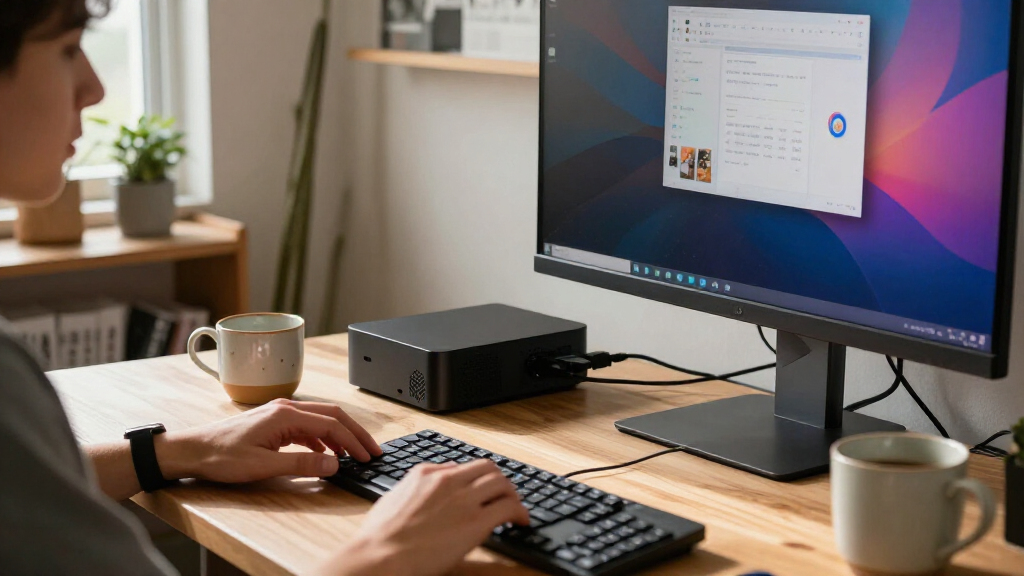
How We Picked
I compared these mini PCs by the factors that most affect daily use: processor class, installed memory, storage capacity, operating system, and stated display capabilities. I gave stronger placement to configurations that offer more headroom for multitasking and a useful amount of storage out of the box, while treating entry-level processors as choices for lighter workloads rather than trying to rank them as performance peers.
The order reflects intended use, not a claim that one specification makes a system best for everyone. The ACEMAGIC M1 ranks first for its strong Ryzen 7 processor and generous memory and storage combination. Other Ryzen 7 systems follow as alternatives with distinct configurations, while compact desktops with Ryzen 5 or older Core i7 processors suit more moderate workloads. The Celeron and Pentium options sit lower because their stated hardware is better matched to basic tasks. I also accounted for meaningful differences such as macOS, Windows 11 Pro, and the P2’s stated triple-display support; the supplied details do not establish performance benchmarks, upgrade limits, or port counts, so I do not assume them.
| mini PC | Display support | Operating system |
|---|---|---|
| ACEMAGICIAN S3A Mini PC with R | Up to three 4K displays | Windows 11 Pro |
| ACEMAGIC M1 Mini PC with AMD R | — | Windows 11 Pro |
| GMKtec G3 Ultra Mini PC with I | — | Windows 11 Pro |
| Beelink SER5 Mini PC with AMD | Dual 4K displays | Windows 11 Pro |
| Bmax B1 Plus Mini PC | — | Windows 11 Home; supports Linux/Ubuntu |
| ACEMAGIC K1 Mini PC | Up to three 4K displays at 60Hz | Windows 11 Pro |
| Apple Mac mini Desktop Compute | Up to three external displays | — |
| KAMRUI Pinova P1 Mini PC | — | Windows 11 Pro |
| GMKtec Nucbox M5 Ultra Mini PC | Up to three displays; HDMI 2.0 supports 4K at 60Hz | — |
| KAMRUI AK1PLUS Mini PC | Two 4K displays at 60Hz | — |
| GEEKOM A5 2027 Edition Mini PC | — | — |
| GMKtec M2 Pro S Mini PC | Up to three 4K displays at 60Hz | — |
| BOSGAME E5 Plus Mini PC with A | — | Windows 11 Pro; supports Ubuntu |
| KAMRUI Pinova P2 Mini PC | Up to three 4K displays at 60Hz | — |
| BOSGAME P4 Ultra Mini PC | — | Windows 11 Pro |
Factors to Consider When Choosing Best Mini PCs
Mini PCs can share a small footprint while serving very different jobs. Before choosing a processor or comparing model names, I’d start with the work the computer must handle, the displays and peripherals it needs to connect, and how much flexibility I want later.
Match Processor Class to Your Actual Workload
Write down the tasks you expect to run at the same time, not just the most demanding app you occasionally open. Browsing, documents, and video calls place different demands on a system than sustained media work or running many applications together. The Celeron and Pentium models in this lineup make the most sense for light use; paying more for a Ryzen 7 may be wasted if those are your only tasks. At the same time, buying too close to the minimum can leave little room for heavier software or future needs. Treat processor family as a starting point, then weigh memory and storage before deciding. When workloads are unclear, a balanced midrange processor can be a safer fit than either extreme.
Choose Memory for Multitasking, Not Just Today
Memory affects how comfortably a mini PC can keep a browser, office apps, meetings, and background tasks open together. The listed configurations range from 6GB on the Bmax to 24GB on the ACEMAGIC M1, so these machines are not equally suited to busy workflows. Check whether the memory is user-upgradable before buying; compact systems do not all offer the same access or expansion options, and the supplied product details do not settle that question. Some models specify LPDDR memory, which may be configured differently from standard laptop-style modules. If a system will be shared or kept for years, choosing adequate memory at purchase can matter more than a small processor-name difference. Avoid paying for extra capacity unless your apps or multitasking habits can use it.
Set Storage Capacity Around Your Files
Installed SSD capacity shapes how much room remains for applications, downloads, and local media after setup. In this roundup, listed storage spans 128GB eMMC on the Bmax to 1TB SSD configurations on several models, a meaningful difference for people who keep files on the computer. Do not treat eMMC and an NVMe SSD as interchangeable labels: check the listed storage type and capacity, since both affect the experience and available space. Cloud storage or an external drive can help, but they add dependence on a network or another device. Ask whether the computer’s storage can be replaced or expanded rather than assuming that a small enclosure means easy upgrades. If your files are mostly online, a smaller drive may be enough; for local projects, choose more room from the start.
Check Display and Peripheral Needs Before Buying
Count the monitors you plan to use and check the exact display outputs on the manufacturer’s specification page. The KAMRUI Pinova P2 specifically lists triple 4K display support, which makes it a more clearly targeted choice for multi-screen desks than a model whose supplied details do not specify that capability. A display-support claim does not tell you which ports are present, what cable standards are needed, or whether every screen can run at your preferred refresh rate. Confirm those details alongside USB ports, networking, audio, and wireless connectivity. A compact PC may save desk space yet still need hubs, adapters, or a dock to connect everything. For a simple one-screen setup, paying extra for multi-display capacity may add no practical benefit.
Choose the Operating System You Want to Live With
Hardware is only part of the decision: operating system affects app compatibility, setup, and how the computer fits with devices you already own. The Apple Mac mini with M6 is the macOS option in this group, while several listed models come with Windows 11 Pro. Before choosing, check that your work apps, accessories, and preferred services support the system you plan to use. Also account for any software licenses or setup time that may be needed when switching ecosystems. A familiar operating system can make a modest machine easier to adopt than a more powerful one that does not suit your workflow. Do not assume that similar-sized desktops offer the same software experience.
Balance Compactness Against Serviceability and Heat
A small chassis saves space, but it also makes cooling, noise, and access for repairs or upgrades worth checking. The specifications supplied for this roundup do not establish how loud a system gets under load, how its cooling performs, or how easily its parts can be serviced. Look for independent thermal and noise testing if you plan to run demanding tasks for long sessions. Check the warranty and the maker’s documentation for memory and storage access before treating a component as upgradeable. A system that fits behind a monitor may be convenient, but it still needs clear airflow and accessible connections. For a fixed desk, quiet operation and service support may matter more than shaving off a little more size.
Frequently Asked Questions
Is a mini PC with a Celeron processor enough for everyday use?
It can be enough for basic browsing, documents, and simple media playback, especially when only a few applications are open at once. In this lineup, the Celeron-based Bmax B1 Plus and KAMRUI AK1PLUS are better treated as light-use systems than as general performance desktops. Their processor class also leaves less room for demanding multitasking than the Ryzen 5 and Ryzen 7 options. Check the memory and storage carefully, since the Bmax’s 6GB RAM and 128GB eMMC configuration is particularly constrained. If you expect your workload to grow, a stronger processor and more memory can be a better long-term choice.
Should I choose the ACEMAGIC M1 or a Ryzen 7 7730U mini PC?
Start with the complete configuration rather than assuming that Ryzen 7 names mean identical performance. The ACEMAGIC M1 lists a Ryzen 7 7735HS, 24GB of LPDDR5 memory, and a 1TB SSD, while the GEEKOM A5, GMKtec Nucbox M5 Ultra, and BOSGAME P4 Ultra list Ryzen 7 7730U processors. Those 7730U systems can still make sense if their configuration, support, or connectivity better matches your needs. The supplied specifications do not provide comparable benchmark results, so I would not claim a precise speed gap from the processor names alone. Compare memory, storage, ports, warranty, and independent testing before deciding.
Can these mini PCs run two or three monitors?
Some may support multiple displays, but the number of screens and supported resolutions depend on the specific video outputs and system configuration. The KAMRUI Pinova P2 explicitly lists triple 4K display support, making it the clearest match here for a three-screen setup. That claim does not, by itself, identify the ports, cables, refresh rates, or combinations supported. For other models, confirm the manufacturer’s display specifications instead of inferring capability from the processor. If your work depends on several monitors, verify the exact connection plan before purchasing.
Is 256GB of storage enough for a mini PC?
It can be enough for office apps, browsing, and a modest collection of local files, particularly if you rely on cloud storage. It may feel tight if you install large applications, keep video or photo libraries locally, or use the machine for project files. This roundup ranges from 128GB eMMC to 1TB SSD configurations, so the right capacity depends on what you keep on the device. Also check whether the listed drive is an SSD or eMMC and whether storage can be expanded. When expansion details are unavailable, choosing more capacity at purchase reduces the chance of needing an external drive right away.
Should I buy a Windows mini PC or the Apple Mac mini?
Choose based on software and ecosystem fit, not the small size of the computers. The Apple Mac mini with M6 is the macOS choice in this roundup; many of the other models are Windows systems, including options listing Windows 11 Pro. Check compatibility for work applications, peripherals, and any software licenses before changing operating systems. If you already rely on Apple services or macOS-only tools, the Mac may fit more naturally; if your work depends on Windows applications, a Windows model may be simpler. The supplied information does not provide directly comparable performance testing, so operating-system needs and independent benchmarks should guide the final call.
Conclusion
For the best overall fit, I’d choose the ACEMAGIC M1: its Ryzen 7 7735HS, 24GB of memory, and 1TB SSD make it the most rounded high-capacity Windows configuration in this group. The best value direction is a Ryzen 5 model such as the ACEMAGIC K1 or KAMRUI Pinova P2 for buyers who want capable everyday hardware without stepping up to a Ryzen 7; compare their connectivity and support details before choosing. For a premium macOS pick, the Apple Mac mini with M6 is the clear choice for buyers already invested in Apple software and services. Beginners with basic computing needs can favor a straightforward Ryzen 5 system, while buyers with very light workloads can look at the entry-level Celeron options and accept their limits. For multi-screen desks, the Pinova P2’s stated triple 4K support stands out; for heavier multitasking and ample built-in storage, the ACEMAGIC M1 is the safer all-round choice.
Evergreen bestsellers Picks

Samsung 43-Inch M70H Series 4K Mini LED Smart TV (2026)

De'Longhi Magnifica Duo Automatic Espresso Machine with Milk Frother – Silver

Ninja DualZone Air Fryer 10 Qt Smart 6-in-1 Grey
As an affiliate, we earn on qualifying purchases.