Complete the kit




Get the latest gadgets delivered free with Prime
- Fast, free delivery on millions of items
- Prime Video, Amazon Music and more included
- Member-only deals all year
Key Takeaways
- Wi-Fi 7 models like the Orbi 970 and 870 justify their higher cost only if you already own Wi-Fi 7 devices or plan to upgrade within two years.
- The Orbi 770 Series strikes the sharpest value curve, delivering Wi-Fi 7 speeds without the extreme premium of the flagship 970 line.
- Quad-band architectures provide a dedicated backhaul channel, which matters more for multi-story homes than for single-level apartments.
- Renewed units like the Orbi 770 RBE773 offer a way to access high-end specs at mid-range costs, but warranty support is shorter.
- The Orbi Pro SXK80B4 is distinct because it prioritizes network management and VLAN support over raw consumer speed metrics.
| NETGEAR Orbi 970 Series WiFi 7 Mesh System, 3-Pack | 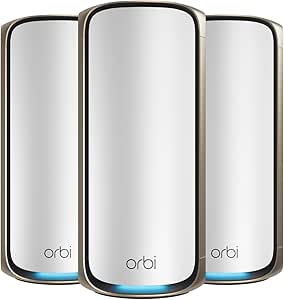 | Best Premium Performance | Wi-Fi Standard: Wi-Fi 7 | Max Speed: Up to 27 Gbps | Coverage Area: Up to 10,000 sq. ft. | VIEW LATEST PRICE | See Our Full Breakdown |
| NETGEAR Orbi 870 Series WiFi 7 Tri-Band Mesh System, 3-Pack |  | Best Overall Balance | Wi-Fi Standard: Wi-Fi 7 | Max Speed: Up to 21 Gbps | Coverage Area: Up to 9,000 sq. ft. | VIEW LATEST PRICE | See Our Full Breakdown |
| NETGEAR Orbi 370 Series WiFi 7 Mesh System, 3-Pack |  | Best Value Entry Point | Wi-Fi Standard: Wi-Fi 7 | Max Speed: Up to 5 Gbps | Coverage Area: Up to 6,000 sq. ft. | VIEW LATEST PRICE | See Our Full Breakdown |
| NETGEAR Orbi RBKE963 Quad-Band WiFi 6E Mesh System with Router and 2 Satellites |  | Best for High-Density Device Loads | Wi-Fi Standard: Wi-Fi 6E | Max Speed: Up to 10.8 Gbps | Coverage Area: Up to 9,000 sq. ft. | VIEW LATEST PRICE | See Our Full Breakdown |
| NETGEAR Orbi Quad-Band WiFi 6E Mesh System, Router and 2 Satellites, Black |  | Best for Aesthetic Integration | Wi-Fi Standard: Wi-Fi 6E | Max Speed: Up to 10.8 Gbps | Coverage Area: Up to 9,000 sq. ft. | VIEW LATEST PRICE | See Our Full Breakdown |
| NETGEAR Orbi RBK653 Tri-Band Mesh WiFi 6 System with Router and 2 Satellites, AX3000 |  | Best Mid-Range Coverage | WiFi Standard: WiFi 6 (AX3000) | Coverage Area: Up to 6,000 sq. ft. | Max Speed: 3 Gbps | VIEW LATEST PRICE | See Our Full Breakdown |
| NETGEAR Orbi Pro WiFi 6 Tri-Band Mesh System with Router and 3 Satellites (SXK80B4) |  | Best for Small Business | WiFi Standard: WiFi 6 (Tri-Band) | Coverage Area: Up to 6,000-12,000 sq. ft. | Device Capacity: Up to 100 devices | VIEW LATEST PRICE | See Our Full Breakdown |
| NETGEAR Orbi 970 Series Quad-Band WiFi 7 Mesh System (Router and 2 Satellites) | | Best Premium Performance | WiFi Standard: WiFi 7 (Quad-Band) | Coverage Area: Up to 10,000 sq. ft. | Max Speed: 27 Gbps | VIEW LATEST PRICE | See Our Full Breakdown |
| NETGEAR Orbi 770 Series Tri-Band WiFi 7 Mesh System (RBE773), Router and 2 Satellites, Renewed |  | Best Value WiFi 7 | WiFi Standard: WiFi 7 (Tri-Band) | Coverage Area: Up to 8,000 sq. ft. | Max Speed: 11 Gbps | VIEW LATEST PRICE | See Our Full Breakdown |
| NETGEAR Orbi RBK863SB Tri-Band WiFi 6 Mesh System with Router and 2 Satellites |  | Best for Future-Proofed WiFi 6 | WiFi Standard: WiFi 6 (Tri-Band) | Coverage Area: Up to 8,000 sq. ft. | Max Speed: 6 Gbps | VIEW LATEST PRICE | See Our Full Breakdown |
| NETGEAR Orbi RBK862S Tri-Band WiFi 6 Mesh System |  | Best for Multi-Gigabit Internet Users | Model: RBK862S | WiFi Generation: WiFi 6 (802.11ax) | Maximum WiFi Speed: Up to 6 Gbps | VIEW LATEST PRICE | See Our Full Breakdown |
| NETGEAR Orbi RBK663 Tri-Band WiFi 6 Mesh System |  | Best Value for Large Homes | Model: RBK663 | WiFi Standard: WiFi 6 (802.11ax) | Maximum Data Rate: 3.8 Gbps | VIEW LATEST PRICE | See Our Full Breakdown |
| NETGEAR Orbi RBK763S Tri-Band Wi-Fi 6 Mesh System |  | Best High-Speed WiFi 6 Coverage | Model: RBK763S | Wi-Fi Generation: Wi-Fi 6 (802.11ax) | Wireless Speed: AX5400 (Up to 5.4 Gbps) | VIEW LATEST PRICE | See Our Full Breakdown |
| NETGEAR Orbi 360 Series WiFi 7 Mesh System, 3-Pack |  | Best Entry-Level WiFi 7 | Series: Orbi 360 | WiFi Generation: WiFi 7 | Frequency Band: Dual-band | VIEW LATEST PRICE | See Our Full Breakdown |
| NETGEAR Orbi 770 Series WiFi 7 Tri-Band Mesh System | | Best Premium Performance | Series: Orbi 770 | WiFi Generation: WiFi 7 | System Type: Tri-band mesh | VIEW LATEST PRICE | See Our Full Breakdown |
| Netgear Orbi mesh Wi-Fi system | Coverage Area | Max Speed | Internet Port |
|---|---|---|---|
| NETGEAR Orbi 970 Series WiFi 7 | Up to 10,000 sq. ft. | Up to 27 Gbps | 10 Gigabit Ethernet |
| NETGEAR Orbi 870 Series WiFi 7 | Up to 9,000 sq. ft. | Up to 21 Gbps | 10 Gigabit Ethernet |
| NETGEAR Orbi 370 Series WiFi 7 | Up to 6,000 sq. ft. | Up to 5 Gbps | — |
| NETGEAR Orbi RBKE963 Quad-Band | Up to 9,000 sq. ft. | Up to 10.8 Gbps | 10 Gigabit Ethernet |
| NETGEAR Orbi Quad-Band WiFi 6E | Up to 9,000 sq. ft. | Up to 10.8 Gbps | 10 Gigabit Ethernet |
| NETGEAR Orbi RBK653 Tri-Band M | Up to 6,000 sq. ft. | 3 Gbps | — |
| NETGEAR Orbi Pro WiFi 6 Tri-Ba | Up to 6,000-12,000 sq. ft. | — | — |
| NETGEAR Orbi 970 Series Quad-B | Up to 10,000 sq. ft. | 27 Gbps | 10 Gbps |
| NETGEAR Orbi 770 Series Tri-Ba | Up to 8,000 sq. ft. | 11 Gbps | 2.5 Gig |
| NETGEAR Orbi RBK863SB Tri-Band | Up to 8,000 sq. ft. | 6 Gbps | 10 Gbps |
| NETGEAR Orbi RBK862S Tri-Band | Up to 5,400 sq. ft. | — | 10 Gbps |
| NETGEAR Orbi RBK663 Tri-Band W | — | — | — |
| NETGEAR Orbi RBK763S Tri-Band | — | — | — |
| NETGEAR Orbi 360 Series WiFi 7 | — | — | — |
| NETGEAR Orbi 770 Series WiFi 7 | — | — | — |
More Details on Our Top Picks
NETGEAR Orbi 970 Series WiFi 7 Mesh System, 3-Pack
This system stands out as the performance ceiling of the current Orbi lineup, designed for users who refuse to compromise on speed or coverage. With 27 Gbps theoretical throughput and a dedicated backhaul, it handles heavy multi-device loads better than the Orbi 870 Series, which caps at 21 Gbps. The inclusion of 10 Gigabit LAN ports is a significant differentiator, allowing for direct high-speed wired connections that most competitors lack. However, this power comes with a large physical footprint and a premium tier positioning. It is not just an upgrade; it is a replacement for legacy infrastructure. Choose this if your internet plan exceeds 5 Gbps or if you have a sprawling estate where signal degradation is a constant concern.
Pros:- Highest theoretical speed in the lineup at 27 Gbps
- Includes 10 Gigabit LAN ports for high-speed wired devices
- Covers up to 10,000 sq. ft. with dedicated backhaul
Cons:- Premium hardware size may be intrusive in smaller rooms
- Requires a separate NETGEAR Armor subscription for advanced security
Best for: Users with 10 Gbps internet plans or large estates requiring maximum wired and wireless throughput.
Not ideal for: Small apartment dwellers or those on sub-1 Gbps plans, where this system is vastly overpowered.
- Wi-Fi Standard:Wi-Fi 7
- Max Speed:Up to 27 Gbps
- Coverage Area:Up to 10,000 sq. ft.
- Device Support:Up to 200 devices
- Internet Port:10 Gigabit Ethernet
- LAN Ports:10 Gigabit and 2.5 Gigabit
- Band Type:Quad-Band with Dedicated Backhaul
- Security:NETGEAR Armor (30-day trial)
Our verdict“The definitive choice for high-end users who need the absolute fastest speeds and most extensive coverage.”
NETGEAR Orbi 870 Series WiFi 7 Tri-Band Mesh System, 3-Pack
The Orbi 870 Series strikes the most practical balance between next-generation features and realistic home needs. While the Orbi 970 Series offers higher peak speeds, the 870 delivers 21 Gbps and 9,000 sq. ft. coverage, which is more than enough for most large households. Its 2.5 Gigabit LAN ports provide a future-proof wired connection for gaming PCs or NAS drives without the cost of 10 Gig infrastructure. This model is ideal for those upgrading from Wi-Fi 6 who want the stability of Wi-Fi 7 without paying for the extreme throughput of the flagship. It manages up to 150 devices efficiently, though heavy users may find the device limit slightly lower than the top-tier options.
Pros:- Strong 21 Gbps tri-band Wi-Fi 7 performance
- Includes 2.5 Gigabit LAN ports for fast wired devices
- Covers up to 9,000 sq. ft. with included satellites
Cons:- Lower device limit (150) compared to the Orbi 970
- Security features require a paid subscription after trial
Best for: Large households upgrading to Wi-Fi 7 who need robust coverage and 2.5 Gbps wired connectivity.
Not ideal for: Users with 10 Gbps internet plans or those needing more than 150 simultaneous connections.
- Wi-Fi Standard:Wi-Fi 7
- Max Speed:Up to 21 Gbps
- Coverage Area:Up to 9,000 sq. ft.
- Device Support:Up to 150 devices
- Internet Port:10 Gigabit Ethernet
- LAN Ports:2.5 Gigabit
- Band Type:Tri-Band
- Security:NETGEAR Armor (30-day trial)
Our verdict“The smartest buy for most large homes, offering Wi-Fi 7 benefits without the extreme cost of flagship specs.”
NETGEAR Orbi 370 Series WiFi 7 Mesh System, 3-Pack
For those wanting to join the Wi-Fi 7 ecosystem without the premium price tag, the Orbi 370 Series is the logical entry point. It lacks the tri-band architecture of the Orbi 870 or the quad-band setup of the Orbi 970, relying on dual-band technology that caps speeds at 5 Gbps. However, it still provides 6,000 sq. ft. of coverage and supports up to 70 devices, making it suitable for mid-sized homes. The trade-off is clear: you get the new protocol and app management at a lower cost, but you lose the dedicated backhaul bandwidth that prevents congestion in busy households. It is an excellent choice if your internet plan is under 1 Gbps and your device count is moderate.
Pros:- Affordable entry into Wi-Fi 7 technology
- Covers up to 6,000 sq. ft. with three units
- Simple app-based setup and management
Cons:- Dual-band design limits speed to 5 Gbps and increases congestion risk
- Supports fewer devices (70) than higher-tier Orbi models
Best for: Mid-sized home owners with moderate device counts wanting to upgrade to Wi-Fi 7 affordably.
Not ideal for: Tech enthusiasts with many smart devices or users with gigabit-plus internet plans.
- Wi-Fi Standard:Wi-Fi 7
- Max Speed:Up to 5 Gbps
- Coverage Area:Up to 6,000 sq. ft.
- Device Support:Up to 70 devices
- Band Type:Dual-Band
- LAN Ports:2.5 Gigabit
- Security:NETGEAR Armor (30-day trial)
- Expandability:Add satellites for +2,000 sq. ft.
Our verdict“A cost-effective way to get Wi-Fi 7 coverage for average households, provided you don’t need extreme bandwidth.”
NETGEAR Orbi RBKE963 Quad-Band WiFi 6E Mesh System with Router and 2 Satellites
Although it uses the older Wi-Fi 6E standard, the RBKE963 remains a powerhouse for device density, supporting up to 200 devices. This matches the capacity of the newer Orbi 970 but at a potentially more accessible price point. The quad-band architecture includes a dedicated 6 GHz band and a separate backhaul channel, ensuring that even with many connections, latency stays low. Compared to the Orbi 870, it lacks Wi-Fi 7’s MLO (Multi-Link Operation), but for most current devices, this difference is negligible. It is the right choice if you have a massive smart home ecosystem but do not have a 10 Gbps internet plan to utilize the newest Wi-Fi 7 speeds.
Pros:- Supports up to 200 connected devices
- Dedicated backhaul minimizes interference and latency
- Proven quad-band performance for high-traffic homes
Cons:- Uses Wi-Fi 6E instead of the newer Wi-Fi 7 standard
- 6 GHz band only benefits compatible Wi-Fi 6E devices
Best for: Users with extensive smart home ecosystems requiring stable connections for up to 200 devices.
Not ideal for: Early adopters who want the absolute latest Wi-Fi 7 features and speeds.
- Wi-Fi Standard:Wi-Fi 6E
- Max Speed:Up to 10.8 Gbps
- Coverage Area:Up to 9,000 sq. ft.
- Device Support:Up to 200 devices
- Internet Port:10 Gigabit Ethernet
- Band Type:Quad-Band
- Security:NETGEAR Armor
- Voice Control:Alexa & Google Assistant
Our verdict“A robust, high-capacity solution for homes with many devices that don’t strictly need Wi-Fi 7.”
NETGEAR Orbi Quad-Band WiFi 6E Mesh System, Router and 2 Satellites, Black
This model is functionally identical to the RBKE963 but distinguishes itself with a sleek black finish, offering a more modern look for contemporary interiors. If you prefer dark hardware that blends into shelves rather than standing out as white plastic, this is the practical choice. Performance metrics remain unchanged, with 10.8 Gbps speeds and 9,000 sq. ft. coverage. While the Orbi 370 Series is cheaper, it lacks the quad-band stability and device capacity of this unit. The black colorway is a minor but meaningful differentiator for design-conscious buyers who refuse to compromise on the high-performance quad-band architecture that handles congestion better than dual-band systems.
Pros:- Premium black finish blends with modern decor
- Quad-band architecture handles network congestion effectively
- High device capacity (200) and coverage (9,000 sq. ft.)
Cons:- No functional performance difference from the standard white model
- Wi-Fi 6E is a step behind the latest Wi-Fi 7 systems
Best for: Design-conscious users who want high-performance Wi-Fi 6E with dark hardware.
Not ideal for: Budget-focused buyers who can find the same specs in white models for less.
- Wi-Fi Standard:Wi-Fi 6E
- Max Speed:Up to 10.8 Gbps
- Coverage Area:Up to 9,000 sq. ft.
- Device Support:Up to 200 devices
- Internet Port:10 Gigabit Ethernet
- Band Type:Quad-Band
- Color:Black
- Security:NETGEAR Armor (30-day trial)
Our verdict“The same reliable high-performance mesh as the white model, packaged in a design that suits modern dark-themed homes.”
NETGEAR Orbi RBK653 Tri-Band Mesh WiFi 6 System with Router and 2 Satellites, AX3000
This system strikes a practical balance for larger homes that don’t need bleeding-edge speeds. The AX3000 speed class is sufficient for most streaming and remote work tasks, though it trails behind the Orbi 970 Series in raw throughput. What stands out here is the inclusion of Gigabit Ethernet ports on the satellites, a feature often missing in lower-tier mesh kits, allowing for stable wired connections to consoles or smart TVs. Compared to the entry-level Orbi 370 Series, this offers significantly more device capacity and bandwidth headroom. However, the 6,000 square foot coverage is modest for a three-piece kit, meaning you might need extra satellites for sprawling layouts.
Pros:- Includes Ethernet ports on satellites for wired backhaul options
- Tri-band architecture reduces congestion on main channels
- Supports up to 40 devices simultaneously without noticeable lag
Cons:- Coverage area is smaller than newer WiFi 7 competitors
- Speeds cap at 3 Gbps, limiting future-proofing for multi-gig plans
- Armor security requires a subscription after the trial period
Best for: Homeowners with 4,000-6,000 square foot homes needing reliable coverage for multiple users without paying for WiFi 7.
Not ideal for: Users with multi-gigabit internet plans or heavy 8K streaming needs, as the AX3000 bandwidth will be a bottleneck.
- WiFi Standard:WiFi 6 (AX3000)
- Coverage Area:Up to 6,000 sq. ft.
- Max Speed:3 Gbps
- Device Capacity:Up to 40 devices
- Ethernet Ports:3 (Router), 2 (Each Satellite)
- Security:WPA3, NETGEAR Armor (30-day trial)
Our verdict“This is the sensible choice for large families who prioritize stable coverage over maximum speed.”
NETGEAR Orbi Pro WiFi 6 Tri-Band Mesh System with Router and 3 Satellites (SXK80B4)
Unlike consumer-focused options like the Orbi RBK653, this Pro system is built for environments requiring network segmentation. The inclusion of VLAN and QoS features allows small business owners to isolate guest traffic from sensitive office data, a critical security layer missing in standard Orbi kits. With three satellites included, it covers larger commercial spaces or extensive home offices more effectively than two-piece kits. The ZyNOS operating system offers more granular control than the simplified Orbi app. However, the inconsistent coverage claims (12,000 vs 6,000 sq. ft.) suggest real-world performance may vary, and it lacks the sleek design of consumer models, appearing more industrial with its wall-mount focus.
Pros:- Supports VLANs for secure network segmentation
- Includes three satellites for extensive coverage
- Quality of Service (QoS) prioritizes critical business traffic
Cons:- Complex setup compared to consumer Orbi models
- Coverage specifications are inconsistent in marketing materials
- Industrial design may clash with home decor
Best for: Small business owners or home offices needing guest networks, traffic prioritization, and physical wall-mounting.
Not ideal for: Residential users who want a simple plug-and-play experience and don’t need VLAN configuration.
- WiFi Standard:WiFi 6 (Tri-Band)
- Coverage Area:Up to 6,000-12,000 sq. ft.
- Device Capacity:Up to 100 devices
- Key Features:VLAN, QoS, WPS
- Included Components:1 Router, 3 Satellites, 4 Wall Mounts
- Security:WPA2, WPA3
Our verdict“This is the only Orbi option here that treats your network like a business asset rather than a household utility.”
NETGEAR Orbi 970 Series Quad-Band WiFi 7 Mesh System (Router and 2 Satellites)
This is the flagship of the lineup, offering WiFi 7 speeds up to 27 Gbps that dwarf the Orbi RBK653’s 3 Gbps cap. The quad-band architecture includes a dedicated backhaul channel, ensuring that distance between the router and satellites doesn’t degrade performance for end devices. It supports up to 200 devices, making it ideal for smart homes packed with IoT sensors and high-bandwidth demands. While the 10 Gbps internet port future-proofs the connection for ultra-fast fiber plans, the system is physically larger and more expensive. Compared to the Orbi 770 Series, this adds a fourth band and higher total throughput, but you pay a premium for bandwidth you may not yet utilize fully.
Pros:- WiFi 7 quad-band supports up to 27 Gbps aggregate speed
- Dedicated backhaul maintains speed over long distances
- 10 Gbps internet port supports next-gen fiber connections
Cons:- Higher cost compared to WiFi 6 and entry-level WiFi 7 models
- Large physical footprint for the router and satellites
- Requires WiFi 7 devices to see significant speed benefits
Best for: Tech enthusiasts with multi-gigabit internet plans and large smart homes requiring maximum throughput.
Not ideal for: Budget-conscious buyers or those with internet plans under 1 Gbps, where this power is overkill.
- WiFi Standard:WiFi 7 (Quad-Band)
- Coverage Area:Up to 10,000 sq. ft.
- Max Speed:27 Gbps
- Device Capacity:Up to 200 devices
- Internet Port:10 Gbps
- Security Subscription:1-Year NETGEAR Armor
Our verdict“If money is no object and you want the absolute fastest wireless network available today, this is the clear winner.”
NETGEAR Orbi 770 Series Tri-Band WiFi 7 Mesh System (RBE773), Router and 2 Satellites, Renewed
As a renewed unit, this system offers a cost-effective entry into WiFi 7 technology without the premium price tag of the Orbi 970 Series. It delivers 11 Gbps speeds, which is more than enough for current multi-gigabit plans and heavy 4K streaming. The 2.5 Gig internet port is a smart inclusion, supporting high-speed connections that the older Orbi RBK653 cannot handle. While it lacks the fourth band of the 970 model, its tri-band design still provides excellent congestion management. The main tradeoff is the renewed condition, which means you are buying refurbished hardware; however, for users who want WiFi 7 features at a lower cost, this represents a pragmatic compromise between performance and budget.
Pros:- WiFi 7 speeds up to 11 Gbps at a lower cost than new units
- 2.5 Gig internet port supports multi-gigabit plans
- Covers up to 8,000 sq. ft. with three units
Cons:- Renewed condition means no guarantee of original packaging or accessories
- Lacks the fourth band found in the premium Orbi 970 Series
- Limited warranty compared to new products
Best for: Budget-conscious tech adopters who want WiFi 7 features and don’t mind refurbished hardware.
Not ideal for: Buyers who require brand-new, sealed-in-box equipment or extensive manufacturer warranty coverage.
- WiFi Standard:WiFi 7 (Tri-Band)
- Coverage Area:Up to 8,000 sq. ft.
- Max Speed:11 Gbps
- Device Capacity:Up to 100 devices
- Internet Port:2.5 Gig
- Condition:Renewed
Our verdict“This renewed 770 Series is the smartest way to get WiFi 7 speeds without paying the flagship tax.”
NETGEAR Orbi RBK863SB Tri-Band WiFi 6 Mesh System with Router and 2 Satellites
This model bridges the gap between standard WiFi 6 and the high-end WiFi 7 kits. It features a 10 Gbps internet port, a rarity in the WiFi 6 category, allowing it to handle multi-gigabit plans that would choke the Orbi RBK653. With 6 Gbps speeds and coverage for 8,000 square feet, it offers more headroom than the RBK653 while remaining more affordable than the Orbi 970 Series. The inclusion of a one-year NETGEAR Armor subscription adds immediate value compared to trial-only offers. However, it still relies on WiFi 6 technology, meaning it lacks the specific latency improvements and new modulation of WiFi 7, making it a solid but not cutting-edge choice for those not ready to jump to the newest standard.
Pros:- 10 Gbps internet port supports multi-gigabit fiber plans
- Covers up to 8,000 sq. ft. with two satellites
- Includes a full one-year NETGEAR Armor subscription
Cons:- WiFi 6 standard lacks the newest WiFi 7 latency features
- Internal antennas may limit range in difficult layouts
- More expensive than basic WiFi 6 kits like the RBK653
Best for: Users with multi-gigabit internet who want a reliable WiFi 6 system with high-speed wired inputs.
Not ideal for: Early adopters who specifically want the latest WiFi 7 features and lower latency for gaming.
- WiFi Standard:WiFi 6 (Tri-Band)
- Coverage Area:Up to 8,000 sq. ft.
- Max Speed:6 Gbps
- Device Capacity:Up to 100 devices
- Internet Port:10 Gbps
- Security Subscription:1-Year NETGEAR Armor
Our verdict“This is the best choice for those with fast internet plans who want WiFi 6 reliability with future-ready wired ports.”
NETGEAR Orbi RBK862S Tri-Band WiFi 6 Mesh System
This system stands out primarily for its 10 Gbps internet port, a feature rarely found in mid-range mesh kits. While the RBK663 caps out at Gigabit Ethernet, the RBK862S allows you to fully utilize multi-gig internet plans without bottlenecking your connection at the WAN port. It delivers WiFi 6 speeds up to 6 Gbps across a generous 5,400 square foot coverage area, making it ideal for tech-savvy homeowners who have upgraded their ISP service but do not yet require WiFi 7 hardware. The dedicated backhaul ensures that satellite communication does not steal bandwidth from your devices. However, unlike the newer Orbi 770 Series, this is a WiFi 6 system, meaning it lacks the future-proofing of the newest wireless standard. It is a pragmatic choice for those with fast internet who want reliable performance without the premium price tag of the latest generation.
Pros:- Includes a 10 Gbps WAN port for multi-gig internet speeds
- Dedicated tri-band backhaul maintains network performance
- One-year NETGEAR Armor subscription included in the box
Cons:- Limited to WiFi 6 technology, lacking WiFi 7 future-proofing
- Coverage area is smaller than larger 3-pack alternatives
- Security subscription reverts to paid model after one year
Best for: Homeowners with multi-gig internet plans (2 Gbps or higher) who need a router capable of handling high WAN throughput.
Not ideal for: Users with standard sub-Gigabit internet plans, as the 10 Gbps port offers no tangible benefit over cheaper Gigabit models.
- Model:RBK862S
- WiFi Generation:WiFi 6 (802.11ax)
- Maximum WiFi Speed:Up to 6 Gbps
- Coverage Area:Up to 5,400 sq. ft.
- Internet Port:10 Gbps
- Included Units:Router and 1 Satellite
- Security Subscription:1 Year NETGEAR Armor
Our verdict“Choose this if you have multi-gig internet and want the fastest wired ingress point in a WiFi 6 package.”
NETGEAR Orbi RBK663 Tri-Band WiFi 6 Mesh System
The RBK663 prioritizes coverage breadth over raw speed, offering a massive 6,600 square foot footprint with its router and two satellites included. Compared to the RBK862S, which covers less area but offers higher speeds, this model is better suited for sprawling single-story homes or complex layouts where signal reach matters more than peak throughput. It supports up to 75 devices and provides seven Gigabit Ethernet ports, offering more wired connectivity options than many competitors. However, its maximum speed of 3.8 Gbps is modest by modern standards, and it requires a separate modem. This system makes the most sense for buyers who have a large physical space to cover but do not need multi-gigabit wireless performance for gaming or heavy streaming.
Pros:- Extensive coverage of up to 6,600 sq. ft. out of the box
- Seven Gigabit Ethernet ports for wired devices
- Tri-band WiFi 6 ensures stable performance for many users
Cons:- Maximum internet plan compatibility capped at 1 Gbps
- Separate modem or ISP gateway required for operation
- Real-world coverage can vary significantly with construction materials
Best for: Owners of large homes or multi-story houses who prioritize wide coverage and multiple wired ports over maximum wireless speed.
Not ideal for: Users with high-density device setups or those needing speeds above 3.8 Gbps for local file transfers.
- Model:RBK663
- WiFi Standard:WiFi 6 (802.11ax)
- Maximum Data Rate:3.8 Gbps
- Coverage:Up to 6,600 sq. ft.
- Ethernet Ports:7 Gigabit Ports
- Included Units:Router and 2 Satellites
- Max Internet Plan:Up to 1 Gbps
Our verdict“This is the go-to choice for maximizing square footage coverage on a budget without sacrificing wired connectivity.”
NETGEAR Orbi RBK763S Tri-Band Wi-Fi 6 Mesh System
If the RBK663 feels too slow but the WiFi 7 options feel too expensive, the RBK763S hits a sweet spot. It offers AX5400 speeds (up to 5.4 Gbps) across a vast 7,500 square foot area, outperforming the RBK663 in both speed and reach. This system includes two satellites, making it ideal for large properties where the RBK862S’s single satellite might leave dead zones. While it uses a proprietary operating system that some users find restrictive, the inclusion of WPA3 security and robust tri-band architecture ensures a secure and stable network. It is a stronger performer than the entry-level Orbi 360 series, offering more headroom for demanding applications. However, its LAN port bandwidth is limited to 1,000 Mbps, which may bottleneck very high-speed local network transfers compared to multi-gig capable models.
Pros:- Covers up to 7,500 sq. ft. with two satellites
- Faster wireless speeds (5.4 Gbps) than comparable WiFi 6 kits
- Supports up to 75 devices with tri-band traffic management
Cons:- LAN port bandwidth limited to 1,000 Mbps
- Proprietary OS limits advanced customization options
- Lacks the latest WiFi 7 technology features
Best for: Large household owners who need strong WiFi 6 performance and extensive coverage without upgrading to the newest WiFi 7 generation.
Not ideal for: Network enthusiasts who prefer open-source firmware or need multi-gigabit LAN ports for local server setups.
- Model:RBK763S
- Wi-Fi Generation:Wi-Fi 6 (802.11ax)
- Wireless Speed:AX5400 (Up to 5.4 Gbps)
- Coverage:Up to 7,500 sq. ft.
- Supported Devices:Up to 75
- LAN Port Bandwidth:1,000 Mbps
- System Components:Router and 2 Satellites
Our verdict“Pick this for a balance of high WiFi 6 speeds and extensive coverage in larger homes.”
NETGEAR Orbi 360 Series WiFi 7 Mesh System, 3-Pack
The Orbi 360 Series brings WiFi 7 technology to a more accessible price point, though it achieves this by using a dual-band architecture rather than tri-band. This distinguishes it sharply from the Orbi 770 Series, which uses tri-band for higher aggregate throughput. The Orbi 360 delivers speeds up to 5 Gbps and covers 6,000 square feet, making it a solid choice for users who want the benefits of WiFi 7—such as lower latency and better congestion management—without paying for the premium multi-gig backhaul features. It is compatible with older WiFi 6 and WiFi 5 devices, ensuring a smooth transition. However, the lack of a dedicated 6 GHz backhaul band means that satellite-to-router communication may compete with client traffic, potentially impacting performance in dense environments compared to tri-band systems.
Pros:- Affordable entry into WiFi 7 technology
- Covers 6,000 sq. ft. with router and two satellites
- Backward compatible with WiFi 6 and WiFi 5 devices
Cons:- Dual-band design lacks dedicated backhaul for optimal efficiency
- Security features require a subscription after the 30-day trial
- Performance may lag behind tri-band WiFi 7 models in crowded areas
Best for: Buyers wanting to future-proof their network with WiFi 7 technology on a budget, without needing tri-band performance.
Not ideal for: Users with very dense device environments who need a dedicated backhaul band to prevent congestion.
- Series:Orbi 360
- WiFi Generation:WiFi 7
- Frequency Band:Dual-band
- Maximum Data Rate:5 Gbps
- Coverage:Up to 6,000 sq. ft.
- LAN Port Bandwidth:2,500 Mbps
- Package Contents:Router and 2 Satellites
Our verdict“This is the smart pick for getting WiFi 7 benefits without the premium cost of tri-band hardware.”
NETGEAR Orbi 770 Series WiFi 7 Tri-Band Mesh System
The Orbi 770 Series represents the peak of consumer mesh performance in this lineup, leveraging WiFi 7 tri-band architecture to deliver speeds up to 11 Gbps. Unlike the dual-band Orbi 360, this system uses a dedicated 6 GHz band for backhaul, ensuring that your devices get the full bandwidth available. It covers an impressive 8,000 square feet and supports up to 100 devices, making it suitable for large, tech-heavy households. Compared to the WiFi 6-based RBK763S, the 770 Series offers significantly higher throughput and lower latency, thanks to WiFi 7 features like Multi-Link Operation. The tradeoff is the cost and the fact that WiFi 7 benefits are only fully realized with compatible client devices. It is the definitive choice for those who want the absolute best speed and coverage Netgear currently offers for the home.
Pros:- Tri-band WiFi 7 delivers speeds up to 11 Gbps
- Massive coverage area of up to 8,000 sq. ft.
- Supports up to 100 connected devices simultaneously
Cons:- Premium pricing compared to WiFi 6 alternatives
- Requires WiFi 7 devices to utilize maximum speed benefits
- Security subscription required after 30-day trial
Best for: Tech enthusiasts and large families with WiFi 7-capable devices who demand maximum speed and coverage.
Not ideal for: Budget-conscious buyers or those with small homes who do not need 8,000 sq. ft. of coverage.
- Series:Orbi 770
- WiFi Generation:WiFi 7
- System Type:Tri-band mesh
- Maximum Speed:Up to 11 Gbps
- Coverage:Up to 8,000 sq. ft.
- Maximum Devices:Up to 100
- LAN Port Bandwidth:2,500 Mbps
Our verdict“The ultimate choice for those who want the fastest, most capable mesh system available without compromise.”
How We Picked
I evaluated these systems based on three core pillars: network architecture, coverage efficiency, and future-proofing potential. Architecture determines how data moves between the router and satellites; tri-band and quad-band models dedicate a channel to backhaul, preventing congestion. Coverage efficiency was judged by the stated square footage per unit and the physical design, which impacts placement flexibility. Future-proofing focuses on the Wi-Fi standard (6, 6E, or 7) and the inclusion of features like 10GbE ports that matter for long-term utility.
Ranking these products required balancing raw specs against real-world usability. A system with massive throughput means little if the setup process is complex or if the hardware is oversized for small apartments. I prioritized systems that offer a seamless app experience and robust parental controls, as these are daily touchpoints for most users. The final order reflects which systems deliver the most reliable performance for their specific price tier and use case.
| Netgear Orbi mesh Wi-Fi system | Coverage Area |
|---|---|
| NETGEAR Orbi 970 Series WiFi 7 | Up to 10,000 sq. ft. |
| NETGEAR Orbi 870 Series WiFi 7 | Up to 9,000 sq. ft. |
| NETGEAR Orbi 370 Series WiFi 7 | Up to 6,000 sq. ft. |
| NETGEAR Orbi RBKE963 Quad-Band | Up to 9,000 sq. ft. |
| NETGEAR Orbi Quad-Band WiFi 6E | Up to 9,000 sq. ft. |
| NETGEAR Orbi RBK653 Tri-Band M | Up to 6,000 sq. ft. |
| NETGEAR Orbi Pro WiFi 6 Tri-Ba | Up to 6,000-12,000 sq. ft. |
| NETGEAR Orbi 970 Series Quad-B | Up to 10,000 sq. ft. |
| NETGEAR Orbi 770 Series Tri-Ba | Up to 8,000 sq. ft. |
| NETGEAR Orbi RBK863SB Tri-Band | Up to 8,000 sq. ft. |
| NETGEAR Orbi RBK862S Tri-Band | Up to 5,400 sq. ft. |
| NETGEAR Orbi RBK663 Tri-Band W | — |
| NETGEAR Orbi RBK763S Tri-Band | — |
| NETGEAR Orbi 360 Series WiFi 7 | — |
| NETGEAR Orbi 770 Series WiFi 7 | — |
Factors to Consider When Choosing Best Netgear Orbi Mesh Wi-Fi Systems
Selecting a mesh system is not just about picking the fastest number on the box. It requires matching the technology to your actual environment and habits.Wi-Fi Standard: 6E vs. 7
The jump from Wi-Fi 6E to Wi-Fi 7 introduces Multi-Link Operation (MLO), which allows devices to use multiple bands simultaneously. While this sounds impressive, the benefit is limited if your phones, laptops, and smart home hubs do not support Wi-Fi 7 yet. For most buyers today, Wi-Fi 6E systems offer sufficient speed and less congestion than older Wi-Fi 6 models. If you are buying for a home filled with older devices, paying extra for Wi-Fi 7 might not yield immediate improvements in streaming or gaming latency. Wait for device compatibility to catch up if your budget is tight, or buy Wi-Fi 7 now if you want to avoid upgrading hardware again for several years.
Band Count and Backhaul
Understanding band count is critical because it dictates how much traffic your satellites can handle. Tri-band systems typically use one band for backhaul (communication between units) and two for client devices. Quad-band systems, like the Orbi 970, add a second backhaul band or a dedicated 6GHz backhaul, which drastically reduces latency in dense networks. If you have a large home with thick walls or multiple floors, the extra bandwidth of quad-band models prevents the ‘speed drop-off’ that often happens at the edge of a tri-band system’s coverage. For smaller apartments, a dual-band or tri-band setup is usually adequate and more cost-effective.
Port Configuration and Wired Backhaul
Wireless backhaul is convenient, but wired backhaul is superior for stability. Check the Ethernet ports on the router and satellites. Many Orbi models include 2.5G or 10G ports, which are essential if you plan to hardwire the satellites to the router. This setup eliminates wireless interference and guarantees maximum speed to every room. If your home lacks Ethernet cabling, you are relying entirely on wireless backhaul, making the quality of the dedicated backhaul band even more important. Buyers should assess whether they are willing to run cables for a performance boost or if they prefer the simplicity of a fully wireless mesh.
Physical Size and Aesthetics
Orbi units are known for their tall, pillar-like design, which can dominate a shelf or table. The Orbi 970 and 870 series are particularly large due to their high-performance antennas and cooling needs. If you live in a compact space, these units may feel intrusive or difficult to place optimally. Smaller form factors are available in some value-oriented models, though they may sacrifice some range. Consider where you will place the satellites; they need to be in open areas, not hidden behind TVs or inside cabinets, which means their visual footprint matters as much as their technical specs.
Software Features and Support
Netgear’s Orbi app is generally user-friendly, but features vary by model. Higher-end models often include advanced parental controls and security subscriptions like Armor, which may require a renewal fee after the trial period. Orbi Pro models shift focus to business features, offering VLANs and remote management, which are overkill for home users but essential for small offices. I recommend checking if the security features are included for the lifetime of the device or if they are subscription-based. This hidden cost can change the long-term value proposition of a cheaper hardware option.
Frequently Asked Questions
Is Wi-Fi 7 worth the extra cost over Wi-Fi 6E for a typical home?
For most typical homes today, Wi-Fi 7 is not strictly necessary unless you have specific high-bandwidth needs. Wi-Fi 6E already provides access to the 6GHz band, which significantly reduces congestion from neighboring networks. The primary advantage of Wi-Fi 7 is its ability to handle multiple data streams simultaneously via Multi-Link Operation, which is most beneficial for 8K streaming, heavy VR usage, or homes with dozens of high-end devices. If your current devices do not support Wi-Fi 7, you will not see the speed benefits until you upgrade your phones and computers. Therefore, Wi-Fi 6E remains the pragmatic choice for immediate performance without the premium price tag.Can I mix different Orbi series models in one mesh network?
Generally, Netgear Orbi systems are designed to be backward compatible within the same generation or series, but mixing different series is not recommended. For example, you typically cannot mix an Orbi 970 (Wi-Fi 7) satellite with an Orbi RBK653 (Wi-Fi 6) router to form a single seamless mesh network. Doing so may result in connection failures or severely degraded performance as the systems attempt to negotiate incompatible protocols. If you need to expand your network, it is best to purchase additional satellites from the same series as your base router. Always check the specific compatibility list on the Netgear support page before adding new units to an existing setup.Do I need a 10G port for my Orbi system?
You only need a 10G port if your internet plan exceeds 2.5 Gbps or if you have a local network with 10G-capable devices like NAS drives or high-end workstations. For the vast majority of residential users with 1 Gbps or even 2 Gbps internet plans, the 2.5G ports found on many mid-range Orbi models are sufficient. Having a 10G port does not make your Wi-Fi faster; it only allows faster wired connections to the router. If you do not currently own 10G hardware, paying extra for a system with 10G ports is likely an unnecessary expense unless you are planning a significant network overhaul in the near future.How many satellites do I actually need for my home?
The number of satellites depends on your home’s square footage and construction materials, not just the number of rooms. A standard rule of thumb is one satellite for every 2,000 to 2,500 square feet of open space, but walls, floors, and appliances reduce this range. For a two-story home, you usually need at least one satellite per floor to maintain signal strength. Start with a 2-pack (router and one satellite) for homes up to 4,000 square feet, and a 3-pack for larger layouts. It is better to start with fewer units and add a satellite later if you experience dead zones than to overbuy and struggle with placement.What is the difference between Orbi and Orbi Pro?
The main difference lies in the target audience and feature set. Standard Orbi systems are optimized for home use, focusing on ease of setup, media streaming performance, and parental controls. Orbi Pro systems are designed for small businesses and offer enterprise-grade features like VLANs (Virtual Local Area Networks), which allow you to separate guest traffic from business traffic for security. Orbi Pro also supports PoE (Power over Ethernet) on some models, allowing for flexible mounting options. Unless you need to segregate network traffic or require remote management for a business, the standard Orbi line is more cost-effective and easier to manage.Conclusion
Choosing from the best Netgear Orbi mesh Wi-Fi systems comes down to balancing your current device ecosystem against future-proofing desires. For those seeking the absolute peak of performance and willing to invest in the latest technology, the Orbi 970 Series is the definitive choice, offering unparalleled speed and coverage for large, tech-heavy homes. If you want Wi-Fi 7 capabilities without the flagship price, the Orbi 770 Series delivers the best value proposition, making it ideal for most modern households ready to upgrade. Budget-conscious buyers or those with smaller homes should look at the Orbi RBK653, which provides reliable Wi-Fi 6 coverage at a more accessible price point. For small business owners needing network segregation and professional management, the Orbi Pro SXK80B4 remains the specialized tool for the job. Match your choice to your actual needs, not just the spec sheet, to ensure your network remains fast and stable for years to come.