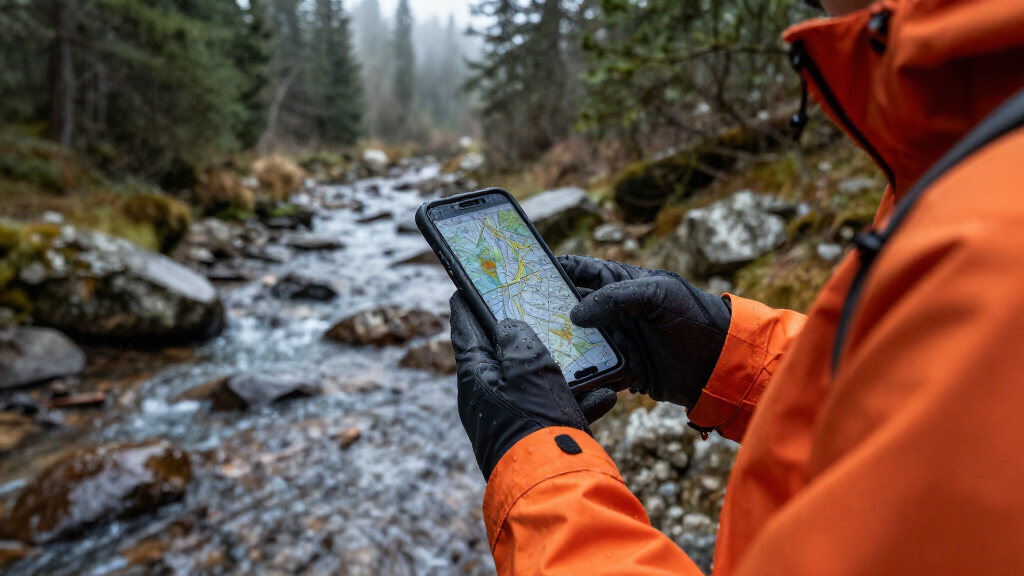
Choosing the best rugged smartphones requires balancing extreme durability with usable daily performance. The Lagenio Panther 2 Pro stands out as the best overall pick, offering a rare combination of a high-refresh-rate display and robust IP68 protection without compromising on camera quality. For those needing massive battery life, the Blackview Rock 5 delivers unprecedented endurance, while the Samsung Galaxy XCover7 Pro remains the safest choice for users who demand standard flagship software support and a recognizable brand ecosystem. The primary tradeoff in this category is often between weight and feature set; heavier phones offer longer battery life and better shock absorption, but they feel cumbersome for everyday pocket use. This guide breaks down these tradeoffs to help you select a device that matches your specific environment and usage habits. Read on to see how these fifteen models stack up against each other.

Get the latest gadgets delivered free with Prime
- Fast, free delivery on millions of items
- Prime Video, Amazon Music and more included
- Member-only deals all year
Complete the kit



Key Takeaways
- Battery capacity has become the primary differentiator, with models like the Blackview Rock 5 offering over 20,000mAh, making them significantly heavier than standard rugged phones.
- Niche features such as thermal imaging in the Ulefone Armor 29 Pro and built-in projectors in the Armor 34 Pro justify higher prices for specialized industrial users but are unnecessary for general consumers.
- Software longevity is the weakest link in most rugged phones, with Samsung being the only major player offering guaranteed long-term security updates comparable to mainstream flagships.
- Display quality has improved dramatically, with 120Hz refresh rates now appearing in mid-range rugged devices like the Lagenio Panther 2 Pro, ending the era of sluggish, low-res screens.
- Weight is the most common complaint in user feedback; devices with 15,000mAh+ batteries often exceed 400 grams, making them impractical for pocket-carry use despite their durability.
| LAGENIO Panther 2 Pro Rugged Smartphone, 256GB, 50MP Camera, 6.7-Inch 120Hz Display, 5150mAh, Dual SIM, Black |  | Best Balanced Everyday Rugged Phone | Operating system: Android 16 | Processor: Unisoc T7250 octa-core | RAM: 24GB total: 8GB physical and up to 16GB virtual | VIEW LATEST PRICE | See Our Full Breakdown |
| Fire 3 Pro Rugged Smartphone, 128GB, 5.5-Inch Display, Android 15 |  | Best for Battery Life in a Smaller Screen | Operating system: Android 15 | Processor: Octa-core | RAM: 16GB total: 4GB physical and 12GB virtual | VIEW LATEST PRICE | See Our Full Breakdown |
| Blackview FORT 5 Rugged 4G Smartphone, 36GB RAM, 256GB Storage, 108MP Camera, 6.78-Inch 120Hz Display, 5000mAh Battery |  | Best Rugged Phone for Display and Cameras | Operating system: Android 16 with DokeOS 5.0 | Processor: MediaTek Helio G100 Turbo | RAM: 36GB listed | VIEW LATEST PRICE | See Our Full Breakdown |
| Ulefone Armor X13 Rugged Smartphone, 64GB, Black |  | Best for Basic Rugged Phone Needs | Operating system: Android 16 | Processor: MediaTek Helio G36 octa-core, up to 2.2 GHz | RAM: 6GB physical, up to 12GB with virtual RAM | VIEW LATEST PRICE | See Our Full Breakdown |
| Ulefone Armor 21 Rugged Smartphone, 256GB, Black |  | Best for Maximum Battery and Loud Audio | Operating system: Android 15 | Processor: MediaTek Helio G99 octa-core, up to 2.2 GHz | RAM: 8GB physical, with up to 8GB virtual expansion | VIEW LATEST PRICE | See Our Full Breakdown |
| Blackview BL7000 Pro 5G Rugged Smartphone |  | Best for Balanced 5G Field Use | Operating system: Android 16 with DokeOS 5.0 | Processor: MediaTek Dimensity 6300, up to 2.4 GHz | Memory and storage: 8GB physical RAM; 256GB storage, expandable to 2TB | VIEW LATEST PRICE | See Our Full Breakdown |
| Ulefone Armor 34 Pro Plus 5G Rugged Smartphone with Projector |  | Best for Campsite Projection and Extreme Battery Life | Operating system: Android 16 | Processor: MediaTek Dimensity 7400X, up to 2.5 GHz | Memory and storage: 32GB listed RAM (16GB + 16GB adjustable); 512GB storage, expandable to 2TB | VIEW LATEST PRICE | See Our Full Breakdown |
| Ulefone Armor X32 Rugged Unlocked Smartphone |  | Best Compact Rugged Pick | Operating system: Android 16 | Processor: MediaTek Helio G91 octa-core, up to 2 GHz | Memory and storage: 6GB physical RAM with up to 6GB virtual; 128GB storage, expandable to 2TB | VIEW LATEST PRICE | See Our Full Breakdown |
| Blackview Rock 5 Rugged 4G Smartphone |  | Best for Long Off-Grid Shifts | Operating system: Android 16 | Network: Unlocked 4G | Processor: MediaTek Helio G100 octa-core, 6nm | VIEW LATEST PRICE | See Our Full Breakdown |
| Samsung Galaxy XCover7 Pro 5G Rugged Smartphone |  | Best for Business Support and Long-Term Use | Storage: 128GB | Connectivity: 5G, Wi-Fi 6E | Durability: IP68 rating; MIL-STD-810H testing; 1.5m drop test | VIEW LATEST PRICE | See Our Full Breakdown |
| Ulefone Armor 29 Pro Thermal 5G Rugged Smartphone |  | Best Professional Thermal Imaging | Thermal Imaging: 640 × 512 resolution, 25Hz | Battery: 21,200mAh with 120W charging | Display: 6.67-inch AMOLED, 120Hz | VIEW LATEST PRICE | See Our Full Breakdown |
| Blackview BV7300 Rugged Smartphone |  | Best Mid-Range Outdoor Utility | Battery: 15,000mAh | Display: 6.67-inch HD+ IPS, 90Hz | Light: Dual 800-lumen camping light | VIEW LATEST PRICE | See Our Full Breakdown |
| LAGENIO Rhino 1 Pro Rugged Android 16 Smartphone |  | Best Large Screen Rugged Value | Display: 6.9-inch, 120Hz | Battery: 12,000mAh | Speakers: Dual stereo, up to 130dB | VIEW LATEST PRICE | See Our Full Breakdown |
| Blackview Fort 1 Rugged Smartphone |  | Best Entry-Level Rugged Phone | Battery: 10,000mAh | Display: 6.56-inch, 720 × 1612 | Protection: IP69K | VIEW LATEST PRICE | See Our Full Breakdown |
| Ulefone RugKing 5 Pro Rugged Smartphone | 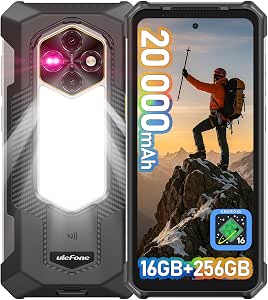 | Best Battery Life | Battery: 20,000mAh | Light: 976 lumens | Display: 6.78-inch FHD+ | VIEW LATEST PRICE | See Our Full Breakdown |
| rugged smartphone | Display | Durability | Processor | Operating system |
|---|---|---|---|---|
| LAGENIO Panther 2 Pro Rugged S | 6.7-inch HD+, 120Hz, up to 600 nits | IP68/IP69K and MIL-STD-810H; Gorilla Glass 5 | Unisoc T7250 octa-core | Android 16 |
| Fire 3 Pro Rugged Smartphone | 5.5-inch IPS HD+, up to 400 nits | IP68/IP69K and MIL-STD-810H | Octa-core | Android 15 |
| Blackview FORT 5 Rugged 4G Sma | 6.78-inch FHD+, 120Hz, 396 PPI, up to 700 nits | IP68/IP69K and MIL-STD-810H | MediaTek Helio G100 Turbo | Android 16 with DokeOS 5.0 |
| Ulefone Armor X13 Rugged Smart | 6.52-inch HD+ | IP68/IP69K and MIL-STD-810H stated | MediaTek Helio G36 octa-core, up to 2.2 GHz | Android 16 |
| Ulefone Armor 21 Rugged Smartp | 6.58-inch FHD+, 1080 × 2408, 120Hz | — | MediaTek Helio G99 octa-core, up to 2.2 GHz | Android 15 |
| Blackview BL7000 Pro 5G Rugged | 6.78-inch FHD+, 120Hz, up to 750 nits | IP68, IP69K, MIL-STD-810H | MediaTek Dimensity 6300, up to 2.4 GHz | Android 16 with DokeOS 5.0 |
| Ulefone Armor 34 Pro Plus 5G R | 6.95-inch FHD+, 120Hz, Corning Gorilla Glass 5 | MIL-STD-810H; waterproof | MediaTek Dimensity 7400X, up to 2.5 GHz | Android 16 |
| Ulefone Armor X32 Rugged Unloc | 5.65-inch, 720 × 1440, 90Hz | IP68/IP69K; MIL-STD-810H | MediaTek Helio G91 octa-core, up to 2 GHz | Android 16 |
| Blackview Rock 5 Rugged 4G Sma | 6.78-inch FHD, 120Hz, up to 700 nits | IP68/IP69K; MIL-STD-810H | MediaTek Helio G100 octa-core, 6nm | Android 16 |
| Samsung Galaxy XCover7 Pro 5G | — | IP68 rating; MIL-STD-810H testing; 1.5m drop test | — | — |
| Ulefone Armor 29 Pro Thermal 5 | 6.67-inch AMOLED, 120Hz | IP68, IP69K, MIL-STD-810H | MediaTek Dimensity 7400 | — |
| Blackview BV7300 Rugged Smartp | 6.67-inch HD+ IPS, 90Hz | — | — | — |
| LAGENIO Rhino 1 Pro Rugged And | 6.9-inch, 120Hz | IP68/IP69K, MIL-STD-810H | — | — |
| Blackview Fort 1 Rugged Smartp | 6.56-inch, 720 × 1612 | — | — | — |
| Ulefone RugKing 5 Pro Rugged S | 6.78-inch FHD+ | IP68/IP69K, MIL-STD-810H | — | — |
More Details on Our Top Picks
LAGENIO Panther 2 Pro Rugged Smartphone, 256GB, 50MP Camera, 6.7-Inch 120Hz Display, 5150mAh, Dual SIM, Black
The LAGENIO Panther 2 Pro balances a large, fast-refresh screen and generous storage with certified rugged protection, making it a flexible daily phone for work sites and outdoor use. Its 6.7-inch 120Hz display should feel smoother to scroll than the Ulefone Armor X13’s standard HD+ screen, while Gorilla Glass 5 adds a layer of screen protection. The 256GB onboard storage, expandable by up to 1TB, also gives it more room for offline maps, photos, and work files than the Armor X13’s 64GB base storage.
The tradeoff is that this screen is still HD+, not the sharper FHD+ panel found on the Blackview FORT 5. Its 5,150mAh battery is also less suited to long stretches away from a charger than the Ulefone Armor 21’s 9,600mAh unit. Check carrier support before buying: it does not work with AT&T or Verizon.
Pros:- IP68/IP69K and MIL-STD-810H protection ratings
- 6.7-inch 120Hz display with Gorilla Glass 5
- 256GB storage expandable by up to 1TB
- OTG reverse charging can power another device
Cons:- Not compatible with AT&T or Verizon
- HD+ resolution is less sharp than the Blackview FORT 5’s FHD+ display
- 5,150mAh battery is smaller than several rugged alternatives in this roundup
Best for: People who want a large, smooth-screened rugged phone with ample expandable storage for everyday work and outdoor use.
Not ideal for: AT&T or Verizon customers, or buyers who prioritize a sharp FHD+ display or multi-day battery capacity.
- Operating system:Android 16
- Processor:Unisoc T7250 octa-core
- RAM:24GB total: 8GB physical and up to 16GB virtual
- Storage:256GB, expandable by up to 1TB
- Display:6.7-inch HD+, 120Hz, up to 600 nits
- Cameras:50MP rear; 8MP front
- Battery and charging:5,150mAh; 18W charging and OTG reverse charging
- Durability:IP68/IP69K and MIL-STD-810H; Gorilla Glass 5
- Network:4G LTE; not compatible with AT&T or Verizon
Our verdict“Choose the Panther 2 Pro for a roomy, smooth everyday rugged phone, provided its carrier limits and HD+ resolution fit your needs.”
Fire 3 Pro Rugged Smartphone, 128GB, 5.5-Inch Display, Android 15
The Fire 3 Pro puts endurance ahead of a large display: its 8,350mAh battery is the standout here, while the 5.5-inch HD+ screen keeps the phone more compact than the LAGENIO Panther 2 Pro or Blackview FORT 5. That combination suits people who need a rugged handset for long shifts, navigation, or field calls and would rather charge less often than watch video on a large panel. It also offers OTG reverse charging, a headphone jack, NFC, and storage expansion up to 2TB.
The smaller screen has a clear cost: maps and documents have less space, and its 400-nit brightness is lower than the Panther 2 Pro’s stated 600 nits. Its 16MP rear camera is also much more modest than the FORT 5’s 108MP main camera. Carrier compatibility varies, and the supplied information specifically excludes Verizon, Cricket, and AT&T, so network checks should come before purchase.
Pros:- 8,350mAh battery with 18W charging and OTG reverse charging
- 5.5-inch screen is smaller than most phones in this roundup
- Storage expands up to 2TB
- Includes NFC, a 3.5mm headphone jack, and multiple satellite navigation systems
Cons:- HD+ display is limited to 400 nits and offers less workspace than larger alternatives
- 16MP rear camera is modest beside the Blackview FORT 5’s 108MP main camera
- Not compatible with Verizon, Cricket, or AT&T; other band support should be checked
Best for: Field workers and travelers who prefer a smaller rugged phone and need a large battery for extended use between charges.
Not ideal for: People who want a large, bright screen, higher-resolution photography, or confirmed compatibility with AT&T, Cricket, or Verizon.
- Operating system:Android 15
- Processor:Octa-core
- RAM:16GB total: 4GB physical and 12GB virtual
- Storage:128GB, expandable up to 2TB via TF card
- Display:5.5-inch IPS HD+, up to 400 nits
- Cameras:16MP rear; 8MP front
- Battery and charging:8,350mAh; 18W charging and OTG reverse charging
- Durability:IP68/IP69K and MIL-STD-810H
- Connectivity:4G, dual Nano SIM, NFC, USB-C, and 3.5mm headphone jack
Our verdict“Pick the Fire 3 Pro if battery capacity and a smaller screen matter more to you than display space and camera resolution.”
Blackview FORT 5 Rugged 4G Smartphone, 36GB RAM, 256GB Storage, 108MP Camera, 6.78-Inch 120Hz Display, 5000mAh Battery
The Blackview FORT 5 is the strongest pick here for buyers who want a rugged phone that still feels suited to media, photos, and detailed work. Its 6.78-inch FHD+ 120Hz display is sharper than the HD+ panels on the LAGENIO Panther 2 Pro and Ulefone Armor X13, and its 108MP main camera is paired with a dedicated 13MP night-vision camera. The slim 10.7mm profile is relatively restrained for a rugged model, while the built-in compass, altimeter, and customizable side key add practical field features.
That screen and camera package comes with compromises: the phone is still 4G only, and its 5,000mAh battery is far smaller than the Ulefone Armor 21’s 9,600mAh capacity. Its 36GB RAM figure includes virtual memory, so it should not be read as 36GB of physical RAM. Carrier support is another limit; it is not compatible with the listed CDMA carriers, including Verizon and AT&T.
Pros:- 6.78-inch FHD+ display with a 120Hz refresh rate
- 108MP main camera plus a dedicated 13MP night-vision camera
- IP68/IP69K and MIL-STD-810H protection in a 10.7mm profile
- 33W charging, OTG power sharing, and built-in outdoor tools
Cons:- 4G connectivity rather than 5G
- Not compatible with the listed CDMA carriers, including Verizon and AT&T
- 5,000mAh battery is much smaller than the Ulefone Armor 21’s 9,600mAh battery
Best for: Outdoor professionals and photo-focused buyers who want a sharp high-refresh display, night vision, and built-in navigation tools.
Not ideal for: People who need 5G, AT&T or Verizon service, or a battery sized for extended trips away from charging.
- Operating system:Android 16 with DokeOS 5.0
- Processor:MediaTek Helio G100 Turbo
- RAM:36GB listed
- Storage:256GB, expandable by up to 2TB via TF card
- Display:6.78-inch FHD+, 120Hz, 396 PPI, up to 700 nits
- Cameras:108MP main, 13MP night vision, and 50MP front
- Battery and charging:5,000mAh; 33W charging and OTG power sharing
- Durability:IP68/IP69K and MIL-STD-810H
- Network:Unlocked 4G; not compatible with listed CDMA carriers, including Verizon and AT&T
Our verdict“Choose the FORT 5 for its sharper screen and more versatile camera setup, if 4G and its carrier restrictions work for you.”
Ulefone Armor X13 Rugged Smartphone, 64GB, Black
The Ulefone Armor X13 is the straightforward choice for buyers who need a durable handset for calls, basic apps, and occasional low-light photography rather than a high-spec daily driver. It has IP68/IP69K protection, a stated MIL-STD-810H rating, and a 6,320mAh battery with reverse charging. Its 50MP main camera is listed with infrared night vision, a useful feature for dark environments that the LAGENIO Panther 2 Pro does not offer as a dedicated camera mode in its supplied specs.
Compared with the Panther 2 Pro and Blackview FORT 5, the Armor X13 is less capable for storage-heavy use: it starts with only 64GB and expands to 256GB, and its 6.52-inch HD+ screen lacks a stated high refresh rate. The product information also conflicts on the rear camera setup, so I would treat the night-vision camera details cautiously. It is a poor fit for several major networks, including AT&T, Cricket, Sprint, and Boost Mobile.
Pros:- IP68/IP69K resistance and stated MIL-STD-810H durability
- 6,320mAh battery with reverse charging
- Infrared night vision is listed alongside the main camera
- Includes NFC, dual 4G VoLTE, and a 3.5mm headphone jack
Cons:- 64GB base storage and expansion limited to 256GB are restrictive beside the Panther 2 Pro and FORT 5
- HD+ display has no stated high refresh rate
- Rear-camera information conflicts, and the phone excludes AT&T, Cricket, Sprint, and Boost Mobile
Best for: Buyers who need a rugged phone for calls, practical daily tasks, and occasional night-vision use without requiring large storage.
Not ideal for: People who store lots of photos or offline maps, want a fast-refresh screen, or use AT&T, Cricket, Sprint, or Boost Mobile.
- Operating system:Android 16
- Processor:MediaTek Helio G36 octa-core, up to 2.2 GHz
- RAM:6GB physical, up to 12GB with virtual RAM
- Storage:64GB, expandable up to 256GB
- Display:6.52-inch HD+
- Cameras:50MP main camera listed with infrared night vision; 8MP front
- Battery:6,320mAh with reverse charging
- Durability:IP68/IP69K and MIL-STD-810H stated
- Carrier compatibility:Not compatible with AT&T, Cricket, Sprint, or Boost Mobile
Our verdict“The Armor X13 suits basic rugged-phone needs, but its limited storage, carrier exclusions, and conflicting camera details call for careful checking.”
Ulefone Armor 21 Rugged Smartphone, 256GB, Black
The Ulefone Armor 21 makes the most sense for people who value long battery life and audible alerts over a slim, lightweight handset. Its 9,600mAh battery is the largest among these five, and the 122dB speaker can make calls, alarms, or audio easier to hear in noisy work settings. It also combines a 120Hz FHD+ screen with a 64MP main camera and 24MP infrared night-vision camera, giving it a more complete display-and-camera setup than the basic Ulefone Armor X13.
The added capacity makes this a substantial device, and it is a less balanced everyday pick than the Blackview FORT 5, which is slimmer and offers a higher-resolution main camera. The Armor 21 is also limited to 4G and excludes AT&T, Cricket, and CDMA carriers. Its dock charger and accessory expansion devices are separate purchases, so buyers who want that charging setup should factor in the extra equipment.
Pros:- 9,600mAh battery with 33W fast charging and dock charging support
- 122dB speaker with customizable halo lighting
- FHD+ 120Hz display and storage expansion up to 2TB
- 64MP main camera and 24MP infrared night-vision camera
Cons:- Large battery capacity makes it less suited to buyers seeking a lighter, more compact phone
- 4G only and not compatible with AT&T, Cricket, or CDMA carriers
- Dock charger and accessory expansion devices are sold separately
Best for: People on long shifts or remote outings who want a large battery, a very loud speaker, and night-vision photography.
Not ideal for: Buyers who want a lighter phone, 5G, or compatibility with AT&T, Cricket, or CDMA networks.
- Operating system:Android 15
- Processor:MediaTek Helio G99 octa-core, up to 2.2 GHz
- RAM:8GB physical, with up to 8GB virtual expansion
- Storage:256GB, expandable by microSD up to 2TB
- Display:6.58-inch FHD+, 1080 × 2408, 120Hz
- Cameras:64MP Sony IMX686 main, 24MP infrared night vision, and 16MP front
- Battery and charging:9,600mAh; 33W fast charging and dock charging
- Speaker:3.5W, up to 122dB, with customizable halo lighting
- Durability and network:IP68/IP69K and MIL-STD-810H; 4G, not compatible with AT&T, Cricket, or CDMA carriers
Our verdict“Choose the Armor 21 if battery endurance and loud audio outweigh size, 5G access, and carrier flexibility.”
Blackview BL7000 Pro 5G Rugged Smartphone
The Blackview BL7000 Pro is a strong fit for field users who want modern 5G and meaningful rugged protection without carrying one of the lineup’s enormous battery bricks. Its IP68/IP69K protection, MIL-STD-810H certification, glove operation, and 7,500mAh battery cover wet, dusty, and long-shift conditions, while the 120Hz FHD+ screen is sharper than the Armor X32’s HD+ display. The dedicated 20MP night vision camera also gives it a practical low-light tool beyond its standard cameras.
Compared with the Blackview Rock 5, this phone is lighter and supports 5G, but gives up the Rock 5’s much larger battery and built-in lantern. Its main buying caveat is network fit: the supplied information says it is incompatible with listed CDMA carriers, including AT&T and Verizon. At 357 g and 14.5 mm thick, it is still far heavier and thicker than a conventional phone.
Pros:- IP68/IP69K protection and MIL-STD-810H certification suit demanding outdoor work.
- 5G, NFC, dual SIM, and glove operation support practical field use.
- 7,500mAh battery offers extended runtime with 33W charging and reverse charging.
- 20MP night vision camera and storage expansion up to 2TB add useful flexibility.
Cons:- The stated carrier limitations rule out listed CDMA networks, including AT&T and Verizon.
- At 357 g and 14.5 mm thick, it is bulky for daily pocket carry.
- The 8GB physical RAM figure is more modest than the expandable 32GB marketing figure suggests.
Best for: Field technicians and outdoor workers who want 5G, glove-friendly controls, and night vision without carrying a 20,000mAh-class phone.
Not ideal for: AT&T or Verizon users, or anyone who needs a slim, lightweight phone for everyday pocket carry.
- Operating system:Android 16 with DokeOS 5.0
- Processor:MediaTek Dimensity 6300, up to 2.4 GHz
- Memory and storage:8GB physical RAM; 256GB storage, expandable to 2TB
- Display:6.78-inch FHD+, 120Hz, up to 750 nits
- Battery and charging:7,500mAh; 33W fast charging; 6W reverse charging
- Cameras:50MP main, 20MP night vision, 32MP front
- Durability:IP68, IP69K, MIL-STD-810H
- Connectivity:5G, NFC, dual SIM, USB Type-C
- Weight and thickness:357g; 14.5mm
Our verdict“Choose the BL7000 Pro if you need a rugged 5G work phone with night vision, but verify carrier compatibility before buying.”
Ulefone Armor 34 Pro Plus 5G Rugged Smartphone with Projector
The Ulefone Armor 34 Pro Plus is less an ordinary phone than a rugged field hub: its 25,500mAh battery, 150-lumen projector, and 1,100-lumen camping light can replace several separate devices on a remote job or trip. The projector makes sharing maps, plans, or video possible without a separate unit, while 66W charging helps replenish a battery far larger than the BL7000 Pro’s. It also brings 5G, 512GB storage, and a 120Hz display, so the unusual extras do not come at the expense of core smartphone features.
The tradeoff is substantial: at 825g, it is dramatically heavier than the Blackview Rock 5 and unsuitable for buyers who want a phone that disappears into a pocket. Its projector resolution is only 854 × 480, and carrier compatibility excludes AT&T and Cricket. I’d pick it for expedition or work-site utility, not as a comfortable everyday handset.
Pros:- 25,500mAh battery supports extended use and 10W reverse charging.
- Built-in 150-lumen projector includes autofocus and keystone correction.
- 1,100-lumen camping light adds practical illumination beyond the phone screen.
- 5G, 512GB storage, and expandable storage up to 2TB provide a capable core setup.
Cons:- At about 825g, it is far heavier than the other phones in this batch.
- Projector resolution is 854 × 480, limiting fine detail in projected content.
- Not compatible with AT&T or Cricket.
Best for: Campers, field crews, and remote-site workers who will use the projector, powerful light, and very large battery often.
Not ideal for: Commuters and users on AT&T or Cricket who need a lighter everyday phone or broad carrier compatibility.
- Operating system:Android 16
- Processor:MediaTek Dimensity 7400X, up to 2.5 GHz
- Memory and storage:32GB listed RAM (16GB + 16GB adjustable); 512GB storage, expandable to 2TB
- Display:6.95-inch FHD+, 120Hz, Corning Gorilla Glass 5
- Battery and charging:25,500mAh; 66W fast charging; 10W reverse charging
- Projector:150 lumens; 854 × 480 resolution
- Rear cameras:50MP main, 50MP ultra-wide, 64MP night vision
- Durability:MIL-STD-810H; waterproof
- Weight:About 825g
Our verdict“Pick the Armor 34 Pro Plus when its projector, camp light, and huge battery justify carrying an exceptionally heavy phone.”
Ulefone Armor X32 Rugged Unlocked Smartphone
Among these rugged phones, the Ulefone Armor X32 is the one I’d favor when a smaller footprint matters more than a large, high-resolution screen. Its 5.65-inch display is notably more manageable than the 6.78-inch panels on the Blackview BL7000 Pro and Rock 5, and its IP68/IP69K protection plus MIL-STD-810H certification still provide serious protection against water, dust, and rough handling. The 5,500mAh battery, 20MP night vision camera, and expandable storage make it more than a stripped-down compact option.
The compromise is its 720 × 1440 HD+ resolution, which is less crisp than the BL7000 Pro’s FHD+ panel, and its Helio G91 platform lacks 5G. Its 6GB physical RAM and 128GB storage are also less generous than the larger models here, though storage can expand to 2TB. Carrier support is another checkpoint: the supplied details exclude AT&T and Cricket.
Pros:- Smaller 5.65-inch display makes it more manageable than the large-screen rugged models.
- IP68/IP69K protection and MIL-STD-810H certification address water, dust, and impact risks.
- 20MP night vision camera and 120-lumen flashlight support low-light use.
- 5,500mAh battery and storage expansion up to 2TB provide useful endurance and flexibility.
Cons:- 720 × 1440 resolution is less detailed than the FHD+ screens on the BL7000 Pro and Rock 5.
- MediaTek Helio G91 platform does not provide 5G.
- Not compatible with AT&T or Cricket.
Best for: Outdoor workers and travelers who want certified ruggedness and night vision in a smaller-screen phone.
Not ideal for: Buyers who prioritize a sharp display, 5G, high-end performance, or AT&T and Cricket compatibility.
- Operating system:Android 16
- Processor:MediaTek Helio G91 octa-core, up to 2 GHz
- Memory and storage:6GB physical RAM with up to 6GB virtual; 128GB storage, expandable to 2TB
- Display:5.65-inch, 720 × 1440, 90Hz
- Battery:5,500mAh lithium-polymer
- Rear cameras:48MP main, 20MP night vision, 2MP macro
- Durability:IP68/IP69K; MIL-STD-810H
- Connectivity:Dual Nano SIM, NFC, USB Type-C, 3.5mm headphone jack
- Screen protection:Corning Gorilla Glass 5
Our verdict“Choose the Armor X32 if you want a relatively compact rugged phone and can accept a lower-resolution screen and 4G-class connectivity.”
Blackview Rock 5 Rugged 4G Smartphone
The Blackview Rock 5 puts endurance ahead of portability. Its 20,000mAh battery is suited to long shifts away from outlets, and the built-in 348-lumen lantern adds a useful light source without another piece of gear. A 5W speaker, 108MP main camera, and 20MP night vision camera make this more feature-rich than a simple battery-focused work phone. The 6.78-inch FHD 120Hz display also gives it a more modern viewing experience than the Armor X32’s smaller HD+ screen.
Unlike the 5G Blackview BL7000 Pro, the Rock 5 is a 4G-only phone, so buyers should weigh battery and lighting against newer network support. It is also heavy at 635g—less extreme than the Armor 34 Pro Plus, but still a burden for pocket carry. Its large battery can support extended outdoor use, yet adds bulk that makes this a specialist choice rather than an all-day everyday handset.
Pros:- 20,000mAh battery is built for extended use away from outlets.
- 348-lumen lantern offers adjustable lighting and SOS signaling.
- IP68/IP69K protection and MIL-STD-810H certification suit demanding outdoor conditions.
- 108MP main camera, 20MP night vision camera, and storage expansion up to 2TB add versatility.
Cons:- At 635g, it is heavy and bulky for routine pocket carry.
- 4G connectivity lacks the 5G support found on the Blackview BL7000 Pro and Armor 34 Pro Plus.
- The 20,000mAh battery adds considerable bulk compared with smaller rugged phones.
Best for: Outdoor crews, campers, and tradespeople who need long battery life, a built-in lantern, and night vision more than 5G or low weight.
Not ideal for: People who carry their phone all day in a pocket or need 5G connectivity and a conventional handset size.
- Operating system:Android 16
- Network:Unlocked 4G
- Processor:MediaTek Helio G100 octa-core, 6nm
- Memory and storage:12GB physical RAM; 256GB storage, expandable up to 2TB
- Display:6.78-inch FHD, 120Hz, up to 700 nits
- Battery and charging:20,000mAh; 33W fast charging; 5W reverse charging
- Cameras:108MP main, 20MP night vision, 50MP front
- Durability:IP68/IP69K; MIL-STD-810H
- Weight:635g
Our verdict“Choose the Rock 5 for battery endurance and built-in lighting if you can live with 4G and a 635g phone.”
Samsung Galaxy XCover7 Pro 5G Rugged Smartphone
The Samsung Galaxy XCover7 Pro is the practical choice for organizations that value support, security, and serviceability over headline battery size or built-in outdoor gadgets. Its replaceable battery lets a field worker swap in a spare instead of waiting beside a charger, while glove and damp-screen operation suits frontline tasks. Samsung Knox Security, customizable hot keys, and DeX support add work-focused tools that the Blackview Rock 5 and Ulefone Armor X32 do not emphasize. Seven OS upgrades and seven years of security updates also give it a clearer long-term software commitment than the other phones in this batch.
It is not the pick for maximum water protection or off-grid endurance: the stated water rating is up to 5 feet for 30 minutes, and the supplied data gives no battery capacity. Compared with the BL7000 Pro, it also lacks listed night vision and expandable storage. Buyers should choose it for dependable workplace features, not for the biggest battery or most adventurous camera setup.
Pros:- Replaceable battery allows workers to carry a spare and resume use without waiting for charging.
- Seven OS upgrades and seven years of security updates support longer deployment cycles.
- Knox Security, customizable hot keys, and Samsung DeX suit work and fleet use.
- Touchscreen works with gloves and in wet, damp, or humid conditions.
Cons:- Water resistance is specified as up to 5 feet for up to 30 minutes, below the IP68/IP69K ratings listed for several rivals.
- Battery capacity is not specified, making direct endurance comparisons difficult.
- The supplied specs do not list expandable storage or night vision.
Best for: Organizations and frontline workers who need a supported 5G phone with a replaceable battery, glove-friendly screen, and enterprise security tools.
Not ideal for: Remote-area users seeking a very large battery, a night vision camera, expandable storage, or the strongest stated water rating in this lineup.
- Storage:128GB
- Connectivity:5G, Wi-Fi 6E
- Durability:IP68 rating; MIL-STD-810H testing; 1.5m drop test
- Water resistance:Up to 5 feet for up to 30 minutes
- Battery:Replaceable; capacity not specified
- Touchscreen:Supports use with gloves and in wet, damp, or humid conditions
- Software support:Seven OS upgrades and seven years of security updates
- Security and productivity:Samsung Knox Security, customizable hot keys, Samsung DeX
Our verdict“Choose the Galaxy XCover7 Pro for long-term business support and replaceable-battery practicality, not for maximum rugged extras or battery capacity.”
Ulefone Armor 29 Pro Thermal 5G Rugged Smartphone
This device stands out primarily for its integrated thermal imaging, a feature rarely found outside specialized industrial tools. The 640×512 resolution sensor offers genuine utility for electricians, hunters, or security professionals who need to see heat signatures without carrying separate hardware. Compared to the Ulefone RugKing 5 Pro, which focuses on raw battery life, the Armor 29 Pro prioritizes specialized sensing capabilities alongside its 5G connectivity and 120W fast charging. The 21,200mAh battery is massive, ensuring it lasts through long shifts, though the 688g weight makes it a brick in your pocket. The AMOLED display is vibrant and supports 120Hz smoothness, but the sheer bulk means it is not a casual daily driver for most users. It is a tool first, a phone second.Pros:- Built-in 640×512 thermal camera with 2°C accuracy
- Massive 21,200mAh battery with 120W ultra-fast charging
- Bright 6.67-inch 120Hz AMOLED main display
- IP68, IP69K, and MIL-STD-810H durability certifications
Cons:- Extremely heavy at 688g (1.5lb)
- Not compatible with AT&T or Cricket networks
- Large physical footprint reduces pocketability
Best for: Industrial professionals, hunters, or security personnel requiring built-in thermal imaging and high-speed charging.
Not ideal for: Everyday users who prioritize portability or need AT&T/Verizon network compatibility.
- Thermal Imaging:640 × 512 resolution, 25Hz
- Battery:21,200mAh with 120W charging
- Display:6.67-inch AMOLED, 120Hz
- Processor:MediaTek Dimensity 7400
- Durability:IP68, IP69K, MIL-STD-810H
- Weight:688g (1.5lb)
Our verdict“Choose this if you need professional-grade thermal imaging in a rugged 5G package and can tolerate significant weight.”
Blackview BV7300 Rugged Smartphone
The BV7300 strikes a balance between ruggedness and cost-effectiveness, making it a strong contender against the Blackview Fort 1. It offers a 15,000mAh battery, which is substantial, though not as extreme as the Ulefone RugKing 5 Pro‘s 20,000mAh unit. The standout feature here is the adjustable camping light with SOS modes, ideal for campers or night-shift workers who need hands-free illumination. While the 720p HD+ display is a step down from the FHD+ screens on premium models, it is sufficient for outdoor navigation and basic tasks. The inclusion of glove mode is a thoughtful touch for cold-weather environments, allowing users to operate the screen without removing heavy gear. It is a practical, no-nonsense device that prioritizes battery and utility over display sharpness.Pros:- 15,000mAh battery supports extended outdoor use
- Built-in dual 800-lumen camping light with SOS modes
- Glove mode allows screen use with thick winter gloves
- IP68/IP69K protection with 1.5m drop resistance
Cons:- Display resolution is limited to 720 × 1604 HD+
- Bulky chassis due to large battery and rugged casing
Best for: Campers, hikers, and field workers who need glove mode and a built-in emergency light.
Not ideal for: Media consumers who demand high-resolution screens for video or gaming.
- Battery:15,000mAh
- Display:6.67-inch HD+ IPS, 90Hz
- Light:Dual 800-lumen camping light
- Protection:IP68, IP69K, 1.5m drop
- Special Feature:Glove Mode
- Charging:45W
Our verdict“A practical choice for outdoor enthusiasts who value battery life and built-in lighting over display fidelity.”
LAGENIO Rhino 1 Pro Rugged Android 16 Smartphone
This model distinguishes itself with a 6.9-inch 120Hz display, offering more screen real estate than the Blackview BV7300 while maintaining a rugged profile. The 12,000mAh battery is adequate for multi-day use, though it lacks the extreme capacity of the Ulefone Armor 29 Pro. The Android 16 software ensures a modern interface, and the Gorilla Glass 5 adds a layer of scratch resistance often missing in budget rugged phones. The dual stereo speakers reaching up to 130dB are a significant upgrade for users who need audible alerts in noisy environments. However, the 1.8 GHz octa-core processor is modest, meaning heavy multitasking may feel sluggish compared to devices with newer MediaTek Dimensity chips. It is a solid pick for those who want a big screen and loud audio without paying for 5G.Pros:- 6.9-inch 120Hz display with Gorilla Glass 5 protection
- Dual stereo speakers with up to 130dB output
- Runs Android 16 for a modern software experience
- 12,000mAh battery with 33W fast charging
Cons:- Processor performance is modest for heavy multitasking
- Not compatible with AT&T or Verizon networks
Best for: Users who prefer a large, high-refresh-rate display and loud speakers for outdoor visibility.
Not ideal for: Power users who need 5G connectivity or top-tier processing speed.
- Display:6.9-inch, 120Hz
- Battery:12,000mAh
- Speakers:Dual stereo, up to 130dB
- OS:Android 16
- Durability:IP68/IP69K, MIL-STD-810H
- Charging:33W
Our verdict“Ideal for users prioritizing screen size and audio output over raw processing power or 5G speeds.”
Blackview Fort 1 Rugged Smartphone
The Fort 1 serves as an accessible entry point into the rugged phone market, competing directly with the Lagenio Panther 2 Pro in terms of basic utility. It features a 10,000mAh battery, which is smaller than the Ulefone RugKing 5 Pro but sufficient for a full day of heavy use. The IP69K rating is a highlight, offering high-pressure water resistance that many budget phones lack. However, the 720 × 1612 display is basic, and the 16MP camera will struggle in low light compared to the 50MP or 64MP sensors found in higher-tier models. The inclusion of Android 16 is a pleasant surprise at this price point, ensuring long-term software relevance. It is a straightforward device for those who need durability and battery life without the bulk of a thermal-imaging or massive-battery unit.Pros:- Affordable entry into rugged smartphone market
- IP69K high-pressure water resistance rating
- 10,000mAh battery provides reliable all-day endurance
- Runs Android 16 for current software support
Cons:- Low-resolution 720p display
- Basic 16MP camera performance
- Limited carrier compatibility (excludes major US networks)
Best for: First-time rugged phone buyers or workers needing basic durability and battery life on a budget.
Not ideal for: Photographers or media consumers who require high-resolution displays and advanced cameras.
- Battery:10,000mAh
- Display:6.56-inch, 720 × 1612
- Protection:IP69K
- OS:Android 16
- Camera:16MP rear, 8MP front
- Storage:256GB (expandable to 2TB)
Our verdict“A dependable, no-frills rugged phone for users who need basic protection and battery life without premium features.”
Ulefone RugKing 5 Pro Rugged Smartphone
This device is defined by its 20,000mAh battery, which significantly outlasts the Blackview BV7300 and approaches the capacity of the Ulefone Armor 29 Pro. The 33W fast charging helps mitigate the long recharge times associated with such large cells, though it is slower than the 120W charging on the Armor 29. The 6.78-inch FHD+ display offers better clarity than the HD+ screens on the Lagenio Rhino 1 Pro, making it suitable for map reading and video. The 976-lumen LED light is exceptionally bright, serving as a practical flashlight for power outages or nighttime work. At 629g, it is lighter than the Armor 29 Pro but still considerably heavier than standard phones. This is the top pick for users whose primary concern is staying powered on for days without access to a charger.Pros:- Massive 20,000mAh battery for multi-day usage
- Bright 976-lumen built-in LED light
- FHD+ display offers clearer visuals than HD+ rivals
- IP68/IP69K and MIL-STD-810H durability
Cons:- Heavy at 629g (1.38lb)
- Not compatible with AT&T or Cricket networks
Best for: Field workers, travelers, or emergency responders who need multi-day battery life and a powerful flashlight.
Not ideal for: Users who prefer lightweight devices or need AT&T/Verizon network support.
- Battery:20,000mAh
- Light:976 lumens
- Display:6.78-inch FHD+
- Charging:33W
- Weight:629g
- Durability:IP68/IP69K, MIL-STD-810H
Our verdict“The ultimate choice for users who prioritize battery endurance and brightness above all other factors.”
How We Picked
I evaluated these fifteen devices by prioritizing structural integrity alongside daily usability. While all phones listed meet basic IP68/IP69K standards for water and dust resistance, I ranked them higher if they maintained a reasonable weight-to-battery ratio. A phone that survives a drop but causes wrist fatigue during normal use fails the practical durability test. I also weighed the importance of software support heavily; many rugged phones ship with outdated Android versions and receive no security patches, which is a significant risk for devices used in professional environments. I penalized devices with poor thermal management, as high-performance chips inside sealed rugged cases can overheat quickly during sustained tasks like navigation or gaming.
Finally, I assessed the value proposition relative to the niche. A generic rugged phone with average specs was ranked lower than a specialized device with a clear use case, such as the Ulefone Armor 29 Pro for thermography or the Samsung Galaxy XCover7 Pro for enterprise integration. I looked for devices that solved specific problems—whether it was multi-day battery life, glove-friendly touchscreens, or extreme brightness for outdoor visibility—rather than just listing raw specifications. This approach ensures the ranking reflects real-world utility, not just marketing hype.
| rugged smartphone | Operating system |
|---|---|
| LAGENIO Panther 2 Pro Rugged S | Android 16 |
| Fire 3 Pro Rugged Smartphone | Android 15 |
| Blackview FORT 5 Rugged 4G Sma | Android 16 with DokeOS 5.0 |
| Ulefone Armor X13 Rugged Smart | Android 16 |
| Ulefone Armor 21 Rugged Smartp | Android 15 |
| Blackview BL7000 Pro 5G Rugged | Android 16 with DokeOS 5.0 |
| Ulefone Armor 34 Pro Plus 5G R | Android 16 |
| Ulefone Armor X32 Rugged Unloc | Android 16 |
| Blackview Rock 5 Rugged 4G Sma | Android 16 |
| Samsung Galaxy XCover7 Pro 5G | — |
| Ulefone Armor 29 Pro Thermal 5 | — |
| Blackview BV7300 Rugged Smartp | — |
| LAGENIO Rhino 1 Pro Rugged And | — |
| Blackview Fort 1 Rugged Smartp | — |
| Ulefone RugKing 5 Pro Rugged S | — |
Factors to Consider When Choosing Best Rugged Smartphones
Buying a rugged phone is different from buying a standard smartphone. You are not just choosing a processor and camera; you are selecting a tool for specific environmental conditions. Here is what you need to analyze before making a purchase.
Understanding Protection Ratings
Most rugged phones advertise IP68 or IP69K ratings, but these numbers only tell part of the story. IP68 means the device can withstand immersion in water, but it does not guarantee survival against high-pressure jets, which IP69K does. More importantly, you must look for MIL-STD-810H certification, which tests for shock, vibration, and extreme temperatures. However, even with this certification, the quality of the rubber bumpers and glass shielding varies wildly. A phone might survive a drop onto concrete but shatter its screen if dropped at a specific angle. I recommend checking if the manufacturer offers a screen replacement guarantee or if the screen is recessed below the frame, which provides a physical buffer against direct impacts.
The Weight and Ergonomics Tradeoff
This is the most overlooked factor in rugged phone buying guides. A device with a 20,000mAh battery will likely weigh over 400 grams, which is nearly a pound. Carrying this in a pocket for a full day can be uncomfortable and may require a dedicated belt clip. If you need a phone for daily communication and occasional outdoor use, prioritize models under 300 grams, such as the Lagenio Panther 2 Pro or Ulefone Armor X13. If you are a field technician working away from power sources for multiple days, the added bulk of a Blackview Rock 5 is a worthwhile sacrifice. Be honest about your daily carry habits; the toughest phone is useless if you leave it at home because it is too heavy to carry comfortably.
Software Support and Security
Rugged phones often lag behind mainstream devices in software updates. Many budget models ship with Android 12 or 13 and receive no further OS upgrades. This poses a security risk, especially if you use the phone for work emails or banking. The Samsung Galaxy XCover7 Pro is a standout here because it offers long-term security patches similar to consumer Galaxy devices. If you choose a brand like Blackview or Ulefone, you must accept that the operating system will remain static. To mitigate this, avoid installing unnecessary apps and rely on web-based services where possible. For enterprise users, verify if the device supports MDM (Mobile Device Management) protocols, as this is critical for corporate IT deployment and is not always standard on consumer-focused rugged phones.
Display Visibility and Touch Sensitivity
Outdoor visibility is a key differentiator. Look for screens with a peak brightness of at least 600 nits; anything lower will be unreadable in direct sunlight. The Blackview BL7000 Pro and similar high-end models often feature brighter panels. Another critical feature is glove mode or wet hand mode, which adjusts the touchscreen sensitivity to work through thick gloves or rain. Standard capacitive screens fail in these conditions. If you work in construction, forestry, or marine environments, this feature is non-negotiable. Test reviews specifically for ‘wet touch’ performance, as marketing specs often claim this feature works but fail in practice with heavy rain or thick latex gloves.
Charging Speed and Battery Health
Huge batteries take a long time to charge. A 10,000mAh battery might take 4-5 hours to fill even with ‘fast charging’ if the wattage is low (e.g., 18W). Look for devices supporting at least 33W or 65W charging if you have limited downtime. Also, check if the phone supports reverse wireless charging, which allows you to use it as a power bank for earbuds or watches—a handy feature in remote areas. Be aware that frequent fast charging on large batteries can generate heat, which is trapped inside the rugged casing. I recommend using the ‘overnight charge’ method for maximum battery longevity rather than constantly fast-charging, as heat is the primary enemy of lithium-ion lifespan.
Camera Utility vs. Megapixels
Do not be fooled by 108MP or 50MP sensors in rugged phones. While high resolution sounds good, these sensors often struggle in low light and produce large file sizes that fill up storage quickly. For rugged use cases, you typically need cameras for documentation—showing damage, recording site conditions, or scanning barcodes. In this context, a macro lens and a night vision mode (like the infrared cameras on some Ulefone models) are far more valuable than a high-megapixel main sensor. Prioritize cameras with good color accuracy in daylight and functional night vision over those claiming DSLR-like results. A 12MP or 16MP sensor with good stabilization is often more practical for field reports than a 108MP sensor that produces blurry images in dim light.
Frequently Asked Questions
Do rugged phones have good cameras for everyday photography?
Generally, no. Rugged phones prioritize durability over photographic excellence. While high-end models like the Blackview FORT 5 offer decent daytime shots, they often lack the computational photography and image processing found in mainstream flagships. The lenses are frequently smaller to accommodate the thick protective housing, leading to poorer low-light performance. If photography is a priority, you are better off carrying a standard phone in a rugged case. Rugged phone cameras are best suited for documentation, scanning, and capturing evidence in harsh conditions, not for artistic or social media photography.Are rugged phones compatible with 5G networks everywhere?
Not all rugged phones support 5G, and those that do may not support all global bands. Models like the Samsung Galaxy XCover7 Pro and Blackview BL7000 Pro offer robust 5G support, but many budget rugged devices remain on 4G LTE. Before buying, check the specific LTE and 5G bands supported by the model against your carrier’s requirements. This is especially important if you travel internationally or use rural networks, where 4G bands vary significantly. A phone that works in the US might miss the specific 5G bands used in Europe or Asia, rendering it slower than a 4G-only device in those regions.How do I clean a rugged phone without damaging the seals?
Rugged phones rely on tight seals for water resistance, which can degrade if cleaned improperly. Avoid using high-pressure water jets or harsh chemicals like bleach. Instead, use a microfiber cloth slightly dampened with water or a 50/50 mix of water and isopropyl alcohol. Pay attention to the charging port and speaker grilles, where debris accumulates; use compressed air carefully to blow out dust from these openings. Do not submerge the phone in soapy water, as soap can break down the rubber gaskets over time. Regular, gentle cleaning extends the life of the waterproofing seals significantly.Is a screen protector necessary for a rugged phone?
Yes, absolutely. Even though the glass is hardened and the frame is raised, the screen is still the most vulnerable point of failure. A tempered glass screen protector designed for your specific model adds a sacrificial layer that prevents scratches and absorbs impact. Many rugged phones ship with a basic plastic film, which offers minimal protection against sharp objects like keys or gravel. Replacing a scratched screen protector is cheap; replacing a cracked display on a specialized rugged device is expensive and often requires shipping the unit back to the manufacturer. Always apply a high-quality protector immediately after unboxing.Can I use standard smartphone accessories with rugged phones?
Rarely. The thick protective bumpers and raised bezels on rugged phones often block standard cases, holsters, and even some wireless chargers. You typically need to buy accessories designed specifically for rugged devices, such as heavy-duty belt clips or vehicle mounts that clamp onto the phone’s sides rather than fitting inside a case. Furthermore, standard charging cables might not fit if the port is covered by a tight rubber flap. Always check if the phone includes a proprietary charger or if it uses standard USB-C, and look for third-party accessories that explicitly state compatibility with your specific rugged model number to ensure a secure fit.Conclusion
Selecting the right rugged phone depends entirely on your environment and tolerance for bulk. For most users who want a balance of durability, modern features, and reasonable weight, the Lagenio Panther 2 Pro is the best overall choice, offering a smooth 120Hz display and solid protection without feeling like a brick. If you are a professional needing guaranteed software security and enterprise features, the Samsung Galaxy XCover7 Pro is the only logical pick, despite its higher cost. For extreme off-grid use where charging is impossible, the Blackview Rock 5 or Ulefone RugKing 5 Pro offer unbeatable battery life, provided you can tolerate the significant weight. Beginners or those on a budget should look at the Ulefone Armor X13 for a lightweight, entry-level experience that still meets basic rugged standards. Specialized workers, such as inspectors or mechanics, will find the Ulefone Armor 29 Pro’s thermal imaging capabilities indispensable. Match the tool to the job, and you will find a device that lasts years in harsh conditions.