
Finding the best running headphones requires balancing situational awareness with audio immersion, a tradeoff that defines this entire category. The SHOKZ OpenRun Pro 2 stands out as the best overall choice for most runners due to its superior bone conduction clarity and secure fit, while the Beats Powerbeats Pro 2 offers unmatched isolation and health tracking for those prioritizing privacy over ambient sound. JBL Endurance Peak 4 provides a compelling middle ground with active noise cancellation in a sporty, ear-hook design. I selected these options based on stability during high-impact movement, battery longevity, and how well they handle sweat and rain. Continue reading to see how these models stack up against budget alternatives and niche open-ear innovations.

Get the latest gadgets delivered free with Prime
- Fast, free delivery on millions of items
- Prime Video, Amazon Music and more included
- Member-only deals all year
Complete the kit


Key Takeaways
- Bone conduction technology has matured enough to offer competitive bass response, making it a viable primary audio source for road runners rather than just a safety backup.
- Ear-hook designs consistently outperform in-ear tips for stability during interval training, though they often sacrifice the compactness needed for casual gym use.
- Open-ear clip-on models are emerging as a distinct category that avoids the pressure points of hooks while maintaining situational awareness, though they struggle with wind noise.
- Battery life claims of 10+ hours are now standard for premium picks, but real-world performance drops by 20-30% when using high-volume playback or active noise cancellation.
- Water resistance ratings of IP55 or higher are non-negotiable for serious runners, as IPX4 models often fail under heavy sweat conditions or sudden rain showers.
| SHOKZ OpenRun Pro 2 Open-Ear Bluetooth Sport Headphones, Orange | 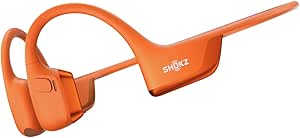 | Best Overall for Open-Ear Running | Fit: Open ear | Audio technology: Bone and air conduction | Battery life: Up to 12 hours | VIEW LATEST PRICE | See Our Full Breakdown |
| JBL Endurance Pace Open-Ear Sport Headphones, Black/Gray |  | Best for Wet and Dusty Routes | Design: Open-ear headphones with memory-wire neckband | Frame material: Titanium memory metal | Ear hook material: Liquid silicone | VIEW LATEST PRICE | See Our Full Breakdown |
| Shokz OpenRun Bone Conduction Open-Ear Bluetooth Sport Headphones |  | Best for Lightweight, Simple Running | Model: OpenRun (S803) | Audio technology: 8th-generation bone conduction | Battery life: Up to 8 hours | VIEW LATEST PRICE | See Our Full Breakdown |
| JBL Endurance Peak 4 Wireless Noise-Cancelling Sport Earbuds, Black/Grey |  | Best for Noise Control and Secure Fit | Fit: TwistLock design with liquid silicone ear hooks and memory wire | Water and dust resistance: IP68 | Driver size: 10 mm dynamic driver | VIEW LATEST PRICE | See Our Full Breakdown |
| Beats Powerbeats Pro 2 Wireless Earbuds with Heart Rate Monitoring, 45-Hour Battery, and Qi Charging Case – Quick Sand |  | Best for Training Data and Apple-Android Flexibility | Battery life: Up to 45 hours with charging case | Fast Fuel charging: 5-minute charge provides up to 1.5 hours of playback | Water resistance: IPX4 | VIEW LATEST PRICE | See Our Full Breakdown |
| Shokz OpenFit Pro Open-Ear Earbuds with Noise Reduction and Dolby Atmos |  | Best Premium Open-Ear Pick | Model: OpenFit Pro (T010) | Driver: 11 × 20 mm dual-diaphragm | Connectivity: Bluetooth 6.1 with MultiPoint pairing | VIEW LATEST PRICE | See Our Full Breakdown |
| Shokz OpenFit Air 2 Open-Ear Earbuds |  | Best Lightweight Fit | Model: OpenFit Air 2 (T520) | Earbud weight: 7.2 g | Frame material: 0.75 mm Ni-Ti alloy | VIEW LATEST PRICE | See Our Full Breakdown |
| Raycon Bone Conduction Open-Ear Headphones, Gray |  | Best for Wet-Weather Training | Model: RBB842-24E | Audio technology: Bone conduction | Ear placement: Open ear | VIEW LATEST PRICE | See Our Full Breakdown |
| Paekole Ultra Open Ear Headphones with Bluetooth 6.1 |  | Best for Long Battery Capacity | Model: KF-1403 | Earbud weight: 0.18 oz (5.1 g) per earbud | Driver: 14.2 mm dynamic | VIEW LATEST PRICE | See Our Full Breakdown |
| Soundcore Sport X20 Noise-Cancelling Sports Earbuds (Black) | 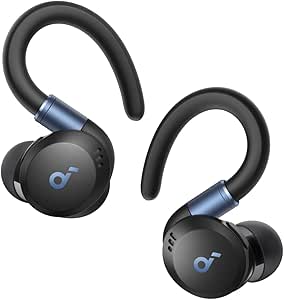 | Best for Noise Isolation and Tough Workouts | Model: Sport X20 | Connectivity: Bluetooth 5.3 | Driver: 11 mm dynamic | VIEW LATEST PRICE | See Our Full Breakdown |
| HAOYUYAN BX17 Wireless Sports Earbuds with Ear Hooks | 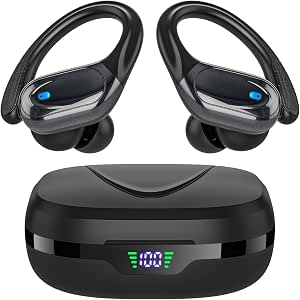 | Best for Long-Workout Battery Life | Fit: In-ear with ear hooks | Driver size: 14.3 mm | Playback: Up to 15 hours per charge; up to 80 hours with charging case | VIEW LATEST PRICE | See Our Full Breakdown |
| SHOKZ OpenRun Air 2 Bone Conduction Open-Ear Bluetooth Headphones, Black |  | Best for Lightweight Open-Ear Running | Audio technology: Bone conduction | Weight: 26.4 g | Fit: Open-ear with memory-alloy earhooks | VIEW LATEST PRICE | See Our Full Breakdown |
| SHOKZ OpenFit 2+ Open-Ear Earbuds with Dolby Audio and Wireless Charging, Grey | 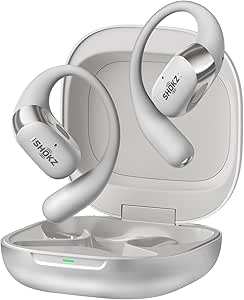 | Best Premium Open-Ear Sound | Design: Open-ear, hook-style | Weight: 9.4 g | Drivers: 17.3 mm low-frequency driver and independent tweeter | VIEW LATEST PRICE | See Our Full Breakdown |
| SHOKZ OpenDots 2 Open-Ear Clip-On Earbuds, Pearl White |  | Best Compact Clip-On Fit | Design: Open-ear clip-on | Weight per earbud: 6.4 g | Drivers: Dual 11.8 mm | VIEW LATEST PRICE | See Our Full Breakdown |
| Soundcore V20i Open-Ear True Wireless Earbuds |  | Best Adjustable-Fit Value | Design: Open-ear, true wireless | Driver size: 16 mm titanium-coated | Fit: Adjustable ear hooks with four positions | VIEW LATEST PRICE | See Our Full Breakdown |
| running headphone | Water resistance | Battery life | Warranty |
|---|---|---|---|
| SHOKZ OpenRun Pro 2 Open-Ear B | IP55 | Up to 12 hours | 2 years |
| JBL Endurance Pace Open-Ear Sp | — | — | — |
| Shokz OpenRun Bone Conduction | IP67 | Up to 8 hours | 2 years |
| JBL Endurance Peak 4 Wireless | — | — | — |
| Beats Powerbeats Pro 2 Wireles | IPX4 | Up to 45 hours with charging case | — |
| Shokz OpenFit Pro Open-Ear Ear | IP55 | Up to 12 hours per charge with noise reduction off; 6 hours with it on; up to 50 hours total | 2 years |
| Shokz OpenFit Air 2 Open-Ear E | IP55 | Up to 8 hours per charge; up to 36 hours with case | 2 years |
| Raycon Bone Conduction Open-Ea | IP68 | — | 1 year |
| Paekole Ultra Open Ear Headpho | IP55 | Up to 10 hours per charge; up to 80 hours total with case | — |
| Soundcore Sport X20 Noise-Canc | IP68 | Up to 12 hours per charge; up to 48 hours total with case | 18 months |
| HAOYUYAN BX17 Wireless Sports | IPX7 | — | 90 days |
| SHOKZ OpenRun Air 2 Bone Condu | IP67; not for swimming | Up to 10 hours | 2 years |
| SHOKZ OpenFit 2+ Open-Ear Earb | IP55 | — | — |
| SHOKZ OpenDots 2 Open-Ear Clip | IP57 | Up to 10 hours per charge; up to 40 hours with case | — |
| Soundcore V20i Open-Ear True W | IP55 | Up to 8 hours per charge; up to 36 hours total | — |
More Details on Our Top Picks
SHOKZ OpenRun Pro 2 Open-Ear Bluetooth Sport Headphones, Orange
The OpenRun Pro 2 is my strongest all-around pick for runners who want to hear traffic and people around them without giving up extended listening time. Its bone and air conduction drivers aim to balance clear highs with fuller bass than a bone-conduction-only design, while the memory-wire frame and ear hooks are built to stay put as your pace changes. Its 12-hour battery also outlasts the Shokz OpenRun’s 8 hours, making it a better fit for long training blocks between charges.
The tradeoff is inherent to the open-ear approach: nearby noise remains audible, and it won’t deliver the isolation of the JBL Endurance Peak 4 or Beats Powerbeats Pro 2. The IP55 rating is also less protective against water and dust than the JBL models’ IP68 rating. I’d choose it for balanced outdoor running, not for blocking a noisy gym or running in especially wet conditions.
Pros:- Open-ear fit helps keep surrounding sounds audible during outdoor runs
- Up to 12 hours of playback exceeds the Shokz OpenRun’s 8-hour battery life
- Bone and air conduction drivers pair open-ear listening with a fuller sound approach
- Memory-wire frame and ergonomic ear hooks are designed for a secure workout fit
Cons:- Open-ear construction provides less isolation than sealed earbuds such as JBL Endurance Peak 4
- IP55 protection is below the IP68 ratings of the JBL Endurance Pace and Endurance Peak 4
- Charging time is not specified
Best for: Outdoor runners who want an awareness-friendly fit, longer battery life, and more audio depth than a bone-conduction-only option
Not ideal for: Runners who need strong noise isolation or the higher water-and-dust protection offered by the JBL Endurance Pace and Endurance Peak 4
- Fit:Open ear
- Audio technology:Bone and air conduction
- Battery life:Up to 12 hours
- Water resistance:IP55
- Microphones:Dual wind-resistant microphones with AI noise reduction
- Bluetooth:Wireless
- Frame material:Nickel-titanium alloy memory wire
- Warranty:2 years
Our verdict“Choose the OpenRun Pro 2 if you want a secure, open-ear running headset with longer battery life than the Shokz OpenRun and can accept limited isolation.”
JBL Endurance Pace Open-Ear Sport Headphones, Black/Gray
The JBL Endurance Pace suits runners who put weather protection ahead of maximum battery life. Its IP68 water and dust resistance is a stronger match for muddy paths, rain, and dusty routes than the SHOKZ OpenRun Pro 2’s IP55 rating. The open-ear design keeps the ear canals uncovered, and its memory-wire neckband with silicone ear hooks is intended to hold steady without sealing the ears. For quick turnarounds, a 10-minute charge adds up to four hours of playback—more than the Shokz OpenRun’s quick-charge yield.
At up to 10 hours, its stated battery life falls short of the OpenRun Pro 2’s 12 hours. It also lacks the sealed, noise-reducing listening option of the JBL Endurance Peak 4, so busy gyms may still sound busy. The charging cable is not included. I’d favor this model for exposed outdoor training, while runners who want longer stretches between charges may prefer the SHOKZ.
Pros:- IP68 water and dust resistance suits demanding outdoor workout conditions
- Open-ear design leaves surrounding sounds audible
- A 10-minute charge provides up to four hours of playback
- Multipoint connectivity supports connection to more than one device
Cons:- Up to 10 hours of playback is less than the SHOKZ OpenRun Pro 2’s 12 hours
- Open-ear fit offers little isolation from traffic, gym noise, or wind
- Charging cable is not included
Best for: Runners training in rain, sweat, or dusty conditions who want open-ear awareness and a useful quick-charge feature
Not ideal for: Long-distance runners who want the longest battery life in this open-ear group, or gym users seeking noise isolation
- Design:Open-ear headphones with memory-wire neckband
- Frame material:Titanium memory metal
- Ear hook material:Liquid silicone
- Water and dust resistance:IP68
- Playback time:Up to 10 hours
- Quick charge:10 minutes for up to 4 hours of playback
- Microphones:2 beamforming microphones
- Connectivity features:Multipoint, Google Fast Pair, Microsoft Swift Pair, Google Audio Switch
Our verdict“Pick the Endurance Pace for weather-exposed runs and fast top-ups, but choose the SHOKZ OpenRun Pro 2 if longer battery life matters more.”
Shokz OpenRun Bone Conduction Open-Ear Bluetooth Sport Headphones
The Shokz OpenRun is a straightforward choice for runners who want an unobstructed ear canal and a lightweight wraparound fit without the added audio approach of the OpenRun Pro 2. Its bone-conduction design leaves ears open to surrounding sounds, while an IP67 rating offers more water and dust protection than the Pro 2’s IP55. A 10-minute quick charge adds up to 1.5 hours, which can help when a run is approaching and the headset is low.
The main compromise is endurance: its 8-hour battery is shorter than both the Pro 2’s 12 hours and the JBL Endurance Pace’s 10. Bone conduction may also sound less full than the Pro 2’s combination of bone and air conduction, and the product is not suited to swimming despite its waterproof rating. I’d pick it for uncomplicated outdoor runs and sweat-heavy sessions, not for richer sound or all-day listening.
Pros:- Open-ear bone conduction keeps ear canals uncovered for environmental awareness
- IP67 water resistance is higher than the SHOKZ OpenRun Pro 2’s IP55 rating
- Lightweight wraparound frame is designed to stay secure during movement
- A 10-minute charge provides up to 1.5 hours of playback
Cons:- Up to 8 hours of battery life trails the OpenRun Pro 2 and JBL Endurance Pace
- Bone-conduction audio may sound less full than the Pro 2’s bone-and-air setup
- Waterproof rating does not make it suitable for swimming
Best for: Runners who want a light, wraparound bone-conduction headset for outdoor training and sweat-heavy workouts
Not ideal for: Runners who need longer battery life, fuller sound, or headphones designed for swimming
- Model:OpenRun (S803)
- Audio technology:8th-generation bone conduction
- Battery life:Up to 8 hours
- Water resistance:IP67
- Quick charge:10 minutes for up to 1.5 hours of playback
- Connectivity:Bluetooth
- Weight:Featherweight
- Warranty:2 years
Our verdict“Choose the OpenRun for lightweight, awareness-focused runs and strong water resistance, but opt for the OpenRun Pro 2 for longer battery life and a fuller sound design.”
JBL Endurance Peak 4 Wireless Noise-Cancelling Sport Earbuds, Black/Grey
For runners who prefer a sealed earbud and the option to reduce distractions, the JBL Endurance Peak 4 is the most focused match here. Unlike the open-ear SHOKZ OpenRun Pro 2 and JBL Endurance Pace, it combines adaptive noise cancelling with Smart Ambient, letting buyers choose between reducing outside sound and keeping more of it audible. Its TwistLock fit, memory-wire ear hooks, and IP68 protection are tailored to active use, while six microphones support calls.
Battery life is a strength on paper: up to 48 hours total with the case when ANC is off, though that drops to 32 hours total with ANC on. The earbuds themselves last up to 12 hours with ANC off, matching the OpenRun Pro 2’s stated span but without its open-ear awareness. I’d skip this model if hearing surroundings is the priority; sealed earbuds also won’t suit every runner’s fit preference.
Pros:- Adaptive Noise Cancelling and Smart Ambient offer different listening approaches
- IP68 water and dust protection suits demanding workout conditions
- TwistLock design and memory-wire ear hooks are built for a secure fit
- Up to 48 hours of total playback with the case when ANC is off
Cons:- ANC-on playback is lower, at up to 8 hours from the earbuds plus 24 hours from the case
- Sealed fit does not provide the same natural awareness as the SHOKZ OpenRun Pro 2
- Charging cable is not included
Best for: Runners who want a stable ear-hook fit, adjustable noise control, and strong water and dust protection
Not ideal for: Road runners who want their ears fully open to traffic and nearby sounds, or anyone who dislikes sealed earbuds
- Fit:TwistLock design with liquid silicone ear hooks and memory wire
- Water and dust resistance:IP68
- Driver size:10 mm dynamic driver
- Playback time:Up to 12 hours from earbuds; up to 48 hours total with case when ANC is off
- ANC-on playback:Up to 8 hours from earbuds plus 24 hours from case
- Charging:10-minute charge provides up to 4 hours of playback
- Microphones:6 total; 3 per earbud
- Connectivity:Bluetooth multipoint, Google Fast Pair, Google Audio Switch
Our verdict“Choose the Endurance Peak 4 if you want sealed, secure-fitting earbuds with noise control, but favor an open-ear model for awareness-focused road running.”
Beats Powerbeats Pro 2 Wireless Earbuds with Heart Rate Monitoring, 45-Hour Battery, and Qi Charging Case – Quick Sand
The Beats Powerbeats Pro 2 stands apart for runners who want workout tracking built into their headphones: its heart rate monitoring joins active noise cancellation and a Transparency mode in one set. Nickel-titanium ear hooks are intended to keep the earbuds secure, and five ear-tip sizes give buyers more options for dialing in a sealed fit. That makes it a different proposition from the open-ear SHOKZ OpenRun Pro 2, which prioritizes hearing the surroundings rather than isolating the listener. The Qi case provides up to 45 hours of total listening time.
Its IPX4 rating is for sweat and water exposure, not submersion, so it offers less water-and-dust protection than either JBL model’s IP68 rating. It also gives up the OpenRun Pro 2’s open-ear awareness, and the USB-C charging cable is sold separately. I’d choose Beats for heart-rate features and a customizable sealed fit, not for wet, dusty routes or riders who prefer environmental sound.
Pros:- Built-in heart-rate monitoring adds workout data without a separate sensor
- Active noise cancellation and Transparency mode provide listening choices
- Up to 45 hours of listening time with the Qi charging case
- Five ear-tip sizes and flexible ear hooks support fit adjustment
Cons:- IPX4 protection is below the JBL Endurance Pace and Endurance Peak 4’s IP68 ratings
- Sealed earbuds do not match the open-ear awareness of the SHOKZ models
- USB-C charging cable is sold separately
Best for: Runners who want built-in heart-rate monitoring, a secure ear-hook design, and compatibility with Apple or Android devices
Not ideal for: Runners who prioritize open-ear awareness, IP68 protection, or a cable included for charging
- Battery life:Up to 45 hours with charging case
- Fast Fuel charging:5-minute charge provides up to 1.5 hours of playback
- Water resistance:IPX4
- Charging case:Wireless Qi charging
- Heart rate monitoring:Built-in sensors
- Microphones:6 total
- Ear-tip sizes:5
- Cable:USB-C to USB-C cable sold separately
Our verdict“Pick the Powerbeats Pro 2 if heart-rate monitoring and a sealed, adjustable fit matter most, but choose an open-ear or IP68-rated option for awareness or harsher conditions.”
Shokz OpenFit Pro Open-Ear Earbuds with Noise Reduction and Dolby Atmos
The OpenFit Pro is the feature-rich choice here for runners who want to hear their surroundings without giving up a more immersive listening mode. Its open-ear noise reduction and Dolby Atmos with head tracking offer a different experience from the simpler, awareness-first Shokz OpenFit Air 2, while flexible nickel-titanium hooks help keep the buds secure on the move. Multipoint pairing and wireless charging also suit runners who use the same set for calls and everyday listening. The main catch is runtime: the advertised 50 hours is total case capacity, and a single charge falls to 6 hours with noise reduction on, compared with 12 hours with it off. I’d also account for possible sound leakage; this isn’t a private or isolating option for quiet spaces.
Pros:- Open-ear design keeps environmental sound accessible while adding a noise-reduction mode.
- Dolby Atmos optimization with head tracking offers spatial audio beyond the simpler OpenFit Air 2.
- Flexible nickel-titanium hooks and soft silicone help maintain a comfortable, secure fit.
- Wireless and fast charging add flexibility, with up to 50 hours of total battery life.
Cons:- Noise reduction cuts single-charge battery life to 6 hours.
- Open-ear listening may leak sound and does not isolate the wearer from noisy surroundings.
- Physical buttons may feel less intuitive to runners who prefer touch controls.
Best for: Runners who want an open-ear fit, spatial audio features, multipoint pairing, and a wireless-charging case for daily use.
Not ideal for: Runners who need long single-session playback with noise reduction enabled, strong sound isolation, or minimal sound leakage.
- Model:OpenFit Pro (T010)
- Driver:11 × 20 mm dual-diaphragm
- Connectivity:Bluetooth 6.1 with MultiPoint pairing
- Battery life:Up to 12 hours per charge with noise reduction off; 6 hours with it on; up to 50 hours total
- Charging:USB-C, wireless charging, and 10-minute fast charge for up to 4 hours of playback
- Water resistance:IP55
- Weight:99.32 g with case
- Warranty:2 years
Our verdict“Choose the OpenFit Pro if you want premium open-ear features and flexible charging, but skip it if noise reduction must last through long runs.”
Shokz OpenFit Air 2 Open-Ear Earbuds
For runners who put comfort and a steady fit ahead of extra audio modes, the OpenFit Air 2 is the simpler Shokz choice. Each 7.2 g earbud uses a flexible Ni-Ti alloy hook, keeping the ear canal open while helping the buds stay in place through workouts. Compared with the more feature-packed Shokz OpenFit Pro, it gives up Dolby Atmos and noise reduction, but its listed 8-hour earbud runtime avoids the Pro’s steep drop to 6 hours when that mode is active. You still get up to 36 hours with the case and a quick charge for a short top-up. Its open design favors awareness over isolation, and IP55 is for sweat and water resistance—not swimming.
Pros:- Light 7.2 g earbud design suits extended wear.
- Flexible Ni-Ti alloy hooks help provide a secure fit during workouts.
- Open-ear architecture lets runners remain more aware of nearby activity.
- Up to 36 hours total playback and a 10-minute charge for 3 hours of playback.
Cons:- Open-ear fit cannot isolate the listener in loud surroundings.
- IP55 water resistance is not a swimming rating.
- Lacks the OpenFit Pro’s Dolby Atmos and noise-reduction features.
Best for: Runners who want lightweight open-ear earbuds with flexible hooks for regular workouts and all-day wear.
Not ideal for: Swimmers, or runners who want noise isolation, richer spatial-audio features, or protection against submersion.
- Model:OpenFit Air 2 (T520)
- Earbud weight:7.2 g
- Frame material:0.75 mm Ni-Ti alloy
- Battery life:Up to 8 hours per charge; up to 36 hours with case
- Fast charging:10-minute charge for up to 3 hours of playback
- Water resistance:IP55
- Controls:Pressure-sensitive buttons
- Warranty:2 years
Our verdict“Pick the OpenFit Air 2 for lightweight, awareness-focused runs; choose the OpenFit Pro if you want more audio features.”
Raycon Bone Conduction Open-Ear Headphones, Gray
The Raycon’s clearest running advantage is its IP68 water resistance, which gives it a stronger stated protection rating than the IP55 Shokz OpenFit Air 2 and Paekole Ultra Open Ear Headphones. Its bone-conduction approach also leaves the ears open, making it a fit for runners who want to stay alert to nearby traffic or trail activity. That awareness comes with a familiar open-ear compromise: surrounding noise remains audible, so music and calls may be harder to follow in busy areas. The product data lists a 2-hour charge time and magnetic charging, but doesn’t provide a playback-time figure, making it harder to judge for long training days. I’d favor it for weather exposure over the more feature-detailed Shokz picks, not for noisy routes.
Pros:- IP68 rating offers a higher stated water-resistance level than the IP55 open-ear alternatives in this batch.
- Bone-conduction audio leaves the ears open for awareness of surroundings.
- Adjustable, lightweight frame supports an adaptable fit.
- Built-in microphone supports calls during everyday activity.
Cons:- Open-ear design does not block environmental noise, which can mask audio in busy areas.
- No playback-time figure is provided, making long-run battery planning difficult.
- The listed 2-hour charging time and magnetic cable offer less charging flexibility than fast-charge models.
Best for: Runners who train in rain or sweat heavily and prioritize a highly water-resistant, open-ear design.
Not ideal for: Runners who need a stated long battery runtime, strong noise isolation, or clear listening in loud urban settings.
- Model:RBB842-24E
- Audio technology:Bone conduction
- Ear placement:Open ear
- Water resistance:IP68
- Weight:5.6 oz
- Charging:Magnetic cable
- Charge time:2 hours
- Warranty:1 year
Our verdict“Choose the Raycon for wet-weather training and open-ear awareness, but look elsewhere if you need dependable long-session battery figures.”
Paekole Ultra Open Ear Headphones with Bluetooth 6.1
The Paekole stands out on listed case capacity: up to 80 hours total is more than the 36 hours claimed for the Shokz OpenFit Air 2 and the 50 hours for the Shokz OpenFit Pro. Its 10-hour per-charge figure also makes it worth a look for runners who use open-ear headphones throughout the day, not just for a workout. Lightweight 5.1 g earbuds and flexible hooks aim to keep the fit comfortable, while IP55 suits sweat and splashes. This is a straightforward air-conduction design, though: unlike the OpenFit Pro, it has no noise-reduction feature, and the open fit may leak sound in quiet spaces. The long total runtime depends on the case, so I’d choose it for charging intervals, not isolation or privacy.
Pros:- Up to 80 hours total playback is the highest stated case capacity among these five products.
- Each 5.1 g earbud is lightweight, with flexible hooks for a stable fit.
- Open-ear design helps preserve awareness while running outdoors.
- IP55 rating is suited to sweat and splashes.
Cons:- No active noise cancellation or noise-reduction mode is listed.
- Open-ear sound may leak in quiet surroundings and offers little isolation.
- IP55 does not make the earbuds suitable for swimming or submersion.
Best for: Runners and active commuters who want lightweight open-ear earbuds and extended total playback between case charges.
Not ideal for: Listeners who need noise cancellation, discreet audio in quiet environments, or a swimming-ready water-resistance rating.
- Model:KF-1403
- Earbud weight:0.18 oz (5.1 g) per earbud
- Driver:14.2 mm dynamic
- Battery life:Up to 10 hours per charge; up to 80 hours total with case
- Bluetooth:Version 6.1
- Bluetooth range:15 meters
- Water resistance:IP55
- Controls:Touch control
Our verdict“Choose the Paekole if long total case runtime matters more than noise control, privacy, or premium audio features.”
Soundcore Sport X20 Noise-Cancelling Sports Earbuds (Black)
Unlike the open-ear Shokz and Paekole options, the Soundcore Sport X20 uses active noise cancellation and an in-ear fit, making it the better match for treadmill sessions or gyms where ambient noise can drown out audio. Its adjustable hooks rotate 30 degrees and extend 4 mm, giving runners more ways to tune the fit than the fixed-style open-ear designs of the Shokz OpenFit Air 2. The tradeoff is less awareness of traffic and other surroundings, so I wouldn’t make it my default for road running. IP68 protection and up to 48 hours total battery life add practical workout durability, but full feature access depends on the companion app. Touch controls may also be awkward to use mid-stride.
Pros:- Active noise cancellation helps reduce gym and treadmill distractions.
- Rotating, extendable ear hooks allow a more adjustable workout fit.
- IP68 rating protects against water, sweat, and dust.
- Up to 48 hours of total playback with the case.
Cons:- In-ear noise cancellation reduces awareness of nearby traffic and people.
- Full feature access and firmware updates require the companion app.
- Touch controls may be imprecise during intense movement.
Best for: Runners who mainly train indoors or on controlled routes and want noise cancellation, secure hooks, and strong water and dust protection.
Not ideal for: Road and trail runners who need open-ear awareness, or buyers who prefer physical controls and app-independent setup.
- Model:Sport X20
- Connectivity:Bluetooth 5.3
- Driver:11 mm dynamic
- Battery life:Up to 12 hours per charge; up to 48 hours total with case
- Charging time:3 hours
- Water resistance:IP68
- Fit adjustment:Ear hooks rotate 30 degrees and extend 4 mm
- Warranty:18 months
Our verdict“Choose the Sport X20 for noisy indoor workouts and a customizable, rugged fit, but favor open-ear models for awareness on roads.”
HAOYUYAN BX17 Wireless Sports Earbuds with Ear Hooks
The HAOYUYAN BX17 is a practical pick for runners who want a secure, sealed fit and fewer stops to recharge. Its soft ear hooks and three ear-tip sizes offer more fit adjustment than the open-ear SHOKZ OpenRun Air 2, while the IPX7 rating suits sweaty sessions and wet-weather runs. Battery claims need context: each charge provides up to 15 hours, and the case brings the stated total to 80 hours, so that figure is not a single-charge runtime. Button controls can also be easier to operate mid-run than touch controls when fingers are sweaty. The tradeoff is a less established feature set than premium SHOKZ models, plus a 90-day warranty that is notably shorter than the two-year coverage listed for several alternatives.
Pros:- Soft hooks and three ear-tip sizes allow fit adjustments for different ears.
- IPX7 water resistance is suited to sweat and splashes.
- Case provides up to 80 hours of stated total playback and displays battery levels.
- Physical button controls and automatic reconnection simplify use during workouts.
Cons:- The 80-hour figure includes case recharges; a single charge lasts up to 15 hours.
- The 90-day warranty is shorter than the two-year coverage listed for SHOKZ models here.
Best for: Runners who prefer in-ear sound isolation, want adjustable hooks, and value long combined playback between charging opportunities.
Not ideal for: Runners who want open-ear awareness, longer warranty coverage, or a long single-charge battery rather than a case-dependent total.
- Fit:In-ear with ear hooks
- Driver size:14.3 mm
- Playback:Up to 15 hours per charge; up to 80 hours with charging case
- Water resistance:IPX7
- Charging port:USB Type-C
- Noise control:Environmental noise cancellation for calls
- Controls:Button controls
- Warranty:90 days
Our verdict“Choose the BX17 if you want a secure in-ear fit and high combined battery capacity, but skip it if open-ear awareness or stronger warranty coverage matters more.”
SHOKZ OpenRun Air 2 Bone Conduction Open-Ear Bluetooth Headphones, Black
The SHOKZ OpenRun Air 2 suits runners who want to hear nearby traffic and people without earbuds sealing the ear canal. At 26.4 g, its lightweight frame and memory-alloy earhooks are designed to stay in place through movement, while bone conduction keeps the design distinct from the clip-on SHOKZ OpenDots 2. The OpenDots 2 offers a longer stated total with its case and Qi charging; the OpenRun Air 2 instead keeps the gear minimal, with up to 10 hours of playback and a five-minute quick charge for up to two hours of use. IP67 protection adds weather resilience, but this model is not for swimming, and the USB-C charging cable is not included. Open-ear listening also gives up the isolation of sealed options such as the HAOYUYAN BX17.
Pros:- Open-ear bone conduction helps preserve awareness of surrounding sounds.
- Light 26.4 g frame and memory-alloy earhooks are designed for a secure exercise fit.
- IP67 water resistance suits sweaty workouts and wet conditions, excluding swimming.
- Five-minute quick charge provides up to two hours of use.
Cons:- Not suitable for swimming or underwater activities.
- USB Type-C charging cable is not included.
- Open-ear audio offers less isolation than sealed in-ear options such as the HAOYUYAN BX17.
Best for: Road and trail runners who prioritize awareness of their surroundings and want a lightweight, secure head-worn fit.
Not ideal for: Swimmers, runners seeking strong noise isolation, or buyers who expect a charging cable in the box.
- Audio technology:Bone conduction
- Weight:26.4 g
- Fit:Open-ear with memory-alloy earhooks
- Battery life:Up to 10 hours
- Quick charge:5 minutes for up to 2 hours of use
- Water resistance:IP67; not for swimming
- Bluetooth:6.0
- Warranty:2 years
Our verdict“Pick the OpenRun Air 2 for lightweight, awareness-first runs, but choose sealed earbuds if blocking outside noise is your priority.”
SHOKZ OpenFit 2+ Open-Ear Earbuds with Dolby Audio and Wireless Charging, Grey
The SHOKZ OpenFit 2+ is the premium pick here for runners who want open-ear awareness without settling for a bare-bones sound setup. Its Dolby Audio, OpenBass 2.0, low-frequency driver, and separate tweeter give it a more elaborate audio package than the bone-conduction OpenRun Air 2. The hook-style fit uses soft silicone contact points and nickel-titanium supports, while IP55 protection is appropriate for workouts rather than swimming. Up to 11 hours per earbud charge and 48 hours with the case make it better suited to frequent use than the Soundcore V20i’s eight-hour single-charge figure. Wireless charging and multipoint pairing add everyday convenience, but the open design cannot isolate sound like the HAOYUYAN BX17, and the case total should not be mistaken for one-charge runtime.
Pros:- Dolby Audio, OpenBass 2.0, and dual-driver arrangement add sound-shaping options.
- Open-ear fit helps keep surrounding sounds audible during runs.
- Up to 11 hours per charge and 48 hours with the case support extended use.
- Wireless charging and multipoint pairing add practical everyday convenience.
Cons:- Open-ear design provides less sound isolation than the sealed HAOYUYAN BX17.
- IP55 protection is not intended for swimming or underwater use.
- The 48-hour figure includes the charging case; earbuds provide up to 11 hours per charge.
Best for: Runners who want open-ear awareness with richer audio features, wireless case charging, and connections to two devices.
Not ideal for: Swimmers, runners who need noise isolation, or buyers who want the lightest possible per-earbud design.
- Design:Open-ear, hook-style
- Weight:9.4 g
- Drivers:17.3 mm low-frequency driver and independent tweeter
- Audio features:Dolby Audio, Shokz OpenBass 2.0, DirectPitch 2.0
- Playback:Up to 11 hours per charge; up to 48 hours with case
- Water resistance:IP55
- Connectivity:Multipoint pairing for two devices
- Charging:Wireless charging; 10-minute quick charge provides up to 2 hours
Our verdict“Choose the OpenFit 2+ if you want feature-rich open-ear audio and wireless charging, but choose sealed earbuds for isolation or a swimming-ready design.”
SHOKZ OpenDots 2 Open-Ear Clip-On Earbuds, Pearl White
The SHOKZ OpenDots 2 is the compact alternative for runners who prefer a clip-on earbud over the OpenRun Air 2’s band-style bone-conduction frame. Each earbud weighs 6.4 g, and its contoured silicone with a flexible frame is designed to hold position while leaving the ear open to surrounding sounds. Dual 11.8 mm drivers and Dolby Audio make it a different proposition from the simpler open-ear layout of the Soundcore V20i, while three microphones support calls. Its IP57 rating and Qi wireless charging add useful workout and charging flexibility. Battery life reaches up to 10 hours per charge or 40 with the case, but the larger total depends on carrying and recharging from that case. As with other open-ear picks, it offers less isolation than the sealed HAOYUYAN BX17.
Pros:- Light 6.4 g per-earbud design uses a flexible clip-on frame.
- Open-ear fit maintains awareness of nearby sounds.
- IP57 water resistance is suited to workouts and outdoor use.
- Qi wireless charging and up to 40 hours of stated total playback with the case.
Cons:- Open-ear construction provides less isolation than the sealed HAOYUYAN BX17.
- The 40-hour total depends on recharging from the case; each charge lasts up to 10 hours.
- Clip-on fit may not suit runners who prefer earhooks or a band-style frame.
Best for: Runners who want a light, compact open-ear clip-on fit and prefer a charging case that supports Qi wireless charging.
Not ideal for: Runners who need noise isolation, dislike clip-on earbud designs, or want the full stated battery total without using a case.
- Design:Open-ear clip-on
- Weight per earbud:6.4 g
- Drivers:Dual 11.8 mm
- Battery life:Up to 10 hours per charge; up to 40 hours with case
- Water resistance:IP57
- Wireless charging:Qi-certified
- Bluetooth:6.1
- Pairing:Multipoint
Our verdict“Pick the OpenDots 2 for a lightweight clip-on design with open-ear awareness, but skip it if you want a sealed fit or dislike carrying a case.”
Soundcore V20i Open-Ear True Wireless Earbuds
The Soundcore V20i stands out for runners who want adjustable open-ear hooks and app-based sound controls without moving to SHOKZ’s more elaborate OpenFit 2+ feature set. Its hooks offer four positions, giving buyers more fit tuning than a fixed clip-on design such as the SHOKZ OpenDots 2. The 16 mm titanium-coated drivers, BassUp, HearID, EQ modes, and Spatial Audio let listeners shape playback, while four AI-enhanced microphones support calls. Open-ear construction keeps surrounding sounds accessible, but it also means less isolation than the sealed HAOYUYAN BX17. Battery life is the main compromise: the earbuds provide up to eight hours per charge, below the OpenFit 2+’s 11 hours, and the 36-hour total depends on the case. IP55 protection is for workouts, not swimming.
Pros:- Four-position adjustable hooks allow fit customization.
- Open-ear design helps maintain awareness of surroundings.
- App includes HearID, EQ modes, Spatial Audio, and firmware updates.
- Multipoint connection and IP55 water resistance suit everyday workouts.
Cons:- Up to eight hours per charge is less than the SHOKZ OpenFit 2+’s stated 11 hours.
- Open-ear design provides less isolation than the sealed HAOYUYAN BX17.
- The 36-hour total playtime includes charging from the case.
Best for: Runners seeking open-ear awareness, a customizable hook fit, and app-based EQ options for everyday training.
Not ideal for: Runners who want stronger noise isolation, longer single-charge playback, or headphones for swimming.
- Design:Open-ear, true wireless
- Driver size:16 mm titanium-coated
- Fit:Adjustable ear hooks with four positions
- Battery life:Up to 8 hours per charge; up to 36 hours total
- Water resistance:IP55
- Bluetooth:5.4
- Microphones:Four with AI enhancement
- App features:HearID, EQ modes, Spatial Audio, firmware updates
Our verdict“Choose the V20i if adjustable hooks and app-based sound tuning matter more than isolation or longer single-charge playback.”
How We Picked
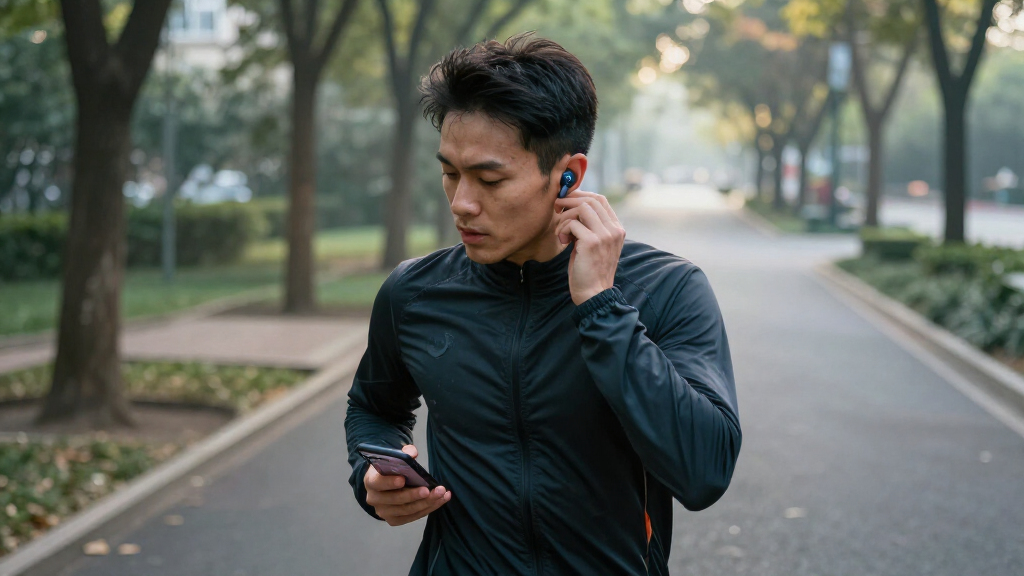
My selection process prioritized stability during motion above all else. I filtered out models that rely solely on friction fit, focusing instead on those with ear hooks, neckbands, or bone-conduction clips that remain stationary during high-intensity strides. Situational awareness was the second major filter; I separated open-ear and bone-conduction options from sealed in-ear models to help readers choose based on their environment (urban streets vs. trails).
I also evaluated durability and comfort by looking at sweat resistance ratings and material breathability. Products with lower IP ratings or bulky charging cases that interfere with pocket storage were excluded. Finally, I balanced the list across price points to ensure that value options were included alongside premium contenders, ensuring every budget has a reliable choice.
Factors to Consider When Choosing Best Running Headphones
Choosing the right audio gear for running is less about brand loyalty and more about matching the technology to your specific running environment and physiological needs. Here are the critical factors to weigh before making a purchase.Open-Ear vs. Sealed Isolation: The Safety Tradeoff
The most significant decision you will make is whether to block out the world or let it in. Open-ear and bone-conduction headphones leave your ear canal open, allowing you to hear traffic, other runners, and your own footsteps. This is critical for urban running where situational awareness prevents accidents. However, if you run in controlled environments like a gym or a quiet trail, sealed in-ear models with noise cancellation provide better sound quality and bass response because external noise does not compete with your music. Do not choose sealed models for city streets unless you run with a partner or in a highly controlled area.
Fit Mechanics: Hooks, Clips, and Bone Conduction
Fit determines whether you finish your run with music or with an earbud in your hand. Ear-hook designs offer the most secure fit for vigorous activity but can cause ear fatigue over long distances. Bone conduction units rest on the cheekbones, eliminating ear pressure but requiring a tight clamp force that may irritate glasses wearers. Clip-on open-ear buds are the newest trend, offering a lightweight alternative that avoids both ear canal insertion and heavy hooks, though they may shift during intense sprints. Match the fit type to your head shape and accessory usage, such as hats or sunglasses.
Durability: Understanding IP Ratings for Sweat and Rain
Do not assume all sport headphones are waterproof. The IP rating tells you exactly what they can withstand. An IPX4 rating means splash resistance, which handles light sweat but fails in heavy rain. IP55 or higher indicates protection against dust and stronger water jets, making them suitable for all-weather runners. I recommend looking for at least IPX7 if you run outdoors regularly, as this allows for temporary submersion and thorough cleaning after muddy runs. Ignoring this spec often leads to premature device failure within six months.
Battery Life vs. Charging Case Practicality
Manufacturer battery claims often assume low volume and no ANC. In reality, high-volume playback drains batteries faster. Look for models offering at least 8 hours of continuous play to cover marathon distances without mid-run charging. Equally important is the charging case size. A bulky case is impractical for runners who do not carry a pack. Compact cases that fit in a zippered pocket or waist pack are more valuable than extended case battery life. Prioritize the earbud battery life over the case capacity for running-specific use.
Connectivity Stability and Multipoint Pairing
Bluetooth interference in urban areas can cause audio dropouts. Bluetooth 5.3 or higher generally offers better stability and range. If you switch between a phone and a smartwatch, multipoint pairing is a convenience feature, but it can sometimes introduce latency or audio glitches. For pure running performance, I often recommend single-device connections to maintain the most stable audio stream. Check if the headphones support LDAC or aptX Adaptive if you prioritize high-fidelity audio, though these codecs may reduce battery life.
Frequently Asked Questions
Are bone conduction headphones bad for my hearing?
Bone conduction headphones bypass the eardrum and transmit sound through the cheekbones to the inner ear. This method generally reduces the risk of noise-induced hearing loss compared to in-ear buds because you are less likely to crank the volume to mask external noise. However, they can cause temporary discomfort or headaches if the clamp force is too tight or if used for excessive durations. They are safer for long-term hearing health but require proper fit adjustment to avoid skin irritation.Can I use running headphones for swimming?
Most running headphones, even those with high IP ratings, are not designed for swimming. Standard Bluetooth signals do not travel well through water, causing immediate connection loss. To swim with audio, you need headphones with built-in MP3 storage or specific bone conduction models rated IP68 that include a dedicated swim mode or offline file playback. Running-focused models usually lack the waterproofing depth and offline storage capabilities required for aquatic environments.Why do my earbuds fall out during running?
Earbuds typically fall out due to improper sizing of ear tips or a lack of mechanical anchoring. If you use standard silicone tips, try foam tips which expand to fit the ear canal more securely. For high-impact running, ear-hook designs or winged tips provide physical retention that friction alone cannot match. Additionally, sweating can reduce friction; wiping your ears and the buds before a run can improve grip.Is noise cancellation useful for runners?
Active Noise Cancellation (ANC) is useful for runners only in specific contexts, such as gym treadmills or flights to race locations. On roads, ANC is dangerous because it masks critical environmental sounds like cars or cyclists. Transparency modes are more valuable for outdoor runners, allowing you to hear surroundings while still enjoying music. If you choose ANC headphones for running, ensure they have a high-quality transparency mode that does not distort ambient sound.Do I need heart rate monitoring in my headphones?
Heart rate monitoring in headphones, like those in the Powerbeats Pro 2, offers convenience by combining devices, but accuracy can vary based on fit and movement. Wrist-based optical sensors are improving, but chest straps remain the gold standard for precision. If you are a casual runner, headphone-based HR monitoring is sufficient for general fitness tracking. Serious athletes may still prefer dedicated chest straps for interval training accuracy, viewing headphone monitoring as a secondary, convenient metric rather than a primary training tool.Conclusion
Choosing the best running headphones depends entirely on where and how you run. For the majority of road runners who need safety and comfort, the SHOKZ OpenRun Pro 2 is the best overall choice due to its excellent balance of audio quality and situational awareness. If you prioritize maximum security and advanced health metrics, the Beats Powerbeats Pro 2 is the best premium option, offering robust fit and integrated heart rate monitoring despite its higher price and sealed design. For those on a budget who still want reliable open-ear technology, the Raycon Bone Conduction or SHOKZ OpenRun Air 2 provide solid performance without the premium feature bloat. Beginners should start with the JBL Endurance Pace for its straightforward interface and affordable entry into open-ear tech. Evaluate your primary running environment first, then select the fit type that matches your head shape, and you will find the right pair to keep you motivated mile after mile.