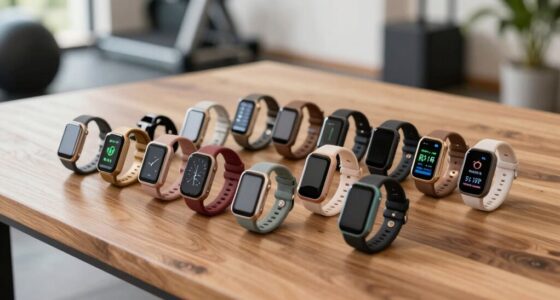
The best smart glasses depend on whether you want discreet AI and camera features or a large virtual screen. My best overall pick is the Ray-Ban Meta Gen 2 Wayfarer, which brings familiar styling together with hands-free capture and AI features. For a screen-first option, the XREAL One Pro stands out with a high-refresh display and native 3DoF, while the VITURE Pro 2 offers myopia adjustment and a 120Hz screen. The main tradeoffs are everyday wearability, display immersion, battery and phone compatibility, and how much you want to rely on an app or assistant. Read on for how the 15 options differ and which type of buyer each one suits.

Get the latest gadgets delivered free with Prime
- Fast, free delivery on millions of items
- Prime Video, Amazon Music and more included
- Member-only deals all year
Complete the kit



Key Takeaways
- The roundup divides into two distinct camps: Ray-Ban Meta, HTC VIVE Eagle, and camera-focused models emphasize wearable capture and AI, while XREAL and VITURE prioritize a personal virtual display.
- Ray-Ban Meta Gen 2 Wayfarer is the strongest all-rounder: it balances familiar eyewear styling with connected features, while the Headliner offers a different frame shape rather than a separate screen-first experience.
- Display capability is the clearest reason to choose an XR model: XREAL One Pro pairs a 171-inch virtual display with native 3DoF, whereas VITURE Pro 2 emphasizes 120Hz viewing and myopia adjustment.
- Specialized features matter more than headline camera figures: translation, teleprompter support, interchangeable lenses, and on-device storage address different needs, but buyers should check their app, language, and workflow requirements.
- Many similarly named AI glasses are not interchangeable: the two HTC VIVE Eagle entries differ by listed frame color and lens description, so verify the exact variant and included lenses before choosing.
| Meta Capri AI Glasses |  | Best Overall for Everyday AI | Camera: 12 MP | Video: 3K | Audio: Open-ear speakers with Bluetooth connectivity | VIEW LATEST PRICE | See Our Full Breakdown |
| Blackview AI Smart Glasses with 8MP Camera, Voice Assistant, and UV400 Lenses |  | Best for Lens Flexibility | Camera: 8 MP | Photo resolution: 4K | Video resolution: 1200P | VIEW LATEST PRICE | See Our Full Breakdown |
| XREAL a01+ AR Glasses with 147-Inch Virtual Display |  | Best for a Wearable Virtual Screen | Display size: 147 inches | Display type: Dual Micro-OLED | Resolution: 1920 x 1080 per eye | VIEW LATEST PRICE | See Our Full Breakdown |
| HTC Vive Eagle AI Glasses with Square Transition Lenses, Black |  | Best for Lightweight Transition Lenses | Operating system: Wear OS 3.0 | Camera: 12 MP ultra-wide; captures 3K photos and videos | Lens: ZEISS square transition lenses | VIEW LATEST PRICE | See Our Full Breakdown |
| Ray-Ban Meta Gen 2 Wayfarer AI Glasses |  | Best for Classic Wayfarer Style | Frame style: Wayfarer | Generation: 2nd generation | Battery life: Up to 8 hours with moderate use | VIEW LATEST PRICE | See Our Full Breakdown |
| Ray-Ban Meta Headliner (Gen 2) AI Glasses |  | Best Overall for Everyday Smart Glasses | Generation: 2nd generation | Battery life: Up to 8 hours with moderate use | Charging case: Up to 48 additional hours of charging | VIEW LATEST PRICE | See Our Full Breakdown |
| AI Smart Glasses with Camera, 4K Video, and 8MP Photos |  | Best for High-Resolution Capture | Camera: 8MP ultra-wide-angle lens | Video: 4K recording and stabilized 1080p recording | Photo resolution: 32MP as stated in the description | VIEW LATEST PRICE | See Our Full Breakdown |
| VITURE Pro 2 XR Glasses with 120Hz Display and Myopia Adjustment |  | Best for a Private Virtual Display | Display size: 146-inch virtual screen | Resolution: 1080p | Refresh rate: 120Hz | VIEW LATEST PRICE | See Our Full Breakdown |
| JIYINGDUO AI Smart Glasses with 4K Camera and Real-Time Translation |  | Best for Outdoor Recording | Camera: 4K video with EIS; 32MP photos | Battery capacity: 300 mAh | Battery life: Up to 10 hours of music playback; 7 days standby | VIEW LATEST PRICE | See Our Full Breakdown |
| SURPAO AI Smart Glasses with 8MP Camera and 16GB Storage |  | Best for Built-In Storage and Translation | Camera: 8 MP | Video: 720p at 30 fps | Storage: 16 GB | VIEW LATEST PRICE | See Our Full Breakdown |
| AMZISH AM08T AI Smart Glasses with 8MP Camera and Interchangeable Lenses |  | Best for Interchangeable Lenses | Camera: 8MP | Video: 1080p at 30 fps | AI translation: 139+ languages | VIEW LATEST PRICE | See Our Full Breakdown |
| RayNeo iO Smart Glasses with AI Assistant, Translation, Recording, and Teleprompter |  | Best for On-Lens Prompts | Weight: 33 g | Display brightness: Up to 1700 nits | Translation: 55 languages and 110 accents | VIEW LATEST PRICE | See Our Full Breakdown |
| HTC VIVE Eagle AI Glasses, Charcoal Black |  | Best for Privacy-Conscious Camera Use | Camera: 12MP ultra-wide | Capture resolution: 3K photos and videos | Weight: Starting at 48.5 g | VIEW LATEST PRICE | See Our Full Breakdown |
| Oakley Meta HSTN AI Glasses with Clear to Grey Transitions Lenses |  | Best for All-Day Camera Glasses | Camera: 12MP | Video: 3K Ultra HD, up to 3 minutes per session | Field of view: 100° | VIEW LATEST PRICE | See Our Full Breakdown |
| XREAL One Pro AR Glasses with X1 Chip, 171-Inch 120Hz FHD Display and Native 3DoF | 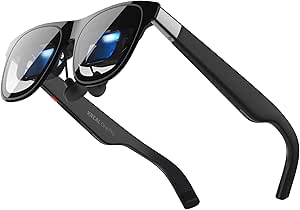 | Best for Immersive AR Display | Processor: XREAL X1 | Tracking: Native 3DoF; optional 6DoF with XREAL Eye | Motion-to-photon latency: 3 ms | VIEW LATEST PRICE | See Our Full Breakdown |
| smart glasse | Camera | Audio |
|---|---|---|
| Meta Capri AI Glasses | 12 MP | Open-ear speakers with Bluetooth connectivity |
| Blackview AI Smart Glasses wit | 8 MP | — |
| XREAL a01+ AR Glasses with 147 | — | Built-in directional speakers |
| HTC Vive Eagle AI Glasses with | 12 MP ultra-wide; captures 3K photos and videos | Dual open-ear speakers |
| Ray-Ban Meta Gen 2 Wayfarer AI | — | Open-ear speakers with Bluetooth connectivity |
| Ray-Ban Meta Headliner | — | Open-ear speakers with Bluetooth connectivity |
| AI Smart Glasses with Camera | 8MP ultra-wide-angle lens | — |
| VITURE Pro 2 XR Glasses with 1 | — | — |
| JIYINGDUO AI Smart Glasses wit | 4K video with EIS; 32MP photos | — |
| SURPAO AI Smart Glasses with 8 | 8 MP | Open-ear speakers |
| AMZISH AM08T AI Smart Glasses | 8MP | — |
| RayNeo iO Smart Glasses with A | — | — |
| HTC VIVE Eagle AI Glasses | 12MP ultra-wide | Dual open-ear speakers |
| Oakley Meta HSTN AI Glasses wi | 12MP | Open-ear audio with Bluetooth |
| XREAL One Pro AR Glasses with | — | — |
More Details on Our Top Picks
Meta Capri AI Glasses
I’d put the Meta Capri AI Glasses at the front of this group for buyers who want a practical mix of camera, audio, and AI rather than a screen on their face. The 12 MP camera, 3K video, calls, music, and real-time translation cover more everyday tasks than the display-focused XREAL a01+ AR Glasses, which are built around a large virtual screen instead. Open-ear speakers keep surrounding conversation audible, while the capture indicator gives people nearby a visible cue when recording is active.
The tradeoff is that Capri has no augmented reality display, so it cannot show a private floating screen. Its up-to-8-hour battery estimate is also based on moderate use, making the case useful for longer days. I’d choose it over the Ray-Ban Meta Gen 2 Wayfarer if the listed camera and translation package matters more than Wayfarer styling and its larger stated case reserve.
Pros:- 12 MP camera captures hands-free photos and 3K video.
- Open-ear Bluetooth audio supports calls and music while keeping ambient sounds audible.
- Meta AI features include real-time translation.
- Charging case provides up to 40 additional hours of charging.
Cons:- No augmented reality display for viewing information in the wearer’s field of vision.
- Up-to-8-hour battery estimate applies to moderate use, and heavier capture or AI use may reduce runtime.
Best for: People who want one pair of everyday glasses for hands-free photos, calls, open-ear audio, and AI translation without needing a visual display.
Not ideal for: Buyers who want directions, video, or other information projected into their view, or who need a guaranteed full day of heavy camera and AI use without recharging.
- Camera:12 MP
- Video:3K
- Audio:Open-ear speakers with Bluetooth connectivity
- Battery life:Up to 8 hours with moderate use
- Charging case:Up to 40 additional hours of charging
- Privacy indicator:Light indicates when capturing
- Display:No augmented reality display
Our verdict“Choose Capri for a balanced camera-and-AI everyday pair; choose the XREAL a01+ instead if a large virtual display is your priority.”
Blackview AI Smart Glasses with 8MP Camera, Voice Assistant, and UV400 Lenses
The Blackview AI Smart Glasses suit buyers who want configurable lenses and a broad set of voice tools without paying for a visual display. Their detachable lenses come with two interchangeable sets, and UV400 protection makes them more adaptable to changing light than the fixed square transition lenses on the HTC Vive Eagle. Blackview also lists object recognition and translation across 100 languages, giving it a wide language feature set alongside voice assistance.
There are clear limits: its 1200P video is below the 3K capture specified for Meta Capri and the Ray-Ban Meta Gen 2 Wayfarer, even though photos are listed as 4K. Up to 10 hours of music playback is useful for audio-first days, but external speakers can leak sound during calls. I’d pick Blackview for lens options and stated language coverage, not for the strongest video capture or discreet conversations.
Pros:- Two sets of detachable, interchangeable lenses provide flexibility for different conditions.
- UV400 lens protection is specified.
- Voice assistance, object recognition, and translation across 100 languages are included.
- USB-C charging and up to 10 hours of music playback support regular audio use.
Cons:- 1200P video resolution is lower than the 3K video listed for Meta Capri and Ray-Ban Meta Gen 2.
- Open-ear speakers may leak audio during calls.
- The 4K photo specification should not be mistaken for 4K video.
Best for: Buyers who want interchangeable lenses, UV400 protection, open-ear music, and built-in translation or object-recognition tools.
Not ideal for: People who prioritize high-resolution video capture or need private calls in quiet shared spaces, where open speakers may leak sound.
- Camera:8 MP
- Photo resolution:4K
- Video resolution:1200P
- AI translation:100 languages
- Bluetooth:5.4
- Music playback:Up to 10 hours
- Lens protection:UV400
- Lens design:Detachable, with two sets of interchangeable lenses
Our verdict“Choose Blackview if interchangeable UV400 lenses and broad translation coverage matter more than sharper video or call privacy.”
XREAL a01+ AR Glasses with 147-Inch Virtual Display
The XREAL a01+ AR Glasses take a different route from the camera-and-assistant models in this roundup: their main purpose is a 147-inch virtual display, created by dual Full HD Micro-OLED panels. That makes them the better fit for watching or viewing compatible device content in a private, glasses-based format, while the Meta Capri AI Glasses are more useful for hands-free capture, calls, and translation. At 62 g, with adjustable nose pads and built-in directional speakers, XREAL aims to keep extended viewing more wearable.
The screen comes with a connectivity tradeoff: the glasses use USB-C DisplayPort and draw power through that connection, so compatibility depends on the source device; some phones and consoles need an adapter. They do not have a camera, GPS, or water resistance, and prescription inserts cost extra. I’d choose XREAL for a display-first setup, but not as a substitute for the everyday AI features of the Meta or HTC glasses.
Pros:- Dual Micro-OLED panels provide a 1920 x 1080 image per eye with HDR10 support.
- 147-inch virtual display is better suited to screen viewing than the non-display Meta Capri.
- At 62 g, the frame is relatively light and includes three nose-pad sizes.
- USB-C DisplayPort connection supplies power, avoiding a separate glasses battery.
Cons:- Requires a compatible USB-C DisplayPort source; some devices need an adapter.
- No camera, GPS, or water resistance.
- Prescription inserts are optional and sold separately.
Best for: Viewers who want a large private virtual screen from a compatible USB-C DisplayPort device and value a lightweight glasses format.
Not ideal for: People seeking camera capture, voice-assistant features, untethered use, water resistance, or compatibility without checking their device’s video output.
- Display size:147 inches
- Display type:Dual Micro-OLED
- Resolution:1920 x 1080 per eye
- Maximum brightness:1600 nits
- HDR:HDR10
- Connectivity:USB-C DisplayPort
- Audio:Built-in directional speakers
- Weight:62 g
- Water resistance:Not water resistant
Our verdict“Pick the XREAL a01+ for a wearable screen and compatible devices, but choose Meta Capri or HTC Vive Eagle for camera-led smart-glasses features.”
HTC Vive Eagle AI Glasses with Square Transition Lenses, Black
The HTC Vive Eagle AI Glasses stand out for combining a light 48.8 g frame with ZEISS square transition lenses, so they’re a strong match for buyers who want one pair for changing light conditions. The 12 MP ultra-wide camera records 3K photos and videos, placing it in the same capture tier as Meta Capri and the Ray-Ban Meta Gen 2 Wayfarer. HTC also lists image stabilization and AI horizon alignment, features intended to keep footage more level while recording hands-free.
Compared with Capri, Vive Eagle adds IP54 moisture resistance and encrypted data storage, but its battery information is less straightforward: the listing gives a 36-hour average life and a 235 battery capacity without a clear usage scenario. Some translation features require a VIVE AI Pro subscription, and there’s no GPS. I’d favor HTC for its lighter frame and transition lenses; Capri is the simpler choice if Meta AI translation access is the priority.
Pros:- 48.8 g weight makes the frame lighter than the XREAL a01+.
- ZEISS square transition lenses adapt to changing light.
- 12 MP ultra-wide camera captures 3K photos and videos, with stabilization and AI horizon alignment listed.
- IP54 rating and encrypted data storage add practical protection and privacy features.
Cons:- Some translation features require a VIVE AI Pro subscription.
- No GPS functionality.
- The listed 36-hour average battery life lacks a stated usage basis.
Best for: People who want lightweight camera glasses with ZEISS transition lenses, open-ear audio, and moisture resistance for everyday wear.
Not ideal for: Buyers who need built-in GPS or want translation features without a possible subscription requirement.
- Operating system:Wear OS 3.0
- Camera:12 MP ultra-wide; captures 3K photos and videos
- Lens:ZEISS square transition lenses
- Audio:Dual open-ear speakers
- Weight:48.8 g
- Battery capacity:235
- Battery average life:36 hours
- Water resistance:IP54; moisture resistant
- AI translation:Over 90 languages; VIVE AI Pro subscription required for some features
Our verdict“Choose Vive Eagle for a light frame, transition lenses, and moisture resistance, but prefer Meta Capri if subscription-free translation is more important.”
Ray-Ban Meta Gen 2 Wayfarer AI Glasses
The Ray-Ban Meta Gen 2 Wayfarer is the style-led pick here: it pairs a familiar Wayfarer frame with a camera, open-ear audio, hands-free calls, and voice-enabled Meta AI. Like Meta Capri, it covers everyday capture and real-time translation rather than projecting a screen, while the XREAL a01+ is the better match for buyers who want a virtual display. The lens choice is a useful differentiator: tinted, clear, blue-light, and Transitions options let buyers tune the glasses to their regular setting.
Its stated up-to-8-hour battery life is based on moderate use, but the case adds up to 48 hours of charging—more than Capri’s listed 40. That extra reserve matters for recharging away from an outlet, though it does not remove the need to manage daily battery use. I’d choose this over Capri when Wayfarer styling and lens selection lead the decision; neither model provides an augmented reality display.
Pros:- Wayfarer frame style blends smart features with a classic glasses silhouette.
- Lens choices include tinted, clear, blue-light, and Transitions options.
- Supports camera capture, hands-free calls, music, Meta AI, and real-time translation.
- Charging case provides up to 48 additional hours of charging, compared with Capri’s 40.
Cons:- No augmented reality display.
- Up-to-8-hour battery life is specified for moderate use and may not reflect intensive use.
Best for: Buyers who want smart-glasses camera and audio features in a recognizable Wayfarer frame, with a choice of lens types.
Not ideal for: People who want a visual AR display or need a stated battery runtime that accounts for heavy camera and AI use.
- Frame style:Wayfarer
- Generation:2nd generation
- Battery life:Up to 8 hours with moderate use
- Charging case:Up to 48 additional hours of charging
- Audio:Open-ear speakers with Bluetooth connectivity
- Features:Camera, hands-free calls, music playback, Meta AI, real-time translation
- Lens options:Tinted, clear, blue light, or Transitions
- Augmented reality display:Not included
Our verdict“Choose the Ray-Ban Meta Gen 2 Wayfarer for familiar styling, lens choice, and a larger case reserve; choose XREAL a01+ if you want a display.”
Ray-Ban Meta Headliner (Gen 2) AI Glasses
I’d put the Ray-Ban Meta Headliner (Gen 2) first for buyers who want smart functions in a familiar pair of glasses, rather than a screen strapped to their face. Its open-ear audio keeps conversations and surrounding sounds audible, while the camera, calls, Meta AI, and real-time translation cover a wider range of daily tasks than the SURPAO AEYE-I, whose video tops out at 720p. The Headliner also offers several lens choices, including Transitions, making it easier to match the glasses to changing light or indoor use. Battery life is rated for up to eight hours, with substantial extra charge in the case. The tradeoff is clear: unlike the VITURE Pro 2, this model has no display, and battery runtime depends on how heavily its features are used.
Pros:- Slim, comfortable frame designed for all-day wear
- Open-ear speakers let ambient sound and conversation remain audible
- Camera, calls, Meta AI, and real-time translation support varied everyday use
- Lens options include clear, tinted, blue-light-filtering, and Transitions lenses
Cons:- No augmented reality or virtual display
- Battery life varies with use, so frequent camera or AI activity can reduce runtime
Best for: People who want camera, calls, open-ear listening, and hands-free AI in everyday glasses without needing a visual display
Not ideal for: Buyers who want a private movie or gaming screen, or who need a predictable full-day runtime with frequent camera and AI use
- Generation:2nd generation
- Battery life:Up to 8 hours with moderate use
- Charging case:Up to 48 additional hours of charging
- Audio:Open-ear speakers with Bluetooth connectivity
- Features:Camera, hands-free calls, music, Meta AI, and real-time translation
- Lens options:Tinted, clear, blue-light-filtering, and Transitions
- Augmented reality display:None
Our verdict“Choose the Headliner for an everyday, display-free pair with a strong mix of camera, audio, and hands-free AI features.”
AI Smart Glasses with Camera, 4K Video, and 8MP Photos
For buyers whose main reason to choose smart glasses is hands-free recording, this model offers a more capture-focused setup than the Ray-Ban Meta Headliner (Gen 2): it lists 4K video, stabilized 1080p recording, and an 8MP ultra-wide-angle camera. Its AI assistant adds object recognition, while Bluetooth 5.3 and Wi-Fi support calls, music, and transferring media to a phone. That makes it a flexible pick for recording activities when carrying a camera is inconvenient. The limits matter, though. Continuous use is rated at up to 150 minutes, well short of the Headliner’s stated moderate-use battery life, and the glasses have no water resistance. The product data also lists 32MP photo resolution, so buyers should check which capture mode and resolution apply to the photos they plan to take.
Pros:- Records 4K video and stabilized 1080p video
- Includes an 8MP ultra-wide-angle camera and AI object recognition
- Bluetooth 5.3 and Wi-Fi support phone transfers, calls, and music
- Works with Android and iOS
Cons:- Continuous use is rated at up to 150 minutes per charge
- Not water resistant
- No GPS, and the listed 8MP camera and 32MP photo resolution may need clarification
Best for: People who prioritize hands-free first-person video and photo capture, and can recharge between recording sessions
Not ideal for: Outdoor users who need water protection or anyone who expects long continuous recording away from a charger
- Camera:8MP ultra-wide-angle lens
- Video:4K recording and stabilized 1080p recording
- Photo resolution:32MP as stated in the description
- Connectivity:Bluetooth 5.3 and Wi-Fi
- Battery capacity:270 mAh
- Continuous use:Up to 150 minutes
- Music playback:Up to 10 hours
- Water resistance:Not water resistant
Our verdict“Pick these glasses for resolution-focused hands-free capture if short recording sessions and dry-weather use fit your routine.”
VITURE Pro 2 XR Glasses with 120Hz Display and Myopia Adjustment
The VITURE Pro 2 serves a different purpose from camera-first options such as the JIYINGDUO AI Smart Glasses: it turns a compatible USB-C video source into a 146-inch virtual screen. Its 1080p Sony Micro-OLED panels and 120Hz refresh rate are aimed at smooth viewing for games and media, while independent myopia adjustment up to -5.00D can reduce the need for prescription inserts for some users. At 63 g, it is also designed for extended viewing, with seven nose-pad sizes to help fit different faces. The tradeoff is that this is not a general-purpose camera or AI pair, and connection depends on compatible USB-C video output. Some consoles and HDMI devices need separately sold accessories; unlike the JIYINGDUO, it also has no stated open-ear audio or recording features.
Pros:- 1080p Sony Micro-OLED display with 120Hz refresh
- Creates a 146-inch virtual screen for compatible devices
- Independent myopia adjustment from 0 to -5.00D per eye
- Lightweight 63 g frame and seven nose-pad sizes support fit adjustments
Cons:- Requires a compatible USB-C video-output device; some setups need separately sold accessories
- Not compatible with iPhone Air or iPhone e-series
- May feel warm during use
Best for: Gamers and video viewers with compatible USB-C devices who want a personal large-screen experience and built-in myopia adjustment
Not ideal for: People seeking camera glasses, hands-free AI, or a simple connection for devices without USB-C video output
- Display size:146-inch virtual screen
- Resolution:1080p
- Refresh rate:120Hz
- Display panels:Sony Micro-OLED
- Myopia adjustment:0 to -5.00D, independently adjustable per eye
- Peak brightness:1600 nits
- Field of view:50 degrees
- Weight:63 g
- Connectivity:USB-C video output
Our verdict“Choose the VITURE Pro 2 if a high-refresh private screen matters more to you than camera and AI features.”
JIYINGDUO AI Smart Glasses with 4K Camera and Real-Time Translation
The JIYINGDUO AI Smart Glasses combine camera functions with a practical outdoor advantage: an IP66 rating, which sets them apart from the non-water-resistant 4K AI Smart Glasses in this lineup. Electronic image stabilization is intended to steady first-person 4K footage, and the frame includes both sunglasses and clear lenses, so it can suit changing conditions without relying on a single lens type. Open-ear music, Bluetooth calls, voice commands, and real-time translation add utility beyond recording. At 43 g, the frame is also relatively light. The omissions are meaningful: there is no GPS for location tagging, and battery figures are not entirely consistent—the specs list up to 10 hours of music playback while other product details cite eight hours average. Like the SURPAO, its AI features are not a substitute for an AR display.
Pros:- 4K video with electronic image stabilization and 32MP photos
- IP66 water resistance supports use in wet outdoor conditions
- Includes sunglasses and clear lenses
- Open-ear audio, real-time translation, and voice or button controls
Cons:- No GPS or geotagging
- Battery information differs between the listed eight-hour average and up to 10 hours of music playback
- No augmented reality display
Best for: Outdoor users who want stabilized first-person footage, open-ear audio, and water-resistant glasses with both clear and sunglasses lenses
Not ideal for: Travelers who need GPS-tagged footage or buyers who require a clearly stated, consistent battery runtime
- Camera:4K video with EIS; 32MP photos
- Battery capacity:300 mAh
- Battery life:Up to 10 hours of music playback; 7 days standby
- Battery charge time:90 minutes
- Connectivity:Bluetooth 5.3 and Wi-Fi
- Water resistance:IP66
- Weight:43 g
- Lenses:Sunglasses lenses and clear lenses
- GPS:Not supported
Our verdict“Choose the JIYINGDUO for outdoor recording and translation when water resistance matters more than GPS or a display.”
SURPAO AI Smart Glasses with 8MP Camera and 16GB Storage
The SURPAO AEYE-I is a practical choice for buyers who want smart functions without depending on a phone for every file transfer: its 16GB of built-in storage pairs with Wi-Fi 6, while Bluetooth 5.4 handles calls and audio. It also offers voice controls, AI assistance, and translation in 144 languages through the WAKEOK app. Compared with the JIYINGDUO, the SURPAO has more clearly specified onboard storage and faster-listed Wi-Fi, but it gives up 4K recording and water resistance. Its camera captures 8MP photos and 720p video, so it suits casual clips better than buyers seeking detailed footage. The AI and translation features require a network connection, limiting their usefulness offline. Open-ear speakers and an approximately eight-hour music rating round out the basics, though actual runtime varies.
Pros:- 16GB built-in storage with Wi-Fi 6 file transfer
- Translation support for 144 languages through the WAKEOK app
- Open-ear speakers support calls and music without in-ear earbuds
- Voice controls enable hands-free photos and video
Cons:- Video is limited to 720p at 30 fps
- AI and app features require a network connection
- No GPS, and battery runtime varies with use
Best for: Travelers and casual creators who value onboard file storage, app-based translation, and open-ear audio over high-resolution video
Not ideal for: People who need 4K footage, water protection, GPS, or AI features that work without a network connection
- Camera:8 MP
- Video:720p at 30 fps
- Storage:16 GB
- Translation:144 languages
- Audio:Open-ear speakers
- Connectivity:Bluetooth 5.4 and Wi-Fi 6
- Music playback:About 8 hours
- Weight:40.3 g frame; 47 g listed item weight
- Compatible operating systems:Android and iOS
Our verdict“Choose the SURPAO if built-in storage and connected translation matter more than high-resolution video or outdoor protection.”
AMZISH AM08T AI Smart Glasses with 8MP Camera and Interchangeable Lenses
I’d pick the AMZISH AM08T for buyers who want one pair for indoor and outdoor wear without committing to a single lens style. Its included blue-light-blocking and black lenses make it more adaptable than the HTC VIVE Eagle, whose listed appeal centers on its camera, assistant support, and privacy safeguards. The AM08T also combines 8MP photos and stabilized 1080p video with open-ear audio, so it handles casual capture and listening without sealing off nearby sounds. AI translation and object recognition add utility, though the feature list alone doesn’t establish how well those tools perform in every situation. The tradeoffs are a 60-minute video limit per session, no GPS, and splash resistance that does not extend to swimming or submersion.
Pros:- Includes blue-light-blocking and black lenses for different settings.
- Captures stabilized 8MP photos and 1080p video at 30 fps.
- Open-ear audio lets ambient sounds remain audible.
- AI features include translation, voice assistance, and object recognition.
Cons:- Continuous video capture is limited to 60 minutes per session.
- IP65 protection does not make the glasses suitable for swimming or submersion.
- No built-in GPS.
Best for: Buyers who want camera-equipped everyday glasses with both clear blue-light-blocking and sunglass lens options.
Not ideal for: Swimmers, GPS-dependent outdoor users, and anyone who needs uninterrupted video recording beyond one hour.
- Camera:8MP
- Video:1080p at 30 fps
- AI translation:139+ languages
- Connectivity:Bluetooth 5.4 and Wi-Fi
- Storage:32GB
- Music playback:Up to 8 hours
- Video session limit:Up to 60 minutes
- Water resistance:IP65; sweat and splash resistant, not for swimming or submersion
- Included lenses:Blue-light-blocking lenses and black lenses
Our verdict“Choose the AMZISH AM08T if interchangeable lenses matter more than longer recording sessions or built-in GPS.”
RayNeo iO Smart Glasses with AI Assistant, Translation, Recording, and Teleprompter
The RayNeo iO takes a different route from camera-first glasses such as the Oakley Meta HSTN: its built-in display is meant for glancing at AI assistance, translations, transcripts, and teleprompter prompts, not just capturing what’s in front of you. That makes it a stronger fit for people who speak, present, or need hands-free information while moving. At 33 g, it is also lighter than many feature-packed smart glasses, and the lenses stay clear when the display is off, preserving a familiar glasses-like look. RayNeo lists up to 48 hours of use and 25-minute fast charging, but those claims don’t clarify runtime for every feature. Some AI models may require a subscription, and GPS depends on a connected smartphone.
Pros:- Built-in display supports hands-free assistance and teleprompter prompts.
- Translation supports 55 languages and 110 accents; transcription supports 97 languages.
- Light 33 g design with up to 48 hours of listed use.
- Lenses remain clear when the display is switched off.
Cons:- Some AI models may require a subscription.
- GPS functionality requires a smartphone.
- Display and AI capabilities make this less suited to buyers who only want simple camera glasses.
Best for: Presenters, frequent travelers, and multilingual professionals who want prompts, translation, or transcription in their field of view.
Not ideal for: Buyers focused on first-person photo and video capture, or anyone who wants standalone GPS and subscription-free access to every AI model.
- Weight:33 g
- Display brightness:Up to 1700 nits
- Translation:55 languages and 110 accents
- Transcription:97 languages
- Listed use time:Up to 48 hours
- Standby time:Up to 96 hours
- Fast charging:25 minutes
- Water resistance:IP54
- GPS:Via smartphone
Our verdict“Pick the RayNeo iO if readable prompts and language tools matter more to you than a camera-centered experience like the Oakley Meta HSTN.”
HTC VIVE Eagle AI Glasses, Charcoal Black
The HTC VIVE Eagle earns its place for buyers who want a capable camera with visible privacy safeguards. Its recording indicator and automatic camera shutoff when the glasses are removed—or the indicator is covered—give it a more explicit privacy story than the AMZISH AM08T, whose supplied details emphasize interchangeable lenses and AI tools instead. The VIVE Eagle pairs a 12MP ultra-wide camera with image stabilization and horizon alignment, while open-ear speakers support calls and listening without blocking surrounding sound. Google Gemini and ChatGPT support broadens its assistant options, but translation in more than 90 languages requires a VIVE AI Pro subscription. At a starting weight of 48.5 g, it is not the lightest-feeling choice in this lineup, and the plastic frame and lenses offer a less premium material proposition.
Pros:- 12MP ultra-wide camera captures 3K photos and videos.
- Image stabilization and horizon alignment support steadier footage.
- Recording indicator and automatic camera shutoff add privacy safeguards.
- Supports Google Gemini and ChatGPT with open-ear speakers for calls and listening.
Cons:- Translation in over 90 languages requires a VIVE AI Pro subscription.
- Plastic frame and lenses may feel less premium than alternatives.
- Starting weight is 48.5 g, heavier than the RayNeo iO’s listed 33 g.
Best for: People who want hands-free camera capture and assistant choice, with a visible recording indicator and automatic camera shutoff.
Not ideal for: Buyers who want translation without an upgrade, premium frame and lens materials, or a stated lightweight advantage over the 33 g RayNeo iO.
- Camera:12MP ultra-wide
- Capture resolution:3K photos and videos
- Weight:Starting at 48.5 g
- Audio:Dual open-ear speakers
- AI assistant support:Google Gemini and ChatGPT
- Translation:Over 90 languages with VIVE AI Pro subscription
- Privacy features:Recording indicator; camera shuts off when glasses are removed or indicator is covered
- Frame and lens material:Plastic
Our verdict“Choose the VIVE Eagle if camera privacy controls and assistant choice outweigh subscription-dependent translation and plastic construction.”
Oakley Meta HSTN AI Glasses with Clear to Grey Transitions Lenses
I’d put the Oakley Meta HSTN near the top for buyers who want camera, audio, and voice assistance in a single pair that can move between indoor and outdoor light. Its clear-to-grey Transitions lenses adapt as conditions change, giving it a practical everyday advantage over the fixed included lens choices of the AMZISH AM08T. The 12MP camera records 3K video, while open-ear audio and Meta AI voice access add utility beyond capture. A charging case adds up to 48 hours of charging, but typical use is listed at up to eight hours, so longer outings may still call for a recharge. Also, video clips stop at three minutes per session—far shorter than the AMZISH’s 60-minute limit. That makes the HSTN better for short moments than extended recording.
Pros:- 12MP camera records 3K video from the wearer’s point of view.
- Clear-to-grey Transitions lenses adapt to changing light.
- Open-ear audio, five microphones, and Meta AI voice access add hands-free functions.
- Charging case provides up to 48 additional hours of charging.
Cons:- Video recording is limited to three minutes per session.
- Typical use is listed at up to eight hours before recharging.
- IPX4 water resistance is limited compared with the AMZISH AM08T’s IP65 rating.
Best for: People who want hands-free photos, short video clips, open-ear audio, and lenses that adapt between indoor and outdoor light.
Not ideal for: Buyers who need long uninterrupted video, all-day use without the charging case, or glasses designed for more than IPX4 water resistance.
- Camera:12MP
- Video:3K Ultra HD, up to 3 minutes per session
- Field of view:100°
- Typical battery life:Up to 8 hours
- Charging case:Additional 48 hours of charging
- Audio:Open-ear audio with Bluetooth
- Microphones:5-mic array
- Water resistance:IPX4
- Lens type:Clear-to-grey Transitions
Our verdict“Choose the Oakley Meta HSTN for adaptive lenses and short hands-free captures, but choose the AMZISH AM08T for longer video sessions.”
XREAL One Pro AR Glasses with X1 Chip, 171-Inch 120Hz FHD Display and Native 3DoF
The XREAL One Pro is the clear choice here for buyers who mean screen-based AR when they say smart glasses. Its X1 chip enables native 3DoF tracking and a low 3 ms motion-to-photon latency, while the 120Hz Micro-OLED display creates a virtual screen up to 171 inches. That is a fundamentally different use from the camera-and-assistant focus of the Oakley Meta HSTN: the XREAL is built for viewing connected-device content, not capturing everyday moments. Adjustable electrochromic tint and two IPD size ranges help with comfort and viewing, and Bose-tuned audio keeps the setup self-contained. The key limitation is compatibility: direct use needs USB-C video output, while HDMI devices may need extra hardware. Native tracking is 3DoF; 6DoF spatial anchoring requires the optional XREAL Eye.
Pros:- 120Hz Micro-OLED display projects a virtual screen up to 171 inches.
- Native 3DoF tracking with listed 3 ms motion-to-photon latency.
- Electrochromic tint adjusts lens dimming.
- Two IPD size options and Bose-tuned audio support viewing comfort.
Cons:- Direct connection requires a USB-C device with video output.
- 6DoF spatial anchoring requires the optional XREAL Eye.
- HDMI devices may need an additional Beam or adapter.
Best for: Viewers who want a large private virtual screen for compatible USB-C devices and value high refresh rate with native 3DoF tracking.
Not ideal for: Buyers seeking camera capture, standalone smart-assistant functions, or plug-and-play support for devices without USB-C video output.
- Processor:XREAL X1
- Tracking:Native 3DoF; optional 6DoF with XREAL Eye
- Motion-to-photon latency:3 ms
- Display:Sony 0.55-inch FHD Micro-OLED
- Refresh rate:120Hz
- Field of view:57°
- Virtual screen:Up to 171 inches
- Connectivity:USB-C devices with video output
- IPD sizes:M: 57–66 mm; L: 66–75 mm
Our verdict“Choose the XREAL One Pro for a responsive, large virtual display, not as a camera-first alternative to the Oakley Meta HSTN.”

How We Picked
I organized this roundup around what buyers mean when they search for smart glasses: some want wearable audio, camera capture, or an AI assistant, while others want a screen they can use for video, gaming, or desktop-style viewing. I compared the listed features by their practical effect, including display size and refresh rate, spatial display controls, camera and storage claims, translation or teleprompter tools, lens options, and the stated frame design. I also weighed how much each product’s main feature appears to depend on compatible devices, software, and a particular use case.
The ranking favors versatility and clarity of purpose over the largest number in a specification list. Ray-Ban Meta Gen 2 Wayfarer leads as the most balanced everyday-style pick; XREAL One Pro ranks highest for immersive viewing; and VITURE Pro 2 is a strong alternative for buyers who value display adjustments. More specialized camera and AI models rank lower when the supplied product details do not establish the same breadth of use or when a feature such as translation, storage, or interchangeable lenses is the main reason to choose them. I treated similarly named variants as separate entries and avoid assuming unlisted performance, compatibility, or battery results.
| smart glasse | Audio |
|---|---|
| Meta Capri AI Glasses | Open-ear speakers with Bluetooth connectivity |
| Blackview AI Smart Glasses wit | — |
| XREAL a01+ AR Glasses with 147 | Built-in directional speakers |
| HTC Vive Eagle AI Glasses with | Dual open-ear speakers |
| Ray-Ban Meta Gen 2 Wayfarer AI | Open-ear speakers with Bluetooth connectivity |
| Ray-Ban Meta Headliner | Open-ear speakers with Bluetooth connectivity |
| AI Smart Glasses with Camera | — |
| VITURE Pro 2 XR Glasses with 1 | — |
| JIYINGDUO AI Smart Glasses wit | — |
| SURPAO AI Smart Glasses with 8 | Open-ear speakers |
| AMZISH AM08T AI Smart Glasses | — |
| RayNeo iO Smart Glasses with A | — |
| HTC VIVE Eagle AI Glasses | Dual open-ear speakers |
| Oakley Meta HSTN AI Glasses wi | Open-ear audio with Bluetooth |
| XREAL One Pro AR Glasses with | — |
Factors to Consider When Choosing Best Smart Glasses
Before choosing, decide what you want the glasses to do on an ordinary day. A camera-and-assistant frame and an XR display can both be called smart glasses, but they solve different problems and may involve different comfort, compatibility, and privacy tradeoffs. These factors can help narrow the field beyond the features listed for each model.
Choose Between Wearable AI and a Virtual Display
Start with the main job, not the broad category name. Camera-and-AI frames suit people who want quick hands-free capture, voice features, or translation without a large image in front of their eyes. XR glasses such as the XREAL and VITURE models are better matched to watching content or using a virtual screen. Buying an XR display for casual photo capture, or choosing camera glasses when you want an expansive screen, can leave you with the wrong tool. If you want both roles, check whether one product genuinely supports both well rather than assuming that a camera or assistant makes it a full XR device.
Check Device and App Compatibility Before Paying for Features
Smart glasses often depend on a phone, computer, or companion app for setup and key functions. Before choosing, check the exact operating systems and device connections supported by the manufacturer, as well as whether your intended use requires a particular app or account. A feature such as real-time translation may be less useful if your preferred language, offline needs, or phone setup is unsupported. Display glasses also need a compatible source device and connection path for the content you plan to view. Do not assume that similar names or features across brands mean cross-platform behavior will match.
Treat Fit, Weight, and Lens Options as Core Features
Glasses that feel uncomfortable are less useful, even if their feature list is strong. Frame width, nose support, temple pressure, prescription needs, and how the glasses sit with headphones or hats can affect daily wear. Interchangeable or transition-style lenses may help with changing light, but they do not automatically solve fit or prescription requirements. For display glasses, check how adjustments such as myopia correction work for your own vision and whether you need prescription inserts. When possible, review return terms and the manufacturer’s fit guidance before committing.
Compare Display Numbers With the Viewing Experience You Need
A large virtual-screen measurement can communicate scale, but it does not tell you by itself how sharp, stable, or comfortable the image will feel. Refresh rate matters most for motion-heavy viewing and gaming, while spatial controls such as native 3DoF can affect how the screen behaves as you move. Think about whether you will watch films, use a laptop screen, play games, or mainly view occasional clips; each puts different demands on the display. Also check the connection, supported devices, and any software required to access the stated modes. Do not pay extra for advanced display controls if your main goal is simply occasional video viewing.
Make a Privacy and Recording Plan
Camera glasses change the social context of recording, so think about where and when you would wear them before choosing. Check how recording is signaled, where footage is stored, how it transfers to a phone, and whether controls let you delete or manage it easily. Built-in storage can be useful when a phone is not close by, but it also makes file capacity and transfer steps part of daily use. If you plan to record in public or at work, follow local rules and the expectations of people around you. A camera’s resolution claim does not answer those privacy or workflow questions.
Pay for a Feature You Will Use, Not a Feature Count
Premium models make sense when their defining advantage matches a regular task, such as spatial viewing, a particular frame design, or a lens option you need. A less expensive camera model may suit occasional capture, but compare storage, controls, app support, and the clarity of its feature claims rather than relying on megapixels alone. Translation and teleprompter functions are worth prioritizing only if they fit your languages and routine. Check what is included in the box and whether accessories or prescription lenses add extra steps. A focused model can be a better buy than a feature-packed pair whose standout tools you rarely use.
Frequently Asked Questions
Should I choose Ray-Ban Meta glasses or XREAL glasses?
Choose based on whether you want wearable camera-and-AI features or a personal screen. The Ray-Ban Meta Gen 2 Wayfarer is the more natural fit for hands-free capture and everyday-style eyewear, while the XREAL options are built around viewing a virtual display. XREAL One Pro is the more feature-forward screen choice in this lineup, with native 3DoF and a stated 171-inch display. Check your phone or computer compatibility before choosing either type. If you want both roles, decide which one you will use more often rather than expecting either design to replace the other.
Are smart glasses with translation a good choice for travel?
They can be useful if the translation feature supports the languages and conditions you actually need. Before buying, check whether translation runs through a phone or app, whether an internet connection is required, and how the glasses present the translated information. A product listing that mentions real-time translation does not by itself establish offline support, language coverage, or accuracy. For travel, also consider how easily you can charge, control, and pair the glasses away from home. If translation is your main reason to buy, treat those details as more important than a secondary camera specification.
Do camera smart glasses replace a phone camera?
They are better understood as a hands-free capture option than a guaranteed phone-camera replacement. Glasses can make it easier to record from your point of view, but resolution claims alone do not establish image quality, stabilization, low-light performance, or audio clarity. Check how recording starts, how long clips can be, and how footage transfers to your phone. Storage capacity and privacy controls also affect whether the workflow suits you. If image quality is your priority, compare sample footage from the exact model rather than relying only on the listed megapixels.
Can I use XR glasses if I need prescription lenses?
Possibly, but the solution varies by model and by your prescription. The VITURE Pro 2 lists myopia adjustment, which may suit some nearsighted users, but buyers should verify the adjustment range and whether it covers their vision needs. Other designs may require prescription inserts or another accessory, so check the manufacturer’s current guidance before ordering. Also confirm whether your prescription type, including astigmatism correction, can be accommodated. Comfort and fit still matter even when the optical adjustment is suitable.
How should I choose between the two HTC VIVE Eagle listings?
Compare the exact product variant rather than assuming the two listings describe the same package. One entry specifies square transition lenses and a black finish; the other is listed as charcoal black, with no matching lens detail in its name. Verify the included lens type, frame color, fit information, and any differences in the manufacturer’s specifications. Also check that the listing corresponds to the intended model and not just a regional or retailer naming variation. If the available details do not clarify the distinction, confirm it with the seller before purchase.
Conclusion
For the most balanced everyday option, I recommend the Ray-Ban Meta Gen 2 Wayfarer; its combination of familiar eyewear styling and connected capture makes it my best overall pick. The best premium choice for a screen-first buyer is the XREAL One Pro, whose native 3DoF and 120Hz display make it the standout for immersive viewing. For a more adjustment-focused XR alternative, the VITURE Pro 2 is a strong match for buyers who value myopia adjustment. I would treat the Blackview AI Smart Glasses as a potential value-oriented option for buyers drawn to its camera and UV400 lens claims, while checking compatibility and support details before purchase. For beginners, the Ray-Ban Meta Headliner or Wayfarer may be easier to understand than an XR setup if everyday camera and AI functions are the goal. For specific needs, choose RayNeo iO for its listed teleprompter and translation tools, JIYINGDUO for its translation emphasis, or AMZISH AM08T if interchangeable lenses matter most. Match the glasses to the task you will use regularly, then confirm fit, device compatibility, and lens requirements before deciding.