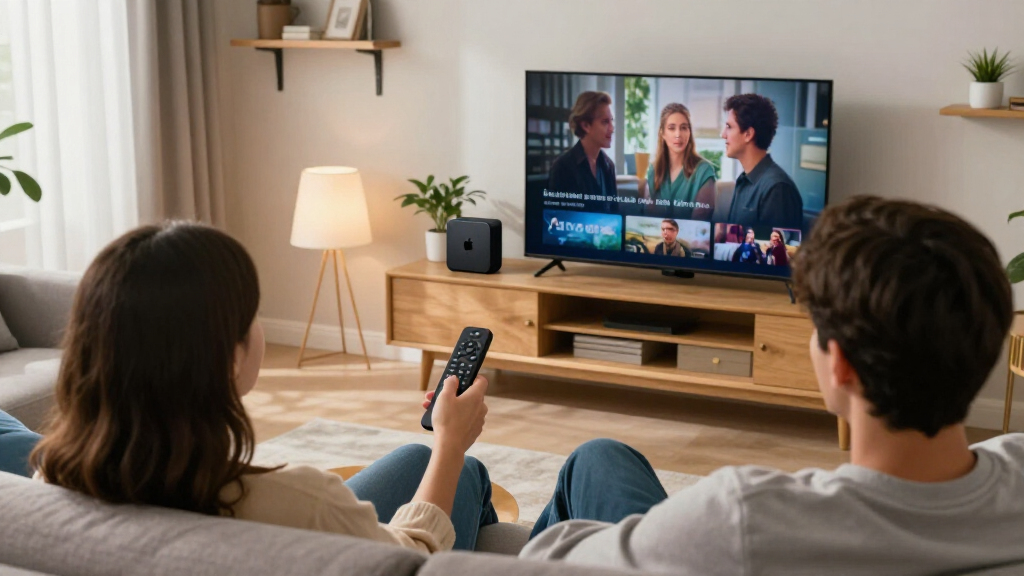

Choosing among the best Apple TV 4K devices comes down to how much you value current-generation features, smart-home functions, and the condition of the hardware. My overall pick is the fourth-generation Apple TV 4K for its newer feature set, including Enhance Dialogue and a Siri Remote with Find My. For most buyers who want a proven balance of speed and modern video support, the third-generation 64GB model is the easier recommendation. The renewed second-generation model is a sensible alternative if you want 4K Dolby Vision and Dolby Atmos without needing the newest platform.

Get the latest gadgets delivered free with Prime
- Fast, free delivery on millions of items
- Prime Video, Amazon Music and more included
- Member-only deals all year
The tradeoffs are less about whether these boxes can stream 4K and more about generation, storage, connectivity, and condition. The newest model has the strongest listed feature set, but the product details provided do not specify its chip or storage. The third-generation Wi-Fi model adds HDR10+ and Thread, while older renewed options bring uncertainty about wear and shorter warranty coverage. I compare each choice by the buyer it suits, the features that separate it from the others, and the drawbacks that could make another model a better match.
Complete the kit



Key Takeaways
- The fourth-generation model is my feature-led pick because it lists Enhance Dialogue, Find My for its Siri Remote, and smart-home hub functions, though its supplied listing omits chip and storage details.
- The third-generation 64GB Wi-Fi model offers a known A15 Bionic chip, Dolby Vision, HDR10+, Dolby Atmos, and Thread in a non-renewed listing.
- The renewed third-generation model retains the A15 Bionic and 64GB storage, but its refurbished condition and 90-day limited warranty distinguish it from the Wi-Fi-only third-generation listing.
- The renewed second-generation option is a capable 4K Dolby Vision and Dolby Atmos streamer with an A12 Bionic chip, but it lacks the newer generations’ listed HDR10+ support.
- The 2017 renewed A1842 is the oldest choice here; its 32GB capacity, Dolby Vision, HDR10, and Dolby Digital Plus 7.1 suit basic 4K streaming, not buyers seeking newer formats or features.
| Apple TV 4K (4th Generation) |  | Best for the newest listed features | Generation: 4th generation | Video: 4K, Dolby Vision, HDR10+ | Audio: Dolby Atmos; Enhance Dialogue | VIEW LATEST PRICE | See Our Full Breakdown |
| Apple TV 4K (3rd Generation) Wi-Fi, 64GB | 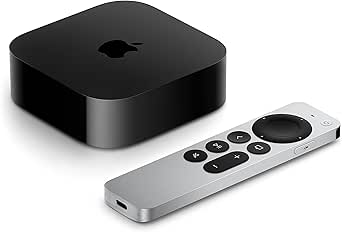 | Best overall for clearly specified modern hardware | Generation: 3rd generation | Storage: 64GB | Processor: A15 Bionic | VIEW LATEST PRICE | See Our Full Breakdown |
| Apple TV 4K (3rd Generation, 2022), 64GB, Wi-Fi, Black (Renewed) |  | Best renewed pick with 64GB and Thread | Generation: 3rd generation, 2022 | Condition: Renewed | Storage: 64GB | VIEW LATEST PRICE | See Our Full Breakdown |
| Apple TV 4K (2nd Generation, 2021), 32GB, Black (Renewed) |  | Best older-generation renewed alternative | Generation: 2nd generation, 2021 | Condition: Renewed; professionally inspected and tested | Storage: 32GB | VIEW LATEST PRICE | See Our Full Breakdown |
| Apple TV 4K 32GB Streaming Media Player (2017), Model A1842, Renewed |  | Best for basic 4K streaming on an older platform | Model: A1842 | Generation: 2017 | Condition: Renewed; inspected and tested | VIEW LATEST PRICE | See Our Full Breakdown |
| Apple TV 4K device | Generation | Audio | Storage | Processor |
|---|---|---|---|---|
| Apple TV 4K | 4th generation | Dolby Atmos; Enhance Dialogue | — | — |
| Apple TV 4K | 3rd generation | Dolby Atmos | 64GB | A15 Bionic |
| Apple TV 4K | 3rd generation, 2022 | Dolby Atmos | 64GB | A15 Bionic |
| Apple TV 4K | 2nd generation, 2021 | Dolby Atmos | 32GB | A12 Bionic |
| Apple TV 4K 32GB Streaming Med | 2017 | Dolby Digital Plus 7.1 | 32GB | A10X Fusion |
More Details on Our Top Picks
Apple TV 4K (4th Generation)
The fourth-generation Apple TV 4K ranks first because it has the broadest set of specifically described newer conveniences in this lineup. Alongside 4K, Dolby Vision, HDR10+, and Dolby Atmos, the listing calls out Enhance Dialogue, a Siri Remote with Find My, built-in far-field microphones, and smart-home hub features. Those additions matter most if this box will be the center of a living-room setup, not just a way to open streaming apps.
Its advantage over the third-generation models is clearest in the remote and listening features. Find My for the remote addresses a small but familiar annoyance, while Enhance Dialogue is aimed at making speech easier to follow. The third-generation 64GB model has more clearly specified core hardware—an A15 Bionic chip and known storage—so it may be the safer choice for buyers who prioritize transparent listing details over newer extras.
There is an information gap: the supplied details do not name this model’s chip, storage capacity, or included connectivity. I would not buy it on the assumption that those match the prior generation or exceed it. Its listed availability date is September 2026, so it is the newest entry by release timing in this roundup, but the missing hardware details make a careful listing check worthwhile. This is my best pick for buyers attracted to its dialogue and remote features; those who want clearly stated capacity and processor specs should compare it directly with the third-generation 64GB option.
Pros:- Supports 4K with Dolby Vision and HDR10+
- Dolby Atmos plus Enhance Dialogue adds a distinct listening feature
- Siri Remote includes Find My
- Listed as capable of serving as a smart-home hub
Cons:- The supplied details do not specify chip or storage capacity
- The provided information does not state connectivity or warranty terms
Best for: Apple TV buyers who want the newest listed remote, dialogue, and smart-home features and are comfortable checking the seller listing for omitted hardware details.
Not ideal for: Shoppers who need confirmed processor, storage, or connectivity specifications before choosing, or who only want a straightforward streaming box.
- Generation:4th generation
- Video:4K, Dolby Vision, HDR10+
- Audio:Dolby Atmos; Enhance Dialogue
- Remote:Siri Remote with Find My
- Smart home:Hub features listed
- Dimensions:3.67 x 3.67 x 1.22 inches
- Weight:7.7 ounces
- Model number:MLFF4LL/A
Our verdict“I rank the fourth-generation model first for its newer dialogue, remote, and smart-home features, while recommending a listing check for its unspecified core hardware.”
Apple TV 4K (3rd Generation) Wi-Fi, 64GB
This third-generation model is my most straightforward recommendation for a buyer who wants a current-feeling Apple TV 4K with the important hardware details spelled out. The A15 Bionic chip and 64GB storage give this listing a clearer specification profile than the fourth-generation entry, whose chip and capacity are not supplied. It also supports Dolby Vision, HDR10+, and Dolby Atmos, so it covers the key formats that distinguish it from the older renewed units here.
Compared with the renewed third-generation model, this one has the same listed generation, chip, storage, and major media formats, but its listing does not identify it as renewed. That distinction can matter to shoppers who prefer a standard-condition listing. It also includes Thread support for compatible smart-home devices and AirPlay, giving it a wider role than a basic video player. The tradeoff is Wi-Fi-only connectivity; buyers who specifically need a wired network connection should look at the 2017 A1842, which lists Gigabit Ethernet.
The device still depends on a suitable display and an internet connection for streaming, and some functions rely on Apple services or compatible accessories. That is normal for this kind of streamer, but it means the box is most useful in an Apple-connected household or for someone who wants Apple’s interface and services. Compared with the fourth-generation model, it lacks the supplied listing’s explicit Enhance Dialogue and Find My remote features. I place it second because it pairs well-documented performance and storage with modern video, audio, and Thread support, without making buyers rely on unspecified hardware details.
Pros:- A15 Bionic chip and 64GB storage are specified
- Supports Dolby Vision, HDR10+, and Dolby Atmos
- Thread and AirPlay support broaden its smart-home and Apple-device uses
- Siri Remote is included
Cons:- Wi-Fi connectivity only; Ethernet is not listed
- Some features rely on compatible devices or Apple services
- Requires a separate display and internet connection for streaming
Best for: Buyers who want a clearly specified 64GB Apple TV 4K with an A15 Bionic chip, HDR10+, Dolby Atmos, and Wi-Fi networking.
Not ideal for: People who need Ethernet, want the fourth-generation model’s listed Find My remote and Enhance Dialogue features, or need a streamer independent of Apple services.
- Generation:3rd generation
- Storage:64GB
- Processor:A15 Bionic
- Video:4K, Dolby Vision, HDR10+
- Audio:Dolby Atmos
- Connectivity:Wi-Fi
- Smart home:Thread support
- Dimensions:3.66 x 3.66 x 1.22 inches
Our verdict“I recommend this third-generation 64GB model to most buyers who want modern formats and clearly stated hardware without moving to the newest feature-led model.”
Apple TV 4K (3rd Generation, 2022), 64GB, Wi-Fi, Black (Renewed)
This renewed third-generation model offers the same key platform combination as the standard Wi-Fi listing: A15 Bionic, 64GB, Dolby Vision, HDR10+, and Dolby Atmos. It also lists Thread networking and smart-home hub use. That makes it a strong fit for buyers who want the third-generation feature set, including a USB-C Siri Remote, and are willing to accept refurbished condition rather than choose the non-renewed listing.
Against the standard third-generation 64GB option, the main difference is not a more advanced streaming feature; it is the product’s renewed status and stated 90-day limited warranty. The supplied listing also names Wi-Fi, Bluetooth, and Thread, while the standard listing emphasizes Wi-Fi. Neither should be treated as a wired-network pick based on the information provided. If avoiding pre-owned hardware matters more than the renewed model’s stated details, I would choose the standard third-generation option instead.
Its media support remains a substantial step beyond the 2017 model’s Dolby Vision and HDR10 combination, particularly for buyers whose display and audio setup can use HDR10+ or Dolby Atmos. Yet the renewed condition introduces uncertainty that a feature list cannot resolve, including the unit’s cosmetic state. Buyers should review the seller’s condition notes and included accessories. I rank it third because it delivers well-specified, modern Apple TV 4K features while making the condition and warranty tradeoff explicit.
Pros:- A15 Bionic and 64GB storage
- 4K Dolby Vision and HDR10+ with Dolby Atmos
- Thread networking and smart-home hub capability
- USB-C Siri Remote with voice control
Cons:- Renewed condition may include prior use
- Warranty is limited to 90 days
- Wi-Fi is listed, but Ethernet is not
Best for: Shoppers who want the third-generation A15 and 64GB feature set, Thread support, and a USB-C Siri Remote, and accept renewed condition with a limited warranty.
Not ideal for: Buyers who want new-condition hardware, longer or more clearly stated warranty coverage, or Ethernet connectivity.
- Generation:3rd generation, 2022
- Condition:Renewed
- Storage:64GB
- Processor:A15 Bionic
- Video:4K Dolby Vision, HDR10+
- Audio:Dolby Atmos
- Connectivity:Wi-Fi, Bluetooth, Thread
- Warranty:90-day limited warranty
- Remote:Siri Remote, USB-C charging
Our verdict“I would choose this renewed third-generation model over older refurbished options when 64GB, HDR10+, Dolby Atmos, and Thread matter more than new-condition hardware.”
Apple TV 4K (2nd Generation, 2021), 32GB, Black (Renewed)
The second-generation Apple TV 4K is the middle ground for buyers who want more recent hardware than the 2017 model but do not need the third-generation lineup’s listed HDR10+ or Thread support. Its A12 Bionic chip, 4K HDR, Dolby Vision, and Dolby Atmos keep it relevant for streaming and apps. The 32GB capacity is half the stated storage of the two third-generation 64GB listings, which may matter to people who install more apps or games, though ordinary streaming itself does not require a large local library.
Compared with the 2017 A1842, this model has a newer chip and lists Dolby Atmos, AirPlay, and support for private listening with up to two sets of AirPods. Those differences make it a more flexible choice for Apple-device households. Compared with the third-generation devices, though, it gives up the newer A15 Bionic chip and the listed HDR10+ support. It also lacks the supplied third-generation listings’ Thread details, so it is not my pick for a smart-home-focused setup.
This is a renewed product with a 90-day limited warranty, so the buyer accepts a shorter stated coverage period and pre-owned condition. The listing says the unit is professionally inspected and tested, but that does not make it equivalent to a new-condition product. I rank it fourth: it is a reasonable way to get Dolby Vision and Atmos on an older Apple TV platform, yet the third-generation models make a stronger case for buyers seeking more storage and newer specifications.
Pros:- Supports 4K HDR with Dolby Vision
- Dolby Atmos audio support
- A12 Bionic chip for apps and games
- AirPlay and private listening with up to two sets of AirPods
Cons:- Renewed, pre-owned condition
- 32GB storage is less than the third-generation 64GB options
- 90-day limited warranty
Best for: Apple users who want a renewed 4K Dolby Vision and Dolby Atmos streamer with an A12 Bionic chip and do not need HDR10+ or Thread.
Not ideal for: Buyers seeking 64GB storage, the newer A15 chip, HDR10+, Thread smart-home support, or a non-renewed device.
- Generation:2nd generation, 2021
- Condition:Renewed; professionally inspected and tested
- Storage:32GB
- Processor:A12 Bionic
- Resolution:4K HDR
- Video format:Dolby Vision
- Audio:Dolby Atmos
- Warranty:90-day limited warranty
- Connector:HDMI
Our verdict“I see this as a capable renewed step up from the 2017 model, but the third-generation options are a better fit for buyers who want HDR10+, Thread, or 64GB.”
Apple TV 4K 32GB Streaming Media Player (2017), Model A1842, Renewed
The 2017 A1842 is the oldest device in this roundup, and its appeal is straightforward: it supplies 4K resolution, Dolby Vision, HDR10, and Dolby Digital Plus 7.1 in a renewed Apple TV package. Its 32GB storage and A10X Fusion chip place it behind the A12 and A15 models, but it still covers the core streaming formats listed for this device. The inclusion of Gigabit Ethernet also separates it from the Wi-Fi-only third-generation listing.
That wired-network option may appeal to someone with an Ethernet connection near the TV or a preference for a direct network link. However, the newer models have a stronger format and feature story: the third-generation devices list HDR10+, Dolby Atmos, and Thread, while the second-generation listing adds Dolby Atmos and an A12 chip. The A1842 instead lists HDR10 rather than HDR10+ and Dolby Digital Plus 7.1 rather than Dolby Atmos. Those distinctions matter most when a buyer’s display and sound setup support the newer formats.
It also comes in renewed condition, and no warranty duration is given in the provided details. That makes it harder to compare its coverage with the 90-day terms specified for some other refurbished entries. I rank it fifth not because it cannot stream 4K, but because it is the oldest option and has the least future-facing format support here. Choose it when its stated Ethernet connection or basic 4K feature set matches your needs; skip it if newer audio and HDR formats are priorities.
Pros:- 4K video with Dolby Vision and HDR10
- Dolby Digital Plus 7.1 surround sound
- Gigabit Ethernet is listed alongside Wi-Fi
- Siri Remote includes voice search
Cons:- Oldest generation in this roundup, with an A10X Fusion chip
- Renewed condition means prior use
- Warranty coverage is not specified in the supplied details
Best for: A buyer who wants a renewed Apple TV 4K with listed Gigabit Ethernet and Dolby Vision, and does not need the newer models’ HDR10+ or Dolby Atmos support.
Not ideal for: People seeking newer-generation hardware, Dolby Atmos, HDR10+, a stated warranty period, or a non-renewed device.
- Model:A1842
- Generation:2017
- Condition:Renewed; inspected and tested
- Storage:32GB
- Processor:A10X Fusion
- Resolution:3840 x 2160 pixels
- HDR formats:Dolby Vision, HDR10
- Audio:Dolby Digital Plus 7.1
- Connectivity:Wi-Fi, Gigabit Ethernet, HDMI
Our verdict“I would choose the A1842 only when its Gigabit Ethernet and basic 4K format support suit the setup better than newer models’ HDR10+ and Dolby Atmos.”
How We Picked
I ranked these devices by how well their specific generation and feature set fit common Apple TV 4K buying needs—not by treating every box that streams 4K as interchangeable. I gave the most weight to supported picture and audio formats, processor and storage information where supplied, smart-home and remote features, and the likely tradeoffs of buying renewed hardware. Since the listings do not provide a consistent set of details across all five, I distinguish confirmed information from details that are simply not stated.
The fourth-generation model leads for buyers who want the newest listed feature set, including Enhance Dialogue, Find My, and hub capabilities. I place the standard third-generation 64GB Wi-Fi model close behind because its A15 Bionic chip, HDR10+, Dolby Atmos, and Thread support are clearly specified. Its renewed counterpart earns a separate place for shoppers who want those core capabilities but accept refurbished condition and a limited warranty. The second-generation and 2017 models rank lower because they are older platforms, even though both still offer useful 4K features.
I also considered the practical distinctions that can be lost in a feature checklist. A 64GB model has more stated storage than the 32GB models, but buyers should not assume that capacity alone will change the streaming picture. The 2017 unit is explicitly renewed, and the second-generation renewed listing specifies a 90-day limited warranty; the renewed third-generation listing gives the same warranty period. I have not inferred missing specifications, condition guarantees, or compatibility details beyond what each listing provides. My order reflects the balance of useful features, clarity of listing information, and tradeoffs—not a claim that every buyer needs the newest device.
| Apple TV 4K device | Audio | Processor | Connectivity | Condition |
|---|---|---|---|---|
| Apple TV 4K | Dolby Atmos; Enhance Dialogue | — | — | — |
| Apple TV 4K | Dolby Atmos | A15 Bionic | Wi-Fi | — |
| Apple TV 4K | Dolby Atmos | A15 Bionic | Wi-Fi, Bluetooth, Thread | Renewed |
| Apple TV 4K | Dolby Atmos | A12 Bionic | — | Renewed; professionally inspected and tested |
| Apple TV 4K 32GB Streaming Med | Dolby Digital Plus 7.1 | A10X Fusion | Wi-Fi, Gigabit Ethernet, HDMI | Renewed; inspected and tested |
Factors to Consider When Choosing Best Apple TV 4K Devices
I would choose an Apple TV 4K by matching its generation and listed features to the television, audio equipment, network, and smart-home setup I already have. The model name alone does not tell the whole story: condition and warranty matter for renewed units, while features such as HDR10+ or Thread are useful only when they fit the rest of the setup.
Start with the picture formats your TV supports
Every model in this roundup is presented as a 4K streamer, but the listed HDR support changes by generation. The 2017 A1842 and the second-generation model list Dolby Vision; the 2017 model also lists HDR10, while the two specified third-generation entries and the fourth-generation device list HDR10+. These formats are not a promise that every title will look different on every screen. The TV must support the relevant format, and the content needs to be available in it. If you do not know which HDR formats your display accepts, check its specifications before treating HDR10+ support as a deciding factor.
For buyers with a newer compatible TV, the third- and fourth-generation listings offer the broader named format combination in this group. If the television only supports a more limited set, the older models may still deliver the formats your screen can use. I would avoid paying attention to a format label without checking the display: compatibility in the source device cannot add HDR capability to a TV that lacks it.
Choose audio support to match your sound system
The newer models list Dolby Atmos, while the 2017 device specifies Dolby Digital Plus 7.1. Atmos support is relevant when the sound system and content can make use of it; it does not mean the built-in speakers on a television will produce the same experience as an Atmos-capable setup. The fourth-generation listing adds Enhance Dialogue, a feature aimed at speech clarity that is not stated for the other models here.
If clearer dialogue is a priority, the fourth-generation model has the most distinctive listed audio feature. If you already own Atmos-capable equipment, the second-, third-, and fourth-generation options all list Atmos support. The A1842 is not necessarily unsuitable for every listener, but its stated Dolby Digital Plus 7.1 support is a different proposition from the newer models’ Atmos specification.
Use generation and storage as a practical filter
The specified chips progress from A10X Fusion in the 2017 unit to A12 Bionic in the second-generation device and A15 Bionic in the third-generation models. The supplied details do not identify the fourth-generation chip, so I would not compare its processor directly without checking the current listing. More recent chips can help with app responsiveness and demanding uses, but buyers who mainly open streaming services may care more about supported formats, remote features, and condition.
Storage is another clear distinction: the 2017 and second-generation renewed models list 32GB, while both specified third-generation choices list 64GB. More capacity gives apps and other stored data more room, but it is not a measure of video quality or internet speed. The fourth-generation listing does not state storage, so buyers who need a known capacity should favor one of the clearly specified 64GB models or verify the fourth-generation details with the seller.
Decide whether smart-home features matter
Thread support appears in the third-generation listings, while the fourth-generation listing describes smart-home hub features without specifying Thread in the supplied details. Thread is relevant to compatible smart-home accessories and an existing setup; it has little value if you do not use compatible devices. AirPlay is listed for the standard third-generation model and the second-generation description, which can be useful for sending content from Apple devices to the TV.
For a streaming-only setup, these functions should not outweigh the basics. For a household that wants its TV box involved in smart-home control, compare the exact model’s hub and network details with the accessories you own. Do not assume that every feature carries across every generation simply because each device belongs to the Apple TV 4K family.
Treat renewed condition as its own tradeoff
Three entries are explicitly renewed: the 2017 A1842, the second-generation 2021 model, and the third-generation 2022 model. The descriptions say the 2017 unit has been inspected and tested and the second-generation model is professionally inspected and tested; the third-generation renewed listing specifies a 90-day limited warranty. The standard third-generation listing is not identified as renewed, while the fourth-generation listing does not provide condition or warranty details in the supplied information.
Renewed can be a reasonable route to an older or higher-spec model, but it means accepting a product with prior use and checking the seller’s condition terms. Warranty length and return policy can affect peace of mind, so verify both before ordering. The 90-day warranty stated for two renewed listings should not be assumed to apply to the other products.
Check network and setup needs before choosing
The 2017 A1842 is the only product here that explicitly lists Gigabit Ethernet. The standard third-generation model is identified as Wi-Fi, and the renewed third-generation model lists Wi-Fi, Bluetooth, and Thread. The second-generation listing describes wireless connectivity. If a wired connection is a firm requirement, the A1842 has the clearest stated fit, though its older platform and audio and HDR specifications are notable compromises.
Each device also needs a compatible TV or display and an internet connection to stream. The third-generation listing specifically notes that some features depend on Apple services or compatible devices, which is a useful reminder for buyers outside Apple’s ecosystem. I would make a short checklist of display formats, audio equipment, network preference, and smart-home use before deciding; that narrows the choice more reliably than generation number alone.
Frequently Asked Questions
Which Apple TV 4K is my best all-around choice?
I would start with the third-generation 64GB Wi-Fi model for most buyers because its A15 Bionic chip, storage, Dolby Vision, HDR10+, Dolby Atmos, and Thread support are all specified. Choose the fourth-generation model instead if its listed Find My remote, Enhance Dialogue, and smart-home features matter more, but check the product listing for chip and storage details that are not included in the information here.
Is the fourth-generation Apple TV 4K better than the third-generation model?
It has a newer listed feature set, including Enhance Dialogue, Find My for the Siri Remote, and smart-home hub functions, alongside 4K, Dolby Vision, HDR10+, and Dolby Atmos. The third-generation 64GB option gives buyers more certainty about core specifications because its A15 Bionic chip and capacity are stated. I would choose based on whether the fourth-generation extras matter enough to accept an incomplete hardware specification listing.
Should I buy a renewed Apple TV 4K?
A renewed model can suit buyers who are comfortable with previously owned hardware and want a particular generation’s feature set. In this lineup, the renewed third-generation model lists an A15 chip, 64GB, HDR10+, Atmos, Thread, and a 90-day limited warranty; the second-generation renewed listing also gives a 90-day term. The 2017 model is renewed as well, but its supplied details do not specify a warranty duration, so I would check the seller’s condition, coverage, and return terms before choosing.
Do I need Dolby Vision, HDR10+, or Dolby Atmos?
Those formats matter when your TV, sound equipment, and available content support them. The third- and fourth-generation models list Dolby Vision, HDR10+, and Dolby Atmos; the second-generation option lists Dolby Vision and Atmos, while the 2017 model lists Dolby Vision, HDR10, and Dolby Digital Plus 7.1. Check your own equipment’s specifications first, since a streamer cannot make an unsupported TV or sound system use a format it does not accept.
Which model should I choose for wired internet or smart-home use?
For a clearly stated wired connection, the 2017 A1842 is the only listing here that names Gigabit Ethernet, though it is also the oldest model and lacks the newer devices’ listed HDR10+ and Dolby Atmos support. For smart-home use, the third-generation listings specify Thread, and the fourth-generation listing says it can act as a hub. Match those details to the accessories you own, since smart-home features depend on compatible devices and may not be useful in a streaming-only setup.
Conclusion
My recommendation depends on what you want from the box. For most buyers seeking a well-specified modern streamer, I would choose the third-generation 64GB Wi-Fi Apple TV 4K: its A15 Bionic chip, Dolby Vision, HDR10+, Dolby Atmos, and Thread make a balanced package. If you want the newest listed conveniences, especially Enhance Dialogue and Find My for the remote, the fourth-generation model is the feature-led choice, with the caveat that the supplied details do not state its chip or storage.
For a renewed option with 64GB and Thread, the renewed third-generation model keeps the core modern features but comes with a stated 90-day limited warranty and pre-owned condition. The renewed second-generation device is a better match if you want Dolby Vision and Atmos with an A12 chip and can live without HDR10+ or Thread. I would reserve the 2017 A1842 for buyers who specifically value its listed Gigabit Ethernet or need a basic renewed 4K streamer. Before ordering any renewed device, I would check its condition and warranty terms; before choosing any model, I would confirm that its picture and audio formats fit the TV and sound equipment at home.
Fall Picks
fall essentials
As an affiliate, we earn on qualifying purchases.