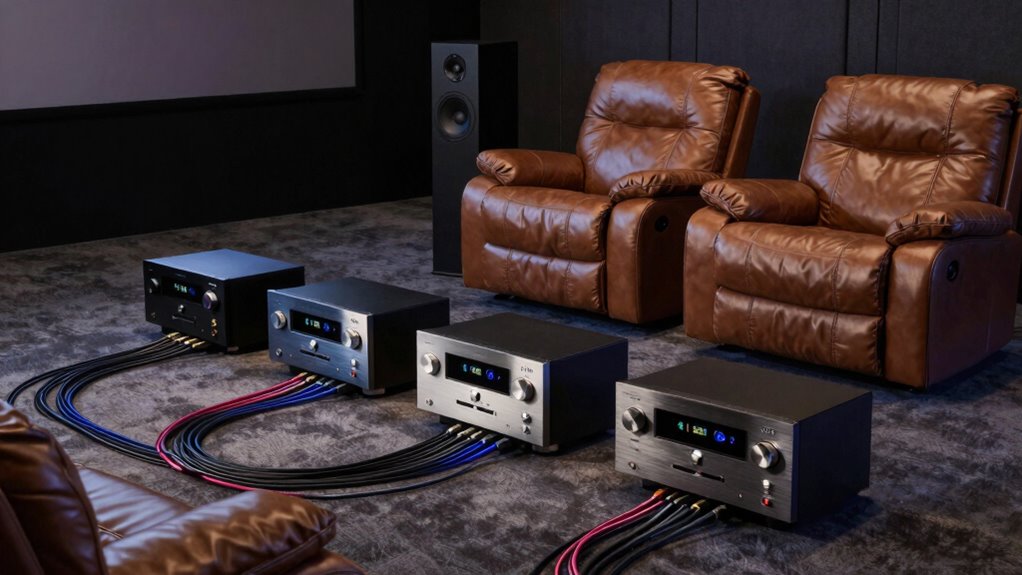

Searching for a 132 channel AV receiver in 2026 means facing a complex landscape of options. The best picks balance power, expandability, and advanced features like 8K support and immersive audio formats. The Denon AVR-X4800H stands out as the overall best for its robust 9.4 channels, while the Yamaha RX-A8A offers top-tier build quality for high-end setups. However, tradeoffs include higher costs and increased complexity, making it critical to choose based on your specific needs. Keep reading for a detailed breakdown of the top models and how to select the right one for your home theater.

Get the latest gadgets delivered free — and shop member deals
- Fast, free delivery on millions of items
- Access to Prime Big Deal Days deals on October 6–7
- Prime Video, Amazon Music and more included
Complete the kit



Key Takeaways
- The highest channel count options often come with increased complexity and cost, making them best suited for advanced setups or dedicated home theaters.
- Many top models offer 8K support and immersive audio formats, but these features can significantly increase price and setup complexity.
- Expandability and future-proofing are key factors; models with multiple HDMI inputs and audio processing channels tend to offer more versatility.
- Build quality and brand reputation vary widely; premium brands like Marantz and Yamaha typically provide more durable and reliable units.
- Price ranges are broad; high channel count receivers generally demand a larger investment, but some models deliver exceptional value considering features.
| Denon AVR-X1700H 7.2 Channel AV Receiver with 80W/Channel and Built-in HEOS |  | Best Overall for Versatile Home Theater and Multi-Room Streaming | Channels: 7.2 | Power per Channel: 80W | HDMI Inputs/Outputs: 6 In / 1 Out | VIEW ON AMAZON | See Our Full Breakdown |
| Onkyo TX-NR5100 7.2-Channel 8K Smart AV Receiver – Black |  | Best for Gaming and 8K Video Support at a Competitive Price | Channels: 7.2 | Video Support: 8K, 4K/120Hz | HDMI Version: 2.1 | VIEW ON AMAZON | See Our Full Breakdown |
| Onkyo TX-NR7100 9.2-Channel THX Certified AV Receiver |  | Best for Precise Room Calibration and Multi-Zone Control | Channels: 9.2 | HDMI Outputs: 3 | HDMI Bandwidth: 40 Gbps | VIEW ON AMAZON | See Our Full Breakdown |
| Denon AVR-X4800H 9.4-Channel Home Theater AV Receiver with 8K UHD and 125W x 9 Amplification |  | Best for Large, High-Power Home Theaters and Advanced Audio Formats | Channels: 9.4 | Power per Channel: 125W | HDMI Ports: 10 | VIEW ON AMAZON | See Our Full Breakdown |
| Yamaha RX300A 5.2-Channel Home Theater AV Receiver with Dolby Atmos, 4K120/8K HDMI and Bluetooth Multipoint (Black) |  | Best for Compact Setups and Simplicity with Future-Ready Video | Channels: 5.2 | Power Output: 70W | Video Support: 4K/120, 8K/60 | VIEW ON AMAZON | See Our Full Breakdown |
| Onkyo TX-RZ70 11.2-Channel AV Receiver |  | Best Overall for High-End Home Theater Integration | Channels: 11.2 | Power Output: 140 watts per channel | Room Calibration: Dirac Live Full Bandwidth | VIEW ON AMAZON | See Our Full Breakdown |
| Sony ES STR-AZ7000ES 13.2-channel home theater receiver (Renewed) |  | Best for Integrators Needing Advanced Connectivity | Channels: 13.2 | Output Power: 150W | HDMI Ports: 7-in/2-out | VIEW ON AMAZON | See Our Full Breakdown |
| Marantz AV 10 Reference 15.4 Channel 8K Ultra HD Home Theater Pre-Amplifier/Processor |  | Best for Audiophiles Seeking Future-Proof Technology | VIEW ON AMAZON | See Our Full Breakdown | |||
| Onkyo TX-NR6100 7.2 Channel THX Certified Network AV Receiver – Black |  | Best for Mid-Range Home Theater with THX Certification | Channels: 7.2 | Power Output: 210W/Ch | HDMI: 8K, HDMI 2.1, 3 inputs | VIEW ON AMAZON | See Our Full Breakdown |
| channel av receiver | Channels | Video Support |
|---|---|---|
| Denon AVR-X1700H 7.2 Channel A | 7.2 | 8K/60Hz, 4K/120Hz pass-through, 8K upscaling |
| Onkyo TX-NR5100 7.2-Channel 8K | 7.2 | 8K, 4K/120Hz |
| Onkyo TX-NR7100 9.2-Channel TH | 9.2 | 8K/60Hz |
| Denon AVR-X4800H 9.4-Channel H | 9.4 | 8K/60Hz, 4K/120Hz |
| Yamaha RX300A 5.2-Channel Home | 5.2 | 4K/120, 8K/60 |
| Onkyo TX-RZ70 11.2-Channel AV | 11.2 | — |
| Sony ES STR-AZ7000ES 13.2-chan | 13.2 | — |
| Marantz AV 10 Reference 15.4 C | — | — |
| Onkyo TX-NR6100 7.2 Channel TH | 7.2 | — |
More Details on Our Top Picks
Denon AVR-X1700H 7.2 Channel AV Receiver with 80W/Channel and Built-in HEOS
The Denon AVR-X1700H stands out for delivering comprehensive 3D audio support, including Dolby Atmos and DTS:X, combined with robust 8K video pass-through and upscaling. Its six HDMI inputs and single output are suitable for most setups, but compared with the Denon AVR-X4800H, it offers fewer HDMI ports, which could limit extensive wiring options in larger setups. The built-in HEOS platform makes multi-room streaming straightforward, and the inclusion of a phono input adds value for vinyl enthusiasts. However, at 80W per channel, it may lack the power needed for demanding speakers or large rooms, a tradeoff for its more accessible price point. This receiver makes the most sense for users seeking a balanced mix of features, multi-room capability, and ease of use without the need for high-powered amplification.
Pros:- Full 8K HDMI support with dedicated 8K inputs and upscaling
- Comprehensive 3D audio support including Dolby Atmos Height Virtualization
- Built-in HEOS for multi-room streaming via Wi-Fi, AirPlay 2, and Bluetooth
- Phono input for turntable connection
Cons:- 80W per channel may be underpowered for large or demanding speakers
- Limited to one HDMI output restricts multi-display setups
Best for: Homeowners who want a versatile, feature-rich receiver with multi-room streaming and good 8K support
Not ideal for: Audiophiles with large, power-hungry speakers or those requiring extensive HDMI outputs for multiple displays
- Channels:7.2
- Power per Channel:80W
- HDMI Inputs/Outputs:6 In / 1 Out
- Video Support:8K/60Hz, 4K/120Hz pass-through, 8K upscaling
- Audio Formats:Dolby Atmos, DTS:X, DTS Virtual:X
- Streaming:HEOS, Wi-Fi, AirPlay 2, Bluetooth
Our verdict“Ideal for users seeking a balanced, capable AV receiver with multi-room streaming and 8K support, but not for high-power or multi-display setups.”
Onkyo TX-NR5100 7.2-Channel 8K Smart AV Receiver – Black
The Onkyo TX-NR5100 excels in integrating gaming features like VRR and ALLM with 8K video support, making it a strong choice for gamers and movie enthusiasts. Unlike the Denon AVR-X1700H, it emphasizes HDMI 2.1 gaming enhancements, such as 4K/120Hz pass-through, which appeals to those prioritizing smooth gameplay. While it supports Dolby Atmos and DTS:X, it lacks detailed mentions of room calibration features or multi-room streaming services, which could limit its versatility. Its straightforward design is ideal for users focused on gaming performance and high-quality video, but those seeking advanced audio calibration or multi-room streaming may find it lacking. This receiver suits gamers and home theater fans who prioritize latest HDMI features and immersive audio, but it’s less suitable for audiophiles or multi-zone setups.
Pros:- Supports HDMI 2.1 features like VRR, ALLM, and 4K/120Hz pass-through
- Delivers immersive audio with Dolby Atmos and DTS:X support
- Seamless eARC connection simplifies TV audio
Cons:- Lacks advanced room calibration features
- No mention of multi-room audio or streaming services
Best for: Gamers and home theater users prioritizing 8K support and gaming-specific HDMI features
Not ideal for: Audiophiles or users needing complex room calibration and multi-zone audio streaming
- Channels:7.2
- Video Support:8K, 4K/120Hz
- HDMI Version:2.1
- Gaming Features:VRR, ALLM, QFT
- Audio Formats:Dolby Atmos, DTS:X
- Connectivity:eARC
Our verdict“Best suited for gamers and home theater enthusiasts seeking the latest HDMI gaming features and 8K video support without complex calibration needs.”
Onkyo TX-NR7100 9.2-Channel THX Certified AV Receiver
The Onkyo TX-NR7100 distinguishes itself with Dirac Live room calibration, offering highly accurate sound tuning that surpasses typical auto-calibration solutions like Yamaha’s setup microphone. Its nine channels and two subwoofer outputs enable larger, more immersive setups, but compared to the Denon AVR-X4800H, it adds complexity with more HDMI outputs and extensive wireless options like DTS Play-Fi and Sonos certification. The HDMI bandwidth of 40 Gbps ensures smooth 8K/60Hz pass-through, making it suitable for demanding video needs. However, its complex feature set and calibration requirements may intimidate casual users. This receiver is best for those who want precise sound calibration and multi-zone control, willing to navigate its advanced setup process. It’s ideal for audiophiles and home theater aficionados seeking ultimate room accuracy and multi-zone flexibility.
Pros:- Dirac Live room calibration for accurate, balanced sound
- Multiple HDMI outputs with 8K/60Hz support and 40 Gbps bandwidth
- Works with Sonos for multi-zone streaming
- Supports Dolby Atmos and DTS:X with virtual height virtualization
Cons:- Calibration requires a third-party USB mic, adding setup complexity
- Steep learning curve for casual users
Best for: Audiophiles and home theater enthusiasts who want precise room calibration and multi-zone audio control
Not ideal for: Casual users or those new to AV setup who prefer plug-and-play simplicity
- Channels:9.2
- HDMI Outputs:3
- HDMI Bandwidth:40 Gbps
- Video Support:8K/60Hz
- Room Correction:Dirac Live
- Streaming Services:Sonos, DTS Play-Fi
Our verdict“This receiver suits audiophiles and advanced users who prioritize precise room tuning and versatile multi-zone connectivity over ease of setup.”
Denon AVR-X4800H 9.4-Channel Home Theater AV Receiver with 8K UHD and 125W x 9 Amplification
The Denon AVR-X4800H targets large, demanding home theaters with its 125W per channel and 9.4 channels, supporting a full range of immersive audio formats including Dolby Atmos, DTS:X Pro, and Auro 3D. Its 10 HDMI ports and 8K/60Hz support ensure flexible connectivity for multiple devices and future-proofed video. Compared to the Onkyo TX-NR7100, it offers more HDMI ports and higher power output, making it better suited for larger rooms with demanding speakers. Its extensive format support and built-in HEOS provide seamless multi-room streaming. The high-end features, however, demand a significant speaker setup, which could be overwhelming for smaller spaces. This model is designed for serious home theater lovers who want maximum power, multi-format compatibility, and future-ready video support.
Pros:- Supports Dolby Atmos, DTS:X Pro, and Auro 3D for immersive sound
- Numerous HDMI ports with 8K/60Hz support for flexible connections
- Powerful 125W per channel amplification for demanding speakers
- Built-in HEOS for multi-room streaming
Cons:- High complexity and cost for smaller or simpler setups
- Requires a substantial speaker arrangement to utilize full potential
Best for: Large home theaters needing high power and extensive connectivity with advanced audio formats
Not ideal for: Smaller rooms or casual users with limited space or simpler audio needs
- Channels:9.4
- Power per Channel:125W
- HDMI Ports:10
- Video Support:8K/60Hz, 4K/120Hz
- Audio Formats:Dolby Atmos, DTS:X Pro, Auro 3D
- Streaming:HEOS, Bluetooth
Our verdict“Perfect for large, dedicated home theaters seeking maximum power, format support, and future-proofed video features.”
Yamaha RX300A 5.2-Channel Home Theater AV Receiver with Dolby Atmos, 4K120/8K HDMI and Bluetooth Multipoint (Black)
The Yamaha RX300A offers a simplified 5.2-channel setup that still provides Dolby Atmos and DTS Virtual:X for immersive sound, making it suitable for smaller rooms or less complex systems. Its support for 4K/120Hz and 8K/60Hz passthrough ensures compatibility with modern high-resolution content, similar to the larger models like the Denon AVR-X1700H, but with fewer channels. The inclusion of Bluetooth Multipoint and an automatic setup microphone enhances ease of use, though it limits expansion for larger or multi-zone systems. Its 70W per channel power rating may fall short for high-demand speakers, yet it offers a straightforward, future-proof solution for compact, modern home theaters. This receiver works best for users who want a simple, reliable 3D audio setup with good video support without complexity.
Pros:- Supports Dolby Atmos and DTS Virtual:X for immersive sound
- Future-proof video with 4K120/8K support and Dolby Vision
- Automatic room correction with included microphone
- Bluetooth Multipoint for easy device switching
Cons:- Limited to 5.2 channels, restricting expansion
- No built-in Wi-Fi or multi-room streaming services
Best for: Small to medium-sized rooms needing a straightforward, future-proof AV receiver with Dolby Atmos
Not ideal for: Large or multi-zone systems requiring more channels or higher power output
- Channels:5.2
- Power Output:70W
- Video Support:4K/120, 8K/60
- HDMI Features:eARC/ARC, Dolby Vision
- Room Calibration:Included microphone
- Connectivity:Bluetooth Multipoint
Our verdict“Best for users seeking a compact, easy-to-set-up AV receiver that delivers immersive audio and high-resolution video support in smaller spaces.”
Onkyo TX-RZ70 11.2-Channel AV Receiver
This flagship model from Onkyo stands out for its powerful 140W per channel across 11.2 channels, making it ideal for serious home theaters. Compared with the Yamaha RX-A8A, the TX-RZ70 offers built-in Dirac Live calibration and THX certification, delivering a more calibrated and immersive experience. However, its extensive feature set can be overwhelming for casual users, and some features like the Dirac bass control require firmware updates, adding complexity. The inclusion of Klipsch Optimize Mode simplifies speaker setup, making it more accessible for enthusiasts seeking premium audio and seamless integration. Tradeoffs involve complexity vs. performance—this is best suited for dedicated home theater setups rather than casual listening.
Pros:- High 140W per channel power across 11.2 channels for robust sound
- Includes Dirac Live Full Bandwidth calibration for precise room tuning
- THX Certified and IMAX Enhanced for premium home theater experience
- Klipsch speaker optimization for seamless speaker integration
Cons:- Dirac Live Bass Control requires a firmware update, which may inconvenience some users
- Feature set could be more than needed for casual or smaller setups
Best for: Avid home theater enthusiasts who want professional-caliber calibration and premium features.
Not ideal for: Casual listeners or those seeking a simple, plug-and-play receiver due to its feature complexity.
- Channels:11.2
- Power Output:140 watts per channel
- Room Calibration:Dirac Live Full Bandwidth
- DACs:ESS Sabre
- Certifications:THX Certified, IMAX Enhanced
- Connectivity:eARC, streaming apps, smart home assistants
Our verdict“This receiver is ideal for high-end home theaters where audiophile-grade calibration and power are priorities.”
Sony ES STR-AZ7000ES 13.2-channel home theater receiver (Renewed)
This 13.2-channel Sony ES model elevates home theater with 150W per channel and extensive connectivity options, including 8K HDMI 2.1 support. It surpasses the Yamaha RX-A8A in terms of system integration flexibility, supporting digital cinema auto calibration and 360 Spatial Sound Mapping, making it ideal for custom installations. Its high price and complexity may deter casual users, and the renewed status might be a concern for some buyers. Nonetheless, its support for Dolby Atmos, DTS:X, and IMAX Enhanced, along with seamless integration with Sonos, makes it a top choice for custom system builders. Tradeoffs involve complexity and cost for advanced features—best for dedicated home theater installers or enthusiasts with advanced needs.
Pros:- Supports 13.2 channels with 150W per channel for expansive sound
- Supports 8K HDMI 2.1 with multiple HDMI inputs and outputs
- Supports Dolby Atmos, DTS:X, IMAX Enhanced, and 360 Spatial Sound
- Optimized for integration with Sonos systems
Cons:- Premium price point and complexity may be overwhelming for casual users
- Renewed condition could raise concerns over longevity and warranty
Best for: Home theater installers and enthusiasts seeking advanced connectivity and system integration.
Not ideal for: Casual users or those on a tight budget, due to its premium price and feature set.
- Channels:13.2
- Output Power:150W
- HDMI Ports:7-in/2-out
- HDMI Features:8K HDMI 2.1, eARC, Dolby Vision
- Supported Audio:Dolby Atmos, DTS:X, IMAX
- Calibration:Digital Cinema Auto Calibration
Our verdict“Best suited for custom installs and advanced home theater setups that demand maximum connectivity and scalability.”
Marantz AV 10 Reference 15.4 Channel 8K Ultra HD Home Theater Pre-Amplifier/Processor
While lacking a built-in power amplifier, the Marantz AV 10 excels as a high-end pre-processor, offering extraordinary audio fidelity with advanced processing technologies like Dolby Atmos, DTS:X Pro, and IMAX Enhanced. It surpasses the Yamaha RX-A8A in audio precision, making it perfect for audiophiles who prefer to pair with a dedicated amplifier. Its sleek design and intuitive control interface make it appealing for modern setups, though its absence of integrated amplification limits use as a standalone receiver. The focus on future-proof features and high-quality build makes it a compelling choice for those wanting top-tier sound without the bulk of multiple components. Tradeoffs involve requiring a separate power amp, making it less suitable for straightforward setups.
Pros:- Exceptional audio processing for detailed, immersive sound
- Supports Dolby Atmos, DTS:X Pro, IMAX Enhanced, and HEOS built-in
- Elegant, robust design with future-ready connectivity
- Supports multiple advanced audio formats and ecosystem integrations
Cons:- Requires a dedicated power amplifier, increasing complexity and cost
- No built-in amplification limits standalone use
Best for: Audiophiles and custom installers who want high-fidelity processing and plan to use separate amplification.
Not ideal for: Casual users seeking an all-in-one receiver with integrated amplification for simple setups.
Our verdict“Ideal for high-end audiophile setups that involve separate amplification and demand ultimate sound quality.”
Onkyo TX-NR6100 7.2 Channel THX Certified Network AV Receiver – Black
The Onkyo TX-NR6100 offers a solid balance of power, features, and THX certification in a 7.2 configuration, making it suitable for medium-sized home theaters. With 210W per channel, it provides more power than the 7.2 Yamaha RX-A8A, but the limited channel count makes expansive multi-zone setups less flexible. Its HDMI 2.1 support with 8K and 40Gbps bandwidth ensures future-proofing for high-resolution content. Compared to higher-channel models like the Yamaha RX-A8A or the Onkyo TX-RZ70, it sacrifices some immersive audio capacity but remains a strong choice for users wanting THX performance and reliable multi-room features. Tradeoffs include limited channels for larger setups, but it delivers high power and quality for its class.
Pros:- 210W per channel with THX Certified Select amplification
- Supports Dolby Atmos and DTS:X in 5.2.2 configuration
- 8K HDMI 2.1 with 40Gbps bandwidth for high-resolution content
- Discrete Zone 2 audio and video outputs for multi-room
Cons:- Limited to 7.2 channels, less flexible for larger theaters
- Premium features may be more than needed for basic setups
Best for: Home theater enthusiasts seeking THX certification and robust power in a 7.2 setup for medium-sized rooms.
Not ideal for: Large multi-zone or multi-room setups requiring more channels or complex configurations.
- Channels:7.2
- Power Output:210W/Ch
- HDMI:8K, HDMI 2.1, 3 inputs
- Surround Formats:Dolby Atmos, DTS:X
- Certification:THX Certified Select
- Zone:Discrete Zone 2
Our verdict“A strong mid-range choice for users prioritizing power, THX certification, and future-proof HDMI support within a 7.2 setup.”
How We Picked
Our evaluation focused on performance, build quality, and feature set, especially as they relate to managing 132 channels. We prioritized models with robust amplification, extensive connectivity options, and support for latest standards such as 8K video and immersive audio formats like Dolby Atmos and DTS:X. Ease of use, expandability, and reliability also factored heavily into our rankings. Given the complexity of managing so many channels, we favored brands with proven reputations for durability and customer support, ensuring that the top picks are not only powerful but also dependable for long-term use.
Factors to Consider When Choosing 132 Channel Av Receivers
Choosing a 132 channel AV receiver involves balancing power, features, and future-proofing. Here are key factors to consider to help you make an informed decision beyond just channel count.Power and Amplification
More channels typically demand higher power output to drive multiple speakers effectively. Look for models with ample wattage per channel and good internal amplification. Overestimating power needs can lead to unnecessary costs, but underestimating can result in weak sound or distortion. Consider your speaker setup and room size to match the receiver’s power capabilities with your home theater demands. Remember, high channel counts don’t always mean better sound—quality amplification matters just as much.
Connectivity and Expandability
With so many channels, connectivity becomes critical. Ensure the receiver offers enough HDMI inputs for your devices and supports latest standards like HDMI 2.1, 8K, and eARC. Optical and analog inputs, as well as multi-zone audio capabilities, can add flexibility for multi-room setups. Pay attention to the availability of RS-232, IP control, and other integration options if you plan to automate or expand your system later. The more flexible the connectivity, the better your long-term investment.
Audio and Video Formats
Support for immersive formats like Dolby Atmos and DTS:X is essential for modern home theaters, especially with many channels. Verify that the receiver can process multiple height or ceiling speakers for true surround sound. Video support, including 8K and HDR, ensures compatibility with future high-resolution content. Understanding what formats your content will use most often can help you choose a receiver that maximizes your setup’s potential without overspending on unnecessary features.
Build Quality and Ease of Use
High-channel receivers tend to be complex and sophisticated, so a well-designed interface and straightforward setup process are vital. Look for models with robust build quality, reliable power supplies, and good thermal management. User-friendly calibration tools like Audyssey or YPAO can simplify setup, especially with so many speakers. Investing in a well-built unit reduces the risk of failure and ensures consistent performance over years of use.
Price and Future-Proofing
Top-tier 132 channel receivers often come with premium prices, but they can also offer future-proof features like 8K support and multiple zones. Balance your current needs with potential upgrades; spending more now can save money later if you plan to expand or upgrade your system. Conversely, if your setup is modest, opting for a less expensive model with fewer channels might be more cost-effective. Consider your long-term plans carefully to avoid overpaying for features you won’t use soon.
Frequently Asked Questions
Do I really need 132 channels for my home theater?
Most home theaters don’t require 132 channels unless you are building an extremely large or professional-grade setup. The number of channels needed depends on your speaker configuration and desired sound immersion. For typical home use, a 7.2 or 9.2 channel receiver usually suffices. The higher count becomes relevant in complex, multi-zone systems or very large rooms where additional speakers and channels enhance the experience.
How important is future-proofing with 8K and new formats?
Future-proofing ensures your receiver remains compatible with upcoming content and technology standards. With 8K video and advanced audio formats becoming more common, investing in a model with support for these features can extend the lifespan of your system. However, it often adds to the cost. If you plan to upgrade your TV and streaming sources soon, prioritizing 8K support makes sense. Otherwise, you might save money by focusing on current-generation features.
Can I upgrade my existing system to a 132 channel receiver easily?
Upgrading to a 132 channel receiver involves more than just plugging in a new unit. You’ll need to consider speaker wiring, calibration, and integration with your existing components. Many high-channel models have complex setups requiring careful planning and setup. If you lack experience, professional installation can help ensure your system performs optimally. It’s also wise to verify that your room layout and speaker wiring support such an expansive system.
Is higher channel count always better for sound quality?
Not necessarily. While more channels can provide more immersive sound, quality depends on the amplifier, speaker matching, and room acoustics. A well-optimized 9.2 system can outperform an overbuilt 15.4 setup if the latter is poorly configured or uses lower-quality components. Focus on the overall sound design, calibration, and amplifier quality, rather than just the number of channels, to get the best audio experience.
What should I consider if I want multi-zone audio with a 132 channel receiver?
Multi-zone capability allows you to play different audio sources in separate rooms. For a system with many channels, check that the receiver supports multi-zone audio and has enough outputs. Consider how easily you can control each zone, whether via app, remote, or integration with smart home systems. Power management and speaker wiring for multiple zones also become more complex at this scale, so plan accordingly to avoid future headaches.
Conclusion
For most users, the Denon AVR-X4800H offers an excellent balance of power, features, and value, making it the best overall choice. The Yamaha RX-A8A is ideal for those seeking premium build quality and high-end performance. If budget is a concern, the Onkyo TX-NR6100 provides solid features at a more accessible price. Beginners or smaller setups should consider more straightforward models, while large, dedicated home theaters benefit from the most advanced, multi-channel options like the Sony ES STR-AZ7000ES or Marantz AV 10. Your specific needs and budget will determine the best fit—consider these recommendations carefully to make an informed purchase.
Halloween Picks
halloween
As an affiliate, we earn on qualifying purchases.