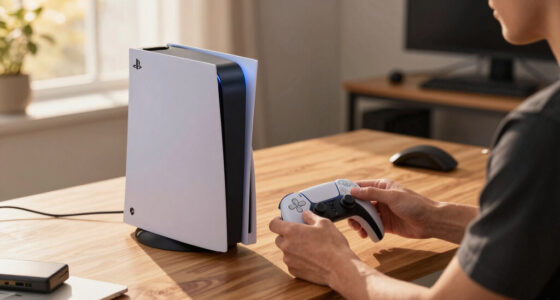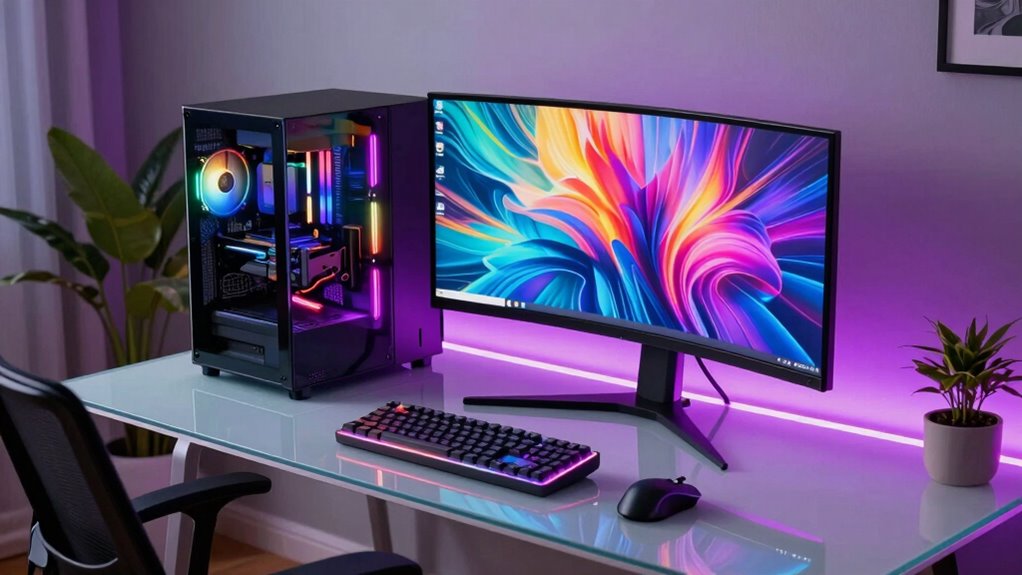

Choosing an ai workstation desktop in 2026 involves balancing raw power, expandability, and budget. The best overall pick is the GEEKOM A9 Mega AI Workstation PC, offering a robust Ryzen AI Max+ processor and ample RAM for complex AI tasks. The HP OMEN 45L Gaming Desktop stands out for users requiring high-end GPU power, while compact options like the MINISFORUM MS-S1 MAX deliver impressive performance in a small form factor. Readers face tradeoffs between raw processing capability and space, cost and future-proofing. Keep reading for a detailed breakdown of how each option stacks up.

Get the latest gadgets delivered free with Prime
- Fast, free delivery on millions of items
- Prime Video, Amazon Music and more included
- Member-only deals all year
Complete the kit

Key Takeaways
- High-core count CPUs are essential for multitasking and large model training in AI workstations.
- GPU choice, especially NVIDIA RTX 5090, significantly impacts AI processing speed and efficiency.
- Expandability and connectivity options vary, influencing future upgrades and peripheral support.
- Mini PCs can handle demanding AI tasks but often compromise on expandability and thermal management.
- Pricing reflects build quality, GPU power, and processor capability—higher costs generally mean more future-proofing.
| BOSGAME Mini PC M5, Ryzen AI Max+ 395, 128GB LPDDR5 RAM, 2TB NVMe SSD |  | Best Overall AI Workstation for Power and Flexibility | Processor: AMD Ryzen AI Max+ 395, 16 cores, up to 5.1GHz | Memory: 128GB LPDDR5X-8000 | Graphics: Radeon 8060S with 40 RDNA 3.5 compute units | VIEW ON AMAZON | See Our Full Breakdown |
| GEEKOM A9 Mega AI Workstation PC, Ryzen AI Max+ 395, 128GB RAM, 2TB SSD |  | Best for Heavy AI Processing and Large Datasets | Processor: Ryzen AI Max+ 395 | Cores: 16 Zen 5 cores | GPU: Radeon 8060S with 96GB VRAM | VIEW ON AMAZON | See Our Full Breakdown |
| Dell Tower Desktop with Intel Core Ultra 7-265, 16GB DDR5 RAM, Windows 11 Pro |  | Best for Business and Everyday Productivity | Processor: Intel Core Ultra 7-265 | Memory: 16GB DDR5 RAM | Storage: SSD (capacity unspecified) | VIEW ON AMAZON | See Our Full Breakdown |
| Dell Tower Plus EBT2250 AI PC Platinum Desktop Workstation |  | Best for Content Creation and Gaming with AI Capabilities | Processor: Intel Core Ultra 9-285, 24 cores | Graphics: NVIDIA GeForce RTX 5060 8GB GDDR7 | Memory: 64GB DDR5 | VIEW ON AMAZON | See Our Full Breakdown |
| MINISFORUM MS-S1 MAX Mini AI Workstation PC, AMD Ryzen AI Max+ 395, 128GB RAM, 2TB SSD, Dual M.2, USB4 V2, Dual 10GbE, Wi-Fi 7 |  | Best Compact AI Powerhouse for Enterprise and Creative Work | Processor: AMD Ryzen AI Max+ 395 | Cores: 16 cores | GPU: RDNA 3.5 | VIEW ON AMAZON | See Our Full Breakdown |
| GEEKOM IT15 Mini PC with Intel Ultra 9 285H, Arc 140T GPU, 32GB DDR5, 1TB SSD, WiFi 7, 8K Quad Display, Windows 11 Pro |  | Best for Creative Multi-Display Environments | Processor: Intel Ultra 9 285H (16 cores, up to 5.4 GHz) | Graphics: Arc 140T GPU | RAM: 32GB DDR5 (upgradable to 128GB) | VIEW ON AMAZON | See Our Full Breakdown |
| MINISFORUM MS-S1 Max Mini Workstation AMD Ryzen AI Max+ 395, 128GB LPDDR5, 2TB SSD, HDMI, USB4, 10G Ethernet, WiFi 7, Bluetooth 5.4, Radeon 8060S Graphics |  | Best for Demanding Content Creation and Professional Use | Processor: AMD Ryzen AI Max+ 395, 16 cores/32 threads, up to 5.1GHz | Graphics: Radeon 8060S, RDNA 3.5, 2900 MHz | Memory: 128GB LPDDR5-8000MHz | VIEW ON AMAZON | See Our Full Breakdown |
| HP 2025 OmniDesk M03 Premium Business Next Gen AI Desktop Computer with Intel Core Ultra 7-265, 16GB DDR5 RAM, 1TB HDD + 256GB PCIe SSD, Wi-Fi 6, Dual 4K Monitor Support, Windows 11 |  | Best for Business Productivity with AI Acceleration | Processor: Intel Core Ultra 7-265, 20 cores, up to 5.3 GHz | Memory: 16GB DDR5-6400 MHz | Storage: 256GB PCIe NVMe SSD + 1TB HDD | VIEW ON AMAZON | See Our Full Breakdown |
| HP OmniDesk Desktop Computer PC, AMD Ryzen 7 8700G, 32GB DDR5, 1TB SSD, Radeon 780M Graphics, Wi-Fi 6 + Bluetooth 5.4 (Includes Keyboard + Mouse) |  | Best for Gaming and Personal Power Users | Processor: AMD Ryzen 7 8700G, 4.2 GHz | Memory: 32GB DDR5 | Storage: 1TB PCIe Gen4 NVMe SSD | VIEW ON AMAZON | See Our Full Breakdown |
| HP OMEN 45L Gaming Desktop with Intel Core Ultra 9 285K, 64GB RAM, 2TB SSD, NVIDIA GeForce RTX 5090, Windows 11 Pro |  | Best for High-End Gaming and AI Workloads | Processor: Intel Core Ultra 9 285K | RAM: 64GB DDR5 | Storage: 2TB PCIe Gen4 SSD | VIEW ON AMAZON | See Our Full Breakdown |
| MES2X Dual GPU AI Workstation with AMD Ryzen 9-9900X and NVIDIA GeForce RTX 5090 |  | Best Powerhouse for Demanding AI and Graphics Workflows | Processor: AMD Ryzen 9-9900X 12-core 4.4GHz | Graphics Card: NVIDIA GeForce RTX 5090 (2x) | RAM: 256GB DDR5 | VIEW ON AMAZON | See Our Full Breakdown |
| ai workstation desktop | Processor | Storage | Memory | Graphics |
|---|---|---|---|---|
| BOSGAME Mini PC M5 | AMD Ryzen AI Max+ 395, 16 cores, up to 5.1GHz | 2TB PCIe 4.0 NVMe SSD | 128GB LPDDR5X-8000 | Radeon 8060S with 40 RDNA 3.5 compute units |
| GEEKOM A9 Mega AI Workstation | Ryzen AI Max+ 395 | 2TB PCIe Gen4 NVMe SSD | 128GB LPDDR5X | — |
| Dell Tower Desktop with Intel | Intel Core Ultra 7-265 | SSD (capacity unspecified) | 16GB DDR5 RAM | — |
| Dell Tower Plus EBT2250 AI PC | Intel Core Ultra 9-285, 24 cores | 2TB PCIe NVMe SSD | 64GB DDR5 | NVIDIA GeForce RTX 5060 8GB GDDR7 |
| MINISFORUM MS-S1 MAX Mini AI W | AMD Ryzen AI Max+ 395 | 2TB SSD, dual M.2 PCIe 4.0 | 128GB LPDDR5x | — |
| GEEKOM IT15 Mini PC with Intel | Intel Ultra 9 285H (16 cores, up to 5.4 GHz) | 1TB NVMe Gen 4 SSD | — | Arc 140T GPU |
| MINISFORUM MS-S1 Max Mini Work | AMD Ryzen AI Max+ 395, 16 cores/32 threads, up to 5.1GHz | 2TB PCIe4.0 SSD, expandable | 128GB LPDDR5-8000MHz | Radeon 8060S, RDNA 3.5, 2900 MHz |
| HP 2025 OmniDesk M03 Premium B | Intel Core Ultra 7-265, 20 cores, up to 5.3 GHz | 256GB PCIe NVMe SSD + 1TB HDD | 16GB DDR5-6400 MHz | Supports 2 × 4K Monitors |
| HP OmniDesk Desktop Computer P | AMD Ryzen 7 8700G, 4.2 GHz | 1TB PCIe Gen4 NVMe SSD | 32GB DDR5 | Radeon 780M |
| HP OMEN 45L Gaming Desktop wit | Intel Core Ultra 9 285K | 2TB PCIe Gen4 SSD | — | — |
| MES2X Dual GPU AI Workstation | AMD Ryzen 9-9900X 12-core 4.4GHz | 8TB NVMe SSD | — | — |
More Details on Our Top Picks
BOSGAME Mini PC M5, Ryzen AI Max+ 395, 128GB LPDDR5 RAM, 2TB NVMe SSD
The BOSGAME Mini PC M5 stands out for its combination of high-end processing with flexible expandability, making it a top choice for demanding AI and creative workloads. Its 16-core AMD Ryzen AI Max+ 395 delivers robust multi-core performance, while the large 128GB LPDDR5 RAM supports complex datasets and multitasking. Supporting up to four 8K displays, it excels at multitasking and visualization, surpassing smaller mini PCs like the MINISFORUM MS-S1 MAX in raw power. However, its compact form factor can limit upgrade options and might be challenging for users unfamiliar with system setup, and the high-end specs come with a steep price tag. Overall, this model makes the most sense for professionals needing serious local computational power without sacrificing display flexibility.
Pros:- Powerful 16-core AMD Ryzen AI Max+ 395 processor for demanding workloads
- Supports up to 4 8K displays for multitasking and visualization
- Large 128GB LPDDR5 RAM suitable for AI and creative tasks
- Flexible storage options with 2TB NVMe SSD and expansion slot
Cons:- High price point due to premium components
- Compact size limits upgradeability and internal space
- Requires technical expertise for optimal setup
Best for: Developers, AI researchers, and creative professionals who need a powerful, expandable local workstation.
Not ideal for: Casual users or small offices with limited budgets, as the high cost and complexity may be unnecessary.
- Processor:AMD Ryzen AI Max+ 395, 16 cores, up to 5.1GHz
- Memory:128GB LPDDR5X-8000
- Graphics:Radeon 8060S with 40 RDNA 3.5 compute units
- Storage:2TB PCIe 4.0 NVMe SSD
- Display Support:Up to 4 displays, 8K@60Hz
- Ports:Dual USB4, HDMI 2.1, DisplayPort 1.4, SD 4.0
Our verdict“This workstation suits professionals requiring high performance and display flexibility, despite its premium price and setup complexity.”
GEEKOM A9 Mega AI Workstation PC, Ryzen AI Max+ 395, 128GB RAM, 2TB SSD
The GEEKOM A9 Mega makes a compelling case for those who prioritize raw AI power. Its 16 Zen 5 cores and 126 TOPS AI processing capability surpass many competitors, including the BOSGAME M5 in pure compute potential. Its advanced cooling system ensures quiet operation during intense workloads, which can be a challenge in smaller systems. The support for up to 8K displays and fast Wi-Fi 7 enhances its versatility for visualization and real-time data processing. Nevertheless, this model’s premium price and high demand for the Ryzen AI Max+ 395 chip may limit accessibility, and its compact size could restrict future upgrades. It is best suited for users who need maximum AI performance and dataset handling in a small footprint.
Pros:- Exceptional AI processing with 126 TOPS and 16 Zen 5 cores
- Supports up to 8K displays and Wi-Fi 7 for high-bandwidth tasks
- 128GB RAM and 2TB SSD for large datasets and fast access
- Advanced cooling system ensures stable, quiet operation
Cons:- Limited availability due to high demand for AMD Ryzen AI Max+ 395
- Premium pricing may be prohibitive
- Compact size limits upgrade options
Best for: AI developers, data scientists, and professionals working with large-scale machine learning projects.
Not ideal for: Casual users or those on a tight budget, as the high price and limited availability make it less accessible.
- Processor:Ryzen AI Max+ 395
- Cores:16 Zen 5 cores
- GPU:Radeon 8060S with 96GB VRAM
- Memory:128GB LPDDR5X
- Storage:2TB PCIe Gen4 NVMe SSD
- Connectivity:Wi-Fi 7, Dual 2.5GbE LAN
Our verdict“Ideal for AI professionals demanding maximum processing power in a small form factor, despite high costs and limited availability.”
Dell Tower Desktop with Intel Core Ultra 7-265, 16GB DDR5 RAM, Windows 11 Pro
The Dell Tower Desktop offers reliable performance for business use and general multitasking, with a more modest configuration compared to the AI-focused options. Its Intel Core Ultra 7-265 processor provides solid performance for everyday tasks and light multitasking, and the 16GB DDR5 RAM ensures smooth operation. While it supports multiple monitors, it lacks dedicated high-end graphics, which makes it less suitable for demanding AI or creative workloads. Compared to the GEEKOM A9 Mega, it is less powerful but more straightforward to set up and upgrade. The absence of detailed storage options and higher-end features limits its appeal for heavy-duty AI work. This model is best for users who need a dependable desktop for work and moderate multitasking without the complexity of high-end AI hardware.
Pros:- Solid performance with latest Intel Core Ultra processor
- Supports multiple monitors for enhanced productivity
- Easy to upgrade with tool-less access
- Includes security features like TPM
Cons:- Limited details on storage capacity and expandability
- No dedicated graphics card for GPU-intensive tasks
- Less suitable for demanding AI or creative workloads
Best for: Small business users and professionals needing a reliable, upgradeable desktop for productivity tasks.
Not ideal for: AI researchers or creative professionals requiring advanced GPU support and high memory capacity.
- Processor:Intel Core Ultra 7-265
- Memory:16GB DDR5 RAM
- Storage:SSD (capacity unspecified)
- Operating System:Windows 11 Pro
- Display Support:Multiple monitor support
- Security:TPM and lock slot
Our verdict“A dependable choice for business users who prioritize simplicity and upgradeability over raw AI power.”
Dell Tower Plus EBT2250 AI PC Platinum Desktop Workstation
The Dell Tower Plus EBT2250 combines powerful multi-core processing with high-end graphics, making it suitable for content creators, gamers, and AI workloads alike. Its 24-core Intel Core Ultra 9-285 ensures handling of demanding tasks, while the NVIDIA GeForce RTX 5060 provides excellent graphics performance for AAA gaming and GPU-accelerated creative work. With 64GB DDR5 RAM and a fast 2TB PCIe SSD, it balances speed with capacity. Compared to the BOSGAME M5, it caters more to users who need gaming or rendering capabilities in addition to AI. However, its weight, size, and higher price point might restrict placement options, and it lacks mention of included peripherals. This desktop is best suited for those who want a versatile machine for gaming, content creation, and AI tasks.
Pros:- Powerful 24-core processor for demanding tasks
- High-quality RTX 5060 graphics card for gaming and GPU acceleration
- Large 64GB DDR5 RAM supports multitasking and rendering
- Fast 2TB PCIe NVMe SSD for quick data access
Cons:- Heavy and large, requiring ample space
- Premium price may be a barrier for some
- No mention of included peripherals or additional features
Best for: Content creators, gamers, and AI users needing a high-performance, versatile desktop.
Not ideal for: Casual users or those with limited space, given its size and higher cost.
- Processor:Intel Core Ultra 9-285, 24 cores
- Graphics:NVIDIA GeForce RTX 5060 8GB GDDR7
- Memory:64GB DDR5
- Storage:2TB PCIe NVMe SSD
- Connectivity:WiFi 7, Bluetooth 5.4
- Dimensions:14.75 x 17.6 x 7 inches
Our verdict“A versatile powerhouse ideal for users who need both gaming and AI capabilities in a single system.”
MINISFORUM MS-S1 MAX Mini AI Workstation PC, AMD Ryzen AI Max+ 395, 128GB RAM, 2TB SSD, Dual M.2, USB4 V2, Dual 10GbE, Wi-Fi 7
The MINISFORUM MS-S1 MAX stands out for its small footprint combined with formidable AI processing abilities. Powered by the AMD Ryzen AI Max+ 395 and supporting up to 128GB RAM, it can handle intensive AI model training and large datasets. Its dual 10GbE LAN and USB4 V2 connectivity offer fast data transfer, making it ideal for enterprise environments. Its support for multiple high-resolution outputs and extensive expansion options give it an edge over bulkier workstations like the Dell EBT2250 for space-constrained setups. The setup can be complex for non-technical users, and the high-end hardware may be overkill for casual or moderate workloads. It is best for those who need a compact yet powerful AI workstation with extensive connectivity.
Pros:- High-performance AMD Ryzen AI Max+ 395 CPU with 16 cores
- Supports up to 128GB RAM and 2TB SSD for large projects
- Dual 10GbE LAN and USB4 V2 enable fast data transfer
- Compact size ideal for space-limited environments
Cons:- Setup complexity may deter inexperienced users
- Limited pre-installed OS information
- High-end hardware cost may not suit casual users
Best for: Enterprise users, AI researchers, and creative professionals needing a small, highly capable workstation.
Not ideal for: Casual users or those new to system assembly, as it requires technical knowledge for setup.
- Processor:AMD Ryzen AI Max+ 395
- Cores:16 cores
- GPU:RDNA 3.5
- Memory:128GB LPDDR5x
- Storage:2TB SSD, dual M.2 PCIe 4.0
- Networking:Dual 10GbE LAN, Wi-Fi 7
Our verdict“A compact yet powerful AI workstation designed for enterprise and advanced creative workloads, requiring technical setup skills.”
GEEKOM IT15 Mini PC with Intel Ultra 9 285H, Arc 140T GPU, 32GB DDR5, 1TB SSD, WiFi 7, 8K Quad Display, Windows 11 Pro
The GEEKOM IT15 stands out for its ability to support up to four 8K displays, making it ideal for data visualization, design, and multitasking setups that demand high resolution. Compared to the MINISFORUM MS-S1 Max, it offers a more robust cooling system and built-in support for multiple high-res outputs, though it comes at a higher price point. Its Intel Ultra 9 285H processor provides significant AI-related capabilities and multitasking performance, but the setup can be daunting for non-technical users, and detailed info on software compatibility is limited. This mini PC’s durable metal frame and advanced connectivity make it suitable for professional environments needing reliable, high-performance visuals.
Pros:- Supports up to 4 8K displays for high-resolution multitasking
- Powerful Intel Ultra 9 processor with AI features
- Fast WiFi 7 and 2.5GbE Ethernet for high-speed connectivity
- Durable metal frame with quiet cooling
Cons:- Premium price may be prohibitive for casual or budget users
- Complex initial setup can be difficult for non-technical buyers
- Limited detailed info on specific software compatibility
Best for: Creative professionals and data analysts needing multiple 8K displays for complex visual work
Not ideal for: Casual users or those seeking a budget-friendly AI workstation, due to its premium price and setup complexity
- Processor:Intel Ultra 9 285H (16 cores, up to 5.4 GHz)
- Graphics:Arc 140T GPU
- RAM:32GB DDR5 (upgradable to 128GB)
- Storage:1TB NVMe Gen 4 SSD
- Display Support:Up to 4 displays, 8K and 4K
- Connectivity:WiFi 7, Bluetooth 5.4, 2.5GbE Ethernet
Our verdict“This mini PC is best suited for professionals needing multi-display support and high AI performance, despite its higher cost and setup complexity.”
MINISFORUM MS-S1 Max Mini Workstation AMD Ryzen AI Max+ 395, 128GB LPDDR5, 2TB SSD, HDMI, USB4, 10G Ethernet, WiFi 7, Bluetooth 5.4, Radeon 8060S Graphics
The MINISFORUM MS-S1 Max delivers outstanding performance for intensive multimedia and professional workloads, thanks to its AMD Ryzen AI Max+ 395 processor with 16 cores and 32 threads. Compared with the HP OMEN 45L, it offers a smaller footprint but packs more raw power with dual 10G Ethernet and extensive 8K video output capabilities. Its 128GB LPDDR5 RAM and expandable storage make it a top choice for content creators who need fast, reliable multitasking and large storage pools. However, its size is still relatively large for a mini PC, and the high power consumption of 130W can lead to increased energy costs. Its advanced cooling system helps manage heat during demanding tasks.
Pros:- Supports multiple 8K outputs for multi-monitor setups
- Powerful AMD Ryzen AI Max+ 395 processor
- Fast wired and wireless connectivity with 10G Ethernet and WiFi 7
- Extensive storage options with large, expandable SSDs
Cons:- Large size for a mini PC, requiring ample space
- High power consumption at 130W
- Setup complexity due to advanced features
Best for: Content creators, digital signage operators, and professionals needing multi-monitor and high-performance computing
Not ideal for: Casual users or those with limited space, since the unit is sizable and consumes significant power
- Processor:AMD Ryzen AI Max+ 395, 16 cores/32 threads, up to 5.1GHz
- Graphics:Radeon 8060S, RDNA 3.5, 2900 MHz
- Memory:128GB LPDDR5-8000MHz
- Storage:2TB PCIe4.0 SSD, expandable
- Video Outputs:5 (including HDMI 8K@60Hz)
- Network:Dual 10G Ethernet, WiFi 7
Our verdict“This workstation excels for users demanding high-end multimedia output and processing, at the expense of size and energy use.”
HP 2025 OmniDesk M03 Premium Business Next Gen AI Desktop Computer with Intel Core Ultra 7-265, 16GB DDR5 RAM, 1TB HDD + 256GB PCIe SSD, Wi-Fi 6, Dual 4K Monitor Support, Windows 11
The HP 2025 OmniDesk M03 is tailored for business environments requiring AI-enhanced multitasking and reliable dual 4K monitor support. Compared to the HP OmniDesk PC with Ryzen 7 8700G, it offers a more modern, multi-core processor with AI capabilities that accelerate workflows. Its quiet HP SilentFlow cooling and comprehensive connectivity make it suitable for professional settings, though it’s somewhat limited in upgrade options due to its compact chassis. The 16GB DDR5 RAM and hybrid storage ensure swift data access and smooth multitasking, but the high-end specs come at a premium price, which might not appeal to budget-conscious buyers.
Pros:- Powerful multi-core processor with AI capabilities
- Supports dual 4K monitors for productivity
- Quiet, efficient cooling system
- Modern connectivity including Wi-Fi 6 and Bluetooth 5.3
Cons:- High price for high-end specs
- Limited upgrade options
- Compact chassis may restrict future expansion
Best for: Business professionals and teams needing AI-accelerated productivity with dual 4K display support
Not ideal for: Casual users or those seeking extensive upgrade flexibility, due to its compact design and limited expansion slots
- Processor:Intel Core Ultra 7-265, 20 cores, up to 5.3 GHz
- Memory:16GB DDR5-6400 MHz
- Storage:256GB PCIe NVMe SSD + 1TB HDD
- Graphics:Supports 2 × 4K Monitors
- Connectivity:Wi-Fi 6, Bluetooth 5.3
- Dimensions:14.5 × 6.5 × 13.8 inches
Our verdict“This desktop is ideal for AI-powered business workflows where space efficiency and dual displays are priorities.”
HP OmniDesk Desktop Computer PC, AMD Ryzen 7 8700G, 32GB DDR5, 1TB SSD, Radeon 780M Graphics, Wi-Fi 6 + Bluetooth 5.4 (Includes Keyboard + Mouse)
The HP OmniDesk with Ryzen 7 8700G offers a compelling mix of gaming and productivity performance. Its 32GB DDR5 RAM and 1TB SSD ensure fast multitasking and quick load times, making it suitable for demanding personal use and casual gaming. Compared with the HP 2025 OmniDesk M03, it features a dedicated Radeon 780M graphics card, which enhances gaming and multimedia capabilities, though it lacks the AI acceleration focus of the business model. Its included keyboard and mouse make it ready to use out of the box, but it doesn’t support extensive future upgrades, and its integrated graphics limit high-end gaming performance.
Pros:- Powerful AMD Ryzen 7 8700G processor
- Large 32GB DDR5 memory for multitasking
- Dedicated Radeon 780M graphics for gaming
- Includes keyboard and mouse for immediate use
Cons:- Limited upgrade flexibility
- No high-end dedicated GPU for AAA gaming
- No specific price info available
Best for: Power users seeking a versatile desktop for gaming, multimedia, and everyday tasks
Not ideal for: Professional workloads requiring multiple high-res displays or AI acceleration, due to limited graphics performance and upgrade options
- Processor:AMD Ryzen 7 8700G, 4.2 GHz
- Memory:32GB DDR5
- Storage:1TB PCIe Gen4 NVMe SSD
- Graphics:Radeon 780M
- Connectivity:Wi-Fi 6, Bluetooth 5.4
- Dimensions:13.27 x 6.1 x 12.4 inches
Our verdict“This PC suits users who want a high-performance desktop for gaming and casual work without extensive future upgrade plans.”
HP OMEN 45L Gaming Desktop with Intel Core Ultra 9 285K, 64GB RAM, 2TB SSD, NVIDIA GeForce RTX 5090, Windows 11 Pro
The HP OMEN 45L combines top-tier gaming hardware with AI capabilities, making it a powerhouse for both gaming and demanding AI tasks. Its Intel Core Ultra 9 285K processor and NVIDIA GeForce RTX 5090 GPU provide exceptional performance, especially compared to the GEEKOM IT15 or MINISFORUM MS-S1 Max, which lack such high-end graphics and extensive upgrade options. The 64GB RAM and 2TB SSD support intensive multitasking and large datasets, while the OMEN Cryo Chamber cooling system ensures thermal stability during prolonged workloads. Its large size and premium price might be overkill for casual users, but for serious gamers or AI developers, it offers unmatched performance and upgradeability.
Pros:- High-end Intel Core Ultra 9 285K processor
- NVIDIA RTX 5090 GPU for gaming and AI tasks
- 64GB RAM supports extensive multitasking
- Advanced cooling system for thermal management
Cons:- Premium price limits accessibility
- Large footprint requires ample space
- Complex setup may overwhelm beginners
Best for: Enthusiast gamers and AI developers needing maximum performance and upgrade options
Not ideal for: Budget-conscious buyers or users with limited space, due to its size and high cost
- Processor:Intel Core Ultra 9 285K
- RAM:64GB DDR5
- Storage:2TB PCIe Gen4 SSD
- Graphics Card:NVIDIA GeForce RTX 5090
- Cooling System:OMEN Cryo Chamber 360mm liquid cooler
- Operating System:Windows 11 Pro
Our verdict“This desktop is ideal for those demanding the absolute best in gaming and AI without compromise, despite its cost and size.”
MES2X Dual GPU AI Workstation with AMD Ryzen 9-9900X and NVIDIA GeForce RTX 5090
This MES2X workstation stands out for its dual NVIDIA GeForce RTX 5090 GPUs, making it ideal for complex AI training and rendering tasks. Compared to the HP OMEN 45L, which also features a high-end GPU but only a single RTX 5090, the dual GPUs here provide significantly higher parallel processing capacity—though this comes with increased power consumption and heat output. The 256GB DDR5 RAM and 8TB NVMe SSD ensure fast data handling and ample storage, making it suitable for large datasets. However, its size and weight mean it requires a spacious setup, and the complex cooling system may demand technical expertise to maintain. This pick makes the most sense for AI researchers or creative professionals who need maximum compute power and can accommodate a bulky, high-cost system.
Pros:- Exceptional dual GPU setup for intensive AI and graphics workloads
- Massive 256GB DDR5 RAM allows handling of large datasets smoothly
- Fast 8TB NVMe SSD supports rapid data access and storage
Cons:- High price point puts it out of reach for most casual users
- Large and heavy, requiring dedicated space and stable power supply
- Setup and maintenance demand technical expertise, especially for cooling
Best for: AI researchers and 3D artists working on resource-intensive projects requiring dual GPU acceleration
Not ideal for: Small studios or individuals with limited space and budget, due to its size and expense
- Processor:AMD Ryzen 9-9900X 12-core 4.4GHz
- Graphics Card:NVIDIA GeForce RTX 5090 (2x)
- RAM:256GB DDR5
- Storage:8TB NVMe SSD
- Power Supply:1600W
- Cooling:360mm Liquid Cooler
- Motherboard:GIGABYTE AM5
- Operating System:Windows 11 Pro
Our verdict“This workstation is ideal for professionals demanding maximum GPU power and extensive RAM, provided space and budget are available.”

How We Picked
To determine the best ai workstation desktops, I evaluated each model based on processing power, GPU performance, memory capacity, expandability, and overall build quality. Performance benchmarks relevant to AI workloads, such as GPU CUDA cores and CPU core counts, guided the rankings. Usability factors like connectivity, upgrade options, and thermal design were also key. By comparing these elements across a range of price points and form factors, I aimed to highlight options suitable for different user needs—from professionals to enthusiasts. The products are ranked to help buyers find the best balance of power and value for their specific AI projects.| ai workstation desktop | Graphics |
|---|---|
| BOSGAME Mini PC M5 | Radeon 8060S with 40 RDNA 3.5 compute units |
| GEEKOM A9 Mega AI Workstation | — |
| Dell Tower Desktop with Intel | — |
| Dell Tower Plus EBT2250 AI PC | NVIDIA GeForce RTX 5060 8GB GDDR7 |
| MINISFORUM MS-S1 MAX Mini AI W | — |
| GEEKOM IT15 Mini PC with Intel | Arc 140T GPU |
| MINISFORUM MS-S1 Max Mini Work | Radeon 8060S, RDNA 3.5, 2900 MHz |
| HP 2025 OmniDesk M03 Premium B | Supports 2 × 4K Monitors |
| HP OmniDesk Desktop Computer P | Radeon 780M |
| HP OMEN 45L Gaming Desktop wit | — |
| MES2X Dual GPU AI Workstation | — |
Factors to Consider When Choosing Ai Workstation Desktop
When selecting an ai workstation desktop, understanding your specific needs is crucial. Consider the type of AI work you’ll perform—whether training large models, running inference, or developing algorithms—as this influences hardware priorities. Beyond raw specs, factors like expandability, cooling, and software compatibility can make a significant difference in long-term usability. Avoid common pitfalls like underestimating future upgrade paths or overinvesting in unnecessary features for your current scope. The right choice depends on balancing immediate performance with future-proofing and budget constraints.CPU Power and Core Count
The CPU is fundamental for handling data preprocessing, model training, and multitasking. For AI workloads, multi-core processors like AMD Ryzen 9 or Intel Core Ultra series provide better parallel processing capabilities. However, higher core counts often come with increased costs and power consumption. Buyers should match CPU performance with their specific workload demands—an entry-level AI project may do fine with a mid-range CPU, while complex training benefits from top-tier options.
GPU Selection
The GPU is the backbone of most AI computations, especially deep learning. NVIDIA’s RTX 5090 stands out for its CUDA cores and tensor performance, making it ideal for intensive tasks. In contrast, integrated or lower-tier GPUs limit the scope of projects you can tackle efficiently. When choosing, consider the GPU’s VRAM, compatibility with AI frameworks, and whether the workstation supports dual GPU setups for scalability. Remember, the GPU often justifies a significant portion of the overall investment.
Memory Capacity and Speed
Ample RAM—ideally 64GB or more—is vital when working with large datasets and complex models. DDR5 memory offers faster speeds and better future compatibility, but may come at a premium. Insufficient memory can cause bottlenecks, especially during training phases. Buyers should also evaluate the motherboard’s RAM slots and upgrade potential, ensuring the workstation can grow with their projects without requiring a complete overhaul.
Expandability and Connectivity
Future-proofing often hinges on upgrade options. Look for workstations with multiple PCIe slots, M.2 slots, and sufficient power supply headroom. Connectivity options like Thunderbolt 4, USB-C, and high-speed Ethernet can streamline data transfers and peripheral support. Compact or mini PCs may sacrifice some expandability, so assess whether current ports and slots meet your needs now and in the future. A well-designed workstation facilitates upgrades without extensive disassembly.
Cooling and Noise Management
High-performance components generate significant heat, especially under continuous AI workloads. Effective cooling systems—liquid cooling or high-quality air coolers—extend hardware lifespan and maintain stability. Noise levels matter if you work in shared spaces; quieter designs often come with more elaborate cooling solutions. Investing in a workstation with robust thermal management ensures consistent performance during intensive tasks, avoiding thermal throttling that hampers productivity.
Frequently Asked Questions
Can I upgrade the GPU in a mini AI workstation?
Upgrading the GPU in mini workstations can be challenging due to limited space and power supply constraints. Many mini PCs are designed with integrated or soldered GPUs, making upgrades impossible or very limited. If GPU upgradeability is a priority, opting for a mid-tower or full-size workstation with accessible PCIe slots will provide more flexibility. Consider your long-term needs, as GPU technology advances rapidly and future upgrades can significantly extend your workstation’s relevance.
Is a more expensive AI workstation worth it for small projects?
For small or beginner projects, investing in the highest-end workstation may not be necessary. Mid-range options with decent CPU and GPU performance can handle most entry-level AI tasks without overspending. The key is to match hardware capabilities with your project scope—overinvestment can lead to underutilized resources, while underinvestment might slow your progress. As your projects grow, you can plan upgrades or move to more powerful systems accordingly.
How important is thermal management for AI workstations?
Thermal management is critical in maintaining consistent performance and prolonging hardware lifespan. AI workloads often run continuously at high capacity, generating heat that can cause throttling or hardware failure if not properly managed. Choosing a workstation with good cooling solutions—liquid cooling, large heatsinks, or multiple fans—can prevent these issues. Proper airflow and quiet operation are additional benefits, especially if you work in shared or quiet environments.
Should I prioritize RAM over GPU for my AI workstation?
Both RAM and GPU are essential, but their importance depends on your specific tasks. Large datasets and complex models require ample RAM to avoid bottlenecks, while GPU power accelerates training and inference. For most deep learning projects, a balanced approach—plenty of RAM (64GB or more) paired with a capable GPU—is ideal. Skimping on either can limit your capacity to work efficiently, so consider your primary workload when allocating your budget.
What is the benefit of dual GPU setups in AI workstations?
Dual GPU configurations can significantly speed up AI training and inference by sharing workloads across multiple cards, especially with frameworks optimized for multi-GPU setups. They also provide redundancy and scalability for future projects. However, dual GPU systems tend to be more expensive, require larger power supplies, and can generate more heat and noise. They are best suited for researchers or professionals working on large-scale models where performance gains justify the additional investment.
Conclusion
For general professional AI development and intensive training tasks, the GEEKOM A9 Mega AI Workstation offers an excellent balance of power, expandability, and value. If budget is less of a concern and maximum GPU performance is needed, the HP OMEN 45L Gaming Desktop with NVIDIA RTX 5090 is the best choice. Beginners or those with limited space and budget might prefer the MINISFORUM MS-S1 MAX for its compact size and decent specs. For enterprise or high-end research, dual GPU options like the MES2X Dual GPU AI Workstation provide unmatched performance. Match your choice to your project scope, budget, and future plans to get the best results.
As an affiliate, we earn on qualifying purchases.Halloween Picks
halloween