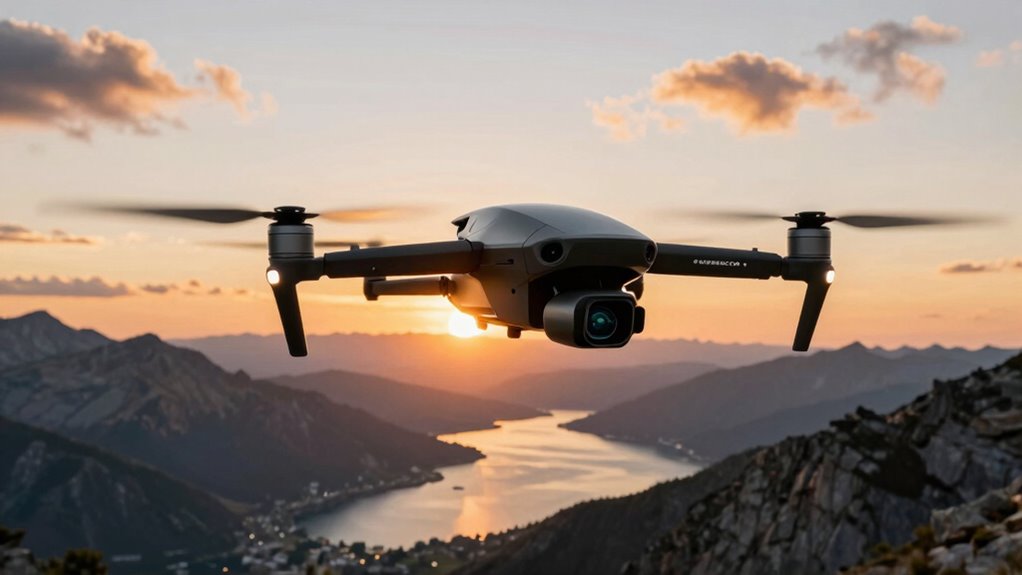

When I shop for a camera drone with a 1-inch sensor, I’m really shopping for the point where portability stops costing me image quality. A 1-inch CMOS chip gathers roughly four times the light of the tiny sensors in budget drones, which means cleaner night shots, more dynamic range in mixed lighting, and footage that survives color grading. In 2026, the market has consolidated around one standout airframe — the DJI Mini 5 Pro — sold through several very different bundles, and that’s exactly what makes choosing tricky.

Get the latest gadgets delivered free with Prime
- Fast, free delivery on millions of items
- Prime Video, Amazon Music and more included
- Member-only deals all year
The differences between these five listings come down to three tradeoffs: how many batteries you get, which controller is included (the basic RC-N3 that uses your phone versus the RC 2 with its own built-in screen), and whether you’re buying standard batteries or the Plus cells that push flight time from 36 to 52 minutes per charge. My top pick for most buyers is the 4-battery RC 2 bundle (B0HFTH8BSR) because it balances cost against real flying time. Budget-conscious pilots should look at the base single-battery kit, and serious creators who want maximum endurance, ND filters, and extended protection will find the Fly More Combo Plus kits worth the premium.
Below, I break down who each bundle actually serves, where each one wastes money, and why I ordered them the way I did.
Complete the kit



Key Takeaways
- All five products share the same DJI Mini 5 Pro airframe with a 50MP 1-inch CMOS sensor, so the real decision is bundle composition: battery count, controller type, and accessories.
- The RC 2 controller with its built-in 5.5-inch screen is the single biggest usability upgrade over the phone-based RC-N3, especially for outdoor flying in sunlight.
- Battery Plus cells extend flight from 36 to 52 minutes per charge but add charging time; standard batteries in a 4-pack total roughly 144 minutes of flying.
- Night flying with LiDAR is a headline feature, but permits are required in some countries and regions — check local rules before relying on it.
- The DJI Fly app is no longer on Google Play; Android owners must sideload it from DJI‘s website, which is a small but real friction point.
- Extended CPS warranty kits and accessory packs (landing pads, backpacks, microSD cards) only justify their price if you’ll actually use them.
| DJI Mini 5 Pro Drone with RC 2 Controller, 4 Batteries & Two-Way Charging Hub |  | Best Overall | Sensor: 50MP 1-inch CMOS, f/1.8 | Video: 4K/60fps HDR, 4K/120fps slow motion | Flight Time: Up to 36 min per battery | VIEW ON AMAZON | See Our Full Breakdown |
| DJI Mini 5 Pro Ultra-Light Drone with 1-Inch CMOS Camera |  | Best Value | Weight: 249.9 g ± 4 g | Sensor: 1-inch CMOS | Video: 4K/60fps HDR | VIEW ON AMAZON | See Our Full Breakdown |
| DJI Mini 5 Pro Fly More Combo Plus with RC 2, 3-Battery Bundle with CPS 26-Month Protection & Accessories Kit |  | Best Premium Bundle | Sensor: 50MP 1-inch CMOS, f/1.8 | Video: 4K/60fps HDR (14 stops), 4K/120fps slow motion | Color: 10-bit HLG / D-Log M | VIEW ON AMAZON | See Our Full Breakdown |
| DJI Mini 5 Pro Fly More Combo Plus with DJI RC 2, Extended Battery Life |  | Best for Long Flight Sessions | Sensor: 1-inch CMOS | Video: 4K/60fps HDR | Flight Time: Up to 52 minutes (Battery Plus) | VIEW ON AMAZON | See Our Full Breakdown |
| DJI Mini 5 Pro Fly More Combo with RC 2 and 4-Battery Bundle |  | Best for Travel Creators | Weight: Under 249 grams | Sensor: 1-inch CMOS, f/1.8 | Video: 4K/60fps HDR | VIEW ON AMAZON | See Our Full Breakdown |
| camera drones 1 inch sensor | Sensor | Video | Flight Time | Batteries |
|---|---|---|---|---|
| DJI Mini 5 Pro Drone with RC 2 | 50MP 1-inch CMOS, f/1.8 | 4K/60fps HDR, 4K/120fps slow motion | Up to 36 min per battery | 4 Intelligent Flight Batteries |
| DJI Mini 5 Pro Ultra-Light Dro | 1-inch CMOS | 4K/60fps HDR | 36 minutes | — |
| DJI Mini 5 Pro Fly More Combo | 50MP 1-inch CMOS, f/1.8 | 4K/60fps HDR (14 stops), 4K/120fps slow motion | Up to 52 minutes per battery | 3x Intelligent Flight Battery Plus |
| DJI Mini 5 Pro Fly More Combo | 1-inch CMOS | 4K/60fps HDR | Up to 52 minutes (Battery Plus) | 3x Intelligent Flight Battery Plus |
| DJI Mini 5 Pro Fly More Combo | 1-inch CMOS, f/1.8 | 4K/60fps HDR | — | 4 Intelligent Flight Batteries |
More Details on Our Top Picks
DJI Mini 5 Pro Drone with RC 2 Controller, 4 Batteries & Two-Way Charging Hub
This is the bundle I’d point most buyers toward because it nails the two upgrades that matter and skips the ones that don’t. You get the RC 2 controller with a built-in screen, which means no fumbling with your phone at the field and a bright live feed you can actually see in midday sun. And with four standard batteries, you’re looking at roughly 144 minutes of total flight time — enough for a full afternoon of shooting without range anxiety.
Compared with the base single-battery kit (B0F6XJ7W9M), this bundle costs more up front but eliminates the two purchases every new owner makes within a month: extra batteries and a better controller. Compared with the Combo Plus kits, it gives up the 52-minute Plus batteries and the ND filter set, but for most shooters, four 36-minute cells beat three 52-minute ones for scheduling flexibility — you can rotate charging while flying.
The O4+ transmission rated to 20 km with dual-band L1+L5 GNSS is overkill for legal line-of-sight flying, but the anti-interference performance is real if you shoot near urban Wi-Fi congestion. The tradeoff is honest: this is the priciest way to buy the drone if you only fly occasionally, and there’s no extended warranty included as a cushion.
Pros:- Four batteries deliver about 144 minutes of total flight time
- RC 2 controller with built-in screen beats phone-based control in bright conditions
- 4K/120fps slow motion on a 50MP 1-inch sensor for cinematic flexibility
- 20 km O4+ transmission with strong anti-interference for urban environments
Cons:- Highest cost per accessory-free bundle — you’re paying purely for batteries and the RC 2
- No extended warranty or extras like ND filters or a storage card
- Standard batteries mean 36-minute ceiling per flight rather than the Plus cells’ 52 minutes
Best for: Regular pilots and semi-pro creators who want maximum practical flying time and the screen-equipped controller without paying for accessory padding.
Not ideal for: Casual flyers who’ll use the drone a few times a year, or buyers on a strict budget who should start with the base kit.
- Sensor:50MP 1-inch CMOS, f/1.8
- Video:4K/60fps HDR, 4K/120fps slow motion
- Flight Time:Up to 36 min per battery
- Batteries:4 Intelligent Flight Batteries
- Transmission:O4+ 10-bit, up to 20 km
- Obstacle Sensing:Omnidirectional with forward LiDAR
- Controller:DJI RC 2
- Warranty:DJI 1 Year Limited
Our verdict“The most logically configured kit in the lineup: everything you’ll use weekly, nothing you won’t.”
DJI Mini 5 Pro Ultra-Light Drone with 1-Inch CMOS Camera
If you want to reach the 1-inch sensor quality threshold for the lowest possible entry price, this is the door. It’s the same airframe as every other pick here — 4K/60fps HDR, the 225° rotating gimbal for true vertical shooting, omnidirectional sensing with LiDAR — but packaged with just the essentials: the RC-N3 controller, one battery, and spare props.
The catch, and it’s a meaningful one, is the RC-N3 relies on your phone as the display. Calls interrupt your flight view, sunlight washes out budget phone screens, and mounting your phone every session adds friction the RC 2 removes. You also get a single 36-minute battery, so a full day out means downtime or buying cells separately at retail price. Against the 4-battery bundle, you’re saving money now but spending more later if you catch the drone bug — and most people do.
Where this kit shines is regulatory simplicity: at 249.9 grams, it slips under the registration weight threshold in many regions, making it the pick for travelers and hesitant first-timers. The 42GB of internal storage means you can fly before buying a microSD card at all, which softens the starter cost further.
Pros:- Lowest-cost entry to 1-inch sensor image quality
- Sub-250g weight simplifies registration and travel in many regions
- 42GB internal storage lets you fly without buying a memory card
- Omnidirectional LiDAR sensing included even at base price
Cons:- Phone-dependent RC-N3 controller is frustrating in bright light and interrupted by notifications
- Single battery limits sessions to about 36 minutes
- DJI Fly app must be sideloaded on Android since Google Play removal
Best for: Budget-conscious first-time buyers and occasional flyers who want 1-inch image quality without bundle markup.
Not ideal for: Frequent shooters who will immediately need extra batteries and a better controller, erasing the savings.
- Weight:249.9 g ± 4 g
- Sensor:1-inch CMOS
- Video:4K/60fps HDR
- Flight Time:36 minutes
- Internal Storage:42GB
- Gimbal:225° rotation, true vertical
- Obstacle Sensing:Omnidirectional with LiDAR
- Controller:DJI RC-N3
Our verdict“The smartest way to test whether drone photography sticks for you, priced accordingly.”
DJI Mini 5 Pro Fly More Combo Plus with RC 2, 3-Battery Bundle with CPS 26-Month Protection & Accessories Kit
This is the kit I’d recommend to someone treating the Mini 5 Pro as a working creative tool rather than a gadget. Three Plus batteries mean up to 52 minutes per flight — a genuine category-leading number that changes how you plan shoots, especially timelapses and long tracking sequences. The included ND8/32/128 filter set is the accessory serious shooters actually use, because controlling shutter speed in daylight is what makes aerial footage look cinematic instead of video-like.
Compared with the 4-battery bundle (my top pick), you trade one battery for three longer-lasting ones, plus filters, a hardshell backpack, a 128GB SanDisk card, a 31.5-inch landing pad, and a 26-month CPS extended protection plan. That warranty is the hidden value here: this drone flies near trees, water, and concrete, and repairs after crashes aren’t cheap. The landing pad alone solves a real problem for anyone launching from grass, sand, or dust.
The downsides are bulk and price. This is the most expensive way to buy the Mini 5 Pro, and the added accessories make the package heavier to carry even though the drone itself is tiny. The 14 stops of dynamic range, 10-bit HLG/D-Log M recording, and 48mm Med-Tele portrait mode are standout creative tools, but they only pay off if you edit your footage. If you shoot JPEGs for social media, most of this bundle’s justification evaporates.
Pros:- Plus batteries deliver up to 52 minutes of flight per charge
- ND filter set and 10-bit D-Log M/HLG support for serious grading workflows
- 26-month CPS extended protection adds real long-term coverage
- Complete accessory loadout including landing pad, backpack, and 128GB card
Cons:- Most expensive bundle in the lineup by a wide margin
- Heavier, bulkier kit despite the palm-sized drone
- Advanced color features are wasted on buyers who don’t edit
Best for: Working creators and dedicated hobbyists who edit footage, shoot in varied light, and want extended crash protection.
Not ideal for: Set-and-forget shooters and casual users who won’t touch ND filters or color profiles.
- Sensor:50MP 1-inch CMOS, f/1.8
- Video:4K/60fps HDR (14 stops), 4K/120fps slow motion
- Color:10-bit HLG / D-Log M
- Batteries:3x Intelligent Flight Battery Plus
- Flight Time:Up to 52 minutes per battery
- Extras:ND8/32/128 filters, landing pad, hardshell backpack, 128GB card
- Warranty:26-Month CPS Extended Protection
- Controller:DJI RC 2 with 5.5-inch 700-nit screen
Our verdict“The full creator arsenal — buy it if the drone earns its keep, skip it if it’s a weekend toy.”
DJI Mini 5 Pro Fly More Combo Plus with DJI RC 2, Extended Battery Life
This bundle occupies a deliberate middle ground: it pairs the RC 2 controller and three Plus batteries — the same 52-minute endurance as my premium pick — with ND filters, a charging hub, and spare props, but without the landing pad, backpack, and extended warranty padding. For buyers who know they want long flights and manual camera control but draw the line at accessory kits, this is the leanest version of the “go far” configuration.
Against the value pick, the difference is transformative: 52-minute flights versus 36, and a purpose-built screen versus your phone. Against the premium bundle, you save money by dropping items you might already own — many pilots have a memory card and a bag already. That said, charging three Plus batteries takes about 193 minutes through the hub, so a full recharge cycle is an afternoon commitment. Plan your shoots around it.
The one caveat I’d flag for beginners drawn in by the “4K drone for beginners” framing: this is a capable aircraft with a flexible 225° gimbal and creative flight modes like MasterShots and Panorama, and the omnidirectional sensing with LiDAR does reduce crash risk — but it’s an expensive first drone if you’re still learning stick control. The base kit remains the better training ground.
Pros:- Three Plus batteries for up to 52 minutes of flight each
- ND filters included for daylight shutter control
- RC 2 screen controller for reliable outdoor visibility
- Charging hub included for managed multi-battery cycles
Cons:- Charging three Plus batteries takes around 193 minutes
- No extended warranty despite the premium price
- Fewer total accessories than the similarly priced premium bundle, so compare listings carefully
Best for: Intermediate pilots who want maximum endurance and ND filters without paying for warranty and travel accessories.
Not ideal for: True beginners (despite the marketing) and anyone who needs quick turnaround charging between sessions.
- Sensor:1-inch CMOS
- Video:4K/60fps HDR
- Flight Time:Up to 52 minutes (Battery Plus)
- Batteries:3x Intelligent Flight Battery Plus
- Charging:~193 minutes for three batteries
- Gimbal:225° rotation, true vertical filming
- Obstacle Sensing:Omnidirectional Nightscape with LiDAR
- Extras:ND filters, charging hub, spare propellers
Our verdict“The endurance-focused pick stripped of fluff — ideal if you already own storage and a bag.”
DJI Mini 5 Pro Fly More Combo with RC 2 and 4-Battery Bundle
This bundle’s identity comes from its Deco Gear Pro backpack and four standard batteries, packaged with the RC 2, a Lexar 128GB card, and a 26-month CPS plan. Where my top pick optimizes for raw flying time with minimal gear, this one optimizes for the travel workflow: everything packs into one bag, you land, swap batteries, and keep shooting through a full day of exploring.
On paper it overlaps heavily with B0HFTH8BSR, and that’s the comparison that decides your purchase. This kit adds the backpack, microSD card, and extended CPS warranty on top of the same four-battery, RC 2 core. If those extras appeal — particularly the warranty for adventurous destinations — this is the better buy. If you’d rather source your own storage and case, the leaner bundle saves you the markup. The two-way charging hub is shared DNA and remains one of DJI’s most practical accessories.
The 10-bit color depth with D-Log M and HLG support gives this kit genuine post-production headroom, and the 50MP stills mode is underrated for landscape photographers who’d rather not carry a second camera. My honest reservation: true vertical shooting, while excellent for social content, still involves a rotating gimbal rather than a natively portrait sensor stack, so dedicated vertical-first creators may find compromises in extreme cases.
Pros:- Four batteries plus two-way charging hub for all-day shooting
- Backpack, 128GB card, and 26-month CPS warranty included
- 10-bit D-Log M/HLG recording for grading flexibility
- 50MP stills make it a viable hybrid tool for photographers
Cons:- Pricier than the equivalent lean bundle with identical core hardware
- Standard 36-minute batteries rather than the Plus cells at this price point
- Bundle bulk works against the drone’s ultra-portable premise
Best for: Travel photographers and vloggers who want a complete, organized kit with extended coverage for trips away from home.
Not ideal for: Buyers who already own storage cards and a case, or anyone minimizing bundle cost.
- Weight:Under 249 grams
- Sensor:1-inch CMOS, f/1.8
- Video:4K/60fps HDR
- Stills:50MP, 10-bit
- Batteries:4 Intelligent Flight Batteries
- Controller:DJI RC 2
- Storage:42GB internal + Lexar 128GB microSDXC
- Warranty:USA Warranty + 26-Month CPS
Our verdict“The organized traveler’s kit — worth it for the warranty and bag, redundant if you already own both.”
How We Picked
Since every product here shares the same 1-inch sensor airframe, I ranked the bundles rather than the drone itself. My criteria fell into four buckets.
Value per flight minute. A drone with one battery is a drone you fly for 36 minutes and then put away. I calculated total bundled flight time and divided by price to see which kits respect your money.
Controller quality. The RC 2’s built-in 700-nit display changes the flying experience far more than any accessory does. Bundles that include it rank higher for anyone who flies regularly.
Completeness for the intended buyer. A beginner doesn’t need ND filters; a traveling creator doesn’t need a hardshell backpack they’ll never check. I matched each kit to the buyer it genuinely fits and penalized bundles padded with filler.
Protection and longevity. Extended warranties matter more for a $700+ flying camera than for most gadgets, so kits with 26-month CPS coverage earned consideration — but only when the rest of the bundle justified the price too.
| camera drones 1 inch sensor | Obstacle Sensing | Controller |
|---|---|---|
| DJI Mini 5 Pro Drone with RC 2 | Omnidirectional with forward LiDAR | DJI RC 2 |
| DJI Mini 5 Pro Ultra-Light Dro | Omnidirectional with LiDAR | DJI RC-N3 |
| DJI Mini 5 Pro Fly More Combo | — | DJI RC 2 with 5.5-inch 700-nit screen |
| DJI Mini 5 Pro Fly More Combo | Omnidirectional Nightscape with LiDAR | — |
| DJI Mini 5 Pro Fly More Combo | — | DJI RC 2 |
Factors to Consider When Choosing Camera Drones 1 Inch Sensor
Because all five products share the same 1-inch sensor airframe, your decision comes down to bundle components. Here’s how I’d evaluate them.Why the 1-Inch Sensor Is the Story
A 1-inch CMOS sensor has roughly four times the surface area of the 1/2.3-inch chips in cheap camera drones. That translates directly into cleaner low-light footage, more dynamic range for scenes mixing bright sky and shadowed ground, and 10-bit color capture that survives grading. If you’ve ever been disappointed by mushy, noisy drone footage at dusk, the sensor is why — and it’s the one spec you can’t upgrade later.
Controller: RC-N3 Versus RC 2
The RC-N3 uses your phone as the display; the RC 2 has a built-in 5.5-inch 700-nit screen. In practice, the RC 2 means instant startup, no battery drain on your phone, no interrupted flights from notifications, and visibility in direct sunlight. If you fly more than a couple of times a month, I’d treat the RC 2 as non-negotiable.
Battery Math: Count Versus Capacity
Standard batteries give you 36 minutes; Plus batteries give you 52 but take longer to charge (about 193 minutes for three via hub). Four standard cells total ~144 minutes of flying with rotation flexibility; three Plus cells total ~156 minutes with fewer swaps. For most shooters the difference is marginal — buy based on whether you prefer more swaps or more bulk.
Weight and Regulation
At just under 250 grams, this airframe sits beneath registration thresholds in many regions, which matters for travel. Note two caveats: Plus batteries may push weight depending on configuration, and night flying with LiDAR requires permits in certain countries. Always check local rules before a trip.
Warranties and Accessories
DJI’s standard coverage is one year limited. Bundles with 26-month CPS protection add meaningful safety net for a crash-prone hobby. As for accessories, prioritize ND filters (real creative value), a landing pad (protects gimbal and props), and storage — and deprioritize bags and cables you probably own.
Frequently Asked Questions
Is a 1-inch sensor really worth paying extra for on a drone?
For most people buying a camera drone they’ll keep for years, yes. The 1-inch sensor is the single biggest determinant of footage quality you can’t fix later in editing. It captures more light, which means usable night and dusk footage instead of noise, and wider dynamic range means skies don’t blow out while shadows turn to mush. Budget drones with smaller sensors look fine on a phone screen in daylight but fall apart the moment conditions get tricky. If you’re shooting casual snapshots purely for social media, a smaller sensor may suffice — but anyone editing footage, printing stills, or shooting in varied light will see the difference immediately.
Which bundle should I buy if I’m a complete beginner?
I’d start with the base kit (B0F6XJ7W9M). It’s the cheapest way to access the same 1-inch sensor, the same obstacle sensing, and the same flight performance as every premium bundle here, and its single battery forces you to fly deliberately while you learn stick control. The phone-based controller is a mild annoyance, but it’s a reasonable trade while you decide whether drone flying is a habit. If it sticks, add batteries and upgrade to the RC 2 later — you’ll know exactly what you need by then, and you’ll avoid paying for accessories you never use.
What’s the difference between standard batteries and the Plus batteries?
Standard Intelligent Flight Batteries deliver up to 36 minutes per charge, while the Plus cells extend that to roughly 52 minutes. The tradeoffs are charging time and convenience: Plus batteries take longer to top up — about 193 minutes for three through the charging hub — and depending on regional rules, the added weight can matter near the 250-gram threshold. In practice, most shooters are well served by more standard batteries rather than fewer Plus ones, because rotating charged cells keeps you flying continuously. Plus batteries shine for long uninterrupted sessions like timelapses or waypoint missions where landing mid-shot isn’t an option.
Can I legally fly this drone at night using the LiDAR sensing?
The hardware supports it — the forward-facing LiDAR and omnidirectional vision sensors are specifically designed for low-light obstacle detection and safer return-to-home. Legality is a separate question. In the United States, recreational night flying is permitted with anti-collision lighting and compliance with Part 107 rules for commercial work, but other countries and regions require specific permits or prohibit night operations outright. Since regulations change frequently and vary by location, check the rules for wherever you plan to fly before scheduling a night session. The sensor’s low-light capability means the footage is worth the paperwork when it’s allowed.
Why isn’t the DJI Fly app on Google Play, and how do I install it?
DJI removed the Fly app from the Google Play store due to platform compatibility disputes, which affects all current DJI drones, not just this one. Android users need to download the app directly from DJI’s official website as an installation file and allow installs from that source in phone settings. It’s a minor inconvenience and worth doing before your drone arrives so you’re not troubleshooting on launch day. iPhone users are unaffected and can install normally from the App Store. DJI has committed to maintaining the direct download channel, so it’s friction rather than a functional limitation.
Conclusion
Since all five products are the same excellent 1-inch sensor airframe, my final recommendations sort cleanly by buyer type. If you’re a first-time buyer or casual flyer, start with the base kit (B0F6XJ7W9M) — it’s the cheapest legitimate entry into 1-inch image quality, and its limitations only matter once you’ve outgrown them. For regular pilots and most enthusiasts, the 4-battery RC 2 bundle (B0HFTH8BSR) is my overall top pick: ~144 minutes of flight time and a screen controller for the least markup per useful component.
Intermediate shooters who chase long sessions should choose the Fly More Combo Plus (B0F6XK911R) for its 52-minute Plus batteries and ND filters without accessory padding. Traveling creators get the best fit from the 4-battery bundle with backpack, card, and CPS warranty (B0GT6ZNSGN), which keeps everything organized on the road. And working professionals who edit footage and want maximum coverage should go straight to the premium kit (B0HBLSRHFM) with its full filter set, landing pad, and 26-month protection.
Whichever bundle you choose, the camera itself won’t disappoint — the 50MP 1-inch sensor, LiDAR-based obstacle sensing, and true vertical gimbal make this the strongest lightweight drone platform available in 2026. Buy the bundle that matches how often you’ll fly, and you won’t pay for anything you don’t use.
Columbus Day / Indigenous Peoples' Day Picks
long weekend sales
As an affiliate, we earn on qualifying purchases.