
For gamers and streamers aiming to record or broadcast in 4K at 120Hz with HDR support, choosing the right capture card can be a challenge. The best options deliver high frame rates, low latency, and robust compatibility, but they also vary in price, usability, and feature set. The Elgato 4K Pro stands out as the overall best, offering excellent quality and reliability, while the AVerMedia Live Gamer Ultra 2.1 provides impressive 4K144 capabilities for advanced users. Meanwhile, some models sacrifice HDR support or have limited compatibility, which are important tradeoffs to consider. Continue reading for a detailed breakdown of each option and how to pick the right card for your setup.

Get the latest gadgets delivered free with Prime
- Fast, free delivery on millions of items
- Prime Video, Amazon Music and more included
- Member-only deals all year
Complete the kit



Key Takeaways
- The top-ranked capture card balances high performance with ease of use, making it ideal for most users.
- Price varies significantly; premium options often support higher frame rates and more features, but budget models can still deliver solid 4K60 HDR recording.
- Compatibility with consoles like PS5, Xbox Series X/S, and Switch is crucial for gamers, especially those who want seamless integration.
- Latency and passthrough quality are critical for real-time gaming and streaming, influencing overall experience.
- HDR support and VRR capabilities are common differentiators that impact image quality and smoothness in gameplay recording.
| AVerMedia Live Gamer Ultra S 4K60 HDMI Capture Card with RGB24 |  | Best Overall for Versatile 4K60 HDR Streaming | Hardware Interface: USB 3.2 Gen 1 | Video Capture Resolution: 4K60 | Operating System: Windows 10, 11 | VIEW ON AMAZON | See Our Full Breakdown |
| Elgato 4K Pro Internal Capture Card, 8K60 Passthrough |  | Best for High-Res Professional Broadcasts | Resolution: 8K60 passthrough, 4K60 recording | Connectivity: HDMI 2.1 in/out | Frame Rate: up to 240fps at 1080p | VIEW ON AMAZON | See Our Full Breakdown |
| PORTTA DX20R HDMI Video Capture Card, 4K 60Hz Streaming & Recording |  | Best for Easy, High-Quality 4K60 Gameplay Capture | Video Capture Resolution: 4K@60Hz | Supported Formats: YUY2, NV12, RGB24 | Connectivity: USB 3.0 | VIEW ON AMAZON | See Our Full Breakdown |
| Elgato 4K S Capture Card for PS5, Xbox Series X/S, Switch |  | Best for Console Gamers Demanding 4K60 and HDR | Hardware Interface: USB 3.0 Type C | Video Capture Resolution: 1080p | Capture Resolutions: 2160p60, 1440p120, 1080p240 | VIEW ON AMAZON | See Our Full Breakdown |
| AVerMedia Live Gamer Ultra 2.1 4K144 HDMI 2.1 USB Capture Card, GC553G2 | 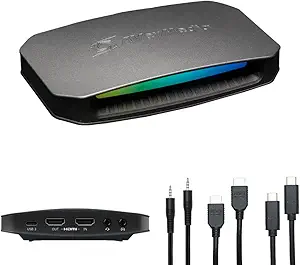 | Best for PC Gamers Wanting 4K144 and Advanced Features | Hardware Interface: HDMI | Video Capture Resolution: 4K60 | Maximum Capture: 4K144 MJPEG on Windows | VIEW ON AMAZON | See Our Full Breakdown |
| BlueAVS 4K HDMI Video Capture Card for Streaming, 4K 60Hz, 1440P 144Hz, 1080P 240Hz with HDR, VRR, ALLM, USB-C, Compatible with PS5, Xbox Series X/S, Switch |  | Best Value for Versatile High-Resolution Streaming | Hardware Interface: 3.5mm Audio, HDMI, Headphone, USB 3.2 Gen 1 | Video Capture Resolution: 4K@60Hz, 1080P@240Hz, 1440P@144Hz | Operating System: Linux, Mac OS, Windows 10/11 | VIEW ON AMAZON | See Our Full Breakdown |
| SIIG HDMI 2.1 Capture Device, 4K60 Capture, 4K120 Loopout |  | Best for High-Frame-Rate, Low-Latency Gaming and Streaming | Video Resolution Support: up to 4K144Hz HDR, 2560×1440 144Hz, 1920×1080 240Hz | Loopout Support: 4K120 HDR | Input/Output: HDMI, USB-C, 3.5mm audio | VIEW ON AMAZON | See Our Full Breakdown |
| capture cards 4k120 hdr | Video Capture Resolution | Hardware Interface |
|---|---|---|
| AVerMedia Live Gamer Ultra S 4 | 4K60 | USB 3.2 Gen 1 |
| Elgato 4K Pro Internal Capture | — | — |
| PORTTA DX20R HDMI Video Captur | 4K@60Hz | — |
| Elgato 4K S Capture Card for P | 1080p | USB 3.0 Type C |
| AVerMedia Live Gamer Ultra 2.1 | 4K60 | HDMI |
| BlueAVS 4K HDMI Video Capture | 4K@60Hz, 1080P@240Hz, 1440P@144Hz | 3.5mm Audio, HDMI, Headphone, USB 3.2 Gen 1 |
| SIIG HDMI 2.1 Capture Device | — | — |
More Details on Our Top Picks
AVerMedia Live Gamer Ultra S 4K60 HDMI Capture Card with RGB24
This option stands out for its support of 4K60 HDR and VRR passthrough, making it a strong choice for gamers seeking smooth, high-quality streams. Unlike the Elgato 4K S, which focuses on near-zero latency and high-end resolutions, the AVerMedia Ultra S offers broader compatibility with Windows, macOS, and iPadOS. The main tradeoff is that it requires a compatible setup and may involve a more complex installation process, especially for newcomers. Its low latency makes it ideal for live streaming and recording, but detailed accessory info is limited, which might impact users wanting an all-in-one solution.
Pros:- Supports 4K60 HDR and VRR passthrough for smooth gameplay streams
- Compatible with Windows, macOS, and iPadOS for versatile use
- Low latency capture ideal for real-time streaming
Cons:- Setup can be complex for users unfamiliar with hardware configuration
- Limited details on bundled accessories may require additional purchases
Best for: Gamers and streamers who need flexible, high-quality 4K HDR capture across multiple platforms.
Not ideal for: Beginners or those seeking an ultra-simple plug-and-play device without setup complexity.
- Hardware Interface:USB 3.2 Gen 1
- Video Capture Resolution:4K60
- Operating System:Windows 10, 11
- Special Features:4K60 HDR/VRR Pass-Through, Low Latency
- Platform:Windows, macOS, iPadOS
- Item Weight:99 g
Our verdict“This capture card suits experienced streamers needing flexible 4K HDR support across multiple devices.”
Elgato 4K Pro Internal Capture Card, 8K60 Passthrough
Compared with external options like the AVerMedia Ultra S, the Elgato 4K Pro provides internal PCIe installation supporting 8K60 passthrough, ideal for professionals needing top-tier resolution. Its HDMI 2.1 connectivity allows for high frame rates and ultra-smooth visuals, but the requirement for a compatible PCIe slot and a more involved installation process makes it less accessible for casual users. While it excels in high-res output and low latency, the setup may be daunting for beginners, and it’s primarily suited for desktop PCs rather than portable setups.
Pros:- Supports seamless 8K60 passthrough and 4K60 recording
- HDMI 2.1 ports enable high frame rates and future-proofing
- Low latency with VRR for synchronized gameplay
Cons:- Requires internal PCIe installation, not suitable for laptops
- Setup complexity can be a barrier for less technical users
Best for: Content creators and professionals with desktop PCs aiming for 8K passthrough and high-fidelity streaming.
Not ideal for: Casual gamers or streamers without a PCIe slot or those preferring simple external devices.
- Resolution:8K60 passthrough, 4K60 recording
- Connectivity:HDMI 2.1 in/out
- Frame Rate:up to 240fps at 1080p
- Features:VRR passthrough, ultra-low latency
- Platform:PCIe
- Item Dimensions:Standard PCIe card size
Our verdict“This card is best suited for professionals with desktop PCs seeking the highest resolution passthrough capabilities.”
PORTTA DX20R HDMI Video Capture Card, 4K 60Hz Streaming & Recording
The PORTTA DX20R makes a compelling choice for users wanting a straightforward, plug-and-play device capable of 4K60 HDR with ultra-low latency. Unlike the Elgato 4K S, which offers high-end options for HDR10 and 144Hz at 2K, the DX20R emphasizes ease of use and broad OS compatibility. Its support for HDR and VRR enhances visual quality, but software download requirements and the need for possibly supplementary hardware for advanced features can complicate setup. It’s perfect for streamers seeking reliable, high-quality capture without extensive configuration.
Pros:- Supports 4K@60Hz with HDR and VRR for enhanced visuals
- Plug-and-play on multiple OS including Windows, macOS, Linux
- Ultra-low latency for live streaming
Cons:- Requires software download for full features
- May need supplementary hardware for advanced controls
Best for: Streamers and gamers who value simple setup and high-quality 4K60 HDR capture.
Not ideal for: Advanced users needing extensive software customization or higher refresh rates at 2K/144Hz.
- Video Capture Resolution:4K@60Hz
- Supported Formats:YUY2, NV12, RGB24
- Connectivity:USB 3.0
- Features:HDR, VRR, Smart Display & Control
- Compatibility:Windows, macOS, Linux
- Dimensions:Compact, portable
Our verdict“This capture card is ideal for users who want reliable, high-quality 4K60 HDR streaming with minimal fuss.”
Elgato 4K S Capture Card for PS5, Xbox Series X/S, Switch
This device makes sense for console gamers who want a straightforward solution for 4K60 and 144Hz at 2K, with the added benefit of HDR10 support and near-zero latency. While it doesn’t support 4K120 or higher refresh rates at 4K, it offers reliable performance for current generation consoles and is highly compatible with Windows, Mac, and iPad. Compared to the AVerMedia Ultra S, it’s simpler to set up and more portable but sacrifices some resolution options. Its HDR10 support enhances visual quality, but some advanced features might need extra software or system requirements, limiting its flexibility for PC-only high-end streaming.
Pros:- Supports 4K60, 1440p120, and 1080p240 for varied gameplay
- HDR10 support enhances visual fidelity
- Plug-and-play with minimal latency
Cons:- Limited to 4K60, not supporting 4K120 or higher resolutions
- HDR capture limited to Windows only
Best for: Console gamers seeking a reliable, easy-to-use 4K60 HDR capture solution.
Not ideal for: PC streamers aiming for 4K120 or higher refresh rates, or those needing internal PCIe solutions.
- Hardware Interface:USB 3.0 Type C
- Video Capture Resolution:1080p
- Capture Resolutions:2160p60, 1440p120, 1080p240
- HDR Support:Yes
- VRR Support:Yes
- Dimensions:112 x 72 x 18 mm
Our verdict“Ideal for console gamers wanting an easy, reliable way to stream in 4K HDR without complex setup.”
AVerMedia Live Gamer Ultra 2.1 4K144 HDMI 2.1 USB Capture Card, GC553G2
This pick stands out for its support of 4K144 on Windows, outperforming most in the lineup for high frame rate gaming capture. Its HDMI 2.1 interface ensures access to higher resolutions and frame rates, but the limited macOS support for 4K144 makes it less versatile for Mac users. Features like party chat, 5.1 audio, and RGB lighting add value for gaming setups, yet the device’s relatively higher cost and Windows-centric design mean it isn’t the best choice for casual or Mac-focused users. Still, for serious PC gamers wanting the highest possible resolution and frame rate, this provides the most robust package.
Pros:- Supports 4K144 capture on Windows, unmatched in this lineup
- HDMI 2.1 supports high resolutions and frame rates
- Includes party chat and 5.1 audio for immersive streaming
Cons:- Limited macOS support for 4K144
- Requires Windows 10/11 with specific system specs
Best for: PC gamers demanding 4K144 capture with advanced gaming features and high frame rates.
Not ideal for: Mac users or casual streamers who don’t need the highest frame rate or advanced party chat features.
- Hardware Interface:HDMI
- Video Capture Resolution:4K60
- Maximum Capture:4K144 MJPEG on Windows
- Special Features:5.1 Multi-Channel Audio, RGB Lighting
- Compatibility:Windows 10/11
- Item Dimensions:2.7 x 7.3 x 6.3 inches
Our verdict“This card is best suited for high-end PC gamers seeking maximum resolution and frame rate with extra gaming features.”
BlueAVS 4K HDMI Video Capture Card for Streaming, 4K 60Hz, 1440P 144Hz, 1080P 240Hz with HDR, VRR, ALLM, USB-C, Compatible with PS5, Xbox Series X/S, Switch
This capture card stands out for delivering solid 4K@60Hz streaming alongside high refresh rates at lower resolutions, making it a flexible choice for gamers who want both quality and speed. Compared to the SIIG HDMI 2.1 Capture Device, it lacks 4K120 HDR pass-through, which could be a limitation for those aiming for the highest frame rates. However, its plug-and-play setup and broad platform support make it accessible for most users. The absence of detailed software features and accessories means it’s better suited for users comfortable with basic configurations. This pick makes the most sense for budget-conscious streamers who need reliable 4K capture without demanding the absolute highest refresh rates or advanced features.
Pros:- Supports 4K@60Hz high-resolution streaming and recording
- Compatible with multiple platforms including PS5, Xbox, Switch, and PC
- Simple plug-and-play setup without needing drivers
- Flexible audio mixing via 3.5mm port
Cons:- Requires a USB 3.0 port for optimal performance, limiting older hardware
- Lacks detailed software controls and advanced features
- No included accessories or external power supply
Best for: Casual streamers and gamers seeking a budget-friendly, high-res capture solution with HDR support
Not ideal for: Professional content creators or competitive gamers who require 4K120 HDR pass-through for the most demanding setups
- Hardware Interface:3.5mm Audio, HDMI, Headphone, USB 3.2 Gen 1
- Video Capture Resolution:4K@60Hz, 1080P@240Hz, 1440P@144Hz
- Operating System:Linux, Mac OS, Windows 10/11
- Antenna Location:Game Streaming, Live Streaming, Video Recording
- Item Weight:126 g
- Item Dimensions:4.33 x 2.36 x 0.9 inches
- Supported Devices:DSLR, Gaming Console, PTZ, Personal Computer, Quest 3/3s
Our verdict“This option suits gamers and streamers needing reliable 4K capture at a budget, but it falls short for those who want 4K120 HDR pass-through.”
SIIG HDMI 2.1 Capture Device, 4K60 Capture, 4K120 Loopout
Compared with the BlueAVS, the SIIG HDMI 2.1 Capture Device supports up to 4K144Hz HDR and includes a 4K120 HDR loopout, making it ideal for gamers who need the highest frame rates during live streams or recording. Its USB-C interface and low latency are well-suited for competitive gaming and professional streaming setups. However, it requires a USB-C port on the host device, which could limit compatibility with some systems. The device integrates seamlessly with OBS and VLC, providing versatility across software platforms, but limited details about bundled accessories may leave some users needing additional purchases. This pick makes the most sense for high-performance streamers and gamers prioritizing 4K120 HDR pass-through and minimal latency.
Pros:- Supports up to 4K144Hz HDR and 2560×1440 144Hz resolutions
- Includes 4K120 HDR pass-through loopout for seamless gameplay
- Low latency recording compatible with major streaming software
- Built-in 3.5mm port for headset audio
Cons:- Requires a USB-C port for best performance, limiting compatibility on some devices
- Limited info on bundled accessories or optional extras
- Potential compatibility issues with certain third-party software
Best for: Pro gamers and streamers demanding 4K120 HDR pass-through with low latency for competitive play
Not ideal for: Casual or less tech-savvy users who lack USB-C ports or need a straightforward, low-cost option without high frame rate support
- Video Resolution Support:up to 4K144Hz HDR, 2560×1440 144Hz, 1920×1080 240Hz
- Loopout Support:4K120 HDR
- Input/Output:HDMI, USB-C, 3.5mm audio
- Connectivity:USB 3.2 Gen 2 10Gbps
- Compatibility:Windows, Mac OS, OBS Studio, VLC
Our verdict“This device is best suited for elite gamers and streamers who need the highest refresh rates and low latency in a professional-grade capture solution.”

How We Picked
The products in this roundup were evaluated based on performance in 4K120 HDR recording, compatibility across gaming consoles and PCs, usability, build quality, and value for price. We prioritized capture cards that explicitly support 4K at 120Hz with HDR, as these are key for high-end gaming streams. Ease of setup and software stability also played a role, along with features like low latency and passthrough quality. The ranking reflects a balance between premium capabilities and practical considerations, ensuring options for different budgets and user needs. We also considered user reviews and industry reputation to select the most reliable and future-proof options.Factors to Consider When Choosing Capture Cards 4k120 Hdr
Choosing a capture card for 4K120 HDR involves understanding several key factors that can impact your experience. Beyond raw specs, it’s important to consider compatibility, latency, and ease of use, especially if you’re streaming or recording in real-time. The right device should fit your setup and budget while providing the performance needed for smooth, high-quality captures. This guide highlights the most critical aspects to help you avoid common pitfalls and make an informed decision.Performance and Frame Rate Support
Ensuring your capture card supports 4K at 120Hz with HDR is fundamental. Lower specifications like 4K60 or 4K144 may not meet your needs if you want the highest fidelity and smoothness. Look for models explicitly supporting 4K120 HDR and check the frame rate limits for your intended use. Remember, supported throughput and bandwidth are crucial for maintaining quality without drops or lag.
Compatibility and Connectivity
Verify that the capture card works with your gaming console, PC, or streaming setup. HDMI 2.1 support is essential for 4K120 HDR pass-through, especially on newer consoles like PS5 and Xbox Series X/S. Additionally, consider the connection type—USB-C or PCIe—based on your system. Compatibility issues can cause frustration or limit your options for expansion.
Latency and Passthrough Quality
Low latency is critical for real-time gaming without input lag. A good capture card provides passthrough that maintains high-quality 4K120 HDR video with minimal delay. This impacts your gaming experience and streaming quality. Some devices include features like VRR and ALLM, which improve synchronization and reduce lag, making them worth prioritizing if you’re serious about live gameplay.
Ease of Use and Software Stability
Intuitive setup and reliable software are often overlooked but significantly affect your overall experience. Choose models with user-friendly interfaces and strong driver support. Software stability ensures your recordings and streams run smoothly without crashes or bugs, saving you time and frustration, especially during long sessions.
Price and Future-Proofing
Higher-priced options often offer better support for upcoming standards, such as HDMI 2.1, and include features like higher bit depth or better HDR support. However, consider whether those extras justify the cost for your current needs. For most users, a well-supported 4K60 HDR device may suffice, but if you want to future-proof your setup, investing in a high-end card might be worthwhile.
Frequently Asked Questions
Can I use a 4K120 HDR capture card with a gaming console like PS5?
Yes, most modern 4K120 HDR capture cards support gaming consoles like the PS5, provided they include HDMI 2.1 passthrough. This allows you to play in 4K120 HDR while recording or streaming simultaneously. However, verify the specific compatibility and passthrough capabilities before purchasing to ensure smooth performance and avoid issues like lag or limited resolution support.
Is HDR support necessary for streaming at 4K120?
HDR support enhances the visual quality by providing richer colors and greater contrast, which can improve the viewer’s experience. While not strictly necessary, incorporating HDR can give your streams a more professional look. Keep in mind that both your capture card and streaming software must support HDR for the full benefit to be visible.
What’s the difference between PCIe and USB capture cards for 4K120 HDR?
PCIe cards generally offer lower latency, higher bandwidth, and better reliability, making them ideal for high-end setups and professional streaming. USB capture cards are easier to install and more portable, suitable for casual streamers or those with limited space. However, ensure the USB interface supports USB-C or USB 3.0/3.1 for the bandwidth required by 4K120 HDR signals.
Should I prioritize price or features for 4K120 HDR capture cards?
If your budget is tight, models supporting 4K60 HDR with good latency may suffice, but for true 4K120 HDR performance, investing in higher-end devices pays off. Premium cards often include advanced features like VRR, ALLM, and better passthrough, which improve gaming and streaming quality. Weigh your needs carefully: if you want the best possible experience now and future-proofing, spending more can be justified.
Are there any common issues with 4K120 HDR capture cards I should be aware of?
Common issues include compatibility problems with certain consoles or PCs, driver stability, and higher demand on bandwidth that can lead to dropped frames or lag if your system isn’t optimized. Some devices may also struggle with HDR metadata or VRR passthrough, causing inconsistent image quality. Checking user reviews and manufacturer support can help identify potential frustrations before purchase.
Conclusion
For most users who want a reliable, all-around performer, the Elgato 4K Pro offers a balanced mix of performance, ease of use, and future readiness. Budget-conscious streamers can opt for the PORTTA DX20R, which supports 4K60 HDR at a lower price point. For those seeking ultimate performance and future-proofing, the AVerMedia Live Gamer Ultra 2.1 provides impressive 4K144 capabilities, ideal for high-end gaming setups. Beginners should focus on models with simple setup and solid software support, while advanced users may prioritize PCIe options with higher bandwidth and extra features. Tailor your choice to your specific gaming, streaming, and budget needs for the best experience.
As an affiliate, we earn on qualifying purchases.Halloween Picks
halloween