If you’re looking to boost your refractor telescope views, I recommend exploring top field flatteners like the SVBONY SV193 Focal Reducer, Astromania 2″ Flattener, and the explore scientific models. These accessories correct field curvature, produce sharper stars across the entire field, and improve image quality. Many are designed specifically for different focal ratios and setups. Stick with me as I’ll walk you through the best options that can make your astrophotography and visual sessions truly remarkable.
Key Takeaways
- High-quality field flatteners correct field curvature for sharp, edge-to-edge star images in refractor telescopes.
- Compatibility with specific focal ratios (f/4–f/8) ensures optimal optical performance.
- Multi-coated lenses enhance image clarity, contrast, and reduce reflections for detailed astrophotography.
- Durable construction with secure threading simplifies installation and long-term stability.
- Many flatteners offer focal reduction (e.g., 0.8x) to expand wide-field imaging capabilities.

SVBONY SV193 Focal Reducer 2 Inch 0.8X Field Flattener with SV305C Pro Telescope Camera
Focal reducer and field flattener is one of the essential accessories for astrophotography; SV193 2 inch 0.8x focal...
As an affiliate, we earn on qualifying purchases.
SVBONY SV193 Focal Reducer 2 Inch 0.8X for Telescope Camera
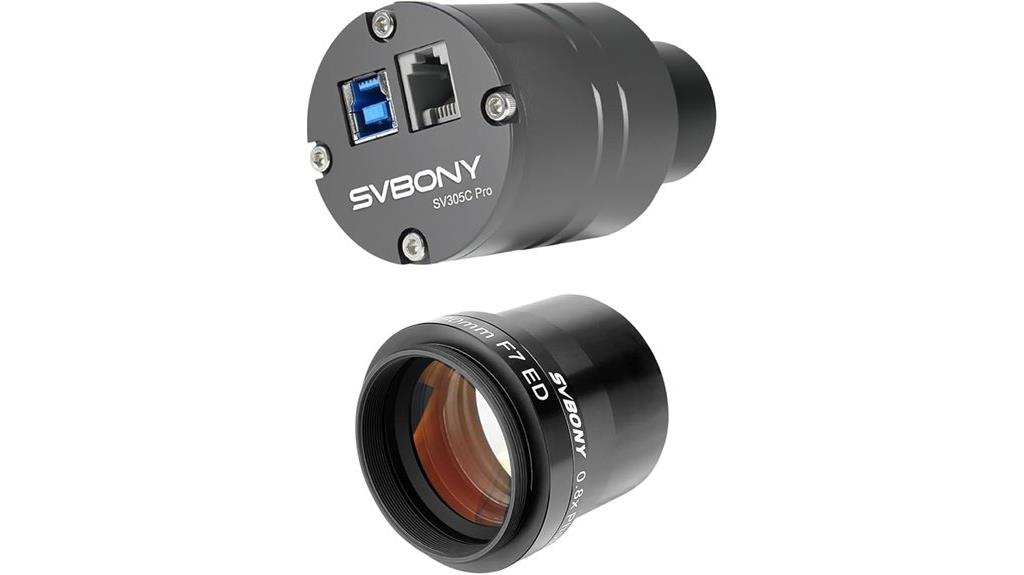
If you’re serious about astrophotography with a refractor telescope, the SVBONY SV193 Focal Reducer 2 Inch 0.8X is a must-have accessory. It reduces focal length by 20%, giving you a wider field of view for capturing expansive celestial scenes. Designed with a standard 2-inch front socket, it’s easy to attach to most refractors, and its M48x0.75 threaded end connects seamlessly to various cameras, including full-frame models like IMX662. The optical quality guarantees sharp, flat images across the entire field, with minimal star distortion. Plus, it supports ultra-high sensitivity imaging, making it ideal for planetary and deep-sky astrophotography.
Best For: astrophotographers using refractor telescopes who want to capture wide-field, sharp celestial images with minimal distortion.
Pros:
- Reduces focal length by 0.8x for wider field of view, ideal for expansive celestial scenes
- Compatible with standard 2-inch accessories and full-frame cameras like IMX662 for versatile use
- Delivers sharp, flat images across the entire field with corrected star points and minimal star distortion
Cons:
- May require additional adapters for certain telescope or camera setups
- Designed primarily for refractor telescopes; less suitable for other types of telescopes
- Slight decrease in image brightness due to focal reduction, which might require longer exposures

SVBONY Focal Reducer, M54X1 Field Flattener, Telescope Accessory for SV503 102mm ED Telescope
0.8x focal reducer and field flattener; for refractor telescopes; meet the illumination needs of full-frame shooting
As an affiliate, we earn on qualifying purchases.
SVBONY Focal Reducer and Field Flattener for SV503 102mm ED Telescope
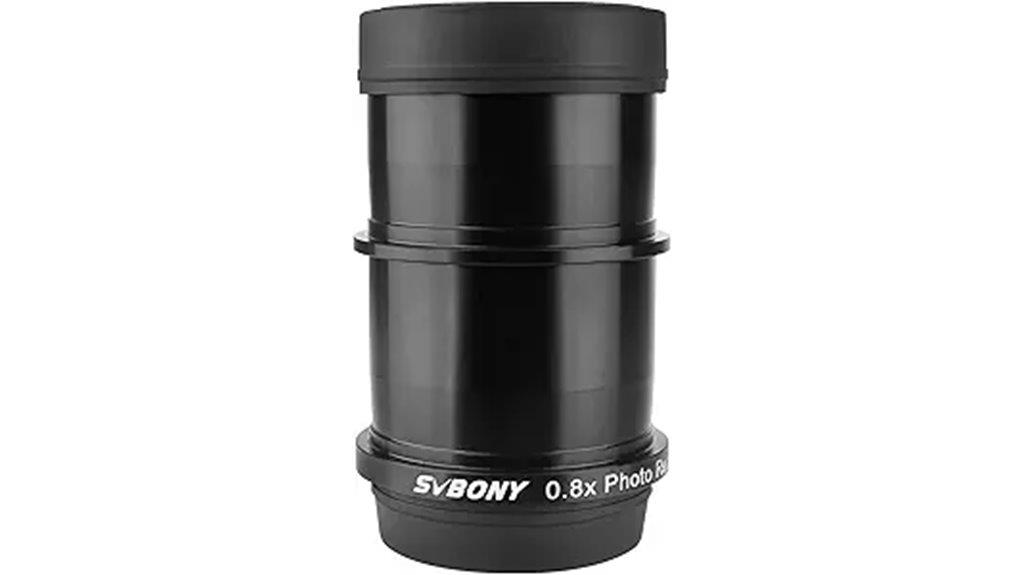
The SVBONY Focal Reducer and Field Flattener for the SV503 102mm ED Telescope is an excellent choice for astrophotographers seeking sharper, wider-field images. It offers 0.8x focal reduction and field flattening, perfect for full-frame imaging and capturing more of the night sky with finer star points. Made with multi-coated optics and a durable aluminum body, it’s lightweight and built to last. Its versatile design includes standard connections like M54X1, M48x0.75, and a 2-inch socket for filters, ensuring easy integration with various accessories. Overall, it’s a reliable, high-quality tool to elevate your astrophotography experience.
Best For: astrophotographers seeking to capture wider, sharper images of celestial objects with minimal distortion, especially those using the SV503 102mm ED Telescope.
Pros:
- Provides 0.8x focal reduction for wider sky views and full-frame imaging.
- Constructed with multi-coated optics and durable aluminum body for longevity and clarity.
- Features versatile standard connections (M54X1, M48x0.75, 2-inch socket) for easy accessory integration.
Cons:
- May require precise alignment for optimal photographic results.
- Slightly heavier than some compact accessories, which could affect portability.
- Compatibility limited primarily to the SV503 102mm ED Telescope, reducing versatility with other models.
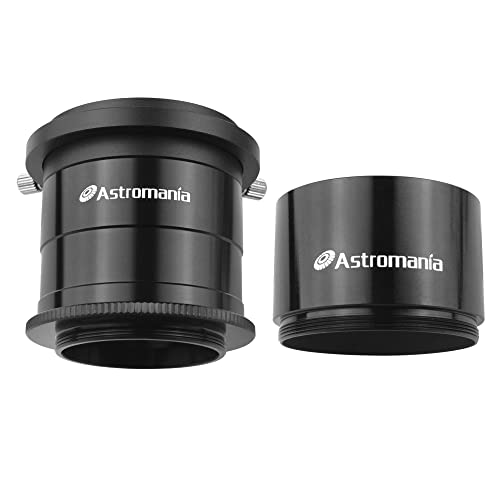
Astromania 2" Field flattener - Provides Perfect Image Flatness for Your Astronomy Photos
Field flattener for refractors; suitable for telescopes from f4 to f8
As an affiliate, we earn on qualifying purchases.
Astromania 2″ Field Flattener for Astronomy Photos
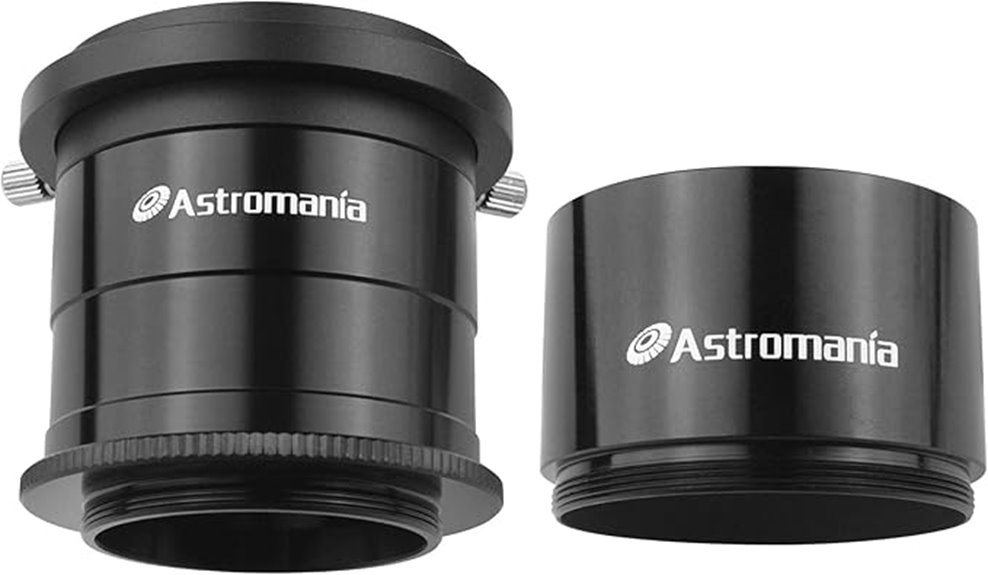
For astrophotographers seeking crisp, flat images across their entire field of view, the Astromania 2″ Field Flattener stands out as an excellent choice. It’s designed specifically for refractor telescopes with focal ratios between f/4 and f/8, ensuring full aperture illumination through its M48 threading. With 109mm back focus, it accommodates various accessories easily. The flattener effectively corrects field curvature, producing pin-sharp stars from center to edges, even with large-chip cameras. Its multi-coated lenses enhance image clarity, reduce reflections, and improve overall optical performance. This makes it ideal for capturing detailed, distortion-free astrophotos with minimal post-processing needed.
Best For: astrophotographers using refractor telescopes with focal ratios between f/4 and f/8 who want crisp, flat, and distortion-free images across their entire field of view.
Pros:
- Corrects field curvature for pin-sharp stars from center to edge
- Suitable for telescopes with f/4 to f/8 focal ratios and full aperture illumination via M48 threading
- Multi-coated lenses enhance image clarity, reduce reflections, and improve overall optical performance
Cons:
- Designed specifically for refractor telescopes, less suitable for other types of telescopes
- May require careful focusing and proper back focus adjustment to achieve optimal results
- Slightly more complex setup compared to simple adapters or spacers

SVBONY SV503 Refractor Telescope with Built-in Field Flattener and SV305C Pro Telescope Camera
Outstanding flat-field correction; built-in field flattener of SVBONY SV503 telescope eliminates field curvature; offering a flat; wide view;...
As an affiliate, we earn on qualifying purchases.
SVBONY SV503 Refractor Telescope with Camera
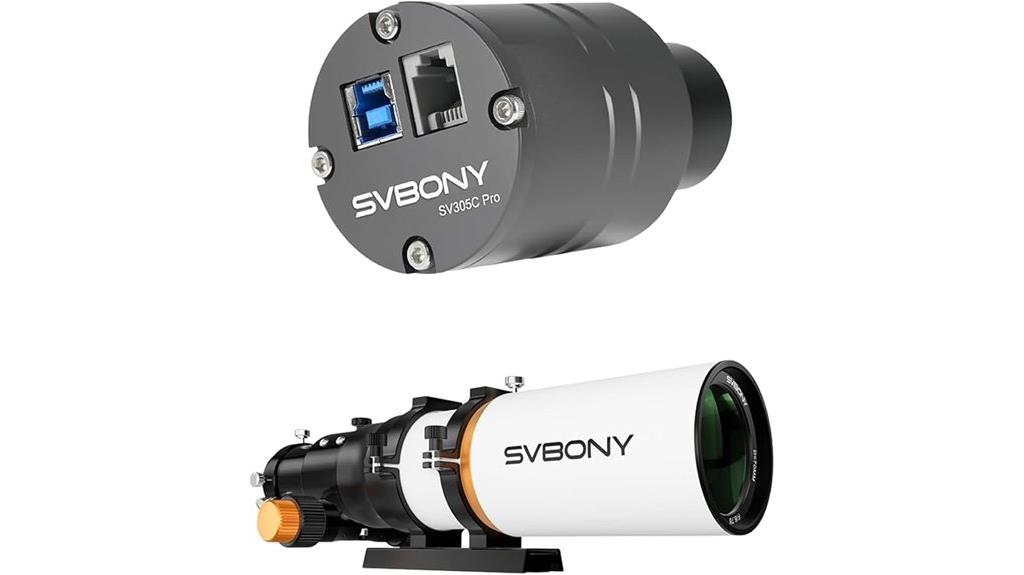
The SVBONY SV503 Refractor Telescope with Camera stands out for its built-in field flattener, making it an excellent choice for amateur and semi-professional astronomers seeking sharp, distortion-free images across the entire field of view. Its 70mm aperture and F/6.78 focal ratio deliver bright, detailed images of galaxies, nebulae, and star clusters. The integrated ED glass minimizes chromatic aberration and enhances color accuracy, while the flat-field design guarantees edge-to-edge sharpness. Paired with the high-sensitivity IMX662 planetary camera, this setup produces clear, low-noise images, perfect for astrophotography and detailed observations. It’s a versatile, user-friendly system that elevates your celestial viewing experience.
Best For: amateur and semi-professional astronomers seeking sharp, distortion-free astrophotography and detailed celestial observations with a versatile, easy-to-use refractor system.
Pros:
- Built-in field flattener ensures edge-to-edge sharpness and minimal distortion across the entire field of view.
- High-sensitivity IMX662 planetary camera provides low-noise, detailed images even in low light conditions.
- Flat-field design and ED glass elements minimize chromatic aberration, delivering true-to-life colors and enhanced clarity.
Cons:
- Limited aperture size of 70mm may restrict brightness and resolution for some deep-sky objects.
- Focal ratio of F/6.78, while versatile, may require longer exposure times for certain astrophotography applications.
- As a specialized system, it may have a learning curve for beginners unfamiliar with astrophotography setups.
Explore Scientific Field Flattener for Refractor Telescopes
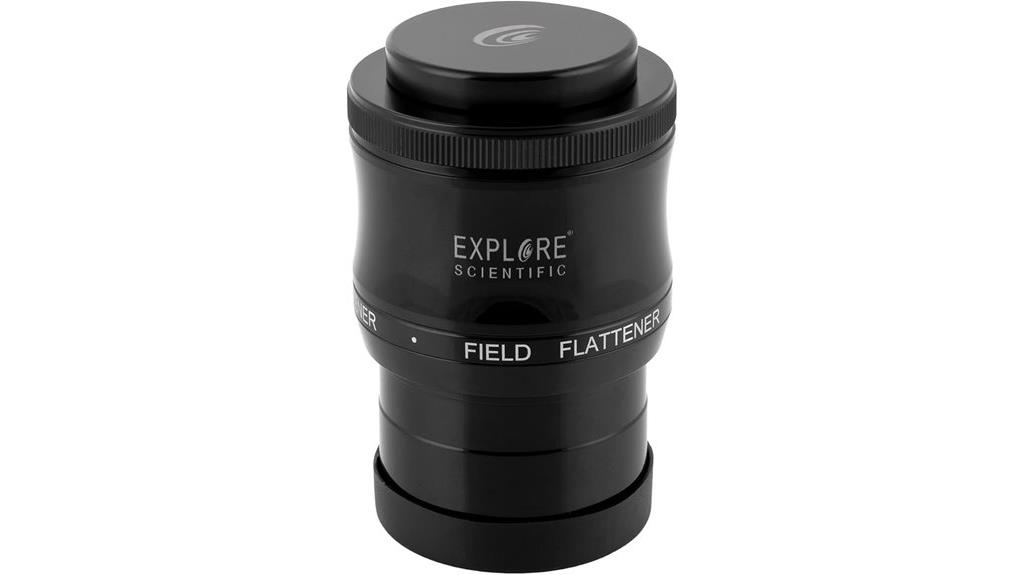
If you’re serious about astrophotography with a refractor telescope, the Explore Scientific Field Flattener stands out as an excellent choice. It effectively minimizes star distortion caused by field curvature, ensuring sharp, pinpoint stars across the entire image. Designed for refractors with focal ratios between f/5 and f/7, it requires a 55mm (+/- 2mm) spacing from the camera sensor for ideal performance. Its fully multi-coated optics maximize light transmission, boosting contrast and detail. Easy to attach via the T-ring thread, it’s perfect for capturing planets, nebulae, and galaxies. Manufactured in the USA, it also comes with reliable customer support for peace of mind.
Best For: astrophotographers using refractor telescopes with focal ratios between f/5 and f/7 seeking to achieve sharp, distortion-free images across the entire field of view.
Pros:
- Minimizes star distortion caused by field curvature for sharp, pinpoint stars
- Fully multi-coated optics enhance light transmission and contrast
- Easy to attach with T-ring thread, compatible with various cameras
Cons:
- Requires precise 55mm (+/- 2mm) spacing for optimal performance, which may need careful adjustment
- Designed specifically for refractors with focal ratios f/5 to f/7, limiting compatibility with other telescopes
- May be an additional cost for amateur astronomers already equipped with basic accessories
Astromania 2″ Field Flattener for Astronomy Photos
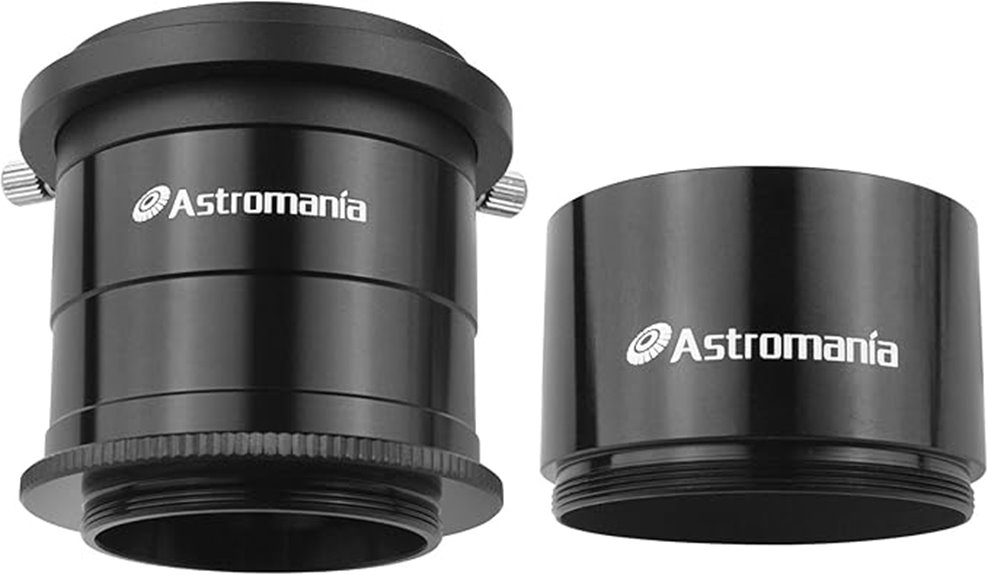
Astromania’s 2″ Field Flattener excels at delivering sharp, edge-to-edge images for astrophotographers using refractor telescopes. Designed for telescopes from f/4 to f/8, it features M48 threading for full aperture illumination at 2″. It effectively addresses field curvature issues that often go unnoticed during visual observation or small-chip astrophotography, ensuring pinpoint stars across the entire field. With a back focus of -109mm, it offers flexibility for accessories and setups. The high-quality, multi-coated lenses improve image clarity and contrast, making this flattener ideal for capturing detailed, high-quality astrophotos with consistent sharpness from center to edges.
Best For: astrophotographers using refractor telescopes from f/4 to f/8 seeking sharp, flat-field images for high-quality astrophotography.
Pros:
- Ensures pinpoint stars across the entire image field, including edges
- Compatible with a wide range of telescope focal ratios (f/4 to f/8)
- Features multi-coated lenses for enhanced image clarity and contrast
Cons:
- Designed specifically for refractor telescopes, limiting use with other types
- Requires precise back focus adjustment (-109mm) which may need careful setup
- May be more expensive compared to basic field flatteners or reducers
SVBONY SV503 Refractor Telescope, 102mm F7
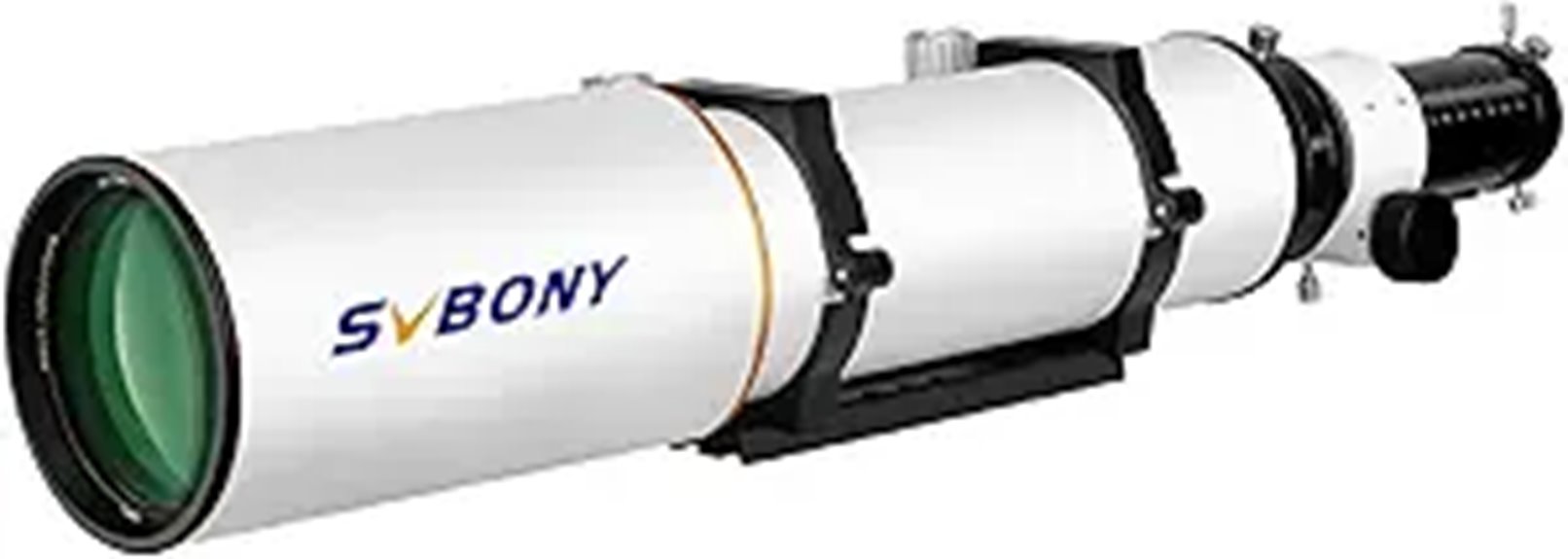
For astrophotographers seeking sharp, distortion-free images, the SVBONY SV503 Refractor Telescope’s 102mm aperture and F7 focal ratio make it an excellent choice, especially when paired with a quality field flattener. Its doublet air-spaced achromatic S-FPL51 ED glass reduces chromatic aberration, delivering vibrant, accurate colors. Fully multi-coated optics maximize light transmission, enhancing brightness and contrast. The dual-speed rack and pinion focuser provides precise adjustments, while the 360° field rotator helps with framing. With a flexible 90mm back focus and included accessories like adapters and a lens hood, this telescope is versatile for deep-sky imaging and planetary viewing.
Best For: amateur astronomers and astrophotographers seeking high-quality, portable refractor telescopes for deep-sky imaging and planetary observation.
Pros:
- Excellent optical quality with doublet air-spaced achromatic S-FPL51 ED glass for reduced chromatic aberration
- Fully multi-coated optics for maximum light transmission, brightness, and contrast
- Features a dual-speed rack and pinion focuser and 360° field rotator for precise focusing and framing
Cons:
- May require additional accessories like a field flattener for optimal astrophotography results
- Larger aperture and high focal length can make the telescope more cumbersome for portable use
- Limited back focus may restrict some accessory configurations without adapters
SVBONY SV260 2″ Telescope Filter for SV503 Refractor
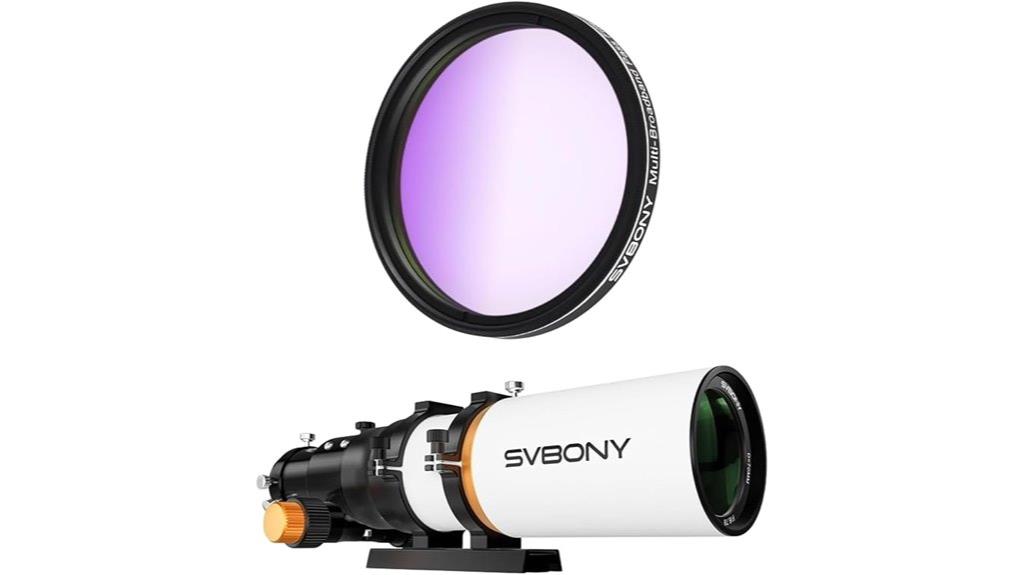
Looking to enhance your astrophotography with a reliable filter that also corrects field curvature? The SVBONY SV260 2″ Telescope Filter for SV503 Refractor is a great choice. Designed specifically for the SV503, it features a built-in field flattener that removes edge distortions, ensuring sharp, flat images across the entire field. Its 5-bandpass broadband filter with high transmittance isolates light pollution and enhances deep-sky details while preserving true colors. This combination improves image brightness, reduces chromatic aberration, and delivers vibrant, accurate astrophotos of galaxies, nebulae, and star clusters. It’s an excellent tool for amateur astronomers seeking crisp, detailed imaging.
Best For: amateur astronomers and astrophotographers seeking high-quality imaging and accurate, flat-field views of deep-sky objects using the SV503 refractor telescope.
Pros:
- High transmittance broadband filter effectively isolates light pollution while maintaining true color fidelity.
- Built-in field flattener removes edge distortions, ensuring sharp, flat images across the entire field of view.
- Enhances image brightness and detail, making it ideal for capturing galaxies, nebulae, and star clusters.
Cons:
- Designed specifically for the SV503 telescope, limiting compatibility with other models.
- May require additional adapters or accessories for certain setups.
- As a specialized filter, it might be more expensive than standard broadband filters for casual observers.
SVBONY SV209 Field Flattener, 0.8X Focal Reducer for Refractor Telescopes
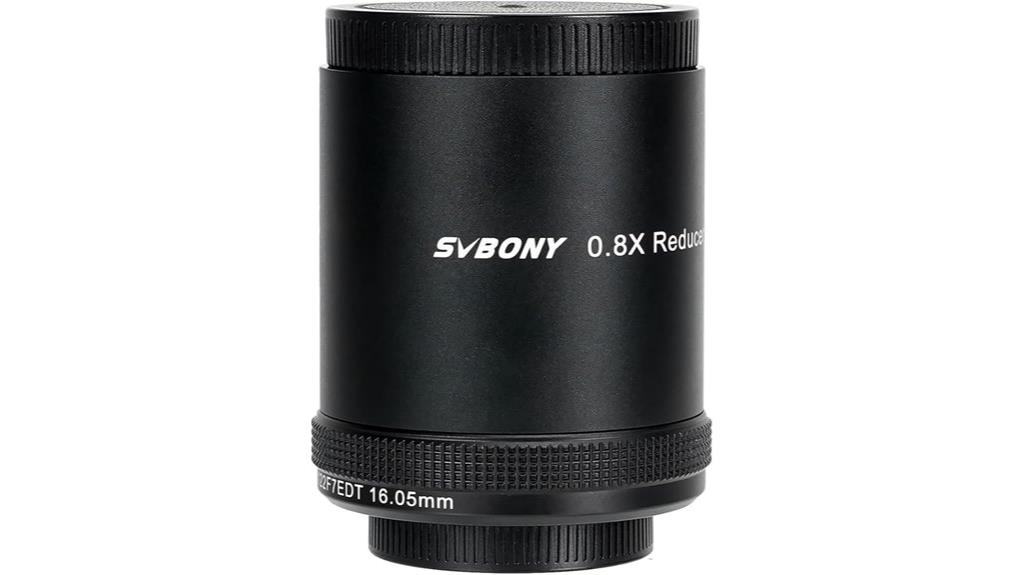
The SVBONY SV209 Field Flattener is an excellent choice for astrophotographers using the SV550 122mm APO refractor who want to expand their field of view while maintaining sharp focus across the entire image. This 0.8X focal reducer corrects field curvature, enabling wider shots with better edge-to-edge clarity. It reduces the focal length from 854mm to 683.2mm and adjusts the f-ratio from f/7 to f/5.6, making imaging faster and more efficient. Its sturdy 63×1 metric thread screws securely into the focuser, ensuring a stable connection. Overall, it enhances image quality for both astrophotography and terrestrial imaging.
Best For: astrophotographers and terrestrial imaging enthusiasts using the SV550 122mm APO refractor seeking to expand their field of view and improve image sharpness across the entire sensor.
Pros:
- Corrects field curvature for sharper edge-to-edge images
- Reduces focal length and f-ratio for faster, wider shots
- Secure, stable connection with 63×1 metric threading
Cons:
- Designed specifically for the SV550 122mm APO refractor, limiting universal compatibility
- Slightly adds weight (15.8 ounces), which may affect balance for some setups
- Requires proper threading and connection to ensure optimal performance
SVBONY SV503 Portable Telescope Tube for Astrophotography and Astronomy

If you’re seeking a portable telescope that combines high-quality optics with reliable performance, the SVBONY SV503 is an excellent choice for astrophotography and astronomy. Its S-FPL51 ED glass minimizes chromatic aberration, delivering sharp, high-contrast images ideal for detailed observation. The micro-reduction RAP focuser supports heavy accessories, while the 2-inch rack and pinion focuser ensures precise focusing. Designed for travel and on-the-go use, the SV503 is versatile for moon, nebulae, galaxies, and terrestrial viewing. It caters to both beginners and experienced observers, providing consistent image quality and ease of use wherever your adventure takes you.
Best For: amateur astronomers and astrophotographers seeking a portable, high-quality telescope suitable for both terrestrial and celestial observations.
Pros:
- High-quality S-FPL51 ED glass minimizes chromatic aberration for sharp images
- Micro-reduction RAP focuser supports heavy accessories and ensures precise focusing
- Compact and lightweight design ideal for travel and mobile use
Cons:
- May require additional accessories for optimal astrophotography performance
- Limited aperture size, potentially restricting deep-sky object visibility
- Not suitable for advanced astrophotography without supplementary equipment
Factors to Consider When Choosing Field Flatteners for Refractor Telescopes
When selecting a field flattener, I look closely at compatibility with my telescope to guarantee a perfect fit. I also consider optical quality and how well it suits my focal ratio for sharp images across the field. Finally, I prioritize durability and ease of installation to make setup straightforward and reliable.
Compatibility With Telescope
Choosing a field flattener that matches your refractor telescope’s specifications is essential for achieving sharp, distortion-free images. Make sure the flattener is designed for your telescope’s focal ratio and aperture to guarantee proper compatibility and peak performance. Verify the threaded connection type—such as M48, M54, or T-ring—to match your camera or accessory mount, preventing fit issues. Check the recommended back focus distance and confirm it aligns with your telescope’s optical design, as incorrect spacing can cause image degradation. Additionally, review the optical specifications, including coating quality and lens configuration, to match your astrophotography or observation needs. Always consult manufacturer guidelines or compatibility charts to ensure the flattener supports your specific telescope model and sensor size for seamless integration.
Optical Performance Quality
Ever wondered what sets a top-tier field flattener apart? It’s all about optical performance. High-quality flatteners use multi-coated optics to maximize light transmission and cut down reflections, delivering sharper, more contrast-rich images. The key measure of performance is how well it produces pin-sharp stars across the entire field, including the edges. A great flattener corrects field curvature, minimizing star distortion at the periphery, so images stay crisp from center to edge. It should also maintain consistent focus across the sensor, avoiding image degradation or star elongation. Ultimately, the optical quality directly impacts the clarity, color fidelity, and overall sharpness of your astrophotos. Choosing a flattener with superior optical performance ensures you get the best possible views and images from your refractor telescope.
Focal Ratio Suitability
Selecting the right field flattener depends heavily on your telescope’s focal ratio, as these accessories are designed to optimize image flatness within specific ranges. Most flatteners work best with refractors that have focal ratios between f/4 and f/8, ensuring sharp, distortion-free images across the entire field. Using a flattener outside its recommended focal ratio can cause residual star distortion, vignetting, or uneven illumination at the edges. Many flatteners are calibrated for particular focal ratios, so choosing one compatible with your telescope guarantees proper correction and sharpness. For faster focal ratios below f/4, you might need specialized flatteners or additional optical accessories to maintain image quality. Verifying compatibility helps prevent star elongation, blurring, or peripheral issues, ensuring your views stay crisp and clear.
Build and Material Durability
The durability of a field flattener’s build directly impacts its performance and longevity. High-quality models use durable, multi-coated optical glass that resists scratches and environmental damage, ensuring consistent image quality over time. The body materials, typically aluminum or sturdy metal alloys, are resistant to corrosion and impacts, providing long-term reliability. Precise threading and secure mechanical connections are essential to prevent loosening or misalignment during use, maintaining optimal optical performance. A well-constructed flattener offers stable support for attached cameras and accessories, reducing vibrations that can blur images. Ultimately, robust construction helps maintain optical alignment over years of use, minimizing the need for recalibration or repairs, and ensuring you get clear, sharp views night after night.
Ease of Installation
Choosing a field flattener that’s easy to install can save you time and frustration during setup. Look for models with compatible threading, like M48 or M54, to ensure straightforward attachment to your refractor. Clear connection points and minimal adapters make setup quicker and less hassle. Opt for designs with standard interface sizes, such as 2-inch or T-ring compatibility, so your existing accessories fit seamlessly. A secure, precise mounting mechanism helps prevent misalignment or damage during installation. Additionally, check if the flattener includes tools or instructions—these can make the process smoother and help you get up and running faster. Prioritizing ease of installation ensures you spend more time observing and less time fiddling with your equipment.
Frequently Asked Questions
Can Field Flatteners Be Used With All Types of Refractor Telescopes?
Yes, field flatteners can be used with most refractor telescopes, but it depends on the specific model and its optical design. I recommend checking your telescope’s compatibility before purchasing, as some older or specialized refractors might not work well with standard flatteners. When used correctly, a good field flattener enhances your views by reducing distortion and providing sharper images across the entire field of view.
How Do I Know Which Field Flattener Is Compatible With My Telescope?
To find a compatible field flattener, I check the telescope’s focal length and aperture specs first. I then look for flatteners designed for my specific telescope model or brand, since compatibility can differ. Reading manufacturer recommendations and reviews helps me gauge fit. I also consult with fellow astronomers or retailers to ensure I select a flattener that works seamlessly with my refractor, avoiding unnecessary issues.
Do Field Flatteners Affect the Focal Length or Magnification?
Yes, field flatteners do affect focal length and magnification, but don’t worry—they’re not secretly sabotaging your views. They typically reduce the focal length slightly, which means a tiny dip in magnification, but they improve image flatness. Think of it like trimming the edges of a perfect pizza—less crust, more delicious center! Your telescope’s overall magnification might shift a bit, but the clearer, flatter views are totally worth it.
Are There Specific Cleaning or Maintenance Tips for Field Flatteners?
Yes, I recommend cleaning your field flattener gently with a soft, lint-free cloth and a small amount of lens cleaner or distilled water. Always handle it carefully to avoid scratches or smudges. Store it in a dust-free, dry place when not in use. Regularly inspect for dirt or oil buildup, and avoid touching the glass directly with your fingers to keep your views crisp and clear.
Can I Use a Field Flattener for Astrophotography With DSLR Cameras?
Absolutely, you can use a field flattener for astrophotography with DSLR cameras. Think of it as the Swiss Army knife of accessories—it helps correct field curvature and guarantees sharp stars across your images. Just make sure the flattener is compatible with your telescope and camera. I’ve found that using one really elevates my shots, making my astrophotos look crisp and professional, even if I’m still a humble stargazer.
Conclusion
Choosing the right field flattener is like perfecting a painting—each stroke matters. While some tools sharpen your view like a fine brush, others merely blur the edges. By selecting the best option for your refractor telescope, you transform a cloudy canvas into a crisp, vibrant masterpiece. Remember, the right flattener doesn’t just improve images—it brings your night sky to life, turning distant stars into a breathtaking, detailed mosaic.