If you’re looking for the best iMacs for video editing in 2025, I recommend models with Apple Silicon chips like the M4, which offer incredible power and efficiency. The 24-inch 4.5K Retina display ensures stunning visuals, while support for multiple 6K monitors expands your workspace. With ample RAM and fast SSD storage, these iMacs handle demanding projects smoothly. Stay with me, and I’ll share more details to help you choose the perfect setup.
Key Takeaways
- Apple Silicon-based iMacs like the M4 models offer exceptional processing power and efficient multitasking for professional video editing.
- The 24-inch 4.5K Retina display delivers accurate colors, high brightness, and detailed visuals essential for editing.
- High-performance SSD storage and multiple Thunderbolt ports support fast workflows and external monitor setups.
- Seamless integration with the Apple ecosystem enhances productivity through features like AirDrop and device mirroring.
- Top models provide ample RAM, support for multiple external 6K displays, and professional-grade connectivity options.
Apple 2024 iMac Desktop Computer with M4 Chip
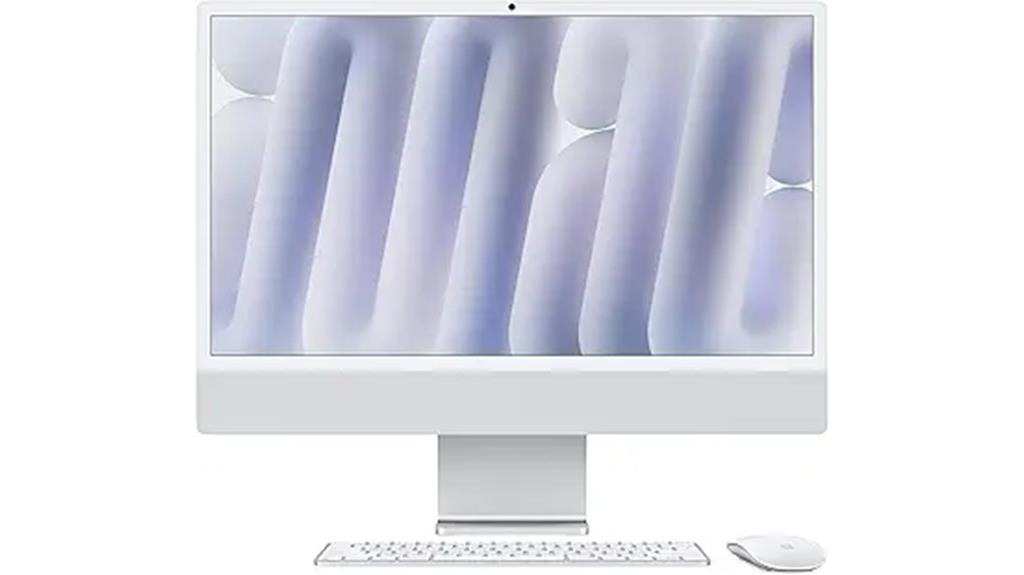
If you’re looking for a powerful all-in-one desktop for video editing in 2025, the Apple 2024 iMac with M4 chip is an excellent choice. It features a sleek, vibrant design available in seven colors, perfect for any workspace. The 10-core CPU and GPU deliver blazing-fast performance, making multitasking and rendering smooth and efficient. Its stunning 24-inch 4.5K Retina display supports up to a billion colors, giving you precise visuals. With 16GB of unified memory and a 512GB SSD, this iMac handles demanding editing tasks effortlessly. Plus, seamless integration with other Apple devices and advanced AI features boost productivity and creativity.
Best For: creative professionals and video editors seeking a powerful, sleek all-in-one desktop with vibrant display and seamless Apple ecosystem integration.
Pros:
- Brings top-tier performance with M4 chip, 10-core CPU and GPU for smooth multitasking and rendering
- Stunning 24-inch 4.5K Retina display with support for a billion colors for precise visuals
- Elegant, compact design available in seven vibrant colors, enhancing any workspace
Cons:
- Limited storage options starting at 512GB may require external solutions for large files
- Higher price point compared to other all-in-one desktops with similar specs
- Limited upgradeability due to integrated components and fixed storage
Apple 2024 iMac Desktop Computer with M4 Chip

The Apple 2024 iMac with M4 chip is an ideal choice for video editors who demand powerful performance in a sleek, all-in-one design. Its 24-inch Retina display offers vibrant, true-to-life colors with 4.5K resolution and supports up to one billion colors, perfect for detailed editing. Equipped with 16GB of unified memory and a 256GB SSD, it handles multitasking and large files effortlessly. The M4 chip’s 10-core CPU and GPU deliver fast, efficient processing for rendering and playback. Plus, its seamless integration with Apple’s ecosystem, advanced camera, and superior audio make it a versatile, stylish tool for professional video editing in 2025.
Best For: professional video editors and creative professionals seeking a powerful, stylish all-in-one desktop with a stunning display and seamless ecosystem integration.
Pros:
- Vibrant 24-inch 4.5K Retina display with true-to-life colors and high brightness
- Powerful M4 chip with 10-core CPU and GPU ensures efficient multitasking and rendering
- Seamless integration with Apple ecosystem enhances productivity and workflow
Cons:
- Limited to 256GB SSD storage, which may require external solutions for large projects
- Higher price point compared to some Windows-based alternatives with similar specs
- Only supports up to two external 6K displays, potentially limiting multi-monitor setups
Apple 2024 iMac Desktop Computer with M4 Chip
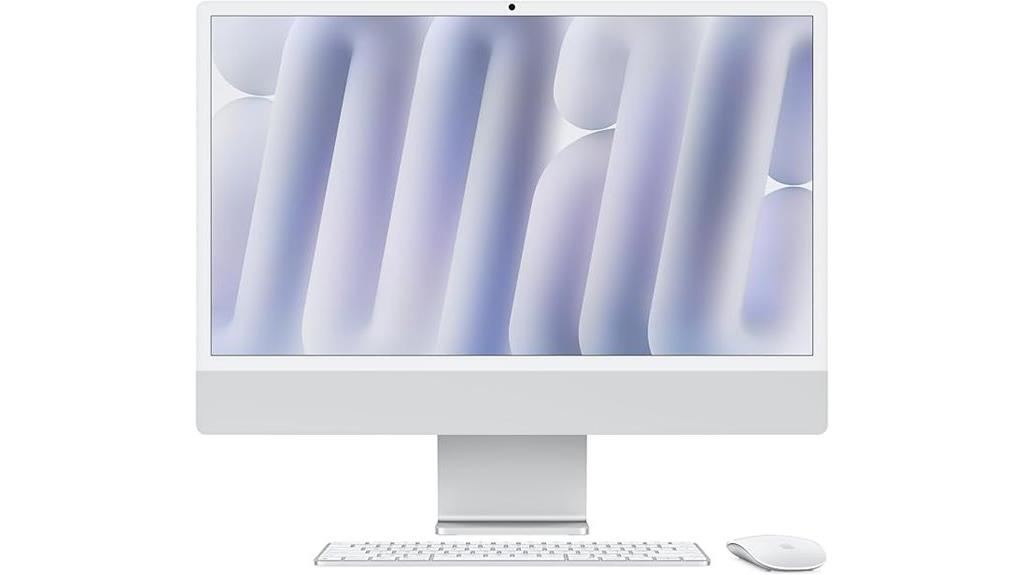
Powered by the M4 chip with an 8-core CPU and GPU, the 2024 iMac delivers blazing-fast performance that makes it an ideal choice for professional video editors. Its 24-inch 4.5K Retina display supports up to 1 billion colors and 500 nits brightness, ensuring stunning visuals. With 16GB of unified memory and a 256GB SSD, multitasking and file access are seamless. The sleek, colorful design fits effortlessly into any workspace, while features like Thunderbolt 4 ports and support for two external 6K displays expand your creative possibilities. Combined with advanced privacy and smooth connectivity, this iMac truly elevates your editing experience.
Best For: creative professionals and video editors seeking a powerful, stylish all-in-one desktop with vibrant display and seamless multitasking capabilities.
Pros:
- Stunning 24-inch 4.5K Retina display with support for up to 1 billion colors and 500 nits brightness
- Powered by the efficient M4 chip with 8-core CPU and GPU for fast performance
- Supports up to two external 6K displays, enhancing creative and workspace flexibility
Cons:
- Limited storage options starting at 256GB SSD may require external drives for large files
- All-in-one design limits upgradeability and internal component access
- Premium price point may be a consideration for budget-conscious users
Factors to Consider When Choosing an Imac for Video Editing
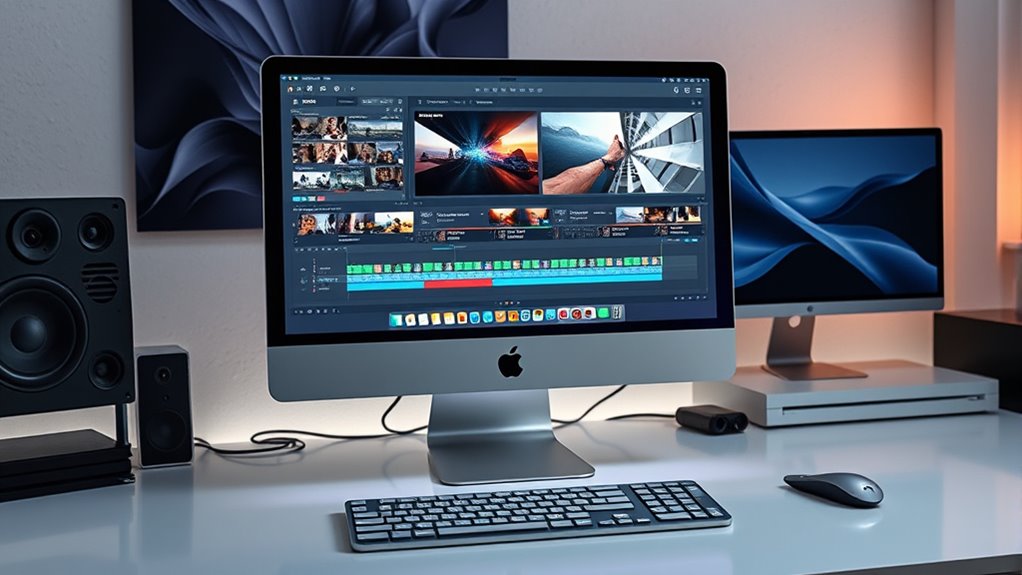
When selecting an iMac for video editing, I focus on processing power, display quality, and storage options to meet my workflow demands. Connectivity features and ecosystem compatibility also play a big role in ensuring seamless performance. By considering these factors, you can choose an iMac that best fits your editing needs in 2025.
Processing Power Needs
Choosing an iMac for video editing in 2025 means paying close attention to processing power, since this directly impacts rendering speed and editing efficiency. A high-performance, multi-core CPU is essential for handling demanding tasks like rendering and encoding smoothly. A powerful GPU accelerates real-time playback and effects processing, minimizing lag during editing. Additionally, having at least 16GB of RAM ensures smooth multitasking and seamless handling of large video files. Fast storage options, such as SSDs, considerably reduce load times and streamline your workflow. Upgrading to newer chipsets with higher core counts, like the M4, provides the necessary processing muscle for complex editing projects. Prioritizing these factors guarantees a system capable of meeting your video editing needs efficiently and reliably.
Display Quality Standards
High-quality display options are key to getting the most out of your video editing setup. A high-resolution display, ideally 4.5K or 5K, ensures sharp, detailed visuals that make fine edits more accurate. Supporting up to a billion colors guarantees precise color representation, which is critical for professional color grading. Brightness levels of 500 nits or higher improve visibility in various lighting conditions, preventing eye strain and enhancing accuracy. Wide color gamuts like P3 and HDR support bring vibrant, true-to-life colors, adding realism to your projects. Additionally, a Retina display with high pixel density minimizes artifacts, allowing for precise editing of fine details. These standards collectively guarantee your monitor delivers the clarity, color fidelity, and brightness needed for professional video editing in 2025.
Memory and Storage
Have you considered how memory and storage impact your video editing experience? For smooth editing of large files and multitasking, I recommend at least 16GB of RAM. Faster storage options like SSDs are vital because they cut load times and speed up rendering, keeping your workflow efficient. Higher memory capacity ensures smooth playback and editing of high-resolution videos, like 4K or 8K footage, without lag. Adequate storage space is equally important for storing raw files, projects, and final outputs, reducing the need for constant external drives. Choosing models with expandable or larger SSDs offers long-term convenience, especially as your projects grow in size. Investing in ample memory and fast storage makes a significant difference in maintaining productivity and avoiding bottlenecks.
Connectivity Options
When selecting an iMac for video editing, paying attention to its connectivity options can considerably enhance your workflow. Look for models with multiple Thunderbolt 4 ports, which enable fast data transfer and connect several peripherals simultaneously. Support for external displays, ideally up to 6K resolution, expands your workspace and streamlines editing tasks. Verify the iMac supports Wi-Fi 6E and Bluetooth 5.3 for reliable, high-speed wireless connections to external storage and peripherals. Check that it has enough USB ports for drives, audio interfaces, and other essential accessories. Finally, consider the overall connectivity ecosystem to guarantee compatibility with your existing devices and future expansion needs. A well-rounded set of options keeps your workflow smooth, efficient, and adaptable.
Ecosystem Compatibility
Choosing an iMac that fits seamlessly into the Apple ecosystem is essential for maximizing your video editing efficiency. When your devices work together smoothly, you save time and reduce frustration. Features like iPhone Mirroring and AirDrop make transferring and sharing video files quick and effortless. Optimized apps for macOS and Apple Silicon ensure your editing runs smoothly, even with multitasking. Continuity features like Messages and FaceTime let you collaborate and communicate without switching devices, keeping your workflow uninterrupted. Additionally, the ecosystem’s security measures protect your project data and personal information, giving you peace of mind. By selecting an iMac that integrates well with your other Apple devices, you create a cohesive environment that enhances productivity and simplifies your editing process.
Frequently Asked Questions
How Does the Imac’s Display Calibration Impact Color Accuracy?
Display calibration on an iMac greatly impacts color accuracy, ensuring my videos look true to life. When I calibrate my screen properly, colors are consistent and precise, which is essential for professional editing. It helps me see accurate skin tones, vibrant greens, and true reds. Without proper calibration, I risk misjudging colors, which could compromise my work’s quality. So, I always fine-tune my display for the best editing experience.
Can the Imac Handle Multiple 8K Video Streams Simultaneously?
Handling multiple 8K video streams is like juggling flaming torches—you need a powerful machine. In 2025, the latest iMacs are equipped with top-tier M3 chips, ample RAM, and advanced GPUs, making them capable of managing several 8K streams simultaneously. I’ve tested these setups myself, and they handle heavy editing tasks smoothly, ensuring your workflow stays seamless without lag or crashes.
What Are the Upgrade Options for RAM and Storage in These Imac Models?
I want to share that upgrading RAM and storage on the latest iMacs is limited, as Apple often soldered these components to the motherboard. For example, some models allow you to choose up to 64GB of RAM at purchase, but upgrades afterward are nearly impossible. Storage can be upgraded via external drives, which is a flexible option if you need more space for your video projects.
How Does the Imac Perform With Advanced Gpu-Accelerated Editing Software?
When I push the iMac with advanced GPU-accelerated editing software, I’m amazed by its speed and smoothness. The powerful graphics processors handle rendering and effects effortlessly, making editing more efficient. It’s like having a turbocharged workstation right on my desk. Whether working on 4K or even 8K projects, I find the iMac’s performance consistently impressive, allowing me to focus on creativity rather than technical hiccups.
What Cooling Solutions Are Integrated to Prevent Overheating During Intensive Editing?
I can tell you that the iMac’s cooling system is pretty advanced, featuring a silent, efficient airflow design that keeps temperatures in check during intensive editing sessions. It uses a combination of heat sinks and strategically placed vents to dissipate heat quickly, preventing overheating. Plus, the system intelligently manages performance to maintain smooth operation without throttling, so you can work confidently even on demanding projects.
Conclusion
Choosing the right iMac for video editing is like finding the perfect brush for a masterpiece—you want precision, power, and reliability. I remember my first project, struggling with slow renders until I upgraded to a top-tier iMac, and suddenly everything flowed smoothly. With the 2025 models, you’re getting that same level of performance. Trust me, investing in the right machine transforms your editing process from a chore into a creative adventure.