
When deciding whether to repair or replace, weigh the costs, environmental impact, and safety risks. Consider if repairs restore enough functionality and extend the item’s lifespan or if a new model may save you money long-term. Check if parts are available and if repairs require specialized skills. Think about energy efficiency and convenience, as well as how the decision impacts the environment. Keep exploring this checklist to make the most informed choice.
Key Takeaways
- Compare overall costs: consider repair expenses versus the price and benefits of a new item.
- Assess the item’s condition, safety, and performance to determine if repairs restore functionality effectively.
- Evaluate the environmental impact, including waste reduction and energy efficiency benefits of repair versus replacement.
- Check parts availability and repair complexity to decide if fixing is practical or more costly than replacement.
- Consider long-term savings, safety risks, and convenience to make a balanced, informed decision.
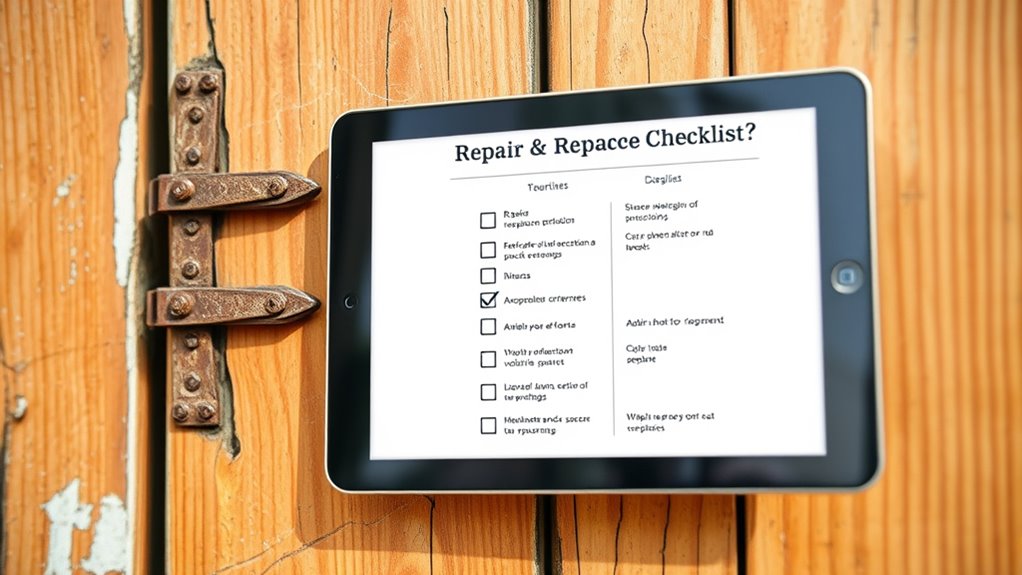
Deciding whether to repair or replace a damaged or outdated item can be a tough choice, but understanding your options helps you make an informed decision. One of the first factors to consider is conducting a thorough cost analysis. You need to compare the expenses involved in repairing the item against the cost of replacing it. Repairs may seem cheaper upfront, but if they’re frequent or extensive, they might add up over time. On the other hand, a new replacement could have a higher initial price but might save you money in the long run through better efficiency and fewer maintenance needs. Beyond immediate costs, think about the long-term value—will the repair extend the item’s lifespan enough to justify the expense? Additionally, consider the energy efficiency of current models, as newer appliances often consume less power and can lead to savings on utility bills.
Environmental impact is another essential aspect to weigh. Repairing an existing item often has a lower environmental footprint because it reduces waste and the demand for new manufacturing. By choosing to fix rather than replace, you’re preventing usable items from ending up in landfills and lowering the energy consumption associated with production, transportation, and disposal. Conversely, if the item is too far gone or outdated, replacing it with a more energy-efficient version could be more sustainable in the long run. Modern appliances and devices are often designed to be more eco-friendly, which can offset the environmental costs of manufacturing a new one.
You should also assess the item’s current condition and how well it still performs. If a simple repair can restore functionality and extend its life considerably, it might be worth fixing. However, if the item constantly needs repairs or no longer meets your needs efficiently, replacement might be the better option. Consider the reliability and safety aspects as well—sometimes, an old or damaged item can pose safety risks, making replacement the smarter choice.
Another factor to consider is the availability of parts and expertise. If replacement parts are hard to find or repairs require specialized skills that are costly or unavailable, replacing the item could be more practical. Additionally, think about your own time and effort; sometimes, repair work can be time-consuming and disruptive, tipping the balance toward replacement for convenience.
Ultimately, making the right decision involves balancing these factors: the cost analysis, environmental impact, current condition, safety, and practicality. Weighing these elements carefully helps ensure you choose an option that’s both financially sound and environmentally responsible, giving you peace of mind in your decision.
energy efficient washing machine
As an affiliate, we earn on qualifying purchases.
As an affiliate, we earn on qualifying purchases.
Frequently Asked Questions
How Long Does a Typical Repair Last Compared to Replacement?
A typical repair usually extends your appliance’s lifespan by a few years, but it often isn’t as durable as a full replacement. When comparing durability, a new appliance generally lasts longer—often 10-15 years—depending on the model and usage. Repairs can be cost-effective short-term, but for long-term reliability and a better durability comparison, replacing the appliance might be the smarter choice, especially if it’s nearing the end of its expected lifespan.
Are There Significant Safety Concerns With Keeping an Old Appliance?
Like a vintage jukebox, old appliances can still work, but safety risks increase with appliance aging. You might save money upfront, but older units could leak, overheat, or cause electrical fires. These safety concerns are real and should not be ignored. Regularly inspect your appliance for damage or unusual behavior. If safety risks are present, replacing it is the smartest move to protect your home and loved ones.
What Are the Environmental Impacts of Repairing Versus Replacing?
Repairing your appliance is generally more eco-friendly because it promotes waste reduction and extends its lifespan, reducing environmental impact. Replacing with a new, energy-efficient model might save energy but can generate more waste and use resources for manufacturing. Consider eco-friendly choices like repairing first, and only replacing if the old appliance is inefficient or beyond repair. This approach helps you make greener decisions and minimizes harm to the environment.
How Does Energy Efficiency Factor Into Repair Versus Replacement Decisions?
Think of your home like a vintage car—upgrading can boost energy efficiency, saving you money in the long run. When deciding, consider how repair might improve energy savings versus the cost effectiveness of replacement with newer, more efficient models. If repairs don’t markedly enhance energy efficiency, replacing could be more economical and environmentally friendly. Ultimately, balancing upfront costs with long-term savings helps you make a smarter choice.
When Should a Professional Inspection Be Considered Before Deciding?
You should consider a professional assessment when inspection timing reveals signs of significant damage or inefficiency. Schedule an inspection early, especially if you notice unusual noises, leaks, or rising energy bills. A professional evaluation helps determine whether repairs are cost-effective or if replacement offers better energy efficiency and long-term savings. Don’t wait too long—timely inspections guarantee you make informed decisions, preventing further damage and costly future repairs.
As an affiliate, we earn on qualifying purchases.
Conclusion
Ultimately, deciding whether to repair or replace hinges on evaluating costs, safety, and longevity. Some say repairs are just band-aids, while others believe replacement offers a fresh start. But what if the truth is somewhere in between? Taking a closer look at your specific situation might reveal that a well-timed repair could extend your item’s life, saving you money. So, trust your instincts, weigh the facts, and make the call that feels right for you.
As an affiliate, we earn on qualifying purchases.
As an affiliate, we earn on qualifying purchases.