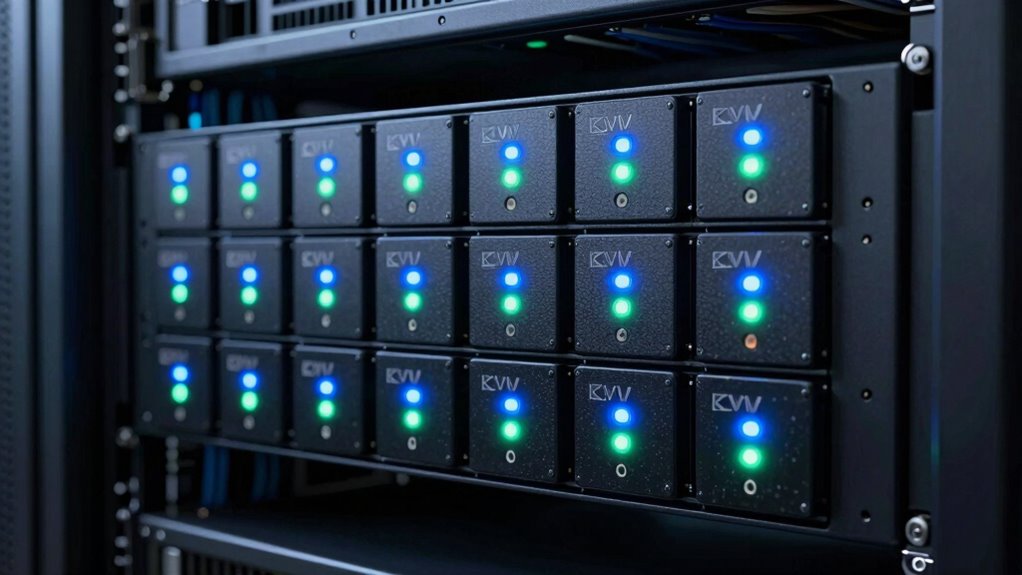

For anyone managing multiple servers remotely, a kvm over ip switch offers a vital solution for secure, high-quality access from anywhere. The best overall pick in 2026 is the Raritan Dominion KX IV-101 for its unmatched performance and BIOS-level control, ideal for data centers and enterprise use. The PiKVM V4 Plus stands out as a versatile, budget-friendly option for advanced hobbyists or small businesses, while the GL.iNet Comet GL-RM10 offers seamless Wi-Fi access for remote management without complex cabling. Each choice balances factors like video quality, ease of setup, and security, but buyers face tradeoffs between features, price, and scalability. Keep reading for a detailed breakdown of these options to find the best fit for your needs.

Get the latest gadgets delivered free with Prime
- Fast, free delivery on millions of items
- Prime Video, Amazon Music and more included
- Member-only deals all year
Complete the kit



Key Takeaways
- High-performance switches like the Raritan Dominion excel in enterprise environments with BIOS-level access and 4K support.
- Budget-friendly options such as PiKVM V4 Plus deliver solid remote management for small-scale or hobbyist users without enterprise features.
- Wireless-capable models like the GL.iNet GL-RM10 simplify deployment in environments where cabling is difficult or impractical.
- Security features, including encryption and BIOS-level control, remain critical for protecting sensitive data during remote access.
- Ease of setup and user interface design significantly influence the overall value, especially for less technical users.
| GL.iNet GL-RM10 Comet Pro Remote KVM Over Wi-Fi 6 Dual Band 4K Passthrough | 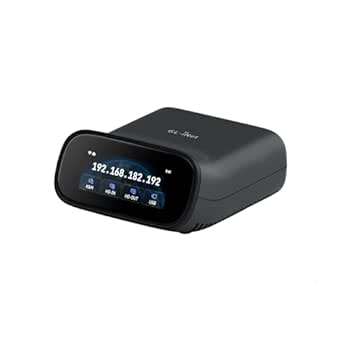 | Best Overall for Versatile Remote Control | Operation Mode: ON-ON | Current Rating: 0.6 A | Operating Voltage: 5 volts | VIEW ON AMAZON | See Our Full Breakdown |
| GL.iNet Comet PoE Remote KVM GL-RM1PE with Tailscale 4K Streaming |  | Best Value for Power-Over-Ethernet Connectivity | Connectivity Technology: Ethernet, HDMI | PoE Compatible Devices: Computer, Server | Streaming Resolution: 4K at 30FPS | VIEW ON AMAZON | See Our Full Breakdown |
| PiKVM V4 Mini IP KVM |  | Best Compact Budget KVM for Basic Remote Access | Fanless design: Yes | Heatsink: Passive | Remote power control: Yes | VIEW ON AMAZON | See Our Full Breakdown |
| GL.iNet Comet GL-RM1 Remote KVM, 4K 30Hz, BIOS Control, Tailscale |  | Best for Secure BIOS-Level Remote Management | Hardware Interface: Ethernet, HDMI, USB 2.0, USB Type C | Data Transfer Rate: 1000 Mbps | Resolution Support: 4K at 30Hz | VIEW ON AMAZON | See Our Full Breakdown |
| PiKVM V4 Plus |  | Best High-Resolution, Multi-Connectivity KVM | Operation Mode: ON-ON | Current Rating: 2 A | Operating Voltage: 12 V DC | VIEW ON AMAZON | See Our Full Breakdown |
| Raritan Dominion KX IV-101 Ultra High Performance 1-Port 4K KVM-Over-IP Switch |  | Best for High-Performance Data Center Management | Weight: 3.1 lbs | Operation Mode: ON-NONE-ON | Connectivity Protocol: Ethernet | VIEW ON AMAZON | See Our Full Breakdown |
| AweSun IPKVM Switch Q1, KVM Over IP Device with HDMI & USB & Ethernet Ports, 4K Remote Access, BIOS-Level Control, Secure Encryption, Server Management, Plug-and-Play |  | Best for Compact, Easy-to-Use Remote Management | Dimensions: 75 × 45.05 × 17mm | Control Method: Remote | Encryption: 2048-Bit RSA & AES | VIEW ON AMAZON | See Our Full Breakdown |
| JetKVM IP KVM Over IP, Ethernet Control for Remote Computer Access |  | Best for Advanced, Customizable Remote Control Solutions | Processor: Rockchip 3188 1 GHz | Memory: 256 MB RAM | Video Output: HDMI | VIEW ON AMAZON | See Our Full Breakdown |
| kvm over ip switch | Weight | Operation Mode | Connectivity Protocol | Control Method |
|---|---|---|---|---|
| GL.iNet GL-RM10 Comet Pro Remo | — | ON-ON | Wi-Fi | App |
| GL.iNet Comet PoE Remote KVM G | 85 g | — | — | — |
| PiKVM V4 Mini IP KVM | 0.35 kg | — | — | — |
| GL.iNet Comet GL-RM1 Remote KV | 85 g | — | — | — |
| PiKVM V4 Plus | — | ON-ON | Wi-Fi | Remote |
| Raritan Dominion KX IV-101 Ult | 3.1 lbs | ON-NONE-ON | Ethernet | Remote |
| AweSun IPKVM Switch Q1 | 63g | Offline Remote Access | — | Remote |
| JetKVM IP KVM Over IP | — | — | Ethernet | — |
More Details on Our Top Picks
GL.iNet GL-RM10 Comet Pro Remote KVM Over Wi-Fi 6 Dual Band 4K Passthrough
The GL.iNet GL-RM10 Comet Pro stands out for its dual-band Wi-Fi 6 support, offering flexible wired and wireless connectivity options that surpass many traditional KVM switches. Its ability to support 4K video passthrough and two-way audio enhances remote interactions, making it suitable for complex home labs or office environments. Unlike simpler models, its touchscreen interface simplifies operation, while secure remote access ensures privacy. However, its setup demands some networking knowledge, and certain advanced features like ATX support are sold separately, which adds complexity. Compared with PiKVM V4 Plus, this device provides a more user-friendly interface but may require more network configuration expertise. This pick is ideal for users wanting high-quality video and audio with flexible deployment options, though it may be less suited for those seeking plug-and-play simplicity.
Pros:- Supports dual-band Wi-Fi 6 for flexible connectivity options
- Features 4K video passthrough and two-way audio for high-quality remote interaction
- Includes a touchscreen interface for intuitive operation
- Provides secure remote access and self-hosted deployment
Cons:- Requires familiarity with network and remote device setup
- Some advanced features are sold separately, increasing total cost
Best for: IT professionals and home lab enthusiasts who need flexible, high-quality remote access with easy operation.
Not ideal for: Casual users or those unfamiliar with network setup, as the device requires some technical knowledge to configure properly.
- Operation Mode:ON-ON
- Current Rating:0.6 A
- Operating Voltage:5 volts
- Connectivity Protocol:Wi-Fi
- Control Method:App
- Compatible Devices:Windows, macOS, Linux, iOS, Android
Our verdict“This device suits tech-savvy users needing versatile, high-resolution remote access with flexible connectivity options.”
GL.iNet Comet PoE Remote KVM GL-RM1PE with Tailscale 4K Streaming
The GL.iNet Comet PoE GL-RM1PE combines PoE power delivery with 4K streaming at 30FPS, offering a streamlined solution for managing remote devices in network-dense environments. Its PoE compatibility reduces clutter by eliminating separate power supplies, and 32GB of onboard storage supports firmware updates and data transfer. Compared to PiKVM V4 Plus, it provides a more straightforward setup for networked environments with PoE, but it lacks the open-source flexibility and advanced hardware options of the PiKVM. While its 4K streaming is reliable for BIOS reinstallation and device control, it doesn’t support as many connectivity protocols. This model makes the most sense for network administrators seeking a cost-effective, integrated PoE solution for remote management, but it might fall short for users needing broader hardware compatibility or customization.
Pros:- Supports 4K streaming at 30FPS for clear remote visuals
- PoE compatibility simplifies power management and reduces cable clutter
- Includes 32GB built-in storage for firmware and data
- Dual power supply options enhance reliability
Cons:- Limited detailed user feedback and testing reports
- Requires network configuration and setup experience
- No mention of additional accessories included
Best for: Network administrators and small IT teams needing reliable PoE-powered remote KVM with 4K streaming capabilities.
Not ideal for: Home users or casual tech enthusiasts who prefer open-source hardware or require extensive hardware compatibility.
- Connectivity Technology:Ethernet, HDMI
- PoE Compatible Devices:Computer, Server
- Streaming Resolution:4K at 30FPS
- Built-in Storage:32GB
- Power Supply:PoE and Type-C dual
- Weight:85 g
Our verdict“Ideal for professionals seeking a cost-effective, PoE-enabled remote KVM with high-quality streaming, especially in network-focused environments.”
PiKVM V4 Mini IP KVM
The PiKVM V4 Mini offers a simple, fanless design based on Raspberry Pi hardware, making it a budget-friendly choice for basic remote server management. Its compact size and silent operation appeal to small office setups or home labs where space and noise are concerns. It supports remote BIOS access, system reinstallation, and power control, but its hardware compatibility details remain limited, and setup requires technical expertise. Compared with the PiKVM V4 Plus, this model sacrifices some resolution and connectivity options for the sake of size and affordability, which may restrict high-demand applications. It’s best suited for users comfortable with Raspberry Pi configurations, seeking a quiet, low-cost solution for light remote management tasks.
Pros:- Compact and fanless, ideal for quiet environments
- Supports remote BIOS access and system reinstallation
- Low power consumption and small footprint
- Budget-friendly option for basic management
Cons:- Limited hardware compatibility details
- Setup can be complex for non-technical users
- Lower resolution support compared to more advanced models
Best for: Small IT setups or hobbyist users needing basic remote BIOS and power control without extensive hardware requirements.
Not ideal for: Large enterprise environments or users needing high-resolution video or broad device compatibility, due to its limited hardware support.
- Fanless design:Yes
- Heatsink:Passive
- Remote power control:Yes
- Power consumption:2.67 Watts
- Compatible Devices:Servers, Personal Computers
- Weight:0.35 kg
Our verdict“Suitable for small-scale, budget-conscious users wanting basic remote BIOS and power management features in a quiet form factor.”
GL.iNet Comet GL-RM1 Remote KVM, 4K 30Hz, BIOS Control, Tailscale
The GL.iNet Comet GL-RM1 offers BIOS-level control with support for 4K resolution at 30Hz, making it a strong choice for users needing seamless remote management of servers and desktops. Its compatibility with a broad array of devices—including laptops, desktops, and routers—extends its versatility beyond traditional KVMs. Unlike the PiKVM V4 Plus, this device emphasizes ease of setup, with no host software required and instant file transfer capabilities. However, its single USB port might restrict peripheral connections, and network setup can be complex for some users. Compared to the more advanced PiKVM V4 Plus, it provides a straightforward, secure solution but with less hardware flexibility. This device is best for users prioritizing BIOS access and remote file transfer in a secure, plug-and-play package.
Pros:- Enables remote BIOS access and control over the internet
- Supports 4K resolution at 30Hz with low latency
- Easy setup with one-click app connection, no host software needed
- Instant file transfer for efficient remote work
Cons:- Limited to one USB port, restricting peripherals
- Requires compatible hardware and network configuration
- No mention of built-in battery or portable power options
Best for: System administrators and remote workers who need BIOS control with simple setup and robust security features.
Not ideal for: Power users seeking extensive hardware support or advanced customization, as its connectivity options are limited.
- Hardware Interface:Ethernet, HDMI, USB 2.0, USB Type C
- Data Transfer Rate:1000 Mbps
- Resolution Support:4K at 30Hz
- Compatibility:Apple, Computers, Laptops, Routers
- Enclosure Material:Plastic
- Weight:85 g
Our verdict“Excellent for remote BIOS management and file transfer, especially for users seeking straightforward, secure access to servers and desktops.”
PiKVM V4 Plus
The PiKVM V4 Plus offers an extensive feature set, supporting up to 1920×1200@60Hz and multiple connectivity options including WiFi, Ethernet, and Cellular. Its open-source architecture and comprehensive accessory bundle make it appealing for advanced users who want full control over remote management. Its hardware flexibility surpasses models like the GL.iNet GL-RM10, catering to diverse environments with USB, Ethernet, and cellular options. The main tradeoff involves its complexity—setup demands technical know-how, and it’s limited to Raspberry Pi CM4 hardware. While it might be overkill for simple needs, this device is ideal for those seeking a customizable, multi-channel remote KVM solution capable of handling demanding tasks in enterprise or data center setups.
Pros:- Supports high-resolution video up to 1920×1200@60Hz
- Multiple connectivity options including WiFi, Ethernet, and Cellular
- Open-source and highly customizable for advanced users
- Includes all necessary accessories for immediate deployment
Cons:- Requires technical knowledge for setup and configuration
- Limited to Raspberry Pi CM4 hardware, restricting hardware choices
- Potentially complex for casual or non-technical users
Best for: Experienced system administrators and tech-savvy users needing high-resolution, multi-hardware connectivity, and open-source flexibility.
Not ideal for: Casual users or those seeking plug-and-play simplicity, due to its technical setup and hardware requirements.
- Operation Mode:ON-ON
- Current Rating:2 A
- Operating Voltage:12 V DC
- Connector Type:USB-C & HDMI
- Control Method:Remote
- Connectivity Protocol:Wi-Fi
Our verdict“Best suited for experienced users needing a flexible, high-res, multi-connection remote KVM with open-source capabilities and extensive customization options.”
Raritan Dominion KX IV-101 Ultra High Performance 1-Port 4K KVM-Over-IP Switch
The Raritan Dominion KX IV-101 stands out for its ability to provide BIOS-level access with 4K video support, making it ideal for managing critical servers in data centers. Unlike the AweSun IPKVM Switch Q1, which focuses on compactness and encryption, this model prioritizes raw performance and reliability for enterprise environments. However, its single-port design limits scalability, and it requires a wired Ethernet connection, which might be restrictive for some setups. This switch is better suited for professionals needing dedicated, high-quality remote server access rather than casual or multi-server environments.
Pros:- Provides BIOS-level remote access for troubleshooting and configuration
- Supports 4K resolution for detailed video display
- Rack mountable for enterprise data center integration
- Remote connectivity for multiple users
Cons:- Limited to a single server port, reducing scalability
- Requires Ethernet network, not wireless or USB-based
- Basic management features may lack advanced automation tools
Best for: IT professionals managing high-density server racks requiring BIOS access and high-resolution video.
Not ideal for: Small offices or home labs where multi-server control or local access is more important than high performance.
- Weight:3.1 lbs
- Operation Mode:ON-NONE-ON
- Connectivity Protocol:Ethernet
- Control Method:Remote
- Number of Ports:1
- Maximum Video Resolution:4K
Our verdict“This switch is perfect for high-performance data center environments where reliability and 4K video are essential, but not suited for small-scale or multi-device setups.”
AweSun IPKVM Switch Q1, KVM Over IP Device with HDMI & USB & Ethernet Ports, 4K Remote Access, BIOS-Level Control, Secure Encryption, Server Management, Plug-and-Play
The AweSun IPKVM Switch Q1 offers a compact, plug-and-play solution capable of BIOS-level control with secure encryption. Compared to the JetKVM IP KVM, which emphasizes expandability and open-source customization, the Q1 excels in simplicity and security, making it ideal for small offices or remote management of a few servers. Its small size and straightforward setup appeal to users who prioritize ease of use over extensive hardware options. The main tradeoff is that it cannot provide local control or multiple port management, limiting its scope to remote access only.
Pros:- Supports BIOS-level control during system crashes
- Compact, portable design fits easily into various environments
- Secure encryption (2048-bit RSA & AES) protects data
- Plug-and-play setup requires no driver installation
Cons:- Limited to remote access, no local console option
- No support for multiple servers from a single device
- Lacks detailed device compatibility info
Best for: Small IT teams or remote workers seeking a secure, portable KVM solution with BIOS-level control.
Not ideal for: Large data centers or users needing local console access or multi-server management.
- Dimensions:75 × 45.05 × 17mm
- Control Method:Remote
- Encryption:2048-Bit RSA & AES
- Supported Video:HDMI
- Weight:63g
- Operation Mode:Offline Remote Access
Our verdict“This device is an excellent choice for remote, secure server management in small-scale setups, but not for extensive or local control needs.”
JetKVM IP KVM Over IP, Ethernet Control for Remote Computer Access
The JetKVM IP KVM delivers low-latency, open-source remote control with expandability and extensive customization, making it suitable for users with technical expertise. Unlike the AweSun Q1, which targets simple remote management, JetKVM appeals to those who need flexible hardware integration, open-source software, and multiple access methods. Its support for cloud, Wake on LAN, and local control options broadens its application, yet it demands a higher level of technical skill for setup and maintenance. The device’s limited ports (one HDMI, one USB-C) might restrict connections, and its price point is not specified, potentially increasing total cost.
Pros:- Low latency with high-quality video streaming
- Open-source foundation allows deep customization
- Multiple access options including cloud and Wake on LAN
- Expandable with various hardware interfaces
Cons:- Requires technical knowledge for configuration
- Limited port count may restrict device connections
- Cost considerations due to hardware and potential development needs
Best for: System administrators and power users comfortable with Linux, open-source software, and custom hardware integrations.
Not ideal for: Non-technical users or small offices seeking a straightforward, plug-and-play solution.
- Processor:Rockchip 3188 1 GHz
- Memory:256 MB RAM
- Video Output:HDMI
- Connectivity Protocol:Ethernet
- Dimensions:2.36 x 1.77 x 1.38 inches
- Open-Source Software:Yes
Our verdict“Ideal for technically skilled users who want a highly customizable, low-latency remote control system, but not suitable for those preferring simple, out-of-the-box solutions.”
How We Picked
Our evaluation focused on key factors that matter most to buyers: performance, security, ease of use, build quality, and value. We prioritized products with reliable remote access, high video resolution, and robust security features suitable for professional or sensitive environments. Compatibility with different network setups and ease of installation also influenced rankings, ensuring options range from simple plug-and-play to enterprise-grade solutions. Products were compared based on their feature set, user interface, and the quality of their remote management capabilities, with a clear emphasis on balancing cost against critical features.| kvm over ip switch | Operation Mode | Connectivity Protocol | Control Method |
|---|---|---|---|
| GL.iNet GL-RM10 Comet Pro Remo | ON-ON | Wi-Fi | App |
| GL.iNet Comet PoE Remote KVM G | — | — | — |
| PiKVM V4 Mini IP KVM | — | — | — |
| GL.iNet Comet GL-RM1 Remote KV | — | — | — |
| PiKVM V4 Plus | ON-ON | Wi-Fi | Remote |
| Raritan Dominion KX IV-101 Ult | ON-NONE-ON | Ethernet | Remote |
| AweSun IPKVM Switch Q1 | Offline Remote Access | — | Remote |
| JetKVM IP KVM Over IP | — | Ethernet | — |
Factors to Consider When Choosing Kvm Over Ip Switch
When choosing a kvm over ip switch, understanding your specific needs helps avoid costly mistakes. Factors like scale, security, and connectivity options determine the right fit. It’s essential to match the switch’s capabilities with your environment to prevent overspending on unnecessary features or selecting an underpowered model that hampers performance. Consider future expansion needs, as some switches can scale easily while others are more limited. Carefully evaluate security protocols, especially if sensitive data is involved. Also, pay attention to compatibility with existing hardware and network infrastructure to ensure smooth deployment.
Performance and Video Quality
High-resolution video support, such as 4K at 30Hz or higher, is vital for detailed server management and troubleshooting. Lower resolutions might save costs but can hinder effective remote work, especially for tasks requiring fine detail. Consider the bandwidth your network can handle; some switches optimize video compression to reduce latency, which is crucial for real-time control. For mission-critical environments, prioritize switches with low latency and stable connections, even during network fluctuations.
Security and Encryption
Remote access introduces security risks, making encryption and BIOS-level control must-have features. Look for switches that support secure protocols like SSL/TLS and offer options for user authentication. Hardware-level security, such as TPM modules, adds extra protection for sensitive data. Avoid switches with minimal security features if you manage sensitive or critical systems; otherwise, vulnerabilities could expose your infrastructure to threats.
Ease of Setup and User Interface
Simplicity in installation and operation can save significant time and reduce errors. Devices with clear configuration interfaces, mobile app support, or web-based dashboards tend to be more user-friendly. For less technical users, plug-and-play models with minimal configuration are preferable. However, more advanced setups might require extensive configuration options, so consider your technical comfort level when choosing.
Scalability and Connectivity Options
Assess whether the switch can grow with your needs. Enterprise-grade products often support multiple concurrent users, virtual media, and network redundancy. Check for compatibility with different network types (Ethernet, Wi-Fi) and future expansion capabilities. If you anticipate growing your infrastructure, investing in a scalable solution now can reduce the need for costly replacements later.
Price and Total Cost of Ownership
While budget models may suffice for small setups, enterprise environments often justify higher initial investments for enhanced security, reliability, and support. Consider licensing costs, maintenance, and potential upgrade expenses over time. Sometimes paying more upfront results in lower total costs by avoiding frequent replacements or troubleshooting issues caused by underpowered hardware.
Frequently Asked Questions
Can I use a KVM over IP switch with different hardware brands?
Yes, most KVM over IP switches support standard interfaces like HDMI, DisplayPort, USB, and Ethernet, making them compatible with a variety of hardware brands. However, it’s essential to verify that the switch supports the resolutions and protocols your hardware requires. Compatibility isn’t always guaranteed across different brands, especially for specialized features like BIOS-level access, so checking manufacturer specifications is advisable before purchase.
Is wireless KVM over IP a secure option for sensitive environments?
Wireless KVM over IP devices can be secure if they incorporate strong encryption protocols, such as SSL/TLS, and support VPN or Tailscale connections. Nonetheless, wireless connections inherently present additional risks compared to wired setups due to potential interference and hacking vulnerabilities. For highly sensitive data, a wired connection combined with advanced security features is generally safer, unless the wireless device offers enterprise-grade security measures.
What is the typical latency I can expect from a KVM over IP switch?
Latency varies significantly depending on the switch’s quality, resolution, and network conditions. High-end enterprise switches like the Raritan Dominion often maintain latency under 100 milliseconds, suitable for precise control and troubleshooting. Budget models or those relying on Wi-Fi might experience higher delays, which can impact tasks requiring real-time responsiveness. Always review manufacturer specifications and user feedback to gauge typical performance in real-world use.
Do I need special network infrastructure to deploy a KVM over IP switch?
Most KVM over IP switches operate over standard Ethernet networks, but for optimal performance, a dedicated or VLAN-segmented network is recommended. High-bandwidth gigabit or 10-gigabit connections help maintain high video quality and low latency. In some cases, managed switches with Quality of Service (QoS) features can prioritize KVM traffic, reducing lag during remote sessions. If you plan to connect multiple switches or users, ensuring your network can handle the traffic load is essential.
Can I access a KVM over IP switch remotely from mobile devices?
Yes, many modern KVM over IP switches support remote access via web browsers or dedicated apps on smartphones and tablets. Features like secure VPN access, Tailscale, or proprietary apps enable flexible management from anywhere. However, device compatibility, network security, and software updates influence performance and security. Confirm that the switch’s remote access options align with your device ecosystem and security protocols before purchasing.
Conclusion
For large enterprises requiring high security, BIOS-level control, and 4K video support, the Raritan Dominion KX IV-101 represents the best overall investment. Small businesses or tech-savvy hobbyists seeking a balance of features and affordability will find the PiKVM V4 Plus to be a compelling choice. Those prioritizing ease of deployment and wireless access might prefer the GL.iNet GL-RM10. For newcomers, simple plug-and-play options with intuitive interfaces minimize setup headaches, while enterprise users should consider scalability and security features before investing in pricier models. Your ideal choice depends on your specific environment, technical comfort, and growth plans.
As an affiliate, we earn on qualifying purchases.Halloween Picks
halloween