
If you’re looking for the best Mac Pros for 2025, I recommend considering options like the MacBook Pro with M4 Max, MacBook Pro with M4 Pro (12-core CPU, 16-core GPU), and Apple’s M4 mini desktops—especially those with up to 128GB RAM and 8TB SSDs. These models combine raw power, high-performance graphics, and excellent connectivity, perfect for demanding 3D and simulation workflows. Keep watching to discover which models fit your needs best and how to choose wisely.
Key Takeaways
- Mac Pros with M4 Max and M4 Pro chips offer unmatched processing and GPU power for demanding 3D rendering and simulation tasks.
- High memory options up to 128GB and large SSD storage (up to 8TB) ensure smooth handling of large datasets and assets.
- Advanced Liquid Retina XDR displays provide high visual fidelity critical for detailed modeling and visualization workflows.
- Robust connectivity, including Thunderbolt 5 and multiple external monitor support, enhances ecosystem integration and peripheral management.
- Top models balance high performance with premium pricing, suitable for professional 3D artists and simulation specialists in 2025.

Apple 2024 MacBook Pro Laptop with M4 Max, 14‑core CPU, 32‑core GPU: Built for Apple Intelligence, 14.2-inch Liquid Retina XDR Display, 36GB Unified Memory, 1TB SSD Storage; Silver
SUPERCHARGED BY M4 PRO OR M4 MAX — The 14-inch MacBook Pro with the M4 Pro or M4...
As an affiliate, we earn on qualifying purchases.
Apple 2024 MacBook Pro Laptop with M4 Max
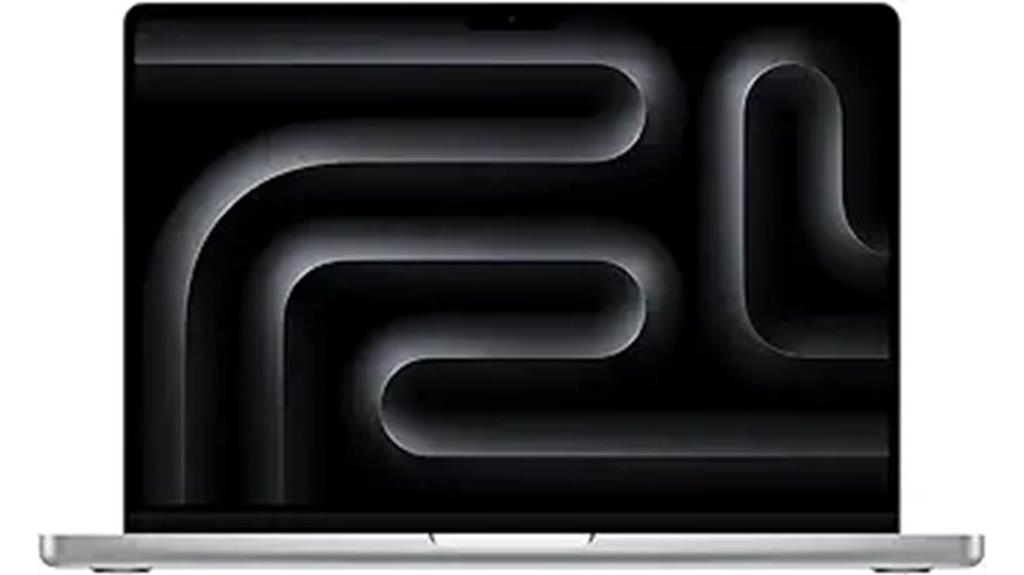
If you’re working with demanding 3D rendering or simulation tasks, the 2024 MacBook Pro with M4 Max is an excellent choice because it delivers top-tier performance with its powerful 14-core CPU and 32-core GPU. Its hardware-accelerated ray tracing, 36GB of unified memory (expandable to 128GB), and up to 8TB SSD guarantee smooth handling of complex projects. The Liquid Retina XDR display offers stunning visuals with HDR support and adaptive 120Hz refresh rate. Combined with long battery life and versatile ports, this MacBook Pro is built for intensive workflows, providing the speed and efficiency needed for professional 3D work and simulations.
Best For: professionals engaged in demanding 3D rendering, simulations, and intensive creative workflows requiring high performance and expansive memory.
Pros:
- Exceptional processing power with the M4 Max chip including a 14-core CPU and 32-core GPU
- Large unified memory options up to 128GB and fast SSD storage up to 8TB for handling complex projects
- Stunning Liquid Retina XDR display with HDR support and adaptive 120Hz refresh rate for vibrant visuals
Cons:
- Premium price point may be prohibitive for casual users
- Limited upgradeability after purchase, especially regarding memory and storage
- Heavier and bulkier compared to lighter, more portable laptops

Apple 2024 MacBook Pro Laptop with M4 Pro, 14‑core CPU, 20‑core GPU: Built for Apple Intelligence, 16.2-inch Liquid Retina XDR Display, 24GB Unified Memory, 512GB SSD Storage; Space Black
SUPERCHARGED BY M4 PRO OR M4 MAX — The 16-inch MacBook Pro with the M4 Pro or M4...
As an affiliate, we earn on qualifying purchases.
Apple 2024 MacBook Pro Laptop with M4 Pro
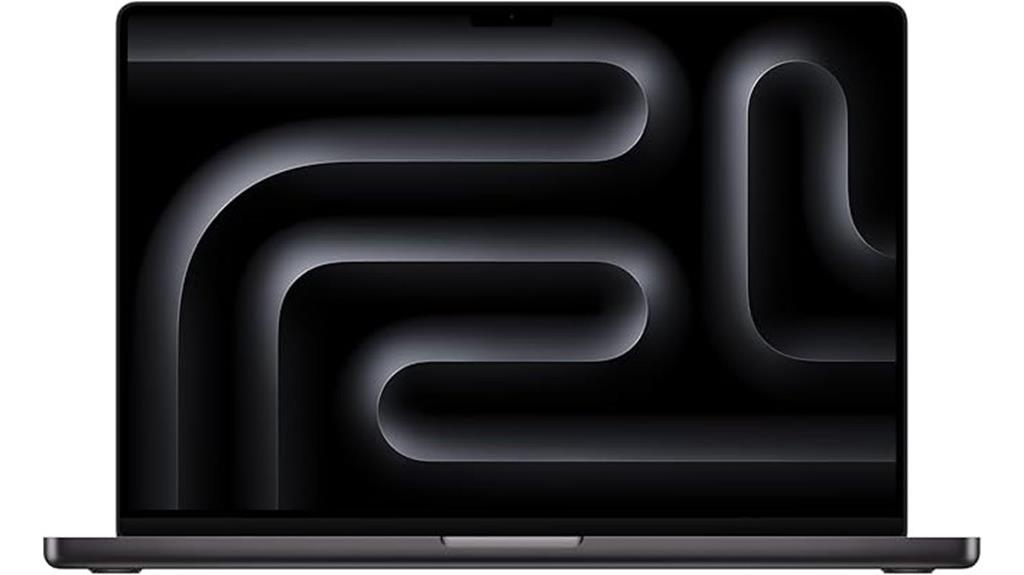
The Apple 2024 MacBook Pro with M4 Pro is an ideal choice for professionals working in 3D modeling and simulation, thanks to its powerful M4 Pro chip and advanced graphics capabilities. Equipped with a 14-core CPU and 20-core GPU, it handles demanding tasks like rendering and complex workflows with ease. The 16.2-inch Liquid Retina XDR display offers stunning visuals, high brightness, and incredible contrast, perfect for detailed work. Its long-lasting battery supports extended sessions, whether plugged in or not. Seamless integration with the Apple ecosystem, robust connectivity options, and a sleek, durable design make this MacBook Pro a top-tier tool for high-performance creative and technical work.
Best For: professionals in 3D modeling, simulation, and other demanding creative workflows seeking a powerful, portable, and highly integrated laptop.
Pros:
- Exceptional performance with M4 Pro chip, ideal for rendering and complex tasks
- Stunning 16.2-inch Liquid Retina XDR display with high brightness and contrast
- Seamless integration within the Apple ecosystem and extensive connectivity options
Cons:
- Higher price point may be prohibitive for some users
- Limited to 512GB SSD storage standard, which may require additional upgrades for large files
- Heavy and potentially less portable compared to smaller laptops

Apple 2024 MacBook Pro Laptop with M4 Pro, 12‑core CPU, 16‑core GPU: Built for Apple Intelligence 14.2-inch Liquid Retina XDR Display, 24GB Unified Memory, 512GB SSD Storage; Space Black
SUPERCHARGED BY M4 PRO OR M4 MAX — The 14-inch MacBook Pro with the M4 Pro or M4...
As an affiliate, we earn on qualifying purchases.
Apple 2024 MacBook Pro Laptop with M4 Pro, 12-core CPU, 16-core GPU

The Apple 2024 MacBook Pro with M4 Pro is a powerhouse designed for professionals tackling complex 3D rendering and simulation tasks. Its 12-core CPU and 16-core GPU deliver exceptional performance, effortlessly handling demanding workflows like large-scale 3D modeling and real-time rendering. The 14.2-inch Liquid Retina XDR display offers stunning visuals with up to 1600 nits brightness, perfect for detailed work. With 24GB of unified memory and 512GB SSD storage, it guarantees smooth multitasking and fast data access. Built for efficiency, the MacBook Pro combines cutting-edge silicon with advanced privacy and intelligence features, making it an ideal portable workstation for serious creators.
Best For: professionals and creative experts who need a powerful, portable workstation for demanding 3D rendering, simulation, and large-scale workflows.
Pros:
- Exceptional performance with 12-core CPU and 16-core GPU ideal for demanding tasks
- Stunning Liquid Retina XDR display with up to 1600 nits brightness for detailed visuals
- Ample 24GB unified memory and fast 512GB SSD for smooth multitasking and data access
Cons:
- Higher price point may be a barrier for some users
- Limited upgradeability due to integrated hardware design
- Battery life may vary depending on intensive workload usage

Apple 2024 Mac mini Desktop Computer with M4 chip with 10‑core CPU and 10‑core GPU: Built for Apple Intelligence, 16GB Unified Memory, 256GB SSD Storage, Gigabit Ethernet. Works with iPhone/iPad
SIZE DOWN. POWER UP — The far mightier, way tinier Mac mini desktop computer is five by five...
As an affiliate, we earn on qualifying purchases.
Apple 2024 Mac mini Desktop Computer with M4 Chip
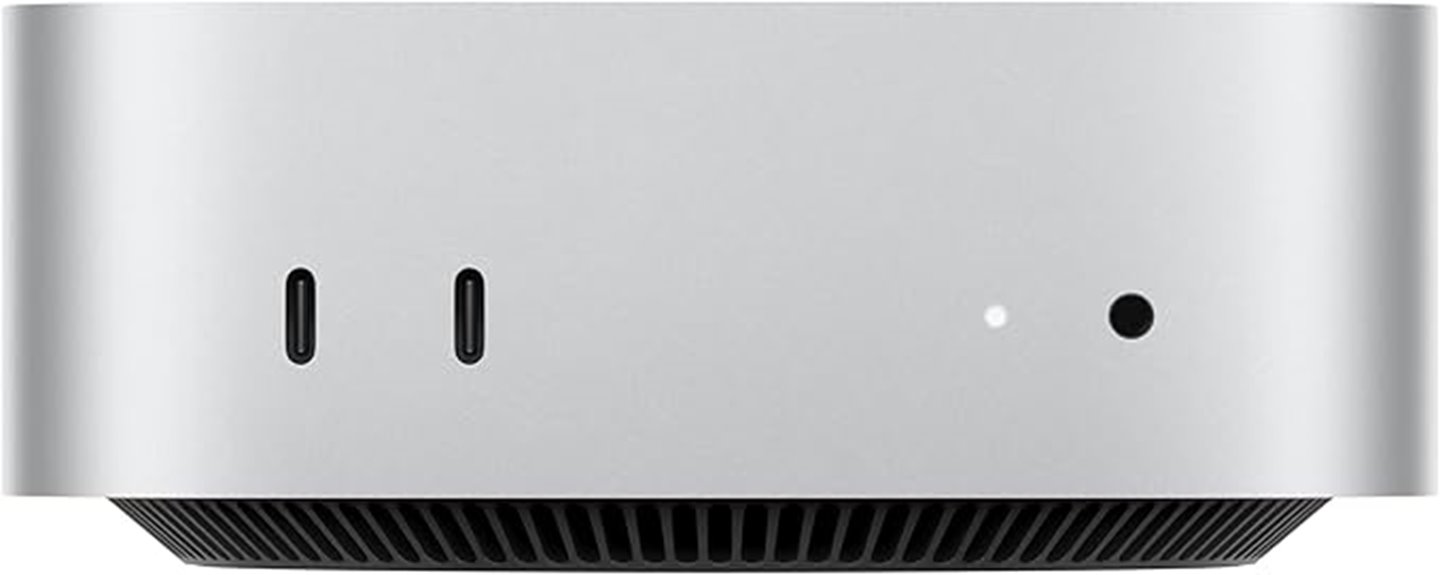
For professionals seeking a compact yet powerful machine for 3D modeling and simulation, the Apple 2024 Mac mini with M4 chip is an excellent choice. Its five-by-five-inch design packs a 10-core CPU and GPU, 16GB unified memory, and 256GB SSD storage, delivering impressive speed and responsiveness. Connectivity options like Thunderbolt, HDMI, USB-C, and Ethernet ensure seamless integration with peripherals. Built on Apple silicon and optimized with macOS, it supports demanding apps like Adobe Creative Cloud and Microsoft 365. Plus, its ecosystem integration with iPhone and iPad enhances productivity. Best of all, it’s environmentally friendly, being carbon neutral, aligning with Apple’s sustainability goals.
Best For: professionals and creative users requiring a compact yet powerful desktop for 3D modeling, simulation, and demanding creative applications.
Pros:
- Compact design fits easily into any workspace without sacrificing performance
- Powerful M4 chip with 10-core CPU and GPU ensures fast, responsive operation for demanding tasks
- Seamless integration with Apple ecosystem enhances productivity across devices
Cons:
- Limited upgradability with fixed 16GB RAM and 256GB storage
- Might be less suitable for users needing high-end graphics or extensive storage options
- Higher price point relative to some other compact PCs with similar specs
Apple Mac mini Desktop Computer with M4 Pro Chip
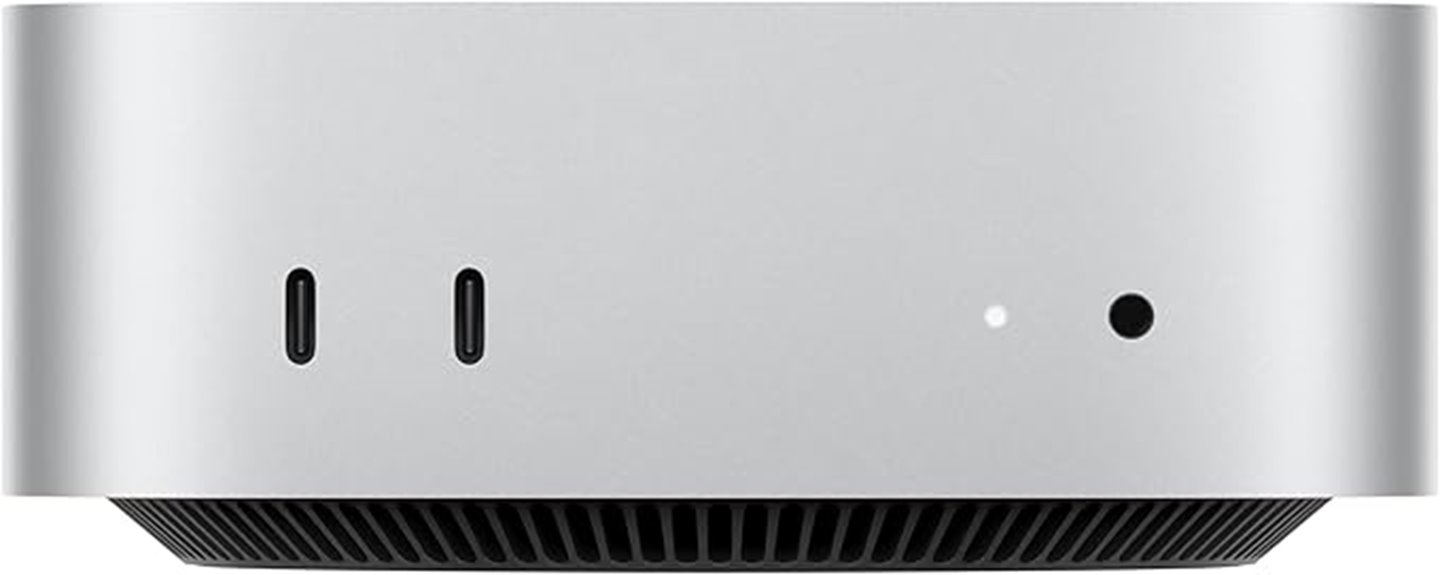
If you’re working on demanding 3D projects or complex simulations, the Apple Mac mini with the M4 Pro chip is an excellent choice because it delivers powerful performance in a compact size. Its 12-core CPU and 16-core GPU handle intensive tasks with ease, while 24GB of unified memory and a 512GB SSD ensure smooth multitasking and quick access to large files. The mini’s five-by-five-inch design fits effortlessly next to your monitor, and its versatile ports—including Thunderbolt, HDMI, USB-C, Ethernet, and a headphone jack—allow seamless connections. Combined with Apple Silicon’s efficiency and macOS optimization, this mini provides a perfect balance of power, size, and connectivity for advanced 3D work.
Best For: creative professionals and developers needing a compact yet powerful desktop for demanding 3D projects, simulations, and large code compilations.
Pros:
- Compact size fits easily next to any monitor, saving space.
- Powerful M4 Pro chip with 12-core CPU and 16-core GPU handles intensive tasks effortlessly.
- Multiple versatile ports (Thunderbolt, HDMI, USB-C, Ethernet) enable seamless connectivity.
Cons:
- Limited upgrade options for memory and storage after purchase.
- Higher cost compared to traditional desktops with similar specs.
- No dedicated GPU options beyond the integrated GPU in the M4 Pro chip.
Factors to Consider When Choosing a Mac Pro for 3D and Simulation
When choosing a Mac Pro for 3D and simulation work, I focus on several key factors to guarantee maximum performance. You’ll want to take into account your processing power needs, graphics capabilities, and how much memory and storage are necessary for your projects. Additionally, compatibility with your preferred software and support for external displays play vital roles in making the right choice.
Processing Power Needs
Choosing the right Mac Pro for 3D and simulation work hinges on understanding your processing power needs. High-performance rendering and complex simulations demand a multi-core CPU, typically 12 cores or more, to handle demanding calculations efficiently. GPU capabilities are equally important; a powerful GPU, like a 40-core setup, can drastically cut rendering times and enable real-time visualization. Adequate RAM—64GB or more—is essential to manage large models and datasets without bottlenecks. Fast SSD storage with high bandwidth speeds up load times and smooths workflow during large projects. Ultimately, your processing power requirements should match the specific demands of your simulation software, ensuring seamless performance, scalability, and productivity.
Graphics Capabilities Required
Selecting a Mac Pro for 3D and simulation work means prioritizing robust graphics capabilities. To handle complex rendering and modeling, I recommend a GPU with high core counts, preferably 40 or more, for efficient processing. Hardware-accelerated ray tracing is essential for realistic lighting and reflections, making scenes more lifelike. A minimum of 16GB of unified memory is needed, but for large scenes and intensive rendering, higher configurations like 128GB are preferable. Supporting multiple external displays, including 6K or 8K resolutions, can considerably enhance workflow and visualization. Additionally, features like hardware-accelerated video decode and encode engines are crucial for high-resolution video processing, ensuring smooth playback and rendering during demanding simulation tasks.
Memory and Storage Size
Ever wondered how much memory and storage you need for demanding 3D and simulation projects? For intensive workflows, I recommend at least 64GB of RAM to handle large datasets and complex rendering tasks smoothly. More memory means better multitasking and fewer bottlenecks during heavy processing. Storage size should match your project requirements; 1TB or more is ideal for storing high-resolution assets, models, and simulation data locally. Configurable options up to 8TB give you plenty of space to manage extensive files without relying heavily on external drives. Investing in larger memory and storage capacities not only improves performance now but also future-proofs your setup as project complexity and data sizes grow over time. Ensuring scalable options will keep your workflow efficient and seamless.
Compatibility With Software
When evaluating a Mac Pro for 3D and simulation work, it’s important to confirm that its hardware and software environments are compatible with your specific applications. First, check that the operating system version supports your software’s latest features. Next, ensure the Mac Pro’s hardware, including CPU, GPU, RAM, and storage, meets or exceeds the minimum requirements of your programs. Compatibility with hardware acceleration features like GPU-based rendering or ray tracing is vital for advanced simulations. Also, verify that the graphics card options are compatible with your software’s supported drivers. Finally, consider whether the Mac Pro offers enough RAM and storage to handle large project files and complex datasets efficiently. Proper compatibility guarantees smooth, reliable performance for demanding 3D and simulation tasks.
External Display Support
Are you ensuring your Mac Pro can support all the displays needed for your complex 3D and simulation projects? Supporting multiple external monitors, ideally up to eight, is essential for managing vast workflows. You’ll want enough Thunderbolt and HDMI ports to connect high-resolution displays—6K or 8K screens are vital for detailed modeling and rendering. Compatibility with advanced display technologies like ProMotion and HDR improves visual accuracy and reduces eye strain during long sessions. The GPU plays a key role, as it determines how many and how high-resolution displays your Mac Pro can handle effectively. Make sure your setup includes robust graphics hardware to support your display needs without bottlenecks, ensuring smooth workflows and precise visuals for your demanding 3D and simulation work.
Port and Connectivity Options
Selecting the appropriate port and connectivity options is crucial to guarantee your Mac Pro can handle the demanding hardware and peripherals required for 3D modeling and simulation. Make certain it has multiple Thunderbolt 5 ports for high-speed data transfer and connecting several external displays. An HDMI port is essential for large monitors or projectors, making immersive visualization easier. Check for an SDXC card slot to swiftly transfer textures, assets, or simulation data from cameras or other devices. USB-C or USB-A ports are necessary for peripherals like external drives, controllers, or input devices. Additionally, consider the number and type of ports to support simultaneous connections for VR headsets, external GPUs, and specialized hardware. Having versatile, abundant ports ensures your Mac Pro can seamlessly integrate all your essential tools.
Budget and Cost Factors
Choosing the right Mac Pro for 3D and simulation work involves carefully balancing your budget with your performance needs. The cost varies widely depending on hardware options; higher-end models with more cores, advanced processors like the M4 Max, and increased RAM can substantially raise the price. Upgrading to specialized GPUs, larger storage, and external displays adds to the total investment. While cheaper models may save money upfront, they might lack the processing power necessary for demanding rendering and simulations. Considering long-term value and productivity gains is essential—spending more initially on a powerful configuration can pay off through faster workflows and fewer bottlenecks. Ultimately, aligning your budget with your specific workload requirements helps guarantee you get the best performance for your investment.
Frequently Asked Questions
How Do Mac Pro Options Compare to High-End Windows Workstations?
Mac Pro options generally match or even surpass high-end Windows workstations in raw power, thanks to their advanced hardware and optimized software. I find that Macs excel in integration, offering seamless performance for 3D modeling and simulations. While Windows machines may have more customization options, I prefer Mac Pros for their stability, sleek design, and consistent performance, making them a strong choice for demanding professional tasks.
Are There Specific Mac Pro Configurations Optimized for 3D Rendering?
Did you know that the latest Mac Pro can be configured with up to 1.5TB of RAM? That’s incredible for 3D rendering. Yes, there are specific configurations optimized for this, like those with the M2 Ultra or M2 Max chips paired with high-core counts and maximum RAM. These setups deliver the power and speed needed for complex rendering tasks, making them ideal for professionals demanding top-tier performance.
What Are the Upgrade Options for Future-Proofing Mac Pros?
You can future-proof your Mac Pro by choosing the highest configurable specs now, like maxed-out RAM, multiple GPU options, and the latest M-series chips. Opt for modular components where possible, so upgrades are easier later. Keep an eye on Apple’s hardware release cycles, and consider external accessories like Thunderbolt 4 docks or external GPUs. This way, your setup stays relevant and powerful for years to come.
How Does Thermal Management Impact Mac Pro Performance During Intensive Tasks?
Think of thermal management like a car’s cooling system—when it works well, performance stays smooth. During intensive tasks, proper cooling prevents overheating, which can throttle the Mac Pro’s speed. Good thermal design ensures the system disperses heat efficiently, maintaining peak performance longer. Without it, thermal throttling kicks in, slowing down processing and cutting into productivity. So, effective cooling is essential for consistent, reliable performance during demanding workloads.
Can Mac Pros Efficiently Run Industry-Standard Simulation Software?
Yes, Mac Pros can efficiently run industry-standard simulation software. I’ve found their powerful processors, ample RAM, and advanced graphics capabilities make handling complex simulations smooth and reliable. Apple’s hardware optimizations guarantee stability during intensive tasks, and with the right configurations, they meet the demanding needs of professionals. So, if you’re considering a Mac Pro for simulations, rest assured, it’s a solid choice that won’t compromise performance.
Conclusion
Choosing the right Mac for 3D and simulation is like selecting the perfect brush for a masterpiece—each tool offers unique strokes. The 2025 Mac Pros I’ve highlighted are my palette, blending power, performance, and precision. As you pick your ideal device, remember that your choice shapes the art you create. With these Macs, you’re not just working; you’re crafting future classics—each a masterpiece waiting to be realized.