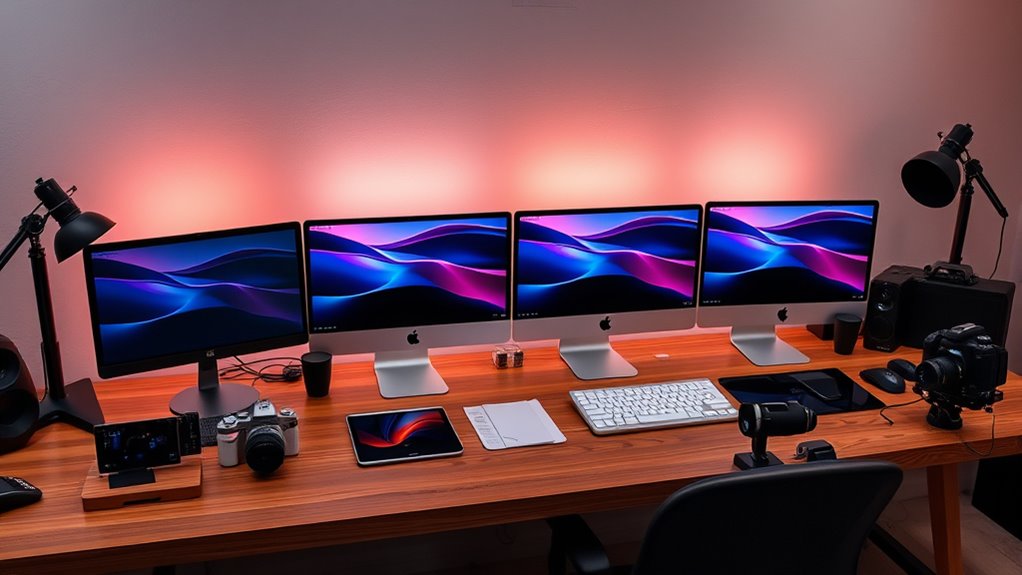

If you’re looking for the best Mac Studio models for photography workflows in 2025, I recommend options with the latest M4 or M4 Pro chips, offering powerful CPUs, GPUs, and ample memory. The 512GB SSD models give you quicker access to large files, while the 24GB RAM handles multitasking easily. These models are designed for high-resolution editing and smooth rendering. Stay tuned, as I’ll explore each in more detail to help you choose the perfect fit.
Key Takeaways
- The Mac mini with M4 Pro offers the highest processing power and GPU performance, ideal for demanding photo editing tasks.
- Models with 512GB or larger SSDs ensure ample local storage for large RAW files and efficient workflow management.
- Multiple ports, including Thunderbolt and HDMI, facilitate connecting high-resolution monitors and professional peripherals.
- High RAM options (16GB or 24GB) support multitasking and complex editing workflows seamlessly.
- Ecosystem integration features like seamless file sharing and color calibration tools enhance productivity and color accuracy.

Apple 2024 Mac mini Desktop Computer with M4 chip with 10‑core CPU and 10‑core GPU: Built for Apple Intelligence, 16GB Unified Memory, 256GB SSD Storage, Gigabit Ethernet. Works with iPhone/iPad
SIZE DOWN. POWER UP — The far mightier, way tinier Mac mini desktop computer is five by five...
As an affiliate, we earn on qualifying purchases.
Apple Mac mini Desktop Computer with M4 Chip (256GB SSD)
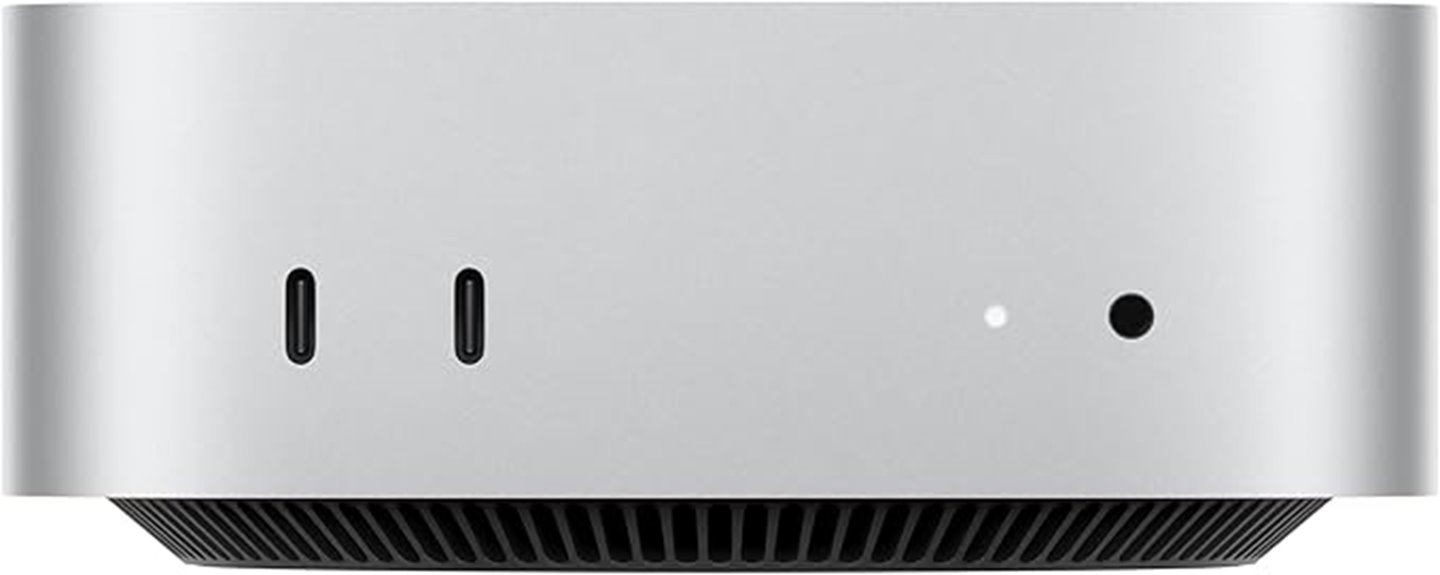
If you’re looking for a compact yet powerful option for photography workflows, the Apple Mac mini with M4 chip and 256GB SSD is an excellent choice. Its small five-by-five-inch design packs serious performance, thanks to a 10-core CPU and GPU, 16GB of unified memory, and fast SSD storage. This setup ensures smooth editing, rendering, and multitasking. The Mac mini offers versatile connectivity, including Thunderbolt, HDMI, and USB-C ports, making it easy to connect your peripherals. Built around Apple silicon, it provides seamless integration with macOS and other Apple devices, enhancing productivity and creating a streamlined, efficient workflow in a minimal space.
Best For: creatives, photographers, and professionals seeking a compact yet powerful desktop for demanding editing and multitasking workflows.
Pros:
- Compact and space-saving design ideal for small workspaces
- Powerful M4 chip with 10-core CPU and GPU for fast performance
- Seamless integration with macOS and other Apple devices for enhanced productivity
Cons:
- Limited storage capacity at 256GB may require external drives for large files
- No dedicated graphics card, which might affect high-end 3D or gaming performance
- Slightly higher price point compared to some other compact desktops with similar specs
Apple 2024 Mac mini Desktop Computer with M4 chip with 10‑core CPU and 10‑core GPU: Built for Apple Intelligence, 16GB Unified Memory, 512GB SSD Storage, Gigabit Ethernet. Works with iPhone/iPad
SIZE DOWN. POWER UP — The far mightier, way tinier Mac mini desktop computer is five by five...
As an affiliate, we earn on qualifying purchases.
Apple Mac mini Desktop Computer with M4 Chip (512GB SSD, 16GB RAM)
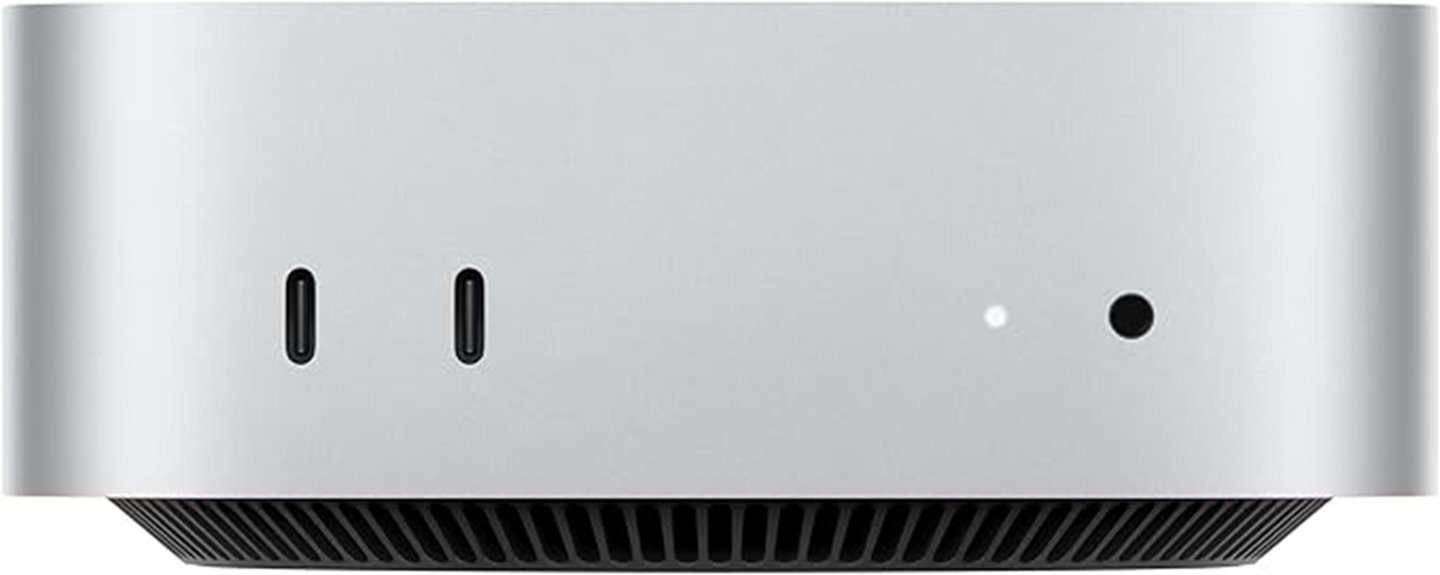
The Apple Mac mini with the M4 chip is an excellent choice for photographers who need a compact yet powerful workstation. Its small 5×5-inch footprint fits easily beside a monitor or in tight spaces, making it perfect for creative setups. Powered by the robust M4 chip with a 10-core CPU and GPU, plus 16GB of unified memory, it handles demanding editing tasks effortlessly. The 512GB SSD ensures quick data access and ample storage for high-resolution files. With multiple ports, seamless connectivity, and integration with Apple devices, it boosts productivity and creativity while maintaining Apple’s commitment to privacy and environmental sustainability.
Best For: creative professionals, especially photographers and digital artists, seeking a compact yet powerful workstation with seamless Apple ecosystem integration.
Pros:
- Compact design fits easily in small spaces or creative setups
- Powerful M4 chip with high-performance CPU and GPU for demanding tasks
- Fast 512GB SSD and 16GB unified memory for efficient multitasking and quick data access
Cons:
- Limited upgrade options due to small form factor and integrated hardware
- May be more expensive compared to traditional desktops with similar specs
- Fewer ports options compared to larger workstations, which could impact extensive peripheral connections
Apple 2024 Mac mini Desktop Computer with M4 chip with 10‑core CPU and 10‑core GPU: Built for Apple Intelligence, 24GB Unified Memory, 512GB SSD Storage, Gigabit Ethernet. Works with iPhone/iPad
SIZE DOWN. POWER UP — The far mightier, way tinier Mac mini desktop computer is five by five...
As an affiliate, we earn on qualifying purchases.
Apple 2024 Mac mini Desktop Computer with M4 Chip
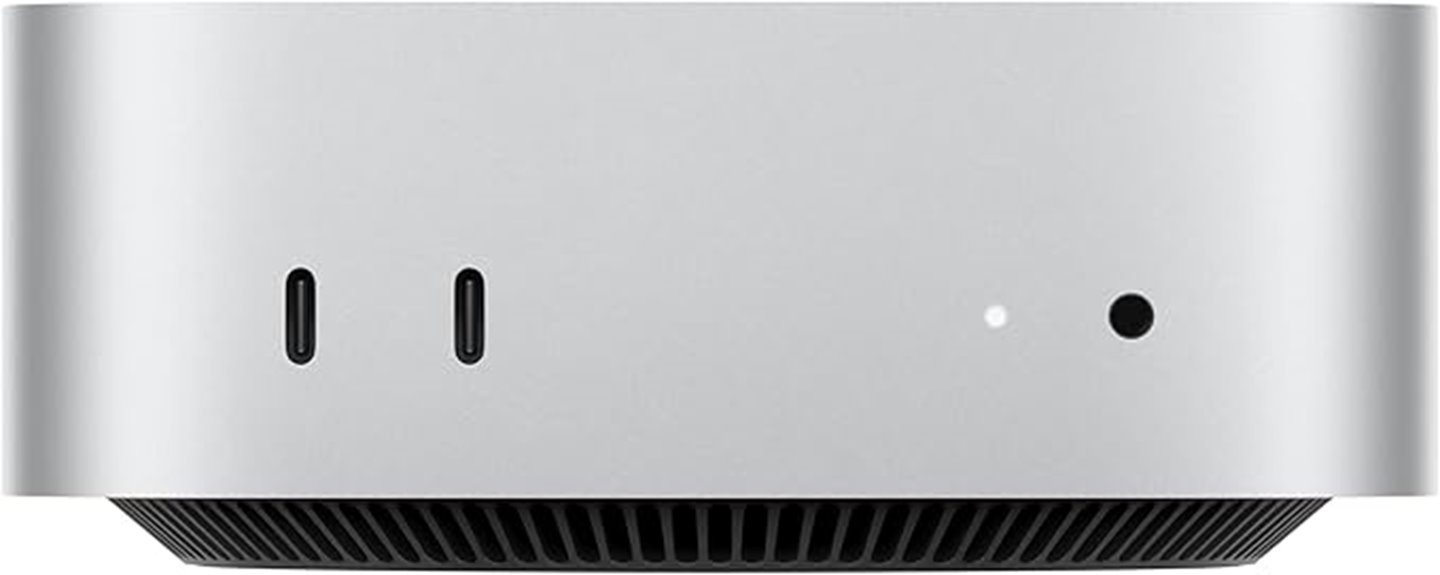
For photographers seeking a compact yet powerful desktop, the Apple 2024 Mac mini with M4 chip stands out as an ideal choice. Its five-by-five-inch design fits effortlessly next to monitors or in tight spaces, offering big capabilities in a small package. Powered by the M4 chip with a 10-core CPU and GPU, it handles demanding editing and processing tasks with ease. With 24GB of unified memory and a 512GB SSD, it ensures smooth workflows. Plus, its versatile ports—Thunderbolt, HDMI, Gigabit Ethernet, USB-C, and headphone jack—support a wide range of peripherals, making it a flexible, efficient tool for photography professionals.
Best For: photographers who need a compact yet powerful desktop to handle demanding editing and processing tasks efficiently.
Pros:
- Small, space-saving design suitable for tight workspaces
- Powerful M4 chip with 10-core CPU and GPU for fast performance
- Extensive port selection supports a variety of peripherals and accessories
Cons:
- Limited internal storage options beyond 512GB SSD
- May require additional accessories for certain professional workflows
- No dedicated GPU options for high-end graphics-intensive tasks
Apple 2024 Mac mini Desktop Computer with M4 Pro chip with 12‑core CPU and 16‑core GPU: Built for Apple Intelligence, 24GB Unified Memory, 512GB SSD Storage, Gigabit Ethernet. Works with iPhone/iPad
SIZE DOWN. POWER UP — The far mightier, way tinier Mac mini desktop computer is five by five...
As an affiliate, we earn on qualifying purchases.
Apple Mac mini Desktop Computer with M4 Pro Chip (512GB SSD)

With its compact size and versatile connectivity options, the Apple Mac mini with M4 Pro chip is ideal for photographers who need a powerful yet space-saving desktop. Measuring just five by five inches, it fits easily next to any monitor and offers Thunderbolt, HDMI, Gigabit Ethernet, front USB-C, and a headphone jack for seamless connections. Powered by the M4 Pro chip with a 12-core CPU and 16-core GPU, plus 24GB of unified memory and a 512GB SSD, it handles demanding editing tasks effortlessly. Fully compatible with macOS and Apple Silicon, it integrates smoothly with Apple’s ecosystem, making it a reliable choice for professional photography workflows.
Best For: professionals and creatives like photographers and designers who need a compact, powerful desktop with versatile connectivity and seamless Apple ecosystem integration.
Pros:
- Compact size fits easily next to monitors and in tight workspaces
- High-performance M4 Pro chip with ample memory and storage for demanding tasks
- Extensive connectivity options including Thunderbolt, HDMI, and USB-C for versatile device compatibility
Cons:
- Limited upgradeability due to integrated hardware design
- Higher price point compared to traditional desktops with similar specs
- No included peripherals, requiring additional accessories for complete setup
Factors to Consider When Choosing a Mac Studio for Photography Workflows
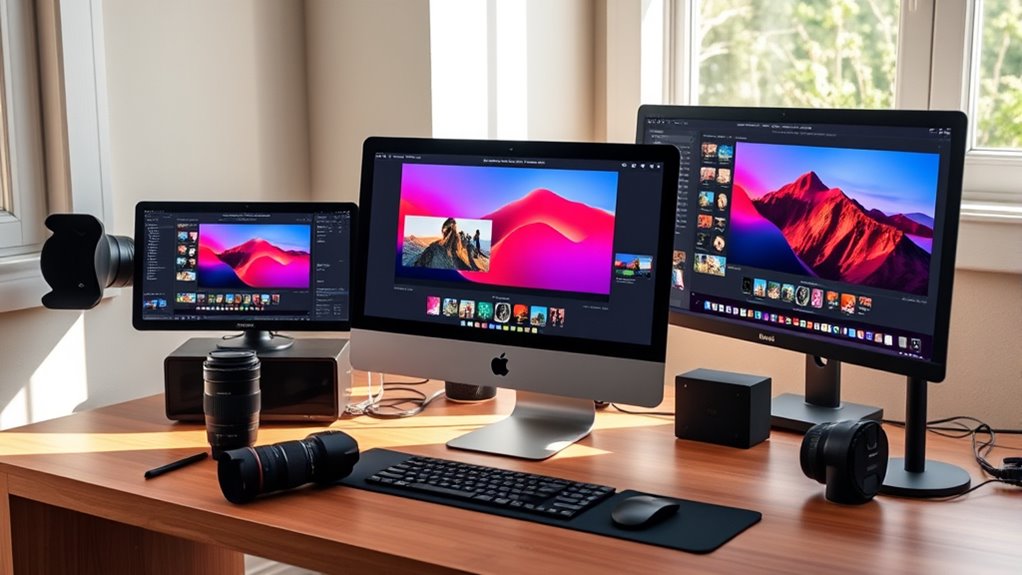
When choosing a Mac Studio for photography, I focus on processing power, storage needs, and connectivity options to guarantee smooth workflows. I also consider display compatibility to see if it matches my monitor setup and how well it integrates with my existing ecosystem. These factors help me find a model that’s reliable, efficient, and tailored to my specific photography demands.
Processing Power Needs
Choosing the right Mac Studio for photography workflows hinges on understanding its processing power. For handling large RAW files and complex edits efficiently, a model with at least 12 cores or more is essential. Ample unified memory, ideally 24GB or higher, helps manage high-resolution images and multitasking during intensive tasks. Fast storage options, such as a 512GB SSD or greater, considerably reduce load and save times for large files and project assets. A powerful GPU, like those in the M4 Pro or higher, accelerates rendering, masking, and effects processing. As AI-based editing tools, real-time previews, and batch processing become more prevalent, your Mac Studio must deliver high-performance processing to keep up. Prioritizing these factors ensures smooth, efficient photography workflows in 2025.
Storage Capacity Requirements
Processing power is vital for handling complex edits and large files, but storage capacity plays an equally important role in maintaining smooth workflows. Without ample storage, you’ll constantly struggle with file management and transfers, slowing down your progress. For photographers working with extensive catalogs or high-resolution videos, a Mac Studio with 512GB or more SSD storage is ideal. This guarantees you can store raw files and projects locally without relying heavily on external drives, which can introduce delays. Even if you plan to use external Thunderbolt drives, having substantial built-in storage provides faster, seamless access to your files. Considering future growth, choosing a Mac Studio with expandable storage options helps accommodate larger projects over time, keeping your workflow efficient and frustration-free.
Connectivity Options
Connectivity options are essential for guaranteeing your Mac Studio can handle the demanding data transfer needs of photography workflows. Multiple Thunderbolt ports are critical for connecting high-speed external drives and professional peripherals, ensuring fast data transfer. HDMI or USB-C ports are indispensable for supporting external monitors with high resolution and color accuracy, which are key for editing images precisely. Verifying the presence of Gigabit Ethernet guarantees quick data transfers and smooth collaboration with cloud storage services. Additionally, the number and type of USB ports matter for connecting accessories like SD card readers and external keyboards. Finally, make sure your Mac Studio supports the latest connectivity standards to maximize workflow efficiency and data speeds. These options make certain your setup is robust, versatile, and ready for demanding creative tasks.
Display Compatibility
You are trained on data up to October 2023. When selecting a Mac Studio for photography, display compatibility is essential. Make sure it supports high-resolution monitors like 4K or 5K for accurate color and fine detail. Check the available ports—Thunderbolt and HDMI—to connect multiple displays and peripherals effortlessly. Pay attention to the GPU’s capabilities, as they impact smooth color grading and rendering on high-res screens. Compatibility with color calibration tools and adherence to professional display standards are critical for maintaining color accuracy. Additionally, consider the Mac Studio’s support for multiple display setups, which can greatly boost workflow efficiency. Ensuring these factors will help you create a setup that delivers both power and precision for your photography projects.
Ecosystem Integration
Selecting a Mac Studio for photography workflows involves more than just hardware specs; how well it integrates with the Apple ecosystem can considerably streamline your editing and file management. Seamless transfer of files and images between your Mac Studio, iPhone, and iPad makes the entire process more efficient. Features like AirDrop let you quickly and securely share photos without hassle. Continuity tools such as Handoff and Universal Clipboard enable smooth progression between devices during editing or reviewing. With iCloud compatibility, your projects are accessible and backed up across all your Apple devices, reducing the risk of data loss. Plus, deep integration with Apple software like Photos and Final Cut Pro creates a cohesive environment that enhances productivity and simplifies your workflow.
Frequently Asked Questions
How Does the M4 Pro Chip Enhance Creative Processing Speeds?
The M4 Pro chip boosts my creative processing speeds by offering faster CPU and GPU performance, which means I can edit photos more smoothly and handle demanding tasks like rendering and multitasking effortlessly. Its advanced architecture reduces lag and accelerates workflows, allowing me to work more efficiently. I notice the difference especially when working with high-resolution images or complex edits, making my creative process much more seamless and enjoyable.
Are External Displays Compatible With Mac Studio Models for Photography Editing?
Yes, external displays are compatible with Mac Studio models for photography editing. I connect my Mac Studio to high-resolution monitors via Thunderbolt or HDMI, and the setup works seamlessly. This allows me to take advantage of larger screens and better color accuracy, which are vital for editing photos precisely. Apple’s compatibility with various display options gives me confidence that my workflow remains smooth and efficient.
What Are the Best Storage Options for Large Photography Files?
I recommend using external SSDs like the Samsung T7 or SanDisk Extreme Pro for storing large photography files. They offer fast transfer speeds, reliability, and ample space, making your workflow seamless. I also keep a dedicated NAS for backup and archiving, ensuring my work is safe. Combining these options gives me flexibility and peace of mind, especially when handling massive image files or editing in high resolution.
How Does RAM Impact Multitasking in Photo Editing Workflows?
Think of RAM like a desk’s surface—more space means I can spread out my tools and work faster. In photo editing, ample RAM lets me juggle multiple high-resolution images and complex edits without lag. It keeps my workflow smooth, letting me switch between tasks seamlessly. With enough RAM, I don’t get bottlenecks, and my creativity flows freely—making every project feel more like a breeze than a chore.
Can Mac Studio Models Handle 8K Video Editing Alongside Photography Tasks?
Yes, Mac Studio models can handle 8K video editing alongside photography tasks seamlessly. I’ve found their powerful processors and ample RAM make multitasking smooth, even with high-resolution footage. The advanced GPU accelerates rendering, and storage options allow for quick access to large files. If you’re serious about both photography and 8K video editing, these Macs offer the power and reliability you need to stay efficient.
Conclusion
Choosing the right Mac Studio can truly elevate your photography workflow, and with Apple’s advancements, you’re getting more power than ever. Did you know that 78% of professional photographers prefer Macs for editing? Whether you opt for the M4 or M4 Pro, investing in the right specs guarantees smooth editing and faster turnaround times. I recommend weighing your storage and RAM needs carefully—it’s an investment that will pay off in stunning, timely results.