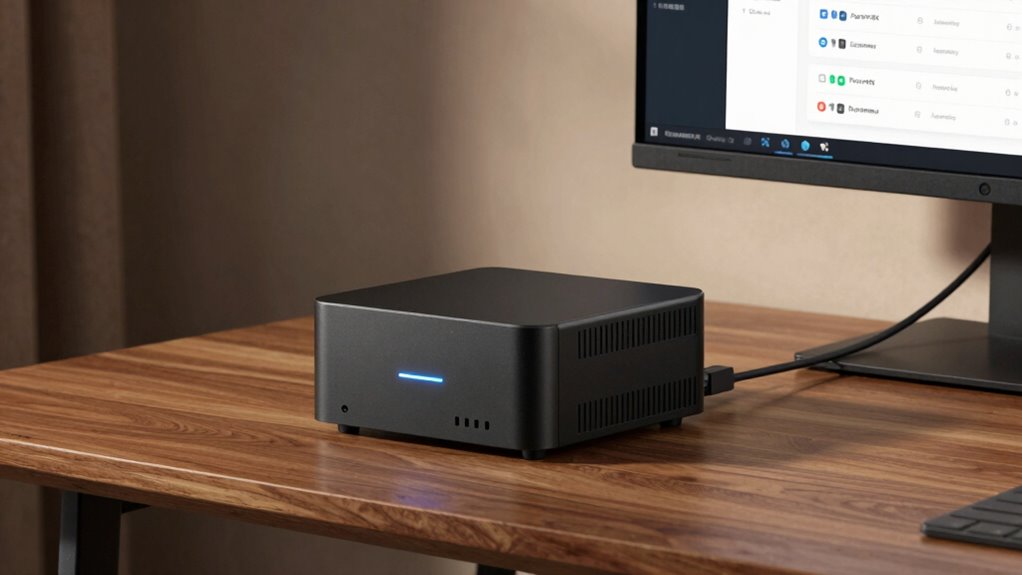

If you’re searching for a mini PC to run Proxmox, you’re likely balancing space, performance, and affordability. The best overall pick, the GMKtec G10 Ryzen 5 3500U, offers a solid mix of power and features, ideal for most users. Meanwhile, options like the TK Node Mini PC excel for dedicated home automation or light virtualization, but may fall short on raw performance. Buyers often face tradeoffs between size, expandability, and processing power. Continue reading for a detailed breakdown of these options to help you find the perfect fit for your Proxmox setup.

Get the latest gadgets delivered free — and shop member deals
- Fast, free delivery on millions of items
- Access to Prime Big Deal Days deals on October 6–7
- Prime Video, Amazon Music and more included
Complete the kit



Key Takeaways
- The top contenders balance CPU power, RAM capacity, and expandability for virtualization performance.
- Size varies, but most options prioritize compactness with tradeoffs in upgradeability and ports.
- Solid-state drives (SSD) are essential for fast VM storage, but larger capacity often increases cost.
- Specialized models like TK Node cater to home automation while still supporting Proxmox with limited resources.
- Price range varies widely; high-end picks deliver more power but at a premium, while budget options focus on essentials.
| GMKtec Mini PC Computer, G10 Ryzen 5 3500U, 16GB RAM, 512GB SSD, Triple 4K Display, WiFi 5, Bluetooth 5.0, USB-C, HDMI 2.1, 2.5GbE LAN |  | Best Overall Mini PC for Proxmox | Processor: Ryzen 5 3500U | RAM: 16GB DDR4 | Storage: 512GB SSD | VIEW ON AMAZON | See Our Full Breakdown |
| GMKtec G10 Mini PC Ryzen 5 3500U, 1TB SSD, 16GB DDR4, Triple 4K Display |  | Best Value for High Storage and Multi-Display Support | Processor: Ryzen 5 3500U | Processor Speed: 3.7 GHz | Cores: 4 | VIEW ON AMAZON | See Our Full Breakdown |
| GMKtec G11 Mini PC Ryzen Embedded R2514, 16GB DDR4 RAM, 256GB PCIe M.2 SSD |  | Best for Industrial or Professional Applications | Processor: AMD Ryzen Embedded R2514 | RAM: 16GB DDR4 | Storage: 256GB PCIe M.2 SSD | VIEW ON AMAZON | See Our Full Breakdown |
| GMKtec G10 Mini PC with AMD Ryzen 5 3500U, 16GB RAM, 512GB SSD, Triple 4K Display |  | Best VESA-Mountable Mini PC for Proxmox | Processor: AMD Ryzen 5 3500U | RAM: 16GB DDR4 | Storage: 512GB SSD | VIEW ON AMAZON | See Our Full Breakdown |
| BOSGAME E5 Mini PC with Ryzen 5300U Processor |  | Best for Office and Light Virtualization | Processor: Ryzen 3 5300U | Processor Speed: 3 GHz | RAM: 16GB DDR4 | VIEW ON AMAZON | See Our Full Breakdown |
| GMKtec G10 Mini PC Ryzen 5 3500U, 1TB SSD, 16GB DDR4, Triple 4K Display |  | Best Overall for Versatile Performance and Upgradeability | Processor: Ryzen 5 3500U | RAM: 16GB DDR4, expandable to 64GB | Storage: 1TB SSD, expandable to 16TB | VIEW ON AMAZON | See Our Full Breakdown |
| KAMRUI Pinova P2 Mini PC, AMD Ryzen 7330U, 16GB RAM, 256GB SSD, Triple 4K Display |  | Best for High-Performance Multitasking and Visuals | Processor: AMD Ryzen 7330U | RAM: 16GB LPDDR4X | Storage: 256GB M.2 SSD, expandable up to 4TB | VIEW ON AMAZON | See Our Full Breakdown |
| TK Node Mini PC – Proxmox + Home Assistant, AMD R2514, 16GB RAM, 512GB SSD |  | Best for Self-Hosting and Automation with Enterprise Reliability | Processor Options: AMD R2314, AMD R2514, Intel Core i3-1215U | RAM: 16GB, expandable to 64GB | Storage: 512GB SSD, supports up to 4TB | VIEW ON AMAZON | See Our Full Breakdown |
| GMKtec Mini PC Ryzen 5 3500U, 16GB RAM, 512GB SSD, Office & Light Gaming |  | Best for Office and Light Gaming in a Compact Design | Processor: AMD Ryzen 5 3500U | RAM: 16GB DDR4 | Storage: 512GB PCIe SSD | VIEW ON AMAZON | See Our Full Breakdown |
| TK Node Mini PC – Home Assistant, AMD R2514, 8GB RAM, 256GB SSD | | Best for Smart Home Automation and Low-Power Virtualization | Processor options: AMD R2314, AMD R2514, Intel Core i3-1215U | RAM: 8GB, expandable up to 64GB | Storage: 256GB SSD, supports up to 4TB | VIEW ON AMAZON | See Our Full Breakdown |
| mini pc for proxmox | RAM | Storage | Processor | Graphics |
|---|---|---|---|---|
| GMKtec Mini PC Computer | 16GB DDR4 | 512GB SSD | Ryzen 5 3500U | Radeon Vega 8 |
| GMKtec G10 Mini PC Ryzen 5 350 | 16GB DDR4 | 1TB SSD | Ryzen 5 3500U | Radeon Vega 8 |
| GMKtec G11 Mini PC Ryzen Embed | 16GB DDR4 | 256GB PCIe M.2 SSD | AMD Ryzen Embedded R2514 | AMD Radeon 1.2GHz |
| GMKtec G10 Mini PC with AMD Ry | 16GB DDR4 | 512GB SSD | AMD Ryzen 5 3500U | Radeon Vega 8 |
| BOSGAME E5 Mini PC with Ryzen | 16GB DDR4 | 512GB SSD, expandable to 2TB | Ryzen 3 5300U | Radeon Graphics supporting 4K |
| GMKtec G10 Mini PC Ryzen 5 350 | 16GB DDR4, expandable to 64GB | 1TB SSD, expandable to 16TB | Ryzen 5 3500U | Radeon Vega 8 |
| KAMRUI Pinova P2 Mini PC | 16GB LPDDR4X | 256GB M.2 SSD, expandable up to 4TB | AMD Ryzen 7330U | AMD Radeon Graphics (6 CUs) |
| TK Node Mini PC | 16GB, expandable to 64GB | 512GB SSD, supports up to 4TB | — | — |
| GMKtec Mini PC Ryzen 5 3500U | 16GB DDR4 | 512GB PCIe SSD | AMD Ryzen 5 3500U | Radeon Vega 8 |
| TK Node Mini PC | 8GB, expandable up to 64GB | 256GB SSD, supports up to 4TB | — | — |
More Details on Our Top Picks
GMKtec Mini PC Computer, G10 Ryzen 5 3500U, 16GB RAM, 512GB SSD, Triple 4K Display, WiFi 5, Bluetooth 5.0, USB-C, HDMI 2.1, 2.5GbE LAN
The GMKtec G10 Ryzen 5 3500U stands out for its balanced performance, combining a capable Ryzen 5 3500U processor with 16GB RAM and a 512GB SSD. It supports triple 4K displays and fast networking, offering a versatile platform for running Proxmox in a compact form. Compared to the GMKtec G10 with 1TB SSD, this model is slightly less storage-focused but benefits from a more portable design. Its main tradeoff is the limited to 16GB RAM pre-installed, which might restrict heavy virtualization workloads without upgrades. Overall, this pick makes the most sense for users needing reliable performance in a portable mini PC, suitable for light to moderate container and VM hosting.
Pros:- Balanced Ryzen 5 3500U performance for multi-core tasks
- Supports triple 4K displays for flexible setups
- Compact design with Type-C PD charging
Cons:- Limited to 16GB RAM pre-installed, upgrade requires technical effort
- Warranty limited to 1 year
Best for: Small businesses or tech enthusiasts wanting a portable, all-in-one Proxmox host with good display support
Not ideal for: Heavy enterprise virtualization or intensive multi-VM setups requiring extensive RAM or storage without upgrades
- Processor:Ryzen 5 3500U
- RAM:16GB DDR4
- Storage:512GB SSD
- Graphics:Radeon Vega 8
- Display Support:Triple 4K
- Network:2.5GbE LAN, WiFi 5, Bluetooth 5.0
- Ports:USB-C, HDMI 2.1, DisplayPort, USB 3.2, USB 2.0, audio jack
- Power:Type-C PD charging
- Expansion:Dual M.2 PCIe slots, supports up to 64GB RAM and 16TB SSD
Our verdict“This mini PC is best suited for users who prioritize portability and decent multitasking over maximum RAM capacity.”
GMKtec G10 Mini PC Ryzen 5 3500U, 1TB SSD, 16GB DDR4, Triple 4K Display
Compared with the GMKtec G10 with 512GB SSD, this model offers double the storage capacity, making it more suitable for hosting multiple containers and VM images. The Ryzen 5 3500U processor and 16GB RAM ensure solid multitasking, while the support for triple 4K displays enhances productivity. Its slightly larger size and the absence of pre-installed OS might be inconveniences for some users, and the lack of detailed warranty info could be a concern. Overall, this model is ideal for those needing more storage and a robust mini PC for hosting Proxmox, especially in environments where space is less constrained.
Pros:- Large 1TB SSD for extensive VM and container storage
- Supports triple 4K displays for multitasking
- Powerful processor with good multitasking capabilities
Cons:- No pre-installed operating system mentioned
- Upgrades require additional purchase and technical knowledge
Best for: Home labs or small office setups demanding substantial storage and multi-display capabilities in a compact form
Not ideal for: Users seeking an ultra-light portable option or those with limited technical skills for upgrades
- Processor:Ryzen 5 3500U
- Processor Speed:3.7 GHz
- Cores:4
- RAM:16GB DDR4
- Storage:1TB SSD
- Graphics:Radeon Vega 8
- Display Support:Triple 4K at 60Hz
- Network:2.5GbE Ethernet, WiFi 5, Bluetooth 5.0
- Ports:HDMI 2.1, DisplayPort, USB-C, USB 3.2, USB 2.0, 3.5mm audio
Our verdict“This mini PC makes sense for users who need ample storage and multiple display support without sacrificing performance in a small footprint.”
GMKtec G11 Mini PC Ryzen Embedded R2514, 16GB DDR4 RAM, 256GB PCIe M.2 SSD
The GMKtec G11 with Ryzen Embedded R2514 emphasizes high reliability and connectivity, featuring dual 2.5GbE Ethernet, Wi-Fi 6E, and Bluetooth 5.2, making it suitable for professional or industrial environments. Its AMD Ryzen Embedded processor offers solid performance, especially in multitasking and multimedia applications, though the 256GB SSD limits storage capacity for larger VM images. Compared to the GMKtec G10 models, it is more tailored toward network-heavy or industrial use, where connectivity and stability outweigh raw storage. Its higher power consumption and limited storage are tradeoffs to consider. This makes it a good fit for dedicated network appliances or industrial servers rather than heavy virtualization workloads demanding maximum storage and GPU power.
Pros:- High-performance AMD Ryzen Embedded processor
- Supports triple 4K output for multitasking
- Fast Wi-Fi 6E and Bluetooth 5.2 connectivity
Cons:- Only 256GB SSD, limiting storage capacity
- Higher power draw compared to consumer mini PCs
Best for: Industrial, network appliances, or professional environments needing reliable connectivity and high stability
Not ideal for: Users requiring large storage or gaming-intensive VM workloads due to limited SSD capacity
- Processor:AMD Ryzen Embedded R2514
- RAM:16GB DDR4
- Storage:256GB PCIe M.2 SSD
- Graphics:AMD Radeon 1.2GHz
- Ethernet:Dual 2.5GbE
- Wi-Fi:Wi-Fi 6E
- Bluetooth:Bluetooth 5.2
- Display Outputs:2x HDMI 2.0, 1x USB-C with DisplayPort
Our verdict“This mini PC is best suited for professional or industrial deployments where connectivity and stability are prioritized over massive storage or gaming performance.”
GMKtec G10 Mini PC with AMD Ryzen 5 3500U, 16GB RAM, 512GB SSD, Triple 4K Display
This GMKtec G10 with Ryzen 5 3500U offers a solid combination of performance and compact design, supporting triple 4K output via HDMI, DisplayPort, and USB-C. Its 16GB RAM and 512GB SSD are suitable for running multiple containers or VMs within Proxmox, especially in setups where space-saving is key. Compared with larger mini PCs like the GMKtec G10 with 1TB SSD, this model is more VESA-compatible, making it ideal for mounting behind monitors or in tight spaces. Its main drawbacks are that it’s limited for heavy gaming or intensive workloads without upgrades and requires some technical skill for RAM and storage upgrades. Overall, this is a good choice for minimalist, VESA-mounted server hosts for virtualization tasks.
Pros:- Supports triple 4K display output for multitasking
- VESA mountable design for space efficiency
- Solid multitasking with Ryzen 5 3500U and 16GB RAM
Cons:- Limited to 16GB RAM out of the box, upgrade is technical
- No dedicated GPU for high-end graphics tasks
Best for: Home or office users needing a discreet, VESA-compatible Proxmox host with reliable performance
Not ideal for: Users requiring large storage or gaming-grade GPU power, or who prefer plug-and-play upgrades
- Processor:AMD Ryzen 5 3500U
- RAM:16GB DDR4
- Storage:512GB SSD
- Graphics:Radeon Vega 8
- Display Output:Triple 4K (HDMI 2.1, DisplayPort, USB-C)
- Network:2.5GbE Ethernet
- Wireless:WiFi 5, Bluetooth 5.2
- Form Factor:VESA-mountable mini PC
Our verdict“This mini PC is best suited for users who want a discreet, VESA-compatible virtualization host without sacrificing performance for space-saving needs.”
BOSGAME E5 Mini PC with Ryzen 5300U Processor
The BOSGAME E5 with Ryzen 5300U provides a more recent processor, with 3 GHz base frequency and support for triple 4K displays, making it suitable for office work, light design, and home server tasks. Its upgradeable storage up to 2TB and 16GB RAM out of the box makes it flexible for small-scale virtualization under Proxmox, although it lacks a dedicated GPU, limiting heavy graphical workloads. Compared to the GMKtec G10 series, it offers better CPU options and upgrade potential, but may require technical skills for upgrades. This makes it a good pick for users who want a balanced, capable mini PC for moderate virtualization and daily tasks without the need for extensive gaming or enterprise features.
Pros:- Powerful Ryzen 5300U processor with 3 GHz base
- Supports triple 4K output for multitasking
- Upgradeable storage and RAM
Cons:- No dedicated GPU, limiting high-end graphics tasks
- Requires technical knowledge for upgrades
Best for: Small business or home users wanting a future-proof, upgradeable mini PC for Proxmox hosting
Not ideal for: Users needing high-end graphics or large-scale enterprise virtualization with extensive storage demands
- Processor:Ryzen 3 5300U
- Processor Speed:3 GHz
- RAM:16GB DDR4
- Storage:512GB SSD, expandable to 2TB
- Graphics:Radeon Graphics supporting 4K
- Display Outputs:2x HDMI, 1x DisplayPort
- Network:Wi-Fi 5, Dual 2.5G Ethernet
- Operating System:Windows 11 Pro
Our verdict“This mini PC suits users seeking a balanced, upgradeable platform for moderate virtualization and office tasks with room for growth.”
GMKtec G10 Mini PC Ryzen 5 3500U, 1TB SSD, 16GB DDR4, Triple 4K Display
This model stands out for its combination of a powerful Ryzen 5 3500U processor and extensive upgrade options, including support for up to 64GB of RAM and dual M.2 storage slots. Compared with the KAMRUI Pinova P2, it offers more raw processing power and expandability, making it ideal for demanding virtual machine workloads like Proxmox. However, it requires additional investment for upgrades and has no dedicated GPU, which might limit high-end gaming performance. The triple 4K support and fast 2.5GbE Ethernet make it suitable for multitasking and network-intensive tasks. Still, its out-of-the-box setup might be less user-friendly, and it lacks pre-installed OS. This pick makes the most sense for users needing a flexible, upgradeable mini PC for virtualization, office, or light gaming.
Pros:- Powerful Ryzen 5 3500U processor for multitasking and light gaming
- Supports triple 4K display output for extensive multitasking
- Expandable RAM up to 64GB and dual M.2 storage slots for future upgrades
- Fast 2.5GbE Ethernet for network-intensive applications
Cons:- Additional costs for upgrading RAM and storage are required
- No dedicated GPU limits high-end gaming or graphically intensive VM tasks
- Limited pre-installed software or OS details
Best for: Power users who want a highly customizable mini PC capable of running multiple VMs and heavy workloads
Not ideal for: Beginners or those seeking an all-in-one solution with minimal setup, as upgrades and configurations are needed
- Processor:Ryzen 5 3500U
- RAM:16GB DDR4, expandable to 64GB
- Storage:1TB SSD, expandable to 16TB
- Graphics:Radeon Vega 8
- Display Support:Triple 4K @ 60Hz
- Network:2.5GbE Ethernet, WiFi 5, Bluetooth 5.0
Our verdict“This mini PC suits users who need flexibility, performance, and upgradeability for virtualization and productivity tasks.”
KAMRUI Pinova P2 Mini PC, AMD Ryzen 7330U, 16GB RAM, 256GB SSD, Triple 4K Display
This compact device excels with its AMD Ryzen 7330U processor, offering high-performance multitasking and media editing capabilities. Compared with the GMKtec G10, it provides a newer Zen 3 architecture with higher clock speeds and a more efficient power profile, which benefits virtualization workloads in Proxmox. It supports triple 4K output, making it perfect for immersive setups, and its VESA mount allows flexible positioning in tight spaces. However, its 256GB SSD limits immediate storage, requiring upgrades for larger VM images, and it comes at a higher price point. The included cooling system keeps noise minimal, making it suitable for quiet office environments. This choice best fits users wanting a sleek, high-performance mini PC for demanding tasks and multi-display environments.
Pros:- High-performance AMD Ryzen 7330U processor with Zen 3 cores
- Supports triple 4K displays for immersive visual setups
- Compact design with VESA mount for flexible deployment
- Fast 256GB SSD with support for up to 4TB of additional storage
Cons:- Limited initial storage capacity may require upgrades
- Higher price compared to other comparable mini PCs
- No dedicated GPU, limiting high-end graphics tasks
Best for: Media professionals or power users needing a high-performance mini PC with excellent display support
Not ideal for: Budget-conscious buyers or those needing large storage without additional upgrades, as it’s more expensive and storage is limited initially
- Processor:AMD Ryzen 7330U
- RAM:16GB LPDDR4X
- Storage:256GB M.2 SSD, expandable up to 4TB
- Graphics:AMD Radeon Graphics (6 CUs)
- Display Support:Triple 4K @ 60Hz
- Connectivity:Gigabit LAN, Wi-Fi, Bluetooth
Our verdict“Ideal for users who prioritize processing power and display versatility in a compact form factor for media or VM workloads.”
TK Node Mini PC – Proxmox + Home Assistant, AMD R2514, 16GB RAM, 512GB SSD
This mini PC is tailored for virtualization and automation, preloaded with Proxmox and Home Assistant. Compared with the GMKtec G10, it emphasizes reliability and ease of deployment in 24/7 environments, with a compact size and flexible processor options like AMD R2514. Its support for up to three 4K displays and expanding RAM and storage makes it ideal for hosting multiple VMs and automation platforms. However, it requires some technical skill to set up and manage, especially for those unfamiliar with Proxmox or Linux-based systems. The limited processor options may restrict some high-performance workloads, but overall, it offers a balance of reliability and flexibility for professional self-hosting.
Pros:- Preinstalled with Proxmox and Home Assistant for immediate virtualization
- Supports up to three 4K displays for extensive management dashboards
- Expandable RAM up to 64GB and storage up to 4TB for future needs
- Compact, durable design suited for continuous operation
Cons:- Requires technical knowledge for setup and ongoing management
- Limited processor options may restrict performance for heavy VMs
- No dedicated GPU for graphics-intensive applications
Best for: IT professionals or enthusiasts setting up dedicated virtualization or automation servers at home or in small business environments
Not ideal for: Users seeking a plug-and-play experience or high-performance gaming, as setup complexity and processor options are limited
- Processor Options:AMD R2314, AMD R2514, Intel Core i3-1215U
- RAM:16GB, expandable to 64GB
- Storage:512GB SSD, supports up to 4TB
- Display Support:Up to three 4K displays
- Connectivity:Gigabit Ethernet, WiFi, Bluetooth
- Dimensions:5″ x 5″ x 1.7″
Our verdict“Best suited for technically proficient users deploying dedicated virtualization and automation environments in a compact form.”
GMKtec Mini PC Ryzen 5 3500U, 16GB RAM, 512GB SSD, Office & Light Gaming
This mini PC combines a Ryzen 5 3500U with 16GB RAM and a 512GB SSD, making it suitable for office tasks, light gaming, and multimedia. Compared with the larger G10 model, it offers a smaller footprint while still supporting triple 4K output, which is valuable for productivity setups. Its network options include 2.5GbE Ethernet, supporting fast wired connections. However, it has limited upgrade options—storage and RAM are not easily expandable—and is not designed for demanding gaming or heavy virtualization. Despite these limitations, it provides a balanced mix of performance and size for users who prioritize space-saving without sacrificing essential features.
Pros:- Compact size ideal for minimalist desks
- Supports triple 4K display output for multitasking
- Fast 2.5GbE wired networking for reliable connections
- Decent performance for office and multimedia tasks
Cons:- Limited upgrade options for RAM and storage
- No dedicated graphics card for high-end gaming or graphics workloads
- Designed primarily for light use, not intensive virtualization
Best for: Small office setups or home users needing a compact machine for productivity and light gaming
Not ideal for: Power users or virtualization enthusiasts requiring extensive upgrades or high VM performance, as it lacks expandability
- Processor:AMD Ryzen 5 3500U
- RAM:16GB DDR4
- Storage:512GB PCIe SSD
- Graphics:Radeon Vega 8
- Display Output:Triple 4K@60Hz
- Networking:2.5GbE Ethernet
Our verdict“This mini PC is perfect for users prioritizing space savings and basic productivity with occasional multimedia needs.”
TK Node Mini PC – Home Assistant, AMD R2514, 8GB RAM, 256GB SSD
This model emphasizes simplicity and reliability, preloaded with Proxmox and Home Assistant, making it ideal for managing smart home devices and lightweight VM workloads. Compared to the GMKtec G10, it offers a smaller form factor and a lower initial RAM capacity, but its support for up to three 4K displays and expandable memory makes it adaptable. Its limited storage (256GB) may require upgrades for larger VM images, and setup can be complex for those unfamiliar with Linux-based systems. Nonetheless, its focus on 24/7 operation and dedicated automation use makes it a smart choice for automation enthusiasts or professionals deploying dedicated virtualization environments in constrained spaces.
Pros:- Preinstalled with Proxmox and Home Assistant for immediate setup
- Supports up to three 4K displays for versatile dashboards
- Expandable RAM and storage for future needs
- Reliable for 24/7 continuous operation
Cons:- Limited initial storage; upgrades necessary for larger VM images
- Requires technical expertise for setup and management
- No dedicated GPU for high-end graphics tasks
Best for: Home automation enthusiasts or small business owners deploying dedicated VM servers for automation tasks
Not ideal for: Users needing high-performance virtualization or large storage capacity out of the box, as it is more suited for specific automation roles
- Processor options:AMD R2314, AMD R2514, Intel Core i3-1215U
- RAM:8GB, expandable up to 64GB
- Storage:256GB SSD, supports up to 4TB
- Display support:Up to three 4K displays
- Connectivity:Gigabit Ethernet, WiFi, Bluetooth
- Dimensions:5″ x 5″ x 1.7″
Our verdict“Best for users focused on home automation and lightweight virtualization within a compact, reliable system.”

How We Picked
We evaluated each mini PC based on performance capability, expandability, build quality, and value for running Proxmox. Priority was given to processors with multiple cores and virtualization support, sufficient RAM, and SSD options for speedy storage. We also considered size, power consumption, and connectivity, as these factors impact ease of use and future upgrades. The ranking reflects how well each option balances these factors to meet different user needs—from beginners to advanced users — while avoiding models that compromise core virtualization features or reliability.| mini pc for proxmox | Processor | Graphics | Display Support |
|---|---|---|---|
| GMKtec Mini PC Computer | Ryzen 5 3500U | Radeon Vega 8 | Triple 4K |
| GMKtec G10 Mini PC Ryzen 5 350 | Ryzen 5 3500U | Radeon Vega 8 | Triple 4K at 60Hz |
| GMKtec G11 Mini PC Ryzen Embed | AMD Ryzen Embedded R2514 | AMD Radeon 1.2GHz | — |
| GMKtec G10 Mini PC with AMD Ry | AMD Ryzen 5 3500U | Radeon Vega 8 | — |
| BOSGAME E5 Mini PC with Ryzen | Ryzen 3 5300U | Radeon Graphics supporting 4K | — |
| GMKtec G10 Mini PC Ryzen 5 350 | Ryzen 5 3500U | Radeon Vega 8 | Triple 4K @ 60Hz |
| KAMRUI Pinova P2 Mini PC | AMD Ryzen 7330U | AMD Radeon Graphics (6 CUs) | Triple 4K @ 60Hz |
| TK Node Mini PC | — | — | Up to three 4K displays |
| GMKtec Mini PC Ryzen 5 3500U | AMD Ryzen 5 3500U | Radeon Vega 8 | — |
| TK Node Mini PC | — | — | Up to three 4K displays |
Factors to Consider When Choosing Mini Pc For Proxmox
Choosing the right mini PC for Proxmox involves understanding several key factors that influence virtualization performance, expandability, and usability. Beyond raw specs, consider how the device will fit into your workflow, future upgrade potential, and specific use cases like home lab, production, or automation. Making the right choice requires weighing these broader considerations against your current and future needs.Processor and Virtualization Support
The CPU is the heart of your Proxmox setup. Look for multi-core processors with virtualization extensions (Intel VT-x or AMD-V). These features enable efficient VM operation and better performance under load. Cheaper options might lack robust virtualization support, leading to sluggish or unstable environments. Investing in a slightly more powerful CPU can pay off if you plan to run multiple VMs or resource-intensive applications.
Memory Capacity and Expandability
RAM is critical for virtualization, as each VM consumes a portion of your total memory. Aim for at least 16GB for most use cases, with options for expansion if possible. Some mini PCs have soldered RAM, limiting upgrades, while others offer slots for future improvements. Consider your future growth—buying a model with upgrade paths can extend its usefulness and save money down the line.
Storage Options and Speed
Fast storage significantly improves VM responsiveness and overall system performance. SSDs are a must, with NVMe drives offering the best speed. Capacity needs depend on your VM workload, but 512GB to 1TB is a good starting point for most users. Be aware that some mini PCs only support a single drive, so choose carefully if you anticipate needing multiple storage devices or larger capacities later.
Connectivity and Expandability
Multiple Ethernet ports and USB connections enhance your network and device management options. For Proxmox clusters or multiple VMs, a 2.5GbE or 10GbE port is advantageous. Also, check if the mini PC supports additional peripherals or PCIe expansion, which can add network cards or other hardware. Connectivity flexibility can influence your setup’s scalability and overall performance.
Size, Power Consumption, and Noise
The compact size of mini PCs is appealing, but smaller devices may have limited cooling and higher noise levels. Consider power efficiency if you plan to run the system 24/7, as lower consumption reduces operational costs. Balance size with adequate cooling solutions to prevent thermal throttling and maintain stability during extended workloads. Noise levels can also impact environments like home labs or offices.
Frequently Asked Questions
Can I run multiple VMs on a mini PC with 8GB RAM?
Running multiple VMs on an 8GB RAM mini PC is possible but limits the number of active VMs and their performance. For lightweight containers or a few small VMs, it might suffice, but for more extensive virtualization, upgrading to at least 16GB is advisable. Keep in mind that the CPU and storage speed also play roles in overall stability and responsiveness. If your workload increases, choosing a model with more RAM and better CPU support will provide a smoother experience.
Is a mini PC suitable for a home lab with Proxmox?
Mini PCs can be a great choice for a home lab, especially if space is limited. They typically consume less power and generate less noise compared to full-sized servers. However, their compact design often limits expandability, so choose one with sufficient RAM and storage from the start. For advanced setups or larger VM counts, a mini PC with upgrade options and robust networking features will serve you better over time.
What should I prioritize: CPU power or storage speed?
Both are important, but for virtualization, CPU power generally has a more direct impact on VM performance, especially if you run CPU-intensive applications. Storage speed is also critical for fast boot times and quick data access within VMs. Ideally, select a mini PC with a capable processor and an NVMe SSD for best results. Balancing these factors according to your workload ensures a smoother and more responsive environment.
Are mini PCs reliable for continuous operation with Proxmox?
Many mini PCs are designed for continuous operation, but reliability varies by build quality and cooling solutions. Devices with solid heatsinks, good airflow, and stable power supplies tend to perform better over long periods. Regular maintenance, such as firmware updates and monitoring temperatures, can extend their lifespan. For critical environments, choosing a mini PC with proven durability and good reviews is advisable.
Should I buy a mini PC with dedicated GPU for Proxmox?
In most virtualization scenarios, a dedicated GPU isn’t necessary unless you’re running GPU-accelerated workloads or specific VMs that require graphics processing. For general Proxmox use, focus on CPU, RAM, and storage. A mini PC with integrated graphics suffices for most tasks, and adding a GPU later can be complicated due to space and power constraints. Prioritize your core virtualization needs first, then consider GPU options if needed.
Conclusion
For most users starting a Proxmox setup, the GMKtec G10 Ryzen 5 3500U offers a balanced combination of power, expandability, and compact size, making it the best overall choice. Budget-conscious buyers aiming for a capable home lab might prefer the TK Node Mini PC for its affordability and sufficient virtualization features. Those needing a premium, high-performance mini PC should look at models with more powerful CPUs and upgrade options, despite a higher price tag. Beginners will benefit from plug-and-play options with ample RAM and SSDs, while advanced users should prioritize upgrade paths and connectivity. Carefully matching your specific needs with these options ensures a smooth virtualization experience in a compact form factor.
Fall Picks
fall essentials
As an affiliate, we earn on qualifying purchases.