For those building or upgrading a server with AMD EPYC processors, choosing the right motherboard is critical. The best options balance high performance, expandability, and reliability, but tradeoffs often involve price, size, and feature sets. The Supermicro H12DGO-6 stands out as the overall top pick thanks to its robust dual socket design and extensive memory support. The TYAN S8050GM4NE-2T makes a strong case for high-end enterprise deployments with its advanced PCIe 5.0 slots and high TDP support. Meanwhile, budget-conscious buyers may lean toward the Supermicro MBD-M11SDV-4C-LN4F for compact builds. Keep reading for a detailed breakdown that will help you identify the best motherboard for your specific needs and budget.

Get the latest gadgets delivered free with Prime
- Fast, free delivery on millions of items
- Prime Video, Amazon Music and more included
- Member-only deals all year
Complete the kit



Key Takeaways
- Dual socket motherboards like the Supermicro H12DGO-6 offer maximum expandability but come at a higher cost and complexity.
- Size matters: mini-ITX boards like the Supermicro M11SDV-8C+ are ideal for space-constrained environments but offer fewer features.
- PCIe 5.0 support is becoming standard on high-end boards like the Tyan S8050GM4NE-2T, enabling future-proofing for new hardware.
- Compatibility with different EPYC generations (7002, 7003, 9004) influences motherboard choice; always match your CPU series.
- Tradeoffs between price and features are common—more advanced boards tend to offer better expandability but at a premium.
| Supermicro H12DGO-6 Server Motherboard |  | Best Overall for Maximum Throughput | Processor Socket: Dual AMD EPYC 7002/7003 Series | Memory Support: Up to 8TB DDR4 3200MHz ECC SDRAM | DIMM Slots: 32 | VIEW ON AMAZON | See Our Full Breakdown |
| ASRock Rack ROMED4ID-2T Deep Mini-ITX Server Motherboard |  | Best Compact EPYC Build | Form Factor: 6.7″ x 8.2″ Deep Mini-ITX (proprietary) | Socket: AMD SP3 (LGA4094) | Processor Support: AMD EPYC 7002 series | VIEW ON AMAZON | See Our Full Breakdown |
| ASRock Rack EPYC4000D4U Micro-ATX Server Motherboard |  | Best Value for a Modern Platform | Form Factor: Micro-ATX (6.7″ x 8.2″) | Processor Support: AMD EPYC 4005/4004, Ryzen 9000/8000/7000 series | Memory: 4x DDR5 ECC UDIMM slots | VIEW ON AMAZON | See Our Full Breakdown |
| ASRock Rack ROMED8-2T Single Socket SP3 Motherboard |  | Best Balanced Single-Socket Workstation Board | CPU Socket: SP3 LGA4094 | Processor Support: AMD EPYC 7002/7001 series | Memory: 8x DDR4 RDIMM/LRDIMM slots | VIEW ON AMAZON | See Our Full Breakdown |
| SuperMicro M11SDV-8C+-LN4F Mini-ITX Motherboard with EPYC 3251 SoC |  | Best All-in-One Compact Server | Processor: AMD EPYC 3251 8-core SoC (integrated) | Form Factor: Mini-ITX | Memory: 2x DDR4 slots, up to 12GB, 2133MHz | VIEW ON AMAZON | See Our Full Breakdown |
| Tyan S8050GM4NE-2T Server Motherboard, 1 SP5 Socket for AMD EPYC 9004 CPU up to 400W TDP, 12″x10.5″ Dimensions, 8 DDR5-4800 DIMM Slots, Up to 12 SATA Ports, 5 PCIe 5.0 x16 Slots |  | Best Overall for High-Density Storage and Expandability | Processor Socket: SP5 | Supported Processors: AMD EPYC 9004 series | Form Factor: 12″x10.5″ | VIEW ON AMAZON | See Our Full Breakdown |
| Tyan Tempest CX S8056 Motherboard for AMD EPYC Genoa, Bergamo, Genoa X – ATX Socket SP5 |  | Best for High-Performance, Multi-Processor Scalability | Processor Socket: SP5 | Supported Processors: AMD EPYC Genoa, Bergamo, Genoa X | Max RAM: 3072 GB | VIEW ON AMAZON | See Our Full Breakdown |
| ASRock Rack GENOAD8X-2T/BCM Server Motherboard Single Socket SP5 (LGA 6096) for AMD EPYC 9004 Series |  | Best for Single-Processor High-Performance Servers | Socket: SP5 (LGA 6096) | Supported Processors: AMD EPYC 9004 series | Memory Slots: 8 DDR5 | VIEW ON AMAZON | See Our Full Breakdown |
| ASRock Rack ROMED8-2T/BCM ATX Server Motherboard for AMD EPYC 7003/7002 Series |  | Best for Budget-Conscious, High-Performance DDR4 Servers | Form Factor: ATX | Socket: SP3 (LGA 4094) | Processor Support: AMD EPYC 7003/7002 | VIEW ON AMAZON | See Our Full Breakdown |
| ASRock Rack GENOAD8UD-2T/X550 Deep Micro-ATX Server Motherboard for AMD EPYC 9004 Series |  | Best Compact Choice for Advanced AMD EPYC 9004 Servers | Socket: LGA 6096 | Processor Support: AMD EPYC 9004 series | Memory Slots: 8 DDR5 RDIMM | VIEW ON AMAZON | See Our Full Breakdown |
| Supermicro MBD-M11SDV-4C-LN4F-O Motherboard for AMD EPYC 3151 with DDR4 Support, Mini-ITX |  | Best Compact Server Motherboard for Entry-Level EPYC Deployments | Compatible Devices: Server | Memory Technology: DDR4 | Supported Processors: AMD EPYC, EPYC 3151, 3251, 3351, 3451 | VIEW ON AMAZON | See Our Full Breakdown |
| server motherboard for epyc | Form Factor |
|---|---|
| Supermicro H12DGO-6 Server Mot | Extended ATX 22110 |
| ASRock Rack ROMED4ID-2T Deep M | 6.7" x 8.2" Deep Mini-ITX (proprietary) |
| ASRock Rack EPYC4000D4U Micro- | Micro-ATX (6.7" x 8.2") |
| ASRock Rack ROMED8-2T Single S | ATX |
| SuperMicro M11SDV-8C+-LN4F Min | Mini-ITX |
| Tyan S8050GM4NE-2T Server Moth | 12"x10.5" |
| Tyan Tempest CX S8056 Motherbo | ATX |
| ASRock Rack GENOAD8X-2T/BCM Se | EEB |
| ASRock Rack ROMED8-2T/BCM ATX | ATX |
| ASRock Rack GENOAD8UD-2T/X550 | Micro-ATX |
| Supermicro MBD-M11SDV-4C-LN4F- | — |
More Details on Our Top Picks
Supermicro H12DGO-6 Server Motherboard
This option stands out for buyers who need the full dual-socket EPYC experience without stepping up to the newer and far pricier SP5 boards like the Tyan S8056. With 32 DIMM slots and an 8TB memory ceiling, it leaves single-socket boards such as the ASRock Rack ROMED8-2T far behind for virtualization, databases, and memory-hungry rendering farms. The integrated IPMI 2.0 with AST2600 BMC means true lights-out management, which cheaper EPYC boards in this roundup simply do not offer at this level of polish.
The tradeoff is real: this is a bare, complex platform. It arrives with no CPU and no memory, the proprietary Extended ATX sizing limits case choices, and populating those DIMM channels correctly demands research. Compared with the ROMED8-2T, you are paying a premium for density and dual-socket scaling that smaller builds will never use.
Pros:- Dual-socket support doubles core counts versus single-socket rivals
- 8TB memory ceiling across 32 DIMM slots for memory-bound workloads
- Full IPMI 2.0 remote management with KVM via AST2600 BMC
- PCIe 4.0 expansion plus dual M.2 slots for fast NVMe storage
Cons:- Ships with no CPU or memory, so total build cost climbs quickly
- Extended ATX 22110 form factor requires specialized chassis and cooling
- Memory population and BIOS configuration demand real technical expertise
Best for: Datacenter operators and homelab power users building multi-core virtualization or compute nodes who need dual EPYC 7002/7003 CPUs and massive memory capacity
Not ideal for: Budget builders or anyone wanting a turnkey system — the board ships bare and requires CPUs, 32 DIMMs of planning, and a compatible chassis to be useful
- Processor Socket:Dual AMD EPYC 7002/7003 Series
- Memory Support:Up to 8TB DDR4 3200MHz ECC SDRAM
- DIMM Slots:32
- PCIe Slots:4x PCIe 4.0 x8, 1x PCIe 4.0 x4 SlimSAS
- M.2:2x PCIe 4.0 x4
- Form Factor:Extended ATX 22110
- Storage:8x SATA3, 2x NVMe via SlimSAS
- Management:IPMI 2.0, KVM, ASPEED AST2600 BMC
Our verdict“This is the pick if you genuinely need dual-socket EPYC muscle and terabyte-scale memory — skip it if a single CPU covers your workload.”
ASRock Rack ROMED4ID-2T Deep Mini-ITX Server Motherboard
This model is better suited to space-constrained server builds than anything else in this lineup. Fitting a full SP3 socket and EPYC 7002 silicon onto a 6.7″ x 8.2″ deep mini-ITX board is genuinely rare — the ROMED8-2T offers more DIMM slots and a standard ATX footprint, but the ROMED4ID-2T lets you put real server-class EPYC cores into a chassis a fraction of the size.
The compromises are structural. You get only four DIMM slots, which caps memory bandwidth and capacity well below eight-slot alternatives, and the proprietary mounting pattern means it will not drop into a standard mini-ITX case without checking hole alignment. Still, the PCIe 4.0 x16 slot plus flexible Slimline ports give it more connectivity than the similarly compact Supermicro M11SDV, which is saddled with a soldered SoC. This pick makes the most sense for dense, low-node-count clusters where every rack unit counts.
Pros:- Full socketed EPYC 7002 support in an unusually small board
- PCIe 4.0 x16 slot for a real GPU or NVMe adapter
- Flexible Slimline ports switch between PCIe 4.0 x8 or 8 SATA ports
- Supports R-DIMM, LR-DIMM, and NV-DIMM memory types
Cons:- Only 4 DIMM slots limit memory capacity and bandwidth versus ATX boards
- Proprietary deep mini-ITX dimensions may not fit standard cases
- No IPMI on this variant means less convenient remote management
Best for: Builders creating dense compute nodes or compact EPYC servers who want a socketed 7002-series CPU in the smallest possible footprint
Not ideal for: Anyone with a standard mini-ITX case or needing high memory capacity — the proprietary form factor and four DIMM slots are hard limits
- Form Factor:6.7″ x 8.2″ Deep Mini-ITX (proprietary)
- Socket:AMD SP3 (LGA4094)
- Processor Support:AMD EPYC 7002 series
- DIMM Slots:4 (DDR4 R-DIMM/LR-DIMM/NV-DIMM)
- PCIe Slots:1x PCIe 4.0 x16, 1x PCIe 4.0 x4
- Storage:2x Slimline PCIe 4.0 x8 or 8x SATA 6Gb/s
Our verdict“Choose this only if small size is the priority — bigger boards deliver more memory and easier compatibility for similar money.”
ASRock Rack EPYC4000D4U Micro-ATX Server Motherboard
This option stands out as the most affordable path into current-gen EPYC silicon. Unlike the DDR4-based Rome boards here, it runs DDR5 ECC UDIMM and opens the door to EPYC 4005/4004 or even Ryzen 9000/8000/7000 processors — meaning you can start with a cheap Ryzen chip and upgrade to EPYC later. Compared with the ROMED8-2T, you trade eight DDR4 slots and raw Rome memory capacity for a PCIe 5.0 x16 slot and newer platform features.
The catch is positioning: EPYC 4000-series tops out well below the core counts of EPYC 7002/7003 chips, so this is a value and efficiency play, not a throughput monster. The OCuLink storage layout also means buying adapters or breakout cables, which adds hidden cost. For small business servers and capable homelab nodes, though, that flexibility is exactly the point.
Pros:- DDR5 ECC UDIMM support brings the platform up to current standards
- PCIe 5.0 x16 slot outpaces the PCIe 4.0 on all Rome boards here
- Dual CPU compatibility lets you start cheap with Ryzen and upgrade to EPYC
- Four OCuLink ports provide flexible NVMe or SATA storage routing
Cons:- EPYC 4000-series caps core counts far below full-size EPYC chips
- OCuLink-based storage requires extra cables and adapters
- UDIMM-only memory limits capacity compared with RDIMM platforms
Best for: Small businesses and homelab builders who want DDR5 and PCIe 5.0 on a budget, with the flexibility to run either Ryzen or EPYC 4000-series CPUs
Not ideal for: Buyers chasing maximum cores or memory capacity — EPYC 4000-series CPUs cannot match 7002/7003-series throughput on the Rome boards
- Form Factor:Micro-ATX (6.7″ x 8.2″)
- Processor Support:AMD EPYC 4005/4004, Ryzen 9000/8000/7000 series
- Memory:4x DDR5 ECC UDIMM slots
- Expansion:1x PCIe 5.0 x16
- OCuLink Ports:3x PCIe 4.0 x4/SATA, 1x PCIe 4.0 x4, 1x PCIe 3.0 x4/SATA
Our verdict“The smart budget entry point if you want modern DDR5/PCIe 5.0 features and CPU flexibility rather than raw EPYC core counts.”
ASRock Rack ROMED8-2T Single Socket SP3 Motherboard
This model makes the most sense for builders who want full-size EPYC 7002/7003 performance in a standard ATX case without the complexity of dual sockets. Compared with the compact ROMED4ID-2T, its eight DIMM slots unlock substantially more memory and better bandwidth from EPYC’s multi-channel architecture — the difference between a serious workstation and a compromised compact node.
Against the dual-socket Supermicro H12DGO-6, it obviously halves your ceiling, but most workstation and single-node server builds never use a second CPU anyway, and the standard ATX footprint means ordinary cases and coolers work. The eight SATA3 ports make it a natural fit for storage servers where drive count matters more than GPU lanes. Tradeoffs: it is DDR4-era hardware, PCIe tops out at 4.0, and BIOS configuration for EPYC memory routing still expects a technically comfortable builder.
Pros:- Standard ATX form factor fits ordinary workstation cases
- 8 DIMM slots enable strong memory capacity and channel utilization
- 8 SATA3 ports suit high-drive-count storage servers
- PCIe 4.0 x16 support for modern GPUs and NVMe adapters
Cons:- DDR4 platform is a generation behind newer EPYC boards
- Single socket halves the performance ceiling of dual-socket options
- Setup and firmware tuning require solid technical knowledge
Best for: Builders creating a single-socket EPYC workstation or storage server who want ATX compatibility and strong memory capacity without dual-socket cost
Not ideal for: Anyone wanting cutting-edge features — DDR4 and PCIe 4.0 lag behind the EPYC4000D4U’s DDR5 and PCIe 5.0
- CPU Socket:SP3 LGA4094
- Processor Support:AMD EPYC 7002/7001 series
- Memory:8x DDR4 RDIMM/LRDIMM slots
- PCIe:PCIe 4.0 x16
- SATA:8x SATA3 6.0 Gb/s
- Form Factor:ATX
Our verdict“The pragmatic middle ground — full EPYC capability, standard ATX convenience, and none of the dual-socket overhead.”
SuperMicro M11SDV-8C+-LN4F Mini-ITX Motherboard with EPYC 3251 SoC
Unlike every other board here, this one arrives with the CPU already on it — the EPYC 3251 SoC is soldered in, which makes it the simplest entry into the roundup. That mirrors the sibling M11SDV-4C-LN4F with its lower-tier 3151 chip, but the 8-core 3251 gives you meaningfully more headroom for concurrent workloads. The five Ethernet ports are the standout: compared with the ROMED4ID-2T, which targets compute density, this board is clearly built as a drop-in firewall, router, or lightweight virtualization appliance.
The limitations are baked in. A 12GB memory ceiling across two DIMM slots is tiny by any server standard, and there is no upgrade path — when the SoC runs out of steam, the whole board is replaced. Storage stops at four SATA ports and a single PCIe slot. For an edge appliance that runs 24/7 and sips power, those limits are acceptable; for anything resembling a compute server, they are disqualifying.
Pros:- CPU included — no separate EPYC processor purchase needed
- Five Ethernet ports make it ideal for routing and firewall duty
- Genuine Mini-ITX fits standard small cases unlike proprietary boards
- Low power draw suits 24/7 edge deployments
Cons:- Hard 12GB memory ceiling with only two DIMM slots
- Soldered SoC means no CPU upgrade path ever
- Just one PCIe slot and four SATA ports limit expansion severely
Best for: Network appliance builders creating firewalls, routers, or low-power always-on servers who value simplicity and multi-NIC connectivity over raw performance
Not ideal for: Anyone needing memory or compute headroom — 12GB max RAM and a fixed 8-core SoC cannot scale with growing workloads
- Processor:AMD EPYC 3251 8-core SoC (integrated)
- Form Factor:Mini-ITX
- Memory:2x DDR4 slots, up to 12GB, 2133MHz
- Ethernet:5 ports
- SATA:4 ports
- PCIe:1 slot
- USB:14 total (8x USB 2.0)
Our verdict“A purpose-built network and edge appliance, not a general server — buy it for its five NICs and simplicity, not for performance.”
Tyan S8050GM4NE-2T Server Motherboard, 1 SP5 Socket for AMD EPYC 9004 CPU up to 400W TDP, 12″x10.5″ Dimensions, 8 DDR5-4800 DIMM Slots, Up to 12 SATA Ports, 5 PCIe 5.0 x16 Slots
This motherboard stands out for its robust expansion capabilities, especially with 5 PCIe 5.0 x16 slots and support for up to 12 SATA ports, making it ideal for data-heavy server setups. Compared to the ASRock Rack GENOAD8X-2T/BCM, it offers more storage options and PCIe slots, but at the cost of larger size and complexity. Its support for AMD EPYC 9004 processors with high TDP up to 400W ensures it can handle demanding workloads, yet its larger form factor might not suit smaller chassis. This model is perfect for enterprise environments needing maximum I/O and storage expansion, but less so for smaller or simpler server builds.
Pros:- Supports AMD EPYC 9004 CPUs up to 400W TDP for demanding applications
- Five PCIe 5.0 x16 slots provide extensive expansion options
- Up to 12 SATA ports enable high storage capacity
- Large 12″x10.5″ form factor allows for multiple drives and cards
Cons:- Large size may limit compatibility with smaller chassis
- Complex setup suited for professional environments, not beginners
Best for: Data centers or enterprise users needing maximum I/O, extensive storage, and high TDP CPU support.
Not ideal for: Small-scale or home server builders seeking a compact, simple solution with minimal expansion.
- Processor Socket:SP5
- Supported Processors:AMD EPYC 9004 series
- Form Factor:12″x10.5″
- Memory Slots:8 DDR5-4800
- SATA Ports:12
- PCIe Slots:5 PCIe 5.0 x16
Our verdict“This motherboard is best suited for high-density, high-performance enterprise applications requiring maximum expandability.”
Tyan Tempest CX S8056 Motherboard for AMD EPYC Genoa, Bergamo, Genoa X – ATX Socket SP5
This ATX motherboard excels in high-performance environments, supporting AMD EPYC Genoa, Bergamo, and Genoa X processors with 24 DDR5 slots, enabling vast memory configurations. Compared with the ASRock Rack GENOAD8X-2T/BCM, it offers significantly more RAM capacity and multiple PCIe 5.0 slots, making it better suited for large-scale servers. However, its ATX size and complex feature set can be daunting for less experienced users or smaller setups. Its dual 10Gb Ethernet ports are ideal for fast network connectivity, especially in clustered or data-intensive environments.
Pros:- Supports AMD EPYC Genoa, Bergamo, and Genoa X processors for versatile performance
- 24 DDR5 slots support up to 3072 GB RAM for heavy workloads
- Multiple PCIe 5.0 slots facilitate high-speed expansion
- Dual 10Gb Ethernet ports offer fast network connectivity
Cons:- ATX size may be incompatible with compact chassis
- Designed for enterprise, which can be complex for beginners
Best for: High-performance data centers or research institutions needing large memory pools and scalable PCIe expansion.
Not ideal for: Small or entry-level servers that do not require extensive memory or multi-processor support.
- Processor Socket:SP5
- Supported Processors:AMD EPYC Genoa, Bergamo, Genoa X
- Max RAM:3072 GB
- Memory Technology:DDR5
- Form Factor:ATX
- Number of PCIe Slots:11
Our verdict“Ideal for organizations seeking a scalable, high-capacity server motherboard with extensive memory and PCIe expansion options.”
ASRock Rack GENOAD8X-2T/BCM Server Motherboard Single Socket SP5 (LGA 6096) for AMD EPYC 9004 Series
The ASRock Rack GENOAD8X-2T/BCM is tailored for single socket AMD EPYC 9004 series processors, supporting AMD 3D V-Cache technology to boost performance. Compared with the Tyan S8050GM4NE-2T, it offers fewer PCIe slots but provides dual 10G Ethernet ports and support for up to 64 GB of RAM, making it suitable for high-speed, compact server deployments. Its 8 DDR5 slots limit total memory compared to larger motherboards, but for users prioritizing a balance of speed and simplicity, it hits a sweet spot. Its design targets users who need high bandwidth and efficient expansion without the complexity of multi-socket configurations.
Pros:- Supports AMD EPYC 9004 series with 3D V-Cache for top-tier performance
- Dual 10GbE ports for fast networking
- Supports DDR5 RAM up to 64 GB with 8 slots
- Compact EEB form factor suitable for space-constrained environments
Cons:- Limited to a single CPU socket, restricting scalability
- Fewer PCIe slots than larger motherboards
Best for: Small to medium-sized high-performance servers requiring single socket but with advanced cache support.
Not ideal for: Multi-processor setups or environments demanding maximum RAM capacity and extensive PCIe expansion.
- Socket:SP5 (LGA 6096)
- Supported Processors:AMD EPYC 9004 series
- Memory Slots:8 DDR5
- Max RAM:64 GB
- Form Factor:EEB
- Ethernet Ports:2 (10GbE)
Our verdict“This motherboard is best for single-processor deployments where high cache performance and network speed are priorities.”
ASRock Rack ROMED8-2T/BCM ATX Server Motherboard for AMD EPYC 7003/7002 Series
The ASRock Rack ROMED8-2T/BCM offers a cost-effective way to access AMD EPYC 7003 and 7002 series processors with AMD 3D V-Cache technology. Compared with the newer Genoad8X-2T/BCM, it supports DDR4 instead of DDR5, which might limit performance but reduces overall costs. Its 8 DIMM slots and dual 10GbE ports make it suitable for small to medium enterprise servers that don’t need the latest memory speeds but still require reliable, high-speed networking. Designed primarily for demanding workloads with older EPYC CPUs, it balances performance with affordability, though it’s less future-proof than DDR5-based boards.
Pros:- Supports AMD EPYC 7003/7002 series processors with AMD 3D V-Cache
- Dual 10GbE ports for fast network connectivity
- Affordable option with reliable DDR4 support
- 8 DIMM slots for decent memory capacity
Cons:- Limited to DDR4, which may restrict future performance upgrades
- No PCIe 5.0 slots, limiting high-speed expansion
Best for: Budget-conscious businesses needing reliable DDR4-based server hardware with solid networking.
Not ideal for: Organizations requiring the latest DDR5 RAM and maximum future scalability.
- Form Factor:ATX
- Socket:SP3 (LGA 4094)
- Processor Support:AMD EPYC 7003/7002
- Memory Slots:8
- Supported RAM:DDR4 RDIMM
- Ethernet Ports:2 (10GbE)
Our verdict“This motherboard is ideal for budget-conscious setups that prioritize reliable performance over cutting-edge features.”
ASRock Rack GENOAD8UD-2T/X550 Deep Micro-ATX Server Motherboard for AMD EPYC 9004 Series
This Micro-ATX motherboard excels in space-constrained environments, supporting AMD EPYC 9004 series processors with AMD 3D V-Cache technology. Compared with larger options like the Tyan Tempest CX, it offers a smaller footprint without sacrificing PCIe 5.0 support, thanks to multiple high-speed slots and dual M.2 ports. Its 8 DDR5 RDIMM slots provide a balance between performance and size, making it suitable for compact high-performance servers. The limited number of PCIe slots and fewer SATA ports mean it’s less suitable for storage-heavy workloads but perfect where space and high-speed connectivity are priorities.
Pros:- Supports AMD EPYC 9004 series with 3D V-Cache
- Multiple PCIe 5.0 and MCIO slots for expansion
- Small Micro-ATX form factor fits in tight spaces
- Supports DDR5 RDIMM memory for high performance
Cons:- Limited to 8 RAM slots, restricting maximum memory capacity
- Less suitable for storage-heavy applications due to fewer SATA ports
Best for: High-performance, space-efficient servers in data centers requiring AMD EPYC 9004 processors.
Not ideal for: Massively expandable server setups needing multiple storage drives or extensive PCIe cards.
- Socket:LGA 6096
- Processor Support:AMD EPYC 9004 series
- Memory Slots:8 DDR5 RDIMM
- PCIe Slots:4 PCIe 5.0 / MCIO
- Storage:2 M.2 PCIe 5.0
- Form Factor:Micro-ATX
Our verdict“This motherboard is ideal for high-performance, space-sensitive server deployments using AMD EPYC 9004 CPUs.”
Supermicro MBD-M11SDV-4C-LN4F-O Motherboard for AMD EPYC 3151 with DDR4 Support, Mini-ITX
This Supermicro Mini-ITX motherboard stands out for its ability to support AMD EPYC 3151 processors while fitting into a remarkably small form factor. Compared to larger boards like the Tyan S8050GM4NE-2T, it sacrifices PCIe expansion but excels in scenarios where space and power efficiency are paramount. Its support for up to 512GB DDR4 RAM makes it suitable for lightweight server or edge applications, but the limited PCIe slots—only two—restrict expandability for high-performance needs. Additionally, it relies on a compatible EPYC CPU, which might add to system cost and complexity. While it offers multiple SATA ports and 8 USB connections, its graphics options are limited beyond server-grade features, making it less ideal for graphics-intensive or highly expandable environments. This pick makes the most sense for small-scale deployments or edge servers where space is at a premium, and extensive expansion isn’t necessary.Pros:- Supports high-capacity DDR4 RAM up to 512GB, ideal for memory-intensive workloads
- Compact Mini-ITX form factor allows flexible deployment in constrained spaces
- Multiple SATA and USB ports facilitate a variety of storage and peripheral options
- Supports a range of AMD EPYC processors, offering flexibility in CPU choices
Cons:- Limited to only two PCIe expansion slots, restricting high-performance upgrades
- No integrated graphics beyond server-grade features, limiting visual output options
- Requires compatible AMD EPYC CPU, increasing initial system costs
Best for: Small businesses or remote offices needing a compact, energy-efficient server with decent memory capacity
Not ideal for: High-performance data centers requiring multiple PCIe slots for GPU or storage expansion
- Compatible Devices:Server
- Memory Technology:DDR4
- Supported Processors:AMD EPYC, EPYC 3151, 3251, 3351, 3451
- Chipset Type:AMD EPYC 3151
- Memory Clock Speed:2133 MHz
- Maximum Memory Size:512 GB
- Main Power Connector:8-Pin 12V DC
- Number of Ports:1
- Total SATA Ports:4
Our verdict“This motherboard is best suited for small-scale, space-constrained server setups where moderate expandability and high memory capacity are priorities.”
How We Picked
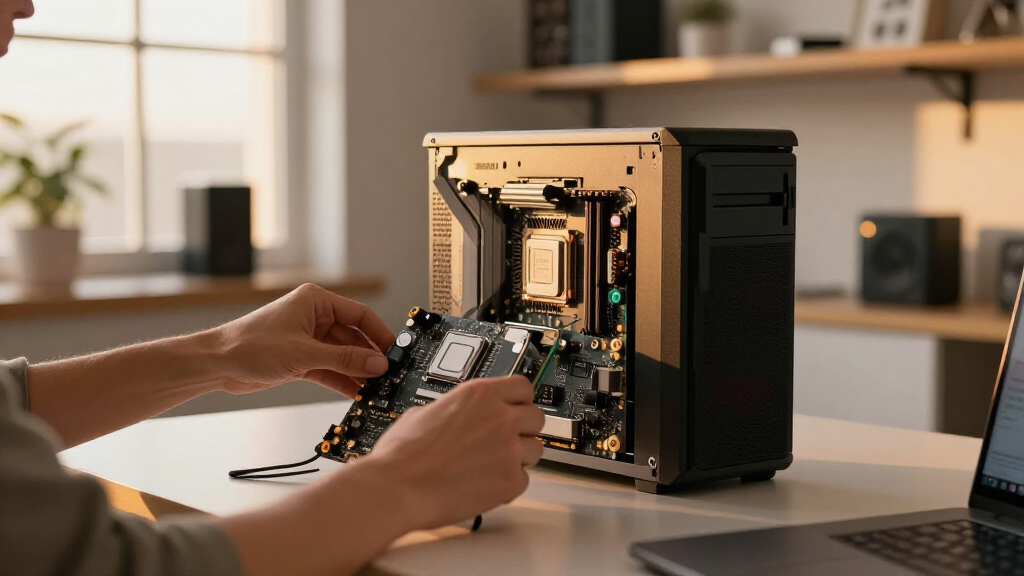
These motherboards were selected based on a combination of performance features, expandability, build quality, and value for money. Priority was given to boards supporting the latest EPYC processors and those with robust VRMs for stability under heavy workloads. Compatibility with various memory configurations and expansion slots was also critical, as was the availability of essential features like multiple PCIe lanes and storage options. We ranked products considering their versatility for different server setups—whether for high-density, enterprise, or budget-conscious builds—aiming to highlight options that suit diverse needs.
Factors to Consider When Choosing Server Motherboard For Epyc
Choosing the right server motherboard for EPYC requires evaluating several key factors beyond just socket compatibility. Understanding these considerations helps prevent costly mistakes and ensures your server is future-proof, reliable, and well-suited to your workload.Socket Compatibility and CPU Support
Matching your motherboard with the correct EPYC generation is essential for optimal performance. For example, boards supporting AMD EPYC 7002 series won’t be compatible with the newer 9004 series. Always verify CPU socket type (SP3, SP5, LGA4094) and ensure the motherboard supports your chosen processor’s TDP and core count for stability and longevity. Buying a motherboard that supports a wider range of EPYC processors can extend your investment, especially if you plan to upgrade later.
Memory Support and Expandability
Memory capacity, type, and speed directly influence server performance. Look for motherboards offering ample DDR4 or DDR5 slots aligned with your workload needs. Also, consider whether the motherboard supports features like ECC memory, which enhances stability for critical applications. Expandability options, including PCIe lanes and storage interfaces, are equally important—more slots mean easier future upgrades, but may also increase initial costs and complexity.
Form Factor and Space Constraints
Size impacts deployment options—mini-ITX boards save space but often limit expansion, while ATX or EATX boards provide more features at the cost of larger chassis requirements. Small form factors are ideal for edge computing or dense data centers, but they may restrict cooling options and add complexity to power distribution. Match the motherboard size to your server chassis and planned environment to avoid compatibility issues.
Future-Proofing and Connectivity
Features like PCIe 5.0, high-speed Ethernet, and multiple M.2 slots help safeguard your investment against obsolescence. Consider your current and future hardware needs—if you plan to add high-speed storage or multiple GPUs, ensure the motherboard provides enough lanes and slots. Also, check for support for the latest network interfaces like 10GbE or 25GbE to sustain high data transfer rates in demanding environments.
Price and Total Cost of Ownership
High-end motherboards with extensive features come at a premium but can reduce total cost of ownership by minimizing future upgrades or replacements. Conversely, budget models might save initial costs but could require upgrades sooner or lack critical features. Balance your budget with your performance needs, considering long-term reliability, support, and potential expansion to make a cost-effective choice.
Frequently Asked Questions
Can I upgrade my EPYC CPU later with these motherboards?
Upgrading the CPU depends on socket compatibility; for example, a motherboard supporting EPYC 7002 series won’t support the newer 9004 series without a socket change. Many high-end motherboards support multiple generations within the same socket, offering some future-proofing, but always verify CPU compatibility before purchase. Also, consider BIOS updates that may be needed to support newer CPUs—these are typically provided by the manufacturer. Planning for future upgrades at the time of purchase can save time and money later.
What is the importance of PCIe 5.0 support in server motherboards?
PCIe 5.0 support allows for higher bandwidth connections, which can be critical for high-performance storage arrays, GPU acceleration, or network cards. As data demands grow, PCIe 5.0 provides a future-proof feature that ensures your server can handle the latest peripherals without bottlenecks. While not all workloads need PCIe 5.0 immediately, investing in boards with this support can extend the lifespan of your setup, especially in enterprise or AI-driven environments.
Should I prioritize dual socket support or single socket for my server?
Dual socket motherboards offer maximum expandability and processing power, making them suitable for large-scale enterprise workloads. However, they also come with higher costs, increased complexity, and power consumption. Single socket boards are more cost-effective and easier to manage, ideal for smaller deployments or applications with moderate performance needs. Your choice should depend on your workload demands, budget, and future scalability plans.
How does form factor influence server deployment?
The form factor determines the size and expandability of your server. Mini-ITX boards are compact, suitable for space-constrained environments, but often limit PCIe and memory options. ATX and EATX boards provide more slots and features, ideal for high-density or high-performance servers. Match the form factor with your chassis size, cooling requirements, and planned density to avoid deployment issues and ensure reliable operation.
Are there downsides to high-end server motherboards?
High-end motherboards typically come with a higher price tag and increased complexity, which may be unnecessary for smaller or less demanding applications. They can also require more power and advanced cooling solutions. Additionally, their extensive features may be underutilized if your workload doesn’t leverage the full capabilities. Balancing features with actual needs helps avoid overpaying and simplifies maintenance.
Conclusion
For most users seeking a reliable, high-performance server, the Supermicro H12DGO-6 offers the best overall value with extensive expandability. Enterprises aiming for cutting-edge features and future-proofing should consider the TYAN S8050GM4NE-2T for its PCIe 5.0 support and robust build. Budget-conscious buyers or small-scale setups will find the Supermicro MBD-M11SDV-4C-LN4F a practical choice. Beginners or those upgrading existing systems should prioritize compatibility and ease of use, while advanced users should focus on expandability and latest features. With this guidance, you can confidently select a motherboard tailored to your specific server needs in 2026.
Halloween Picks
halloween
As an affiliate, we earn on qualifying purchases.