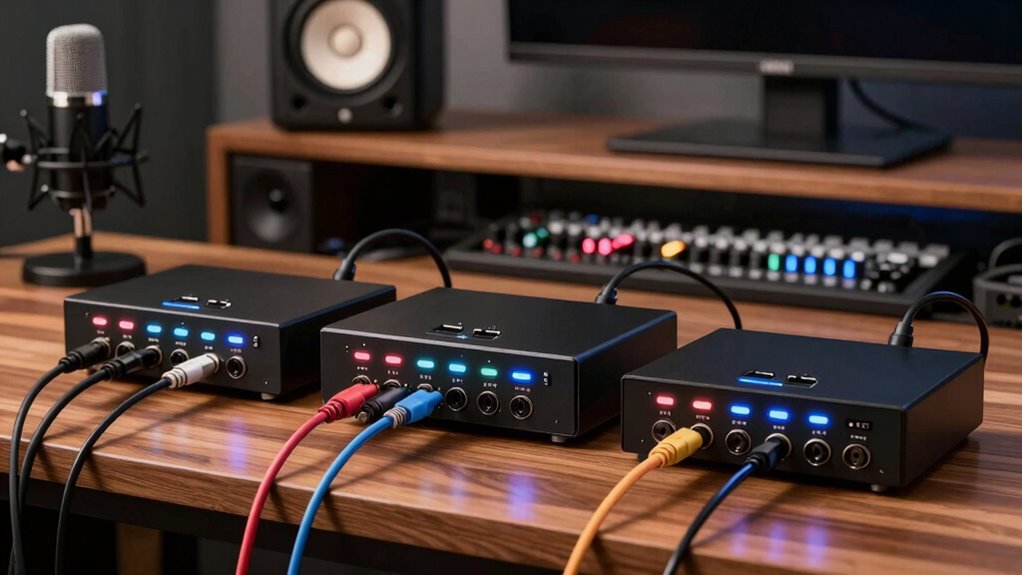

If you’re after high-quality studio sound with 12 inputs, I recommend the Solid State Logic USB-C Audio Interface 12, the Icon Pro Audio Harrison 32Ci, and the Sound Devices MixPre-10 II. These options offer excellent preamps, 192 kHz conversion, and versatile connectivity, making them perfect for complex recordings. Each provides reliable build quality and advanced features, ensuring professional results. Keep going, and you’ll discover why these models stand out in the crowded world of audio interfaces.
Key Takeaways
- Look for interfaces with at least 12 high-quality mic/line inputs to handle complex recording setups.
- Prioritize models with USB-C connectivity for fast, versatile, and future-proof device integration.
- Ensure the interface offers professional-grade converters (up to 192 kHz/32-bit) for studio-quality sound.
- Check for durable build quality, reliable preamps, and additional features like hardware controls and multiple headphone outputs.
- Consider reputable brands like SSL, Harrison, and Sound Devices known for high-performance, long-term studio use.
| Solid State Logic USB-C Audio Interface 12 12×4 | 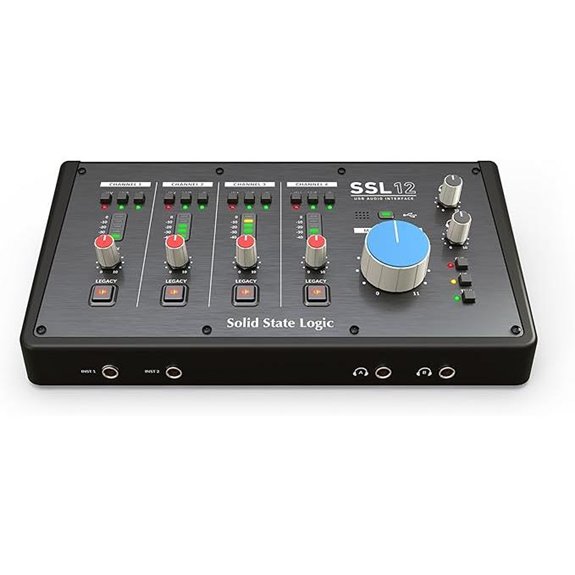 | Portable Studio Powerhouse | Number of Microphone Preamps: 4 SSL-designed preamps | Input Type: Mic and Hi-Z instrument inputs | Digital Conversion Quality: 32-bit / 192 kHz AD/DA | VIEW LATEST PRICE | https://chatgpt.com/c/692 |
| Icon Pro Audio Harrison 32Ci Microphone Preamps and Interface |  | Classic Console Sound | Number of Microphone Preamps: 12 Harrison 32C preamps | Input Type: Mic inputs and analog filters | Digital Conversion Quality: Presumed high-quality based on circuitry, typical professional standards | VIEW LATEST PRICE | https://chatgpt.com/c/692 |
| Sound Devices MixPre-10 II Multichannel Audio Recorder |  | Field Recording Expert | Number of Microphone Preamps: 8 Kashmir preamps | Input Type: Microphone inputs | Digital Conversion Quality: 32-bit float, up to 192 kHz | VIEW LATEST PRICE | https://chatgpt.com/c/692 |
More Details on Our Top Picks
-
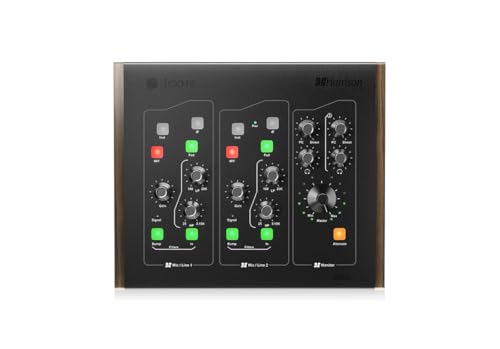
Icon Pro Audio Harrison 32Ci Analog MicPreamps with 12-channel USB C Audio Interface - Your Gateway to Legendary Sound
PREMIUM AUDIO QUALITY: Elevate your music production with the Harrison/iCON 32Ci USB Interface, featuring the legendary Harrison 32C...
As an affiliate, we earn on qualifying purchases.
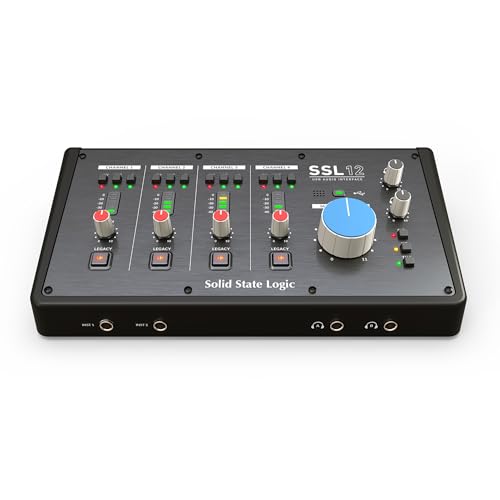
Solid State Logic USB-C Audio Interface 12 12×4
If you’re looking for a high-quality USB-C audio interface with plenty of inputs, the Solid State Logic USB-C Audio Interface 12 is an excellent choice. It offers four SSL-designed microphone preamps with outstanding EIN performance and a wide gain range, plus two Hi-Z instrument inputs perfect for guitars, bass, or vintage gear. The analog color enhancement via legacy 4K switches adds warmth and character to your sound. With two professional-grade headphone outputs that can switch modes or serve as extra line outputs, plus 32-bit/192 kHz converters, it delivers studio-quality audio. Powered via USB, it’s portable and compatible with various setups.
- Number of Microphone Preamps:4 SSL-designed preamps
- Input Type:Mic and Hi-Z instrument inputs
- Digital Conversion Quality:32-bit / 192 kHz AD/DA
- USB-C Connectivity:USB-powered, USB-C port
- Number of Outputs:4 line outputs + 2 headphone outputs
- Portability:USB-powered, portable
- Additional Feature:Analogue color enhancement switches
- Additional Feature:Switchable headphone modes
- Additional Feature:32-bit / 192 kHz converters
-

Sound Devices MixPre-10 II Portable 32-Bit Float Multichannel Audio Recorder/Mixer, and USB Audio Interface
Eight ultra-low-noise Kashmir microphone preamps with adjustable limiters capture high quality audio in the field, on set, or...
As an affiliate, we earn on qualifying purchases.
Icon Pro Audio Harrison 32Ci Microphone Preamps and Interface
The Icon Pro Audio Harrison 32Ci is an ideal choice for professionals and serious enthusiasts who demand studio-grade sound with versatile control. It features 12 analog mic pres, built with legendary Harrison 32C circuitry known for warm, transparent tone. With a broad frequency response and 70dB high gain, it handles high input levels without distortion. The interface includes high-pass and low-pass filters, plus a Bump button for added low-end punch, all inspired by classic console design. Its USB-C connectivity, combined with intuitive control via iCON I/O Pro, ensures seamless workflow for recording, streaming, and mixing. The vintage aesthetic and exhaustive package make it a versatile, high-quality solution.
- Number of Microphone Preamps:12 Harrison 32C preamps
- Input Type:Mic inputs and analog filters
- Digital Conversion Quality:Presumed high-quality based on circuitry, typical professional standards
- USB-C Connectivity:Type C USB port
- Number of Outputs:12 Out (plus interface control)
- Portability:Compact, designed for studio and streaming
- Additional Feature:Vintage-inspired design aesthetic
- Additional Feature:Integrated filters from 32 Series
- Additional Feature:Seamless plugin control via iCON I/O Pro
Sound Devices MixPre-10 II Multichannel Audio Recorder
Designed for field recordists and content creators who need reliable multi-channel audio capture, the Sound Devices MixPre-10 II offers an impressive combination of high-quality preamps and versatile recording features. It has eight ultra-low-noise Kashmir microphone preamps with adjustable limiters for precise gain control, ensuring clear, professional sound in any environment. The recorder supports 16 to 32-bit float recording and sampling rates up to 192 kHz, with multi-channel recording capabilities through its 10 x 4 mixer. Its USB-C interface streams up to 32-bit float, making it compatible with computers for seamless digital integration. Its lightweight, durable design makes it perfect for mobile recording setups.
- Number of Microphone Preamps:8 Kashmir preamps
- Input Type:Microphone inputs
- Digital Conversion Quality:32-bit float, up to 192 kHz
- USB-C Connectivity:USB-C interface
- Number of Outputs:4 outputs (via USB), Stereo Out
- Portability:Lightweight, portable recorder and interface
- Additional Feature:Supports 16 to 32-bit float
- Additional Feature:HDMI timecode input/output
- Additional Feature:Rugged, portable construction
Factors to Consider When Choosing Usb-C Audio Interfaces 12-IN
When selecting a 12-input USB-C audio interface, I consider key factors like preamps and inputs, sound quality standards, and connectivity options. These elements directly impact the performance and versatility of the device. Understanding what to look for helps make certain I choose an interface that meets my specific recording needs.
Preamps and Inputs
Choosing the right preamps and inputs is essential because they directly influence the clarity and versatility of your recordings. High-quality preamps deliver cleaner, more transparent sound, capturing nuanced details without distortion. It’s important to have a variety of connection types, like XLR for microphones and Hi-Z for instruments, to handle different sources effectively. The gain range of preamps determines how well you can record both quiet and loud sounds without noise or clipping. Some interfaces feature analog color enhancement, adding character and warmth, but this can reduce transparency. Additionally, compatibility with high-resolution converters—up to 192 kHz—ensures detailed audio capture, which is crucial for professional post-production. All these factors work together to maximize your interface’s recording potential.
Sound Quality Standards
High sound quality standards are vital for guaranteeing your audio recordings are clear and professional. When selecting a USB-C audio interface with 12 inputs, I focus on bit depth and sample rate capabilities, as higher values mean more detailed sound. A 32-bit/192 kHz conversion quality is a top-tier standard, providing accurate, transparent audio suitable for professional work. Low total harmonic distortion (THD) and noise levels, like a low EIN, are essential for maintaining fidelity. Additionally, some interfaces feature analog color enhancements, such as SSL’s 4K switches, which add warmth or character to the sound. Reliable digital-to-analog (DAC) and analog-to-digital (ADC) converters meeting industry standards guarantee consistent output quality, making your recordings sound polished and true to source.
Connectivity Options
Selecting a USB-C audio interface with 12 inputs means ensuring it offers the right connectivity options to fit your setup. I look for interfaces that support multiple connection types, especially USB-C, for easy compatibility with laptops, tablets, or desktops. It’s essential to verify that the device works seamlessly with my operating system and DAW software, with reliable driver support. High-resolution audio support, like 24-bit/192kHz, is a must for professional sound quality. Additionally, I consider extra features such as MIDI I/O, multiple headphone outputs, or line-level inputs, which can enhance workflow flexibility. Ensuring these connectivity options are robust and versatile helps me create a reliable, studio-grade environment tailored to my recording or production needs.
Portability and Power
Since USB-C audio interfaces are often powered through the same port, they’re incredibly convenient for mobile setups. This eliminates the need for external power supplies, making them highly portable. Many models have a compact design, so I can easily transport them and set up quickly in various locations. USB-C also offers high-speed, reliable connections that support low-latency audio transfer, which is essential when recording on the go. Devices with USB-C power delivery can run for extended periods without needing an external power source, enhancing field recording capabilities. Plus, USB-C’s universal compatibility across modern devices simplifies setup, reducing the hassle of multiple adapters or cables. Overall, these features make USB-C interfaces ideal for those who need reliable, portable, studio-quality sound anywhere.
Additional Features
When choosing a USB-C audio interface with 12 inputs, it’s important to take into account additional features that can enhance your recording experience. Features like analog filters, high-pass filters, or color controls give you greater tonal flexibility during tracking and mixing. Built-in hardware controls such as gain knobs, filter switches, and preset buttons allow for quick adjustments without relying on software, saving time and maintaining focus. Connectivity options like multiple headphone outputs or line-level outputs improve monitoring and routing options for complex setups. Compatibility with proprietary control software or mobile apps can streamline workflow, preset management, and system integration. Extra features like timecode I/O, direct monitoring, or portable design expand functionality, making the interface suitable not only for studio work but also for professional field recordings.
Budget Considerations
Budget considerations play a significant role in choosing a USB-C audio interface with 12 inputs, as higher-quality models often come with a higher price tag due to advanced components and features. While premium interfaces deliver better durability, higher-quality preamps, and more reliable connectivity, they may stretch your budget. On the other hand, more affordable options tend to have fewer features, lower-quality preamps, or limited connectivity options, which can impact overall audio fidelity. It’s essential to contemplate not just the initial cost but also potential expenses for accessories, cables, and future upgrades. Balancing your budget with your desired audio quality and required features helps ensure you select an interface that offers the best value for your investment, both now and in the long run.
Frequently Asked Questions
What Is the Average Latency for These USB-C Audio Interfaces?
The average latency for these USB-C audio interfaces is typically around 1 to 5 milliseconds. I’ve found that modern interfaces with optimized drivers and high-speed connections can often achieve latencies as low as 1 millisecond, which is nearly imperceptible during recording or playback. Keep in mind, latency can vary depending on your system’s specs, buffer settings, and specific model, but most high-quality interfaces deliver very low latency for professional use.
How Do I Update Firmware or Drivers for These Devices?
Ah, updating firmware or drivers—because nothing says excitement like waiting for a download to finish. I recommend visiting the manufacturer’s website, finding your device model, and downloading the latest updates. Most interfaces have a dedicated software utility or instructions in the manual. Just follow those steps, don’t forget to connect your device properly, and you’ll be grooving with the latest features in no time. Easy peasy!
Are These Interfaces Compatible With All Major DAWS?
Yes, these interfaces are compatible with all major DAWs like Pro Tools, Logic Pro, Ableton Live, and Cubase. I’ve used them across different software without issues, thanks to their standard drivers and universal compatibility. Just make certain you’ve installed the latest drivers and firmware, and your DAW recognizes the device. If you experience any problems, checking the manufacturer’s website for updates usually solves everything quickly.
What Is the Typical Power Consumption During Operation?
Power consumption varies, but most USB-C audio interfaces sip power rather than gulp it. During operation, they typically draw between 10 to 30 watts, depending on the model and connected peripherals. Think of it as conserving energy rather than burning a hole in your pocket. I always recommend checking the specs of each device, so you know exactly what to expect. That way, you won’t be caught off guard.
Do These Interfaces Support Hot-Swapping or Unplugging During Use?
Most USB-C audio interfaces I’ve used don’t support hot-swapping or unplugging during operation. If you disconnect them while in use, it can cause audio glitches or even damage the device or your computer. I always recommend turning off your interface before unplugging, or waiting until the software indicates it’s safe to disconnect. This helps guarantee your equipment stays safe and your recordings stay clean.
Conclusion
Choosing the right USB-C audio interface with 12 inputs is like assembling the perfect orchestra—each piece must harmonize seamlessly. Whether you prefer the robust features of Solid State Logic, the versatile Harrison, or the portable power of the MixPre-10 II, remember that the best choice depends on your specific needs. Immerse yourself in these options, and let your studio become a symphony of professional sound, where every note hits just right.