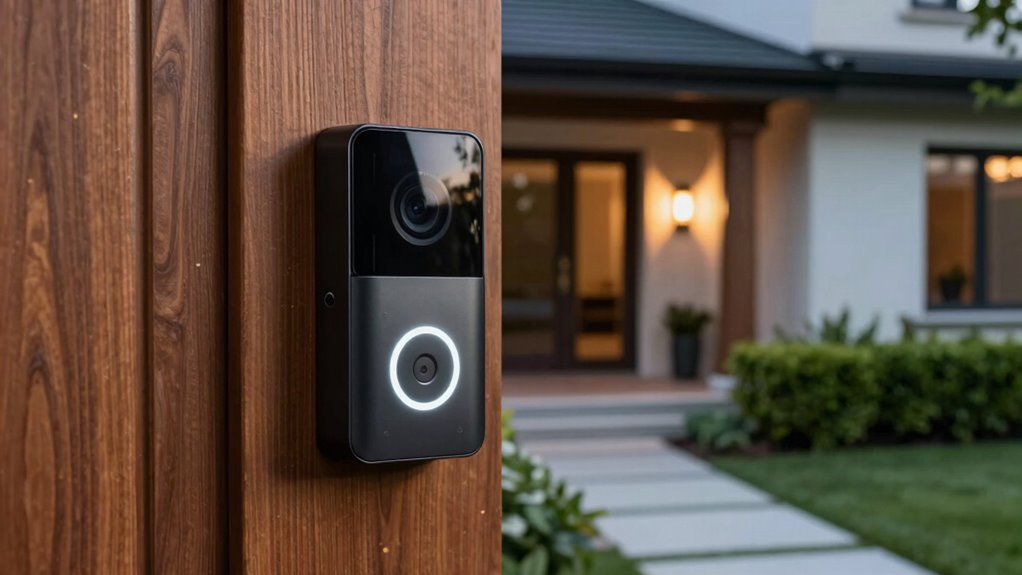

Among these wired video doorbells, I rank the Google Nest Doorbell (Wired, 3rd Gen) as the best overall for its 2K HDR video and polished smart-home features. The Tapo D225 is a strong value-minded alternative with 2K QHD video and an included chime, while the Ring Wired Doorbell 2K suits buyers who want a higher-resolution Ring option with a chime. The main tradeoffs are video clarity versus setup demands, included versus separate chimes, and how much each device depends on its app or subscription features. Existing wiring does not automatically mean every model will work with your transformer or indoor chime. Read on for the full breakdown and guidance on matching a doorbell to your home.

Get the latest gadgets delivered free with Prime
- Fast, free delivery on millions of items
- Prime Video, Amazon Music and more included
- Member-only deals all year
Complete the kit



Key Takeaways
- Nest leads the roundup for all-around capability: its 2K HDR video gives it a stronger case for buyers prioritizing detail and challenging light over a basic 1080p view.
- Tapo pairs 2K QHD video with an included chime: that combination can simplify the setup for households that do not want to rely only on phone alerts.
- Ring’s two wired options serve different priorities: the 1080p model keeps the feature set simpler, while the 2K version adds resolution and a chime.
- Wired power does not mean identical installation: compatibility with existing wiring, transformer output, and chime setup still needs checking before purchase.
- The lineup includes both wired-only and flexible installation choices: Arlo’s 2nd Gen model can operate wired or wirelessly, while the dedicated wired models favor a fixed power connection.
| Ring Video Doorbell Wired with 1080p HD Video, Two-Way Talk, and Advanced Motion Detection |  | Best Simple Hardwired Pick | Video resolution: 1080p HD | Power: Hardwired; requires existing doorbell wiring | Connectivity: 2.4 GHz Wi-Fi | VIEW ON AMAZON | See Our Full Breakdown |
| Tapo D225 2K QHD Smart Video Doorbell with Chime |  | Best for Flexible Power and Local Storage | Video resolution: 2K QHD | Field of view: 180° head-to-toe | Power: Wired (8–24V) or 10,000mAh battery | VIEW ON AMAZON | See Our Full Breakdown |
| Blink Wired Doorbell 2K+ |  | Best for a Compact, Square View | Video resolution: 2K (1920 × 1920) | Field of view: 140° horizontal, 140° vertical | Aspect ratio: 1:1 | VIEW ON AMAZON | See Our Full Breakdown |
| Arlo Video Doorbell 2K (2nd Gen), Wireless or Wired, 1 Camera |  | Best for Multi-Platform Smart Homes | Resolution: 2K | Field of view: 180° | Power options: Rechargeable battery or wired trickle charging | VIEW ON AMAZON | See Our Full Breakdown |
| Google Nest Doorbell (Wired, 3rd Gen), 2K HDR, Hazel |  | Best for Google Home Households | Model: Nest Doorbell (Wired, 3rd Gen) | Video resolution: 2K HDR (2000) | Field of view: 166° | VIEW ON AMAZON | See Our Full Breakdown |
| Blink Wired Doorbell 2K+ |  | Best for Alexa Homes | Video resolution: 2K (1920 x 1920) | Field of view: 140° horizontal, 140° vertical | Aspect ratio: 1:1 | VIEW ON AMAZON | See Our Full Breakdown |
| Ring Wired Doorbell 2K with Chime – Speckled Gray and White |  | Best Bundled Chime Setup | Video resolution: 2K | Zoom: Up to 6x enhanced zoom | Motion detection field of view: 140° horizontal x 140° vertical | VIEW ON AMAZON | See Our Full Breakdown |
| wired video doorbell | Video resolution | Connectivity | Field of view | Power |
|---|---|---|---|---|
| Ring Video Doorbell Wired with | 1080p HD | 2.4 GHz Wi-Fi | — | Hardwired; requires existing doorbell wiring |
| Tapo D225 2K QHD Smart Video D | 2K QHD | — | 180° head-to-toe | Wired (8–24V) or 10,000mAh battery |
| Blink Wired Doorbell 2K+ | 2K (1920 × 1920) | 2.4 GHz Wi-Fi 802.11b/g/n | 140° horizontal, 140° vertical | 12–24V AC, 10–40 VA, 50/60Hz, or 24V DC 0.42A |
| Arlo Video Doorbell 2K | — | — | 180° | — |
| Google Nest Doorbell | 2K HDR (2000) | Wired; Wi-Fi | 166° | — |
| Blink Wired Doorbell 2K+ | 2K (1920 x 1920) | 2.4 GHz Wi-Fi (802.11b/g/n) | 140° horizontal, 140° vertical | 12–24V AC, 10–40 VA, 50/60 Hz, or 24V DC, 0.42A |
| Ring Wired Doorbell 2K with Ch | 2K | Wi-Fi 4, 2.4 GHz single band | — | — |
More Details on Our Top Picks
Ring Video Doorbell Wired with 1080p HD Video, Two-Way Talk, and Advanced Motion Detection
I’d choose this Ring when I want a straightforward wired doorbell for basic live viewing and visitor conversations. Its 1080p HD video, night vision, two-way talk, and phone alerts cover the everyday tasks without the extra detection and storage options offered by the Tapo D225. Hardwired power means no battery recharging, but the setup depends on existing doorbell wiring.
The main tradeoff is the chime: this model does not ring an existing indoor chime, so visitors may need to rely on phone alerts or a compatible connected device. Some added features also require a separate Ring Protect subscription. Compared with the 2K options here, its video resolution is more modest, making it a better fit for buyers who value a simple Ring setup over broader coverage or sharper detail.
Pros:- 1080p HD video with night vision supports day-and-night visitor viewing.
- Two-way talk lets you respond without opening the door.
- Hardwired power avoids routine battery charging.
- Phone alerts provide a direct way to notice doorbell activity.
Cons:- Requires existing doorbell wiring.
- Does not sound an existing doorbell chime.
- Some features require a separately sold Ring Protect subscription.
Best for: Homeowners with existing doorbell wiring who want basic video, two-way talk, and phone alerts through Ring and select Alexa devices.
Not ideal for: Buyers who need their existing indoor chime to ring, want 2K video, or prefer local footage storage without a subscription.
- Video resolution:1080p HD
- Power:Hardwired; requires existing doorbell wiring
- Connectivity:2.4 GHz Wi-Fi
- Audio:Two-way talk
- Motion detection:Advanced motion detection
- Night vision:Yes
- Smart home compatibility:Select Alexa-enabled devices
- Existing chime support:Does not sound existing chime
Our verdict“Choose this Ring for basic hardwired video and two-way talk, but skip it if you need a working indoor chime or higher-resolution footage.”
Tapo D225 2K QHD Smart Video Doorbell with Chime
The Tapo D225 is the most adaptable choice here for buyers who want wired operation but do not want installation constraints to rule out the doorbell. It can run on 8–24V wiring for 24/7 recording or use its battery, while the included indoor chime and mounting wedges make placement more flexible. Its 2K video and 180° head-to-toe view also show more of the entryway than the Ring’s 1080p image.
Unlike the Arlo Video Doorbell 2K, the Tapo offers microSD storage up to 512GB, so local recording is an option without cloud storage. That card is not included, and cloud recording still costs extra. The camera also uses only 2.4 GHz Wi-Fi. This is my pick for buyers who want a choice of power and storage methods, not those seeking 5 GHz connectivity out of the box.
Pros:- Wired or battery operation accommodates different installation situations.
- 2K video and a 180° field of view capture a broad head-to-toe view.
- Person, package, and vehicle detection help distinguish types of activity.
- Supports microSD storage up to 512GB without requiring cloud storage.
Cons:- Supports 2.4 GHz Wi-Fi only.
- A microSD card must be purchased separately for local storage.
- Optional cloud storage requires a subscription.
Best for: Households that want a wide 2K view, an included indoor chime, and the choice between wired recording and battery operation with local microSD storage.
Not ideal for: Buyers whose network depends on 5 GHz Wi-Fi or who want local recording without purchasing a microSD card.
- Video resolution:2K QHD
- Field of view:180° head-to-toe
- Power:Wired (8–24V) or 10,000mAh battery
- Battery life:Up to 8 months
- Wi-Fi:2.4 GHz; does not support 5 GHz
- Storage:microSD card up to 512GB (not included) or optional cloud storage
- Detection:Person, package, and vehicle
- Night vision:Full-color with spotlight
- Smart home compatibility:Alexa and Google Assistant
Our verdict“Pick the Tapo D225 if you want installation flexibility, wide coverage, and local storage; pass if 5 GHz Wi-Fi is a requirement.”
Blink Wired Doorbell 2K+
The Blink Wired Doorbell 2K+ suits buyers who want a compact camera with a square image that captures a visitor from head to toe. Its 1:1 2K video and 140° horizontal and vertical views make the frame useful for checking both faces and packages near the doorstep. Continuous hardwired power also avoids battery changes, while person detection can make motion alerts more targeted.
Compared with the Tapo D225, Blink gives up a wider 180° field of view and battery-powered installation, but it offers an IP65 weather-resistant housing and a smaller listed body. It is a wired-only choice: existing wiring is required, and there is no battery backup for an outage. Some features also need a Blink subscription. I’d favor it over the Ring 1080p model for higher resolution, but not if power flexibility is a priority.
Pros:- 2K square video combines head-to-toe framing with detailed footage.
- Continuous hardwired power avoids battery charging or replacement.
- Person detection can focus alerts on people.
- IP65 weather resistance suits outdoor installation.
Cons:- Requires existing doorbell wiring and cannot run on battery power.
- No built-in battery backup for power outages.
- Some features require a separately sold Blink subscription.
Best for: Wired-doorbell buyers who want a compact unit, square 2K framing, person detection, and weather-resistant outdoor construction.
Not ideal for: Renters or households without usable doorbell wiring, and buyers who need battery backup or a wider 180° view.
- Video resolution:2K (1920 × 1920)
- Field of view:140° horizontal, 140° vertical
- Aspect ratio:1:1
- Power:12–24V AC, 10–40 VA, 50/60Hz, or 24V DC 0.42A
- Connectivity:2.4 GHz Wi-Fi 802.11b/g/n
- Weather resistance:IP65
- Dimensions:4.72 × 1.89 × 1.14 inches
- Weight:3.6 oz (102 g)
Our verdict“Choose Blink for a compact, weather-resistant wired camera with square 2K framing, but choose the Tapo D225 for wider coverage or battery operation.”
Arlo Video Doorbell 2K (2nd Gen), Wireless or Wired, 1 Camera
Arlo stands out for households that use more than one smart home platform or may want to change the installation method later. It records 2K video with a 180° field of view, and can run on a rechargeable battery or wired trickle charging. Compatibility spans Alexa, Apple Home, Google Home, Samsung SmartThings, and IFTTT—a broader mix than the Google Nest Doorbell, which is a more natural fit for Google-centered homes.
The flexibility comes with a service tradeoff: advanced detection and 60-day video history are included only during the one-month trial, then require a paid plan. Arlo also relies on 2.4 GHz Wi-Fi. Compared with the Tapo D225, it does not list local microSD storage, so buyers who want subscription-free local recording may prefer Tapo. It makes more sense when platform compatibility and wired-or-wireless setup matter more.
Pros:- 2K video and a 180° field of view provide broad entryway coverage.
- Rechargeable battery or wired installation offers placement flexibility.
- Works with Alexa, Apple Home, Google Home, Samsung SmartThings, and IFTTT.
- IP65 weather resistance supports outdoor use.
Cons:- Advanced detection and 60-day video history require a paid plan after the trial.
- Wi-Fi connectivity is limited to 2.4 GHz.
- The listed power choices do not include hardwired operation without battery charging or replacement.
Best for: Smart-home households using several platforms that want 2K coverage and the option to install the doorbell with a battery or wired power.
Not ideal for: Buyers who want ongoing advanced detection and long video history without a subscription, or who require 5 GHz Wi-Fi.
- Resolution:2K
- Field of view:180°
- Power options:Rechargeable battery or wired trickle charging
- Wi-Fi:2.4 GHz
- Weather resistance:IP65
- Smart home compatibility:Alexa, Apple Home, Google Home, Samsung SmartThings, and IFTTT
- Advanced detection and video history:One-month trial; paid plan required afterward
Our verdict“Choose Arlo if broad smart-home compatibility and wired-or-battery installation outweigh the ongoing plan requirement for advanced features.”
Google Nest Doorbell (Wired, 3rd Gen), 2K HDR, Hazel
The Nest Doorbell is the strongest match for buyers already organizing their smart home around Google. Its 2K HDR video, color night vision, and 166° field of view provide broad, detailed views, while wired power means there is no battery to recharge. Encrypted video and two-step verification also make security protections a visible part of its appeal. Compared with the Ring Video Doorbell Wired, Nest offers higher-resolution footage and a wider field of view.
Its main limitation is ecosystem fit: the product’s intelligent alerts and video summaries are tied to Google Home Premium, and some Gemini features and detailed alerts require that subscription. The Tapo D225 is more flexible if battery installation or local microSD storage matters; Nest is a wired-only model. I’d choose it for a Google-centered setup, not for buyers seeking platform-neutral storage or installation options.
Pros:- 2K HDR video and color night vision support clear day-and-night viewing.
- 166° field of view captures a broad area around the entrance.
- Wired power avoids battery charging or replacement.
- Encrypted video and two-step verification add security protections.
Cons:- Requires wired installation.
- Some intelligent alerts, video summaries, and Gemini features require Google Home Premium.
- Less flexible for local-storage preferences than the Tapo D225, which supports microSD.
Best for: Google Home households with existing doorbell wiring that want 2K HDR, color night vision, and security-focused video features.
Not ideal for: Buyers without compatible doorbell wiring, those seeking battery-powered installation, or households that do not want a Google Home Premium subscription for added features.
- Model:Nest Doorbell (Wired, 3rd Gen)
- Video resolution:2K HDR (2000)
- Field of view:166°
- Power source:Corded electric
- Connectivity:Wired; Wi-Fi
- Color:Hazel
- Dimensions:5.16 × 1.65 × 1.14 inches
- Weight:4.96 ounces
- Security:Encrypted video and two-step verification
Our verdict“Choose Nest for a wired 2K doorbell in a Google Home setup, but look to the Tapo D225 if battery power or local microSD storage matters more.”
Blink Wired Doorbell 2K+
The Blink Wired Doorbell 2K+ is a strong fit for buyers who want hardwired power and sharp, square-format video without needing the bundled indoor chime offered with the Ring Wired Doorbell 2K. Its 2K, 1:1 head-to-toe view can show more of a visitor and packages near the doorstep, while person detection helps distinguish people from general motion. Noise-canceling two-way audio and color night vision add useful detail for conversations and after-dark checks. Alexa compatibility is its clearest ecosystem advantage, but some features require a Blink subscription. It also depends on existing doorbell wiring, and an in-home chime is sold separately, so buyers who want alerts heard throughout the house may prefer Ring’s included Chime. This is a focused choice for wired Alexa households, not a complete chime-in-the-box setup.
Pros:- 2K square-format video captures a head-to-toe view of visitors and doorstep activity.
- Hardwired power supports continuous operation without routine battery charging.
- Person detection and color night vision add useful context to alerts and nighttime footage.
- Two-way audio includes noise cancellation for clearer conversations.
Cons:- Requires compatible existing doorbell wiring.
- An in-home chime is sold separately, so audible alerts inside may require an extra purchase.
- Some features require a Blink subscription.
Best for: Alexa households with compatible existing doorbell wiring that want 2K head-to-toe video and person alerts.
Not ideal for: Renters or homeowners without doorbell wiring, and buyers who need an included indoor chime or want subscription-free access to every feature.
- Video resolution:2K (1920 x 1920)
- Field of view:140° horizontal, 140° vertical
- Aspect ratio:1:1
- Power:12–24V AC, 10–40 VA, 50/60 Hz, or 24V DC, 0.42A
- Connectivity:2.4 GHz Wi-Fi (802.11b/g/n)
- Weather resistance:IP65
- Dimensions:4.72 x 1.89 x 1.14 in
Our verdict“Choose this if your home already has compatible wiring and you want Alexa-friendly 2K coverage, but pick the Ring Wired Doorbell 2K if an included indoor chime matters more.”
Ring Wired Doorbell 2K with Chime – Speckled Gray and White
The Ring Wired Doorbell 2K with Chime stands out for buyers who want a doorbell camera and an indoor alert in the same package. The included upgraded Chime addresses a practical gap in the Blink Wired Doorbell 2K+, whose in-home chime is sold separately. Ring also offers 2K video with up to 6x enhanced zoom, giving viewers a way to inspect details without relying only on the full 140-degree view. Installation can use an existing transformer or a separately purchased plug-in adapter, but neither power option is included; that makes the setup less complete than the Chime bundle may first suggest. Cloud video storage and advanced AI features require a Ring subscription, and some AI features may be unavailable in certain states. I’d choose it for the bundled alert, not for a plug-and-play power setup.
Pros:- The included upgraded Chime provides audible alerts inside the home.
- 2K video and up to 6x enhanced zoom support closer inspection of visitors and activity.
- Two-way talk lets occupants speak with people at the door.
- IP65 weather resistance suits outdoor installation.
Cons:- A compatible transformer or Ring plug-in adapter is not included.
- Cloud video storage and advanced AI features require a Ring subscription.
- Some AI features are unavailable in certain states due to legislation.
Best for: Homeowners who want an indoor chime included with a 2K wired doorbell and can supply a compatible transformer or adapter.
Not ideal for: Buyers without existing doorbell power who want every installation component included, or those avoiding subscriptions for cloud storage and advanced AI features.
- Video resolution:2K
- Zoom:Up to 6x enhanced zoom
- Motion detection field of view:140° horizontal x 140° vertical
- Power requirements:16–24 VAC, 10–40 VA (30–40 VA recommended), 12W; standard doorbell system, Ring plug-in adapter, or hardwired transformer
- Connectivity:Wi-Fi 4, 2.4 GHz single band
- Weather resistance:IP65
- Dimensions:2.1 x 5.2 x 1.02 in
- Operating temperature:-5°F to 120°F
Our verdict“Pick this Ring bundle if an included indoor chime and zoom are priorities, but account for the separately supplied power hardware and subscription requirements.”
How We Picked
I compared the seven listings against the needs that shape a wired doorbell purchase: video resolution and HDR, power and installation requirements, included chime options, smart features, and the likely effort involved in daily use. I also looked at how much flexibility each model offers, since a wired-only device suits a different household from a model that can also run wirelessly. Product names and listed specifications formed the basis of this comparison; features not stated in the listing were not treated as confirmed.
The ranking favors useful performance without unnecessary setup friction. Nest takes the lead for its 2K HDR positioning, while Tapo earns a strong place by pairing 2K QHD with a chime. Ring’s 2K option ranks ahead of its 1080p counterpart for buyers seeking more image detail, but the simpler Ring model remains relevant for shoppers who prefer a narrower feature set. Arlo’s wired-or-wireless flexibility is a distinct advantage, while the repeated Blink Wired Doorbell 2K+ listing is treated as one model rather than two separate products; its position reflects the available listing details rather than an assumed feature advantage.
Factors to Consider When Choosing Wired Video Doorbells
Before choosing a model, I would check the parts of the setup that are easy to overlook: electrical compatibility, alert habits, and ongoing feature access. A higher-resolution camera may help with detail, but it cannot fix a poor mounting angle or unreliable home network. These broader checks can prevent a doorbell from becoming an awkward fit after installation.
Check Your Existing Wiring and Chime Before Choosing
Start by identifying whether the wires at your door connect to a working transformer and whether your indoor chime is mechanical, digital, or absent. A wired camera still has electrical requirements, and a doorbell that receives power may not work correctly with every existing chime. Check the manufacturer’s voltage and wiring guidance rather than assuming that an older setup is compatible. If you rent or cannot alter the wiring, a model with wireless operation, such as Arlo’s dual-mode option, may provide more flexibility. Also check whether installation calls for a bypass or a specific chime configuration. Sorting this out before buying can save more trouble than choosing a model based on resolution alone.
Choose Resolution for the View You Actually Need
Higher resolution can reveal more detail, but the benefit depends on distance, lighting, camera angle, and the size of the area being monitored. A 2K or 2K QHD label is not a guarantee that a face or package will be clear from every position. HDR can be useful when bright daylight behind a visitor creates a strong contrast with a shaded porch. Before paying for more pixels, consider whether your camera will face direct sun, a narrow walkway, or a wide approach. A well-positioned 1080p doorbell can be more useful than a higher-resolution model mounted too high or pointed at the wrong area. Make the camera’s field of view and placement part of the decision, not an afterthought.
Decide Whether You Need a Physical Indoor Chime
Phone notifications are convenient, but they do not replace an audible alert for everyone in the home. A physical chime can help when phones are on silent, someone does not carry one, or the household wants a familiar doorbell sound. Check whether a chime is included, whether an existing chime can be retained, and whether the product requires a separate accessory. An included chime, as listed with the Tapo D225 and Ring Wired Doorbell 2K package, can reduce the number of separate components to plan for. Do not assume that every wired doorbell will trigger an existing indoor chime in the same way. The right choice depends on who needs to hear the alert and where they spend time at home.
Look Beyond the Camera to Storage and App Requirements
Live video and recorded clips are different needs, so check how each model handles event history before deciding. Some connected doorbells may reserve certain recording, detection, or history features for a paid plan; verify the current terms for the exact model and region. Ask how long clips remain available, whether local storage is supported, and whether you can retrieve an event without an ongoing subscription. App quality also matters: frequent alerts are only useful if they arrive promptly and are easy to review. If multiple people need access, check account sharing and notification controls. A clear plan for recordings can matter more to daily usefulness than a small difference in image resolution.
Match Smart-Home Features to Your Existing Setup
A doorbell’s smart-home value depends on the devices and voice assistants you already use. Before choosing, confirm that the doorbell works with your preferred ecosystem and that the specific functions you want are supported, not just basic notifications. Household members may also need shared access, separate alert settings, or a way to view the camera on a display. Mixing brands can still work, but it may mean managing another app or accepting fewer integrated controls. Avoid paying for ecosystem features you will not use, especially if you mainly want a door alert and a clear live view. Prioritize dependable access and easy sharing over a long feature list.
Factor in Network Quality and Installation Effort
A wired power connection does not improve Wi-Fi coverage at the front door, so check the signal where the camera will sit. Weak connectivity can affect live viewing, notifications, and recording access regardless of the camera’s resolution. If the signal is poor, improving router placement or adding a compatible access point may matter more than changing doorbell models. Consider whether you can safely work with the existing wiring or would rather hire an installer. A tidy installation also depends on the mounting surface, available space, and whether the camera will sit at a useful angle. Plan for power and network together: one without the other can leave a wired doorbell short of its purpose.
Frequently Asked Questions
Will a wired video doorbell work with my existing doorbell wires?
Not automatically. The wiring must provide power within the specific doorbell’s supported range, and an existing chime can introduce separate compatibility requirements. Check the model’s installation guide and inspect your transformer and chime type before ordering. If you are unsure how to identify the electrical setup, ask a qualified installer rather than guessing. This check is especially useful for older homes, where a button may be wired but the transformer or chime may not match a newer camera doorbell.
Do I need an indoor chime if I already get phone notifications?
Not necessarily, but phone alerts can be easy to miss when a device is muted, out of reach, or used by only one person. A physical chime gives other household members a more direct alert and can be helpful when the doorbell is for a shared home. Check whether a chime is included, whether your current one can be used, and whether extra setup is needed. If you rely on phones alone, confirm that everyone who needs alerts can access the app and set suitable notification permissions. The best choice depends on how your household responds to visitors, not just on the doorbell’s camera features.
Is 2K video worth choosing over 1080p for a front door?
It can be worthwhile if you want more image detail and the camera has a useful view of visitors or packages. However, resolution alone does not determine whether footage will be clear: lighting, camera placement, Wi-Fi performance, and the viewing angle all matter. A model with HDR may also help when the entryway has bright and shaded areas. If your door is close to the camera and the scene is well lit, 1080p may meet your needs. Compare the full setup and recording features rather than treating the resolution label as a guarantee.
Can I avoid a subscription with a wired video doorbell?
That depends on the exact model and which features you expect to use. Live viewing and basic alerts may be available without a plan, while recorded event history or extra detection features can have separate requirements. Check the current product terms for local storage, clip access, retention periods, and subscription limits before buying. Do not assume that having wired power means recordings are stored locally or kept indefinitely. If ongoing fees are a concern, make storage and playback access a deciding factor alongside the camera itself.
Should I choose a wired-only model or one that can also run wirelessly?
A wired-only model makes sense when you have compatible wiring and want a fixed power connection without managing a rechargeable battery. A dual-mode option can suit a home where wiring is absent, unreliable, or difficult to use, though wireless operation may bring charging or battery upkeep. Check whether features or performance change between wired and wireless modes. Also consider whether you expect to move the doorbell or relocate it later. Choose based on your installation constraints and willingness to maintain a battery, not on flexibility alone.
Conclusion
For the strongest all-around fit in this lineup, I would choose the Google Nest Doorbell (Wired, 3rd Gen), particularly if 2K HDR and smart-home integration matter most. The Tapo D225 is my value pick for buyers who want 2K QHD and an included chime, while the Ring Wired Doorbell 2K suits those who prefer Ring and want a higher-resolution option with a chime. For a more straightforward 1080p choice, the Ring Video Doorbell Wired is the better beginner-oriented pick if its simpler feature set matches your needs. Choose the Arlo Video Doorbell 2K (2nd Gen) for the specific need of wired-or-wireless installation flexibility; buyers seeking a clearly defined premium choice should favor Nest based on the listed 2K HDR capabilities. I would treat the duplicated Blink listing as one model and compare its current specifications and storage terms directly before choosing it. Before placing any order, confirm wiring, chime, network, and recording compatibility for your home.
Halloween Picks
halloween
As an affiliate, we earn on qualifying purchases.