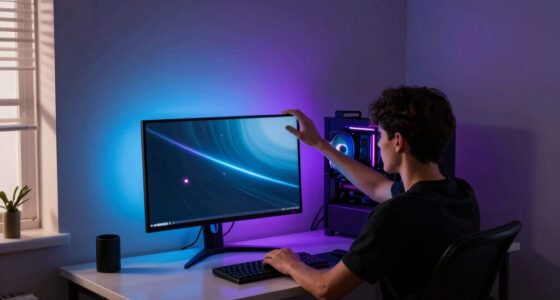
For professionals seeking high-end workstation GPUs, Nvidia’s RTX Ada generation offers impressive performance and advanced features. The Nvidia RTX 5000 Ada Quadro stands out as the best overall choice thanks to its balanced power and stability. Meanwhile, options like the PNY RTX PRO 6000 excel for extremely demanding tasks with massive VRAM, and the NVIDIA RTX 4000 Ada cards cater to more compact setups. Buyers face tough tradeoffs between raw power, price, and form factor. Continue reading for a detailed breakdown of these options and what makes each unique.
Open a free Amazon Business account
Business pricing, bulk buying and tax-exempt orders.
Create a free accountAs an affiliate, we earn on qualifying purchases.
Complete the kit

Key Takeaways
- The RTX 5000 Ada offers the best overall performance with a balanced feature set suitable for most professional workflows.
- Massive VRAM options like the RTX PRO 6000 are ideal for complex 3D rendering and large datasets, but come at a steep price.
- Compact models such as the NVIDIA RTX 4000 SFF Ada are perfect for space-constrained setups without sacrificing too much performance.
- Price remains a significant factor; premium cards deliver top-tier performance but may be overkill for less intensive tasks.
- Power consumption and cooling solutions vary widely, influencing overall system design and operational costs.
| Nvidia RTX 5000 Ada Quadro RTX 5000 32 GB GDDR6 |  | Best for Professional Visualization and Computing | Memory: 32 GB GDDR6 | Support: GPUDirect RDMA, Quadro Sync II, 3D stereo, Mosaic technology | VIEW ON AMAZON | See Our Full Breakdown | |
| PNY NVIDIA RTX PRO 6000 Blackwell MAX-Q Workstation Edition Dual Fan 96GB GDDR7 |  | Best for Heavy-Duty Professional Workloads | Memory: 96 GB GDDR7 | Cooling: Dual Fan | Edition: Workstation | VIEW ON AMAZON | See Our Full Breakdown |
| NVIDIA RTX 4000 SFF Ada Generation Workstation Graphics Card |  | Best for Compact Professional Workstations | Architecture: Ada Lovelace | Form Factor: Dual Slot Low Profile | FP32 Speed: Twice as fast as previous generation | VIEW ON AMAZON | See Our Full Breakdown |
| NVIDIA RTX 4000 Ada Generation Professional Graphics Card |  | Best for High-Resolution 3D and Data-Intensive Tasks | Memory: 20 GB GDDR6 | Maximum Resolution: 7680×4320 | Power Consumption: 130W | VIEW ON AMAZON | See Our Full Breakdown |
| PNY NVIDIA RTX 4500 Ada Generation 24GB GDDR6 PCIe 4.0 Graphics Card |  | Best for 8K Resolution and Demanding Visuals | Memory: 24GB GDDR6 | Supports: 8K resolution | Fan: Active ultra-quiet | VIEW ON AMAZON | See Our Full Breakdown |
| NVIDIA RTX PRO 4000 SFF Blackwell 24GB GDDR7 ECC PCIe 5.0×8 AI Workstation GPU |  | Best for Compact High-Performance Workstations | Architecture: Blackwell | Memory: 24GB GDDR7 | Interface: PCIe 5.0×8 | VIEW ON AMAZON | See Our Full Breakdown |
| PNY NVIDIA RTX 6000 ADA |  | Best for Heavy-Duty Professional Workloads | VIEW ON AMAZON | See Our Full Breakdown | |||
| NVIDIA RTX PRO 4000 Blackwell Graphics Card – 24GB GDDR7 ECC Memory, PCIe 5.0 x16, 4X DisplayPort 2.1b, Single Slot Full Height AI Workstation GPU |  | Best for Multi-Monitor AI Workstations | Memory: 24GB GDDR7 ECC | Architecture: Blackwell | Interface: PCIe 5.0 x16 | VIEW ON AMAZON | See Our Full Breakdown |
| NVIDIA RTX 4500 Ada Generation Graphics Card |  | Best for High-Resolution and AI-Enhanced Workflows | Graphics Coprocessor: NVIDIA RTX 4500 | Memory: 24 GB GDDR6 | GPU Clock Speed: 1800 MHz | VIEW ON AMAZON | See Our Full Breakdown |
| PNY NVIDIA RTX 4000 SFF Ada Gen OEM |  | Best Budget-Friendly OEM Choice | VIEW ON AMAZON | See Our Full Breakdown |
| workstation gpus nvidia rtx ada | Memory |
|---|---|
| Nvidia RTX 5000 Ada Quadro RTX | 32 GB GDDR6 |
| PNY NVIDIA RTX PRO 6000 Blackw | 96 GB GDDR7 |
| NVIDIA RTX 4000 SFF Ada Genera | — |
| NVIDIA RTX 4000 Ada Generation | 20 GB GDDR6 |
| PNY NVIDIA RTX 4500 Ada Genera | 24GB GDDR6 |
| NVIDIA RTX PRO 4000 SFF Blackw | 24GB GDDR7 |
| PNY NVIDIA RTX 6000 ADA | — |
| NVIDIA RTX PRO 4000 Blackwell | 24GB GDDR7 ECC |
| NVIDIA RTX 4500 Ada Generation | 24 GB GDDR6 |
| PNY NVIDIA RTX 4000 SFF Ada Ge | — |
More Details on Our Top Picks
Nvidia RTX 5000 Ada Quadro RTX 5000 32 GB GDDR6
The Nvidia RTX 5000 Ada Quadro stands out for its massive 32 GB GDDR6 memory, making it ideal for high-end visualization tasks like 3D modeling, CAD, and scientific computing. Compared with the NVIDIA RTX 4000 Ada, it offers significantly more VRAM, which is essential for handling large datasets and complex rendering. However, its focus on professional features like GPUDirect RDMA and Mosaic technology means it isn’t suitable for gaming or general consumer use. The high cost and specialized design make it a less appealing choice for hobbyists or small studios with less demanding workflows.
Pros:- Massive 32 GB GDDR6 memory for handling large datasets and complex visuals
- Supports advanced features like GPUDirect RDMA, Quadro Sync II, and Mosaic technology
- Optimized for professional visualization workflows
Cons:- High cost makes it inaccessible for smaller budgets
- Designed primarily for professional use, not gaming or general tasks
Best for: Large design firms or scientific research teams needing robust memory and specialized GPU features
Not ideal for: Casual users or gamers — its high price and professional features aren’t necessary for everyday tasks
- Memory:32 GB GDDR6
- Support:GPUDirect RDMA, Quadro Sync II, 3D stereo, Mosaic technology
Our verdict“This GPU is perfect for professionals requiring extensive VRAM and advanced visualization features, but isn’t suited for casual or gaming setups.”
PNY NVIDIA RTX PRO 6000 Blackwell MAX-Q Workstation Edition Dual Fan 96GB GDDR7
The PNY RTX PRO 6000 Blackwell MAX-Q offers an enormous 96 GB of GDDR7 memory, making it a top choice for data science, AI, and large-scale rendering projects. Its dual-fan cooling system helps manage heat during prolonged high-performance tasks, setting it apart from single-fan designs like the NVIDIA RTX 4000 Ada. While its immense memory capacity makes it ideal for complex simulations and big data processing, it also results in higher power consumption and a hefty price tag. This card is tailored for enterprise environments and large research facilities rather than casual or small-scale use.
Pros:- Exceptional 96 GB GDDR7 memory for intensive data workloads
- Dual fan cooling system for better thermal management
- Designed specifically for demanding professional applications
Cons:- High power consumption and potential cooling challenges
- Expensive price point not suitable for casual users
Best for: Large-scale data scientists, AI developers, and enterprise-level research teams
Not ideal for: Small studios or individual hobbyists, due to its high cost and power needs
- Memory:96 GB GDDR7
- Cooling:Dual Fan
- Edition:Workstation
Our verdict“This card excels in environments demanding massive memory and sustained high performance, but its cost and power requirements limit its appeal to large organizations.”
NVIDIA RTX 4000 SFF Ada Generation Workstation Graphics Card
The NVIDIA RTX 4000 SFF Ada Generation packs high performance into a low-profile, dual-slot design, making it ideal for compact workstations with limited space. Compared to the NVIDIA RTX 4000 Ada, its smaller form factor sacrifices some expandability but retains impressive FP32 calculation speeds—twice as fast as previous generations—plus enhanced AI capabilities. Its compact size makes it suitable for small offices or tower cases where space is at a premium, though limited memory specifics and cooling options could restrict performance during prolonged heavy workloads.
Pros:- High FP32 calculation speeds, twice as fast as previous models
- Compact low profile fits small workstations
- Enhanced AI performance for complex tasks
Cons:- Limited memory details, potentially restricting large datasets
- Cooling solutions may be less robust for extended workloads
Best for: Professionals needing high performance in small or space-constrained workstation setups
Not ideal for: Users requiring maximum VRAM or extensive multi-GPU configurations, due to its compact design
- Architecture:Ada Lovelace
- Form Factor:Dual Slot Low Profile
- FP32 Speed:Twice as fast as previous generation
Our verdict“Ideal for professionals who need a powerful GPU in a small form factor, but those with heavy VRAM needs should consider larger options.”
NVIDIA RTX 4000 Ada Generation Professional Graphics Card
The NVIDIA RTX 4000 Ada Generation offers a single-slot design with 20 GB of GDDR6 memory, combining efficiency with high performance. Its support for resolutions up to 7680×4320 makes it suitable for high-end visualization, 3D rendering, and virtual prototyping. Compared to the 24 GB model from the PNY RTX 4500, this card may have slightly less memory but benefits from better power efficiency and a more compact form. Its 130W power draw is manageable for most professional desktops, though detailed cooling and price info are scarce, which could influence purchasing decisions.
Pros:- Supports high resolutions up to 7680×4320 for detailed visualizations
- Efficient single-slot form factor reduces space requirements
- High FP32 calculation speed and AI performance
Cons:- Limited detailed cooling info, which could affect thermal performance
- Price and availability are not specified, making cost assessment difficult
Best for: Designers and engineers working on high-resolution visualization or complex 3D models in space-conscious setups
Not ideal for: Environments demanding maximum VRAM or those with limited PCIe slots, as it is a single-slot card
- Memory:20 GB GDDR6
- Maximum Resolution:7680×4320
- Power Consumption:130W
Our verdict“A solid choice for high-res rendering in tight spaces, but potential thermal and cost considerations may impact some workflows.”
PNY NVIDIA RTX 4500 Ada Generation 24GB GDDR6 PCIe 4.0 Graphics Card
The PNY RTX 4500 Ada Generation offers 24 GB of GDDR6 memory and supports 8K resolution, making it well-suited for high-end visualization, video editing, and virtual production. Its dual-slot design and active ultra-quiet fan deliver effective cooling while maintaining a relatively quiet operation. Compared to other Ada models like the NVIDIA RTX 4000, it emphasizes high-resolution output, though its high power draw may necessitate robust power supplies. Its bulkiness could be a concern for smaller cases, but overall, it balances high performance with quieter operation.
Pros:- Supports 8K resolution for ultra-high-quality visuals
- 24 GB GDDR6 memory handles demanding applications smoothly
- Ultra-quiet active fan maintains cooling without noise disruption
Cons:- Potentially high power consumption, requiring a strong PSU
- Bulky dual-slot design may fit poorly in small cases
Best for: Video professionals, architects, and VFX artists requiring ultra-high-resolution outputs
Not ideal for: Casual gamers or users with limited space and power capacity, due to its size and high power needs
- Memory:24GB GDDR6
- Supports:8K resolution
- Fan:Active ultra-quiet
Our verdict“Best suited for professionals needing 8K output and high VRAM, though its size and power draw limit compatibility for some setups.”
NVIDIA RTX PRO 4000 SFF Blackwell 24GB GDDR7 ECC PCIe 5.0×8 AI Workstation GPU
This GPU stands out for bringing high-end AI and ray tracing capabilities into a small form factor, making it ideal for space-constrained professional environments. Unlike the larger RTX PRO 4000 with PCIe 5.0 x16, it focuses on SFF systems, which means slightly reduced bandwidth but better compatibility with smaller setups. The 24GB GDDR7 memory ensures substantial AI workload capacity, yet the limited information on pricing and availability suggests it may carry a premium. This makes it a solid choice for professionals needing performance in tight spaces, but those on a tight budget might want to consider alternatives.
Pros:- High-performance 24GB GDDR7 memory for demanding AI tasks
- Compact SFF design fits small workstation cases
- Supports PCIe 5.0 for fast data transfer
Cons:- Limited details on price and availability could hinder purchasing decisions
- Potentially high cost for professional-grade hardware in small form factors
Best for: Engineers and researchers working in small, high-performance workstations who need AI and ray tracing support without sacrificing space.
Not ideal for: Large-scale data centers or users prioritizing maximum PCIe bandwidth and expandability, as this card’s focus on SFF limits its scalability.
- Architecture:Blackwell
- Memory:24GB GDDR7
- Interface:PCIe 5.0×8
- Form Factor:Small Form Factor (SFF)
- Features:Ray Tracing, AI Workload Support
Our verdict“This card suits professionals who need powerful AI capabilities in a compact workstation environment and are willing to pay a premium.”
PNY NVIDIA RTX 6000 ADA
The NVIDIA RTX 6000 ADA is tailored for data centers, AI research, and advanced visualization, offering a significant leap in performance over mainstream options like the RTX 4500 Ada. While it excels in rendering and AI capabilities, the lack of detailed specs and its likely high price tag make it less accessible for casual or smaller enterprise users. Compared to the RTX PRO 4000 series, its specialized focus on high-end professional tasks makes it a smarter pick for large-scale, resource-intensive workflows, but it may be overkill for standard workstation needs.
Pros:- Exceptional performance for AI and rendering workloads
- Designed specifically for demanding professional environments
- Supports advanced rendering features and AI acceleration
Cons:- Limited information available on detailed specs or compatibility
- High cost may be prohibitive for smaller organizations or individual users
Best for: AI researchers, data scientists, and visualization professionals requiring maximum GPU performance for large-scale projects.
Not ideal for: Small business users or hobbyists who need an affordable, versatile GPU for less demanding tasks, as this card’s premium price and focus are overkill.
Our verdict“This GPU is best suited for large-scale AI and visualization tasks where maximum performance justifies the investment.”
NVIDIA RTX PRO 4000 Blackwell Graphics Card – 24GB GDDR7 ECC Memory, PCIe 5.0 x16, 4X DisplayPort 2.1b, Single Slot Full Height AI Workstation GPU
This RTX PRO 4000 variant offers a full-height, single-slot design with PCIe 5.0 x16 support and four DisplayPort 2.1b outputs, making it ideal for multi-monitor AI and professional workflows. Compared to the SFF Blackwell model, its larger size allows for improved cooling and potentially better performance under sustained loads, although it may not fit in smaller cases. Its high memory capacity and multiple outputs make it a flexible choice for AI developers and visualization specialists, but its likely high price and form factor could limit accessibility for some users.
Pros:- High-performance 24GB GDDR7 ECC memory for professional workloads
- Supports PCIe 5.0 for fast data throughput
- Multiple DisplayPort 2.1b outputs support multi-monitor setups
Cons:- Likely expensive compared to smaller or less feature-rich cards
- Single slot full-height design may limit cooling options in some cases
Best for: AI developers and visualization specialists who need multiple high-resolution displays and robust GPU performance in a full-height workstation.
Not ideal for: Small form factor setups or budget-conscious users, since the single slot full-height design and high-end features come with increased costs and space requirements.
- Memory:24GB GDDR7 ECC
- Architecture:Blackwell
- Interface:PCIe 5.0 x16
- Display Outputs:4X DisplayPort 2.1b
- Form Factor:Single Slot Full Height
Our verdict“This card is ideal for professionals who need multi-monitor setups and high GPU performance in a full-height workstation environment.”
NVIDIA RTX 4500 Ada Generation Graphics Card
Compared with the RTX PRO 4000 series, the RTX 4500 Ada Generation offers a more accessible option with 24GB GDDR6 memory and built on the Ada Lovelace architecture, making it suitable for demanding professional workflows and AI applications. While it supports high resolutions up to 4K, details on cooling and noise remain sparse, which could impact long-term reliability under heavy loads. It’s a well-rounded choice for users needing high memory capacity and real-time rendering, but the lack of detailed specs may concern those who prioritize cooling and noise performance.
Pros:- Large 24GB GDDR6 memory suitable for complex projects
- Built on efficient Ada Lovelace architecture for AI and rendering
- Supports up to 4K display resolution
Cons:- Limited information on cooling and noise levels
- Pricing details are not provided, making value assessment difficult
Best for: Creative professionals and AI developers needing a high-memory, high-resolution capable GPU for demanding tasks without the premium price of flagship models.
Not ideal for: Enthusiasts seeking ultra-quiet operation or maximum cooling efficiency, as cooling details are limited and could vary.
- Graphics Coprocessor:NVIDIA RTX 4500
- Memory:24 GB GDDR6
- GPU Clock Speed:1800 MHz
- Video Output Interface:DisplayPort, HDMI
- Interface:PCI-Express x16
- Display Maximum Resolution:3840 x 2160
Our verdict“This card makes sense for high-end professionals who need substantial memory and high-resolution support without going to the most expensive models.”
PNY NVIDIA RTX 4000 SFF Ada Gen OEM
This OEM version of the RTX 4000 SFF Ada Generation offers a straightforward, reliable option for users who need a professional-grade GPU without the frills. While it is described as good quality and easy to use, it lacks detailed specifications, which makes it less suitable for those who require specific performance metrics or advanced features. Compared to the more detailed models like the Blackwell SFF, this card is better suited to users who prioritize basic functionality and compatibility over advanced features or high-end performance.
Pros:- Good quality build suitable for OEM applications
- Easy to install and operate
Cons:- Limited detailed specifications limit performance understanding
- Not suitable for demanding AI or rendering workloads
Best for: Small businesses or OEM builders needing a dependable GPU for general workstation tasks with minimal fuss.
Not ideal for: Power users or professionals requiring detailed specs, high performance, or advanced AI capabilities, as limited info hampers precise evaluation.
Our verdict“This OEM card is ideal for basic professional tasks where simplicity and reliability are more important than peak performance.”
How We Picked
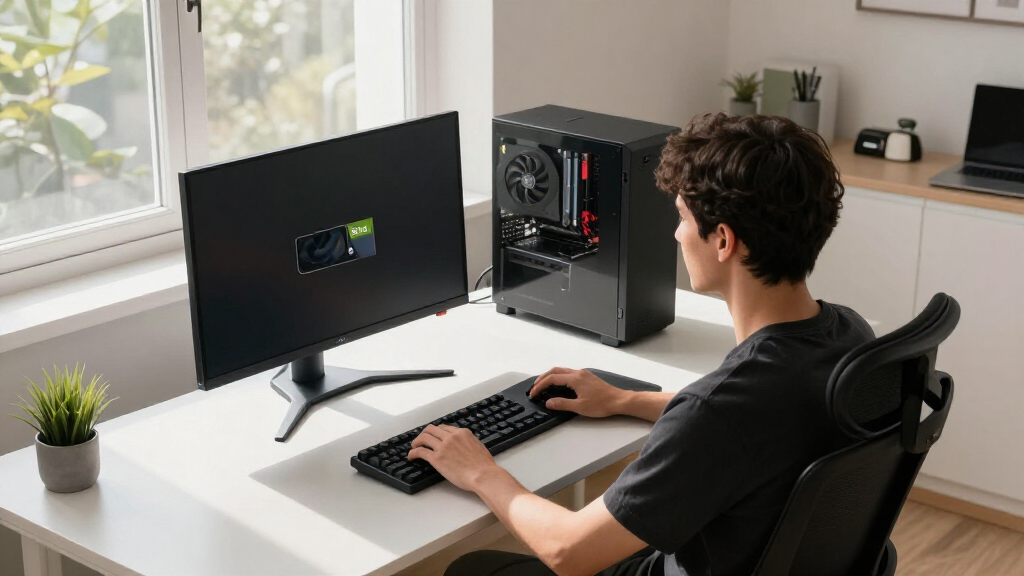
These GPUs were selected based on a combination of performance benchmarks, feature set, software compatibility, and build quality. We focused on cards that are widely available for professional use and have proven reliability in demanding workloads. The ranking considers price-to-performance ratios, VRAM capacity, power efficiency, and the breadth of professional features like ECC memory and advanced display outputs. Our goal was to highlight options that serve different professional needs, from high-end rendering to compact workstation builds, ensuring each choice offers clear value for its intended use case.Factors to Consider When Choosing Workstation Gpus Nvidia Rtx Ada
Choosing the right Nvidia RTX Ada workstation GPU involves balancing several key factors beyond raw specs. Understanding your workload, budget, and system compatibility can significantly influence the best choice for you. The following sections explore the main considerations to keep in mind before making a purchase.Performance and VRAM Capacity
Performance benchmarks and VRAM are critical for professional workloads like 3D rendering, simulation, and large dataset processing. Higher VRAM enables handling bigger projects without bottlenecks, but it also increases cost and power consumption. Buyers should evaluate their typical project size and complexity to choose a GPU that offers sufficient memory and processing power without overspending on unnecessary features.
Form Factor and Compatibility
Workstation GPUs come in various sizes, from full-height, dual-slot cards to compact SFF (Small Form Factor) designs. It’s essential to check your workstation’s physical space and power supply compatibility. A compact GPU might save space but could limit future upgrade options or performance capacity. Conversely, larger cards often provide more VRAM and higher performance but require robust cooling solutions and ample space.
Price-to-Performance Ratio
High-end workstation GPUs can be very costly, but not all offer proportional benefits. It’s important to assess whether the extra expense translates into real productivity gains based on your workload. Sometimes, a mid-range card like the NVIDIA RTX 4000 Ada delivers enough power for most tasks at a much better value, whereas premium options are justified only for the most demanding professional applications.
Power Consumption and Cooling
These GPUs can draw significant power, affecting overall system design and operational costs. High-performance models often require specialized cooling solutions to maintain stability under load. Ensuring your workstation has adequate power supply capacity and cooling infrastructure is vital to avoid thermal throttling or hardware failure, especially for continuous or intensive use.
Feature Set and Future-Proofing
Beyond performance, consider features like ECC memory for error correction, multiple display outputs, and support for PCIe 4.0 or 5.0 standards. Future-proofing can save costs long-term, especially if you plan to upgrade your system gradually. Evaluate whether the GPU’s software support and driver stability meet your professional needs, as these factors impact reliability and workflow continuity.
Frequently Asked Questions
Is VRAM more important than raw GPU performance for my workflow?
VRAM capacity often determines how large and complex your projects can be without lag or crashes, making it crucial for tasks like 3D rendering and large dataset processing. However, raw GPU performance affects rendering speed and simulation time. Ideally, you want a balance—adequate VRAM to handle your project sizes, paired with enough processing power to keep workflows efficient.
Can I use a GPU like the RTX 5000 Ada in a compact workstation?
While the RTX 5000 Ada offers excellent performance, its size and power requirements may limit compatibility with smaller or less robust systems. You’ll need to verify your workstation’s physical dimensions, power supply, and cooling capacity. For smaller setups, opting for a more compact model like the NVIDIA RTX 4000 SFF Ada might make more sense, even if it offers slightly less performance.
Are premium GPUs worth the extra cost for most users?
Premium GPUs provide top-tier performance and extra features, but they often come with significantly higher prices. For many professional users, a mid-range card like the NVIDIA RTX 4000 Ada can deliver excellent results without overspending. However, if your work involves large, complex projects or real-time rendering, investing in higher-end models can reduce bottlenecks and improve productivity.
How important is ECC memory on workstation GPUs?
ECC (Error-Correcting Code) memory enhances reliability by detecting and correcting memory errors, which is vital for sensitive calculations, simulations, and data integrity. If your work involves critical data or long rendering jobs where errors could be costly, choosing a GPU with ECC support like the RTX PRO 6000 makes a substantial difference. For less critical tasks, non-ECC models may suffice.
Should I prioritize PCIe 5.0 support for my GPU?
PCIe 5.0 offers higher bandwidth, which can future-proof your workstation and improve data transfer speeds. If your system supports PCIe 5.0, choosing a GPU with this standard can enhance performance in data-heavy workflows. However, for many current tasks, PCIe 4.0 still provides ample bandwidth, and the added cost of PCIe 5.0 support might not justify the benefit unless you plan extensive future upgrades.
Conclusion
For most users seeking a reliable, high-performance workstation GPU, the Nvidia RTX 5000 Ada offers a balanced mix of power, stability, and features, making it the best overall choice. If budget is a primary concern, the NVIDIA RTX 4000 Ada series provides excellent value, especially for less demanding workflows. Professionals demanding maximum VRAM and advanced features should consider the PNY RTX PRO 6000 or RTX 6000 ADA—these are suited for heavy 3D rendering and simulation tasks. Beginners or those with limited space will benefit from smaller, more compact options like the NVIDIA RTX 4000 SFF Ada. Ultimately, your choice depends on your specific workload needs, budget, and system compatibility.
As an affiliate, we earn on qualifying purchases.Flea & tick season Picks
flea and tick prevention