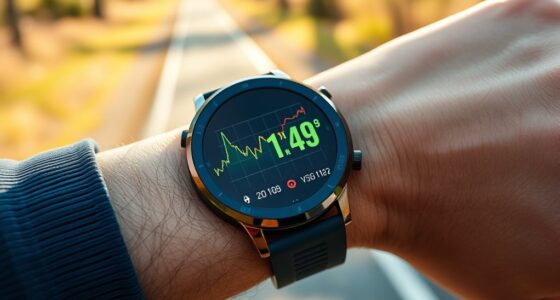
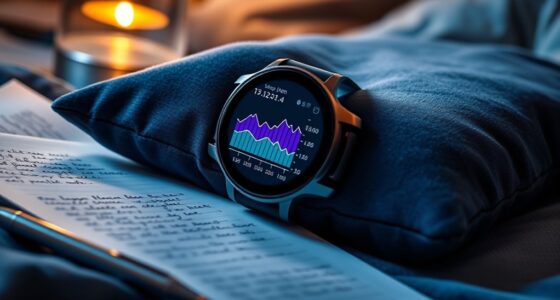
Wearable sensors decode ECG, SpO2, and HRV by analyzing electrical signals, blood oxygen levels, and autonomic nervous system responses in real time. They capture heart rhythms, oxygen saturation, and stress indicators using advanced light and electrical measurements. These insights help you monitor heart health, stress, and recovery. Continued exploration reveals how waves, patterns, and technologies work together to provide a clearer picture of your well-being and give you more control over your health.
Key Takeaways
- ECG sensors analyze electrical signals from the heart to monitor rhythm, rate, and detect abnormalities.
- SpO2 sensors use light absorption to measure blood oxygen levels in real-time.
- HRV sensors track variations in heart rate, reflecting autonomic nervous system balance and stress response.
- Wearable sensors require precise calibration and seamless data transfer for accurate health monitoring.
- Regular use of these sensors enables early detection, stress management, and long-term wellness insights.
Top picks for "spo2 watch sensor"
Open Amazon search results for this keyword.
As an affiliate, we earn on qualifying purchases.
Understanding ECG: The Heart’s Electrical Language
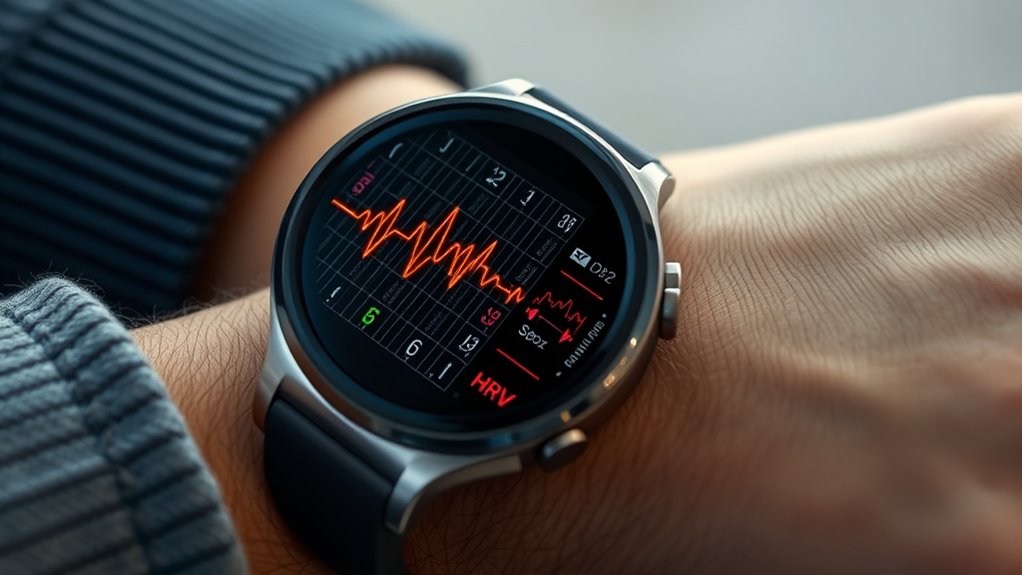
The heart’s electrical activity can be understood through electrocardiograms (ECGs), which record the tiny electrical signals generated as your heart beats. These signals result from cardiac conduction, where electrical impulses travel through your heart muscle to trigger contractions. By analyzing the ECG, you interpret these signals to assess how well your heart’s electrical system functions. Signal interpretation involves identifying specific wave patterns, intervals, and segments that correspond to different phases of the heartbeat. When you look at an ECG, you’re fundamentally decoding the heart’s electrical language, revealing information about rhythm, rate, and potential abnormalities. Understanding this process helps you grasp how your heart’s electrical system coordinates each beat, ensuring your heart works efficiently. Advances in cloud technology support improved data storage and analysis of ECG signals, enhancing diagnostic accuracy and remote monitoring capabilities. Recognizing normal versus abnormal electrical patterns is crucial for early detection and treatment of cardiac issues.
How SpO2 Sensors Measure Oxygen Levels

SpO2 sensors determine your blood’s oxygen levels by shining light through your skin and measuring how much is absorbed. This process, known as pulse oximetry, uses red and infrared light to detect oxygen saturation in your blood. The sensor captures the light that passes through your tissue and analyzes the absorption patterns, which vary depending on oxygen levels. The accuracy of these readings can be influenced by various factors, including air quality and ambient light conditions. To guarantee accurate readings, proper sensor calibration is essential; manufacturers adjust the device to match known oxygen saturation levels, accounting for individual differences and skin tones. Additionally, understanding Free Floating concepts can help in optimizing sensor placement and performance. Proper calibration ensures the readings are reliable and trustworthy. Recognizing the importance of Feature Buddies can assist in maintaining sensor functionality and longevity. By continuously monitoring light absorption, the sensor provides real-time SpO2 data, helping you and your healthcare provider assess your oxygen status quickly and non-invasively. Regular maintenance and awareness of sensor wear can further enhance measurement accuracy and device lifespan. Proper calibration ensures the readings are reliable and trustworthy.
Exploring HRV: Your Autonomic Nervous System’s Indicator
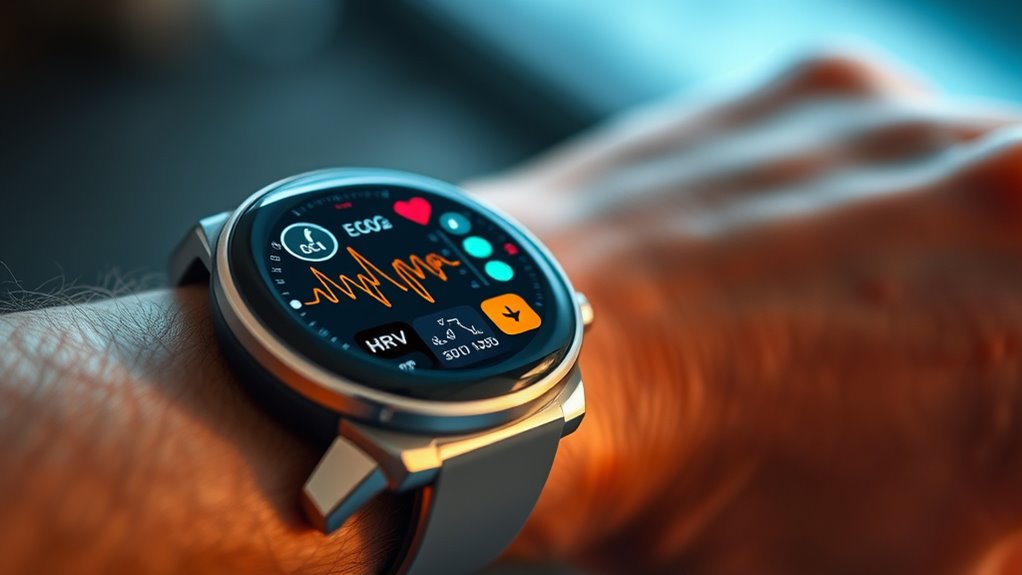
Understanding your heart rate variability (HRV) offers valuable insights into how your autonomic nervous system manages stress and recovery. When your HRV is high, it indicates dominant parasympathetic activity, helping you relax and recover. Conversely, low HRV signals a stress response, where sympathetic activity takes over. Imagine this:
- Your body *responding to stress* like a tightrope walker balancing on a wire.
- Parasympathetic activity *restoring calm*, like gentle waves soothing the shoreline.
- Fluctuations in HRV *reflecting your body’s ability* to adapt and recover from daily pressures.
- The balance between sympathetic and parasympathetic activity influences your cryptid mysteries, affecting how well your body responds to different stimuli.
The Technology Behind Wearable Sensors

Wearable sensors have revolutionized how we monitor our body’s internal signals, making it possible to track essential signs like heart rate and HRV in real time. These devices rely on precise sensor calibration to guarantee accurate readings, which involves adjusting and fine-tuning the sensors for peak performance. Once calibrated, data transmission becomes vital, as it allows seamless transfer of information from the sensor to your smartphone or medical device. Proper calibration is crucial for ensuring the accuracy of the data collected. Advanced wireless technologies like Bluetooth or NFC facilitate quick, reliable data exchange, enabling real-time monitoring without cumbersome cables. The combination of proper calibration and efficient data transmission ensures that your wearable sensors provide trustworthy insights, helping you stay informed about your health with minimal effort and maximum accuracy. Additionally, understanding how to simplify your device setup can make managing your health data even easier and more efficient. Incorporating smart home integration can enhance the overall functionality of your health monitoring system, allowing for more comprehensive data management and automation. Ensuring sensor reliability through regular updates and maintenance is also essential for maintaining the accuracy and consistency of your health monitoring devices.
Benefits of Monitoring These Vital Signs Regularly
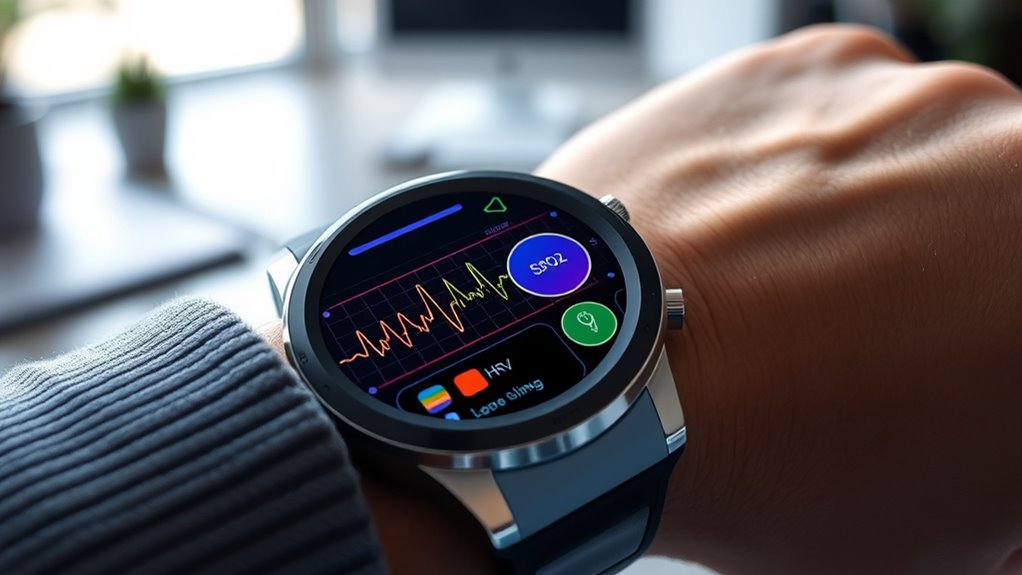
Regularly monitoring your vital signs provides immediate insights into your health, allowing you to catch potential issues early before they become serious problems. With consistent tracking, you can:
- Optimize exercise routines by analyzing your heart rate and recovery times, enhancing performance and endurance.
- Manage stress more effectively by observing fluctuations in HRV, helping you identify triggers and adopt relaxation techniques.
- Detect early signs of health issues like abnormal oxygen levels or irregular heart activity, prompting timely medical attention.
- Understanding sleep science can further help you interpret your data and make informed lifestyle adjustments. Additionally, being aware of heart rate variability trends can provide deeper insights into your overall well-being. Recognizing biofeedback patterns can empower you to make proactive health choices and improve your quality of life. Engaging in preventive health measures through regular monitoring supports early detection and better management of potential health concerns, ultimately contributing to long-term wellness and resilience.
Frequently Asked Questions
How Accurate Are Consumer-Grade ECG and Spo2 Devices?
Consumer-grade ECG and SpO2 devices can be quite accurate if they have proper sensor calibration and reliable data interoperability. Keep in mind that calibration guarantees measurements are precise, while good interoperability allows seamless data sharing with other health apps. While they’re not as clinical-grade, many offer sufficient accuracy for personal health monitoring, but always consider device reviews and validation studies to ensure you’re getting trustworthy results.
Can Exercise Affect the Readings of These Sensors?
Yes, exercise can affect your sensor readings, especially if calibration isn’t perfect or if you don’t follow user compliance guidelines. During physical activity, increased movement and sweat may cause temporary inaccuracies. To guarantee reliable data, keep sensors properly calibrated and stay still when taking readings. Following user instructions carefully helps maintain accuracy, even during exercise, so you get the most precise information from your device.
What Are Common Errors in Sensor Placement?
Think of your sensors as tiny detectives; if they’re misaligned, they miss the clues. Common errors include inconsistent placement, which disrupts readings, and sensor misalignment, causing data inaccuracies. To keep your device sharp, make certain of consistent placement each time and double-check positioning. Proper sensor placement acts like a steady hand guiding the detective, ensuring your readings are accurate, reliable, and reflective of your true health status.
How Do Environmental Factors Influence Sensor Performance?
Environmental factors like ambient interference can disrupt sensor performance by introducing electrical noise or signal distortion. You should regularly check sensor calibration to guarantee accurate readings, especially in noisy environments. Keep sensors away from strong electromagnetic sources, and ensure good skin contact to minimize interference. Proper calibration and awareness of ambient interference help maintain reliable data, so always monitor environmental conditions and adjust sensor placement as needed for ideal performance.
Are There Privacy Concerns With Continuous Health Monitoring Data?
You should know that continuous health monitoring data raises privacy concerns, especially regarding data security and ethical considerations. As you use these sensors, your personal health info can be vulnerable to breaches or misuse if not properly protected. It’s essential to guarantee your device manufacturer follows strict data security protocols and addresses ethical issues around consent and data sharing, so your privacy remains safeguarded while benefiting from health insights.
Conclusion
Think of your wearable sensors as a personal team of detectives, constantly decoding your body’s signals. Just like a detective pieces together clues to solve a case, these sensors monitor your ECG, SpO₂, and HRV to keep you aware of your heart’s story. Regular check-ins help you catch tiny signs before they turn into big problems. Embrace this tech—your health’s best detective—so you stay a step ahead and feel confident every day.