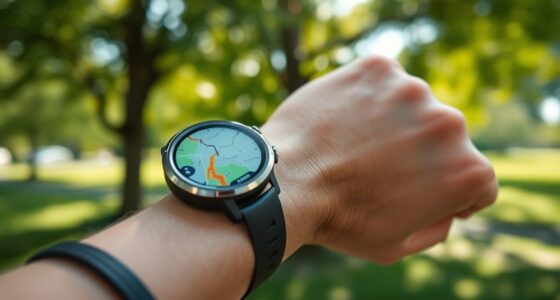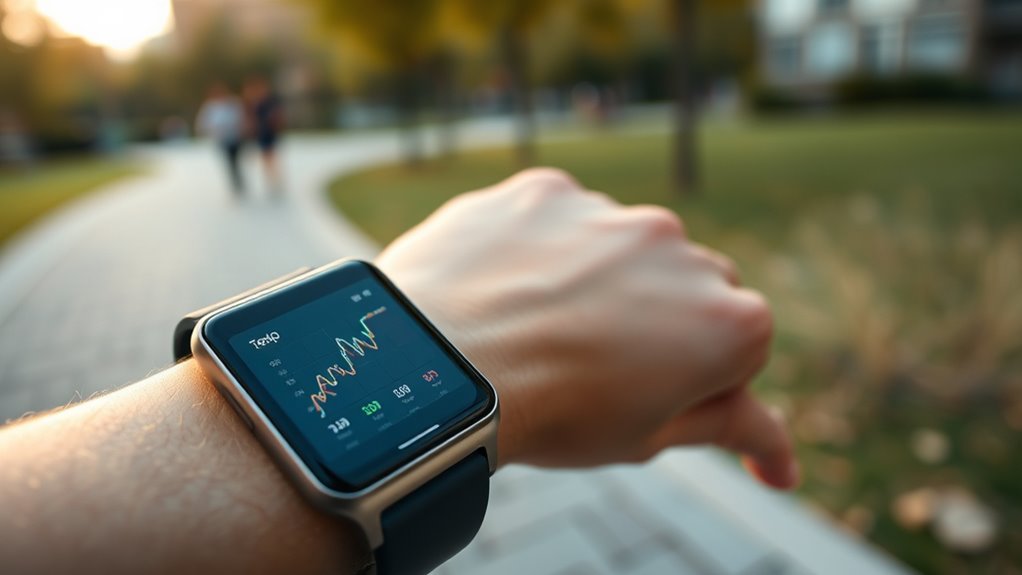

Your device calculates step counts by using motion sensors like accelerometers that detect your movements. These sensors pick up subtle signals from walking, but they can sometimes mistake other motions, like arm swings or vehicle rides, for steps. Algorithms filter out these inaccuracies, while your device’s placement and stride length estimates affect the count. Variations in walking style or terrain also play a role. To understand how these factors interact, keep exploring how your device measures every step more precisely.
Key Takeaways
- Step counts are estimated using accelerometer data that detects rhythmic motion characteristic of walking or running.
- Devices apply algorithms to filter out non-step movements, but external motions can cause over- or under-counting.
- Stride length estimates, personalized based on user data and activity, influence total step calculations.
- Placement (wrist, waist, shoe) affects sensor accuracy, impacting how steps are detected.
- Variations in walking speed, terrain, and device calibration lead to differences in step count accuracy.
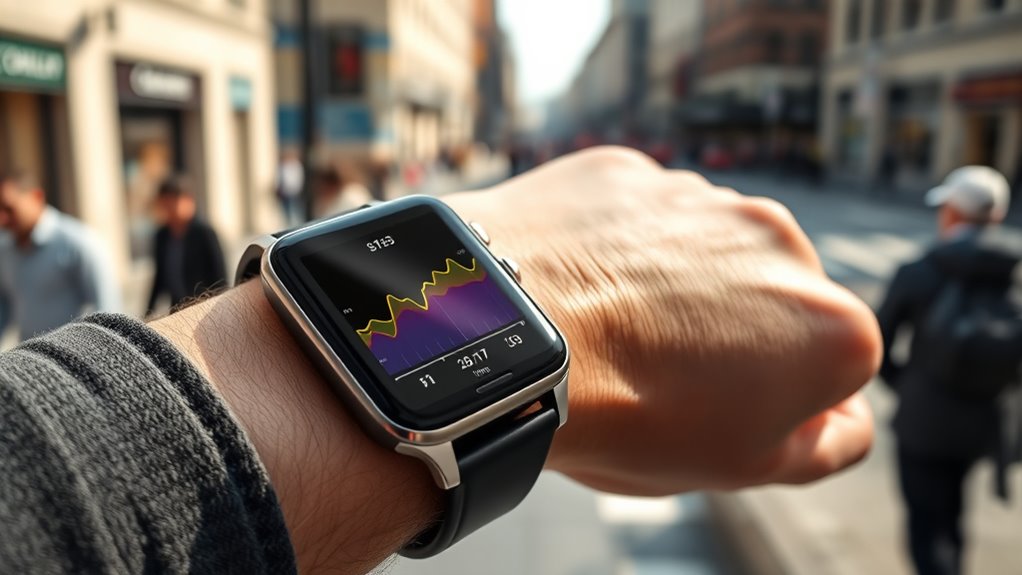
Have you ever wondered how your device determines the number of steps you take each day? It might seem straightforward—simply counting each time you lift your foot—but there’s more to it than that. The accuracy of your step count depends heavily on how well your device can interpret your movements. Pedometer accuracy varies based on the technology used, the placement of the device, and even your walking style. Many fitness trackers rely on accelerometers, small sensors that detect motion in multiple directions. These sensors pick up the subtle movements associated with walking or running. However, they can sometimes misinterpret other motions, like hand gestures or riding in a vehicle, leading to inaccuracies. That’s why some devices incorporate additional algorithms to filter out non-walking movements and improve pedometer accuracy.
Device accuracy depends on sensor technology, placement, and walking style, with algorithms filtering out non-step motions.
Another key factor influencing step count calculation is stride length estimation. Your stride length—the distance covered with each step—differs from person to person and can vary depending on your height, walking speed, and terrain. When your device estimates your steps, it often uses a default stride length based on average data or your personal profile. But if your stride length is off, your total step count may be too high or too low. Many advanced trackers attempt to personalize stride length estimation by calibrating during initial setup or through periodic updates based on your walking patterns. Some devices even learn from your daily activity over time, refining their estimates to better match your actual stride. Additionally, the underlying sensors and algorithms are continually evolving to enhance pedometer accuracy and provide more reliable data.
The way your device calculates steps also depends on where you wear it. A wrist-worn tracker might pick up arm swings that don’t correspond precisely to your steps, potentially overcounting or undercounting. Conversely, a device clipped to your waistband or shoe may measure steps more directly but might miss some movements if it’s not aligned properly. The algorithms behind these devices aim to balance these factors, but no system is perfect. Variations in walking speed, terrain, and even how you carry yourself can influence the data.
In essence, understanding how your device calculates steps reveals a combination of sensor technology, stride length estimation, and algorithmic filtering. Even with the most advanced technology, some degree of error is inevitable. Recognizing these nuances helps you interpret your step counts more accurately and set realistic expectations for your activity tracking. So, the next time you glance at your daily steps, remember that it’s a sophisticated process working behind the scenes—one that endeavors to give you the best estimate possible, even if it’s not always perfectly precise.
Top picks for "step count calculat"
Open Amazon search results for this keyword.
As an affiliate, we earn on qualifying purchases.
Frequently Asked Questions
Do Different Brands Use Different Algorithms for Step Counting?
Yes, different brands use varying algorithms for step counting. These algorithm differences mean each device may interpret movement uniquely, affecting your step count. Additionally, device calibration plays a role; some devices require manual calibration to improve accuracy. So, even if you walk the same distance, your step count can differ depending on the brand and how well the device is calibrated, making it essential to understand these factors for accurate tracking.
How Accurate Are Step Counts on Older Fitness Devices?
Older fitness devices are often as accurate as a weather forecast in July—questionable at best. Their device sensitivity can miss steps during quick movements or count fake ones from shaky hands. User behavior, like inconsistent wearing or forgetting to sync, further skews your counts. So, don’t rely solely on those vintage gadgets; they’re more nostalgic than precise, turning your steps into a fun, but wildly unreliable, number game.
Can Environmental Factors Affect My Step Count Accuracy?
Environmental factors can definitely affect your step count accuracy. You might notice discrepancies if your sensor placement isn’t ideal or if environmental influences like uneven terrain, weather, or crowded areas interfere with your device’s sensors. For the most accurate results, make certain your device is snugly fitted and positioned correctly. Keep in mind that external conditions can sometimes cause your step count to be slightly off, especially during vigorous activity or in challenging environments.
Do Step Counts Include Activities Like Cycling or Swimming?
Sure, your device counts steps mainly for walking and running, but it doesn’t include activities like cycling or swimming—those are alternative activities. Ironically, even if you work hard in the pool or on the bike, your step count stays the same. Device limitations mean it can’t track non-weight-bearing exercises accurately, so you might need a fitness tracker designed for a broader range of activities to get a complete picture of your activity.
How Often Should I Calibrate My Step Counting Device?
You should calibrate your device every few weeks or after any major activity change to guarantee accurate step counts. Regular calibration helps your device adapt to your walking style and terrain variations. Keep in mind, calibration frequency depends on how often you use it and if your activity habits change. By staying consistent with calibration, you improve your device’s accuracy and get better insights into your activity levels.
Conclusion
So, even if your step count seems inconsistent, remember it’s influenced by factors like stride length and device accuracy. Don’t get discouraged—your activity still counts, and tracking helps you stay motivated. While numbers might vary, the real goal is moving more and staying active. Keep walking, stay consistent, and use your data as a guide, not a strict rule. After all, every step you take is a step toward better health.