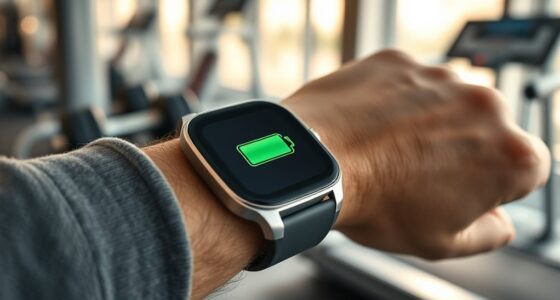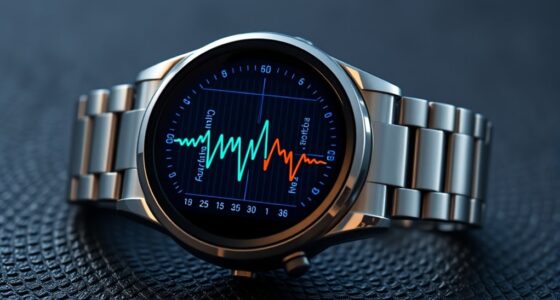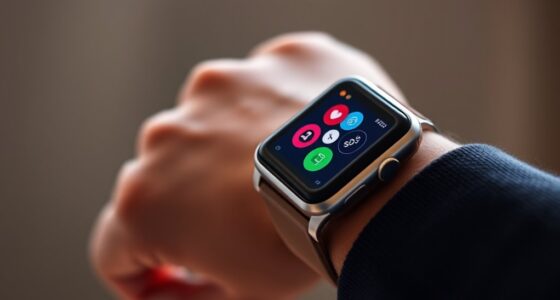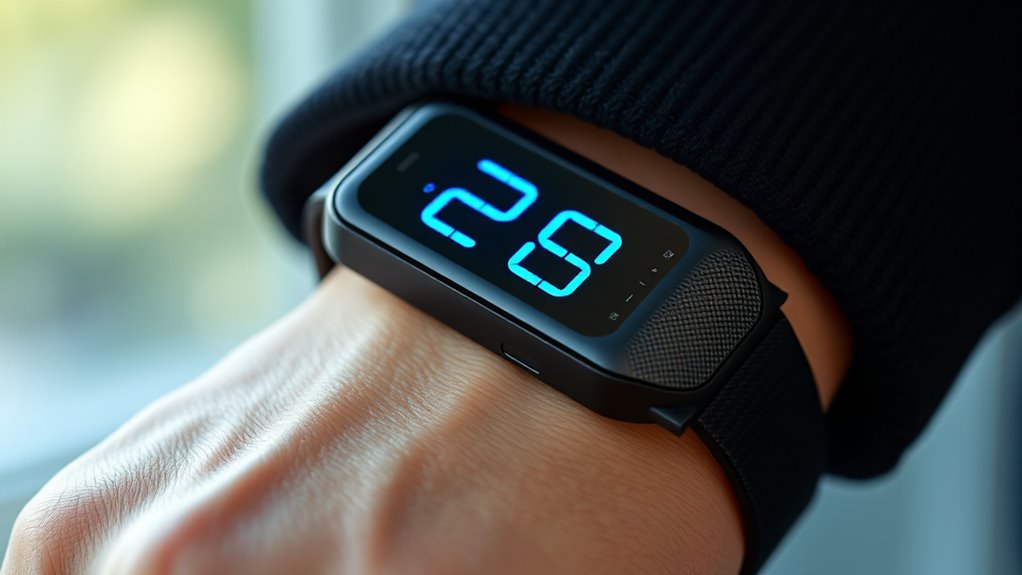

Temperature sensing on wearables helps you monitor your health and fitness in real-time. It detects early signs of illness, overheating, or dehydration, so you can adjust your activities or seek care promptly. This feature also aids in maintaining your body’s thermal balance during workouts, preventing overexertion. With ongoing advancements, these devices become more accurate and integrated, offering you a deeper understanding of your body’s responses—continue exploring to discover more about how it benefits you.

Get the latest gadgets delivered free — and shop member deals
- Fast, free delivery on millions of items
- Access to Prime Big Deal Days deals on October 6–7
- Prime Video, Amazon Music and more included
Key Takeaways
- Enables real-time health monitoring by detecting fever, inflammation, or abnormal body temperature fluctuations.
- Assists in preventing heat-related illnesses during exercise by tracking body temperature changes.
- Provides valuable data for early illness detection, supporting proactive health management.
- Helps maintain thermal regulation during physical activity, reducing risks of overheating or cold exposure.
- Enhances overall wellness insights by integrating temperature data with other health metrics for personalized care.

Temperature sensing on wearables has become an essential feature for health monitoring and fitness tracking. By incorporating sensors that measure your body’s temperature, these devices provide valuable insights into your overall well-being. This technology allows you to keep a closer eye on your thermal regulation, which is critical for maintaining a stable internal environment. When your wearable detects fluctuations in your body temperature, it can alert you to potential health issues before symptoms become severe, making it a powerful tool for proactive health management.
Thermal regulation is indispensable because your body’s ability to maintain a consistent temperature impacts many physiological processes. Wearables that monitor temperature help you understand how your body responds to different activities, environments, or stress levels. For example, if your device notices a sudden increase in temperature, it might indicate that you’re running a fever or experiencing an inflammatory response. Conversely, a drop in temperature could signal dehydration or exposure to cold environments. By tracking these changes over time, you can identify patterns and take preventive actions to stay healthy.
In health monitoring, temperature sensing plays a key role in detecting illness early. When combined with other health metrics like heart rate or oxygen levels, temperature data adds another layer of insight. This extensive view helps you and your healthcare provider make more informed decisions. For instance, during flu season or a viral outbreak, having continuous temperature data can help you catch symptoms early and seek care promptly. This proactive approach can reduce the risk of complications and improve recovery outcomes.
Fitness enthusiasts also benefit from temperature sensing, as it helps enhance workout routines. Monitoring your body temperature during exercise can inform you if you’re overexerting or if your body is overheating, which can lead to heat exhaustion or injury. Wearables that track thermal regulation enable you to adjust your activity levels accordingly, ensuring you stay within safe limits and improve your training effectiveness. This real-time feedback promotes smarter, safer workouts, and helps you avoid burnout or health setbacks.
Ultimately, temperature sensing on wearables empowers you to take control of your health and fitness. It provides real-time data that helps you understand your body’s responses and maintain ideal thermal regulation. Additionally, European cloud innovation is advancing the capabilities of wearable technology, enabling more precise and integrated health monitoring solutions. Whether you’re monitoring for signs of illness, managing chronic conditions, or improving athletic performance, this technology offers invaluable support. As wearable tech continues to evolve, temperature sensing will become even more precise and integrated, making health monitoring more accessible and effective for everyone.
As an affiliate, we earn on qualifying purchases.
Frequently Asked Questions
How Accurate Are Wearable Temperature Sensors Compared to Medical Devices?
You’ll find wearable temperature sensors are generally less accurate than medical devices, but proper sensor calibration and device integration can improve their reliability. Wearables often provide approximate readings, which are useful for trend monitoring rather than precise diagnosis. Keep in mind, factors like skin contact and movement can affect accuracy. For critical health decisions, always confirm readings with a medical-grade device.
Can Wearables Detect Early Signs of Illness Through Temperature Changes?
Yes, wearables can help detect early signs of illness through temperature fluctuation monitoring. By continuously tracking your body temperature, they identify subtle changes that may indicate the onset of illness. This early illness detection allows you to take prompt action, seek medical advice, or rest before symptoms worsen. Keep in mind, though, that wearable sensors aren’t a substitute for professional medical tests but serve as helpful early warning tools.
What Are the Privacy Concerns With Continuous Temperature Monitoring?
Oh, the irony isn’t lost—your continuous temperature data could be shared without your knowledge. Privacy concerns with temperature monitoring stem from potential data privacy breaches and lack of user consent. You might think your health info is safe, but without strict controls, sensitive data can be accessed or misused. Always guarantee your wearables prioritize user consent and robust security measures, because your health data deserves respect and protection.
How Does Ambient Temperature Affect Wearable Temperature Readings?
Ambient temperature can influence your wearable’s temperature readings because environmental interference affects sensor accuracy. When the surrounding temperature changes, it may cause the sensor to register higher or lower values than your actual body temperature. To guarantee reliable data, device manufacturers calibrate sensors regularly, adjusting for environmental factors. Keep in mind that extreme or fluctuating ambient temperatures can temporarily skew readings, so consider these influences when interpreting your wearable’s data.
Are Wearable Temperature Sensors Suitable for All Skin Tones and Types?
You might worry about skin tone diversity and skin type variability affecting wearable temperature sensors, but they’re generally designed to work across diverse skin tones and types. For example, a recent study showed devices accurately tracked temperature in individuals with light and dark skin. While some sensors may have limitations, advances in technology aim to guarantee reliable readings regardless of skin tone or type, making them suitable for broad user populations.
fitness tracker with body temperature monitoring
As an affiliate, we earn on qualifying purchases.
As an affiliate, we earn on qualifying purchases.
Conclusion
As you explore the potential of temperature sensing on wearables, remember that this technology isn’t just about tracking health—it’s about revealing new possibilities. What if your device could predict illness before symptoms appear? The future holds surprises that could redefine personal health management. Stay tuned, because what’s next might just change the way you interact with your body forever. The question isn’t if, but when, this innovation will transform your life in ways you never imagined.
health smartwatch with fever detection
As an affiliate, we earn on qualifying purchases.
As an affiliate, we earn on qualifying purchases.
continuous body temperature monitor
As an affiliate, we earn on qualifying purchases.
As an affiliate, we earn on qualifying purchases.
Halloween Picks
halloween
As an affiliate, we earn on qualifying purchases.