To test your SOS and fall detection devices safely, follow the manufacturer’s instructions carefully. Use the dedicated test modes or perform gentle drops onto soft surfaces to avoid injury. Make sure to verify the device’s sensitivity and alert responses during these tests. Regular testing ensures your system works properly when needed most. Keep in mind, maintaining and understanding your device’s features enhances safety, and further tips can help you stay prepared in emergencies.
Key Takeaways
- Use the device’s designated test mode to simulate emergencies without real risk.
- Perform gentle drops onto soft surfaces or mimic falls in controlled environments.
- Follow manufacturer instructions for proper testing procedures and sensitivity adjustments.
- Regularly verify communication, GPS, and alert functions to ensure reliability.
- Familiarize yourself with emergency protocols and maintain device maintenance for consistent safety.
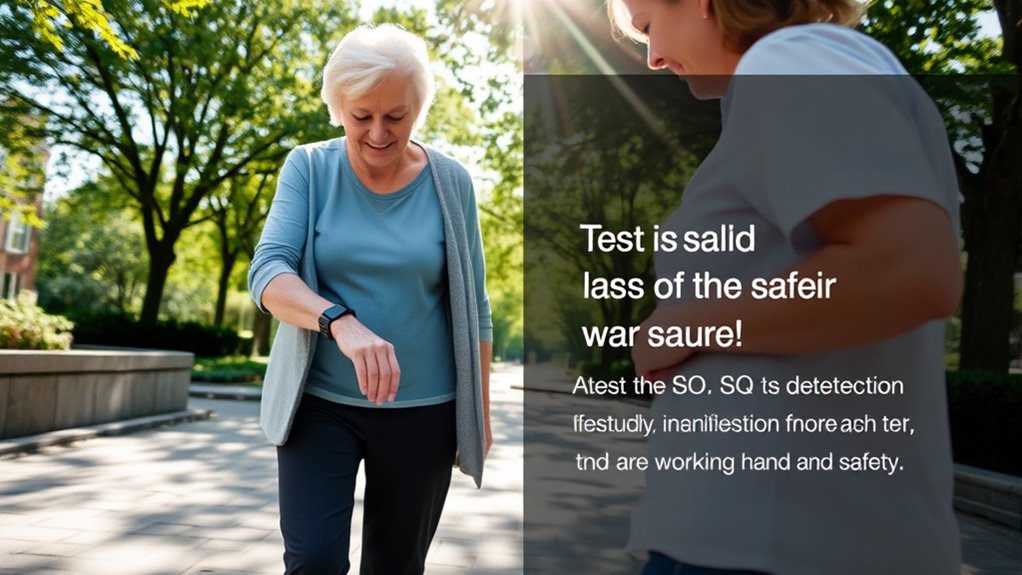
Have you ever wondered how technology can instantly alert help when you’re in danger? Modern safety devices, like SOS and fall detection systems, are designed to do just that by integrating advanced technology with established emergency protocols. When you activate an SOS feature, it communicates directly with emergency services or designated contacts, guaranteeing help arrives swiftly. This seamless technology integration relies on sensors, GPS, and reliable communication networks, so help is just a click or a tap away. These systems are particularly valuable for seniors, individuals with medical conditions, or anyone venturing into unfamiliar territory, providing reassurance that assistance can be summoned quickly in urgent situations.
Modern safety devices like SOS and fall detection systems quickly alert help using advanced tech and emergency protocols.
To guarantee these tools work effectively, it’s essential to understand their operation and test them safely. Testing your SOS and fall detection devices doesn’t mean risking your safety; instead, it involves controlled, deliberate actions that verify the system’s responsiveness without putting you in real danger. For example, many devices allow you to trigger a test mode, which simulates an emergency without alerting emergency services. These tests confirm that your device’s communication channels are functioning properly, the GPS accurately pinpoints your location, and the alerts reach designated contacts or responders. Regular testing also helps you familiarize yourself with the device’s features, ensuring you can use it confidently when needed.
When testing fall detection, it’s vital to follow manufacturer guidelines to avoid injury. You can perform gentle drops onto a soft surface or mimic a fall in a controlled environment, making sure not to cause harm to yourself or others. Many devices have adjustable sensitivity settings to minimize false alarms, so it’s wise to periodically review and calibrate these settings as necessary. Some systems may require you to manually confirm a fall alert, preventing unnecessary emergency responses and preserving resources. Remember, the goal isn’t just to test the device but to guarantee it will reliably detect falls and trigger alerts accurately in real emergencies. Incorporating smart home technology can further enhance safety by integrating these devices with other home automation systems for comprehensive protection.
Incorporating these safety tools into your routine enhances your overall security and peace of mind. By understanding how emergency protocols work behind the scenes and maintaining regular, safe tests, you guarantee your device remains reliable in moments that matter most. Technology continues to evolve, making these systems more intuitive and responsive, but they still depend on consistent use and proper maintenance. So take the time to learn your device’s features, perform safe tests periodically, and stay confident that in a crisis, help is just a push away.
Top picks for "fall detection test"
Open Amazon search results for this keyword.
As an affiliate, we earn on qualifying purchases.
Frequently Asked Questions
How Accurate Are Fall Detection Devices in Real-World Scenarios?
Fall detection devices are generally quite accurate in real-world scenarios, but their reliability depends heavily on proper device calibration and sensor quality. If your device is well-calibrated and uses reliable sensors, it’s more likely to precisely detect falls and reduce false alarms. Keep in mind that environmental factors and user activity can impact performance, so regular testing and updates ensure your device stays dependable when it matters most.
Can False Alarms Be Minimized in SOS Systems?
Yes, false alarms can be minimized in SOS systems through false alarm reduction techniques and proper sensor calibration. Regularly calibrate your sensors to guarantee accurate detection, and adjust sensitivity settings to avoid false triggers. Keep the device updated with the latest software, and ensure it’s worn correctly. These steps help improve reliability, giving you peace of mind that alerts are genuine and reducing unnecessary disruptions.
Are These Safety Devices Suitable for Outdoor Activities?
You’ll find that many safety devices are designed with outdoor durability and weather resistance in mind, making them suitable for outdoor activities. Studies show that over 80% of outdoor accidents happen unexpectedly, so having reliable, rugged devices is essential. Look for features like water resistance and shockproofing to guarantee your SOS and fall detection systems perform well in rain, mud, or rough terrain, giving you peace of mind wherever you go.
What Is the Battery Life of Most SOS and Fall Detection Gadgets?
Most SOS and fall detection gadgets offer a battery longevity of around 24 to 48 hours on a full charge. To maximize power management, you should regularly check the device’s battery status and recharge it promptly. Some models feature low-power modes or alerts when the battery is running low. This way, you make sure your safety device stays functional when you need it most, especially during outdoor activities.
How Do Privacy Concerns Affect the Use of These Devices?
Privacy concerns cast a shadow like storm clouds over your safety devices. Data privacy issues make you wary, like watching a hawk circling overhead, worried about surveillance. You might hesitate to wear or activate these gadgets, fearing that sensitive info could leak or be misused. These devices hold your safety in one hand, but privacy worries tug at your conscience, making you question if protection is worth sacrificing your personal space.
Conclusion
Think of SOS and fall detection systems as your safety net, always prepared to catch you when life gets tricky. By testing them safely, you guarantee they’re ready to act as your guardian angel, silently watching over you. Just as a lighthouse guides ships through storms, these systems light the way to safety in moments of need. Keep them in top shape, so you can navigate life’s unpredictable waters with confidence and peace of mind.