If your watch strap is causing skin irritation, first switch to a hypoallergenic material like silicone or titanium, and avoid straps with dyes or chemicals. Make sure your strap fits loosely to allow airflow and prevent moisture buildup. Clean your strap regularly with gentle soap and dry it thoroughly. If irritation persists, consider replacing worn or damaged straps or consult a dermatologist for personalized advice. Keep going to discover more tips to keep your skin healthy and comfortable.
Key Takeaways
- Switch to hypoallergenic straps made from silicone, titanium, or chemical-free leather to reduce allergic reactions.
- Clean your watch strap regularly with gentle soap and water to prevent bacteria buildup that worsens skin irritation.
- Ensure your strap fits properly—not too tight—to allow airflow and prevent moisture trapping.
- Replace worn or damaged straps promptly to avoid prolonged skin contact with irritants.
- Consult a dermatologist if irritation persists despite using hypoallergenic straps for personalized treatment.
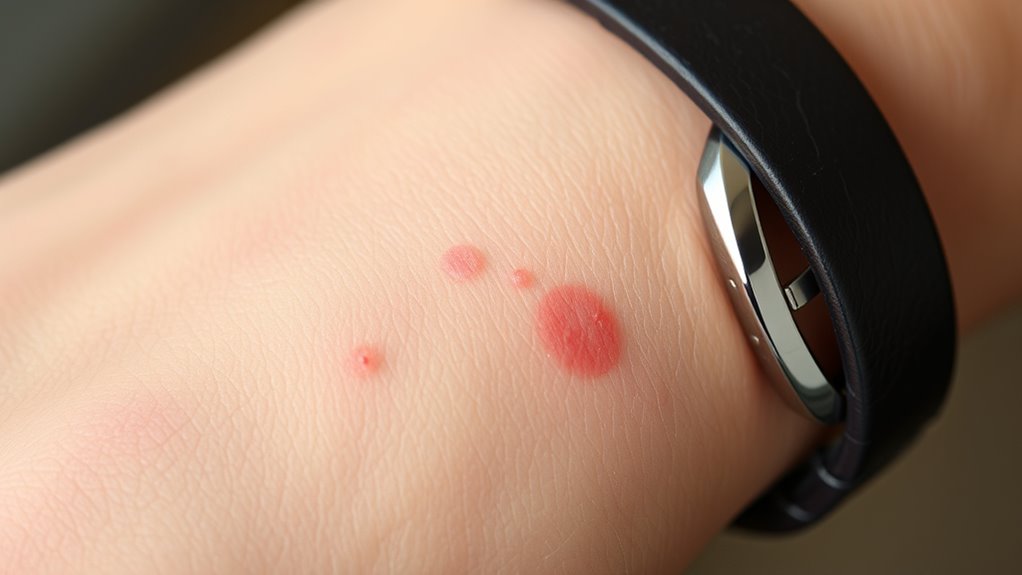
Wearing a watch with a strap that doesn’t suit your skin can lead to irritation and discomfort. If your skin turns red, itchy, or inflamed after wearing your watch, it’s likely due to the materials used in the strap. Many common watch straps are made from materials that can cause allergic reactions or sensitivities, especially if you have sensitive skin. To avoid these issues, you should consider switching to watches with hypoallergenic materials. These materials are specifically designed to minimize allergic responses and are gentle on your skin. Common hypoallergenic options include silicone, certain metals like titanium, and high-quality leather that’s free from dyes and chemicals. When choosing a new strap, always check if it’s labeled hypoallergenic to guarantee it won’t irritate your skin.
Wearing a strap that doesn’t suit your skin can cause irritation and discomfort.
Beyond selecting the right materials, proper strap maintenance is essential to prevent irritation. Sweat, dirt, and oils from your skin can accumulate on the strap over time, creating an environment for bacteria and fungi to grow. This buildup can worsen skin reactions and cause persistent irritation. Regularly cleaning your watch strap is a simple but effective step. Use gentle soap and water or a manufacturer-recommended cleaning solution to wipe down the strap. If the strap is removable, take it off periodically to give it a thorough clean and allow it to dry completely before reattaching. This prevents moisture from lingering and helps maintain both skin health and the strap’s longevity.
In addition, inspect your strap frequently for signs of wear or damage. Frayed edges, loose stitching, or discoloration can contribute to skin irritation. Replacing a worn strap promptly can save you from ongoing discomfort. When reattaching or adjusting your strap, guarantee it’s not too tight; constrictive straps can trap sweat and moisture against your skin, increasing irritation. Looser fits allow your skin to breathe and reduce the likelihood of skin reactions. Incorporating proper maintenance routines can also help extend the life of your strap and reduce irritation risks.
If you’ve tried switching to hypoallergenic straps and maintaining them properly but still experience irritation, it might be time to consult a dermatologist. They can help identify specific sensitivities and recommend tailored solutions. Sometimes, a simple change in strap material or routine can make a significant difference in how your skin reacts. Remember, your skin’s health is essential, and wearing a comfortable, skin-friendly strap isn’t just about style—it’s about your overall well-being.
Top picks for "watch strap caus"
Open Amazon search results for this keyword.
As an affiliate, we earn on qualifying purchases.
Frequently Asked Questions
Can Switching Strap Materials Prevent Skin Irritation?
Switching strap materials can definitely prevent skin irritation. If you have sensitive skin or allergies, choosing hypoallergenic strap materials like silicone, leather, or nylon helps with allergy prevention. Avoid metals like nickel or certain plastics that may cause reactions. By selecting a strap material suited to your skin, you reduce irritation and make wearing your watch comfortable. Always check for skin-friendly options to keep irritation at bay and enjoy your watch worry-free.
Are There Hypoallergenic Watch Straps Available?
Yes, there are hypoallergenic watch straps available. You might worry about synthetic alternatives causing irritation, but many are designed with allergy testing in mind, making them safe for sensitive skin. These straps often use materials like silicone or titanium, which are less likely to trigger allergies. By choosing hypoallergenic options, you can enjoy wearing your watch comfortably without worrying about skin reactions.
How Often Should I Replace My Watch Strap for Skin Health?
You should replace your watch strap every 6 to 12 months, especially if you notice skin irritation or wear and tear. Pay attention to the band material—hypoallergenic options like silicone or leather are gentler on your skin—and make certain the strap size fits well to avoid unnecessary friction. Regularly cleaning your strap also helps prevent irritation, keeping your skin healthy and your watch comfortable to wear.
Do Natural Leather Straps Cause Fewer Skin Reactions?
Think of natural leather straps as gentle guardians, often causing fewer skin reactions than synthetic leather or metal bands. They breathe better, like a friend who understands your skin’s needs, reducing irritation. Choosing genuine leather can be a soothing choice, especially if you have sensitive skin. Metal bands, while durable, might cause allergic reactions. So, opt for natural leather to keep your skin happy and comfortable, like a calming embrace.
Can Cleaning My Watch Strap Reduce Skin Irritation Risks?
Yes, cleaning your watch strap can reduce skin irritation risks. Regular watch strap maintenance removes sweat, dirt, and oils that can cause skin reactions. Use gentle soap and water or a suitable cleaning solution, especially for leather or fabric straps. Keeping your strap clean helps prevent bacteria buildup, ensuring better skin irritation prevention and making your watch more comfortable to wear daily.
Conclusion
If your watch strap’s turning your skin into a battlefield, don’t let irritation win the war. Think of it as a stubborn stain that can be scrubbed away with a simple fix—whether it’s switching materials or giving your skin a break. With a little care, you’ll soon have your wrist feeling happy again, like a garden after rain. So, take action now, and turn that itchy nightmare into a distant, forgotten memory.