When using your gadgets abroad, start by backing up data, updating apps, and ensuring your devices are *unlocked* and compatible with local networks. Consider getting a local SIM card or portable Wi-Fi to save on roaming costs and improve connectivity. Always connect to secure Wi-Fi networks and use encryption for privacy. Keep devices charged with power banks and protect them with sturdy cases. Want more tips to keep your gadgets safe and efficient? Stick around for helpful advice.
Key Takeaways
- Back up important data and ensure devices are updated and compatible for international use.
- Use local SIM cards or portable Wi-Fi devices to save costs and improve connectivity.
- Connect only to trusted, secure Wi-Fi networks and enable encryption for data safety.
- Carry power banks and protect devices with sturdy cases to maintain battery life and prevent damage.
- Keep devices in good condition, update software regularly, and activate security features like PINs or biometrics.

EVEO Screen Cleaner Spray - Large Screen Cleaner Bottle - TV Screen Cleaner, Computer Screen Cleaner, for Laptop, Phone, Ipad - Computer Cleaning kit Electronic Cleaner (1 Pack)
- Versatile Screen Cleaning: Suitable for TVs, laptops, phones, and tablets
- Effective Streak-Free Cleaning: Removes dust, fingerprints, and smudges
- Gentle on Sensitive Screens: Safe for LCD, LED, OLED, CRT screens
As an affiliate, we earn on qualifying purchases.
Preparing Your Devices Before Departure
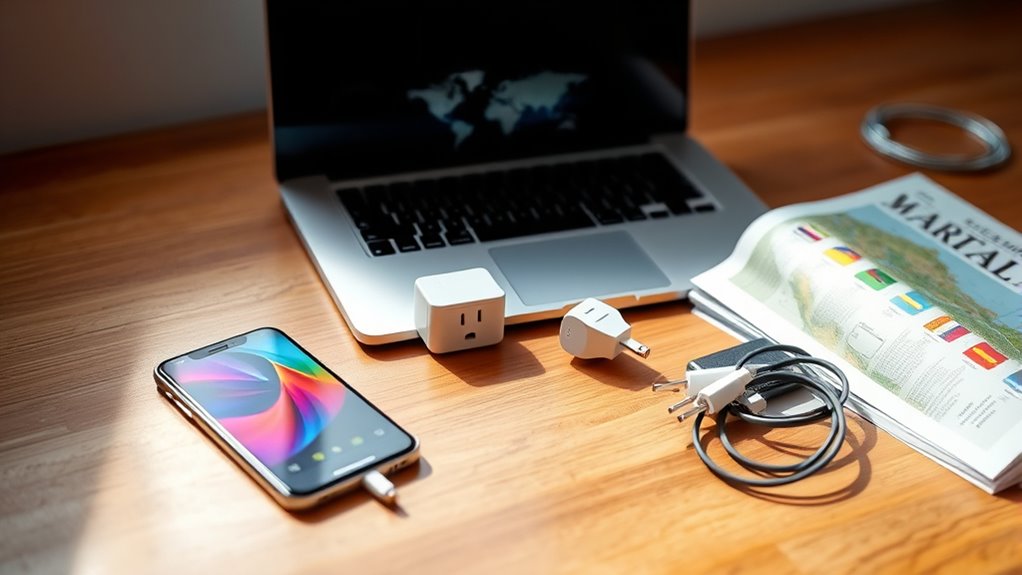
Before you leave, make sure to back up all important files and data on your devices. This protects your information if something gets lost or damaged. Next, check device compatibility for international use. Some phones and laptops may require updates or specific apps to work abroad. Also, confirm your devices are unlocked for use with local SIM cards. Don’t forget to pack the right power adapters; different countries have varying outlets and voltage standards. Bringing universal or plug adapters will save you time and hassle. Verify if your devices support the voltage in your destination country to avoid damage. Additionally, understanding affiliate disclosure can help you make informed decisions about purchasing accessories or gadgets for your trip. Knowing about privacy policies can also help you manage your data security while abroad. Staying informed about device maintenance can help you troubleshoot minor issues during your travels. Understanding modern kitchen technology can help you stay connected and utilize your gadgets efficiently while traveling. Preparing these essentials beforehand means you’ll stay connected and avoid surprises, making your travel smoother and more enjoyable.

iO CLEAN Screen Cleaner Spray (16oz - 473ml) – Best Large Cleaning Kit
- Versatile Device Compatibility: Works on all electronic screens and devices
- Gentle, Scratch-Free Formula: Removes dust and grime without scratching
- Protective, Anti-Static Coating: Repels dirt and reduces static electricity
As an affiliate, we earn on qualifying purchases.
Choosing the Right Connectivity Options
When selecting connectivity options abroad, consider whether a local SIM card suits your needs or a portable Wi-Fi device offers more flexibility. A local SIM can save you money and provide reliable service, while portable Wi-Fi keeps multiple devices connected without swapping cards. Think about your travel plans and data requirements to choose the best solution. Additionally, understanding the concept of Free Floating networks can help you identify flexible and cost-effective connectivity options. Being aware of Widespread Network Accessibility can further enhance your ability to stay connected in remote areas. Incorporating European Cloud Infrastructure solutions can also ensure secure and efficient data management while traveling, especially since cloud services are often supported by Floating on Water technologies that enable seamless connectivity across regions.
Local SIM Card Benefits
Choosing the right local SIM card can substantially enhance your travel experience by providing reliable and affordable connectivity. The local SIM card benefits include better network coverage and faster data speeds, which keep you connected without hassle. It often offers significant cost savings compared to roaming plans from your home provider, helping you avoid expensive charges. With a local SIM, you can easily access maps, translation apps, and communicate with locals without worry. Plus, many countries have prepaid SIM options, so you only pay for what you use. Selecting the right plan ensures you get enough data, calls, and texts for your needs. Overall, using a local SIM card makes your trip smoother, more economical, and less stressful when staying connected abroad. Understanding senior caregiver needs can also help you manage your connectivity options more effectively during your travels. Additionally, understanding home and small‑shop power needs can help you prepare for any electrical or device requirements during your trip. Being aware of network compatibility is crucial to ensure your device works seamlessly with local networks. Moreover, considering event logistics can inform your choices about connectivity, especially if you plan to attend festivals or large gatherings where reliable internet is essential. Being informed about electric device requirements can help you avoid issues with incompatible chargers or power sources while abroad.
Portable Wi-Fi Devices
If you want to stay connected across multiple devices or in areas where local SIM cards aren’t available, portable Wi-Fi devices are a smart solution. They offer reliable internet without relying on your phone’s data plan. When choosing one, consider device compatibility—ensure it works with your gadgets—and battery longevity, so you won’t run out of power during long outings. Additionally, understanding network compatibility can help you select a device that supports local networks or offers global options for seamless coverage. It’s also helpful to look into privacy and security features to keep your data protected while abroad. Considering load calculations can help ensure your device can handle multiple connections without slowing down or overloading, especially when using several gadgets simultaneously. Being aware of lease terms related to device usage can also prevent unexpected charges or limitations during your trip. Moreover, researching customer support services can provide peace of mind in case you encounter technical issues abroad.
Managing Data Usage and Costs
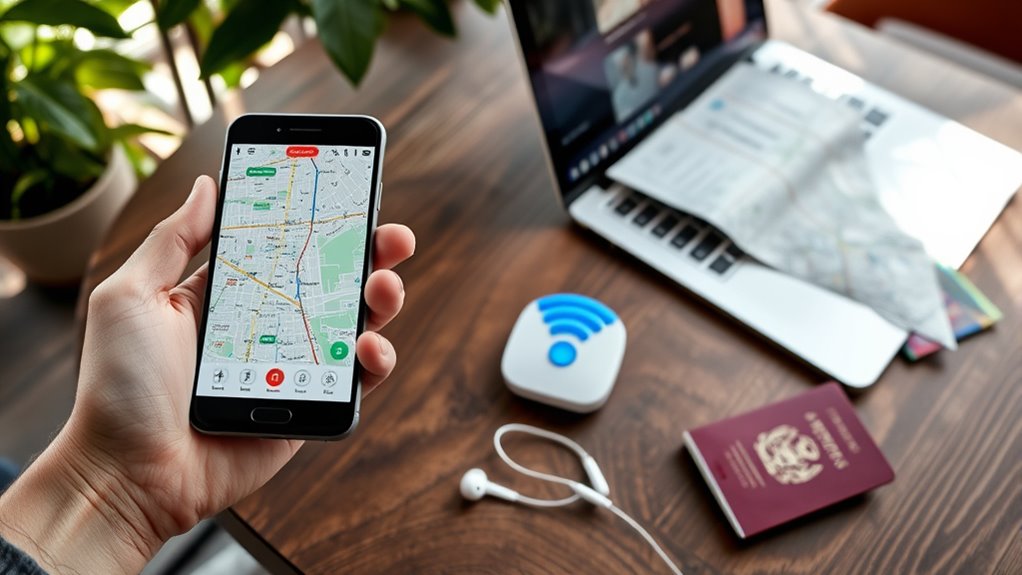
To keep your travel expenses in check, start by monitoring your data consumption so you don’t go over your limits. Whenever possible, connect to Wi-Fi networks to save mobile data. Consider getting a local SIM card to enjoy affordable rates and better coverage during your trip. Using a reliable mobile data management app can help you track your usage more effectively. Additionally, understanding privacy policies can help you better communicate your needs and preferences while abroad. Being aware of best safety glasses for 2024 can also protect your eyes when using electronic devices in unfamiliar environments. Staying informed about international data roaming policies can further help you avoid unexpected charges.
Monitor Data Consumption
Monitoring your data consumption is vital to avoid unexpected charges and keep your devices running smoothly during travel. Keep an eye on your usage through your device’s settings or carrier apps to prevent data throttling, which can slow your connection once you hit a limit. Managing app data usage is also essential—disable background data for apps that aren’t necessary and restrict data access to prevent unnecessary consumption. Regularly check your data usage to stay within your plan’s limits, especially if you’re on a limited data plan. Setting alerts or usage caps can help prevent surprises. By staying vigilant and using app data management tools, you guarantee a smoother, cost-effective experience abroad without disruptions. Understanding network hardware and infrastructure can help you troubleshoot connectivity issues and optimize your device settings for better performance. Being aware of network coverage areas can help you avoid dead zones and maintain reliable connectivity while traveling. Additionally, understanding data management practices can help you make informed decisions to maximize your plan’s effectiveness.
Use Wi-Fi When Possible
Using Wi-Fi whenever available is one of the most effective ways to manage data usage and cut costs while traveling. Connecting to secure networks helps you avoid hefty roaming charges, but always ensure Wi-Fi security before logging in. Be mindful of device compatibility; some gadgets may not connect seamlessly to certain networks or require updates. To maximize safety and efficiency, consider the following:
- Use trusted, password-protected Wi-Fi networks to protect your data.
- Keep your device’s software updated for ideal compatibility and security.
- Avoid entering sensitive information on public or unsecured networks.
Choose Local SIM Cards
Opting for local SIM cards can substantially reduce your roaming charges and give you more control over your data usage. When you arrive, explore local provider options to find the best coverage and rates. Many providers offer prepaid SIM cards that are easy to activate—just insert the SIM and follow the activation instructions, often available online or at the provider’s store. This approach guarantees you’re not tied to costly international plans and allows you to manage your data plan based on your needs. Be sure to check whether your device is unlocked before purchasing a local SIM. Choosing a local provider option and completing a simple SIM card activation process can save you money, improve connectivity, and make managing your data consumption much easier during your trip.
Ensuring Security and Privacy While Traveling
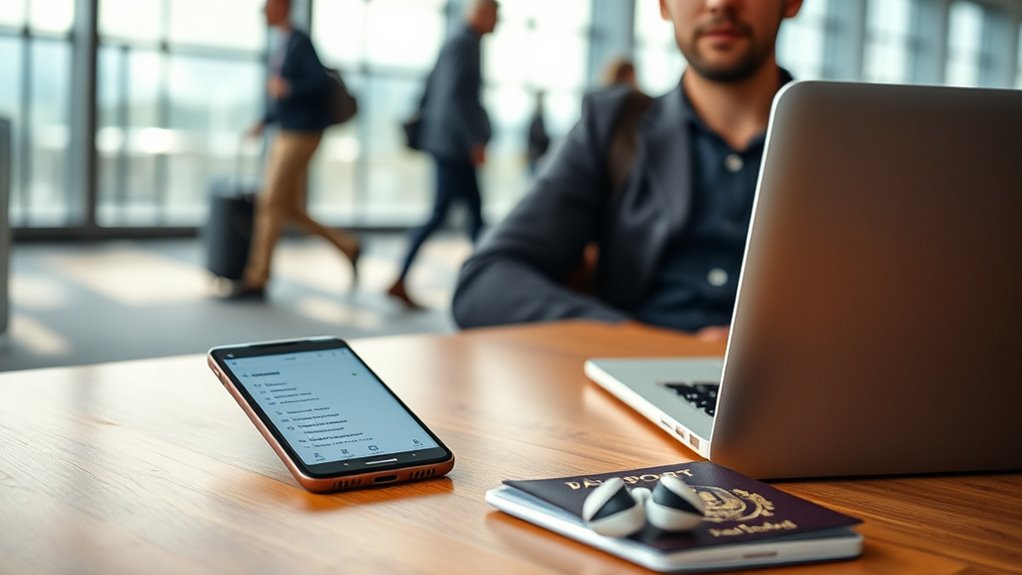
When you’re traveling, protecting your phone and laptop from security threats should be a top priority. Use encrypted connections whenever possible, especially on public Wi-Fi, to safeguard your data from prying eyes. Enable device authentication features like PINs, biometrics, or passwords to prevent unauthorized access if your device is lost or stolen. Additionally, consider installing security apps that monitor for suspicious activity and encrypt sensitive files.
To further secure your devices, remember to:
- Always verify secure connections before entering personal info
- Keep your software and security patches up to date
- Turn off Bluetooth and auto-connect features when not in use
Keeping Your Devices Charged and Protected

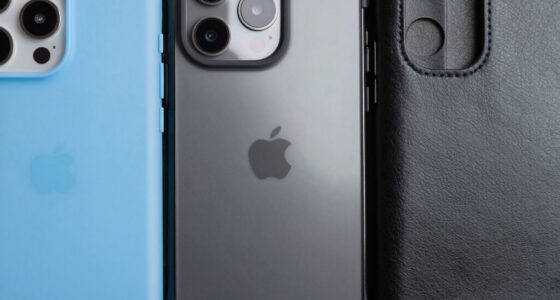
Keeping your devices charged and protected is essential to guarantee they function properly and stay secure during your travels. Carry a reliable power bank to ensure your phone and laptop stay powered throughout long outings or during delays. Regularly top off your devices, especially when access to outlets is limited. Protect your gadgets with a sturdy device case that guards against scratches, bumps, and accidental drops. Choose a case with adequate padding and a snug fit to keep your devices safe in your bag. Additionally, avoid exposing your devices to extreme temperatures or moisture. By staying proactive with charging and protection, you’ll avoid unexpected outages and damage, ensuring your gadgets remain reliable and secure throughout your trip.
Tips for Maintaining Device Performance Abroad

To guarantee your devices perform their best abroad, it’s important to take proactive steps to optimize their functionality. Regular device cleaning prevents dust and debris from slowing performance, especially in different climates. Keeping software updated ensures you have the latest security patches and performance improvements.
Consider these tips:
- Schedule routine device cleaning to maintain airflow and prevent overheating
- Enable automatic software updates to stay current with bug fixes and improvements
- Clear unnecessary files and apps to free up storage space
Frequently Asked Questions
Can I Use My Home Charger Adapters Internationally Without Damage?
You can’t use your home charger adapters internationally without damage unless they support universal voltage. Check the charger compatibility—most modern chargers handle voltage conversion, typically 100-240V. If not, you’ll need a voltage converter to prevent damage. Always verify your device’s voltage range before plugging in abroad. Using the right adapter and converter guarantees safe charging and protects your gadgets from electrical issues during your travels.
What Are the Best Apps for Offline Maps and Translation?
You might hesitate to rely solely on offline tools, but apps like Google Maps and Maps.me excel in offline navigation, ensuring you won’t get lost without internet. For language translation, consider Google Translate and iTranslate, which offer offline mode for quick, accurate translations. These apps help you communicate confidently and navigate seamlessly, even abroad, making your travel experience smoother and more enjoyable without worrying about connectivity issues.
How Do I Reset My Device if It Gets Locked Abroad?
If your device gets locked abroad, you can try a factory reset to release it. First, back up your data if possible. Then, access the recovery mode by holding specific buttons (like volume and power) during startup. Follow the prompts to perform a factory reset, which erases all data and restores the device to its original settings. This process often helps with device unlocking when other methods fail.
Are There Specific Warranties That Cover International Damage?
Yes, some devices come with an international warranty that covers damage abroad. Check your warranty policy to see if it includes international damage coverage, as many brands offer this option for an extra fee. Before traveling, contact your manufacturer or retailer to confirm. This way, you’ll know whether repairs or replacements due to international damage are covered, giving you peace of mind during your trip.
How Can I Back up My Data Remotely Before Traveling?
Imagine your data as a shimmering stream flowing freely. To back it up remotely, you should use a cloud backup service before your trip. Make sure you enable strong encryption methods to keep your information secure during transfer. This way, your photos, contacts, and files are safely stored online, ready to restore if your device gets lost or damaged abroad. It’s a simple, effective way to protect your digital world.
Conclusion
Traveling with your gadgets doesn’t have to be stressful. By preparing your devices, choosing the right connectivity, and staying secure, you can enjoy seamless adventures abroad. Did you know that over 60% of travelers experience issues with device performance or security while abroad? Staying proactive helps you avoid those problems and makes your trip smoother. So, follow these tips, stay connected, and make the most of your journey with confidence!