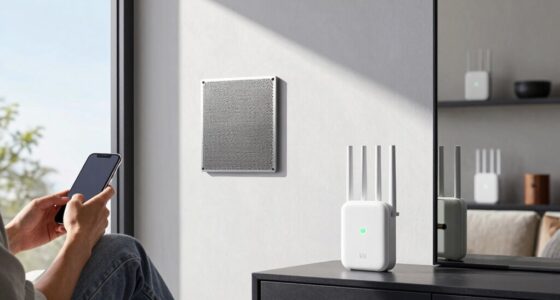
Choose Wi-Fi when you’re at home, work, or in places with reliable hotspots because it’s often faster, more stable, and free or cheaper than mobile data. Use mobile data for on-the-go connectivity, especially when Wi-Fi isn’t available or if you need constant access. Keep in mind, each option has costs and security concerns; understanding when to switch can help you stay connected, safe, and save money—more details await you.
Key Takeaways
- Use Wi-Fi near trusted hotspots for faster, more stable, and cost-effective browsing, especially for streaming and downloads.
- Rely on mobile data when on the go, in crowded areas, or where Wi-Fi is unavailable or unreliable.
- Prefer Wi-Fi to avoid extra costs and data throttling, especially during heavy usage or at data cap limits.
- Use mobile data for constant connectivity during travel or remote locations, ensuring seamless access to essential apps.
- Enhance security by avoiding sensitive activities on public Wi-Fi and using VPNs, while mobile networks generally provide better privacy.

TP-Link AC1200 WiFi Extender – 1.2Gbps Home Signal Booster, Dual Band 5GHz/2.4GHz, Up to 1600 Sq.ft and 32 Devices, EasyMesh Compatible, One Ethernet Port (RE315)
𝐒𝐭𝐫𝐨𝐧𝐠𝐞𝐫 𝐖𝐢-𝐅𝐢 𝐢𝐧 𝐄𝐯𝐞𝐫𝐲 𝐂𝐨𝐫𝐧𝐞𝐫 – Enjoy extended coverage with strong performance powered by Adaptive Path Selection and…
As an affiliate, we earn on qualifying purchases.
As an affiliate, we earn on qualifying purchases.
Understanding the Cost and Speed Differences

When comparing mobile data and Wi-Fi, understanding their cost and speed differences is essential. Mobile data often costs more, especially if you exceed your data cap, leading to additional charges. Wi-Fi, usually free or included in your internet plan, offers a more economical option for heavy usage. Speed-wise, Wi-Fi generally provides faster, more stable connections, but network congestion can slow down its performance during peak times. Mobile data can be throttled during high traffic, reducing speeds after reaching data limits, which impacts your browsing experience. Data throttling on mobile networks is intended to manage congestion but can be frustrating. In contrast, Wi-Fi speeds depend on your provider and network load, often delivering more consistent performance when the network isn’t congested. Additionally, wireless technology advancements continue to improve mobile data speeds and reliability, narrowing the gap with Wi-Fi connections. Emerging 5G networks are playing a significant role in enhancing mobile data performance, making it more competitive with Wi-Fi.

RoamWiFi Mobile Hotspot Pocket WiFi, Portable WiFi No SIM Card Needed, MiFi
【Global Seamless Roaming with a Variety of Data Plans】RoamWiFi offers seamless, high-speed connectivity in 170+ countries. Enjoy stable…
As an affiliate, we earn on qualifying purchases.
As an affiliate, we earn on qualifying purchases.
When to Rely on Wi-Fi for Better Performance
Choosing Wi-Fi over mobile data can considerably improve your browsing experience when conditions favor it. Use Wi-Fi when you’re near reliable Wi-Fi hotspots, such as at home, cafes, or libraries, for faster speeds and stable connections. Avoid Wi-Fi during peak hours at crowded hotspots, as network congestion can slow down your connection. Consider these scenarios:
Opt for Wi-Fi at trusted spots for faster, more stable browsing—avoid congestion during peak hours.
- You’re working from home or at a trusted Wi-Fi hotspot.
- You need to stream videos or download large files.
- You’re in an area with high mobile data costs.
- The mobile network is experiencing congestion, leading to slower speeds.
- Wi-Fi quality can vary depending on location and infrastructure, so assessing signal strength is essential for optimal performance.
Low light pollution and natural landscapes can also affect your outdoor connectivity options, making Wi-Fi the more reliable choice when available.

Roam 6 AX1500 Portable Wi-Fi 6 Travel Router Dual-Band USB C 3.0
𝐑𝐨𝐚𝐦 𝟔 𝐀𝐗𝟏𝟓𝟎𝟎 𝐝𝐮𝐚𝐥-𝐛𝐚𝐧𝐝 𝐬𝐩𝐞𝐞𝐝𝐬 – Wi-Fi 6 Speeds up to 1,201 Mbps (5 GHz) and 300 Mbps…
As an affiliate, we earn on qualifying purchases.
As an affiliate, we earn on qualifying purchases.
Situations Where Mobile Data Offers Greater Flexibility

Mobile data provides greater flexibility when you need internet access on the go, without being tied to Wi-Fi hotspots or fixed locations. Unlike Wi-Fi, which can be affected by network congestion, mobile networks often offer more consistent speeds in crowded areas. You don’t have to search for a reliable Wi-Fi connection or worry about signal drop-offs. Additionally, device compatibility is a key advantage—most smartphones are designed to seamlessly switch between mobile data and Wi-Fi, giving you constant connectivity. This flexibility is especially useful when traveling, commuting, or in remote areas where Wi-Fi access is limited or unavailable. With mobile data, you stay connected wherever you go, ensuring uninterrupted access to maps, messaging, and work apps, regardless of local network conditions. Smart home technology can also enhance your mobile connectivity experience by automating network preferences based on your location. Moreover, network coverage varies depending on your location, so understanding where your mobile data works best can help you plan your connectivity needs more effectively. To maximize your experience, choosing a data plan with higher limits or unlimited access can help avoid interruptions, especially during heavy usage periods. Properly managing your data usage can also prevent unexpected charges and ensure consistent service.
Roam 6 AX1500 Portable Wi-Fi 6 Travel Router Dual-Band USB C 3.0
𝐑𝐨𝐚𝐦 𝟔 𝐀𝐗𝟏𝟓𝟎𝟎 𝐝𝐮𝐚𝐥-𝐛𝐚𝐧𝐝 𝐬𝐩𝐞𝐞𝐝𝐬 – Wi-Fi 6 Speeds up to 1,201 Mbps (5 GHz) and 300 Mbps…
As an affiliate, we earn on qualifying purchases.
As an affiliate, we earn on qualifying purchases.
Security Concerns and Privacy When Using Public Networks

Public networks, such as those in cafes, airports, or hotels, often lack the same level of security as private connections, making your data vulnerable to cyber threats. Public Wi-Fi vulnerabilities can expose sensitive information if your connection isn’t protected. To stay safe, consider these points:
Public Wi-Fi often lacks security, putting your sensitive data at risk. Use HTTPS, VPNs, and mobile networks for safety.
1. Use secure websites beginning with HTTPS to ensure encryption.
2. Avoid accessing sensitive accounts on public networks.
3. Enable VPNs for an extra layer of security against potential hackers.
4. Remember that mobile network encryption generally offers better privacy than public Wi-Fi.
5. Incorporating air purifier technology insights can remind you of the importance of a clean environment, which parallels maintaining secure and protected digital spaces.
6. Choosing security-focused devices and networks can significantly reduce your risk of data breaches.
Additionally, being aware of network encryption standards can help you identify more secure connections.
7. Being mindful of cookie management can also help protect your privacy and reduce tracking on public networks.
While public Wi-Fi can be convenient, it’s riskier without proper safeguards. Protect your privacy by understanding these vulnerabilities and opting for secured connections whenever possible.
Tips for Managing Data Usage and Saving Costs
Managing your data usage is essential to avoid unexpected charges and make the most of your plan. To do this, monitor your data regularly and set usage alerts if your provider offers them. Be aware of data throttling, which can slow your connection after reaching a limit, impacting your browsing. Consider plans that offer data rollover, allowing unused data to carry over to the next billing cycle, helping you maximize your plan’s value. Avoid streaming videos or downloading large files over mobile data unless necessary. Use Wi-Fi whenever possible to save data and reduce costs. Adjust app settings to restrict background data usage. Staying informed about network management techniques can further optimize your connection and prevent surprises on your bill. Additionally, understanding cutting through tech clutter can help you choose the most reliable and cost-effective data solutions. Being aware of modern connectivity options can also aid in selecting the best method for different situations. For instance, learning about how network throttling affects your connection can help you avoid unexpected slowdowns. Utilizing Gold IRA rollovers can be a strategic way to diversify your retirement investments and potentially safeguard your assets from market volatility. These tips help you stay within your data limits and save money while staying connected.
Frequently Asked Questions
How Does Network Congestion Affect Data Speed and Reliability?
Network congestion slows down your data speed and reduces reliability, especially during peak hours when many users are connected. When congestion occurs, your provider might implement data throttling, intentionally limiting your bandwidth to manage the network. This results in slower downloads, buffering videos, and dropped connections. To avoid this, switch to Wi-Fi when available, as it usually offers more stable and faster connections during busy times.
Can Wi-Fi Signals Interfere With Other Electronic Devices?
Imagine your Wi-Fi signal as a gentle breeze flowing through a forest. Wireless interference from devices like cordless phones or microwave ovens can cause signal disruption, making your connection flaky. This interference creates pockets of signal disruption, slowing your internet or dropping your connection altogether. To avoid this, keep electronic devices that cause wireless interference away from your Wi-Fi router, ensuring a smoother, more reliable internet experience.
What Are the Best Practices for Using Public Wi-Fi Securely?
To guarantee public Wi-Fi safety, always use a VPN to secure your connection and avoid sensitive transactions. Verify the network’s legitimacy before connecting, and disable file sharing and network discovery. Stick to websites with HTTPS, and avoid accessing banking or personal accounts. Keep your device’s security software updated, and turn off Wi-Fi when not in use. These secure connection tips help protect your data on public networks.
How Does Roaming Impact Mobile Data Costs Internationally?
A stitch in time saves nine, and understanding international roaming can save you money. Roaming impacts mobile data costs internationally by often incurring extra charges, which can surprise you if you’re not careful. Data cost implications vary depending on your carrier and plan, so it’s wise to check your roaming rates before traveling. Use Wi-Fi whenever possible to avoid high costs, and consider local SIM cards for better deals.
Are There Apps That Optimize Data Usage Automatically?
Yes, there are data saving apps that automatically manage your data usage. These apps optimize your data by limiting background activity, compressing images, and controlling streaming quality. They handle automatic data management so you don’t have to think about it, helping you save data without losing much functionality. Popular options include Google Datally and Opera Max, which make it easy to stay within your data limits while browsing or streaming.
Conclusion
Choosing between mobile data and Wi-Fi depends on your needs. Weigh the wonder of Wi-Fi’s speed against mobile’s mobility. Wisely switch when speed is supreme, but stay cautious with public networks. Keep control by conserving data, and stay secure by staying savvy. Remember, smart selections save your signal and your savings. So, select sensibly, switch securely, and stay connected comfortably—your perfect pairing of power and privacy.