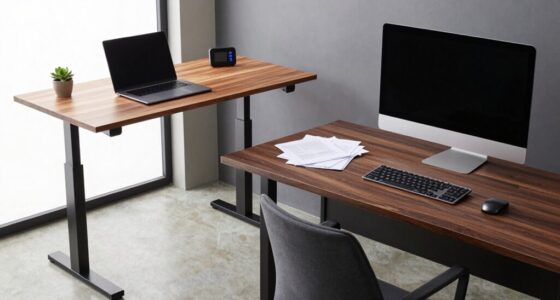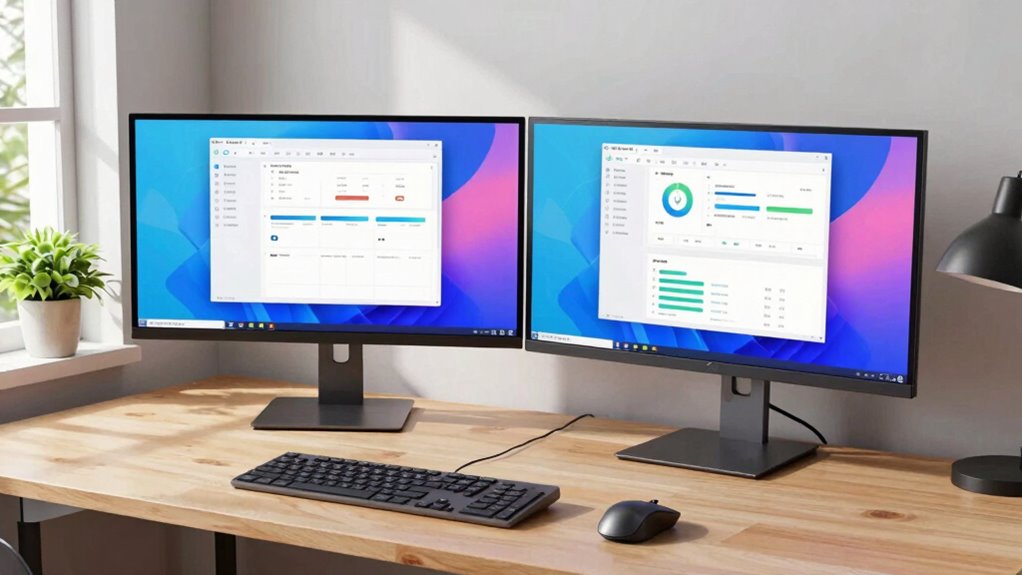

To set up dual monitors for a productivity boost, start by choosing compatible screens with adjustable stands and good ergonomics. Connect them securely using the right cables like HDMI or DisplayPort, organizing cables with clips for a tidy workspace. Configure display settings, aligning resolutions and positions at eye level for comfort. Properly arranging monitors and customizing preferences can enhance work flow and reduce strain. Keep exploring these steps to access your ideal multi-monitor setup.
Key Takeaways
- Choose compatible monitors with adjustable stands and appropriate resolution for your workspace needs.
- Connect monitors securely using the right cables (HDMI, DisplayPort) and organize cables for a tidy setup.
- Configure display settings to match resolution, orientation, and color calibration for seamless workflow.
- Position monitors at eye level and adjust height to promote ergonomic comfort and reduce strain.
- Organize applications and desktop layouts across screens for efficient multitasking and enhanced productivity.

EVEO Screen Cleaner Spray - Large Screen Cleaner Bottle - TV Screen Cleaner, Computer Screen Cleaner, for Laptop, Phone, Ipad - Computer Cleaning kit Electronic Cleaner (1 Pack)
Screen Cleaner is Your Screen’s New Bestfriend! - EVEO is proud to present a screen cleaner that’s perfectly...
As an affiliate, we earn on qualifying purchases.
Choosing the Right Monitors for Your Workspace

Choosing the right monitors for your workspace is essential to guarantee comfort, productivity, and a seamless experience. Start by considering monitor stand selection; adjustable stands help you find the perfect height and angle, reducing strain during long hours. Pay attention to screen size and resolution to match your workflow needs, whether for detailed design work or general tasks. Color calibration techniques are pivotal for color accuracy, especially if you work with visuals or photography, ensuring your display reflects true colors. Look for monitors with good viewing angles and anti-glare coatings to improve visibility in different lighting conditions. Prioritizing ergonomic features for comfort and durability can prevent fatigue and long-term health issues. Additionally, understanding color accuracy methods can significantly enhance your display quality and color fidelity. Incorporating ergonomic design principles into your monitor setup can further optimize comfort and prevent strain during extended use. Considering features like screen brightness and flicker-free technology can also help reduce eye strain during prolonged work sessions. To ensure long-term satisfaction, selecting monitors with durability and build quality is also important. By carefully selecting your monitors with these factors in mind, you’ll create an efficient, comfortable setup that enhances your overall productivity.

iO CLEAN Screen Cleaner Spray (16oz - 473ml) – Best Large Cleaning Kit
Screen cleaner spray and cloth. Screen cleaner spray and cloth are designed for high-end devices and work flawlessly...
As an affiliate, we earn on qualifying purchases.
Gathering Necessary Cables and Accessories
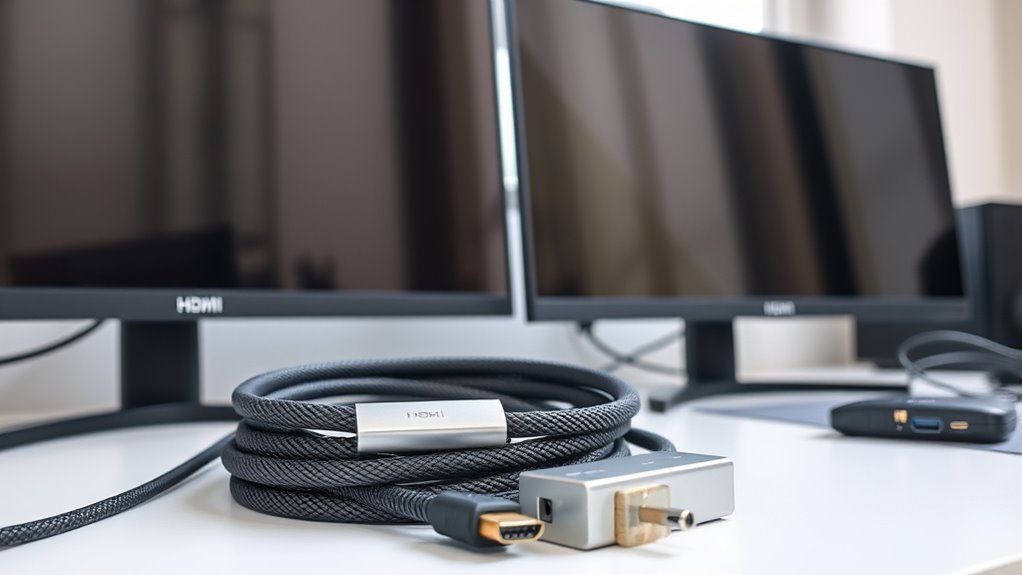
Before you start setting up your dual monitors, make sure you have all the necessary cables and accessories. Check your monitors and computer ports to identify the right cables you’ll need, like HDMI, DisplayPort, or VGA. Gather any compatible accessories, such as adapters or cable organizers, to guarantee a smooth setup process. Additionally, ensure that you recognize electrical safety precautions to prevent any hazards during installation. Confirm that your power sources and outlets are appropriate for your equipment to avoid overloading circuits during setup. Considering device compatibility can help prevent connection issues later on.
Essential Cables Checklist
To set up your dual monitors smoothly, you’ll need to gather the essential cables and accessories. Start with HDMI, DisplayPort, or VGA cables, depending on your monitor and computer ports. Make certain you have the right length to avoid clutter and facilitate cable management. Power cords are also necessary to keep both monitors running. If your monitors require adapters, have those ready as well. Don’t forget monitor stands or mounts to position your screens comfortably. Proper cable management is key to keeping your workspace organized and safe, so consider cable clips or sleeves. Having these cables and accessories ready before starting ensures a seamless setup, minimizes frustration, and helps you achieve a clean, professional-looking dual monitor arrangement.
Compatible Accessories Needed
Gathering the right accessories is essential for a smooth dual monitor setup. To keep your workspace organized and efficient, you’ll need a few key items. First, monitor stands or mounts help position your screens comfortably and save desk space. Cable management tools like clips or sleeves prevent tangles and keep cables tidy. Make certain you have the correct adapters or docking stations compatible with your monitors and computer. A power strip with surge protection safeguards your equipment. Finally, a cleaning cloth helps keep your monitors free of dust and fingerprints. These accessories not only improve aesthetics but also enhance productivity by creating a clutter-free environment. Proper cable management and sturdy monitor stands make setup easier and ensure your dual monitors stay securely in place. Additionally, understanding field‑of‑view and imaging‑scale concepts can help you optimize your monitor positioning for better ergonomics and efficiency. Incorporating ergonomic accessories can further reduce strain and improve comfort during long work sessions.

Screen Mom Screen Cleaner Spray 16oz Bottle for TV, Car, Laptop & Computer
STREAK FREE FORMULA FOR CRYSTAL CLEAR SCREENS: Screen Mom tv cleaner spray and cloth advanced streak-free screen cleaner...
As an affiliate, we earn on qualifying purchases.
Connecting Your Monitors to Your Computer
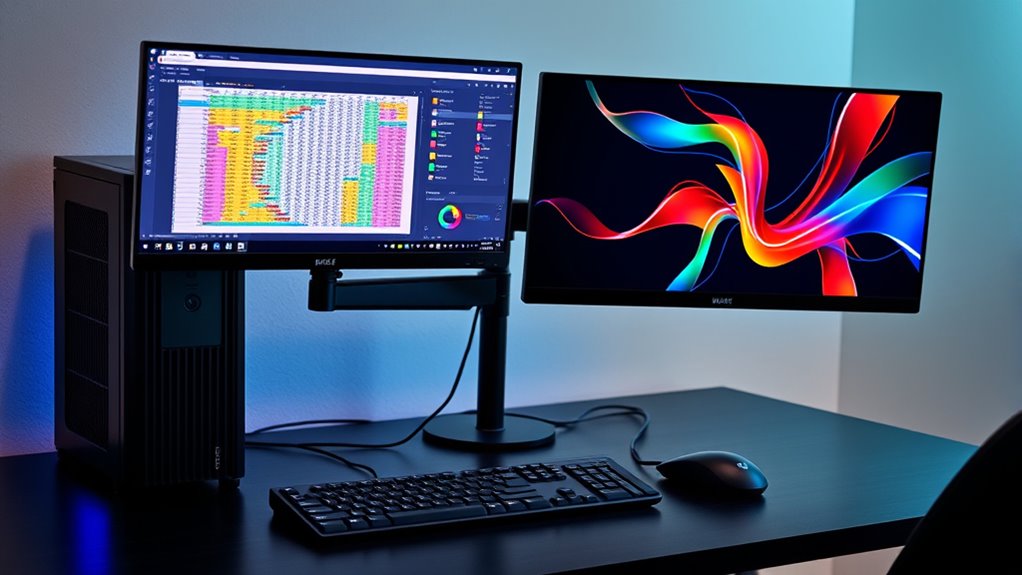
Connecting your monitors to your computer is a straightforward process that guarantees your setup works seamlessly. First, identify the available ports on your computer, such as HDMI, DisplayPort, or VGA. Choose the appropriate cables and connect each monitor securely. If you’re using monitor mounting, ensure your mounts are properly installed before attaching the monitors. Good cable management is essential; use clips or sleeves to keep cords tidy and prevent tangling. This not only improves the appearance but also reduces strain on ports and cables. Double-check that each connection is firm and that your monitors are powered on. Once connected, you’re ready to proceed to display configuration, ensuring your dual monitor setup is optimized for productivity.

KIC CrystalVu Screen Cleaner Spray Kit (16oz) with Microfiber Cloth
Streak-Free Formula – Professional-grade electronic screen cleaner spray removes fingerprints, smudges, and oily buildup from Smart TVs, OLED...
As an affiliate, we earn on qualifying purchases.
Configuring Display Settings for Optimal Layout

Once your monitors are properly connected and powered on, it’s time to configure the display settings to guarantee an efficient and comfortable workspace. Start by adjusting resolution and orientation to match your physical setup. Use color calibration to ensure consistent tones across screens, reducing eye strain. Pay attention to ergonomic positioning, making sure displays are aligned at eye level and at the same height for seamless workflow. Fine-tune scaling options so text and icons are clear and proportionate. Additionally, consider display calibration to optimize image quality and color accuracy. This process can be enhanced by utilizing modern display technology features that adapt to your environment. You can also explore adaptive brightness settings to further reduce eye fatigue during extended use. Finally, set your primary display to optimize task focus. Consider these points:
- Align displays for seamless visual transition
- Calibrate colors for consistency
- Adjust resolution and scaling
- Ensure ergonomic positioning
- Set primary monitor for main tasks
- Take advantage of smart home automation features to customize your workspace environment for increased comfort and efficiency.
- Incorporate display management tools to streamline multiple monitor setups and improve workflow.
Arranging and Positioning Your Monitors for Comfort
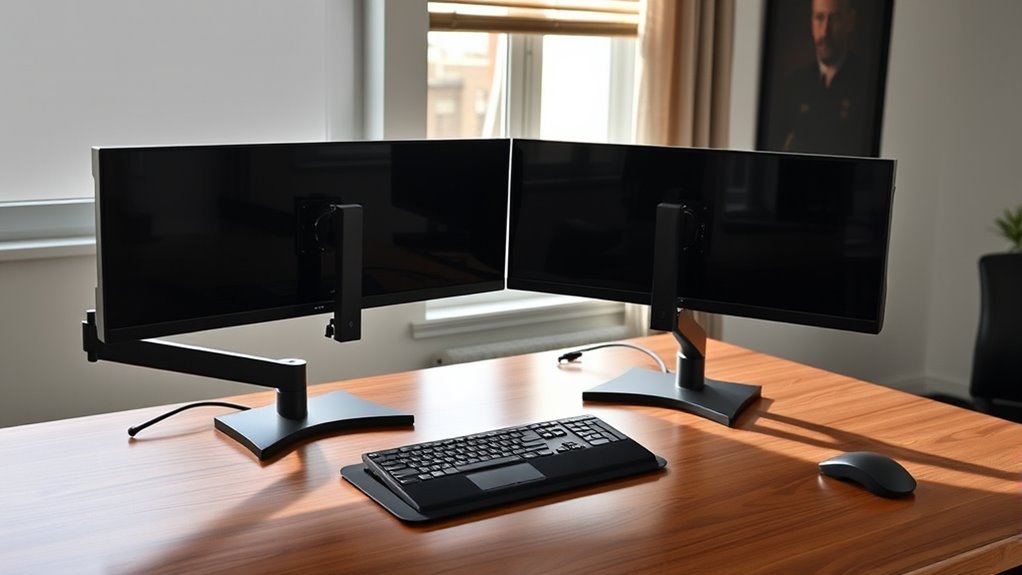
To guarantee comfort and reduce strain, you should carefully arrange your monitors so they fit naturally within your workspace. Position them at eye level to maintain an ergonomic posture, preventing neck and eye fatigue. Use monitor height adjustment features to align the screens with your eye line, avoiding downward or upward tilting. Keep the monitors close enough to minimize head turning, ideally within an arm’s reach. Place the primary monitor directly in front of you and set the secondary slightly to the side, maintaining a comfortable viewing angle. Ascertain the top of each screen is level with your eyes. Proper arrangement helps you stay comfortable during long work sessions, minimizes strain, and promotes better focus and productivity. Additionally, ergonomic setup ensures you maintain a healthy posture, reducing the risk of discomfort over extended periods. Incorporating home energy considerations like proper layout can further enhance your workspace comfort and efficiency. Paying attention to workspace organization can also contribute to overall ergonomic benefits and streamline your workflow, especially when integrating dual monitor configurations for maximum productivity.
Adjusting Display Preferences for Enhanced Productivity

To boost your productivity, start by calibrating your display settings so colors and brightness look right for you. Organize your desktop layouts to keep frequently used apps within easy reach, reducing clutter. Don’t forget to optimize resolution settings to guarantee sharp images and smooth performance across both screens. Additionally, implementing simple organizing strategies can help maintain a calm and functional workspace, making it easier to stay focused and efficient.
Calibrate Display Settings
Calibrating your display settings is essential for optimizing your dual monitor setup and boosting productivity. Proper adjustments guarantee consistent color calibration and accurate contrast levels across both screens, reducing eye strain and improving visual clarity. Begin by fine-tuning contrast adjustment to achieve a balanced display with clear distinctions between light and dark areas. Use built-in calibration tools or third-party software for precise color calibration, matching colors on both monitors. Adjust brightness to comfortable levels suited for your workspace. Remember, consistent display settings prevent distractions and make it easier to work across multiple screens.
- Use calibration tools for precise color matching
- Adjust contrast for clarity and detail
- Set brightness to comfortable levels
- Ensure color profiles are consistent
- Regularly revisit settings for ongoing accuracy
Organize Desktop Layouts
Once your display settings are calibrated for consistent color and contrast, organizing your desktop layout becomes the next step in optimizing your dual monitor setup. Proper monitor placement is essential; position screens at eye level and side by side to reduce neck strain and promote seamless workflow. Adjust your desktop organization by grouping related applications and files on specific monitors—for example, use one for communication and the other for work tasks. Keep your desktop clutter-free by minimizing icons, creating folders, and utilizing virtual desktops if available. This setup helps you locate tools quickly and maintains focus. Regularly rearrange your layout based on your evolving needs to ensure your workspace remains efficient and comfortable. Effective desktop organization boosts productivity and simplifies multitasking.
Optimize Resolution Settings
Have you ever noticed how blurry or stretched images can slow down your productivity? To fix this, optimize your resolution settings. Start by setting each monitor’s resolution to its native value for sharp images. Adjust resolution scaling if text or icons appear too small or large, making everything easier to read. Don’t forget to perform color calibration to ensure consistent and accurate colors across both screens, reducing eye strain. Proper calibration helps maintain visual comfort during long work sessions. Additionally, check display settings regularly to avoid mismatched resolutions, which can cause lag or misalignment. Fine-tuning these preferences creates a seamless viewing experience, boosting your efficiency and reducing fatigue. Staying informed about nanoscience breakthroughs can also inspire innovative setups and improvements for your workspace, especially as emerging display technology continues to evolve. Exploring display calibration techniques can further enhance visual quality and comfort during extended use, and understanding monitor hardware specifications can help you select the best equipment for your needs. Keeping up with advancements in ergonomic design can also help prevent discomfort and promote better posture during long hours at your desk.
Frequently Asked Questions
Do I Need a Graphics Card That Supports Dual Monitors?
No, you don’t necessarily need a graphics card that specifically supports dual monitors. Most modern graphics cards, even integrated ones, can handle dual display setups. Check your current graphics card’s outputs—if it has two or more video ports, you’re good to go. If not, you might need an upgrade. Just verify your graphics card can support the resolution and refresh rate you want for a smoother dual display experience.
How Do I Troubleshoot When a Monitor Isn’t Detected?
When a monitor isn’t detected, don’t throw in the towel just yet. First, check your connections—cables and ports—and guarantee everything’s snug. Then, perform troubleshooting steps like updating your graphics driver, restarting your computer, and trying different cables or ports. Sometimes, simply running the display settings can prompt your system to detect the monitor. If issues persist, your hardware might need a closer look or replacement.
Can I Use Different Brands or Sizes of Monitors Together?
Yes, you can use different brands or sizes of monitors together. Just verify monitor brand compatibility isn’t an issue, as some brands may have proprietary features or connections. Focus on monitor size matching for a seamless workspace; mismatched sizes might look uneven but won’t affect functionality. You might need to adjust display settings or scaling to optimize your setup, but overall, mixing brands and sizes works fine for boosting productivity.
What Is the Ideal Monitor Resolution for Productivity?
Did you know that 92% of workers believe better monitor quality improves productivity? For peak performance, aim for a monitor resolution of at least 1080p, but 1440p or 4K offers sharper images. Pay attention to the monitor aspect ratio, ideally 16:9 or 16:10, and guarantee good color calibration for accurate visuals. This setup minimizes eye strain, enhances clarity, and keeps your workflow smooth.
How Do I Set up a Third Monitor Later On?
To add a third monitor later, start by choosing a suitable monitor mount that supports multiple screens and guarantees stability. Connect the new monitor using the appropriate cables, managing them neatly to avoid clutter. Adjust display settings in your operating system to extend or duplicate your workspace. Proper cable management and mounting help keep your setup organized and accessible, making it easy to expand your productivity with minimal hassle.
Conclusion
Setting up dual monitors boosts your productivity, enhances your workflow, and improves your comfort. By choosing the right monitors, gathering necessary accessories, connecting devices properly, configuring settings accurately, and arranging your workspace thoughtfully, you create an efficient environment. Follow these steps consistently, adjust your setup as needed, and enjoy seamless multitasking. Embrace these changes confidently, optimize your workspace diligently, and release your full potential every day.