If you’ve lost your phone, stay calm and assess your surroundings. Call your number or use Find My Device or Find My iPhone to locate it. Enable sounds and tracking if possible. Lock or suspend your accounts, and notify your service provider to block the device and prevent misuse. Contact authorities if needed and change passwords for sensitive accounts. These steps can help protect your data and increase your chances of recovery—your next moves are vital.

Get the latest gadgets delivered free with Prime
- Fast, free delivery on millions of items
- Prime Video, Amazon Music and more included
- Member-only deals all year
Key Takeaways
- Remain calm, assess your surroundings, and recall your last location to plan your next steps effectively.
- Call or use Find My Device to locate and ring your phone, ensuring volume is up and location services are active.
- Lock or suspend your accounts, change passwords, and enable two-factor authentication to protect your data.
- Report the loss to law enforcement, provide device details, and notify your carrier to suspend or block the phone.
- Enable device tracking, back up data regularly, and consider insurance to prevent future loss and secure your information.
Stay Calm and Assess the Situation

When you realize you’ve lost your phone, the instinct might be to panic, but taking a moment to stay calm is essential. Your emotional response can feel overwhelming, but managing your mental health in this moment helps you think clearly. Deep breaths can reduce anxiety and prevent impulsive actions that might make the situation worse. Assess your surroundings calmly—think about where you last had your phone and who you’ve seen recently. Staying composed allows you to process the situation objectively, making it easier to plan your next steps. Remember, losing your phone is frustrating, but keeping your emotions in check helps you stay focused and avoid unnecessary stress. Maintaining mental clarity now sets a solid foundation for finding your device effectively. Additionally, understanding contrast ratio and other visual factors can help if you’re searching in low-light conditions. Being aware of your environment’s lighting and visual cues can significantly improve your chances of locating your phone quickly. Recognizing the importance of secure cloud backups can also save you time and frustration if you need to remotely lock or erase your device. It’s also helpful to stay informed about emergency contact procedures to quickly notify someone if your phone contains critical information. Furthermore, being familiar with search techniques can enhance your ability to locate your device swiftly in various environments.
Call Your Phone to Locate It
Start by dialing your number to see if you can hear it ring nearby. If you have a smartphone, use the Find My feature to make it ring or locate its last known position. These quick steps can help you recover your phone fast. Additionally, support breakfast often includes features that can assist in locating your device if it is connected to your vehicle or other smart devices. Remember, understanding device tracking options can significantly increase your chances of recovery. Knowing how Soul Sanctuaries utilize technology and wellness tools can also provide insights into additional recovery methods.
Dial Your Number
Calling your phone is one of the quickest ways to locate it if it’s nearby. Dial your phone number from another device or ask someone to do it for you. When your phone rings, listen carefully for the call ringtone, which can help you pinpoint its location. Make sure your volume is turned up so you won’t miss it. If you’re in a quiet environment, the ringtone will be easier to hear. Keep an ear out for any movement or sounds that might indicate where your phone is hiding. Remember, if your phone is within earshot, hearing the call ringtone is often the fastest way to find it. Staying aware of your smartphone features can also enhance your chances of finding your lost phone quickly. Additionally, enabling features like location tracking can help you locate your device even if the ringtone isn’t audible. Utilizing smart home automation settings, such as sound alerts or notifications, can further assist in finding your phone more efficiently. Being familiar with device management tools can also streamline the process of locating or securing your phone if it’s lost.
Use Find My Feature
If your phone is nearby but you can’t see it, using the find my feature can quickly help you locate it. Most smartphones have built-in location services that let you ring your device, even if it’s on silent. Simply log into your account from another device and select the “Find My” option. This activates your phone’s speaker, helping you hear where it’s hiding. If you’re worried about security, remember that device encryption protects your data. If you believe your phone is stolen or lost permanently, you can also choose remote wipe to erase sensitive information. Using the find my feature gives you a quick way to recover your phone and keep your data safe, giving you peace of mind during this stressful situation. Additionally, understanding your device’s location services capabilities can help you prevent losing your phone in the first place, especially since attention to detail is crucial for avoiding such issues. Regularly reviewing your security settings can further enhance your device’s safety and tracking features. Being aware of your device’s navigation and mapping features can also assist in recovering it if misplaced, as these tools often record recent locations. Moreover, utilizing sound and vibration options can further improve your chances of finding your phone in noisy environments.
Use Find My Device or Find My Iphone
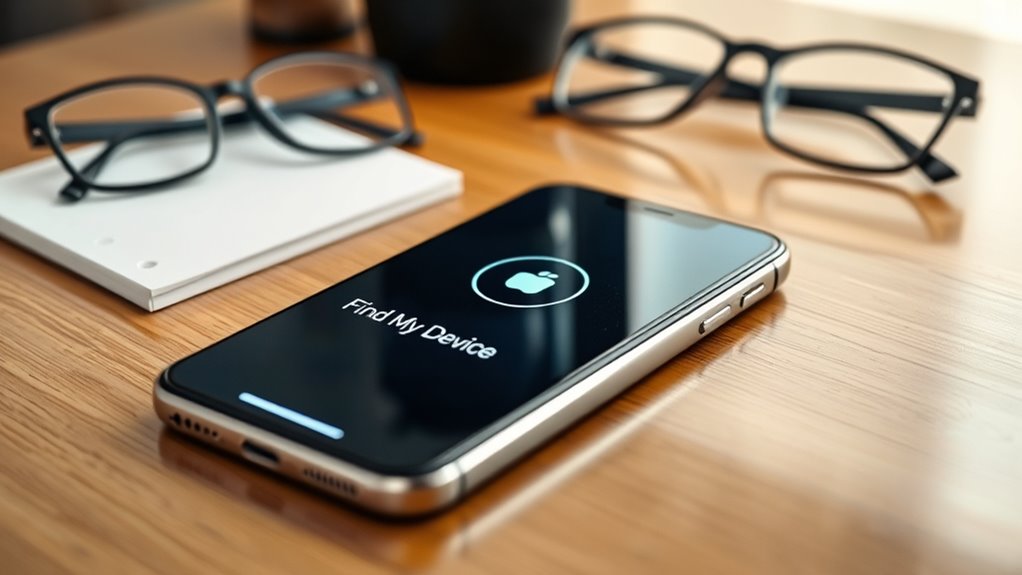
When your phone goes missing, using the built-in tracking tools can quickly help you locate it. Both Find My Device (Android) and Find My iPhone (Apple) are essential for device tracking. Log into your account from another device or computer to see your phone’s location on a map. Confirm your security settings are up-to-date to allow tracking and remote actions. Here are some key steps:
- Check your device’s last known location
- Enable location services if they’re off
- Lock your device remotely to prevent unauthorized access
- Play a sound to help locate it nearby
- Regularly review your privacy and consent settings to ensure your data is protected while using these features. Being aware of trusted resources can also help you find additional support if needed. Additionally, staying informed about device security best practices can help prevent future loss or theft. Remember that enabling two-factor authentication adds an extra layer of protection for your accounts.
Using these tools promptly can minimize risks and increase the chances of recovery. Always verify your security settings to keep your data protected while tracking your device.
Lock or Suspend Your Accounts
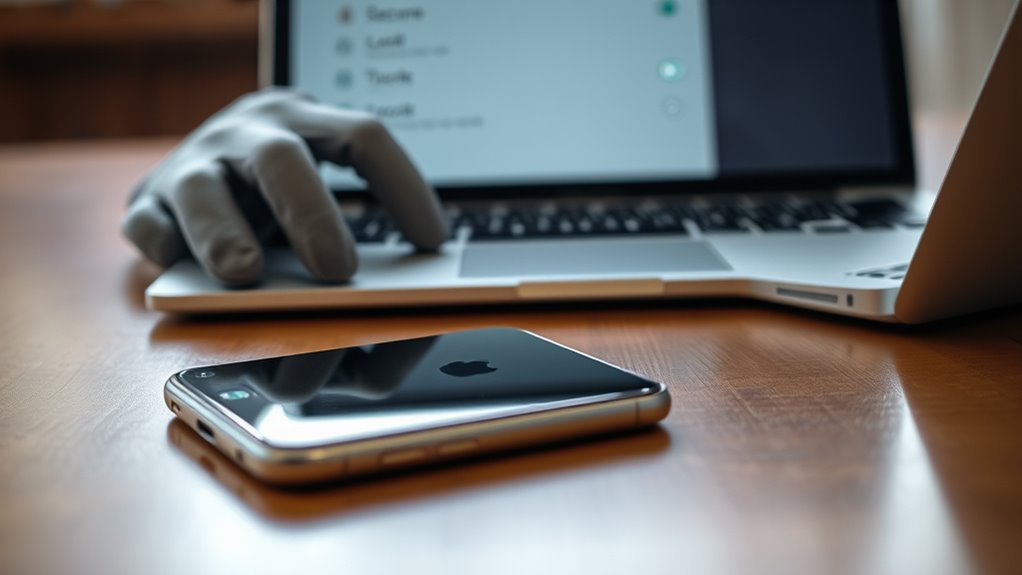
To protect your personal information after losing your phone, you should immediately lock or suspend your accounts. This step is vital for maintaining account security and preventing unauthorized access. Access your account settings from a computer or another device, and enable features like two-factor authentication if available. Consider changing your passwords for email, banking, and social media accounts to add an extra layer of data protection. Many services offer options to temporarily suspend or lock your account until you retrieve your device. Acting quickly minimizes the risk of someone misuse your personal data or commit identity theft. Remember, the faster you secure your accounts, the better you safeguard your sensitive information against potential threats. Additionally, being aware of wave and wind security considerations can help you stay informed about potential vulnerabilities in the digital environment.
Notify Your Service Provider
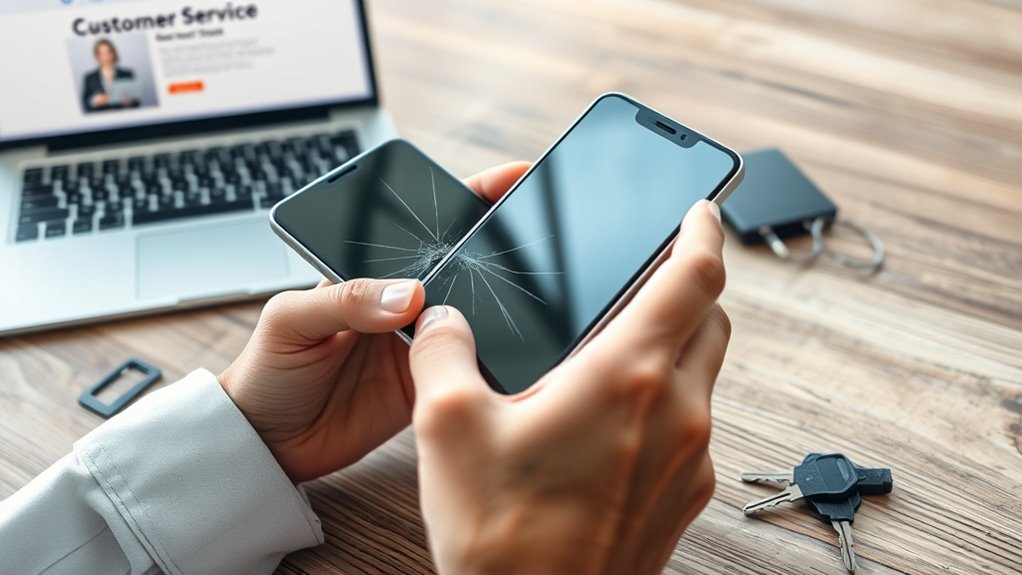
You should contact your service provider as soon as possible to report your lost phone. Ask them to suspend your service immediately to prevent unauthorized use. This quick step helps protect your data and stops any potential misuse of your account.
Contact Customer Support
Notifying your service provider immediately is crucial after losing your phone. Contact customer support to report the theft or loss so they can assist you quickly. They can suspend your account, prevent unauthorized charges, and guide you through the next steps. Be prepared to provide details like your account number, phone model, and last known location. If you have phone insurance, ask about coverage for replacement or repairs. Also, inquire about legal reporting requirements to ensure proper documentation and protection. Prompt communication helps safeguard your personal data and financial information. Remember, the sooner you notify your provider, the better your chances of minimizing damage and avoiding potential fraud. Stay calm and act swiftly to secure your accounts and plan your next move.
Suspend Service Immediately
Wondering how to prevent unauthorized use of your phone? The first step is to suspend your service immediately. Contact your service provider and request a temporary suspension to block any calls, texts, or data usage. Doing this helps protect your personal information and prevents potential charges or misuse. If you have insurance, file a claim for device replacement as soon as possible—this often requires proof that your phone is lost or stolen. Your provider can assist with the insurance process and ensure your account is secure. Remember, quick action minimizes damage and simplifies recovery. Once your service is suspended, you can focus on securing your accounts and arranging for a new device, making the entire process smoother and more efficient.
Report the Loss to Authorities if Necessary
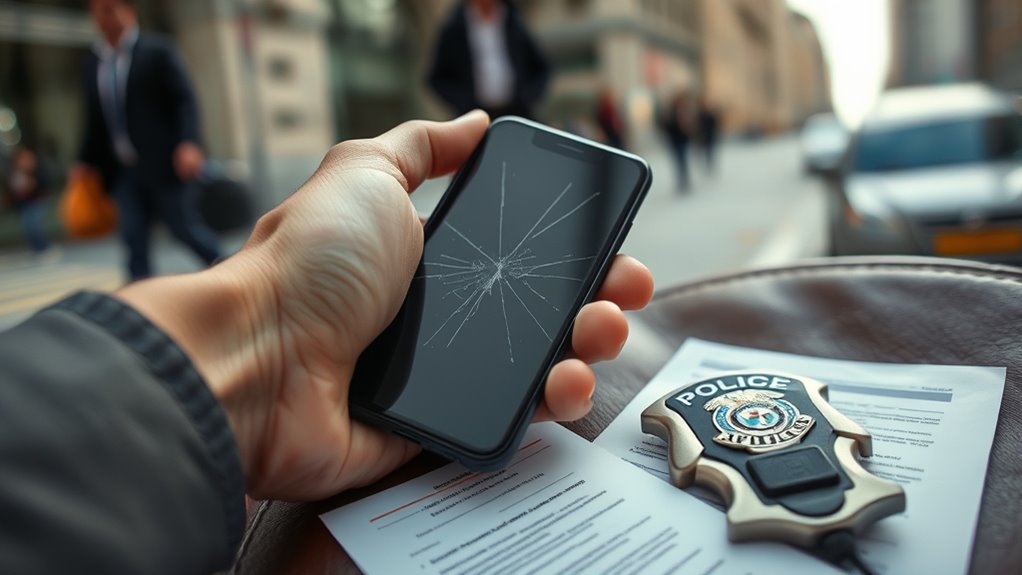
Reporting the loss to authorities is a essential step if your phone was stolen or if you suspect it has been used fraudulently. Filing a theft reporting with local law enforcement helps create an official record, which could be critical for legal assistance or insurance claims. It also alerts authorities to potential serial thefts and increases the chances of recovery. Be prepared to provide details like the phone’s make, model, and IMEI number. Keep a copy of the police report for future reference. Remember, taking this step can protect you from unauthorized use and assist in tracking down the thief. Always follow local procedures for theft reporting to guarantee your case is properly documented and handled efficiently.
- Gather all relevant details about your phone
- Visit or contact local law enforcement for theft reporting
- Request a copy of the police report for your records
- Consider notifying your carrier about the theft
Change Passwords for Sensitive Accounts

Immediately after losing your phone, you should change the passwords for your sensitive accounts, such as email, banking, and social media. Use a password manager to generate strong, unique passwords for each account, reducing the risk of unauthorized access. Enable two-factor authentication on all important accounts; this adds an extra layer of security even if someone has your password. Avoid reusing passwords from your lost device to prevent breaches. If your accounts support it, update recovery options like email addresses and phone numbers to ensure you’re the only one with access. Regularly reviewing your account activity can help spot suspicious activity early. Taking these steps swiftly minimizes potential damage and keeps your personal information secure.
Take Preventive Steps for the Future

To prevent future phone losses and unauthorized access, it’s essential to implement proactive security measures now. Start by investing in device insurance to cover potential damages or theft. Regularly backup data to cloud services or external drives, ensuring you don’t lose important information if your device goes missing. Enable two-factor authentication on all sensitive accounts for added security. Consider installing tracking apps and setting strong, unique passwords for your device and apps. These steps help protect your data and make recovery easier, reducing stress if your phone is lost again. Taking these preventive measures now can save you time, money, and frustration down the line. Stay vigilant and proactive to safeguard your device and personal information effectively.
- Invest in device insurance
- Regularly backup data
- Enable tracking and strong passwords
- Use two-factor authentication
Frequently Asked Questions
How Can I Recover Data From a Lost Phone?
You can recover data from a lost phone by using cloud backup services if you’ve enabled them beforehand. Check your account on services like Google Drive or iCloud for your backed-up data. If needed, utilize data recovery tools on your computer to scan your device or storage cards. Acting quickly increases chances of retrieval, especially if you’ve regularly backed up your data, ensuring you don’t lose important files permanently.
What Should I Do if My Phone Is Stolen Abroad?
If your phone is stolen abroad, immediately activate international travel safety measures by contacting your bank and emergency contacts. Use remote tracking apps to locate or lock your device, and inform local authorities to file a report. Follow emergency contact protocols by notifying your embassy or consulate for assistance. This quick response helps safeguard your data, ensures your safety, and facilitates recovery efforts while abroad.
Can I Track My Phone if It’s Turned Off?
Sure, you can try phone tracking even if your device’s shut down—if your tech is fancy enough to support it. But honestly, once you hit device shutdown, your phone’s pretty much playing hide-and-seek, rendering tracking impossible. It’s like trying to find a ninja in the dark. So, don’t rely solely on phone tracking; instead, act fast, lock your accounts, and hope your device’s clever enough to be found.
How Do I Prevent Identity Theft After Losing My Phone?
To prevent identity theft after losing your phone, immediately enable biometric security and change all your passwords using a trusted password management app. Report your device as lost to your carrier and remotely wipe your data if possible. Be alert for suspicious activity on your accounts, and consider placing a fraud alert or freeze with credit bureaus. Acting quickly helps protect your personal information and minimizes potential damage.
What Are the Legal Steps to Recover a Stolen Device?
Think of your stolen device as a lost treasure needing to be reclaimed. You should file a police report promptly, providing all relevant details like serial numbers and last known location. Follow the legal procedures outlined by local authorities, and cooperate fully with law enforcement. This creates an official record, increasing the chances of recovery. Remember, acting swiftly and legally is your best shot at bringing your device back home.
Conclusion
Losing your phone can be stressful, but acting quickly makes all the difference. Imagine realizing your phone is missing during a busy day—you follow these steps, lock your accounts, and track it down using Find My Device. Just like Sarah, who recovered her phone within hours after reporting it stolen, you can regain control and protect your information. Stay calm, act fast, and you’ll minimize the damage and get your device back or prevent misuse.
Halloween Picks
halloween
As an affiliate, we earn on qualifying purchases.