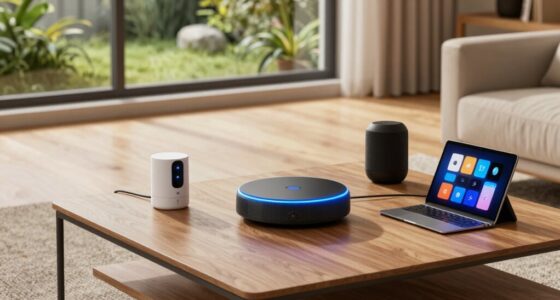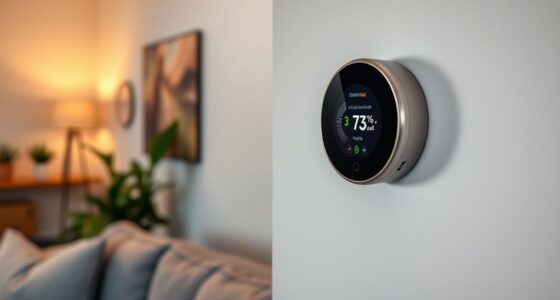
To save money with your smart thermostat, set a comfortable temperature during the day and lower it at night or when you’re away using scheduled programs or learning algorithms. Enable geofencing so it adjusts based on your location, and activate energy-saving modes like Eco Mode. Monitoring your energy use helps you spot savings opportunities. Adjust humidity and ventilation for efficiency, and use manual overrides wisely. Keep exploring for more tips to maximize your savings and comfort.
Key Takeaways
- Set your thermostat to 68-70°F during active hours and lower it at night to save energy and reduce costs.
- Use occupancy and geofencing features to automatically adjust settings when residents are home or away.
- Schedule seasonal temperature changes aligned with weather to optimize comfort and efficiency year-round.
- Enable eco modes, such as Eco Mode and occupancy-based controls, to minimize unnecessary heating and cooling.
- Monitor energy usage data regularly to identify patterns and refine settings for maximum savings.

EVEO Screen Cleaner Spray - Large Screen Cleaner Bottle - TV Screen Cleaner, Computer Screen Cleaner, for Laptop, Phone, Ipad - Computer Cleaning kit Electronic Cleaner (1 Pack)
Screen Cleaner is Your Screen’s New Bestfriend! - EVEO is proud to present a screen cleaner that’s perfectly...
As an affiliate, we earn on qualifying purchases.
Understanding Your Smart Thermostat’s Features
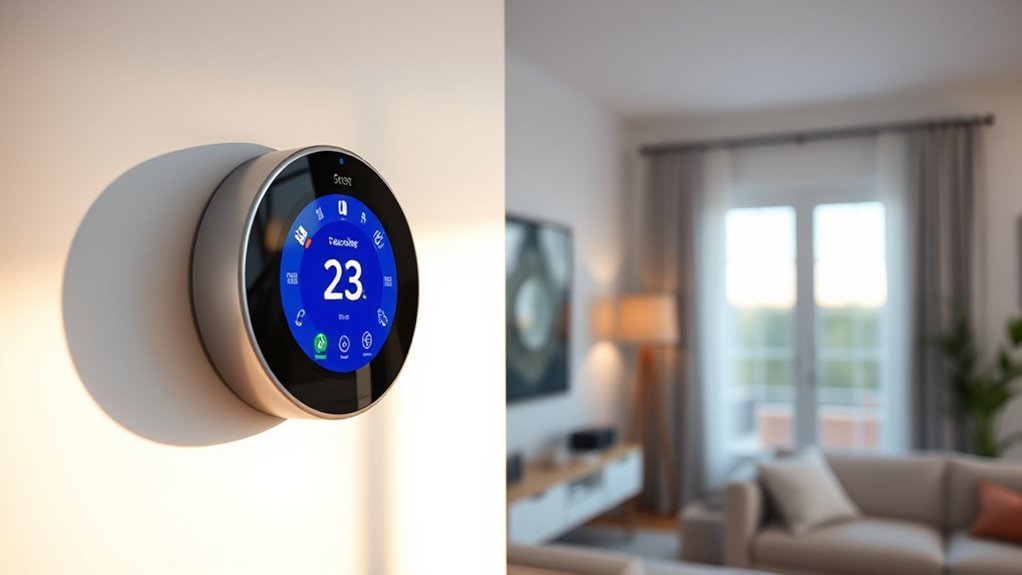
Smart thermostats come equipped with a variety of features designed to make managing your home’s temperature more convenient and efficient. One key feature is voice commands, allowing you to adjust settings hands-free using devices like Alexa, Google Assistant, or Siri. This makes it simple to change the temperature or activate modes without reaching for your phone. Compatibility features are equally important; your smart thermostat must work seamlessly with your existing smart home ecosystem and Wi-Fi network. Many models support various smart home platforms, giving you flexibility and control. Understanding these features helps you maximize your thermostat’s potential, making your home more comfortable while saving energy. With voice commands and compatibility options, managing your home’s climate becomes quicker and more integrated into your daily routine. Additionally, smart home platform compatibility can help you better understand complex features and optimize your device usage. Recognizing the importance of color accuracy in related smart home devices can also enhance your overall experience, especially when integrating with visual displays and screens. Moreover, some thermostats offer learning algorithms that adapt to your schedule over time, further increasing energy savings and comfort. A thorough understanding of piercing care and hygiene can also contribute to a healthier environment when integrating smart air quality monitors.

iO CLEAN Screen Cleaner Spray (16oz - 473ml) – Best Large Cleaning Kit
Screen cleaner spray and cloth. Screen cleaner spray and cloth are designed for high-end devices and work flawlessly...
As an affiliate, we earn on qualifying purchases.
Setting the Ideal Temperature Schedules
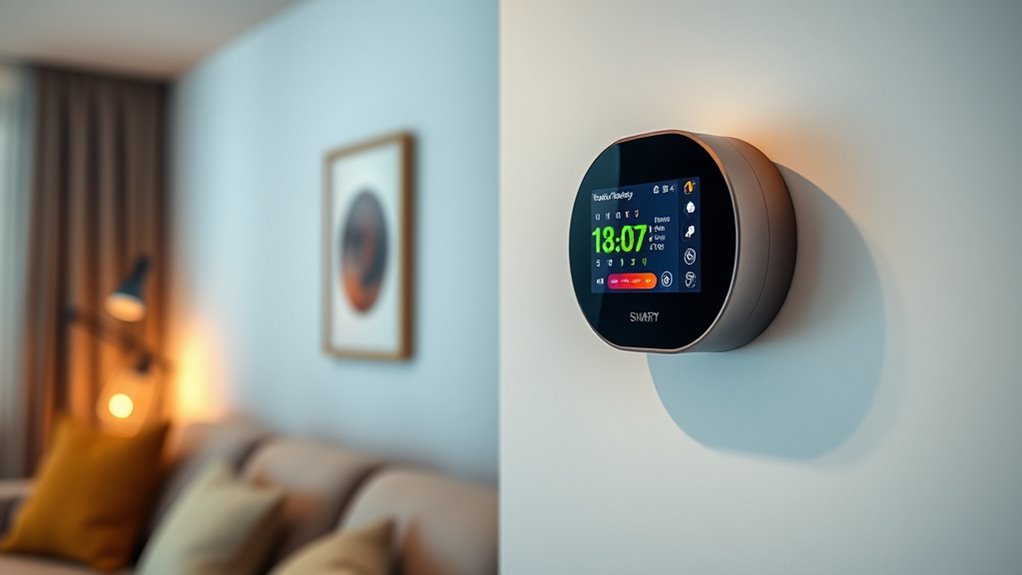
You can improve comfort and conserve energy by setting your thermostat to match your daily routines. Adjust the schedule for day and night to ensure your home stays cozy when you need it and saves power when you don’t. Remember to optimize for occupancy so the system only heats or cools when someone is home. Incorporating connected home technology can further enhance your energy efficiency by allowing remote adjustments and real-time monitoring. By leveraging adaptive scheduling, you can automatically fine-tune your thermostat settings based on your habits and preferences. Additionally, understanding energy-efficient settings can help you maximize savings without sacrificing comfort, especially when combined with smart home integrations that can automate adjustments based on your lifestyle. Utilizing European cloud servers to manage your smart system can ensure data security and reliability, supporting sustainable home automation solutions.
Adjust for Day/Night
Adjusting your thermostat for day and night schedules helps optimize comfort and energy savings. During the day, set a higher temperature to reduce cooling or heating when you’re active. At night, lower the temperature to promote better sleep optimization and create a cozy environment. This also enhances your home’s aesthetic design by maintaining a consistent, calming atmosphere. Using the following schedule as a guide:
| Time of Day | Temperature Setting | Purpose | |
|---|---|---|---|
| Morning | 68-70°F | Wake-up comfort | |
| Day | 75-78°F | Energy efficiency | Setting the right temperature schedule can significantly impact your energy bills. To maximize savings, consider programming your thermostat to automatically adjust these settings based on your routine. Additionally, some thermostats allow you to monitor your energy usage, helping you identify opportunities for further efficiency. Regularly updating your energy management settings ensures your system remains optimized over time. |
| Evening | 68-70°F | Relaxation | |
| Night | 65-68°F | Sleep optimization | |
| Late Night | 65°F | Restful sleep |
Implementing a consistent schedule ensures your home remains comfortable and energy-efficient throughout the day and night.
Optimize for Occupancy
To maximize energy savings and comfort, tailoring your thermostat settings based on occupancy patterns is essential. When you refine for occupancy, your smart home adjusts temperatures to match when spaces are in use. Imagine: 1. Your family leaves for work and school, and the thermostat lowers the temperature, saving energy. 2. As you return home, it smoothly raises the temperature to comfort levels. 3. During the night, it adjusts for restful sleep, improving indoor air quality by maintaining optimal humidity and airflow. This proactive approach ensures you’re not wasting energy heating or cooling empty spaces. It also promotes better indoor air quality by preventing stale air buildup. Additionally, integrating smart home automation features can further enhance your system’s responsiveness to occupancy patterns. By syncing your thermostat with your routine, you boost efficiency and create a healthier, more comfortable environment. Understanding net worth of smart home devices can also help in selecting cost-effective options that maximize your investment. Being aware of the energy consumption of your devices can help you fine-tune your settings for even greater savings. Incorporating air quality monitoring can provide real-time feedback on indoor conditions, ensuring your environment remains healthy and comfortable, especially when combined with ventilation control systems.

KIC CrystalVu Screen Cleaner Spray Kit (16oz) with Microfiber Cloth
Streak-Free Formula – Professional-grade electronic screen cleaner spray removes fingerprints, smudges, and oily buildup from Smart TVs, OLED...
As an affiliate, we earn on qualifying purchases.
Utilizing Geofencing for Automated Adjustments
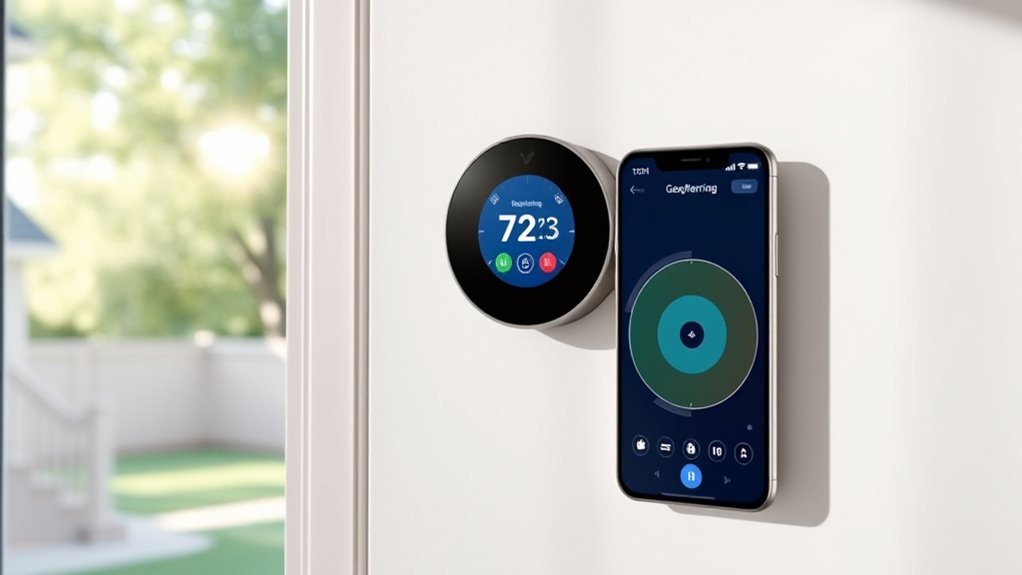
Utilizing geofencing allows smart thermostats to automatically modify temperature settings based on your location, enhancing comfort and energy efficiency. With location-based control, your thermostat detects when you leave or approach home, adjusting temperatures accordingly to save energy or ensure comfort. This seamless adjustment means you don’t need to manually change settings each time you enter or leave your house. Many systems provide real-time alerts, notifying you of temperature changes or if your device detects unusual activity. By setting geofences, you optimize your energy use without sacrificing comfort, making your home smarter and more responsive. Additionally, understanding the sensor technology behind these devices can help you choose systems that respond more accurately to your routines. Incorporating automated routines can further streamline your energy savings and comfort preferences. This automation reduces wasted heating or cooling when you’re away, helping you save money while maintaining a cozy environment when you return. Home safety & accessibility can be improved by integrating smart thermostats with other devices to create a more accessible living environment. Moreover, selecting systems with advanced connectivity can enhance control and monitoring capabilities for even better efficiency. Staying informed about energy consumption patterns can also help you fine-tune your settings for maximum savings.

Screen Mom Screen Cleaner Spray 16oz Bottle for TV, Car, Laptop & Computer
STREAK FREE FORMULA FOR CRYSTAL CLEAR SCREENS: Screen Mom tv cleaner spray and cloth advanced streak-free screen cleaner...
As an affiliate, we earn on qualifying purchases.
Leveraging Learning Algorithms to Optimize Comfort and Savings
Learning algorithms enable smart thermostats to analyze your heating and cooling patterns over time, automatically refining their settings for maximum comfort and efficiency. Through machine learning and predictive algorithms, your thermostat understands when you typically wake up, leave home, or return. Visualize this as:
- Tracking your daily routines like clockwork.
- Anticipating temperature needs before you even adjust the thermostat.
- Adjusting automatically based on weather forecasts and occupancy.
These algorithms learn from your habits, reducing energy waste and maintaining comfort. They adapt seamlessly, ensuring your home stays cozy when needed and saves energy when you’re away. By leveraging machine learning, your thermostat becomes smarter over time, optimizing settings without manual input. This continuous learning process maximizes savings while keeping your environment just right.
Implementing Energy-Efficient Modes
To conserve energy, you can set your thermostat to specific schedules that match your daily routine. Using eco mode helps reduce power consumption without sacrificing comfort, especially when you’re away. Adjusting settings based on occupancy ensures your system only runs when needed, maximizing efficiency.
Schedule Thermostat Settings
Scheduling your thermostat settings is a key step in creating an energy-efficient home. When you set specific times for heating and cooling, you optimize energy conservation and guarantee appliances work smoothly together. Imagine this:
- You lower the temperature at night, saving energy while you sleep.
- During work hours, you reduce heating or cooling, preventing waste.
- When you’re home, you raise the temperature for comfort.
Utilize Eco Mode
Utilizing Eco Mode is one of the simplest ways to make your thermostat more energy-efficient. Eco mode automatically adjusts your heating and cooling settings to optimize energy savings without sacrificing comfort. When you activate eco mode, your thermostat maintains temperature levels that are ideal for reducing energy consumption during periods of low activity or when you’re away. This setting minimizes unnecessary energy use, helping you cut down on utility bills. Many smart thermostats allow you to customize eco mode preferences, so you can set temperature ranges that suit your comfort and savings goals. By consistently using eco mode, you encourage your system to operate more efficiently, which not only lowers your energy costs but also reduces your environmental impact.
Adjust for Occupancy
Adjusting your thermostat based on occupancy helps maximize energy savings by ensuring heating and cooling only run when needed. Using occupancy sensors and presence detection, your smart thermostat can identify when you’re home or away. Imagine walking into a room:
- The sensors detect your presence, and the system kicks in to heat or cool.
- When you leave, sensors recognize absence, and the thermostat dims or turns off to conserve energy.
- As you return, presence detection instantly adjusts the temperature for comfort.
This automation prevents unnecessary energy use, reducing bills and environmental impact. By customizing these settings, you guarantee your HVAC system operates efficiently, only when occupancy is detected. It’s a simple way to optimize comfort while saving money.
Adjusting Humidity and Ventilation Settings
Since maintaining ideal humidity and ventilation is vital for comfort and air quality, you should focus on fine-tuning these settings with your smart thermostat. Proper humidity levels reduce mold growth and dust, improving air quality, while good ventilation removes indoor pollutants. Adjust humidity settings to keep moisture between 30-50%, preventing issues like dryness or excess dampness. Make certain your ventilation system is active enough to refresh stale air without wasting energy. Regular filter maintenance is essential; clean or replace filters to ensure ventilation works efficiently and air quality remains high. Many smart thermostats can automatically adjust humidity and ventilation based on occupancy or air quality sensors, helping you create a healthier, more comfortable home environment while saving energy.
Monitoring and Analyzing Energy Usage Data

Monitoring and analyzing your energy usage data helps you understand how your smart thermostat impacts your home’s efficiency. By reviewing data visualization charts, you can identify patterns and pinpoint areas where energy consumption spikes. Imagine these insights as a map, guiding you to make smarter decisions:
- Spot times when your heating or cooling peaks, so you can adjust schedules accordingly.
- Recognize days or months with high energy consumption, helping you plan efficiency improvements.
- Track how your manual adjustments influence overall energy use, ensuring you’re optimizing settings.
With clear data, you can make informed choices to reduce waste and lower bills. Regularly monitoring and analyzing this information empowers you to fine-tune your home’s climate control for maximum savings.
Tips for Manual Overrides and Seasonal Adjustments
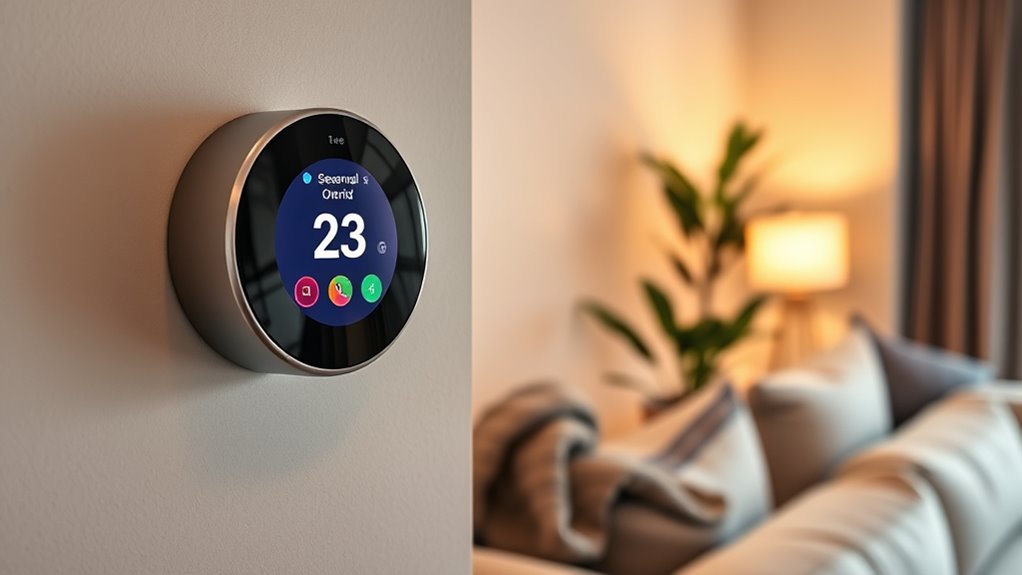
Manual overrides and seasonal adjustments allow you to optimize your smart thermostat’s performance throughout the year. Use a manual override when you need immediate comfort, such as during unexpected cold snaps or heatwaves, but remember to return to your regular schedule afterward to avoid energy waste. Seasonal adjustments help you prepare your home for changing weather; for example, lower the temperature slightly in winter or raise it during summer months. Always set a schedule that aligns with your daily routines, and make seasonal tweaks to maximize savings. Keep in mind that frequent manual overrides can lead to higher energy bills if not managed properly. Use seasonal adjustments proactively to maintain comfort while saving money, and only override manually when necessary.
Frequently Asked Questions
How Secure Is My Data With a Smart Thermostat?
Your data security with a smart thermostat is generally strong, but privacy concerns do exist. Manufacturers often use data encryption to protect your information from hackers. To stay safe, make sure your device receives regular firmware updates and use a strong, unique password. While no system is entirely foolproof, taking these steps can considerably reduce risks and give you peace of mind about your data privacy.
Can Smart Thermostats Integrate With Other Smart Home Devices?
Yes, smart thermostats easily integrate with other smart home devices. You can control them using voice control through platforms like Alexa or Google Assistant. Plus, they provide energy reports, helping you track your usage and optimize your system. This seamless integration enhances your home’s automation, making it more efficient and convenient while saving you money. You’ll enjoy a more connected and smarter living environment with these versatile devices.
What Is the Typical Lifespan of a Smart Thermostat?
A smart thermostat typically lasts about 10 to 15 years, depending on usage and brand quality. You’ll benefit from enhanced energy efficiency over time, but remember to update software regularly to protect your user privacy. Proper maintenance can extend its lifespan, ensuring you keep saving money and optimizing comfort. Keep an eye on manufacturer recommendations, and consider replacing it sooner if you notice performance issues or security concerns.
Are There Any Hidden Costs Associated With Smart Thermostat Features?
You might think all features are free gifts, but hidden costs lurk behind some smart thermostat functions. Extra installation fees, subscription services, or premium features can add up like unexpected thunderclouds. Be aware of feature limitations that may require upgrades or additional hardware, turning what seems like a simple upgrade into a financial storm. Always read the fine print to avoid surprises and keep your savings sailing smoothly.
How Do I Troubleshoot Connectivity Issues With My Device?
You should start troubleshooting connectivity issues by checking your Wi Fi signal strength; a weak signal can disrupt your thermostat’s connection. Restart your device and router to refresh the connection. Make sure your thermostat’s firmware is up to date, as updates often fix bugs and improve connectivity. If problems persist, try repositioning your router closer to the device or resetting your thermostat to factory settings.
Conclusion
Just like Icarus learned, soaring too close to comfort can lead to trouble. With your smart thermostat, you hold the power to balance cozy warmth and energy savings—flying high without risking the heat. By mastering these settings, you become the hero of your home’s energy story, saving money while staying comfortable. Embrace the technology, and let your thermostat be the wings that lift you toward smarter, more efficient living.