
TL;DR

Get the latest gadgets delivered free with Prime
- Fast, free delivery on millions of items
- Prime Video, Amazon Music and more included
- Member-only deals all year
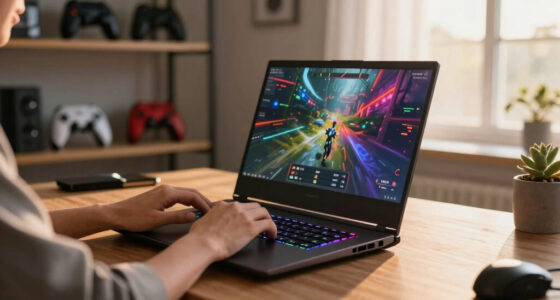
In 2026, artificial intelligence is expected to significantly reshape gaming through enhanced realism, smarter NPCs, and personalized experiences. Experts predict these developments will impact both players and developers.
Artificial Intelligence is set to revolutionize the gaming industry in 2026, with experts predicting nine major developments that will enhance realism, interactivity, and personalized experiences. These changes are expected to impact game design, player experiences, and industry standards, making AI a central driver of future gaming innovation.
Industry analysts and AI researchers have outlined nine key predictions for how AI will transform gaming in 2026. These include the creation of more realistic virtual environments, smarter non-player characters (NPCs) capable of adaptive learning, and tailored gaming experiences driven by player data. Companies like OpenAI and major gaming studios are investing heavily in AI technologies, aiming to embed these capabilities into upcoming titles. For insights into AI’s broader impact, see the original analysis.
Confirmed developments involve ongoing AI integration in game engines, enabling more dynamic storytelling and responsive gameplay. Learn more about AI in gaming from the top gaming mice guide. For example, AI-driven NPCs are already demonstrating basic adaptive behaviors, and further improvements are expected to make interactions indistinguishable from human players. Additionally, AI tools are streamlining game development processes, reducing costs, and enabling rapid prototyping.
While some predictions are based on current technological trajectories, others remain speculative, such as the full extent of AI personalization and the emergence of autonomous game design. Industry insiders emphasize that regulatory, ethical, and technical challenges could influence the pace and scope of these innovations.
The 9 picks
- 1
 Logitech G502 Lightspeed Wireless Gaming Mouse – BlackView on Amazon →
 - 2
 GravaStar Mercury M2 Wireless Gaming Mouse with 26,000 DPI, PAW3395DM Sensor,…View on Amazon →
 - 3
 Razer Basilisk V3 X HyperSpeed Wireless Gaming Mouse, BlackView on Amazon →
 - 4
 Logitech G305 Lightspeed Wireless Gaming Mouse – BlackView on Amazon →
 - 5
 Logitech G305 Lightspeed Wireless Gaming Mouse – BlueView on Amazon →
 - 6
 AOC GM401 Wireless RGB Gaming Mouse, 12000 DPI, Rapid-Fire Shortcut, 70HrsView on Amazon →
 - 7
 Logitech G305 Lightspeed Wireless Gaming Mouse – WhiteView on Amazon →
 - 8
 Redragon M810 PRO Wireless RGB Gaming Mouse 10000 DPIView on Amazon →
 - 9
 T-DAGGER Wireless Gaming Mouse – USB Cordless PC Accessories with LED Backlit…View on Amazon →
Impacts of AI-Driven Changes on Gaming Industry
The integration of advanced AI into gaming in 2026 will likely redefine player engagement, pushing the boundaries of immersion and personalization. For developers, AI offers tools to create more complex, adaptive worlds with reduced production costs. For players, this means more realistic, responsive, and tailored gaming experiences, potentially transforming entertainment consumption and social interaction within virtual spaces.
Furthermore, these advancements could accelerate industry growth, foster new genres, and influence related sectors such as hardware and cloud gaming. However, they also raise questions around AI ethics, data privacy, and the potential for increased digital inequality, making this a pivotal moment for industry regulation and consumer awareness.
Current State of AI in Gaming and Industry Trends
As of 2023, AI is increasingly integrated into gaming, primarily through procedural content generation, enhanced graphics rendering, and basic NPC behaviors. Major companies like Ubisoft, Electronic Arts, and emerging AI startups are investing in AI research to develop smarter NPCs and more immersive environments. The industry is also exploring AI-assisted game design tools that streamline development pipelines.
Recent advances in machine learning, natural language processing, and real-time data analysis suggest that AI capabilities will expand rapidly over the next few years. The ongoing development of large language models and reinforcement learning algorithms indicates that AI-driven personalization and adaptive storytelling will become standard features by 2026.
While current implementations are promising, widespread adoption of fully autonomous, AI-controlled game worlds remains in the experimental stage, with technical and ethical hurdles still to overcome.
Unconfirmed Aspects of AI’s Future Role in Gaming
While many predictions are based on current technological trends, the full extent of AI’s capabilities in gaming by 2026 remains uncertain. Challenges such as AI bias, ethical considerations, and technical limitations could slow or alter expected developments. Additionally, regulatory responses and consumer acceptance will influence how quickly and broadly these innovations are adopted.
Next Steps for Industry and Developers in 2024-2025
In the coming years, industry stakeholders are expected to focus on refining AI algorithms, developing ethical guidelines, and integrating AI into mainstream game development. Key milestones include the release of AI-enhanced game engines, pilot projects demonstrating autonomous game design, and industry conferences highlighting breakthroughs. Monitoring these developments will be crucial to understanding how AI’s role in gaming evolves toward 2026.
Key Questions
How soon will AI-driven NPCs become common in games?
While some AI-driven NPCs are already in early-stage games, widespread adoption is expected to occur gradually over the next 2-3 years, reaching mainstream status by 2026 as technology matures and developers gain confidence.
Will AI make gaming more personalized?
Yes, AI is expected to enable highly personalized gaming experiences by analyzing player behavior and preferences, tailoring content, difficulty, and storylines in real time.
Are there ethical concerns with AI in gaming?
Yes, issues such as data privacy, AI bias, and the potential for addictive or manipulative experiences are being discussed within the industry, emphasizing the need for regulation and responsible AI development.
Source: ThorstenMeyerAI.com
Halloween Picks
halloween
As an affiliate, we earn on qualifying purchases.