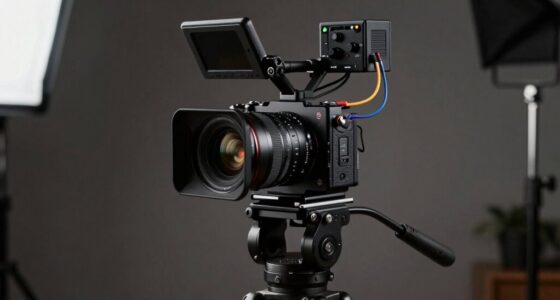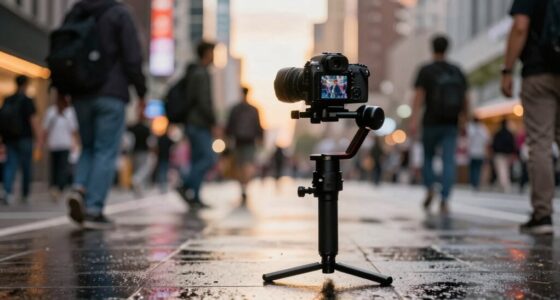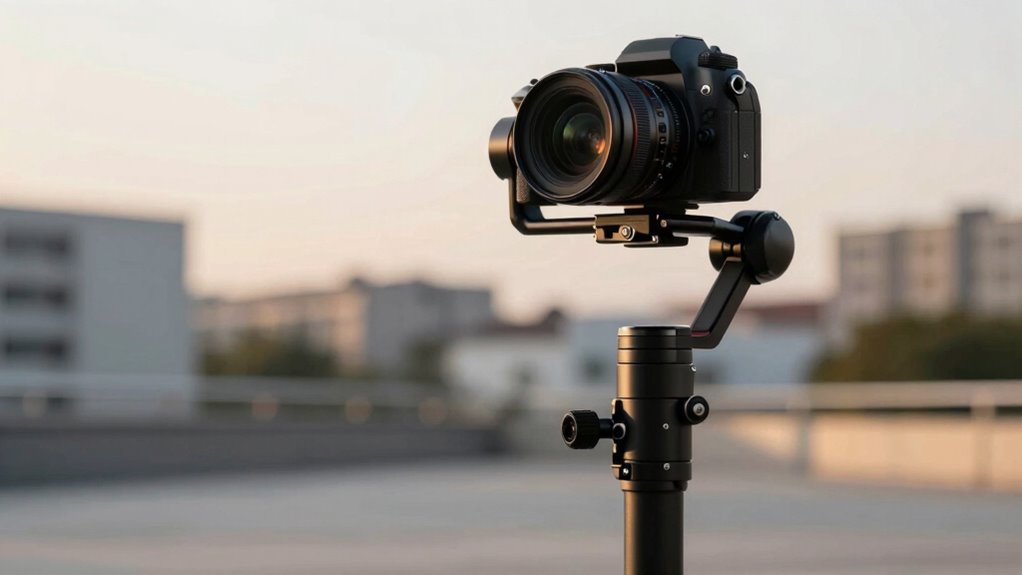
Full-frame gimbals have become standard because they support professional-grade cameras, ensuring you get smooth, high-quality footage. They handle larger cameras without strain, providing stability even during complex shots. Their durable build and long-lasting batteries let you shoot longer without interruptions. Advanced stabilization tech and smart features make shooting easier and more reliable. As a creator, these tools boost your confidence and production value. Keep exploring how they can elevate your content even further.
Key Takeaways
- Full-frame gimbals support larger, professional-grade cameras for higher image quality and creative flexibility.
- They are built with durable, high-quality materials to withstand demanding shooting conditions.
- Longer battery life and hot-swappable power enable extended shoots without interruptions.
- Advanced stabilization tech ensures smooth footage with heavier, more complex camera setups.
- Their reliability, stability, and versatility have made them essential tools for modern creators.
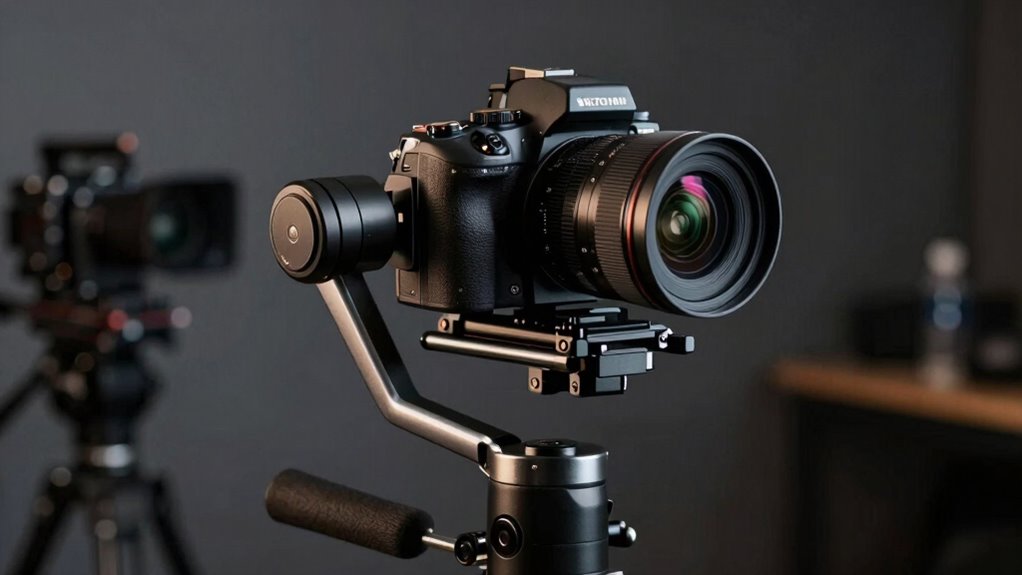
As filmmaking and content creation continue to evolve, full-frame gimbals are increasingly becoming vital tools for creators. These stabilizers are designed to handle larger, more advanced cameras, making them a versatile choice regardless of your project. One of the main reasons full-frame gimbals have become standard gear is their exceptional camera compatibility. They’re built to support the weight and size of full-frame cameras, which are favored for their superior image quality, depth of field, and low-light performance. This means you can attach professional-grade gear without worrying about strain or instability, guaranteeing your shots stay smooth and professional-looking, even during complex movements. When you’re working on high-stakes projects, knowing your gimbal can comfortably accommodate your camera setup is vital. It eliminates the need for frequent equipment swaps or compromises, giving you the confidence to push creative boundaries. Additionally, the durability and capacity of full-frame gimbals mean they are often designed with professional-grade construction to withstand rigorous use over time. Battery life is another critical factor that has contributed to the rise of full-frame gimbals as standard gear. Creating content often requires long shooting sessions, and running out of power can be disruptive and frustrating. Fortunately, many full-frame gimbals come equipped with robust batteries that last for several hours, allowing you to focus more on capturing the perfect shot rather than managing power supplies. Some models even feature hot-swappable batteries, so you can extend your shooting time without stopping. This reliability in battery life ensures you can work seamlessly, whether you’re filming a multi-day project or capturing live events where breaks aren’t always possible. Having a gimbal with impressive battery longevity also means you’re less likely to carry multiple power sources, reducing your gear load and streamlining your setup. Moreover, considering the weight capacity of a gimbal is crucial for ensuring it can handle your camera and accessories without compromising performance. As the technology behind stabilization continues to advance, full-frame gimbals are becoming more accessible and reliable, further fueling their adoption among creators. The integration of smart features like auto-calibration and remote control options enhances their usability and efficiency during shoots. The combination of camera compatibility and extended battery life makes full-frame gimbals an investment that pays off for both amateur and professional creators. They offer stability and smoothness that elevate production value, while their durability and power management give you the stamina needed for demanding shoots. As you seek to deliver high-quality content, these features keep your workflow efficient and your footage polished. The ongoing improvements in stabilization technology are making these devices more intuitive and easier to use, even for those new to gimbal operation. Over time, it becomes clear why full-frame gimbals have moved from niche equipment to must-have gear in the creator’s toolkit. They’re not just about stabilizing shots—they’re about empowering you to create more dynamic, professional content with ease and confidence.
full-frame camera gimbal stabilizer
As an affiliate, we earn on qualifying purchases.
As an affiliate, we earn on qualifying purchases.
Frequently Asked Questions
How Do Full-Frame Gimbals Compare in Price to Crop-Sensor Models?
Full-frame gimbals tend to be more expensive than crop-sensor models due to their advanced features and larger motors, impacting cost efficiency. However, they offer better stabilization and image quality, which can justify the investment for serious creators. Keep in mind, full-frame gimbals are often less portable, so if portability concerns are high, a crop-sensor model might be a more practical, budget-friendly choice.
Are Full-Frame Gimbals Compatible With All Camera Brands?
You’ll find that most full-frame gimbals are compatible with a wide range of camera brands, thanks to adjustable mounts and versatile payload capacities. Around 85% of top models support multiple brands, but sensor compatibility and brand compatibility can vary. It’s essential to check each gimbal’s specifications to confirm your particular camera, whether Sony, Canon, or Nikon, fits securely and functions smoothly for your filming needs.
What Maintenance Is Required for Full-Frame Gimbals?
You need to regularly maintain your full-frame gimbal by performing calibration procedures to guarantee smooth operation and accurate stabilization. Keep an eye on firmware updates, as they often fix bugs and add new features. Clean the gimbal’s moving parts and contact points with a soft cloth to prevent dust buildup. Also, check battery health and balance your camera properly to prolong your gimbal’s lifespan and optimize performance.
Can Full-Frame Gimbals Support Heavier Camera Setups?
Imagine holding steady as your camera captures every detail, even with heavier setups. Full-frame gimbals support these larger rigs, thanks to their impressive weight capacity, ensuring smooth camera stabilization. You can confidently mount heavier cameras, knowing the gimbal’s robust design keeps your shots fluid and professional. So, whether you’re working with a bulky cinema camera or a lightweight mirrorless, these gimbals handle the weight, elevating your creative possibilities.
How Long Do Battery Charges Last on Full-Frame Gimbals?
Your full-frame gimbal’s battery life typically lasts between 8 to 12 hours, depending on usage and model. Charging times usually take around 2 to 3 hours for a full recharge. To guarantee uninterrupted filming, keep a spare battery or portable charger handy. Regularly monitoring your battery levels and understanding charging times helps you plan shoots more efficiently, avoiding unexpected power loss during critical moments.
professional camera gimbal with long battery life
As an affiliate, we earn on qualifying purchases.
As an affiliate, we earn on qualifying purchases.
Conclusion
Just like a trusted pair of shoes transforms your daily walk into a smoother journey, a full-frame gimbal elevates your creative flow. I remember filming a sunrise shot that was shaky without it—after switching, the footage looked as steady as a calm lake. That’s the power of embracing the right gear: it’s not just equipment, but your secret weapon. So, invest in a full-frame gimbal, and watch your stories become as seamless as a well-told tale.
hot-swappable battery gimbal for DSLR
As an affiliate, we earn on qualifying purchases.
As an affiliate, we earn on qualifying purchases.
advanced stabilization gimbal for full-frame cameras
As an affiliate, we earn on qualifying purchases.
As an affiliate, we earn on qualifying purchases.