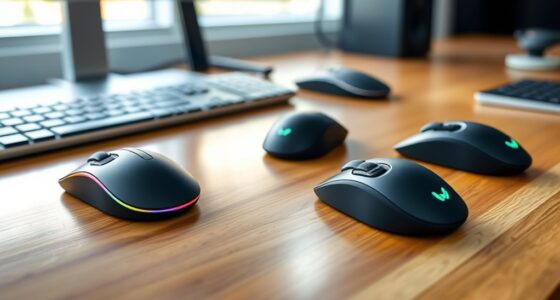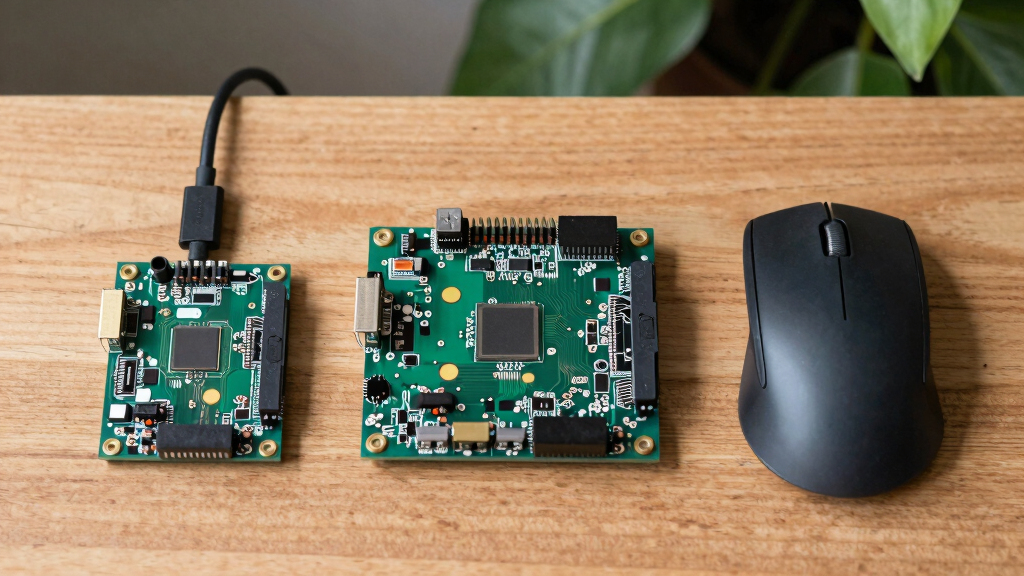

For anyone exploring RISC-V development boards, the options can seem overwhelming due to the variety of features, price points, and target uses. The Waveshare ESP32-C6 RISC-V Microcontroller stands out as a top overall pick for its balance of connectivity and performance, while the VisionFive2 offers impressive AI capabilities for more advanced projects. The main tradeoffs often involve choosing between affordability and feature set—lower-cost boards may lack the processing power or connectivity options needed for demanding applications. Keep reading to see a detailed breakdown of the best RISC-V development boards and find the one that fits your project needs.
Complete the kit



Key Takeaways
- The top-ranked boards balance performance, connectivity, and price, making them suitable for a wide range of projects.
- Most high-end options, like the VisionFive2, provide advanced features such as AI processing and HDMI output, but come at a higher cost.
- Budget-friendly boards, like the CH32V003 series, excel for simple IoT tasks but may lack processing power for complex applications.
- Connectivity options such as Wi-Fi 6 and Bluetooth 5 are becoming standard, influencing the choice for IoT and embedded projects.
- Ease of use and community support vary significantly; beginner-friendly boards often have extensive documentation and tutorials.


| RISC-V development board | Processor |
|---|---|
| 2Pcs Type-C USB CH32V003 Devel | — |
| Arduino Nano ESP32 with Header | ESP32-S3 dual-core Xtensa 32-bit LX7, 240 MHz |
| Waveshare ESP32-C6 1.47-inch L | RISC-V 32-bit, up to 160MHz |
| Waveshare ESP32-C6 RISC-V Micr | RISC-V 32-bit single-core, up to 160MHz |
| Orange Pi RV2 4GB RAM LPDDR4X | — |
| CH32V307VCT6 Development Board | 32-bit RISC-V |
| Waveshare ESP32-C6 RISC-V Micr | RISC-V 32-bit single-core, up to 160MHz |
| Arduino UNO R4 WiFi [ABX00087] | — |
| VisionFive2 RISC-V AI Single B | JH7110 quad-core 64-bit RISC-V |
| ESP32-P4-NANO Development Boar | ESP32-P4 RISC-V dual-core and single-core |
| 5pcs CH32V003F4P6 RISC-V Devel | — |
More Details on Our Top Picks
2Pcs Type-C USB CH32V003 Development Board for Nano RISC-V
This compact development board centers around the CH32V003F4U6 chip, offering a straightforward platform for simple embedded applications. Compared to more feature-rich boards like the Waveshare ESP32-C6, it lacks advanced wireless capabilities and extensive peripherals, which limits its scope to basic projects. Its USB Type-C connection and essential features make it highly accessible for entry-level users, but the limited feature set and minimal documentation could hinder more complex development. The inclusion of only two pieces may also restrict batch testing or multi-node projects. Overall, this board makes the most sense for hobbyists or students starting with Nano RISC-V architectures who prioritize simplicity over expandability.
Pros:- Compact and easy to integrate into small projects
- Includes essential features like reset button and LED indicators
- Compatible with various devices via Type-C USB
Cons:- Limited to basic features, restricting project complexity
- No detailed software support or extensive documentation
Best for: Beginners and students exploring basic RISC-V embedded development on a tight budget.
Not ideal for: Advanced developers needing extensive peripherals, software support, or multi-board setups for complex projects.
- Processor Speed:72 MHz
- Connectivity Technology:USB
- Operating System:Linux
- Processor Brand:WCH
- Compatible Devices:Computers (PCs, laptops, tablets), smartphones, devices with Type-C USB ports
- RAM Memory Technology:LPDDR3
- Processor Count:1
- Total USB Ports:1
Our verdict“This board is ideal for newcomers seeking a simple, affordable RISC-V development platform for fundamental embedded tasks.”
Arduino Nano ESP32 with Headers [ABX00083] – ESP32-S3, USB-C, Wi-Fi, Bluetooth, HID Support, MicroPython Compatible for IoT & Embedded Projects
– ESP32-S3, USB-C, Wi-Fi, Bluetooth, HID Support, MicroPython Compatible for IoT & Embedded Projects” image=”https://m.media-amazon.com/images/I/61X7ynACnQL._AC_SX300_SY300_QL70_FMwebp_.jpg” link=”0″]Best for Wireless IoT and Rapid Prototyping
View Latest PriceThe Arduino Nano ESP32 stands out for its robust ESP32-S3 dual-core microcontroller, making it significantly more powerful than the Waveshare ESP32-C6 1.47-inch LCD, especially for wireless IoT projects. Its support for Wi-Fi 5, Bluetooth 5.0, and MicroPython enables quick development cycles and flexible prototyping, ideal for smart home or wearable applications. However, the lack of onboard sensors or extensive peripheral options means it’s less suited for sensor-heavy projects without additional components. Its design emphasizes wireless connectivity and ease of use, but detailed GPIO map and expansion options are less clear, which could be a limitation for complex hardware integrations. Overall, this pick is perfect for developers prioritizing connectivity and rapid development over extensive hardware expansions.
Pros:- Powerful dual-core ESP32-S3 processor, ideal for complex IoT tasks
- Supports both Wi-Fi and Bluetooth 5.0 for versatile wireless connectivity
- USB-C port provides fast programming and power options
- MicroPython compatibility accelerates development
Cons:- Limited onboard sensors and peripherals
- GPIO and expansion options are not extensively documented
Best for: IoT developers and hobbyists needing fast wireless connectivity and MicroPython support for quick prototyping.
Not ideal for: Projects requiring extensive onboard peripherals or complex hardware configurations from the start.
- Processor:ESP32-S3 dual-core Xtensa 32-bit LX7, 240 MHz
- Memory Storage Capacity:16 GB
- Connectivity:Wi-Fi, Bluetooth 5.0, USB-C
- RAM:SRAM
- Processor Speed:240 MHz
- Total USB Ports:2
Our verdict“This board is best suited for IoT projects that benefit from fast wireless connectivity and rapid prototyping with MicroPython.”
Waveshare ESP32-C6 1.47-inch LCD Display Development Board
The Waveshare ESP32-C6 with a 1.47-inch LCD excels in projects where visual interfaces are crucial. Its RISC-V processor running up to 160MHz balances performance with low power consumption, suitable for HMI applications. Unlike the other ESP32 boards, its integrated display makes it ideal for GUI-based projects, such as smart control panels or wearable interfaces. The support for Wi-Fi 6 and Bluetooth 5 ensures modern wireless capabilities, but the small display size and limited onboard RAM could restrain more complex visual or data-heavy applications. Its multiple IO interfaces and compact size make it a compelling choice for projects needing a display-centric interface, though it requires some technical skills for setup and programming.
Pros:- High-performance RISC-V processor supports complex GUIs
- Supports Wi-Fi 6 and Bluetooth 5 for modern wireless connectivity
- Multiple interfaces including USB and TF card slot
- Colorful high-resolution LCD display
Cons:- Limited onboard RAM may restrict large GUI applications
- Small display size may not suit detailed visual projects
Best for: Developers creating user interfaces or visual IoT devices requiring a small, high-res display.
Not ideal for: Projects requiring large displays, extensive data processing, or multiple peripheral integrations without additional hardware.
- Display Size:1.47 inch
- Display Resolution:172×320
- Display Color:262K
- Processor:RISC-V 32-bit, up to 160MHz
- Wi-Fi:2.4GHz Wi-Fi 6
- Bluetooth:Bluetooth 5
- Flash Memory:4MB
- Ports:USB, TF Card Slot
Our verdict“This board is well-suited for visual IoT projects needing a compact, colorful display with modern wireless features.”
Waveshare ESP32-C6 RISC-V Microcontroller Development Board with WiFi 6 and Bluetooth 5
The Waveshare ESP32-C6 RISC-V board offers a broad range of wireless options including WiFi 6 and Bluetooth 5, making it more versatile than the simpler CH32V003-based boards. Its rich peripheral interface set, supporting SPI, UART, I2C, and more, positions it as a flexible platform for complex IoT systems. While the ESP32-C6’s RISC-V architecture provides a modern alternative to traditional ARM-based microcontrollers, this complexity can be daunting for beginners unfamiliar with the ESP-IDF environment. The board’s extensive features come with the tradeoff of needing additional peripherals for full functionality, which could increase project complexity and cost. Overall, this pick suits developers who need a robust, feature-rich IoT platform capable of handling diverse communication protocols and peripherals.
Pros:- Supports WiFi 6 and Bluetooth 5 for high-speed wireless connectivity
- Rich peripheral interfaces enable complex integrations
- Compatible with ESP-IDF with ample online resources
Cons:- Complex for users unfamiliar with IoT development environments
- Requires additional peripherals to maximize its capabilities
Best for: Experienced IoT developers building multi-protocol connected devices requiring extensive peripheral support.
Not ideal for: Beginners or those who need a simple, low-cost microcontroller for basic tasks.
- Processor:RISC-V 32-bit single-core, up to 160MHz
- Flash Memory:8MB
- Wireless:WiFi 6, Bluetooth 5, IEEE 802.15.4
- Interfaces:SPI, UART, I2C, I2S, LED PWM, SDIO
- USB Support:USB-C port with onboard CH343 and CH334 USB HUB
Our verdict“This development board is designed for seasoned IoT developers seeking a highly flexible, multi-protocol platform.”
Orange Pi RV2 4GB RAM LPDDR4X RISC-V 8-Core Single Board Computer with Wi-Fi 5+BT 5, Ubuntu 24.04
The Orange Pi RV2 stands out for its octa-core RISC-V processor and 4GB of LPDDR4X RAM, surpassing the single-core options in most other boards like the CH32V003. Its extensive set of interfaces, including HDMI, USB, Ethernet, Wi-Fi, and Bluetooth, makes it suitable for demanding applications like NAS, industrial control, or AI-powered robotics. Compared to smaller microcontroller boards, its focus on a full Linux environment with Ubuntu 24.04 broadens its use cases but also increases the complexity of setup and maintenance. The absence of built-in smart home features means it’s less ideal for consumer automation, but its powerful hardware supports resource-heavy applications. This board makes the most sense for advanced developers seeking a full Linux-based SBC with strong processing power and connectivity.
Pros:- Octa-core RISC-V processor with AI capabilities
- Ample 4GB RAM for multitasking and heavy workloads
- Multiple interfaces including HDMI, USB, Ethernet, Wi-Fi, and Bluetooth
- Supports NVMe SSDs via M.2 for high-performance storage
Cons:- Requires technical expertise to set up and operate Linux-based systems
- Not suitable for small or low-power applications
Best for: Developers requiring a full Linux environment for edge computing, AI, or industrial automation projects.
Not ideal for: Users seeking simple, low-power microcontroller solutions or dedicated smart home devices.
Our verdict“This single board computer is tailored for developers needing high processing power and Linux flexibility for advanced edge and AI projects.”
CH32V307VCT6 Development Board 32-bit RISC-V Microcontroller Core Module
The CH32V307VCT6 stands out for its impressive 144MHz processing speed and 256KB Flash, making it a robust choice for embedded systems and IoT projects, especially compared to the more basic Waveshare ESP32-C6. Its support for RT-Thread OS enhances real-time performance, a key advantage over simpler microcontrollers. However, it requires some technical expertise for setup and offers limited info on power consumption, which could be a concern for battery-powered applications. This board is ideal for developers needing a high-speed RISC-V microcontroller with comprehensive peripheral support, but less suited for beginners or those prioritizing ultra-low power design.
Pros:- High processing speed at 144MHz for demanding applications
- Supports RT-Thread OS for real-time control
- Rich peripheral interfaces for versatile connectivity
- Comprehensive documentation and community support
Cons:- Requires some technical knowledge for proper setup
- Limited information on power consumption, affecting battery planning
Best for: Embedded systems engineers and IoT developers wanting high performance and real-time OS support
Not ideal for: Beginners or hobbyists seeking plug-and-play solutions without deep technical setup
- Processor:32-bit RISC-V
- Frequency:144MHz
- Flash Memory:256KB
- SRAM:64KB
- OS Compatibility:RT-Thread
Our verdict“This board fits experienced developers needing a powerful, flexible RISC-V microcontroller for embedded and IoT projects.”
Waveshare ESP32-C6 RISC-V Microcontroller WiFi 6 Development Board with Pinheader
The Waveshare ESP32-C6 offers a compelling combination of WiFi 6, Bluetooth 5, and Zigbee, making it ideal for wireless IoT projects that demand fast, reliable connectivity. Its single-core processor up to 160MHz is sufficient for many applications but falls short of the multi-core performance seen in the VisionFive2 SBC, which supports AI and vision workloads. Its rich peripheral options, including SPI, I2C, and I2S, provide flexibility, though its setup can be complex for newcomers. Additionally, the lack of detailed power consumption data means it may not be optimal for battery-powered deployments. This board is perfect for those prioritizing cutting-edge wireless features without needing high processing power, but less so for intensive computation tasks.
Pros:- Supports WiFi 6 and Bluetooth 5 for fast, reliable wireless communication
- Rich set of peripherals including SPI, I2C, and I2S
- Onboard USB hub chips facilitate simultaneous USB and UART development
- Compatible with ESP-IDF and comprehensive tutorials
Cons:- Single-core processor limits high-performance applications
- Setup complexity may challenge beginners
- Limited power consumption details for battery-powered designs
Best for: Wireless IoT developers focusing on connectivity and low-cost prototyping
Not ideal for: Users requiring high-performance processing or AI capabilities
- Processor:RISC-V 32-bit single-core, up to 160MHz
- Wireless:WiFi 6, Bluetooth 5, Zigbee 3.0, Thread
- Flash Memory:8MB
- Interfaces:SPI, UART, I2C, I2S, LED PWM, SDIO
- Pin Compatibility:ESP32-C6-DevKitC-1-N8
Our verdict“This board suits IoT projects that need advanced wireless features on a cost-effective, compact platform.”
Arduino UNO R4 WiFi [ABX00087] – Renesas RA4M1 + ESP32-S3, Wi-Fi, Bluetooth, USB-C, CAN, 12-bit DAC, OP AMP, Qwiic Connector, 12×8 LED Matrix
– Renesas RA4M1 + ESP32-S3, Wi-Fi, Bluetooth, USB-C, CAN, 12-bit DAC, OP AMP, Qwiic Connector, 12×8 LED Matrix” image=”https://m.media-amazon.com/images/I/614tXIQWSRL._AC_SX300_SY300_QL70_FMwebp_.jpg” link=”0″]Best for Versatile Embedded Projects with High Processing Power
View Latest PriceThe Arduino UNO R4 WiFi combines dual-core ARM Cortex-M4 from Renesas with an ESP32-S3, delivering robust wireless connectivity and versatile I/O options. Its inclusion of a high-precision 12-bit DAC, OP-AMP, and a built-in 12×8 LED matrix make it suitable for complex IoT, audio, and visual projects. Compared to the CH32V307VCT6, it offers more processing power and multimedia features but at a higher price point and increased complexity. Its setup can be overwhelming for beginners due to multiple chips and interfaces, and detailed user feedback is sparse. This board makes sense for advanced users needing powerful processing combined with integrated sensors and displays, but may be overkill for simple sensor readings or basic projects.
Pros:- Dual-core processing with ARM Cortex-M4 and ESP32-S3
- Modern USB-C interface and multiple communication options
- Built-in LED matrix for real-time visual feedback
- Supports high-precision analog outputs with DAC and OP-AMP
Cons:- Complex setup due to multiple processing chips
- Higher cost than simpler microcontrollers
- Limited available user reviews for troubleshooting
Best for: Experienced developers working on multimedia or complex IoT applications
Not ideal for: Hobbyists or newcomers seeking simple, low-cost solutions
- Microcontroller:Renesas RA4M1 ARM Cortex-M4
- Wireless:Wi-Fi, Bluetooth 5.0
- Connectivity:USB-C, CAN, Qwiic
- Analog Output:12-bit DAC, OP-AMP
- Display:12×8 LED Matrix
Our verdict“This board suits advanced users with multimedia and high-performance IoT needs, willing to navigate its complex setup.”
VisionFive2 RISC-V AI Single Board Computer with JH7110 SoC, 8GB RAM, WiFi & HDMI
The VisionFive2 is a standout for AI and vision projects, featuring a powerful JH7110 quad-core 64-bit RISC-V processor and 8GB RAM, making it comparable to the Orange Pi RV2 in computing power but with better support for AI acceleration. Its onboard GPU and multiple interfaces—including HDMI, Ethernet, and USB—enable development of demanding applications like image recognition or machine learning. Its reliance on Linux-based systems and early availability may limit immediate access for some users, and its software ecosystem is still maturing compared to more established architectures. This SBC is ideal for developers targeting AI, vision processing, or Linux-based RISC-V development, but less suitable for simple or low-power projects.
Pros:- Quad-core 64-bit RISC-V processor with AI acceleration
- 8GB LPDDR4 RAM supports demanding workloads
- Rich connectivity including HDMI, Ethernet, and USB
- Supports Linux distributions like Debian and Fedora
Cons:- Limited software ecosystem compared to mainstream architectures
- Requires significant technical expertise to set up and optimize
- Early production runs may have availability issues
Best for: AI developers and vision system engineers seeking high-performance computing
Not ideal for: Hobbyists or those needing a low-cost, simple microcontroller
- Processor:JH7110 quad-core 64-bit RISC-V
- GPU:IMG BXE-4-32 MC1
- RAM:8GB LPDDR4
- Storage:eMMC socket, Micro-SD card slot
- Connectivity:WiFi, Gigabit Ethernet, USB, HDMI
Our verdict“Designed for AI and vision projects that require serious processing power and Linux support, suitable for experienced developers.”
ESP32-P4-NANO Development Board with Wi-Fi 6 and Bluetooth 5/BLE
The ESP32-P4-NANO offers a compelling mix of Wi-Fi 6, Bluetooth 5, and a dual-core RISC-V processor, making it well suited for high-end image and voice processing projects. Its extensive peripheral set, including MIPI-CSI, MIPI-DSI, Ethernet, and USB, surpasses many basic microcontrollers like the CH32V307VCT6 in multimedia capabilities. However, its setup complexity and need for advanced technical skills could be barriers for less experienced developers. The limited onboard storage and the requirement for additional modules for extensive projects may also add to costs. This board makes the most sense for developers working on sophisticated multimedia applications, but less so for simple sensor-based projects or beginners.
Pros:- Supports Wi-Fi 6 and Bluetooth 5/BLE for fast, secure connectivity
- Rich peripherals including MIPI interfaces and Ethernet
- Powerful image and voice processing capabilities
- Supports secure boot and flash encryption for security
Cons:- Complex setup requiring advanced technical knowledge
- Limited onboard storage, additional modules needed
- Potentially higher overall system cost
Best for: Developers needing powerful multimedia processing and advanced wireless features
Not ideal for: Beginners or those seeking a straightforward, low-cost microcontroller
- Processor:ESP32-P4 RISC-V dual-core and single-core
- Memory:768 KB HP L2MEM, 32 KB LP Static RAM
- Flash:16MB Nor Flash
- Connectivity:Wi-Fi 6, Bluetooth 5/BLE
- Peripherals:MIPI-CSI, MIPI-DSI, USB 2.0 OTG, Ethernet
Our verdict“Best suited for multimedia and AI projects demanding high wireless and processing performance, with a willingness to handle complex setup.”
5pcs CH32V003F4P6 RISC-V Development Board Low Power MCU Module for IoT Projects
This set of five CH32V003F4P6 boards stands out for their high-performance RISC-V core, making them well-suited for embedded and IoT projects that demand efficiency. Compared with the more versatile Waveshare ESP32-C6, these boards excel in low power consumption, boasting a sleep mode current of just 1.8µA, which translates into longer battery life. Their compatibility with Arduino IDE and Raspberry Pi broadens their usability, though the limited 32KB flash memory constrains larger or more complex programs. Additionally, the inclusion of multiple I/O pins allows for expandability, but some users may find the lack of included accessories or detailed setup instructions a hurdle. This pick makes the most sense for developers focused on battery-powered IoT devices where power efficiency and expandability are priorities, rather than for those needing extensive onboard features or large memory.
Pros:- High-performance RISC-V core suitable for embedded applications
- Compatible with Arduino IDE and Raspberry Pi for ease of development
- Low power consumption ideal for battery-powered IoT devices
- Includes multiple I/O pins for flexible expansion
Cons:- Limited 32KB flash memory restricts large or complex programs
- Requires some technical knowledge for integration and setup
- No detailed information on included accessories or comprehensive documentation
Best for: Engineers designing low-power IoT devices requiring expandability and compatibility with popular development environments.
Not ideal for: Developers working on complex projects with large codebases or needing extensive onboard peripherals, due to limited flash memory and minimal accessories.
- Microcontroller:CH32V003F4P6
- Clock Speed:48MHz
- Flash Memory:32KB
- RAM:4KB
- Power Supply Voltage:2.4V to 5.5V
- Supported VDD:3.3V or 5V
- Sleep Mode Current:1.8µA
- Battery Life:72 hours with 2000mAh battery
- I/O Pins:16
Our verdict“This set is best for developers focusing on energy-efficient IoT projects with expandable I/O, but it’s less suited for large-scale or feature-rich applications.”

How We Picked
These boards were selected based on a combination of technical specifications, versatility, and user relevance. We prioritized performance metrics such as CPU cores, RAM, and connectivity features, while also considering build quality and expansion options. Ease of use, documentation, and community support played a crucial role, especially for beginners or those new to RISC-V. Cost-effectiveness was another key factor, ensuring options are accessible without sacrificing core capabilities. The ranking reflects a balance between high-end features and value, aiming to match different user needs from hobbyists to professional developers.
Factors to Consider When Choosing Best RISC-V Development Boards
Choosing the right RISC-V development board depends on your project goals, budget, and technical experience. To help you decide, consider these key factors that influence how well a board will serve your specific needs. Avoid common pitfalls like overpaying for features you won’t use or selecting a board with limited community support that hampers troubleshooting.
Performance and Processing Power
Assess your project’s computational needs. Boards with multiple cores, higher clock speeds, and ample RAM support more complex tasks such as AI, multimedia, or real-time data processing. However, these features often come at a higher cost and increased power consumption. For simple IoT sensors or control applications, lower-power microcontrollers may suffice and save you money.
Connectivity Options
Consider what wireless or wired interfaces your project requires. Wi-Fi 6 and Bluetooth 5 are increasingly common, enabling faster, more reliable connections for IoT devices. Some boards come with integrated cellular or Ethernet options, which could be critical for industrial or remote deployments. Be mindful that more connectivity features often increase complexity and price.
Ease of Use and Documentation
For newcomers, a well-documented board with an active community can dramatically reduce setup time and troubleshooting frustration. Boards designed specifically for beginners often include tutorials, sample projects, and simplified development environments. Conversely, advanced users might prioritize boards with more flexible hardware interfaces, even if they require more effort to master.
Form Factor and Expandability
Size matters if your project space is limited or if you plan to embed the board into a product. Compact boards are easier to integrate but may have fewer expansion options. Look for boards with GPIO pins, connectors, or slots that match your intended peripherals or sensors. The right form factor can streamline your development process and final product design.
Price and Long-Term Value
Balancing cost with features is key. High-end boards with AI capabilities or extensive connectivity commands a premium but may not be necessary for simple applications. Conversely, cheaper boards might save money upfront but could limit your project’s future growth or require upgrades sooner. Think about your project’s scope and whether investing in a more capable board now saves time and money later.
Frequently Asked Questions
Can I upgrade the memory or storage on these RISC-V boards?
Most RISC-V development boards have fixed memory and storage options, especially microcontroller-based models. However, single-board computers like the VisionFive2 often include accessible RAM modules or SD card slots, allowing some upgrades. Always check the specific model’s specifications to see if expansion is possible—this can extend your project’s lifespan and flexibility.
Are RISC-V boards compatible with existing Arduino or Raspberry Pi projects?
While RISC-V boards are fundamentally different architectures, some microcontroller boards offer code compatibility layers or support for common programming environments like MicroPython or Arduino IDE. For more complex projects, you may need to adapt your code or use cross-compilation tools. Compatibility varies widely, so review the developer community and available libraries for your chosen board.
What should I prioritize if I am new to embedded development?
Beginners should look for boards with strong community support, extensive documentation, and straightforward development environments. Boards like the Arduino Nano ESP32 or similar variants often come with tutorials and ready-to-use SDKs. Prioritizing ease of setup and available learning resources can make your initial experience smoother and more productive.
Is Wi-Fi 6 necessary for my IoT project?
Wi-Fi 6 offers faster speeds and better device management, which benefits dense IoT deployments or data-heavy applications. However, for simple sensor networks or low-bandwidth tasks, Wi-Fi 5 or even Ethernet may suffice. Evaluate your project’s data requirements and device count before investing in Wi-Fi 6—it’s a valuable feature but not always essential.
How do I determine if a RISC-V board meets my power consumption needs?
Power consumption varies significantly between microcontrollers and single-board computers. Microcontroller-based boards like the CH32V003 are designed for low-power operation, ideal for battery-powered or remote sensors. High-performance boards like the VisionFive2 consume more energy but provide greater processing capabilities. Always check the specifications and consider your power budget to select the most appropriate board for your project.
Conclusion
For hobbyists or those starting out, the Arduino Nano ESP32 offers a user-friendly experience with broad community support. Developers aiming for advanced AI or multimedia applications should consider the VisionFive2 for its processing power and connectivity. Budget-conscious projects will find the CH32V003 series to be a cost-effective solution, while industrial or IoT deployments may benefit from the robust features of the Waveshare ESP32-C6 RISC-V. Ultimately, your choice hinges on balancing project requirements, experience, and budget—this guide aims to simplify that decision.